
Passionflower Is a Strong Candidate for a California Fence, Depending on Your Yard
A bare fence can feel like a missed chance, especially when a single vine could cover it with leaves and strange, beautiful flowers. Passionflower is one of the vines that can do that job in many California yards.
It can also feed butterfly caterpillars, which is a gift and a cost at the same time. Here is how to decide if it fits your fence, and how to set it up for success.
A bare fence can become a living feature
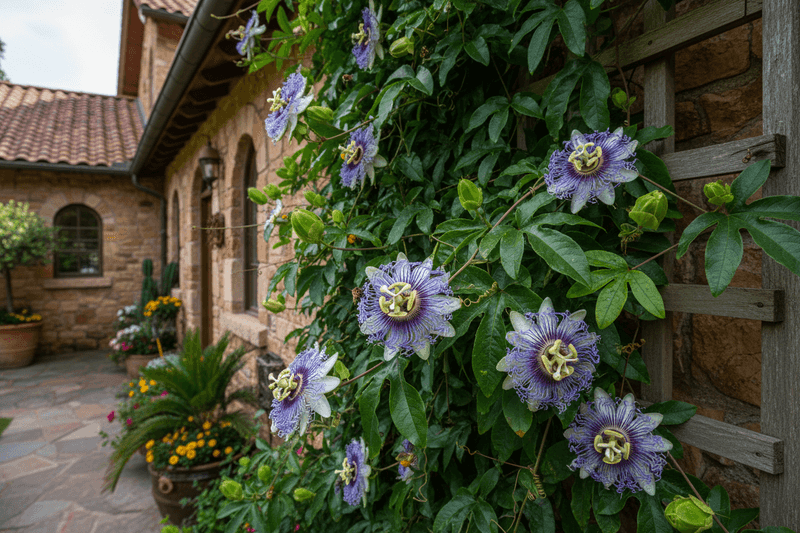
Picture a plain fence turning into a wall of green dotted with blooms that look almost like tiny spaceships. That is the promise of passionflower, and it is a real one in the right spot.
UC Davis describes blue passion vine (Passiflora caerulea) as a vigorous climber that can fill a trellis with dense foliage.
Other California sources agree on the showy part. UC Master Gardener material on vines for bees describes passion vines as fast-growing and showy, which is exactly what a gardener wants from a vine on a fence line.
Still, nobody can honestly call passionflower the best fence plant for every California yard. A foggy coastal lot, a frosty inland valley, and a hot, dry foothill slope will give very different results.
The species you pick, your winter lows, your summer heat, and how much pruning you are willing to do all shape the outcome.
Think of passionflower as a strong candidate rather than a guaranteed winner. The next sections walk through how to choose a type, set it up, and decide whether the trade-offs suit you.
If the answers line up, you could end up with the most talked-about fence on the block.
Choose a passionflower for your California yard
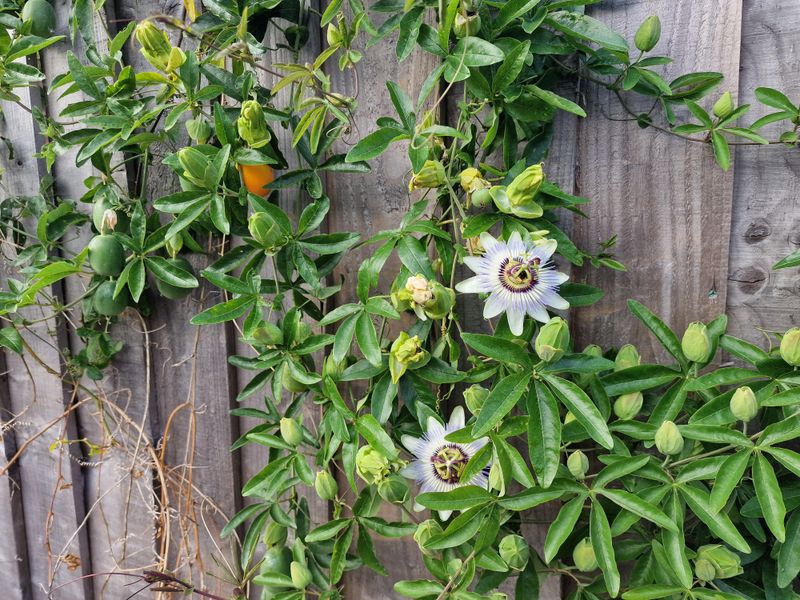
The word passionflower covers many different plants, so choosing the species is your first real decision. Blue passionflower (Passiflora caerulea), maypop (P. incarnata), and edible passion fruit (P. edulis) are not interchangeable.
They differ in cold hardiness, fruit, butterfly value, and how they spread. NC State Extension’s profile of blue passionflower is a handy reference for that species.
Climate matters just as much as the name on the tag. The UC Master Gardeners of San Diego County note that fruiting passion vines are frost-sensitive and can struggle in very hot, dry conditions.
If your winters dip low or your summers bake, ask a local nursery which type has done well nearby.
A quick word about fruit. Do not eat fruit or other parts from a passionflower unless you have confirmed the species and that it is suited for food.
UF/IFAS Extension warns that some passionflower fruits are toxic, and Queensland’s poisons information service says unripe wild passionfruit may cause nausea and vomiting.
An ornamental vine is planted for its looks, not its snacks. Save the fruit-eating plan for a variety sold specifically as edible.
Give the vine a sturdy support and suitable conditions
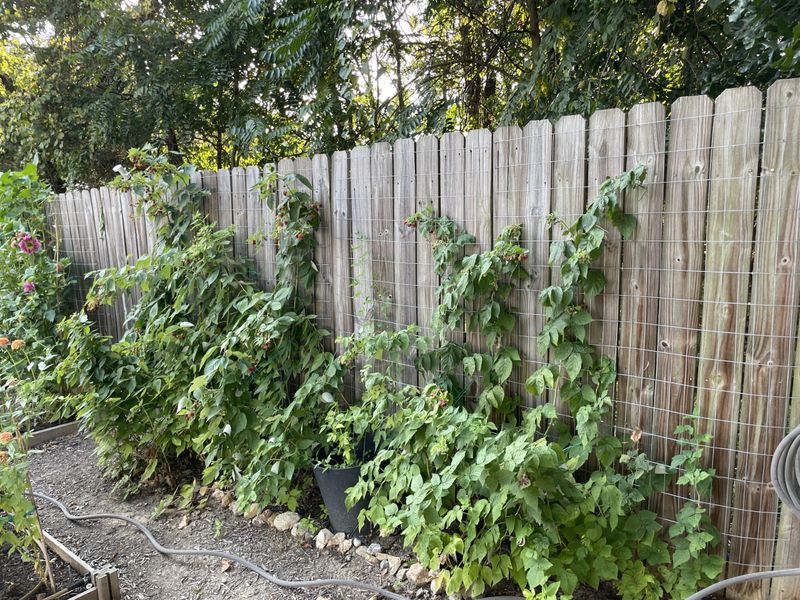
Passionflower climbs by tendrils, so it needs something thin to grab. A fence with wire or lattice, a trellis, or an arbor all work.
NC State Extension lists fences and trellises as suitable supports and reports a mature height of 10 to 40 feet for blue passionflower, so plan for a vine that wants to keep going.
Solid, flat boards give tendrils nothing to hold, so add wire, netting, or slim lattice. Check that the fence itself is sound before planting, because a leafy vine can catch wind.
UF/IFAS notes that passion fruit vines on a fence or trellis can act like a sail.
Aim for full sun where you can. UF/IFAS gardening guidance points to sunny spots, and some species tolerate partial shade.
In very hot inland yards, a bit of afternoon relief may help.
Water is the other piece. California summers are dry, so expect to irrigate while the vine settles in and during dry stretches.
A UC Master Gardener article recommends moderate, consistent watering and warns against overwatering. UC Davis irrigation trial information is a good place to check blue passion vine’s needs, and remember that other species may differ.
Let flowers and foliage do the visual work
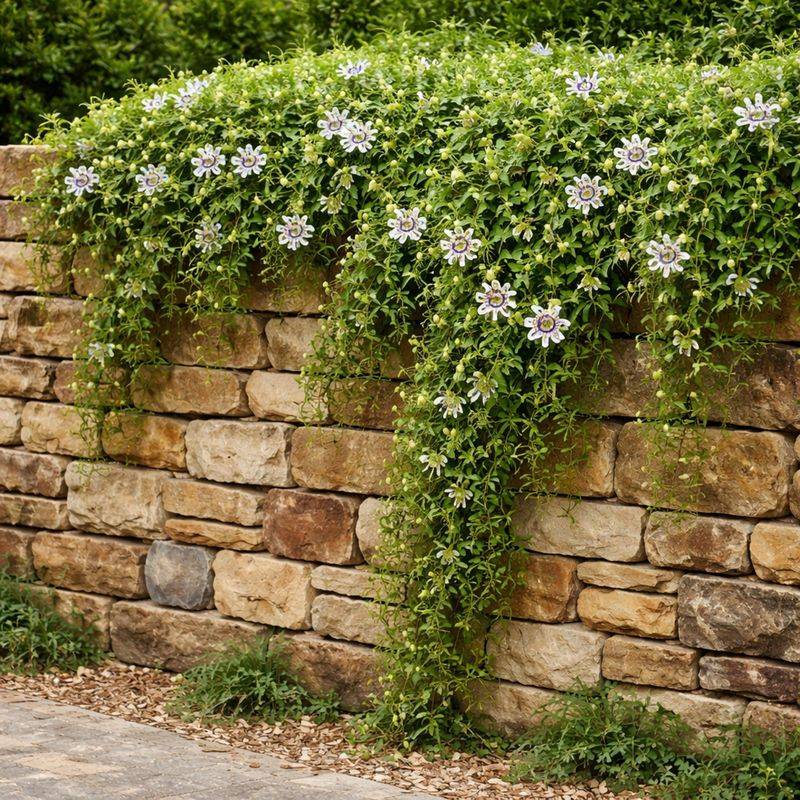
Once a passionflower gets going, the flowers steal the show. Each bloom has layered petals and a fringe of filaments in purple, blue, or white, and the whole thing looks too elaborate to be real.
Set against glossy, lobed leaves, a few open flowers can make a plain fence feel like a planned garden feature.
The leaves matter as much as the blooms. UC Davis notes that blue passion vine can fill a trellis with dense foliage, which gives the fence a soft, layered look.
Many gardeners find that texture just as appealing as the flowers.
That leafy growth also has screening potential. A thick stretch of vine can soften a view of a neighbor’s wall or a utility box, and it can take the harsh edge off a fence line.
Treat it as a gradual, partial screen rather than instant privacy, because coverage depends on the species, the support, and the season.
Fast growth is part of the draw too. UC Master Gardener sources call passion vines fast-growing, so a young plant can start filling in within a season or two in good conditions.
Give it time, and train new shoots sideways along the wires to get even coverage instead of a tangle at the top.
Expect screening to change with the seasons
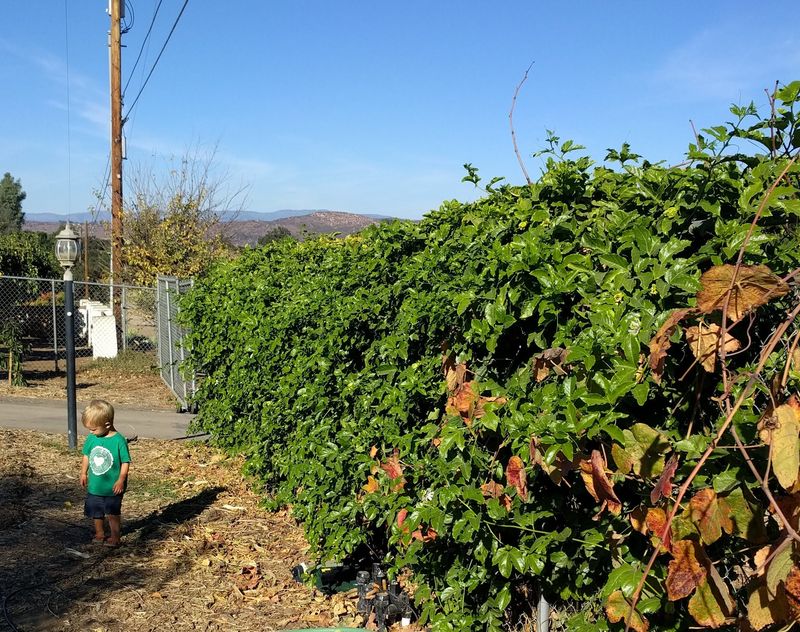
A living screen is not a solid wall, and passionflower follows the weather. According to NC State Extension, blue passionflower is evergreen in warm-winter climates but deciduous in temperate ones.
In a mild coastal garden you may keep most of your leaves, while a cooler inland yard may see the fence thin out in winter.
Cold can do more than drop leaves. The UC Davis Arboretum notes that some passion vines can be injured or killed by the coldest winters.
If your area gets hard freezes, pick a hardier species and plant it in a sheltered spot, such as near a south-facing wall.
Here is a practical way to plan. Look at your fence in January and ask what you need it to hide.
If you only need cover for the warm months, a deciduous vine works well. If you need year-round coverage, pair the passionflower with an evergreen shrub or a screen panel behind it.
Seasonal change also has a bonus. New spring growth looks fresh, and the cycle gives you a natural moment for pruning.
Welcome butterflies only if you can accept leaf damage
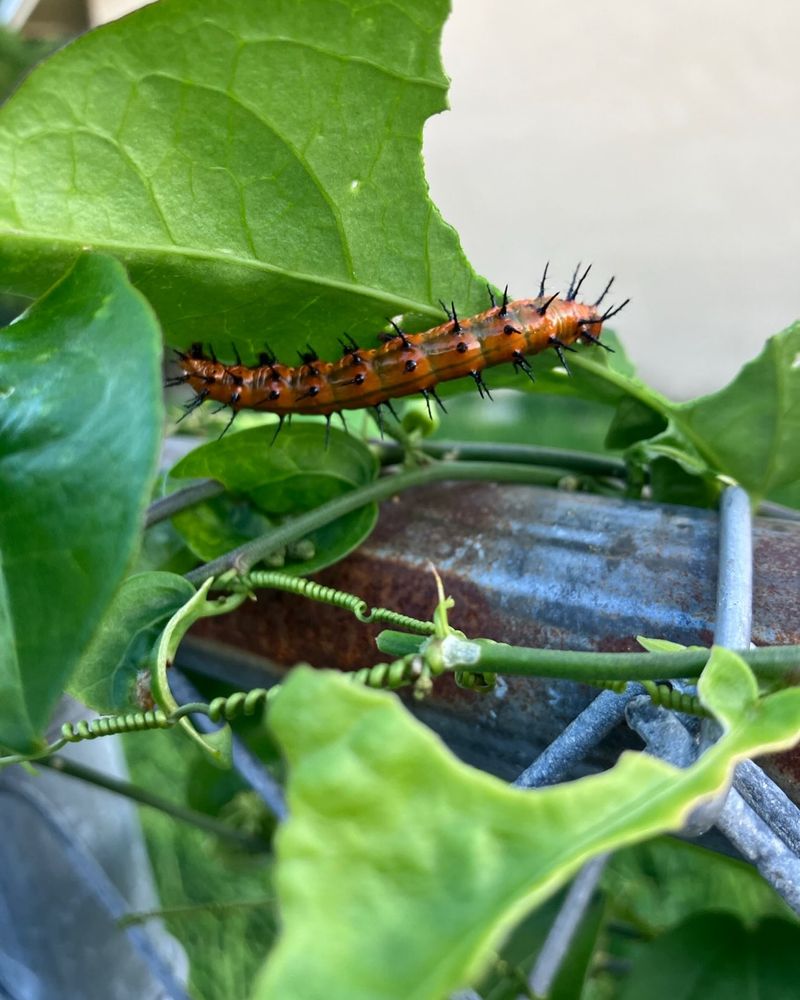
Few things beat the sight of an orange Gulf fritillary fluttering around your fence. Some passionflowers serve as larval host plants for this butterfly, which means the caterpillars feed on the leaves.
UC Agriculture and Natural Resources butterfly guidance lists passion flowers as hosts, but notes that not all passion vines qualify. Host use depends on the species, so do not assume yours will draw them.
Here is the honest trade-off. Caterpillars eat foliage, and they can eat a lot of it.
UF/IFAS describes feeding damage on passion vines, so a fence planted for butterflies may look ragged for a while instead of neat and untouched.
The good news is that the vine often bounces back. The UC Davis Arboretum says passion vines can recover from caterpillar feeding.
That will not be true for every vine in every situation, particularly a young or stressed plant.
If you want both a tidy screen and butterflies, try keeping the caterpillar-feeding vine on one section of the fence. Let the rest be a backdrop of other plants.
Then you can enjoy the wildlife without feeling that your whole fence has been eaten.
Prune thoughtfully and check the plant’s identity
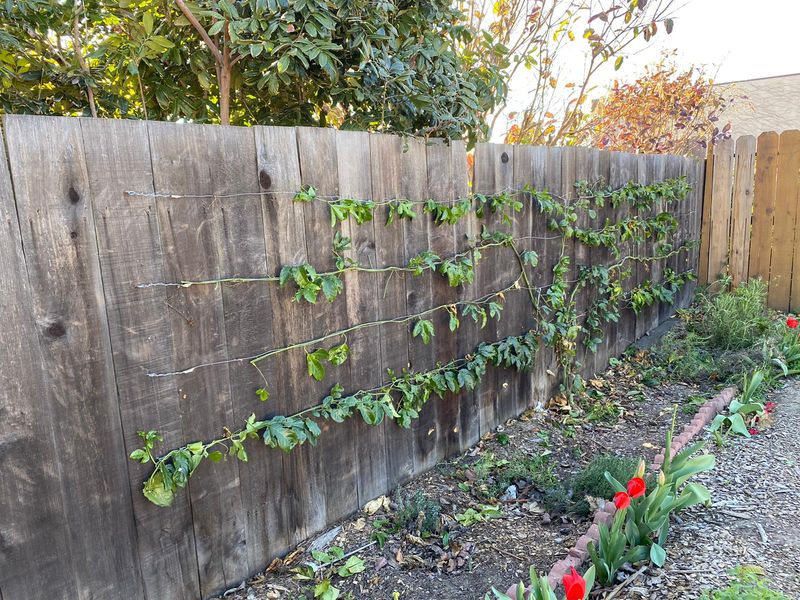
A vigorous vine needs a steady hand. Pruning keeps passionflower in bounds, lets light reach the inner leaves, and stops the vine from crawling over gutters or into a neighbor’s yard.
UF/IFAS gardening guidance recommends pruning to manage growth, and a trim after the main growing season is a good habit to start.
Identity matters too, because spread concerns are species-specific. Blue passionflower is native to South America, not California, and Flora of North America reports it naturalized in the Los Angeles area and able to spread locally by root suckers.
If you plant it, watch for new shoots popping up away from the main vine and remove them.
Banana passionfruit (P. tarminiana) is a separate case. The California Invasive Plant Council lists it as a Watch plant.
That is a caution about particular species, not a claim that every passionflower is invasive. For fruiting types, the San Diego County Master Gardeners guide is a useful place to compare options.
So the answer is conditional. Pick a species suited to your site, accept some pruning and seasonal limits, and skip the idea of a universal best vine.
Sometimes the right plant is simply the one that fits your fence.