
Why Your Florida Christmas Cactus Leaves Are Going Soft and Floppy, and Steps to Try Before the Holidays
A Christmas cactus with limp, rubbery segments can look like it is giving up. The trouble is that the same droopy look can come from very different problems below the surface.
Before you grab the watering can, a few quick checks can tell you what your plant is really dealing with. Here is how to sort it out calmly, one clue at a time.
Floppy segments signal a problem, not a diagnosis
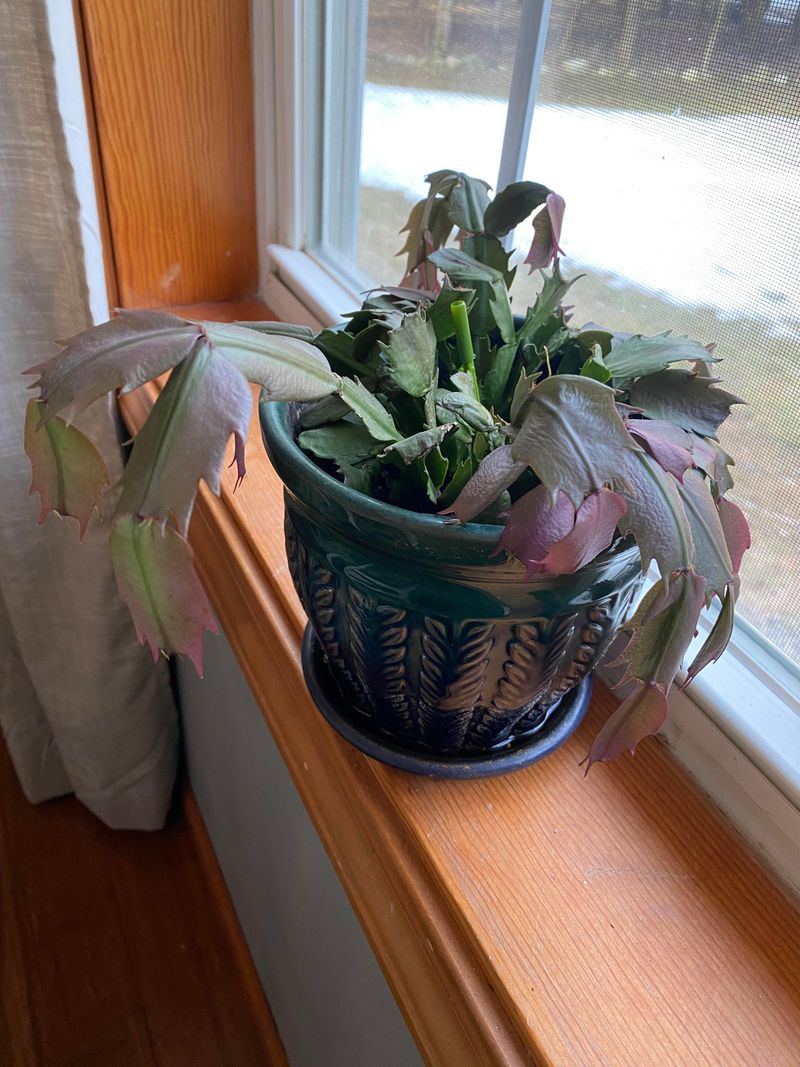
Soft, floppy segments tell you one thing: the plant is not getting enough water to its stems. They do not tell you why.
According to Iowa State Extension guidance on houseplant problems, wilting can happen when the root ball is dried out, and it can also happen when roots have been damaged by long periods of wet soil.
That means the old rules of thumb fail. Floppy does not automatically mean overwatered, and it does not automatically mean thirsty either.
A plant with soggy, damaged roots can look just as limp as one that has been forgotten on a shelf for weeks.
So the first move is to hold off on adding water just because the plant looks sad. Watering a plant with already damaged roots or a mix that stays wet can make things worse.
A quick look at the pot will point you in a better direction.
A small bit of plant science helps here. Those flat, scalloped parts most of us call leaves are actually specialized stems, known as phylloclades, as UF/IFAS Extension in Nassau County explains.
You can keep calling them leaves, but it helps to remember they are the plant’s water-holding stems, so when they go soft, the whole plant’s water supply is in question.
The rest of this article walks through what to check: the root ball, the drainage, the roots themselves, and the conditions around the plant.
Check whether the root ball is dry
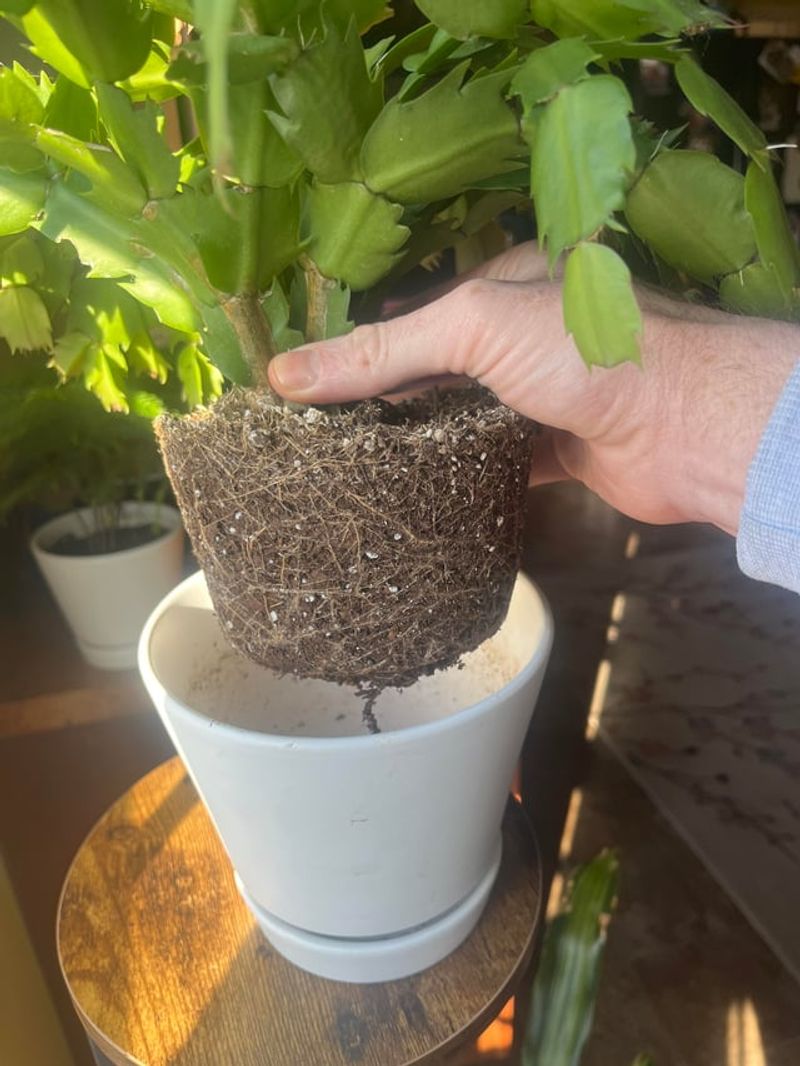
The top of the soil can fool you. A crusty, dry surface does not prove the roots are dry, and a damp surface does not prove they are well hydrated.
To get a real answer, push a finger a couple of inches into the mix, or lift the pot and judge its weight against how it feels after a thorough watering.
A truly dry root ball can be stubborn. According to Iowa State Extension, dry mix can repel water, so a quick splash may run down the sides of the pot without ever reaching the roots.
If you see water racing out of the drainage holes almost right away, that is a clue the root ball may still be dry in the middle.
When the root ball is dry, water thoroughly so the whole mix becomes moist, then let the excess drain away completely. Do not leave the pot sitting in a saucer of runoff afterward.
Keep in mind that this advice applies only to a plant whose mix is actually dry. If the mix feels wet or heavy, more water is not the answer, and the next section covers what to do instead.
For general timing, UF/IFAS suggests watering when the upper inch of mix feels dry and using a well-drained medium. Treat that as a starting point and confirm it by checking deeper in the pot.
Wet mix can conceal damaged roots
Here is the tricky part: a plant can wilt in wet soil. When roots sit in water for too long, they can rot, and a plant with fewer working roots cannot move enough water up into its stems.
As Iowa State Extension describes, this can leave a plant limp even though the mix is soggy.
Start with the easy fixes. Empty any water collecting in the saucer or decorative outer pot, and make sure the pot has drainage holes that are not blocked.
University of Minnesota Extension also covers holiday cactus care and the risk of keeping the mix too wet.
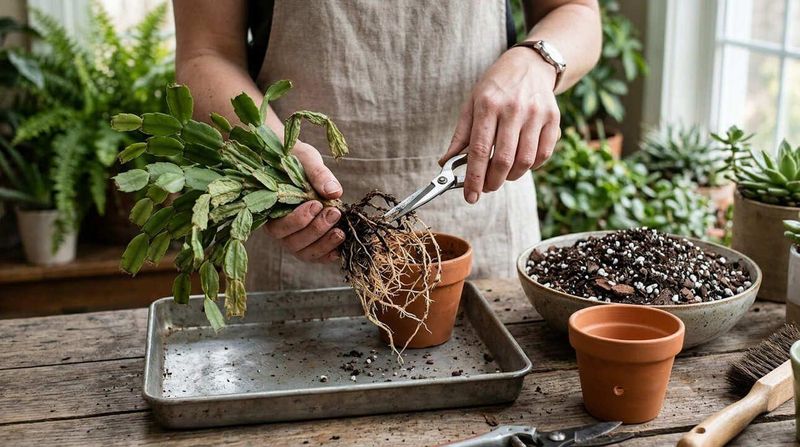
If the plant stays limp, it is time for a gentle look at the roots. Slide the plant out of its pot and examine what you find.
Healthy roots tend to look firm, while dead or diseased ones may look dark, soft, or mushy.
According to University of Wisconsin-Madison Extension, you can cut away dead or diseased roots, repot into fresh, well-drained mix, and water sparingly while the roots recover. Use clean scissors, and choose a pot with good drainage.
Be honest with yourself about the outcome. A plant with severe root damage may be difficult to save, even with good care.
If most of the root system is gone, the next sections on realistic expectations and propagation will matter more.
Assess light and temperature as care conditions
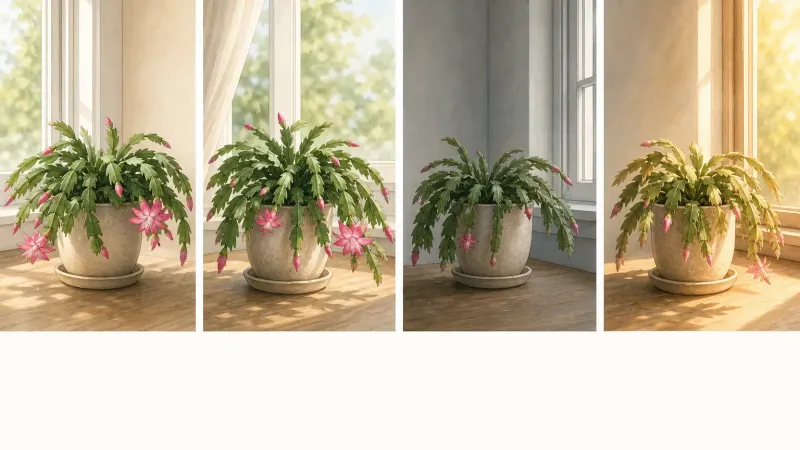
Living in Florida does not tell you what is wrong with your plant. A Christmas cactus on a shaded porch faces very different conditions than one pressed against a hot, sunny window or parked near an air conditioning vent.
What matters is the spot where your plant actually sits.
So take a look around it. Notice how much direct sun lands on it during the day, whether the window glass feels hot, and whether heating vents, fireplaces, or drafts are nearby.
The goal is bright, indirect light. UF/IFAS recommends this kind of light and advises keeping the plant away from heat sources.
The Royal Horticultural Society notes that these rainforest plants dislike full sun and very high temperatures.
Think of these as care conditions to improve, not as proven reasons for limp segments. Moving a plant out of harsh sun or away from a heater makes sense for its general health, but it will not fix a dry root ball or rotted roots on its own.
That is why the order matters. Check the roots and moisture first, since those are directly tied to water uptake.
Then adjust the light and temperature so the plant is not dealing with extra stress while it works through the problem.
Adjust watering to the plant’s growth stage
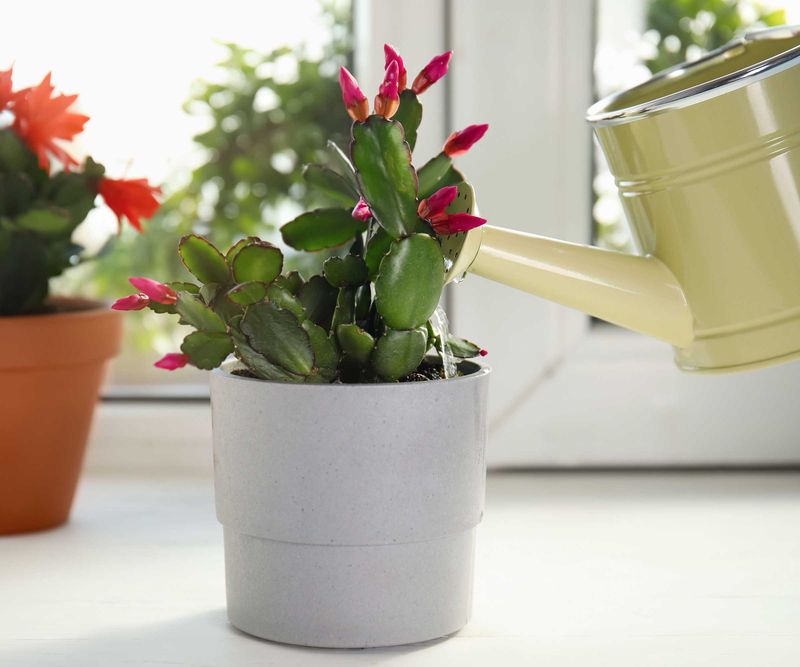
Rather than following a calendar, let the mix tell you when to water. A well-drained growing medium and a pot with drainage holes give you the most flexibility, because excess water can escape instead of pooling around the roots.
Different sources give slightly different guidance, and that is useful. UF/IFAS advises watering when the upper inch of mix feels dry.
Iowa State Extension says to keep the mix evenly moist while the plant is budding and flowering, and to let it dry out more between waterings when it is not in flower.
Neither rule is a universal threshold. A small pot in a warm, bright room will dry faster than a large pot in a cool corner, and a dense mix will hold moisture much longer than a chunky one.
The practical approach is to check the mix before each watering. Feel how dry it is, consider whether the plant is growing, budding, or resting, and water only when the conditions match what you see.
If your plant is already limp, apply this thinking after you have checked the root ball and roots. Switching to a stricter schedule will not solve a problem that begins with damaged roots.
Recovery and holiday blooms are uncertain
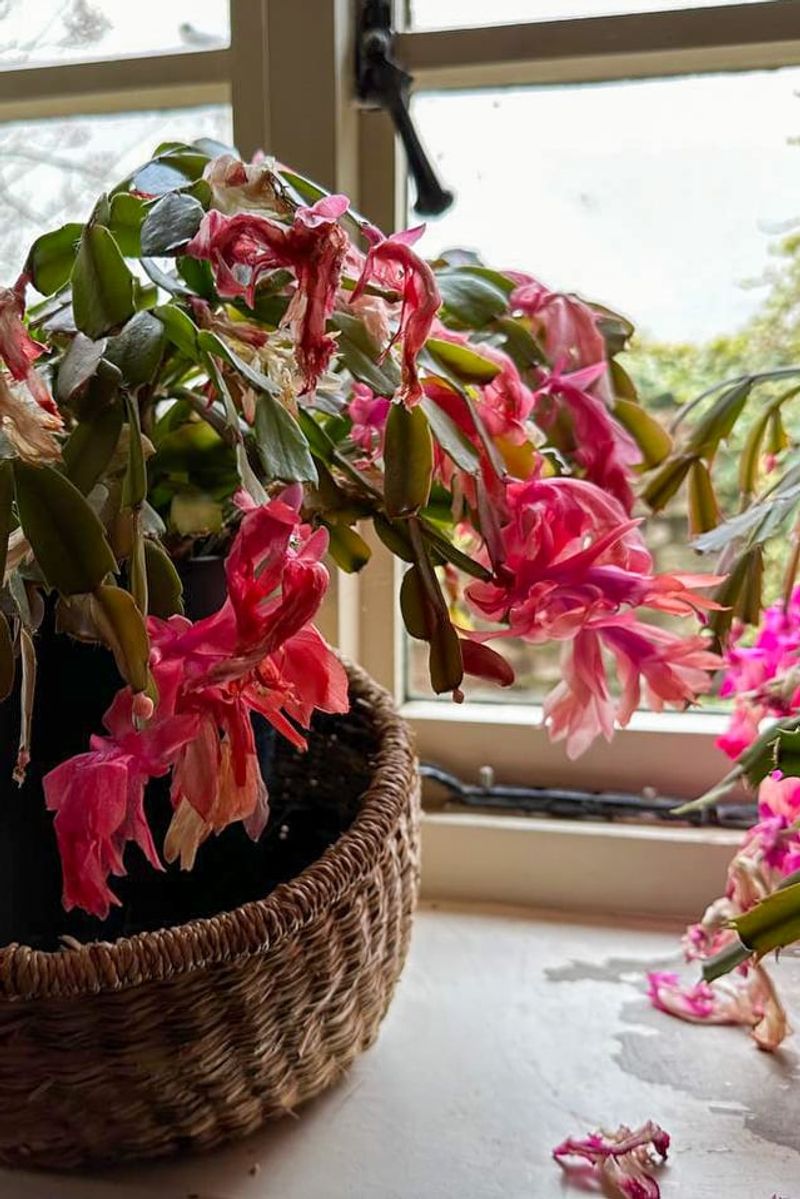
After you correct the moisture and tweak the conditions, patience is the main tool left. Plants do not bounce back overnight, and some do not bounce back at all.
Roots that have rotted badly may leave the plant unable to take up enough water, and University of Wisconsin-Madison Extension notes that severely damaged plants may be difficult to save. Improved care gives the plant a chance, but it is not a guarantee.
Blooms add another layer of uncertainty. Iowa State Extension says drought, overwatering, drafts, or other changes during bud development can cause buds to drop.
A plant that has been through a rough stretch may lose buds, even if you do everything right from here.
It helps to set a modest goal: a plant with firmer segments and new growth over the coming weeks. Flowers on a holiday schedule would be a bonus, not something to count on.
Keep conditions steady while you wait. Frequent moving, repotting again, or switching up the watering will add stress rather than speed things along.
Preserve healthy segments if the parent plant declines
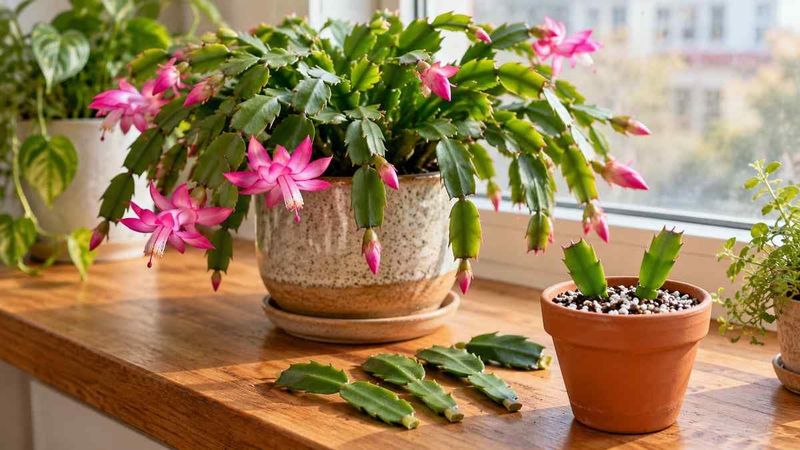
If the parent plant keeps declining, you can still save some of its healthy material. Propagation is a fallback that preserves what is good, not a cure for the original plant.
The method from Iowa State Extension is simple. Take two to five healthy segments, let the cut ends callus overnight, and then root them in moist perlite or coarse sand.
Choose segments that look firm and green rather than soft or discolored. Keep the rooting medium lightly moist, and give the cuttings a bright spot out of harsh direct sun.
Remember where this started. Diagnose the root and growing conditions first, because a rooted cutting placed in the same wet or poorly draining setup can run into the same trouble.
Cuttings do not guarantee that the parent plant will recover or that anything will flower by the holidays. Still, a few small rooted segments can carry the plant forward when the original cannot.