
Those Lumpy Green Hedge Apples Piling Up In Missouri Pastures Have A Surprising Pioneer Backstory
Walk a Missouri fence line in early fall and you may find the ground scattered with bumpy green balls the size of softballs. They look strange, smell faintly citrusy, and nobody seems to eat them.
Those fruits come from a tree that pioneers once planted on purpose to hold in livestock. Here is how to recognize the fruit, what the tree was used for, and how to handle it safely.
The lumpy fruit has a name and a season
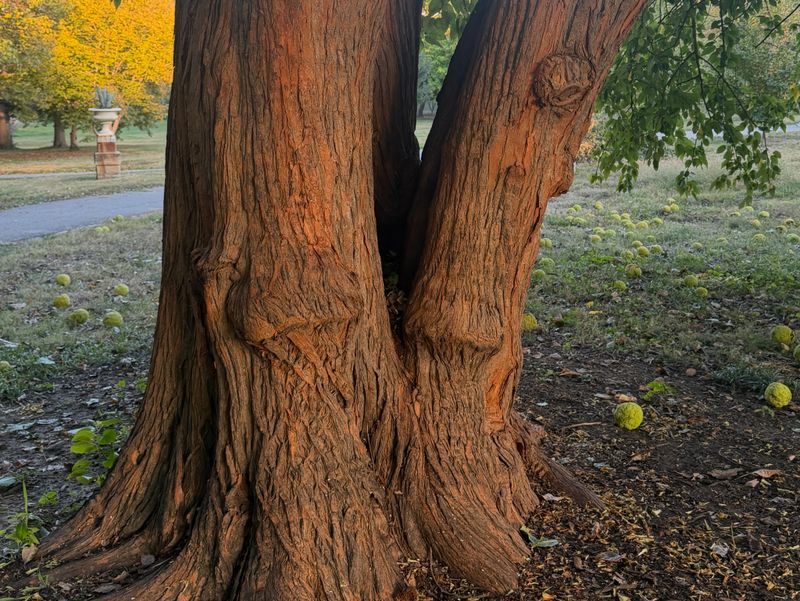
Those bumpy green globes are Osage oranges, also called hedge apples, from the tree Maclura pomifera. Each fruit is large, rough, round, and yellow-green, and it looks a bit like a wrinkled brain.
According to the Missouri Department of Conservation field guide, the fruits ripen in September and October and often litter the ground in autumn.
You can double-check the tree before naming the fruit. Osage orange leaves are shiny and simple, meaning each leaf is a single blade rather than split into leaflets.
The branches carry stout thorns, and cut twigs or fruit ooze a milky sap.
Only female trees bear fruit. That is why one tree in a line may drop piles of hedge apples while the one beside it drops none.
If you find a similar-looking fruit, look at the leaves, thorns, and sap before deciding what you have.
The tree also has a human story, because people once planted it across the prairie for a very practical reason. A fruiting tree alone cannot tell you who planted it or when, but the history behind the species is well worth knowing.
A thorny tree could form a living stock barrier
Picture a farmer on the open prairie with few rocks and little timber for rails. Fencing was a real problem, because livestock had to be kept out of crops and kept in pastures.
Osage orange offered a different answer: grow the fence.
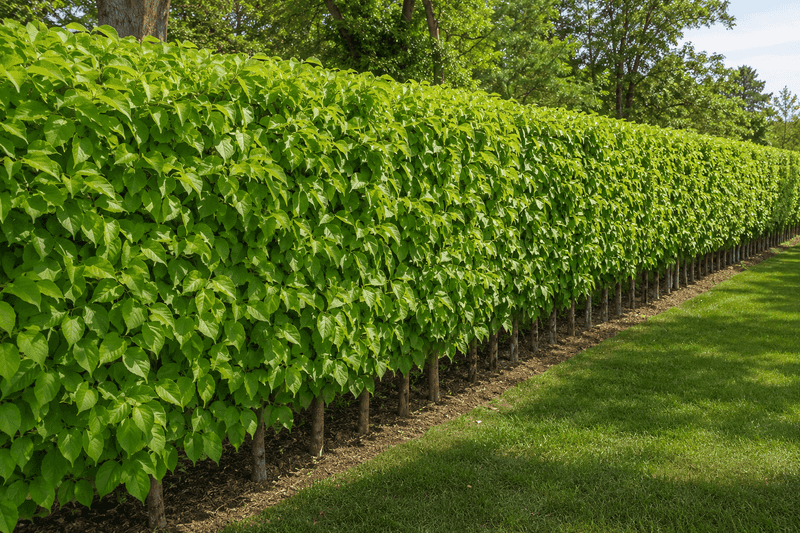
The tree has stout thorns and dense, twiggy growth. As the Missouri Department of Conservation’s history of the tree explains, it was promoted as a living fence, and settlers planted hedgerows in Missouri before barbed wire became a cheaper choice.
Planted close together and shaped, the trees could form a barrier that stock animals did not want to push through.
The National Park Service story of the Homestead hedgerow shows how this idea fit the homesteading era, when farmers across the plains needed boundaries they could make themselves.
Notice what the fruit had to do with all this: very little. The big green balls that catch your eye today were a side effect.
The reason for planting was the thorny, tough, living wall, and hedge apples were simply what the female trees left behind each fall.
Growers had to train and maintain the hedge
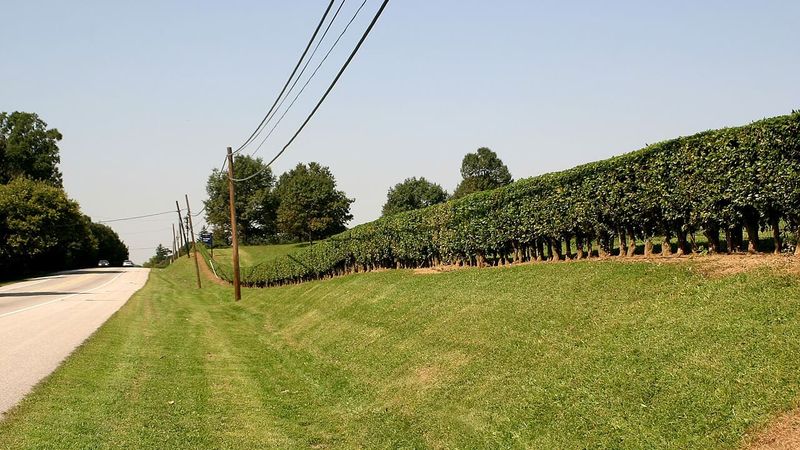
A living fence sounds easy, but it was a long project. Growers set young trees close together, then cultivated around them so weeds did not choke them out.
The hedge did not work as a barrier the first year or even the second.
Shaping came next. Growers pruned the trees, layered them, or plashed them, which means partly cutting the stems and weaving them together.
The goal was a tight, thorny mass that could stop stock instead of a row of tall, bare trunks. The Missouri Department of Conservation account describes this work of dense planting and training.
Patience was part of the price. The National Park Service describes establishment taking roughly three to four years, followed by ongoing trimming and filling of gaps.
Think of the yearly chores: cutting back vigorous shoots, patching holes where animals pushed through, and repairing storm damage. Neglect a hedge and it could grow tall and leggy, leaving openings at the bottom.
That labor and waiting time is a big reason the living fence was never a magic, maintenance-free solution, and why not every farmer used one.
Missouri records show a substantial hedge era
Missouri’s paper trail is thin, but it does show a real hedge era. The Missouri Department of Conservation notes scattered plantings in several counties by the 1840s and 1850s, while admitting that records from that time are few.
The numbers get bigger later. By 1879, Monroe and Nodaway counties reportedly had more than 2,000 miles of hedgerows between them.
That is a striking figure, and it shows that planting could reach a large scale in parts of the state.
Be careful with what that number means. It describes two counties, plus earlier scattered plantings elsewhere.
It does not mean hedges covered Missouri evenly, and it does not mean every farm had one.
The figures also do not tell you the origin of any single tree you meet today. They give a regional picture: in some places, farmers planted miles upon miles of thorny hedge.
Which of the surviving trees came from those rows is a different question, and one the records usually cannot answer.
Cheaper barbed wire changed the fencing choice
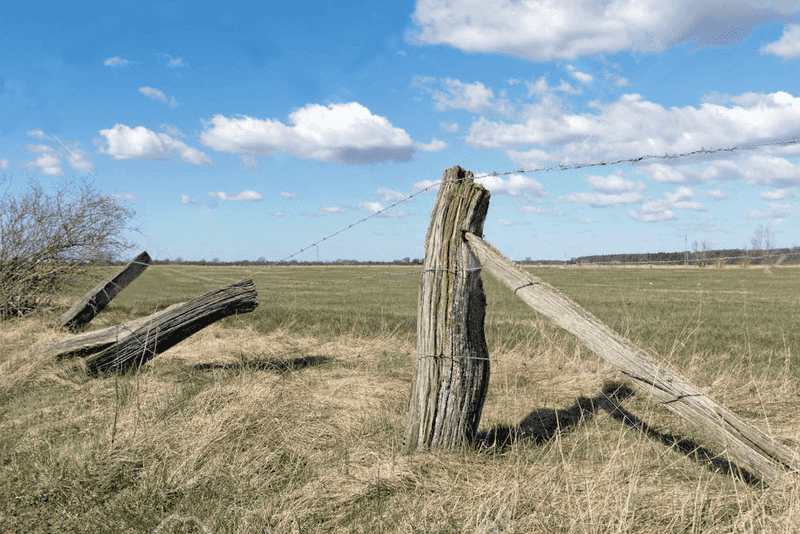
Money often decides what stays on a farm. In the 1870s, barbed wire gained favor as a cheaper fencing option, and for many farmers it beat the years of work a hedge demanded.
Wire could be bought, strung, and put to work much faster.
As that shift spread, many hedges were removed or left untended, according to Missouri Department of Conservation history. Still, the change did not happen overnight or everywhere at once.
Some hedges stayed in use, and others simply grew wild along old field edges.
The tree had another selling point that outlived the hedge era. Its wood is hard and durable, so Osage orange was also valued for fence posts.
The USDA Forest Service Silvics entry covers the tree’s uses and traits, and if you have ever tried to drive a staple into an old post, you know why farmers trusted it.
So an old hedge row today might be a leftover living fence, a line of trees that outlasted its purpose, or a row of posts and trees mixed together.
A pasture tree cannot prove its own history
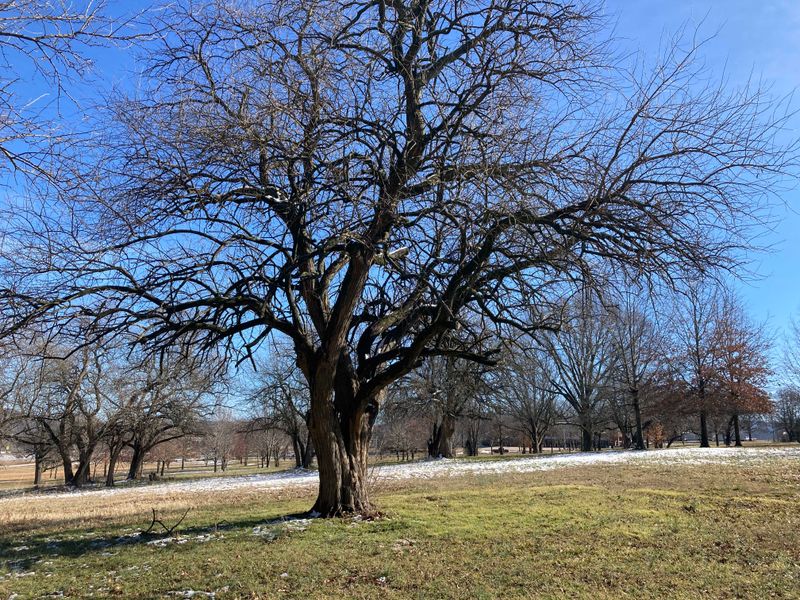
It is tempting to look at a lone Osage orange in a pasture and say a pioneer planted it. Sometimes that may be true.
But a tree standing there is not proof by itself.
Missouri planting records are sparse, as the Missouri Department of Conservation history makes clear, so the paper trail for any given spot is usually missing. A hedge may have been removed, and a seedling may have sprouted where a fruit rolled or was carried.
Where the species belongs also matters. The Missouri Department of Conservation field guide says Osage orange is introduced statewide and possibly native in southern Missouri.
So in the south, a tree could have a very different story than one planted in a northern hedge.
If you want clues, look at the layout. Trees in a straight, tight line along a boundary fit a hedge better than a single tree or scattered clump.
Even then, an old survey, deed, or landowner’s memory would be needed to say more, and often the honest answer is simply that the origin is unknown.
Handle hedge apples carefully and skip the folklore
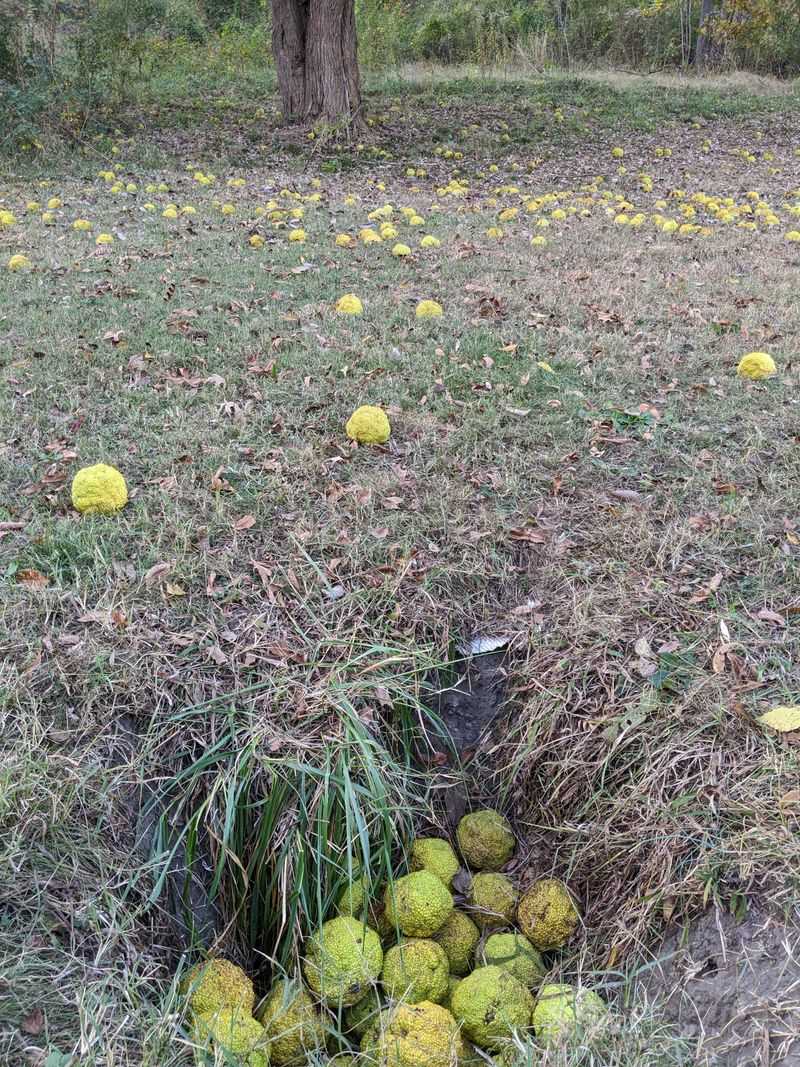
Start with the basics: do not eat hedge apples. The sticky, milky sap can irritate skin, so the Missouri Department of Conservation advises gloves when handling damaged fruit.
Watch for thorns on the branches, and be careful under a tree in fall, since heavy fruits can fall.
You may have heard that a hedge apple in the basement keeps spiders away. The Burke Museum reports no evidence that whole fruits repel spiders, and spiders may even build webs on them.
Lab studies of purified extracts have shown effects on some insects, but that does not make a whole fruit a household repellent.
Livestock is another area full of old stories. According to the USDA Silvics Manual, reports of cattle deaths from the fruit were disproved in feeding experiments.
That does not make it food, though. The fruit is generally bitter and little eaten, so there is no reason to encourage animals to eat it, and nobody can offer a safe amount.
Treat the fruit as an interesting fall find, not a snack, a pesticide, or a feed. Pioneers wanted the tree for its thorns, and the fruit just came along for the ride.