
Those Little Mud Chimneys in Your Louisiana Yard May Be Crawfish Burrows
Walk across a soggy Louisiana lawn in spring and you might spot small mud towers poking up from the grass. They look like tiny castles built overnight, and they leave many homeowners wondering what is going on underground.
The most likely builder is a crawfish, and the towers can tell you a few useful things about your yard. Here is how to read the clues without jumping to conclusions.
A mud chimney may mark a crawfish burrow
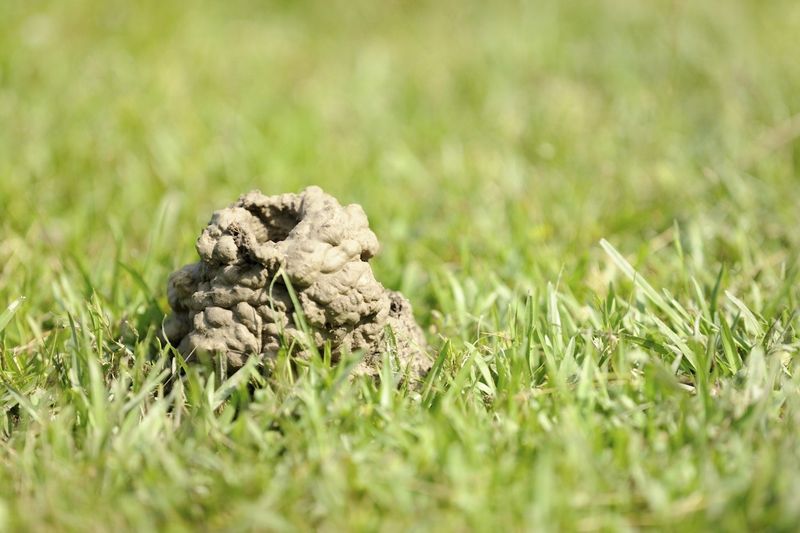
Those little round towers of mud, usually a few inches tall and hollow in the middle, are a familiar sight in Louisiana lawns. According to LSU AgCenter guidance on crawfish in lawns, they are a recognized sign of crawfish burrows.
So if you have found one, crawfish are a likely builder.
The chimney is only the part you can see. Below it, a crawfish has dug a tunnel, and the mud pellets stacked around the opening are the soil it pushed out.
Think of the mound as a doorstep marking activity underground.
Still, a tower alone cannot prove who made it. Without spotting the animal itself, or finding other evidence, the identification stays provisional.
A photo shared with your parish Extension office can help if you want a firmer answer.
The same goes for species. Louisiana is home to several kinds of crawfish, and a mud chimney by itself does not tell you which one dug it.
Pinning down a species would take a close look at the animal, which most homeowners never need.
One easy clue is the shape. A crawfish chimney is usually a neat, hollow tube made of small clumps of damp soil, not a loose pile of fine crumbs like you might see from earthworms or ants.
If you gently look into the top and see a hole leading down, that fits the crawfish picture.
The good news is that the chimney is more clue than crisis. It tells a story about what is happening beneath your grass, and the next sections walk through what that story likely means.
Burrowing brings soil to the surface

Digging a tunnel makes a lot of dirt, and the dirt has to go somewhere. A crawfish carries wet soil up through its burrow and stacks it around the opening, one small pellet at a time.
Over a night or two, that stack grows into the chimney you see on your lawn.
Burrows do real work for the animal. A Louisiana crawfish production manual describes burrows as refuges that help crawfish survive dry periods and reproduce.
That does not mean every burrow serves the same purpose, since some may simply be a place to hide or stay damp.
Timing matters too. LSU AgCenter notes that the chimneys are commonly seen in spring.
Common does not mean exclusive, so finding one in another season is not strange, especially after a good soaking rain.
You might notice new chimneys appear overnight, often after rain softens the ground. Fresh mud looks dark and wet, while older mounds dry to a pale, crumbly gray.
A dry, weathered tower may mean the burrow has been quiet for a while.
If you want to learn more, you can check the lawn in the morning when new building is easiest to spot. Seeing fresh, damp mud tells you something is active down there right now.
Moist habitat matters, but the mound is not a diagnosis
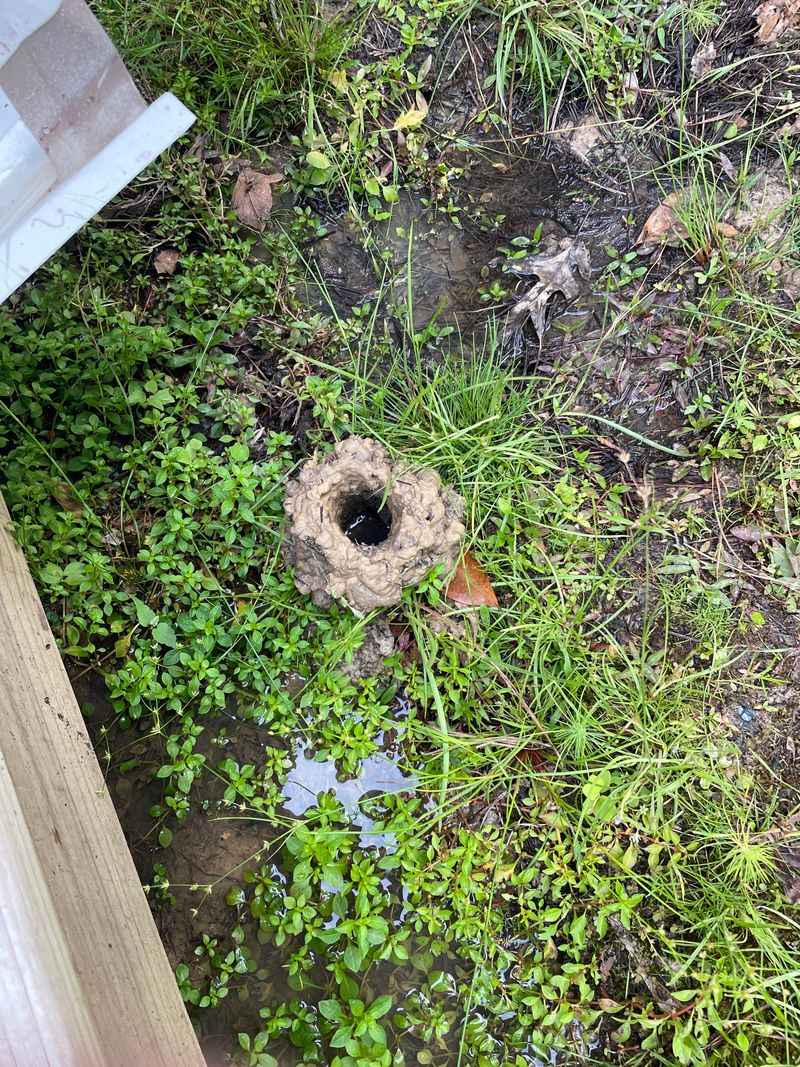
Crawfish like places that stay wet, or at least get wet now and then. LSU AgCenter says they favor permanently or occasionally wet spots, including ditches and drainage areas.
Some can live in ground that only holds water part of the time.
That means your yard does not need to sit beside a pond or stream. A low corner, a shallow swale, or a stretch near a ditch may be enough.
Burrowing tends to follow water and moisture, and the animal can dig down to reach it.
Here is the catch. A chimney shows that burrowing is happening in moist ground, but it does not prove your whole yard drains badly.
One damp patch can host a few chimneys while the rest of the lawn stays perfectly fine.
You may also wonder why crawfish build chimneys at all. In a peer-reviewed study, researchers found that chimneys can work as passive ventilation for the burrow.
The authors said more research is needed, so it is a possible function, not a settled answer for every chimney.
Try a simple test. Notice where the chimneys cluster, and whether that spot stays wet after a dry week.
If the pattern lines up with a low area, you have a helpful clue about where water likes to linger.
Check persistent sogginess separately
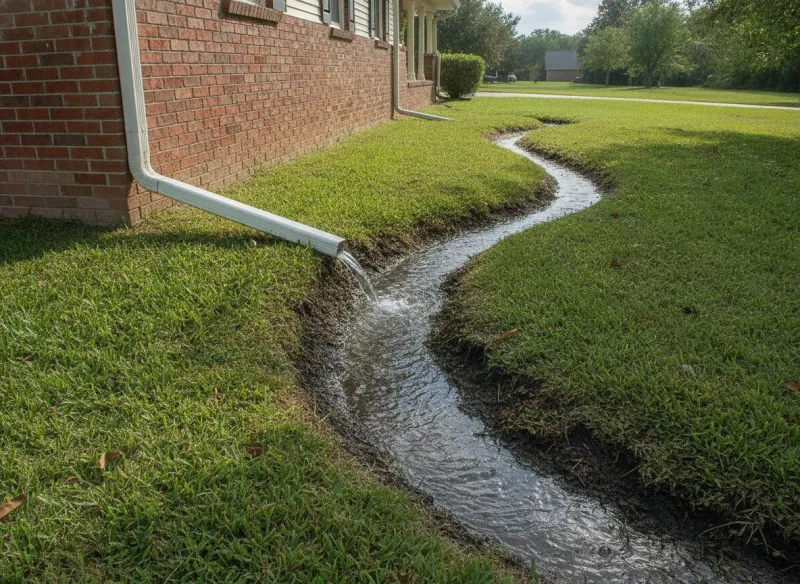
Whether your lawn has a water problem is a different question from why a chimney showed up. Treat them as two separate checks.
One tells you about a possible crawfish burrow, and the other tells you about how water moves across your property.
Start by watching for puddles that hang around days after the rain stops. University of Arkansas Extension suggests looking at overwatering, downspout discharge, and runoff.
A sprinkler that runs too long or a gutter that dumps beside the lawn can keep soil wet all by itself.
Walk the yard during a rainstorm if you can. Notice where water pools, where it streams across the grass, and where it runs off from a driveway or neighbor’s lot.
A few minutes in the rain often teaches more than an hour of guessing.
These checks describe your yard conditions. They do not prove why a particular chimney appeared.
A yard can drain well and still have a damp low spot where a crawfish settled in.
Be realistic about fixes, too. Wet-weather conditions can limit what drainage changes accomplish, and in a rainy Louisiana season, even good work may not dry things out right away.
If puddling is persistent, a parish Extension office can help you sort out next steps. Otherwise, a little extra moisture after a storm is normal.
The mound may be more nuisance than turf damage
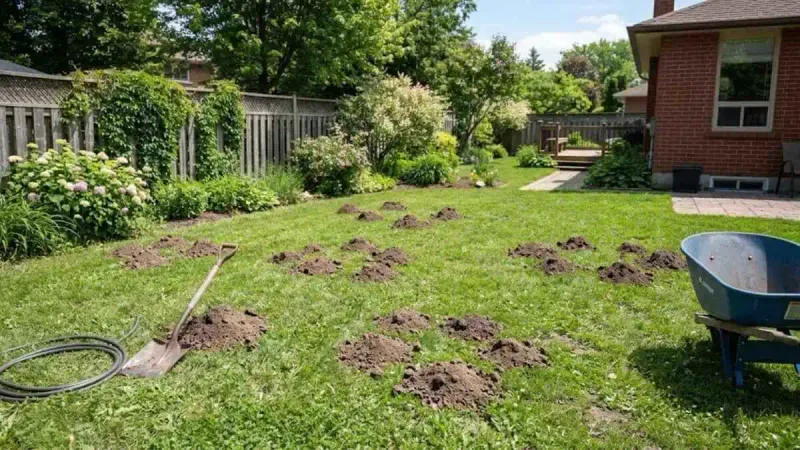
Seeing mud piled on a lawn you work hard to keep tidy can be frustrating. The mounds sit right where the mower wants to go, and they can smear or scatter when you roll over them.
Those complaints are fair.
The grass itself is usually in better shape than the mess suggests. LSU AgCenter says crawfish do not technically injure turfgrass.
The common complaints are the visible soil and the hassle at mowing time.
That fits what NC State Extension describes for crayfish in turf, where the mounds are an annoyance more than a threat to the lawn. So if your grass is thinning or turning brown, look for other causes before blaming the chimneys.
A few practical clues can help. Brown patches that spread, grass that pulls up like a loose mat, or widespread thinning point to something else, such as insects, disease, or too much shade.
Chimneys sitting on otherwise green grass are more likely just a surface mess.
Keeping that in mind can lower the stress. You are dealing with an untidy lawn, not a failing one, and the response can stay modest and proportionate.
Manage the visible mound without chemical shortcuts
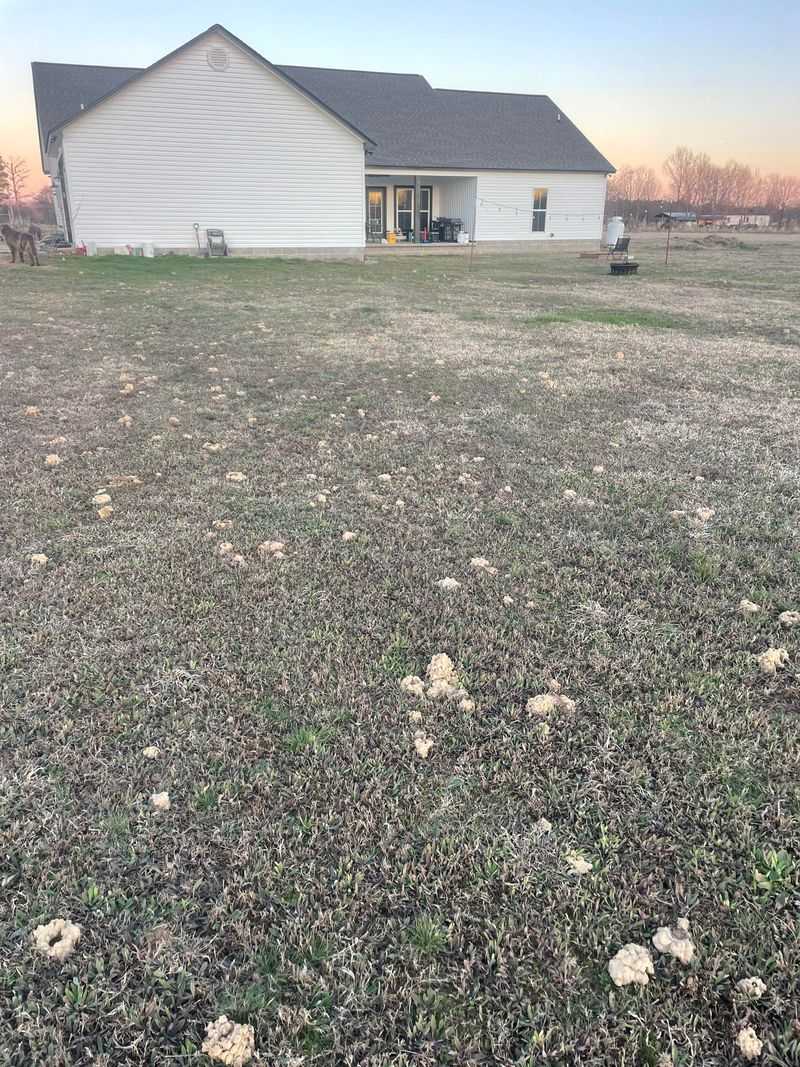
For a mound that bugs you, the gentlest fix is also the simplest. NC State Extension suggests raking it smooth or dispersing it with a stream of water.
New mounds may return, so a quick pass with the rake before mowing keeps things neat.
Drainage changes are another option, but keep expectations modest. The same guidance says altering drainage may discourage crayfish, yet it can be costly, and cutting their numbers is not necessarily beneficial.
Nothing promises that fixing drainage will clear them out.
Skip the chemical shortcuts. Do not pour pesticides, bleach, lye, or homemade mixtures into burrows.
Current LSU AgCenter guidance says no pesticides are labeled for crawfish control and warns of possible water contamination.
You may come across an older LSU AgCenter article from 2014 that recommends lye. That advice conflicts with the current guidance, so do not treat it as settled.
For background on why labels matter, EPA explains that pesticide use must follow the product label, with limited legal exceptions.
If you are unsure what to do, ask your parish Extension office for current advice. Always follow any pesticide label you do use for other purposes.
A mud chimney is a small message from the ground, and reading it calmly is all the job requires.