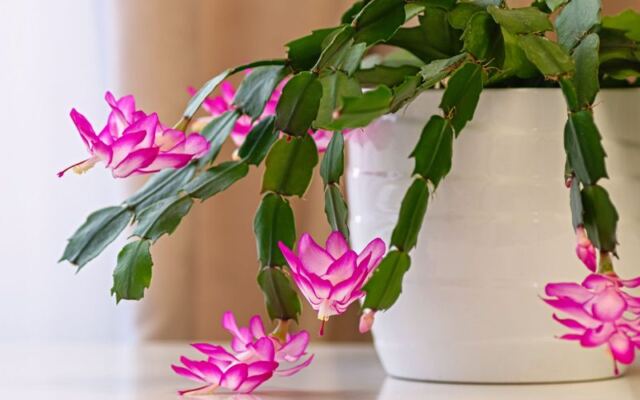
You water it, you watch it, and then the tiny pink buds start landing on the windowsill. It feels unfair when a holiday plant gives up right before the show.
A falling bud is a clue, but it is not a verdict. Here is how to look at your plant’s recent conditions and fix what you can before the holidays.
Bud drop is a symptom, not a diagnosis
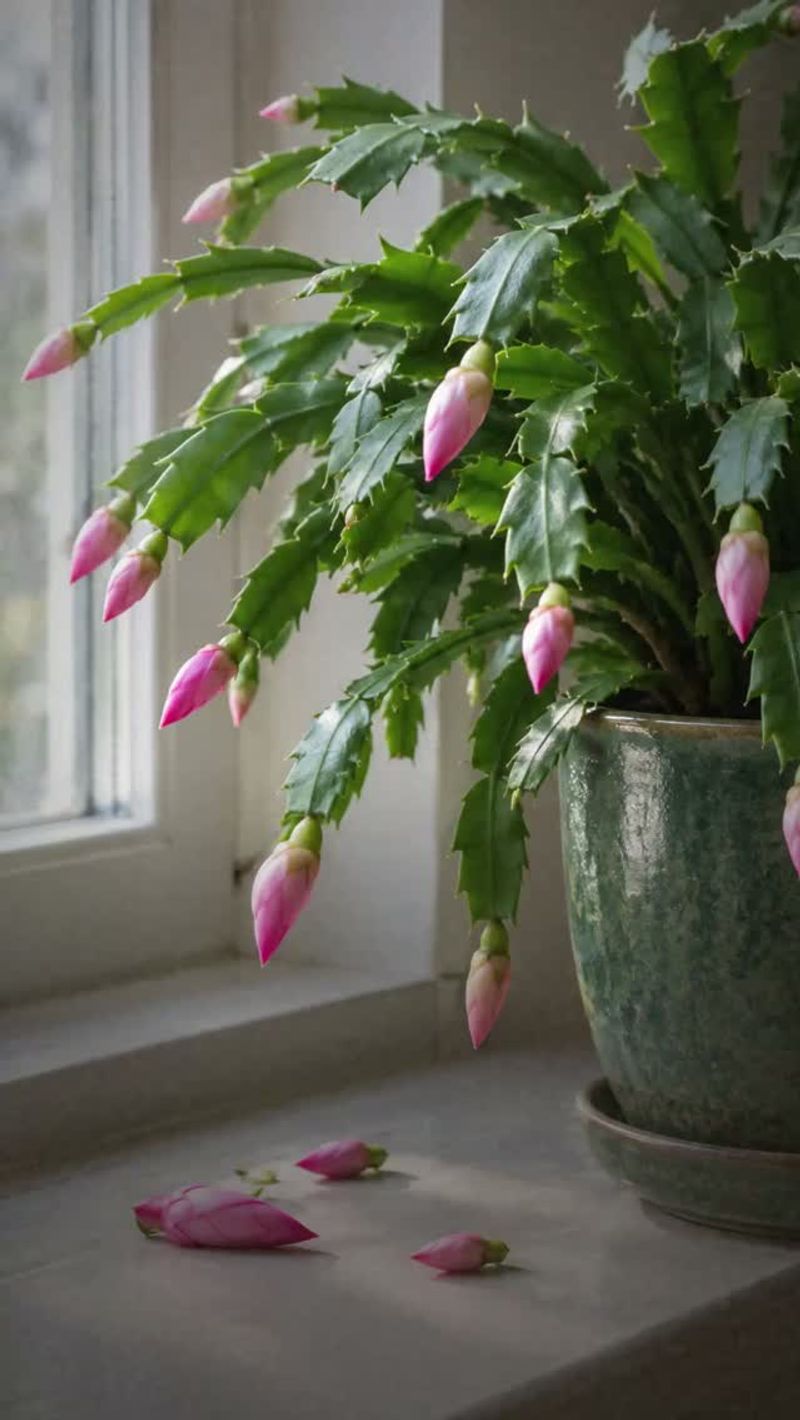
Finding buds on the floor is discouraging, especially when you waited weeks for them to swell. The good news is that the plant is not necessarily failing.
A fallen bud is a stress signal, and it can also be a sign of natural shedding.
Several sources agree that more than one thing can trigger it. UConn’s holiday cactus fact sheet lists causes such as low humidity, drafts, poor light, and watering problems.
Other extension pages add sudden changes in temperature or humidity to the list. Because the possibilities overlap, one dropped bud cannot tell you whether the plant was too cold, too wet, too dry, or too dim.
That is why guessing from the symptom alone tends to backfire. Someone who assumes the plant is thirsty and soaks it may add a new problem on top of the old one.
A calmer approach is to look at what has happened around the plant in the past few weeks, then adjust one thing at a time.
It also helps to know what you own. Iowa State Extension notes that many plants sold as Christmas cactus are really Thanksgiving cacti or hybrids.
They differ in bloom timing and some leaf features, but the care advice in this article applies to all of them.
Think of the fallen bud as a reason to investigate, not a reason to blame yourself. The next section shows how to start.
Which conditions changed recently?
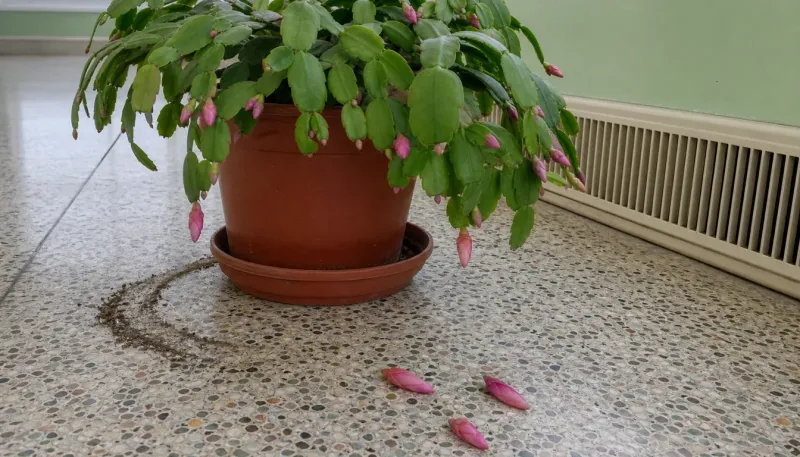
Start with a short timeline. Think back two to four weeks and write down anything that was different for the plant.
You are collecting clues, not building a case against one culprit.
Ask about temperature first. Did the heat come on for the season, or did you open a window more often?
Minnesota Extension says drafts and sudden shifts in temperature or humidity can lead to bud drop, so a spot near a door, vent, or radiator deserves a second look.
Next, think about light. Shorter autumn days, a new curtain, or a blocked window can all change how much brightness the plant gets.
Then look at the soil and your watering habits. Was it left dry for a week, then soaked, or has the saucer been holding water?
Humidity is the murkiest clue. UConn lists low humidity as one possible contributor, but advice on fixing it varies, so treat it as something to notice rather than a sure answer.
If two or three of these changed at once, that is normal in a busy household. You do not have to prove which one mattered.
The next sections cover how to settle each one so the plant has steadier conditions.
Bright, steady conditions reduce avoidable stress
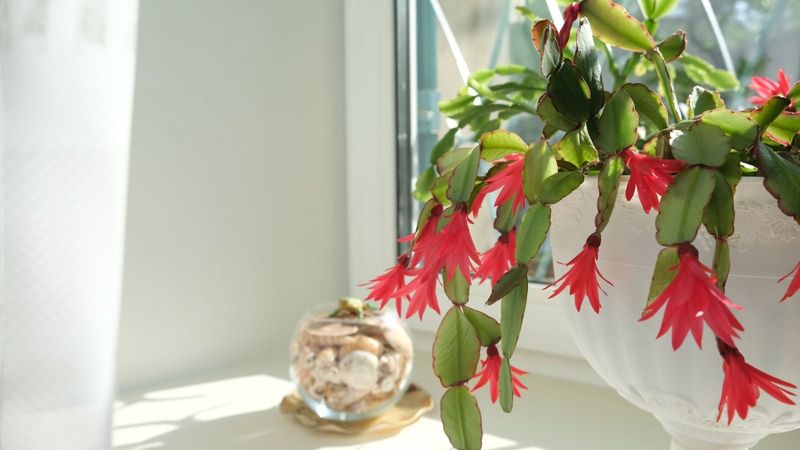
Aim for a spot with bright light that is not harsh. Direct afternoon sun through glass can be strong, so a sheer curtain or a place a little back from the window often works well.
The goal is bright, indirect light that stays about the same from day to day.
Distance matters just as much. Keep the pot away from cold window glass, exterior doors, heaters, and vents.
Air that swings between chilly and hot is the kind of change that stresses a plant carrying buds.
Temperature numbers can help, as long as you treat them as guidance and not a promise. Iowa State Extension prefers an indoor range of 60 to 70 degrees Fahrenheit.
The Royal Horticultural Society describes 65 to 69 degrees as suitable while the plant is flowering. Staying in those ranges does not guarantee buds will hold, but it avoids extremes.
A simple test is to stand where the plant sits for a minute. Do you feel a cold stream near the glass or warm air from a vent?
If so, a shelf a few feet over may be a better choice.
Once you find a place that is bright, calm, and moderate, let the plant settle there. Steadiness is the real prize, and it costs nothing.
Moving the pot matters when the setting changes
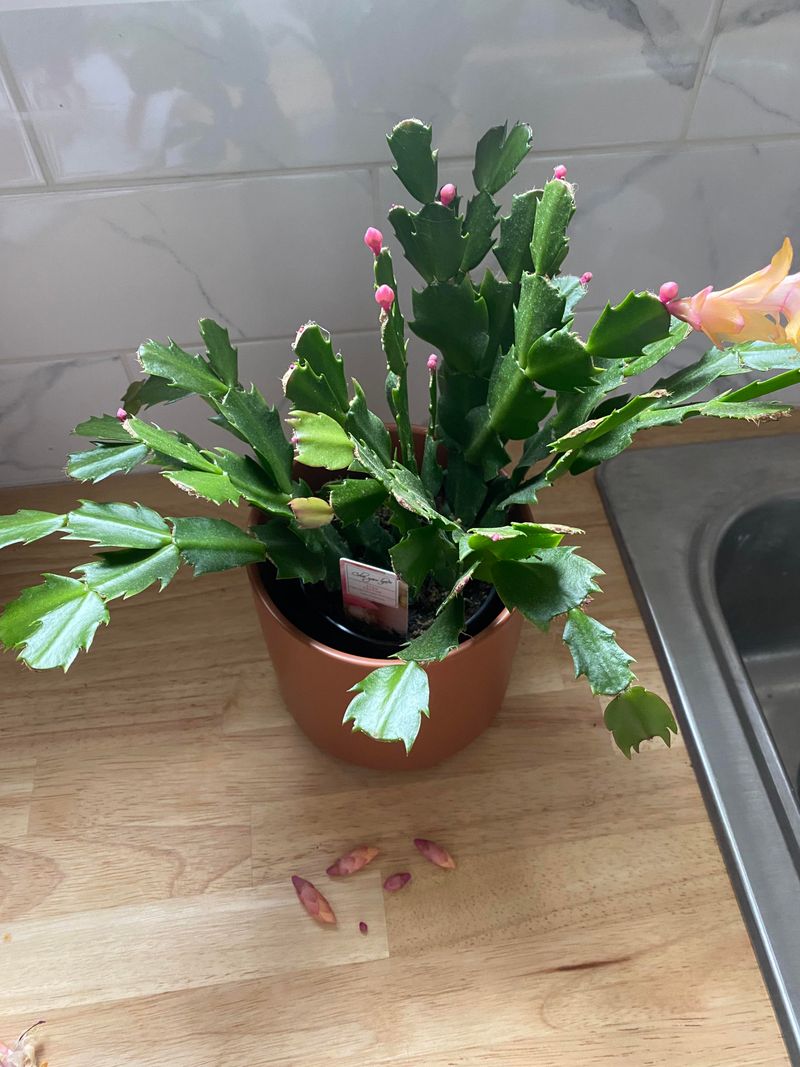
Plenty of owners have heard that touching a budding cactus makes the buds fall. The sources tell a more careful story.
Moving the pot is not a proven cause by itself, but a move that lands the plant in very different light or temperature can be trouble.
Advice differs on how strict to be. Iowa State Extension suggests not moving the plant until flowers begin to open.
Wisconsin Extension specifically cautions against moving it into radically different light or temperature.
Minnesota Extension offers a useful exception. It suggests moving a plant to a warmer room as soon as buds appear if that is where it will stay.
In other words, a one-time move to a better home can make sense, while repeated shuffling does not.
So if the plant sits in a drafty hallway, move it once, early, to a bright and steady place. If it is already in a good spot, leave it there.
Turning it a quarter turn is not something the sources identify as a cause of drop on its own, though many growers simply skip it during budding.
The rule of thumb is to keep the surroundings consistent, not to freeze the pot in place.
Water for even moisture, not a soggy root ball
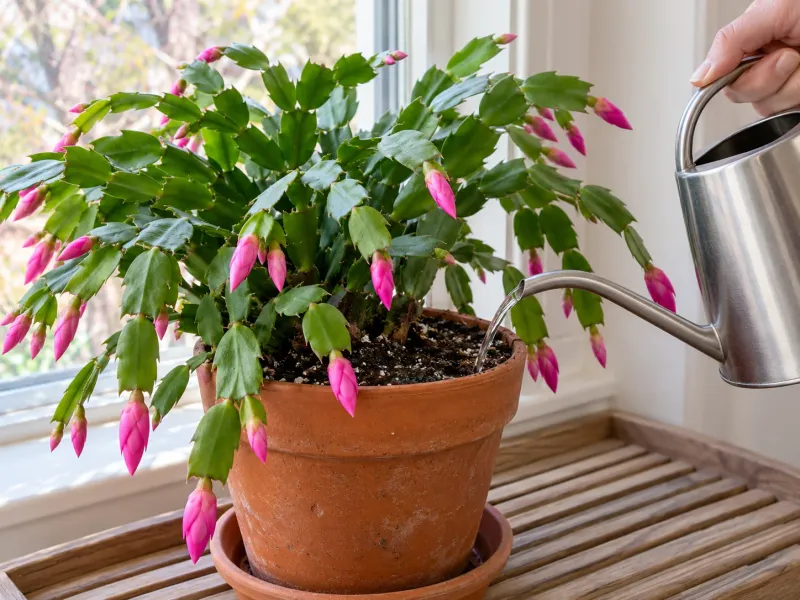
Holiday cacti are not desert plants, so the old habit of leaving a cactus alone for weeks does not fit here. Water is part of what keeps buds on.
At the same time, roots that sit in water have their own problems.
The practical middle is simple. Press a finger into the soil, water when it begins to dry, and then let the extra water run out.
Iowa State Extension recommends evenly moist soil during budding and flowering and warns that dryness can cause buds to fall.
Minnesota Extension adds that the soil can dry between waterings and that excess water should be emptied from the saucer. These two pieces of advice fit together once you read them as a rhythm: moist, then slightly drying, then moist again, never bone-dry and never soaked.
A pot with drainage holes makes this much easier. Water at the sink, wait a few minutes, and return it to its saucer after it stops dripping.
If buds are falling, resist the urge to correct everything in one day. A heavy soaking after a dry spell or a long pause after a wet one swaps one swing for another.
Steady, modest checks every few days do more good.
Dark treatment helps before buds form, not after
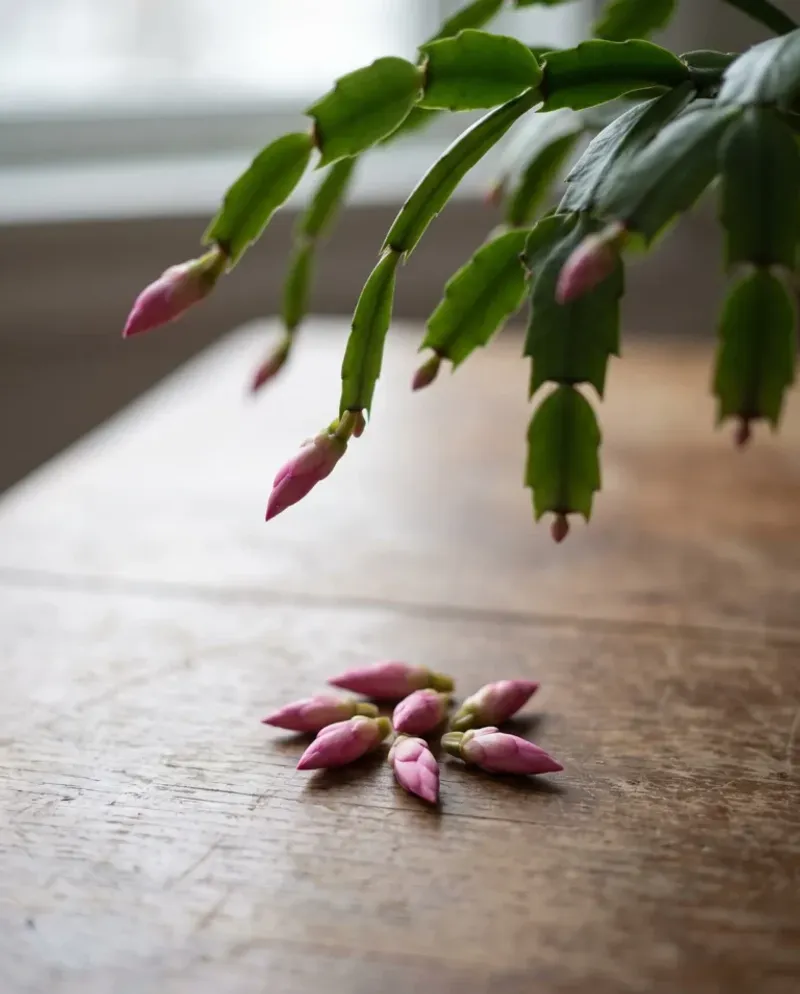
You may have read that a holiday cactus needs long, dark nights to bloom. That is true, but timing is everything.
Short days and long nights help start the flowering process, which happens before visible buds appear.
Once buds are already there, that stage has done its job. Iowa State Extension says plants can be returned to normal light after buds form.
Colorado State’s PlantTalk also describes the role of short days in encouraging flowering.
That means covering a plant or banishing it to a closet is not a rescue for buds that are already dropping. Doing so could add a new change in light, which is exactly the kind of disruption you are trying to avoid.
This article does not give a dark-treatment schedule, because the focus here is on the buds you already have.
One practical clue: if you see small buds at the leaf tips, think about steadiness, not darkness. Bright, indirect light by day and a natural evening routine in the room are enough.
Save the long-night idea for next season’s planning.
Some bud loss can be normal
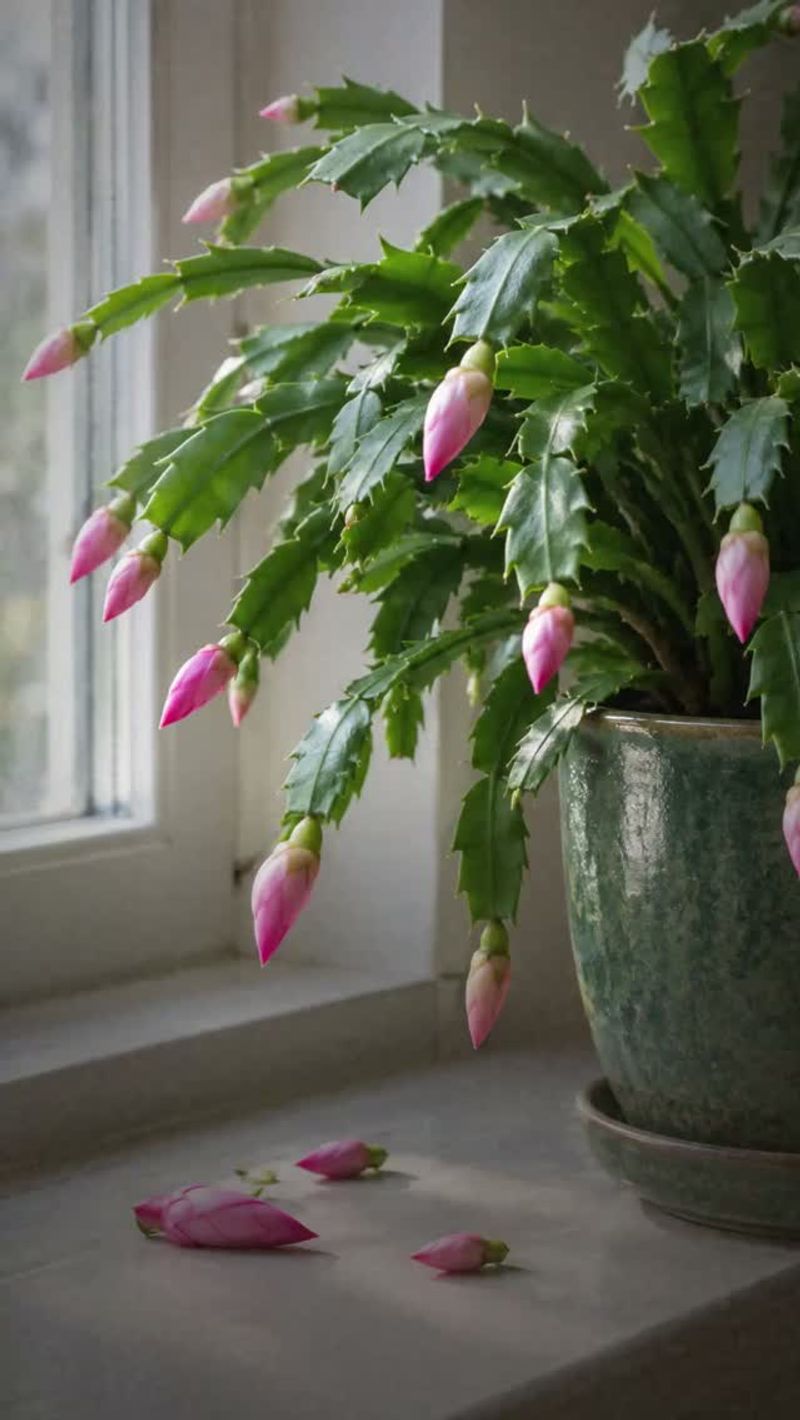
A few fallen buds do not always mean something went wrong. Minnesota Extension notes that a plant may self-prune when it has more buds than it can support.
A heavily loaded plant may simply be trimming its own workload.
The difference between that and preventable stress is the amount and the pattern. A small scatter of buds is one thing, while a steady rain of them right after a cold draft or a long dry spell points back to conditions worth checking.
Either way, keep things steady and skip big corrections. No one can promise that every remaining bud will open, but a calm plant in a calm spot has the best chance.
Sometimes the plant edits itself, and the best help is a quiet corner and a steady hand with the watering can.
Share this story