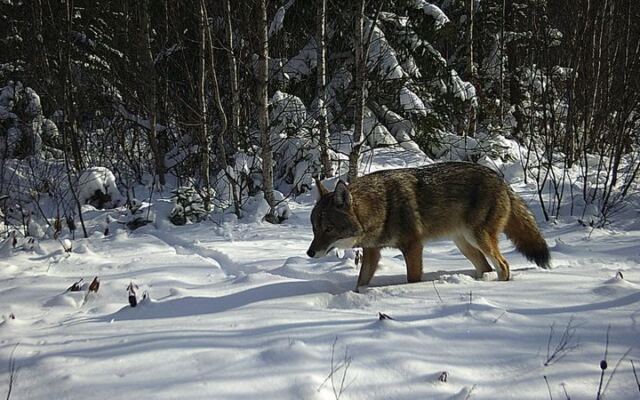
Winter is when coyotes in New York start their breeding season, and many homeowners start to wonder what that means for the yard. The good news is that a few simple habits can lower the chances of trouble for pets and kids.
Most of the advice is ordinary and easy to follow. Here is how to get your home ready before the busy spring months arrive.
Breeding season is a reason to prepare, not proof coyotes are bolder

Winter breeding season is a good time to tidy up your yard, but it does not prove that coyotes are about to act bolder around homes. Nothing in the seasonal facts shows a general jump in backyard boldness.
Calm, steady preparation makes more sense than worry.
An older NYSDEC trapper education manual places coyote breeding from January through early March. Pups come later.
New York City’s wildlife guidance says pups are born around April and May.
That timeline shows that breeding, denning, and being seen are three different things. Breeding happens in winter.
Denning follows in spring, when pups are raised in a sheltered spot. Seeing a coyote can happen at any time of year, and a sighting alone says nothing about either one.
The spring stretch matters mostly for dogs. NYSDEC says coyotes may defend territory and stay near dens in early spring, so keeping dogs away from den areas is wise.
The greatest concern does not begin the moment breeding does.
Problems between people and coyotes are rare. According to NYSDEC incident guidance, the issues reported in New York most often involve pets.
Winter is simply a handy time to get your routines in place.
Reduce food attractants around the yard
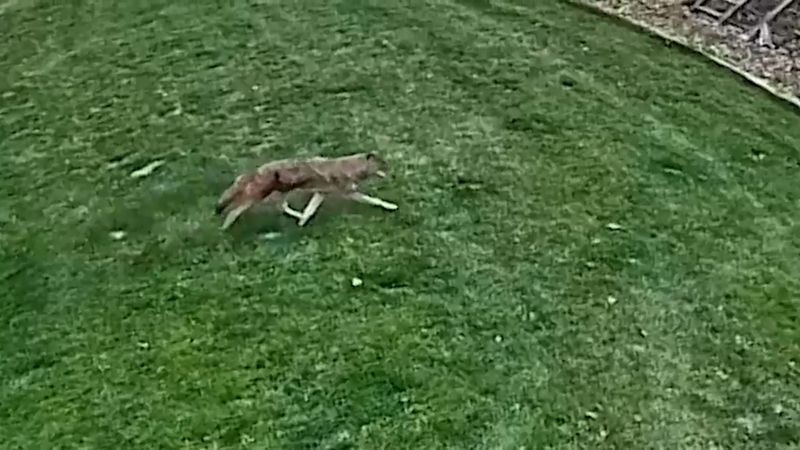
Food is the easiest thing to control. Never feed coyotes on purpose, and feed your pets indoors so bowls are not left on the porch or patio.
Leftover pet food is an easy meal for any wildlife passing through.
Garbage and compost need attention too. Keep trash in sturdy containers with tight lids, and use a closed compost bin rather than an open pile.
Rinse out recycling that held food and set bins out on collection morning instead of the night before.
Birdseed deserves a second look. Seed that falls to the ground draws birds and rodents, and those animals may in turn attract coyotes, as NYSDEC incident guidance explains.
Sweep up spilled seed under feeders often, since it is easy to overlook.
New York’s Be Coyote Conscious graphic advises taking down bird feeders after April 1, and any time coyotes have been seen nearby. A quick walk around the yard each week can show you what might be drawing animals in.
These steps lower the chance that your yard looks like a snack stop. They are not a promise that coyotes will stay away, but they remove a common reason for a visit.
Supervise pets, especially outdoors

A simple pet routine does most of the work. Keep dogs on a leash during walks, and stay with them whenever they are in the yard.
Pay the most attention around dusk and at night, when coyotes are more active.
Pets should not be left outside alone, even for a few minutes. A quick trip to the door with your dog is easy to manage, and it lets you spot anything unusual right away.
A porch light and a flashlight make evening trips simpler.
Cats are a special case. New York City’s wildlife guidance advises keeping cats indoors.
Indoor cats are safer from coyotes and from many other outdoor hazards.
Spring is when dogs need a little extra thought. NYSDEC notes that coyotes may defend territory near dens, so steer your dog away from any spot where you suspect one.
A dog that stays close is less likely to wander into that kind of situation.
None of this means every pet outing will turn into a problem. NYSDEC describes conflicts with people as rare, and coyotes are not seeking people out.
Supervision is simply a low-effort habit that keeps small risks small.
Remove cover and close off sheltered spaces
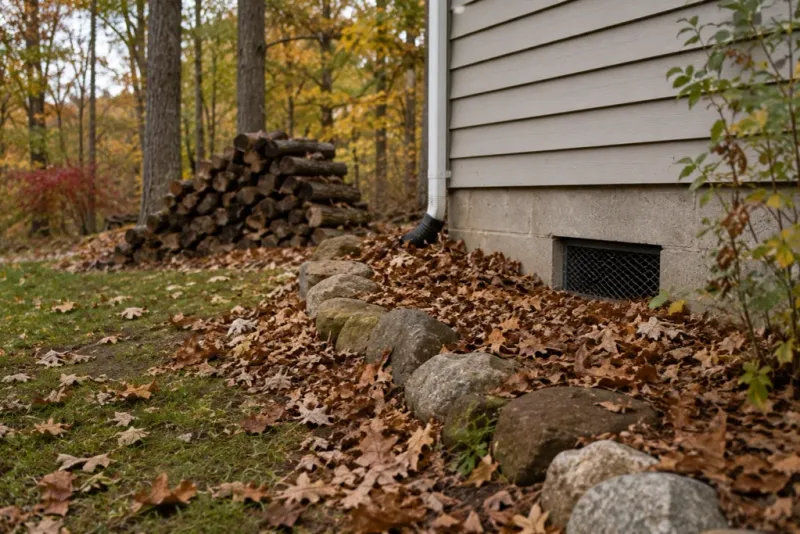
Coyotes like places that feel hidden. Thick brush and tall grass give them cover, and they can also hide a den site.
NYSDEC recommends removing brush and tall grass near your property.
Late winter is a handy time for this chore, since plants are bare and tangles are easy to see. Cut back overgrown edges, haul away brush piles, and keep the lawn near the house short once growth returns.
A tidy yard feels less like a hiding place.
Look under things as well. Massachusetts wildlife officials suggest closing access to crawl spaces under decks, porches, and sheds, as described in their coyote FAQ.
That is regional guidance from Massachusetts, not a New York rule, but it is a sensible extra step for many homes.
Check first that no animal is inside before blocking an opening. Sturdy hardware cloth or lattice, fastened securely, is a common way to cover a gap.
If you are unsure, ask a licensed wildlife professional for help.
Landscaping cannot keep coyotes off your property. It can only make the yard a little less appealing as shelter, which is still a useful trade for an hour or two of work.
Fencing may deter coyotes, but it is no guarantee

A good fence can help, though it works as a deterrent and not as a wall. NYSDEC says fencing may deter coyotes, and a determined animal can still find a way in.
Think of it as one layer among several.
According to NYSDEC incident guidance, a fence should be tight to the ground and taller than four feet. It should preferably extend six inches below ground.
Gaps at the bottom are the usual weak spot, so walk the line and look for loose sections.
Massachusetts offers a stricter picture. Its wildlife agency recommends a fence six feet high with one foot buried, or a ground skirt, in its coyote FAQ.
That advice comes from another state, so treat the numbers as a regional comparison, not a New York requirement.
Which height makes sense depends on your yard, local rules, and budget. Check your town’s fence regulations before building or changing anything.
Even a taller fence works best when the other steps are in place.
Keep supervising pets inside a fenced yard, and keep food out of it. A fence that holds attractants still invites a visit, so the fence and the cleanup go hand in hand.
Teach children to keep their distance
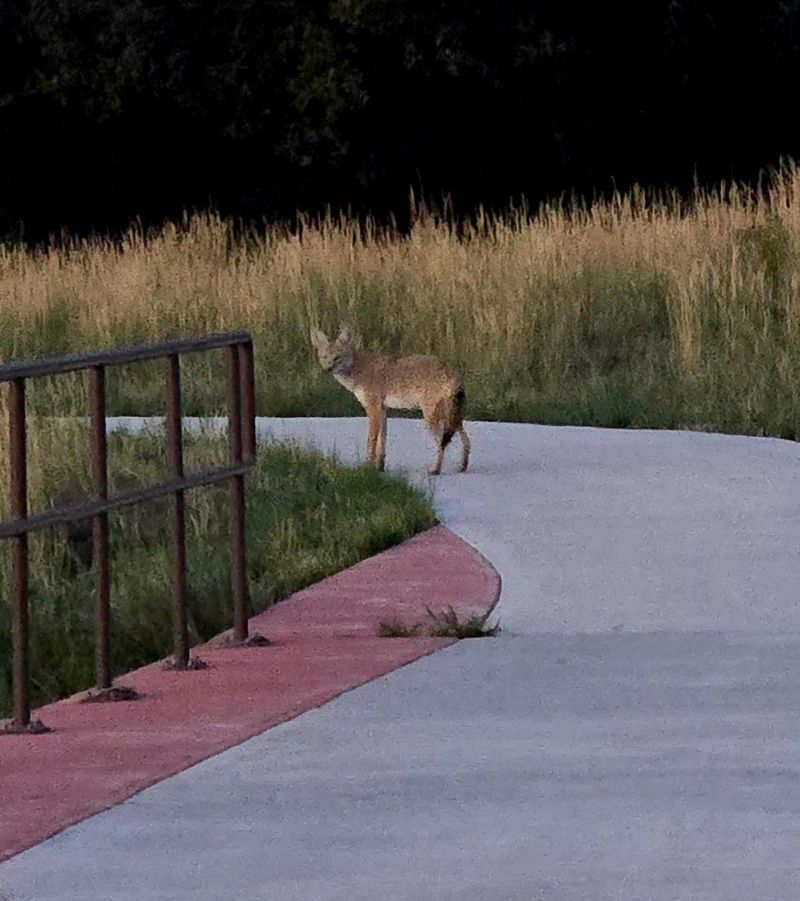
Kids need a short, simple plan. If they see a coyote, they should keep their distance, leave calmly, and go find an adult.
Running is not needed, and they should never try to chase, feed, or touch the animal. Massachusetts guidance, found in its coyote FAQ, tells children to leave calmly.
Practice the plan once or twice, the way you would a fire drill. Pick a spot, such as the back door, where kids go first.
Make it clear that watching a coyote from far away is fine, but getting close is not.
Responding to a lingering coyote is a job for adults. NYSDEC advises standing tall, looking larger, and making noise if it stays.
Noisemaking is a form of hazing, and USDA describes it as a possible deterrent. Its cited controlled study used captive coyotes, so no one can promise a wild animal will react the same way.
Adults should never approach, corner, or touch a coyote either. Give it room to leave.
Two common worries deserve a calm answer. A coyote seen in daylight is not automatically sick or aggressive, since NYSDEC says they may be seen during the day.
Howling does not mean a big pack is near, because a family group can sound larger than its five or six members.
A bite or scratch calls for prompt medical advice
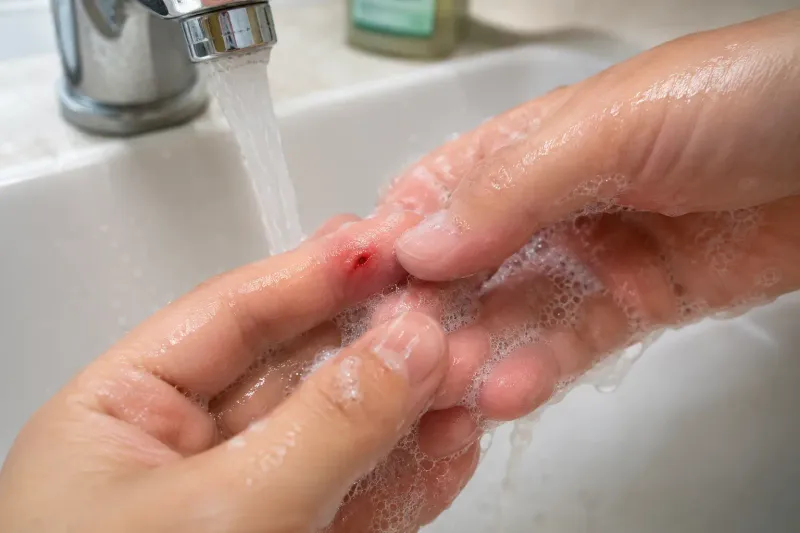
Bites and scratches from coyotes are uncommon, but the response is medical, not just a wildlife matter. CDC guidance says to wash the wound immediately with soap and water for 15 minutes.
Start right away and keep going for the full time.
After washing, contact a healthcare or public-health professional promptly to talk about rabies risk. Washing is a first step and does not replace that conversation.
A professional can decide what treatment, if any, is needed.
Do not try to judge rabies risk on your own. Looks and behavior can be misleading, and only a trained person can weigh the details.
Tell them what happened, when it happened, and what the animal did.
It also helps to let local authorities know about the encounter, and a health professional can point you to the right contact. Keep other family members and pets away from the animal while you get help.
Acting quickly is the main point here. A few minutes at the sink, followed by a phone call, is the plan to remember.
Keep a steady prevention routine
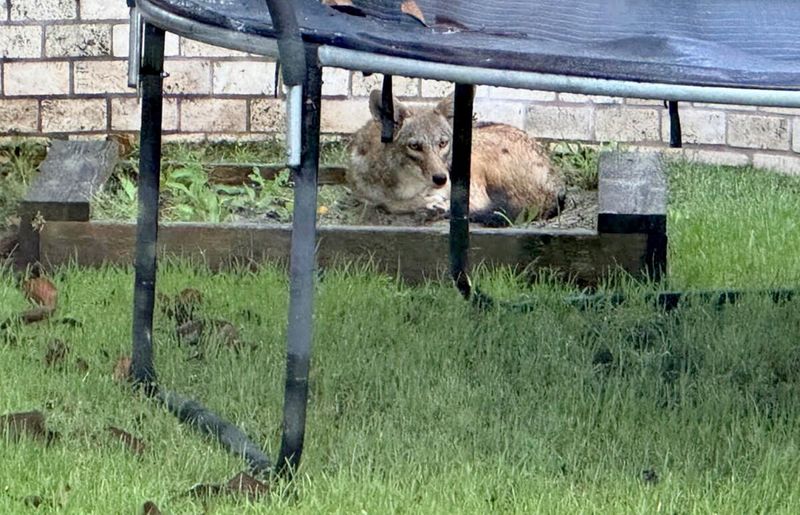
Three habits matter most: keep food out of the yard, stay with your pets outdoors, and teach kids to keep their distance. The Be Coyote Conscious graphic and NYSDEC incident guidance back these basics.
They lower the chances of a problem, but they cannot promise a coyote-free yard. Small routines, repeated through the year, do the quiet work.
A yard that offers no easy meal and no easy cover gives coyotes little reason to linger.
Share this story