You tucked the bulbs into the ground, or you still have a bag sitting in the garage, and now you wonder if depth will make or break April. Tulip advice can sound very sure, yet the experts do not all agree on one number.
The good news is that a few simple checks can help you decide what to do next. Here is how to sort out the facts, the guesses, and the steps that really matter.
Late fall may still leave a planting window open
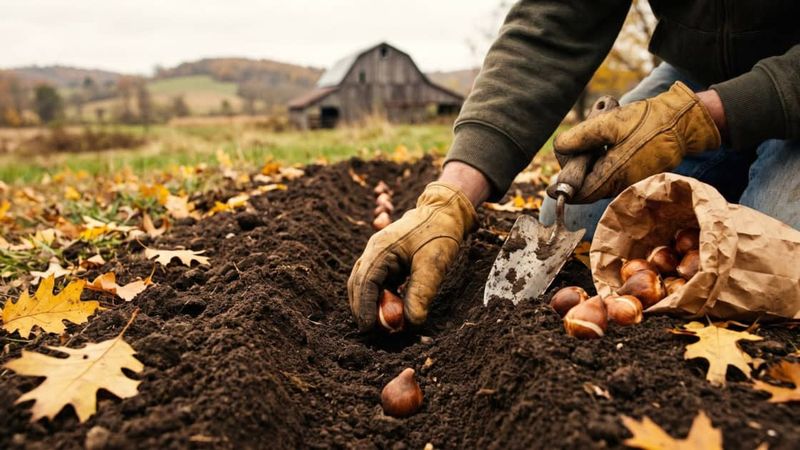
Timing comes first, because bulbs in the bag cannot bloom until they are in the ground. Penn State Extension gives September through October as the best planting window in western Pennsylvania.
That is the ideal, not a deadline that makes later planting pointless.
Cornell guidance is a bit more relaxed. Cornell Cooperative Extension says tulips can go in as late as late November or early December, as long as the ground is not frozen.
Keep in mind that this is general advice for a wider region, not a promise that every Pennsylvania yard will qualify.
So the real test is your own soil. Push a trowel into the bed and see what happens.
If the soil is workable, crumbles in your hand, and is not frozen solid, planting may still be possible.
Also look at moisture. Soil that is soggy, puddled, or heavy with standing water is a poor place for bulbs, even when it is not frozen.
Waiting for a drier day, or picking a better-drained corner, is wiser than forcing bulbs into mud.
Late planting gives the bulbs less time to settle in, so there is no guarantee of flowers next spring. Still, bulbs left in a bag will certainly not bloom.
If the ground cooperates, planting them is a reasonable gamble.
Tulip depth recommendations do not agree on one number
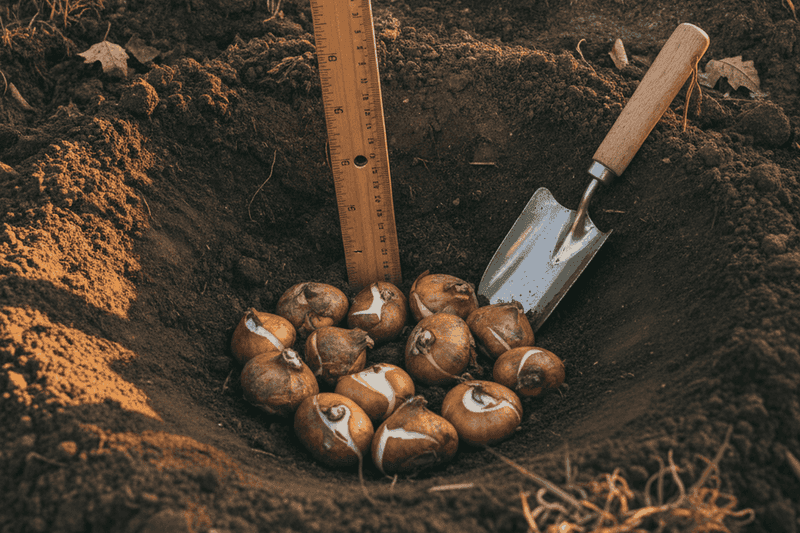
Ask three gardening sources how deep to plant tulips and you may get three answers. Penn State suggests 5 to 6 inches for a tulip bulb about 2 inches long.
Cornell Cooperative Extension recommends 6 to 8 inches.
Minnesota Extension takes a different route. It says to follow the package directions first, and generally plant bulbs two to three times their diameter.
It also suggests going shallower in heavy clay and deeper in sandy soil.
Then there is research pointing the other way. A Cornell flower bulb trial found that all tested depths performed well in the first flowering season.
Deeper planting did reduce flowering by the third year. Illinois Extension has summarized that work as favoring 2 to 4 inches, even though other extension offices still advise deeper holes.
Before you treat that trial as the final word, look at its limits. It used two cultivars chosen for perennializing, one clay-loam site, and particular mulch treatments.
Your garden, soil, and tulip variety may behave differently, so its later-year results are not a forecast for every bed.
The practical takeaway is simple. No single number is the universal rule, and a small gap between your planting and one guide is not a disaster.
Use the package directions as your starting point, then adjust for soil type.
Check what the depth measurement includes
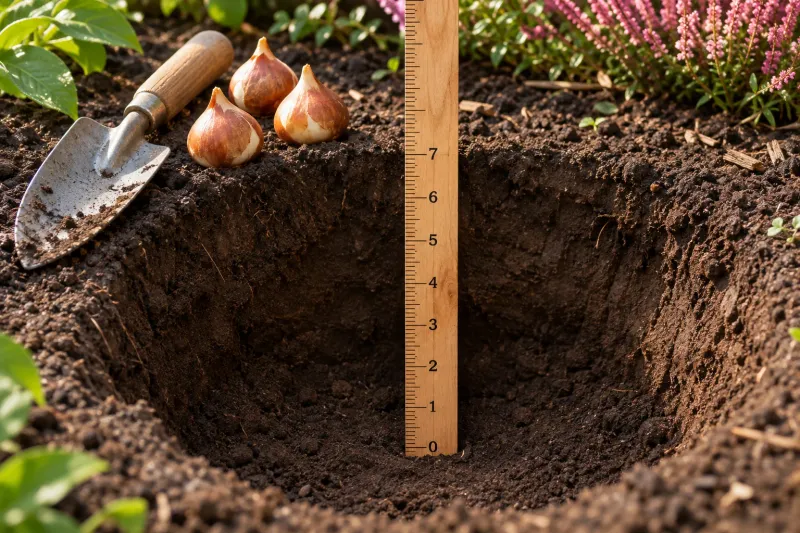
Two people can both say “plant 6 inches deep” and mean different things. One may measure the hole from the surface down to the bulb’s base.
The other may mean the soil covering the top of the bulb. That difference can easily be an inch or two.
Look at your bulb package or reference and see which method it uses. If it is unclear, think about how much soil sits above the bulb’s tip once the hole is filled.
Mulch counts too, because it adds to the cover over the bulb in winter.
The Cornell trial shows why “too shallow” needs context. In the Cornell planting-depth report, bulbs planted just 1 inch deep without mulch were often lost to animals or freezing.
Shallow bulbs with mulch performed differently.
That does not create a new rule that shallow is always fine or always risky. It simply shows that bulb depth, mulch, animals, and winter cold work together.
Treat them as one picture instead of separate numbers.
Soil also plays a part. Minnesota Extension suggests adjusting for soil type, with shallower placement in heavy clay and deeper placement in sandy ground.
A quick note on what you measured, and what mulch you added, will help you understand next spring’s results.
Choose a sunny, well-drained site

Even perfectly planted bulbs struggle in the wrong place. Cornell Cooperative Extension recommends at least six hours of direct sun and fertile, well-drained soil.
Those two traits make a good starting checklist for any bed.
Drainage deserves extra attention. Standing water or slow-draining ground raises the risk of bulb rot, as both the Pennsylvania Horticultural Society and Minnesota Extension point out.
After a heavy rain, watch whether water lingers in the spot.
Shade is not an automatic problem. The Pennsylvania Horticultural Society notes that tulips can do well under deciduous trees, because they flower before the trees leaf out.
In early spring, those branches are still bare, so sunlight reaches the bed.
That is why a poor site is rarely about shade alone. A sunny spot with soggy clay can fail, while a lightly shaded, well-drained bed under an oak may do fine.
Check sun, water, and soil together before you dig.
If your yard has one wet corner and one drier slope, choose the slope. Moving a planting a few feet can matter more than agonizing over one inch of depth.
Already planted? Do not disturb bulbs based on one depth number

If your bulbs are already in the ground, take a breath before grabbing a shovel. A difference from one general recommendation does not prove anything has gone wrong.
Guides from Penn State and Cornell Cooperative Extension already differ from each other.
Start with a calm comparison. Read your package instructions, then think about how much soil and mulch now cover the bulbs.
Consider your soil type and how well the bed drains. The Cornell trial saw good first-season flowering at all depths it tested, though that was one study with limits.
No source offers digging up and repositioning bulbs as a proven rescue. Digging can also damage roots that have started to form.
Unless you see a clear problem, such as standing water in the bed, leaving them alone is the safer choice.
If you still have unplanted bulbs, the plan is easier. Follow the package directions, as Minnesota Extension advises, and choose a sunny, well-drained site.
Plant while the soil is still workable and unfrozen.
Protect bulbs from animals and handle them carefully
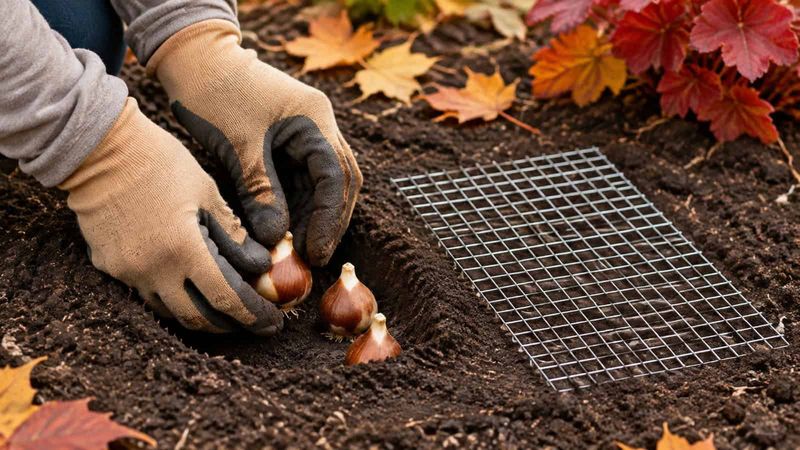
Animals can cause bare spots that look like a depth problem but are not. Squirrels and other diggers may unearth bulbs no matter how deep they sit.
If that is a concern, Minnesota Extension suggests laying chicken wire over the planted area, anchoring it, and covering it with mulch.
A clue helps you tell the difference. Disturbed soil, scattered bulb skins, or empty holes point to animals.
Even, undisturbed soil with no sprouts suggests another cause, such as drainage or bulb quality.
Handling and safety matter too. The ASPCA lists tulips as toxic to dogs, cats, and horses, and the highest concentration of the toxin is in the bulb.
Keep bulbs and freshly dug beds out of reach of pets.
For people, Poison Control recommends nitrile gloves and keeping bulbs away from children and pets. Repeated handling can cause irritated skin sometimes called tulip fingers.
A quick touch is not necessarily dangerous, but gloves are an easy habit on planting day.
Spring blooms are uncertain; let foliage fade naturally
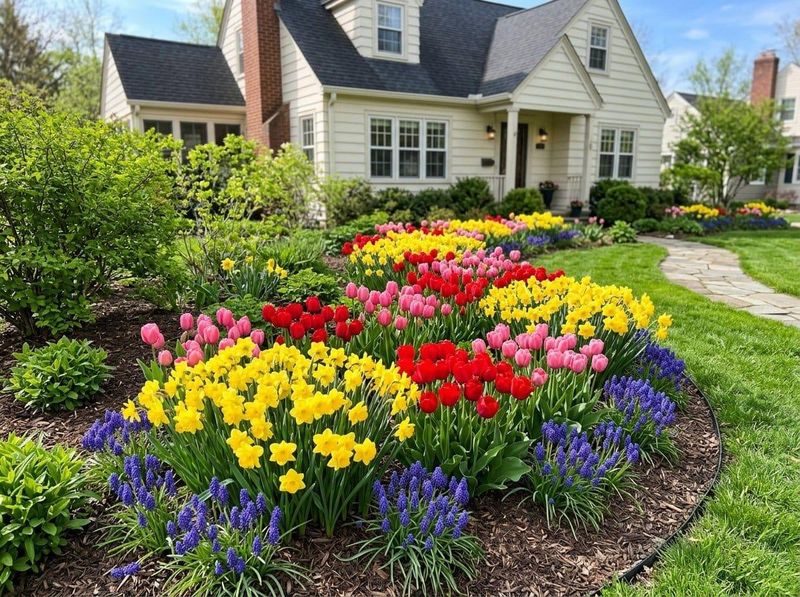
Depth and site both influence how tulips perform, yet neither one can tell you in advance that a bed will be bare or bloom on a set schedule. Weather, bulb quality, animals, and drainage all play a role.
The Cornell trial is a good reminder that results vary by situation.
Expect some variety, too. Many modern tulips are short-lived rather than reliably perennial, so a great show one year may fade in later years.
Planting fresh bulbs every few years is a normal part of tulip gardening.
Once flowers do appear, what you do afterward counts. Both Minnesota Extension and the Pennsylvania Horticultural Society advise letting the foliage yellow and wither naturally.
Cutting leaves early can weaken the bulb’s growth the next season.
That after-bloom care is separate from your fall decisions. Planting now is about giving bulbs a fair start.
Leaf care in May is about helping them recharge.
Tulips reward patience more than perfection, and a few inches here or there rarely decide the story.
Share this story