Get the latest garden guides in your inbox →
Gardening Latest
  • General Gardening
  • Lawn Care
  • Plant Care
  • Composting
  • Soil Health
  • Backyard
  • Garden Muse Magazine
  • General Gardening
  • Lawn Care
  • Plant Care
  • Composting
  • Soil Health
  • Backyard
  • Garden Muse Magazine
  • News
  • Gardening Calendar
  • Garden Structures
  • Vegetable Garden
  • Vertical Garden
  • Raised Beds
  • Hydroponics
  • General Equipment
  • Community Gardens
Garden Themes
  • Spiritual Garden
  • Hydroseeding
  • Seeding and Laying Sod
  • Artificial Grass
  • Lawn Care Equipment
  • Plants
  • Trees
  • Planting Tools
  • Composting Basics
  • Fertilizer
  • Alternative Growing Mediums
  • Front Yard
  • Backyard Activities
  • Landscaping
Gardening Latest

Explore by state

Which state is your garden in?

Currently viewing Pennsylvania

All states

Northeast

  • Connecticut —
  • Delaware 13
  • Maine —
  • Maryland 3
  • Massachusetts 15
  • New Hampshire —
  • New Jersey 3
  • New York 9
  • Pennsylvania 9
  • Rhode Island —
  • Vermont —

Southeast

  • Alabama 3
  • Arkansas —
  • Florida 3
  • Georgia 3
  • Kentucky 14
  • Louisiana 2
  • Mississippi —
  • North Carolina 1
  • South Carolina 13
  • Tennessee —
  • Virginia 2
  • West Virginia —

Midwest

  • Illinois 2
  • Indiana 4
  • Iowa 13
  • Kansas —
  • Michigan 3
  • Minnesota 2
  • Missouri 2
  • Nebraska —
  • North Dakota —
  • Ohio 3
  • South Dakota —
  • Wisconsin 14

Southwest

  • Arizona 3
  • Colorado —
  • Nevada —
  • New Mexico —
  • Oklahoma —
  • Texas 2
  • Utah —

West

  • Alaska —
  • California 3
  • Hawaii —
  • Idaho —
  • Montana —
  • Oregon —
  • Washington —
  • Wyoming —

No state matches that search.

Site menu

Gardening Latest
  • General Gardening
    • News
    • Gardening Calendar
    • Garden Structures
    • Vegetable Garden
    • Vertical Garden
    • Raised Beds
    • Hydroponics
    • General Equipment
    • Community Gardens
    Garden Themes
    • Spiritual Garden
  • Lawn Care
    • Hydroseeding
    • Seeding and Laying Sod
    • Artificial Grass
    • Lawn Care Equipment
  • Plant Care
    • Plants
    • Trees
    • Planting Tools
  • Composting
    • Composting Basics
  • Soil Health
    • Fertilizer
    • Alternative Growing Mediums
  • Backyard
    • Front Yard
    • Backyard Activities
    • Landscaping
  • Garden Muse Magazine

Explore

  • About GardeningLatest.com
  • Contact Us

Get the latest from the garden

New guides on lawn care, plants and backyard projects, sent when they go up.

Subscribe →

Follow

  • Facebook
  • X
  • Pinterest
  • YouTube
Pennsylvania Gardening

Which Hydrangeas Need a Leaf-Filled Cage Before Winter Sets In in Pennsylvania?

Some hydrangeas lose their flower buds over winter, and then the shrub looks healthy but gives few blooms the next summer…

MY

By Martha Yoder

November 18, 2026 · 6 min read

Which Hydrangeas Need a Leaf-Filled Cage Before Winter Sets In in Pennsylvania?

Some hydrangeas lose their flower buds over winter, and then the shrub looks healthy but gives few blooms the next summer. A simple cage of wire mesh filled with leaves may help certain types get through the cold.

Whether you need it depends on which hydrangea is growing in your yard. Here is how to tell, and what to do before winter settles in.

At a glance

Where
Pennsylvania Gardening
Hardiness zone
6 −10 to 0°F
Read
6 minutes
Published
November 18, 2026

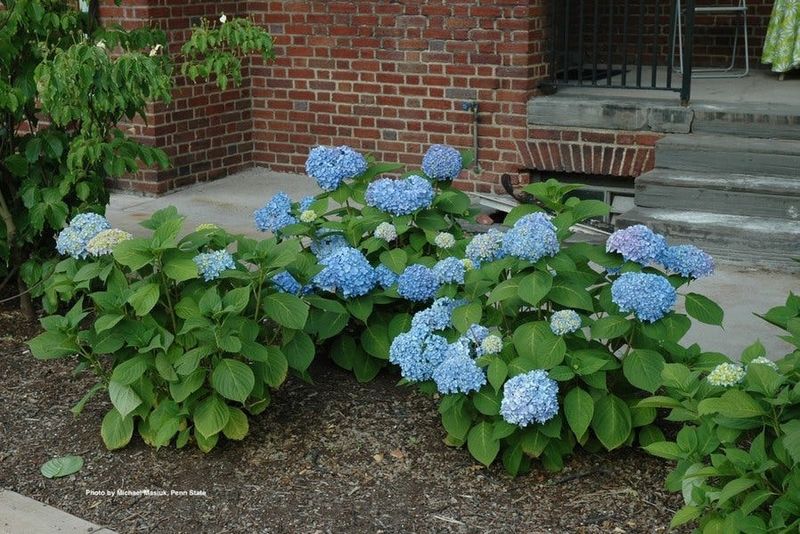
Which hydrangeas may need extra protection?
Which hydrangeas may need extra protection?
© Penn State Extension

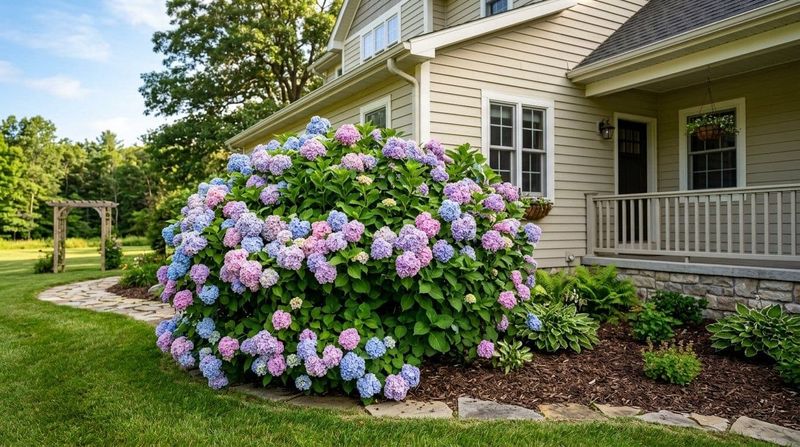
Start by figuring out what you are growing, because hydrangeas do not all share the same winter needs. The leaf-filled enclosure in this article is aimed mainly at bigleaf hydrangeas (Hydrangea macrophylla) planted in the ground, especially ones that have lost buds to cold in the past.

Bigleaf and mountain hydrangeas set their flower buds on old stems, which means the buds are already formed before winter arrives. Oakleaf hydrangeas also bloom on old wood.

The Pennsylvania Horticultural Society explains that cutting these types at the wrong time can remove the coming season’s flowers.

Smooth hydrangeas, such as the Annabelle types, and panicle hydrangeas bloom on new wood that grows in spring. Rutgers Cooperative Extension groups them this way, and these shrubs generally do not need a bud-protection cage to flower next summer.

One wrinkle: some reblooming bigleaf cultivars flower on both old and new growth. If winter kills the old-wood buds on one of these, the display may be smaller or later, but you may still get some blooms.

Keep in mind that this advice is for in-ground shrubs. UConn Extension notes that florist hydrangeas are often less winter-hardy than nursery-grown plants, and container plants face their own risks.

Old-wood buds carry next summer’s flowers
Old-wood buds carry next summer’s flowers
© Stacy Ling

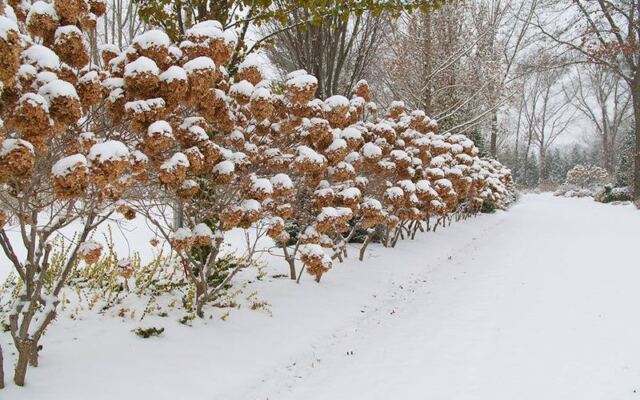
A hydrangea can come through winter looking fine and still bloom poorly. The reason sits at the tips of last season’s stems, where flower buds were set months earlier.

If cold or a late frost damages those buds, the plant leafs out normally but has little to show in summer.

Tidying up in fall feels natural, but a hard cut on an old-wood hydrangea can remove next summer’s flowers.

University of Georgia Extension notes that bigleaf hydrangea buds form in late summer, so they spend the whole cold season exposed on the stems. That exposure is why bigleaf types are the ones most often protected.

University of New Hampshire Extension says winter protection may help keep bigleaf hydrangea buds alive. The key word is may.

Insulation improves the odds, but it cannot stop every winter freeze or spring frost.

Poor flowering also has other causes. Pruning at the wrong time and too much shade, especially for bigleaf hydrangeas, can both cut down on blooms, so a cage will not fix every problem.

Build a loose, leaf-filled mesh enclosure
Build a loose, leaf-filled mesh enclosure
© Tiny Garden Habit

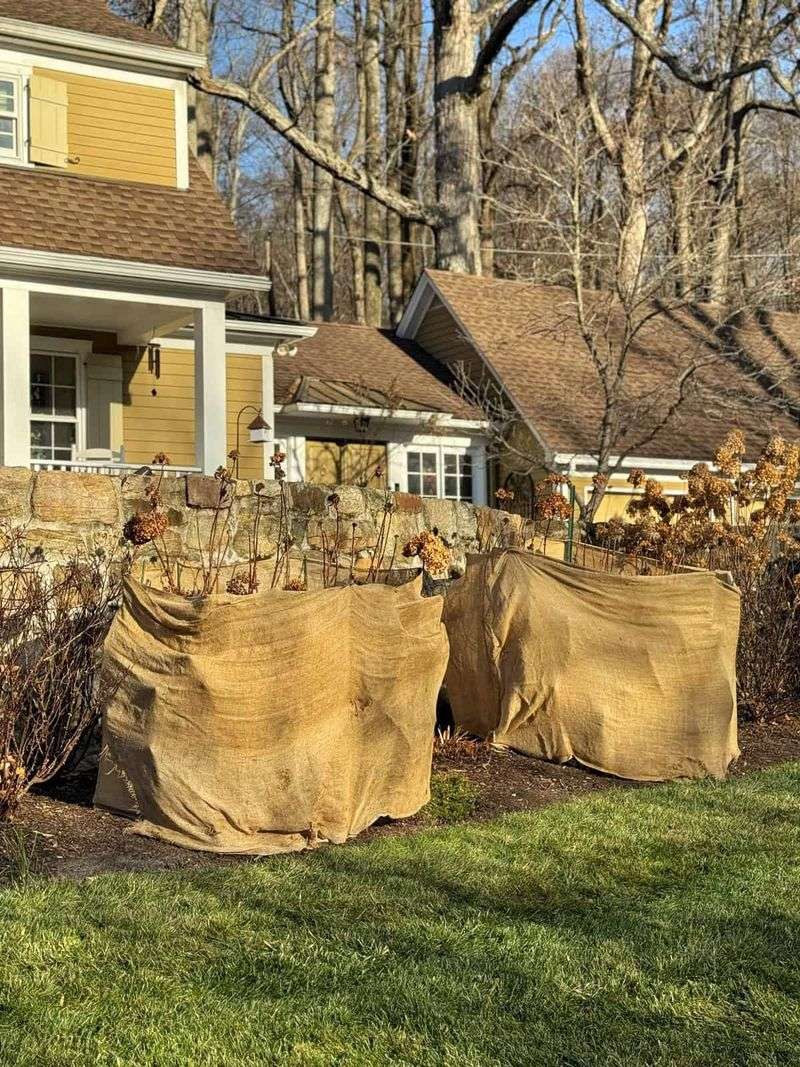
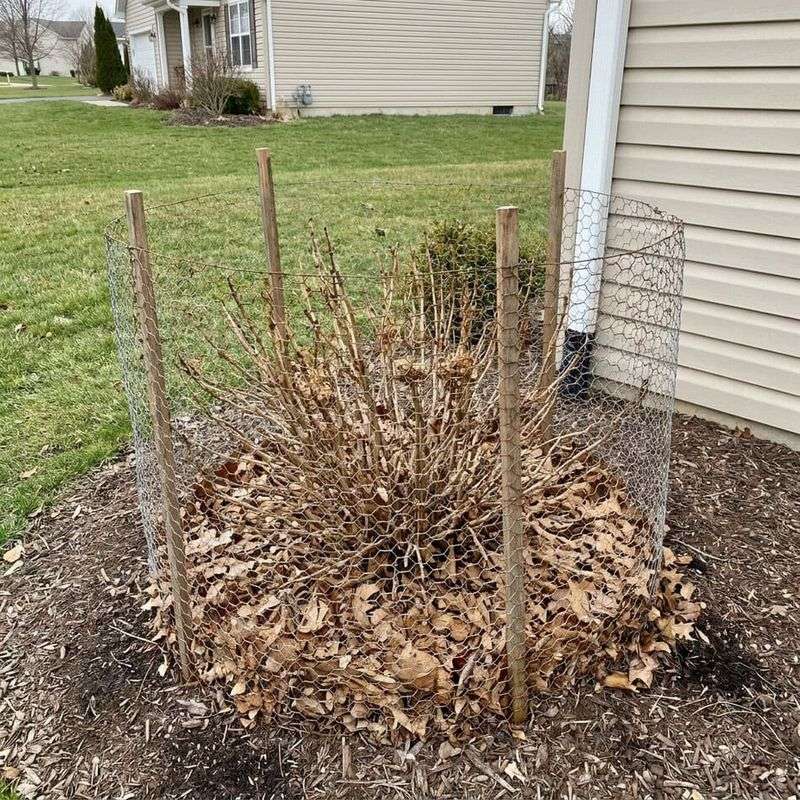
Here is the basic method for a vulnerable in-ground bigleaf hydrangea. Gather wire or chicken-wire mesh, a few stakes, and a pile of dry fallen leaves.

Oak and maple leaves work well when they are dry.

Set the stakes in a circle around the shrub, leaving space between the stems and the wire. Wrap the mesh around the stakes to form a cylinder.

The mesh should stand loose around the plant, never pressing against or breaking the buds.

Next, fill the cylinder with leaves, packing them loosely rather than stuffing them. The leaves trap air and insulate the stems and buds, and University of New Hampshire Extension describes this kind of leaf-filled enclosure for protecting bigleaf hydrangea buds.

University of Georgia Extension also recommends a chicken-wire cylinder filled with leaves for cold protection. Make the cage tall enough to cover the stems that carry buds.

Do not swap this job for cutting the plant back or removing the old flower heads. The goal is to shelter the stems as they are, not to trim them.

When should the enclosure go up and come down?
When should the enclosure go up and come down?
© Hydrangea.com

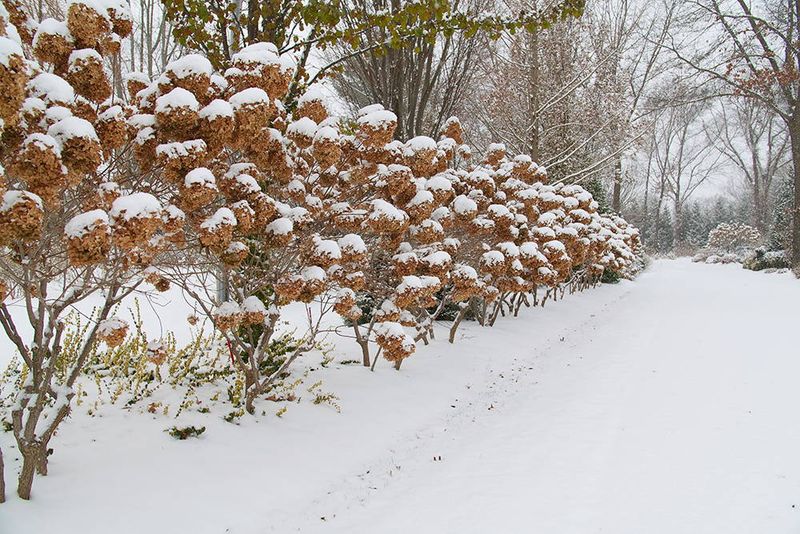
Think of the cage as a pre-winter job. Putting it up once the leaves have fallen and before harsh weather settles in is a practical prompt, not a Pennsylvania-wide deadline tied to the ground freezing.

No single date or temperature fits every yard.

Local exposure, the cultivar, and the kind of winter you get all matter. A windy, open site may need more attention than a sheltered spot near the house, so watch your own conditions and plan the work for a mild fall day.

Leaves settle over time, so check the cage now and then and add more if the pile sinks. UConn Extension also stresses choosing the right protection for the hydrangea type and its hardiness.

When spring arrives, be patient. University of New Hampshire Extension recommends keeping the protection in place until buds begin expanding.

Removing it too early can expose tender buds to a late cold snap.

Skip a fall hard prune on old-wood bloomers
Skip a fall hard prune on old-wood bloomers
© Planet Natural

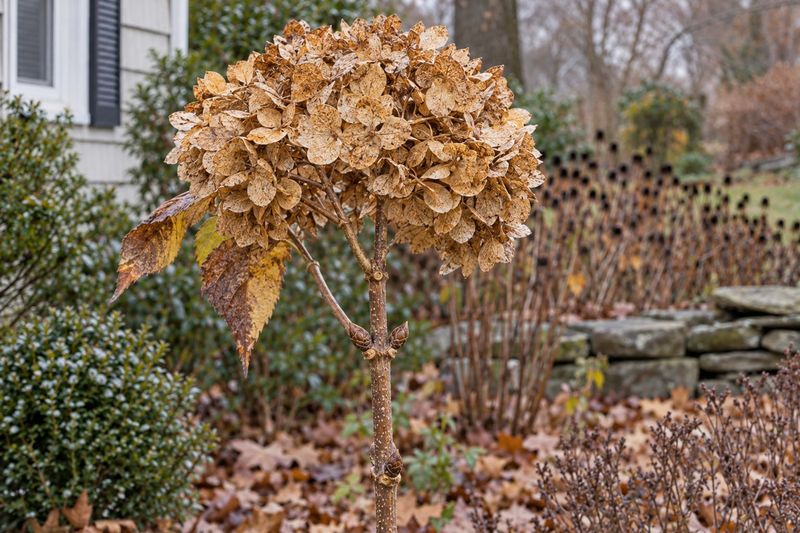
Tidying up in fall feels natural, but a hard cut on an old-wood hydrangea can remove next summer’s flowers. The buds may already be sitting on the stems you are about to trim.

For bigleaf hydrangeas, University of Georgia Extension says buds form in late summer and advises against pruning after August 1. By the time winter prep begins, that window has closed.

The Pennsylvania Horticultural Society gives similar advice, warning that late-season pruning can remove developing buds. Old-wood types, including bigleaf, mountain, and oakleaf hydrangeas, are the ones at risk.

If you want to take off something, limit it to branches that are clearly dead or broken. For everything else, leave the stems standing so the buds stay where they are and the cage has something to protect.

A bud-protection cage is not a mulch pile
A bud-protection cage is not a mulch pile
© Tiny Garden Habit

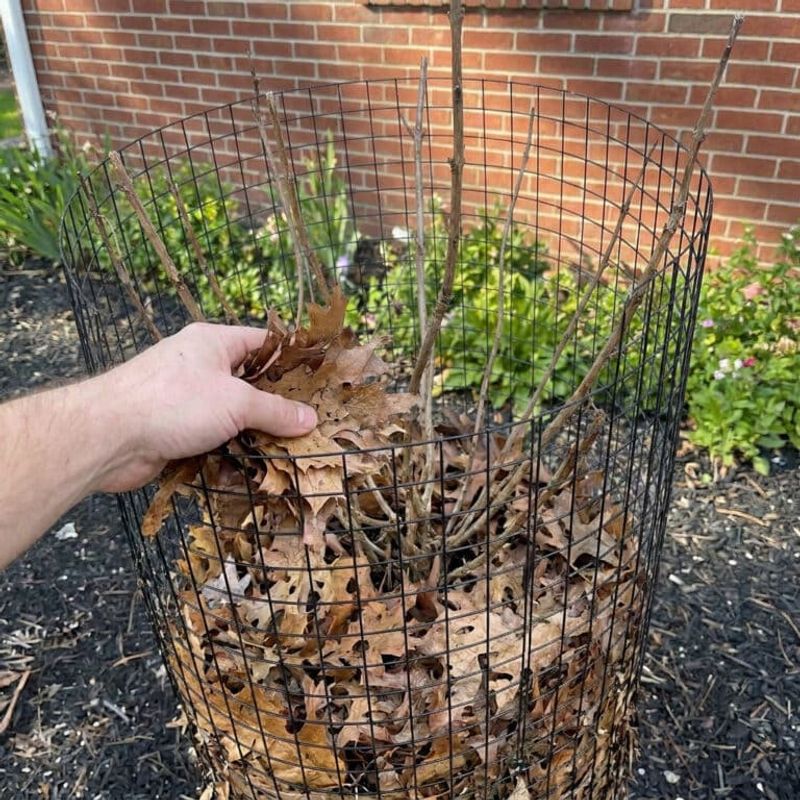
Gardeners often blur two different jobs. The mesh cage holds leaves around the shrub itself, insulating the stems and the buds that sit on them.

Mulch, by contrast, goes on the soil.

Penn State Extension explains that mulch can moderate soil freezing and thawing, which helps protect the roots. It also says mulch should not be piled against shrub stems.

That difference matters when you set up both. Spread mulch over the root zone and keep a small gap around the base of the stems.

Then build the loose cage around the plant so the leaves surround the buds without being heaped against the bark.

The cage targets buds, as University of New Hampshire Extension describes for bigleaf hydrangeas. Mulch does a different job, so neither one replaces the other.

Protect the buds, not a promise of blooms
Protect the buds, not a promise of blooms
© Colonial Classics

Identify your hydrangea first, shelter vulnerable bigleaf buds with a loose leaf-filled cage, and hold off on fall pruning of old-wood types. That is the whole plan, and it fits only the shrubs that need it.

Extension guidance from UNH and UGA points to better odds, not a sure thing, since shade and pruning timing also affect flowers. A cage is a fair bet, and sometimes that is the best a gardener gets.

Share this story
MY

Written by

Martha Yoder

More from Martha Yoder →

About Gardening Latest

Gardening Latest provides in-depth guides to maintaining and enhancing your garden and backyard. Learn how to make the most of the space you have and create a beautiful garden.

More about us →

Latest stories

  • Wisconsin GardeningHere’s What To Do Next If You Spot A Yellow Jacket Nest Near Your Wisconsin Home

    Here’s What To Do Next If You Spot A Yellow Jacket Nest Near Your Wisconsin Home

    36 min ago
  • Iowa GardeningHearing Coyotes Howl Near Your Iowa Home Late at Night? Here’s What It Really Means

    Hearing Coyotes Howl Near Your Iowa Home Late at Night? Here’s What It Really Means

    37 min ago
  • Massachusetts GardeningHearing Scratching in Your Massachusetts Walls at Night? Flying Squirrels Are One Possibility

    Hearing Scratching in Your Massachusetts Walls at Night? Flying Squirrels Are One Possibility

    1 hr ago
  • Delaware GardeningA Virginia Opossum Crossing Your Delaware Yard on a Cold Night Is Generally Normal Wildlife Activity

    A Virginia Opossum Crossing Your Delaware Yard on a Cold Night Is Generally Normal Wildlife Activity

    1 hr ago
  • Kentucky GardeningKentucky’s Northern Short-Tailed Shrew Has a Venomous Bite, and Your Fallen Leaves Make Good Habitat

    Kentucky’s Northern Short-Tailed Shrew Has a Venomous Bite, and Your Fallen Leaves Make Good Habitat

    1 hr ago

Gardening by state

Stories for your state, and the hardiness zone most of it gardens in.

Keep exploring

Read next

All Pennsylvania Gardening →
Pennsylvania GardeningPlanted Tulips This Fall In Pennsylvania? How Depth May Affect Spring Blooms
Pennsylvania Gardening

Planted Tulips This Fall In Pennsylvania? How Depth May Affect Spring Blooms

1 hr ago
Pennsylvania GardeningFound A Suspected State-Listed Noxious Weed In Your Pennsylvania Yard? Here’s What Happens Next
Pennsylvania Gardening

Found A Suspected State-Listed Noxious Weed In Your Pennsylvania Yard? Here’s What Happens Next

6 hr ago
Pennsylvania GardeningCan You Cut Your Neighbor’s Vines Hanging Over The Fence? Here’s What Pennsylvania Law Says
Pennsylvania Gardening

Can You Cut Your Neighbor’s Vines Hanging Over The Fence? Here’s What Pennsylvania Law Says

Yesterday

More from Pennsylvania Gardening

  • 7 Things In Your Pennsylvania Yard That Quietly Invite Coyotes Closer To Your House

    Nov 11
  • Here’s What To Do Next If You Spot A Yellow Jacket Nest Near Your Wisconsin Home

    36 min ago
Back to top

Leave a response Cancel

Your email address stays private. Required fields are marked with an asterisk.

Gardening Latest

In-depth guides to maintaining and enhancing your garden and backyard: how to make the most of the space you have, and how to make it beautiful.

  • Facebook
  • X
  • Pinterest
  • YouTube

We may earn a portion of sales from products or services that are purchased through our site as part of our affiliate partnerships with retailers.

Explore

  • About GardeningLatest.com
  • Contact Us
  • Terms and Conditions
  • Privacy
  • Editorial Note:
  • FTC Disclosure

Newsletter

New garden guides and seasonal tips, straight to your inbox.

We’ll email you a link to confirm. Unsubscribe any time.

Almost there! Check your inbox and tap the link to confirm.

© 2026 Gardening Latest. All rights reserved.

Back to top