You are lying in bed when a wild chorus of yips and howls floats through the dark outside your window. It can make your heart skip, and it can leave you wondering what is going on in your own backyard.
Those sounds are a normal part of coyote life, and they say less than most people think. Here is what the calls can tell you, what they cannot, and what to do if you actually see a coyote.
Coyotes howl to keep contact and signal occupancy
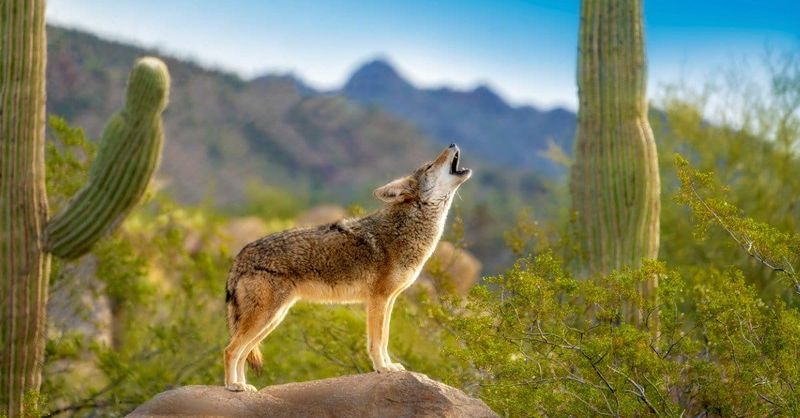
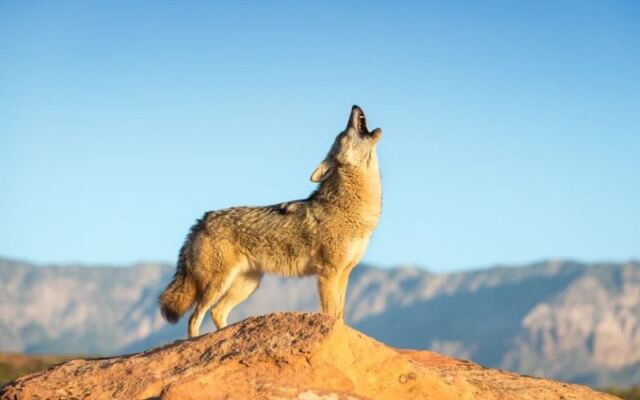
Coyotes have a surprisingly varied voice. They use howls, yips, barks, and mixes of all three, sometimes in the same breath.
Woodland Park Zoo’s coyote FAQ notes that these animals can vocalize during the day as well as at night, so the dark hours are not the only time they talk.
Two broad jobs show up again and again. One is keeping in touch with other members of a group, especially when animals are spread out across the landscape.
The other is signaling that a territory is occupied, a bit like a neighborhood saying that this spot is taken.
Think of those as general purposes, not a dictionary. A single howl does not translate into a sentence such as “come here” or “stay away.” Coyotes may also call in response to a disturbance, such as a siren or another animal nearby.
That means a sound by itself leaves a lot unanswered. From your bedroom, you usually cannot tell which coyote is calling, how far away it is, or what set it off.
Even wildlife experts treat the calls as a sign that coyotes live in the area, which the Wisconsin DNR describes as a common and widespread animal in the state.
So when the yips start up, you can picture ordinary animals checking in with one another. It is communication, and you just happen to be within earshot.
A chorus can make a few coyotes sound like many
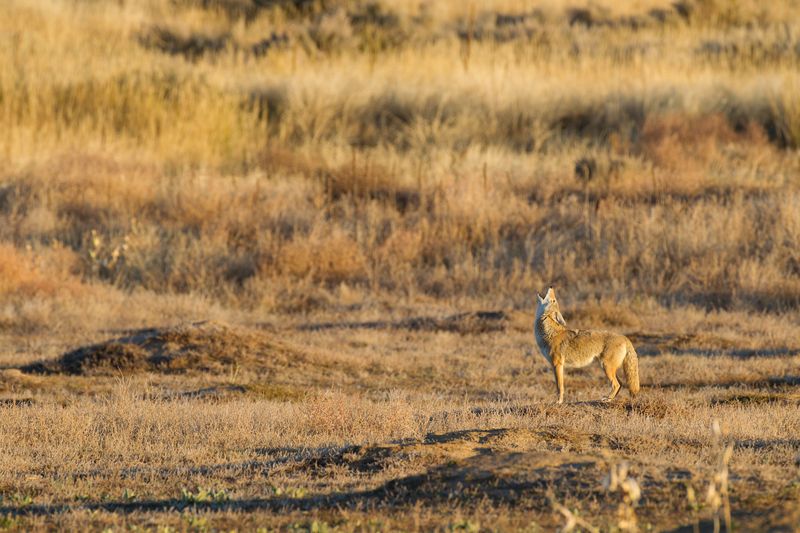
Ever heard a chorus that sounded like a dozen animals? Your ears may have been fooled.
Coyote voices overlap, rise and fall, and bounce around the landscape, so a small group can sound much bigger than it is.
Researchers tested this idea directly. In a 2017 study in Human-Wildlife Interactions, 427 listeners heard recordings of coyote groups and tried to guess how many animals were calling.
Nearly 90% guessed too high, and on average people overestimated by nearly twofold.
The listeners were not careless. Coyotes simply make it hard to count by ear, because their yips and howls blend into one swirl of sound.
One detail matters for Wisconsin readers. The study took place in southern Texas, so it tells us something about how human hearing works, not how many coyotes live near you.
It is not a population estimate for Wisconsin or any other place.
The practical lesson is simple. If you hear a loud burst of calling, do not assume a big pack is gathered just past the fence.
The sound could come from two or three animals, or a few more, and the recording alone cannot settle it.
If you want to know how many coyotes are around, sound is a poor tool. Seeing the animals, ideally in daylight, tells you far more.
Could seasonal dispersal explain a Wisconsin howl?
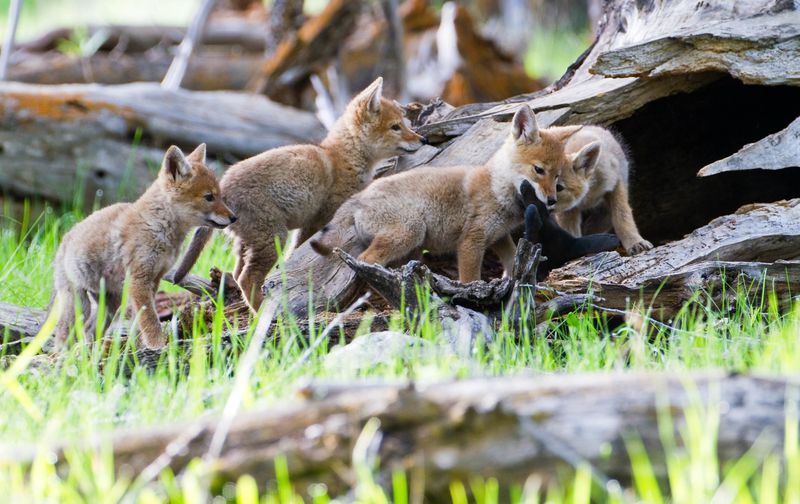
Coyote families follow a yearly rhythm. According to the Wisconsin DNR, mating usually happens in February or March, pups are generally born in April, and some young coyotes leave their parents in fall or winter.
That leaving is called dispersal.
It is tempting to connect the dots and say that a howl on a chilly November night means a young coyote is heading out on its own. That is too big a leap.
The DNR is describing pup life history, not explaining why anyone hears howling near their home.
Research on calling adds another reason for caution. A Michigan study in Wildlife Biology found that how often coyotes answered recorded calls differed from month to month, and it noted that peak months in the Midwest had not been reported before.
Results from other regions do not line up neatly, either.
So dispersal is best seen as a possible seasonal backdrop. It might be part of what is happening in the countryside in fall and winter, but it cannot tell you why coyotes called on a particular night.
It also does not give Wisconsin a howling calendar. You can hear coyotes in many months, and no source here crowns late fall as the state’s peak.
The honest answer is that timing is context, not an explanation.
A howl alone doesn’t mean a hunt or an imminent threat to people

Stories about howling tend to get dramatic. People say the coyotes just made a kill, or that they are hunting right now, or that an attack is coming.
The sources reviewed give no basis for any of that.
Woodland Park Zoo says there is no evidence that howling is a sign a group is hunting. It also points out that coyotes can vocalize in daylight, so the idea that they only howl at night, or only at the moon, does not hold up.
None of this means coyote calls never carry a warning or signal of some kind. It means a sound alone does not let you work out what the message was.
A howl by itself is not proof that a person or a pet is in danger.
Risk to people is also low. The Wisconsin DNR describes attacks on people as exceptionally rare, though it acknowledges that coyotes can kill small pets.
The difference between hearing and seeing matters here. A distant sound tells you very little, while the behavior of a visible animal tells you much more.
A coyote that trots away when it spots you is acting very differently from one that keeps coming closer.
So you can let the howls pass without rushing outside or taking action against an animal you cannot see.
What should you do if a coyote appears?
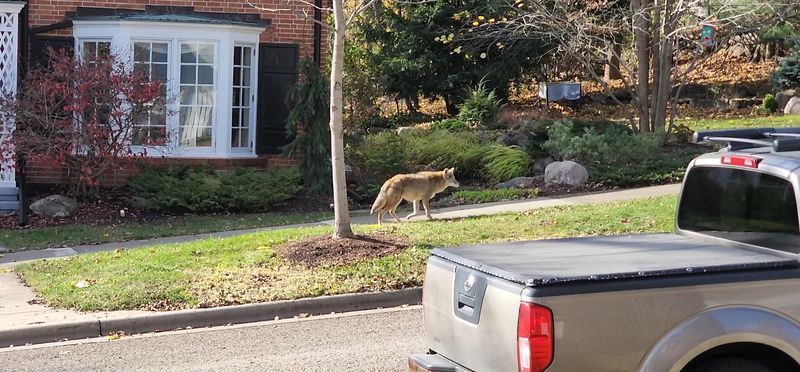
Hearing a coyote and seeing one are two different situations. A coyote merely being present is not an emergency, and the Wisconsin DNR says attacks on people are exceptionally rare.
Small pets are another matter, since coyotes can kill them, so keep an eye on cats and little dogs.
Most coyotes you spot will simply move along. If one is behaving in a concerning way, such as lingering near you or showing no fear, the DNR advises loud noises and other scare tactics.
For a local version of that advice, Public Health Madison and Dane County suggests making yourself look large, shouting, and throwing objects in the animal’s direction, not at it. The goal is to scare, not to injure.
There are important exceptions. Do not haze a coyote that looks sick or injured, one that has pups with it, or one near a den with pups.
In those cases, give it space and walk away.
If a coyote keeps approaching or becomes aggressive, leave the area and contact local authorities. The phone number in the Madison and Dane County guidance is for that area only.
Elsewhere in Wisconsin, check with your own town, county, or the DNR.
None of this applies to sounds heard from a distance. Without a visible animal behaving in a worrying way, there is nothing to haze and nothing to chase.
Small changes can make a yard less inviting

Coyotes are opportunists, so a yard with an easy meal is more likely to draw them in. The most useful step is also the simplest: do not feed them, on purpose or by accident.
UW-Madison Extension offers guidance on coexisting with canids that follows this approach.
Start with the garbage. Keep trash in secure containers, and put them out as close to pickup time as you can.
Bring pet food indoors rather than leaving a bowl on the porch.
Food meant for other wildlife counts too. Spilled birdseed, scattered scraps, or piles left out for squirrels and raccoons can attract the animals coyotes might follow.
Pets deserve a few sensible habits. Supervise them while they are outside, keep dogs leashed where coyotes are present, and keep cats indoors.
The Wisconsin DNR notes that coyotes can kill small pets, which is why these habits are worth the effort.
You do not need to treat a howl as a reason to rebuild your yard. These steps are good practice if coyotes live near you, whether or not you hear them.
Think of them as quiet housekeeping that keeps wildlife wild and your pets safer.
Let the sound be a cue to stay calm
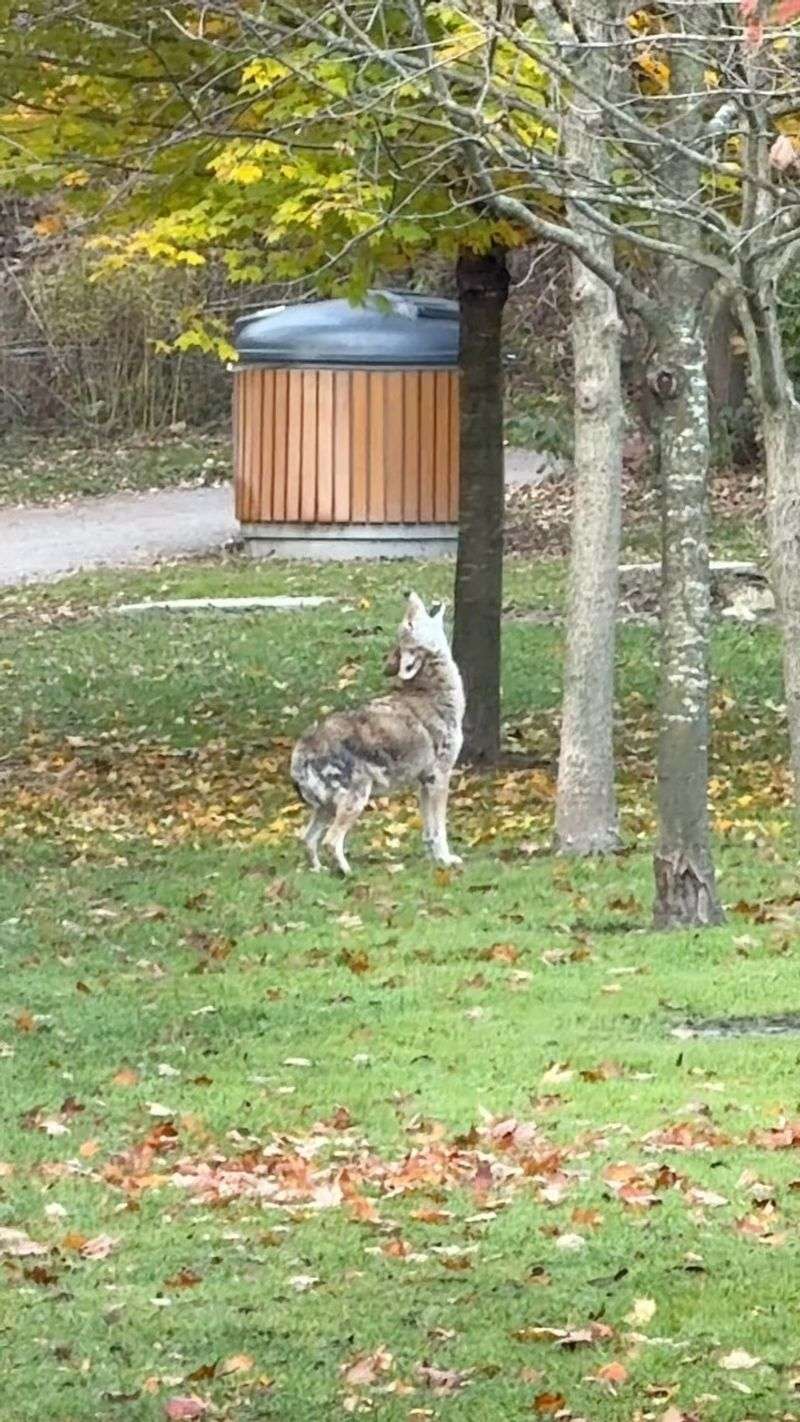
Next time the yips drift across the yard, take them for what they are: coyotes communicating. A chorus is not a head count, and it is not a reliable sign of danger to people.
As Woodland Park Zoo explains, howling is not evidence of hunting.
Nothing needs to be done about an animal you cannot see. If one does show up, let its behavior guide you, and keep up the habits from UW-Madison Extension.
Roll over, pull up the blanket, and let the night sing.
Share this story