Spreading fertilizer on a lawn seems like a simple chore, but Wisconsin has two different rules that can apply. One rule is about frozen ground, and the other is about phosphorus.
Mixing them up is easy, and the details matter for your yard and for nearby lakes and streams. Here is how each rule works and how to check before you spread anything.
Wisconsin has two separate fertilizer rules

Many headlines blend two Wisconsin rules into one, and that can mislead homeowners. The first rule bars applying fertilizer to covered turf when the ground is frozen, and it applies regardless of what is in the bag.
Nitrogen-only products, organic blends, and phosphorus products are all treated the same way on that point.
The second rule is about phosphorus. It applies to fertilizer products covered by the statutory wording and generally bars their use on turf.
Product coverage can vary, so not every item that contains some phosphorus is handled identically.
The phosphorus restriction has two exceptions. A covered product may be used when establishing grass by seed or sod during the growing season when establishment begins.
It may also be used when a laboratory soil test from the previous 36 months finds a phosphorus deficiency. Details appear in the DATCP fact sheet and in Wisconsin Statutes section 94.643.
Neither phosphorus exception overrides the frozen-ground rule. A new lawn or a deficient soil test does not make it legal to spread covered fertilizer on frozen turf.
The two rules work side by side.
The sections below answer practical questions. They explain which lawns and products are covered, what the exceptions require, and how to check ground conditions.
They also cover the penalties the law allows and why local rules may add more limits.
Which lawns and products fall under the state rules?

State law defines turf as closely mowed, managed grass. That includes residential lawns, golf courses, and public land.
Pasture, land used to grow sod, and other agricultural land are not treated as turf under the statute.
The phosphorus wording concerns fertilizer labeled as containing phosphorus or available phosphate. That is why the label matters.
Some organic phosphorus sources may be treated differently, as noted in UW-Madison Extension lawn fertilization guidance.
That does not mean every organic product is exempt from every rule. The frozen-ground clause, for example, separately names manipulated manure and finished sewage-sludge products.
A product may escape one rule and still fall under another.
The law also bars intentionally applying covered turf fertilizer, manipulated animal or vegetable manure, or finished sewage-sludge product to impervious surfaces such as driveways, sidewalks, and streets. If some lands there by accident, remove it right away.
DATCP advises sweeping or blowing it back onto the target area rather than washing it into a storm drain.
How can you tell when the ground is frozen?
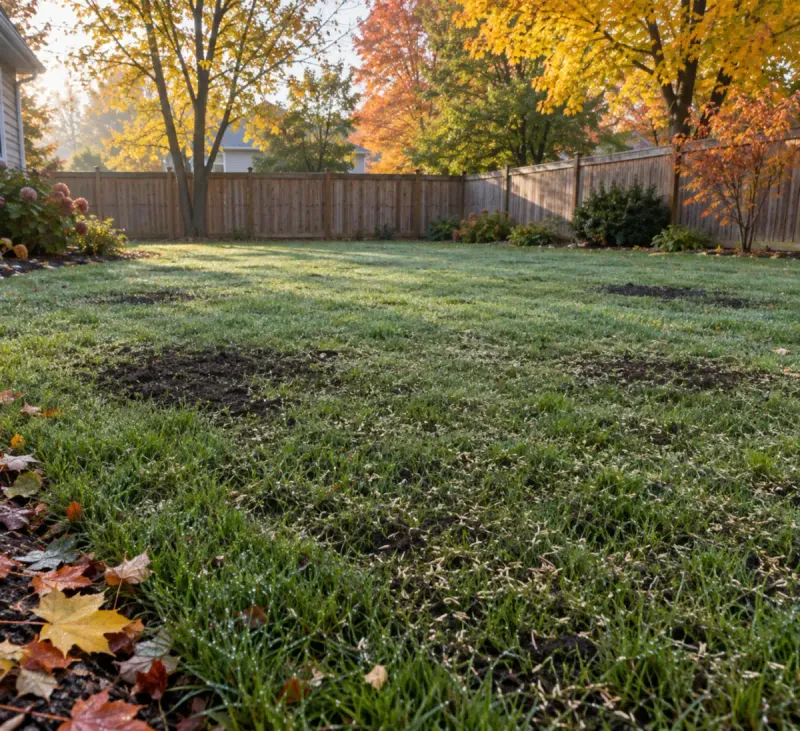
The frozen-ground rule depends on the ground, not the calendar and not the weather forecast. A warm afternoon can leave the soil below still locked up, and a bare lawn can be frozen solid.
So the check has to be physical.
DATCP gives a simple test. Ground counts as frozen when you cannot dig down six to eight inches.
Grab a spade or a soil probe and try it in a few spots, including shaded areas where frost lingers longest.
Snow cover is not a reliable stand-in. DATCP says snow alone is not a good indicator, since the ground can be frozen under bare grass or unfrozen under a thin layer of snow.
You can read the agency’s wording in its turf fertilizer fact sheet.
Remember that this rule covers all fertilizer used on covered turf, whatever the ingredients. A lawn product with no phosphorus at all still cannot go down on frozen ground.
If the spade will not go in, wait.
Phosphorus use requires a specific exception

For covered products, the phosphorus restriction is the starting point, and use needs one of two exceptions. The first is establishing grass.
That means starting turf by seed or sod during the growing season when establishment begins.
The second is a laboratory soil test performed within the previous 36 months that finds phosphorus deficiency. A guess or a feeling that the lawn looks thin does not count.
The test needs to come from a lab, and it needs to be recent.
Both exceptions are spelled out in the Wisconsin statute and summarized in the DATCP fact sheet. Keep your test report on file in case you need to show it later.
An exception only answers the phosphorus question. It does not lift the frozen-ground rule, so a seeded lawn in a cold snap still cannot get covered fertilizer while the ground is frozen.
The exceptions also should not be stretched to products outside the statute’s coverage, which may be governed by other provisions.
Check the label and soil before choosing fertilizer
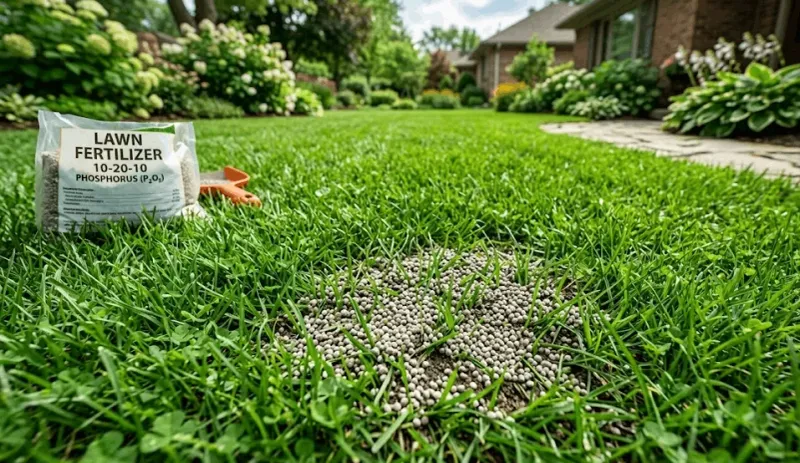
Every fertilizer bag shows three numbers. The middle one is phosphorus, and DATCP says a nonzero middle number means the product contains it.
A bag marked 24-0-6 has none, while 10-10-10 does.
Next, find out whether your lawn needs phosphorus in the first place. UW-Madison Extension says most Wisconsin soils already have enough for established turf and recommends a soil test to determine need.
A test also tells you about soil pH and potassium, so it is useful even when phosphorus is fine.
If a lab test shows a deficiency, that result can serve as an exception to the phosphorus restriction, as long as it is within the previous 36 months. Without one, a no-phosphorus product is usually the simple path.
Neither the label nor the soil test settles every question. You still need to check that the ground is not frozen, think about whether the product falls under the statute, and look at any local rules.
Those checks are separate from the numbers on the bag.
Winter runoff explains the environmental concern
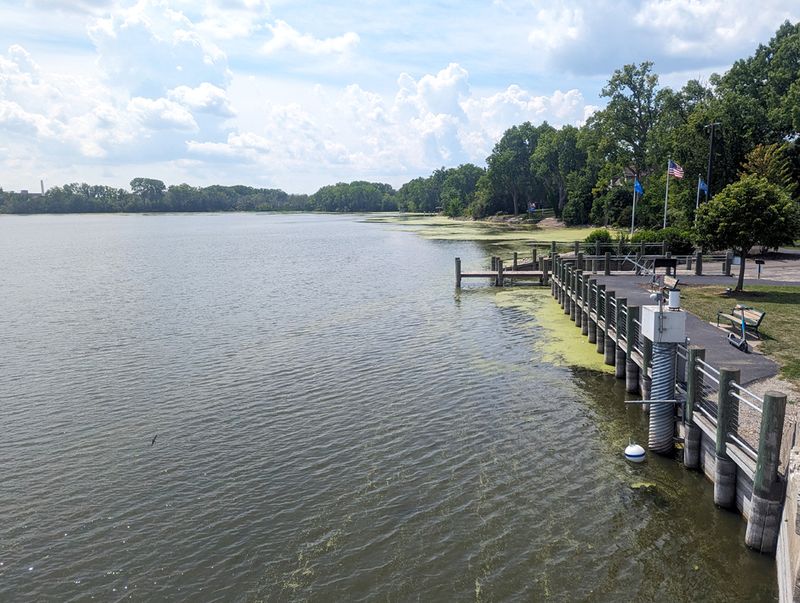
Phosphorus helps plants grow, and that is also the trouble when it reaches water. The Wisconsin DNR explains that phosphorus washing into lakes and streams can feed algae growth.
Frozen ground adds a twist. Water cannot soak into it well, so rain or melting snow tends to run across the surface instead.
UW Extension notes that snowmelt and winter runoff can carry dissolved phosphorus along with it.
That runoff pathway is the reason fertilizer on frozen turf is a concern, whatever the ingredients. Fertilizer sitting on the surface when a thaw arrives can be carried off rather than reaching grass roots.
Phosphorus has many origins, including soil, manure, plant material, and fertilizer. Nothing here ranks lawns against those other sources.
The point is narrower: when you put fertilizer on frozen turf, you give it an easy path off the lawn.
A violation may bring a forfeiture, not an automatic fine
Headlines often say violators will be fined, but the statute is more careful. It says a violator may be required to forfeit certain amounts.
That wording makes the penalty possible rather than automatic.
For a first violation, the forfeiture can be up to $50. For a second or subsequent violation, it can range from $200 to $500.
The full text is in Wisconsin Statutes section 94.643.
The sources reviewed do not show how often homeowners are cited or penalized. So there is no basis to say enforcement is frequent or rare.
What can be said is what the law allows.
The better reason to follow the rules is practical. Spreading fertilizer on frozen turf wastes product and can send nutrients toward storm drains and waterways.
A small penalty on paper is only part of the picture.
Local ordinances can add restrictions

State law sets a floor, and local governments can add more. Dane County is one clearly identified example.
Its own lawn-fertilizer ordinance prohibits phosphorus-containing fertilizer except for new lawns or documented soil-test need, as described by the county’s Land and Water Resources Department.
The legal text sits in Chapter 80 of the Dane County Code. That is a local rule, not statewide law, so it does not automatically apply to a yard in another county.
Wherever you live, check your own municipality and county. Look for provisions that match your product and how you plan to use it.
Local rules can differ in wording, coverage, and exceptions.
Product details can also change the answer. UW-Madison Extension notes that some organic phosphorus sources are treated differently under state restrictions and that local ordinances may be stricter.
Do not assume an organic label exempts you from every rule.
Check the product, the ground, and local rules

Start with the bag: look at the middle number and decide whether the product falls under the phosphorus restriction. If it does, confirm that you have an exception, either establishing grass or a lab soil test from the past 36 months showing deficiency.
UW-Madison Extension suggests a soil test to settle that question.
Then test the ground with a spade. If you cannot dig six to eight inches, DATCP’s guidance says treat it as frozen, and no exception lifts that rule.
Finish by checking local ordinances.
Most lawn mistakes in winter come from guessing, so let the spade decide.
Share this story