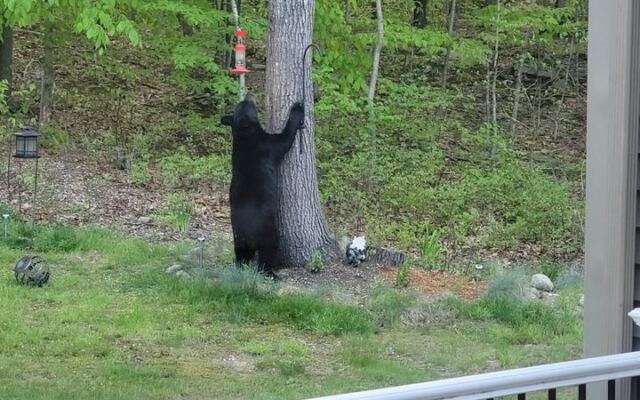
A bird feeder can feel like a small, harmless pleasure, but in parts of Massachusetts it can also catch the attention of a hungry black bear. Many people wonder if there is a date, like Thanksgiving, when feeders become safe to leave up.
The real answer is simpler and does not depend on the calendar. Here is how bear denning works, why feeders matter, and a clear plan for taking yours down.
When do Massachusetts bears actually den?
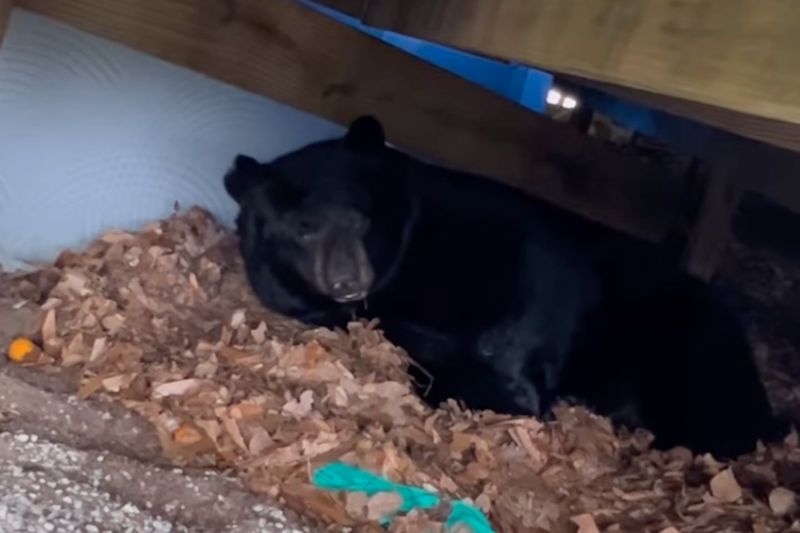
Massachusetts bears do not follow a holiday schedule. MassWildlife’s bear FAQ says bears typically enter dens from mid-November to mid-December, depending on food availability.
Some bears stay active for part or all of winter.
That range is a guide, not a deadline. One bear might settle into a den in early November while another keeps wandering well into December.
Weather, age, and the food a bear can find all play a part, so nobody can name a single date when every bear is asleep.
Fall activity near homes is real, though it should not be mistaken for a statewide trend. In one example, WCVB reported a bear eating birdseed in Chelmsford on October 24, 2026.
That story shows what can happen in autumn. It does not show that bears are raiding feeders across the state in late November.
So Thanksgiving is a poor cutoff. A bear that is still out on the Friday after the holiday does not care what the calendar says, and a feeder left up until then gives it an easy meal.
If you live where bears are active, the safer plan is to stop waiting for a date and take the feeder down now.
MassWildlife says there is no safe time of year to leave feeders out. It recommends removing them at the first sign of bear activity, and that advice works for any week of the year.
Food can influence denning, but feeders are not the whole story

Food is one of several things that shape when a bear dens. It is not a switch that turns hibernation on or off.
Temperature, age, and a bear’s own habits all matter too.
A study of 51 female bears and 131 den events near Durango, Colorado, published in the Journal of Applied Ecology, found that natural food availability and bears’ use of developed areas were both linked to later denning and shorter den periods. Warmer temperatures also delayed denning.
In plain terms, bears that spent time around people and found plenty to eat tended to go to sleep later.
That is a pattern in Colorado bears, not proof about a backyard in Massachusetts. The study did not single out bird feeders, and it cannot say that your feeder caused a particular bear to stay up late.
Anyone claiming that goes beyond what the research shows.
The practical lesson is still useful. MassWildlife notes that plentiful human-associated food can lead a bear to skip or postpone denning, as explained in its black bear FAQ.
Taking away easy food from your yard is a low-cost step that removes one possible pull toward homes.
Think of it as lowering the odds, not flipping a switch. Removing a feeder will not guarantee that a bear sleeps on schedule, but it does take one temptation off the table.
Feeders and spilled seed can attract bears
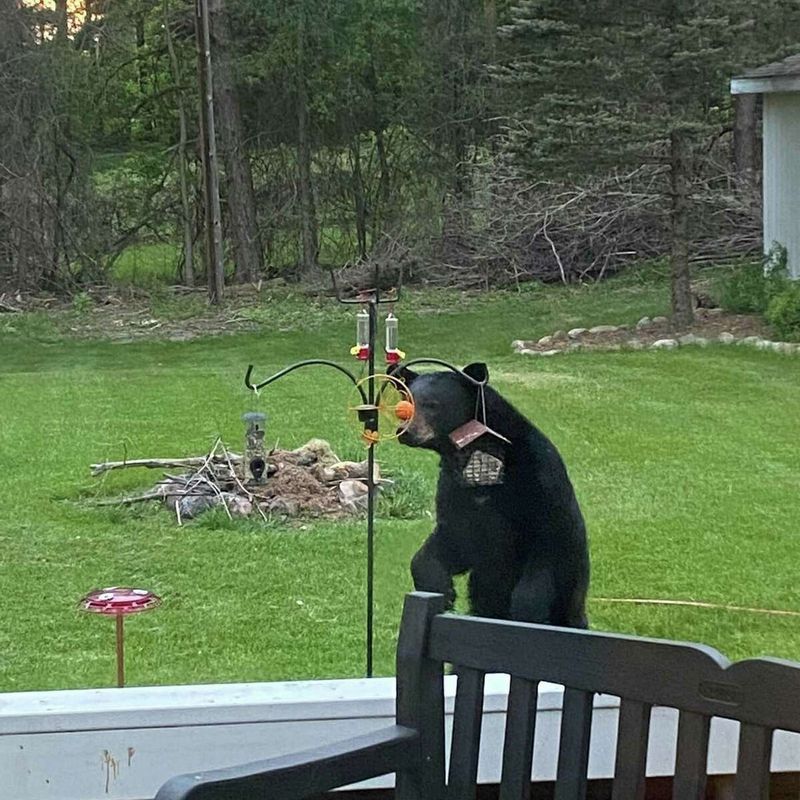
Bears have a strong sense of smell and a big appetite, and birdseed is rich in fat and calories. MassWildlife explains in its guidance on preventing bear conflicts that feeders can attract bears.
Seed, suet, and seed that lands on the ground all count.
Spilled seed is easy to overlook. Even if the feeder is empty or gone, a layer of hulls and kernels under it can still smell like food.
A bear that found a meal in one spot may come back to check it again.
MassWildlife’s bear coexistence flyer adds that feeding near people can make bears used to humans. A bear that loses its natural caution around houses is more likely to cause trouble later.
That can end badly for the bear as well as for the people nearby.
None of this means every feeder will bring a bear. Many yards with feeders never see one, and plenty of factors decide who visits.
The point is that a feeder is an avoidable food source, and in bear country that is a risk worth removing.
Taking the feeder down is a simple way to cut that risk. It costs you a season of watching chickadees at the window, and it spares you and the neighborhood a possible bear problem.
Wait for the bear to leave, then remove the whole feeder
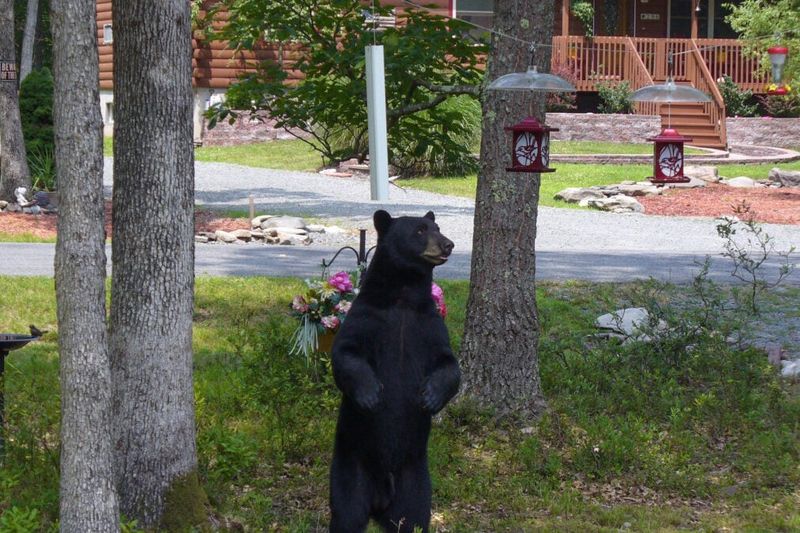
If a bear is in your yard, stay inside. Do not go out to grab the feeder, do not chase the bear, and do not try to scare it off from close range.
MassWildlife’s coexistence flyer tells residents to wait until the bear has left before removing or securing food sources.
Once the yard is clear, work through the cleanup in order. First, take down the entire feeder, including the pole hooks, trays, and cages, not just the food.
A feeder with seed residue still smells like a meal.
Next, deal with what was inside. Empty any leftover seed and store it in a sealed container in a garage, basement, or other closed building, not on a porch or in an open shed.
Suet should go in the freezer or indoors until bear season is truly over.
Then sweep up what spilled. The U.S.
Fish and Wildlife Service explains in a story on feeding wildlife that regularly cleaning up excess seed matters. Rake or sweep the ground under the feeder, and bag the hulls with your trash.
If you do meet a bear while outdoors, talk calmly and back away slowly. Do not run.
Doing these steps in daylight, with the bear gone, keeps everyone safer.
Secure other food and potential attractants
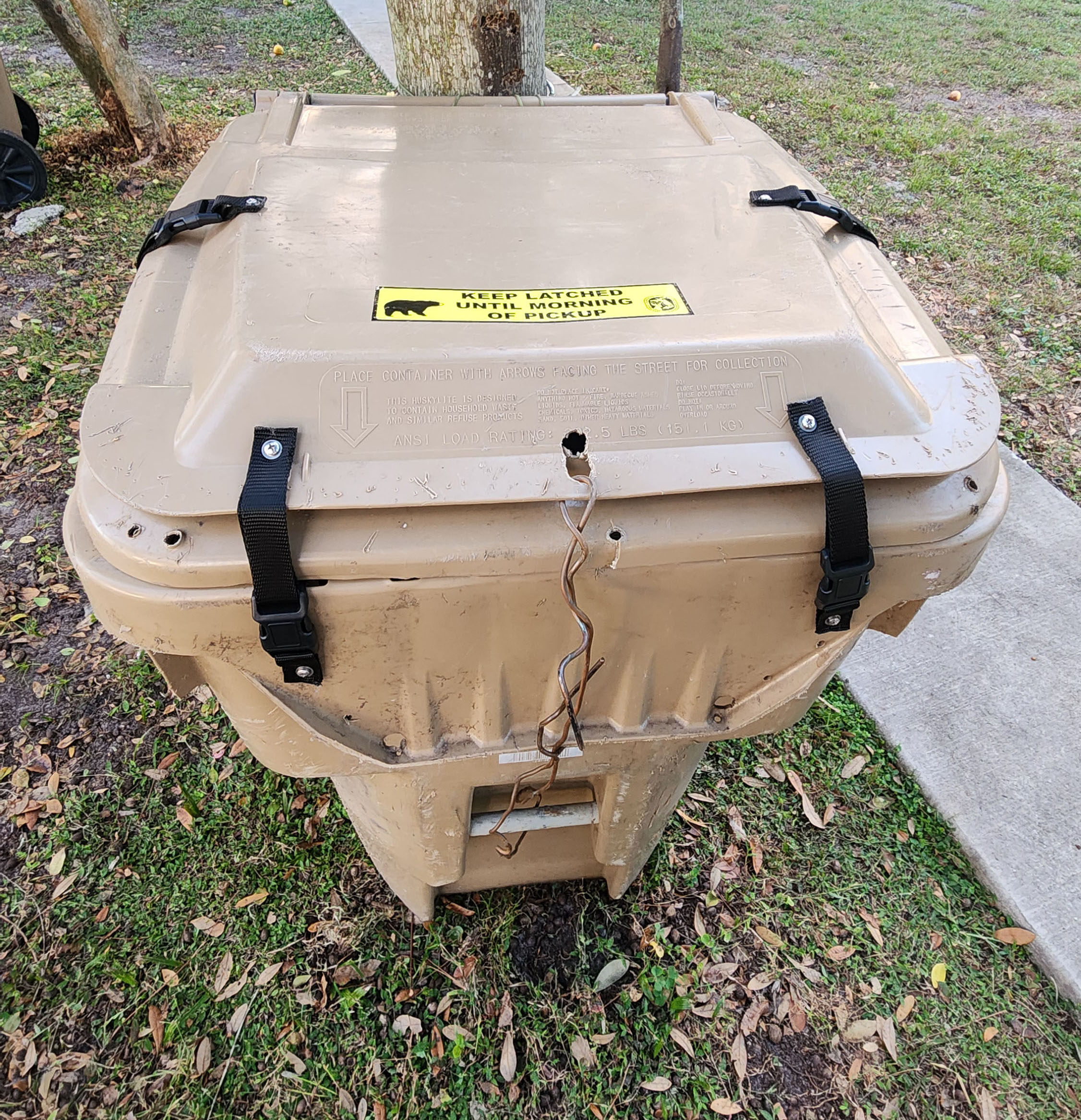
Birdseed is only one item on a bear’s menu. Taking down the feeder helps less if the trash can behind the house is still a free buffet.
MassWildlife’s bear conflict prevention guidance covers the other common draws.
Start with garbage and compost. Keep trash in a secure building or a bear-resistant container until pickup, and avoid putting bins out the night before collection if you can.
Compost piles with food scraps can smell strong, so keep meat, fish, and sweet scraps out of open piles.
Pets can attract bears as well. Feed dogs and cats indoors, or pick up bowls and leftovers as soon as they finish.
Grills need attention too, since grease and food bits hold odor, so scrape and clean them after each use.
Backyard animals are a special case. The MassWildlife flyer recommends properly installed electric fencing to protect livestock, beehives, and coops.
A standard coop or pen may not keep a bear out, so do not count on ordinary wire or a latch alone.
A good habit is to walk the yard at dusk and ask what a hungry animal could smell. Fix the answers one at a time, and the whole property becomes less interesting to a passing bear.
Support backyard birds without a seed feeder
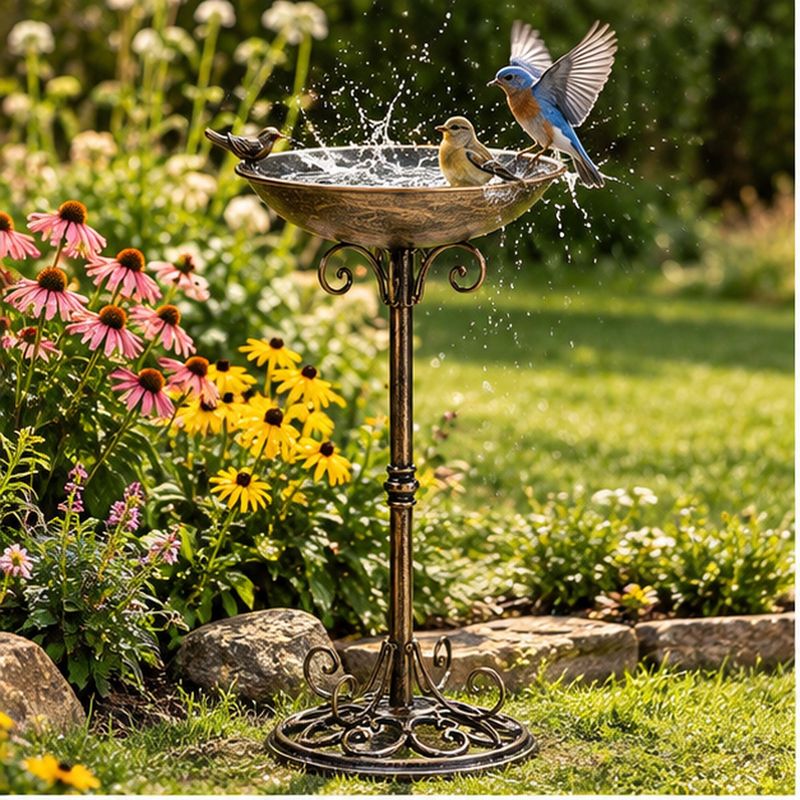
Birds do not need a seed feeder to thrive in your yard. MassWildlife’s advice on avoiding feeding wildlife points to native plants, birdhouses, and fresh water as better choices.
Berry shrubs, oaks, and native flowers give birds natural food and shelter through the year.
A birdbath or shallow dish of clean water can draw as many visitors as a feeder. Change the water often and scrub the basin to keep it fresh.
Birdhouses give nesting birds a safe place to raise young, and they have no food odor to attract a bear.
Guidance on feeders differs a bit between groups. Mass Audubon’s bird feeding advice is aimed at bear-occupied central and western Massachusetts.
It says to remove feeders between March and November, and in winter too if bear activity is evident.
This article leans on MassWildlife’s stricter statement, found in its bear conflict guidance, that there is no safe time of year to leave feeders out. It also recommends taking them down at the first sign of bear activity.
If you want a firm rule for bear country, that is the one to follow.
Even these alternatives do not remove all bear risk, since a bear may still wander through for acorns, berries, or trash. They do shift your yard toward natural food and away from a concentrated pile of calories.
Make feeder removal the rule, not the holiday
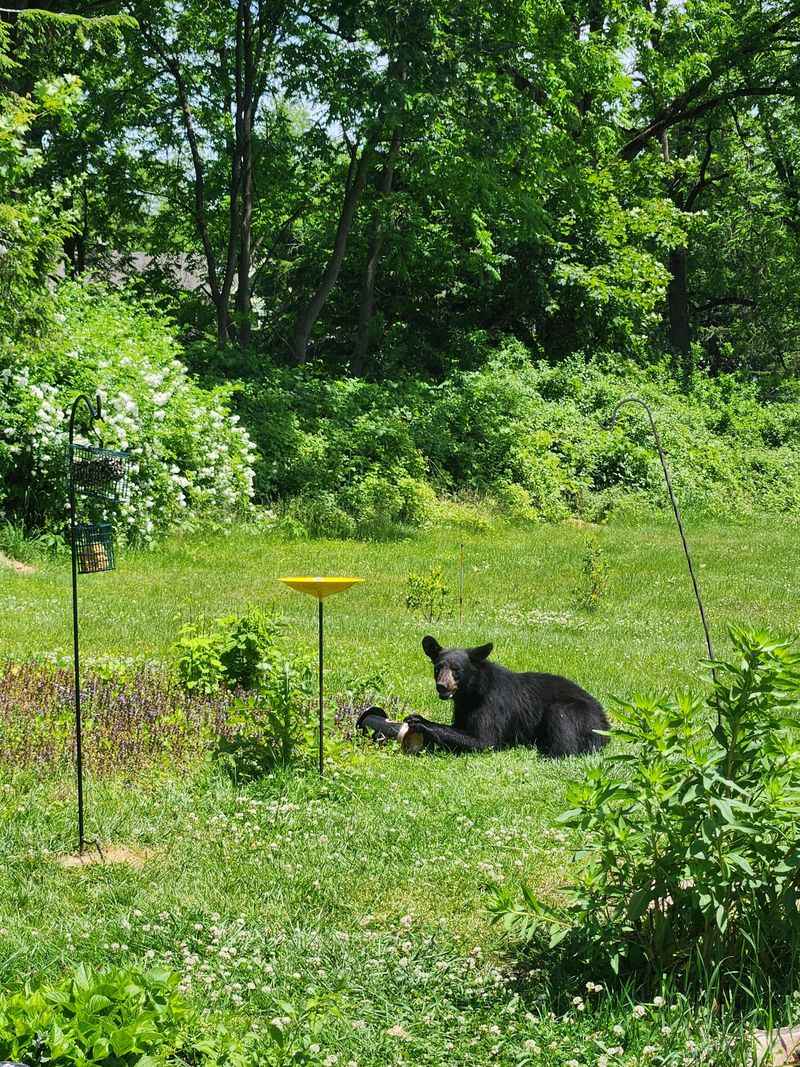
In bear country, take feeders down when you first notice bear activity, rather than counting days to Thanksgiving. Sweep up spilled seed and secure garbage, pet food, and grills, following MassWildlife’s prevention guidance.
These steps cut down easy food and lower conflict risk, but they cannot promise a bear-free yard. They also do not prove that a feeder decides when a bear dens, and den timing varies from bear to bear.
Birds will find what they need elsewhere, and a quiet yard is a fair trade for a sleepy bear.
Share this story