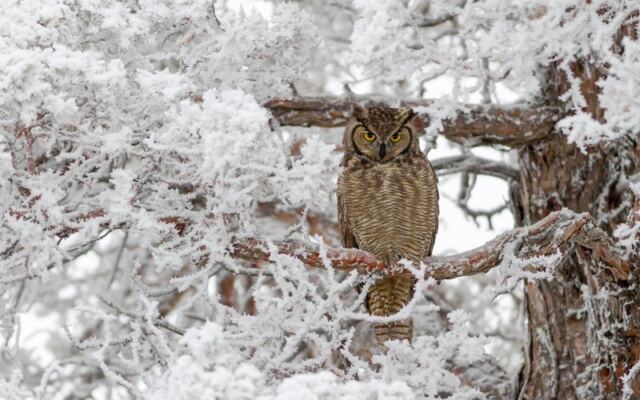
A deep hoot drifts across a cold, still Massachusetts night, and suddenly you are wide awake. Great Horned Owls are common here, and winter is when many people first notice them.
Their calls can say a lot to other owls, but they tell us less than you might guess. Here is what your ears can learn, and what they cannot.
Why winter nights bring more owl voices
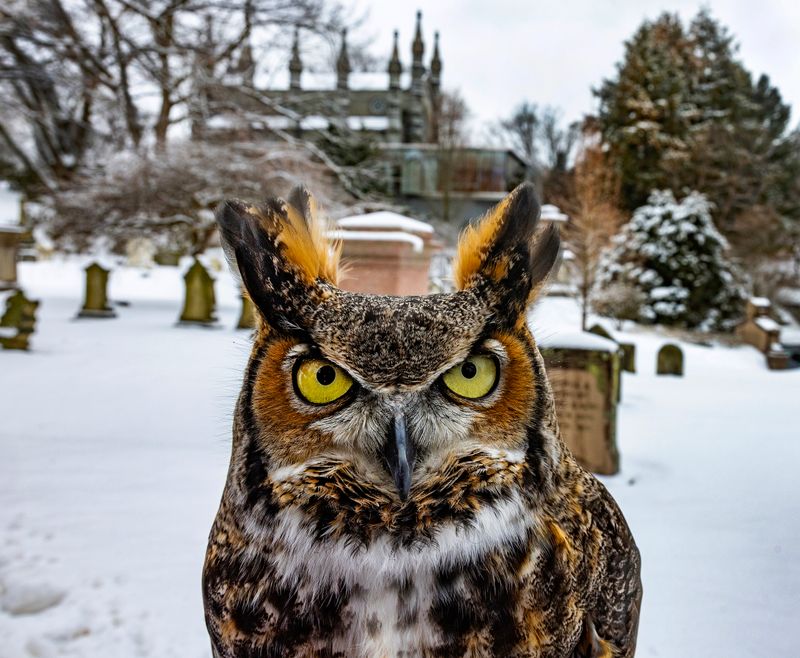
Winter is when many Massachusetts residents first notice that owls live nearby. Great Horned Owls are common across most of the state, from quiet suburbs to wooded edges and farm country.
Their deep, rhythmic hooting carries well on cold nights, when leaves are gone and the neighborhood goes quiet.
The timing matters. Mass Audubon’s breeding bird atlas notes that these owls are most vocal from late December through January, leading up to the start of nesting in February.
That makes the dead of winter the best stretch for listening.
It is tempting to hear a hoot and picture a nest in the big pine out back. Hold that thought loosely.
The same atlas puts the usual egg-laying period between February 20 and March 25 in Massachusetts, so a January call comes weeks before any eggs would appear. Calling shows that owls are active and communicating as the season shifts toward breeding.
It does not tell you that a nest exists near your house.
Think of winter hooting as the opening act. Owls may be sorting out who is where, and paired birds may be keeping in touch.
You get to enjoy the soundtrack, even though the full story stays out of sight in the dark.
So when the hooting starts, treat it as a seasonal signal rather than a map. The best clue you have is the calendar: late December and January are prime time, and the sounds you hear then fit a species gearing up for the year ahead.
What does a hoot actually mean?
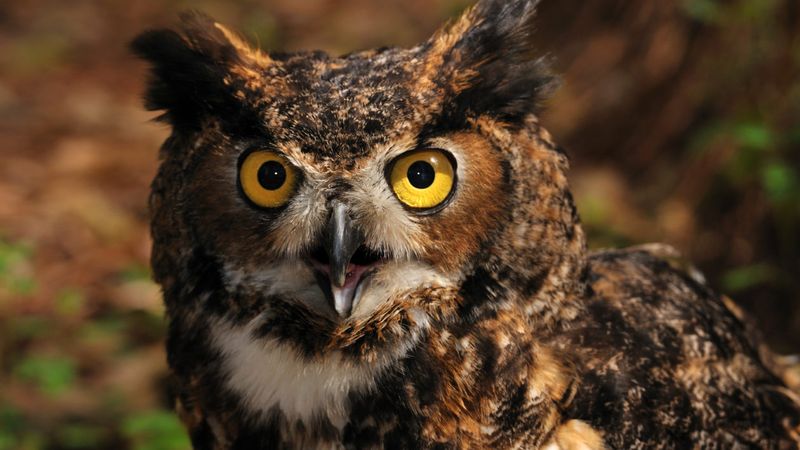
Owls do not hoot to entertain us. A hoot is communication, a message sent to another owl.
Depending on the moment, that message may relate to territory, courtship, or both at once.
Researchers have studied this closely. A study of Great Horned Owl vocalizations reports that territorial hoots are given by adults of both sexes.
They happen when a bird calls alone, when a pair calls back and forth in a duet, and when owls exchange calls with other owls. They can occur year-round but are most common in fall and winter.
That variety is the key point. Territorial calling is not the same thing as courtship.
A duet fits with two birds communicating, but one overheard duet does not prove a bonded pair, and it does not prove a nest.
Then there is the old either/or question: is the owl courting or hunting? Hooting does not answer it.
Cornell Lab’s life history notes describe the calls as communication, not a sign of what the owl is doing at that moment.
An owl that hoots may well hunt before or after, or from a spot nearby. Sound alone cannot show what happens between calls.
All you really know is that one owl wanted to be heard.
A duet offers clues, not a sex test
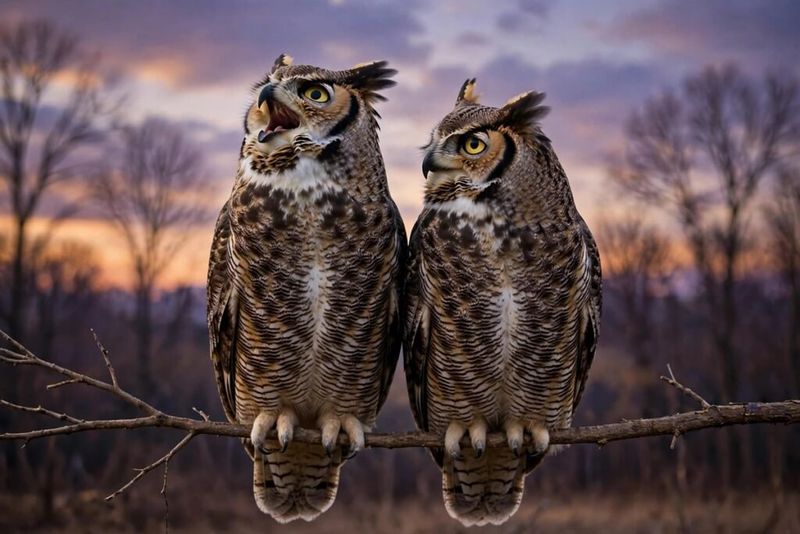
Listen closely to a duet and you may notice two different voices. Cornell Lab’s Great Horned Owl identification guide describes the female as generally higher-pitched than the male.
That is a little surprising, because females are the larger birds.
The male’s call tends to sound deeper and more booming. The female’s can sound a bit lighter, almost like a higher echo answering back.
When both are calling, the contrast can be easy to hear.
There is also a count clue. The vocalization study reports typical calls of six to nine notes for females and four to five for males.
Treat that as a pattern, not a rule.
Here is why. The study combined observations of wild owls with a human-imprinted captive female, and its author called for more verification in wild owls.
In other words, the numbers are not a guaranteed field method.
A single hoot from the dark is the hardest case. Without a second voice to compare, you cannot tell whether you are hearing a low female or a high male.
Wind, distance, and a half-heard phrase can also blur the count.
The best approach is to enjoy the contrast when you hear two voices and hold your guesses lightly. Pitch and note count make good listening games.
They do not make a reliable test.
Could that be a Barred Owl?
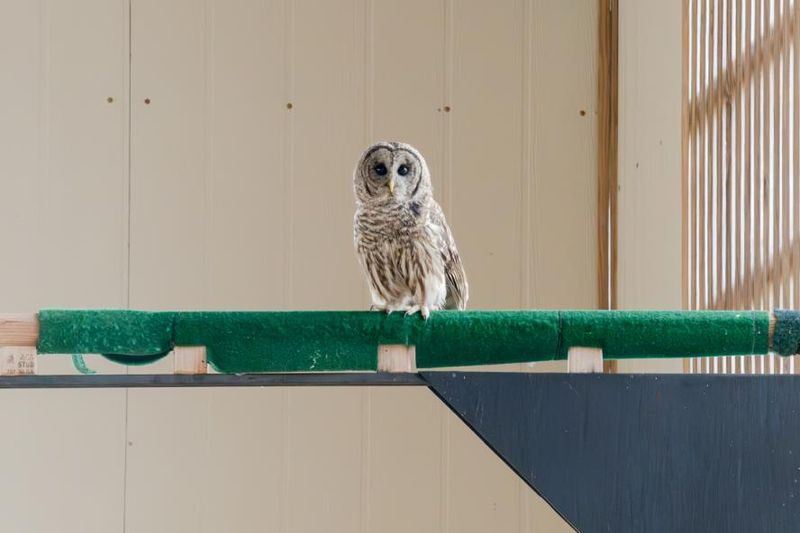
Before you decide what an owl is up to, make sure you have the right owl. Great Horned Owls are not the only big voices out there.
Mass Audubon’s owl guide notes that Barred Owls are also common across most of the state and can call year-round.
Their signature sound is a rhythmic phrase often written as “who cooks for you.” It has a rolling, conversational quality that is quite different from the steadier, deeper hooting of a Great Horned Owl. Many people find it easy to remember once they have heard it a few times.
Barred Owls often live in wetter, more wooded areas, but they can turn up near homes too. If you live near a swamp edge or mature forest, they are a real possibility.
Some sounds will stay a mystery. A short, distant, or muffled call may not give you enough to decide.
That is perfectly fine, and being honest about it is part of good listening.
A simple habit helps. Compare what you heard with recordings of Massachusetts owls, listening to both species.
Matching the voice first keeps you from building a story around the wrong bird.
A loud call does not map a nest
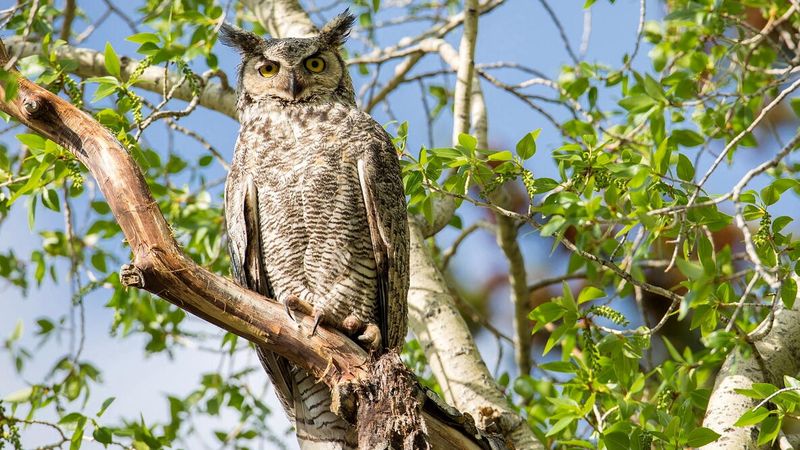
A hoot that seems to come from just outside the window can feel like proof the owl is right there. It is not.
Sound behaves strangely on a cold, calm night.
According to Mass Audubon, Great Horned Owl hoots can carry for miles on a still night. A call that sounds booming may have started far across a valley or beyond a few neighborhoods.
That means volume is a poor guide to distance. Trees, buildings, hills, and wind all change how a call reaches you.
Two identical hoots can sound very different depending on the night.
The same goes for the bigger questions. Hearing a call does not tell you whether the owl belongs to a pair, whether a mate is answering from somewhere out of earshot, or where a nest might be.
Even a duet only shows that two owls were calling, not that they are settling on your street.
A practical example: if you hear hooting from the north on three nights, it may be the same owl or several different ones. Keeping notes on date, time, and what you heard is more useful than guessing at a nest site.
Listen without disturbing the owls
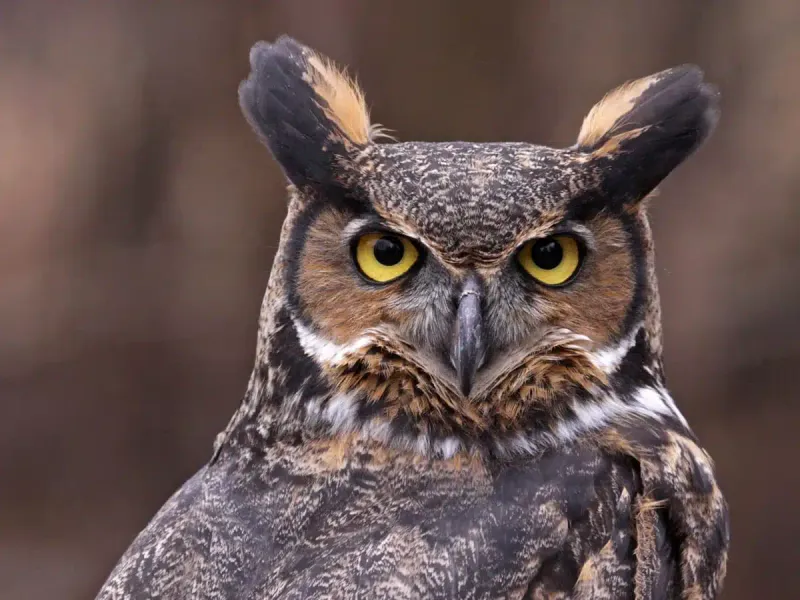
The kindest way to enjoy owls is the simplest. Crack a window, or step onto the porch for a few minutes, and let the night do the work.
Observing from indoors or from a good distance keeps the birds calm and your curiosity satisfied.
The International Owl Center advises giving owls space. Do not approach a suspected nest, shine lights at them, use flash, or play recordings over and over to coax a reply.
Repeated playback can disturb owls and pull them away from what they are doing.
Instead, write down what you hear, compare it with recordings, and enjoy the mystery.
The hoot tells you an owl is out there talking. The rest stays the owl’s secret.
Share this story