A flash of bright red on a tree trunk can stop you in your tracks each autumn. It might be a native Virginia creeper, but it could also be poison ivy, and the two can look alike from a distance.
Knowing which one you have helps you stay safe and decide whether the tree needs any attention at all. Here is how to look closely without touching anything.
Red leaves cannot identify the vine

A crimson vine climbing a trunk is hard to miss in October. Virginia creeper is a common New Jersey native, and Rutgers Cooperative Extension describes its fall foliage as a striking red.
That makes it tempting to say, “Red vine, must be Virginia creeper.”
That shortcut can lead you wrong. CDC guidance on poisonous plants notes that poison ivy leaves may also turn red, and the plant’s look changes with the season and growing conditions.
Two very different vines can wear the same fall color.
Think of red leaves as a reason to look more carefully, not as an answer. Color is the least reliable clue you have, especially from a distance or in dim light, when shapes blur together.
Better clues come from the plant’s structure. How many leaflets make up each leaf?
How does the vine hold on to the bark? Those details are easier to judge, and you can check both with your eyes or a camera zoom, so there is no need to reach out and handle a single stem.
Until you know what you are looking at, treat the vine as a mystery plant. Keep your hands, pets, and children away from it, and take a few photos from a few feet back.
The next section explains what to look for in those photos.
Leaflets and climbing structures offer better clues
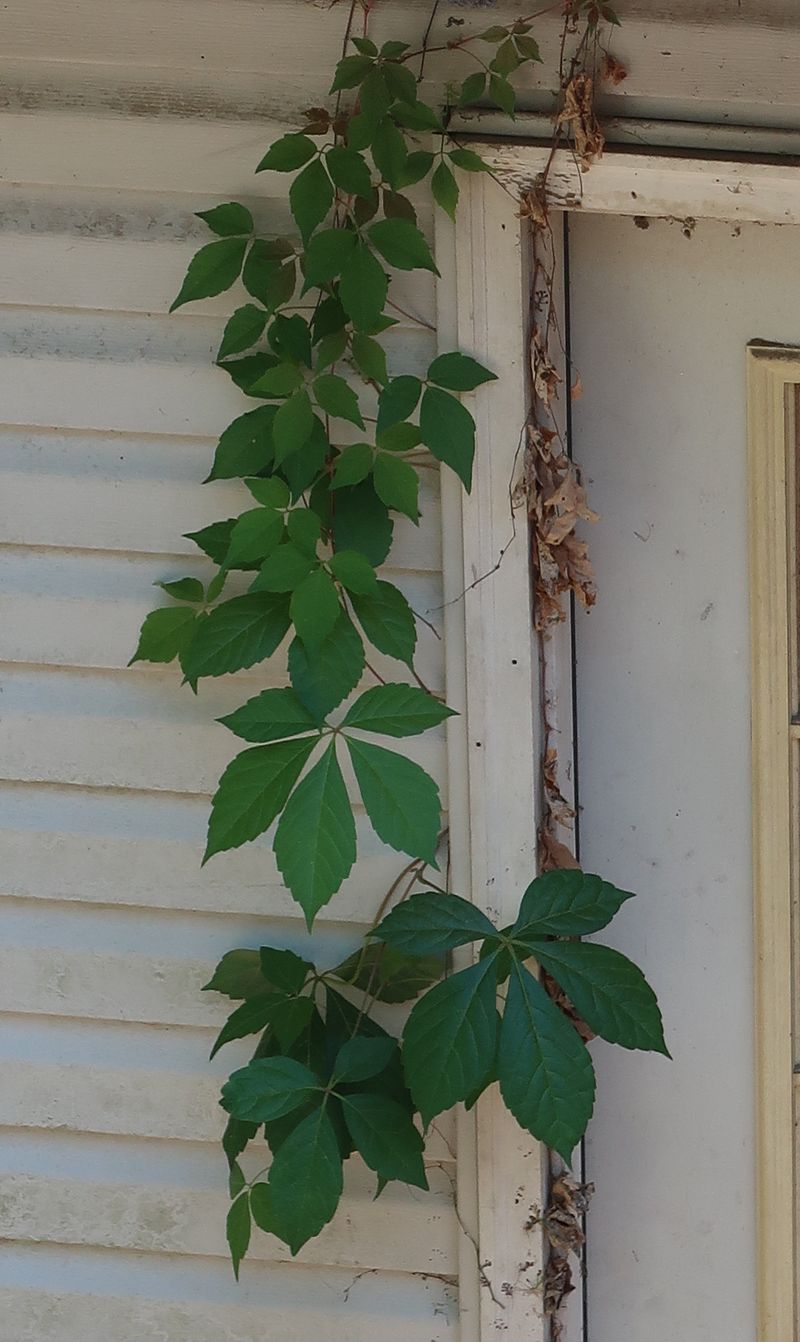
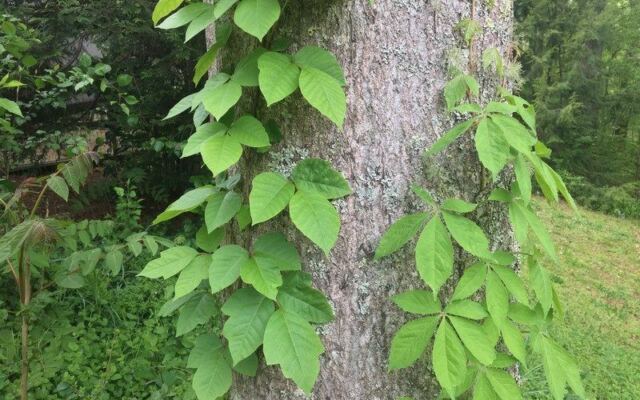
Start with the leaves. Virginia creeper typically has five leaflets that fan out from a single point, like fingers on a hand.
Poison ivy usually has three leaflets per leaf, which is where the old rhyme “leaves of three” comes from.
Next, look at how the vine grips the tree. Rutgers Plant and Pest Advisory explains that Virginia creeper climbs with tendrils that end in adhesive pads.
Poison ivy lacks those tendrils and disks. Its older stems often look hairy because of the aerial roots that anchor it to bark.
Use the two clues together. A five-leaflet leaf plus branching tendrils with little sticky pads points toward Virginia creeper.
Three leaflets plus a fuzzy, rope-like stem points toward poison ivy.
Neither clue is foolproof, though. University of Maryland Extension notes that poison ivy can occasionally show groups of five, seven, or nine leaves, and Virginia creeper can be confused with other plants.
A single leaf count can mislead you.
Do not pluck a leaf or peel the vine back to get a better look. Zoom in with a phone camera instead, or photograph the vine and bring the pictures to your county Rutgers Cooperative Extension office.
If you still cannot tell, assume it could be poison ivy and keep your distance.
Neither vine is a reason to handle it casually
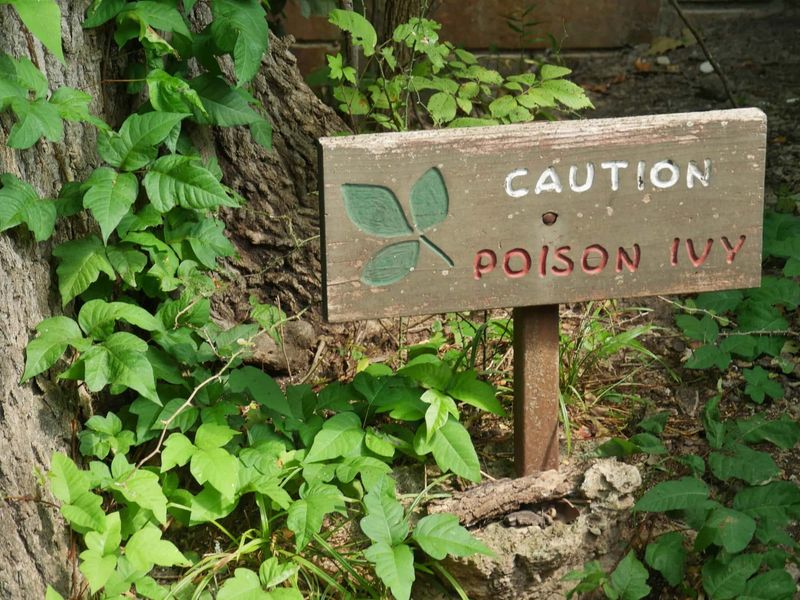
Poison ivy is the better-known troublemaker. Its sap contains urushiol, an oil that causes an itchy rash in many people, and CDC guidance warns that it can linger on tools, clothing, and other objects.
You do not have to touch the plant itself to pick it up.
Virginia creeper is not a safe alternative. Rutgers says it has been suspected of causing skin irritation in some people, so it deserves the same caution.
Having five leaflets does not make a vine harmless.
Berries are another concern, especially in homes with small children. The Missouri Poison Center describes irritation and stomach symptoms after Virginia creeper is eaten.
Do not eat any part of it.
If someone does swallow some, stay calm and call Poison Control at 1-800-222-1222 for advice. Sources describe the severity differently, and the berries are not invariably fatal, but a quick call is the right move rather than guessing.
The simple rule is to admire the color from a distance. Skip wreaths, crafts, and nature walks that involve picking pieces of an unidentified vine.
A vine on the trunk does not prove the tree is suffering
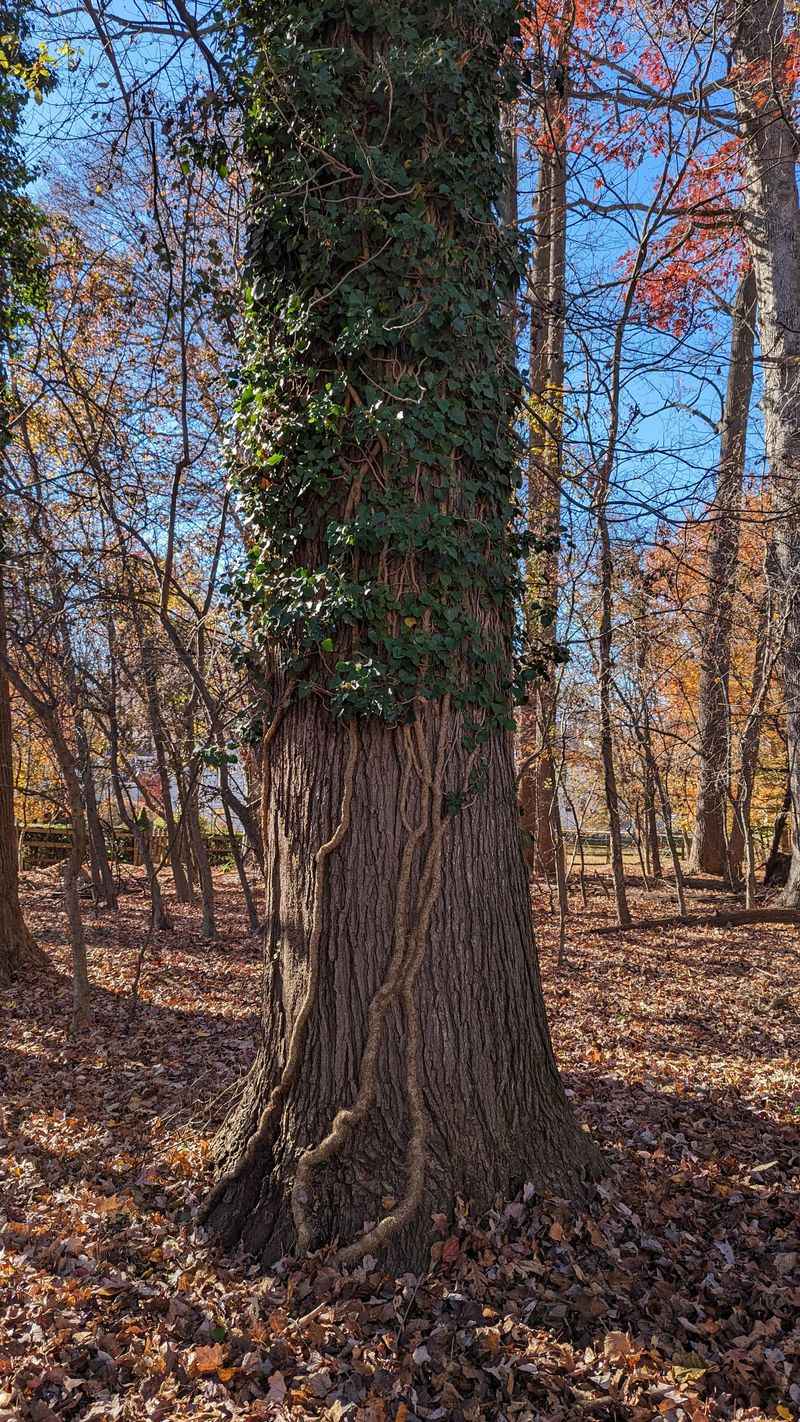
Many people see a vine wrapped around a trunk and assume the tree is being choked. That is not always true.
University of Maryland Extension states that poison ivy vines do not harm their host trees, even though the plant is a problem for people.
Virginia creeper deserves a more careful answer. The Rutgers commercial tree fruit production guide warns that it can smother fruit trees in orchard settings.
That is a real concern for growers.
It does not follow that every Virginia creeper on a backyard maple or a woodland oak is harming it. The risk depends on the plant, how vigorously it grows, and the tree it is climbing.
So look at the tree itself. Is the canopy full and green in summer?
Are branches leafing out normally? A tree with healthy foliage and a vine confined to the trunk is usually not in trouble.
Signs worth a second opinion include thinning leaves, dead branches, or vine growth that blankets the crown. If you see those, ask a certified arborist to assess the tree rather than blaming the vine on color alone.
If you remove suspected poison ivy, cut rather than pull
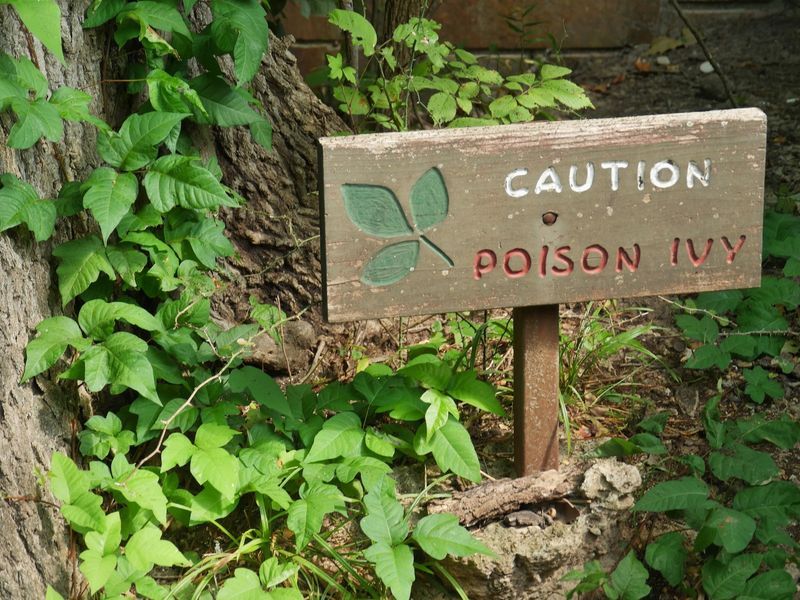
Removal is optional, not an emergency. If you choose to deal with a suspected poison ivy vine, Penn State Extension recommends cutting it near ground level and again a few inches above the first cut.
Then leave the upper vine on the tree to die naturally.
Resist the urge to yank it down. Pulling a large vine can tear bark and expose you to urushiol, which is the oil that causes the rash.
Even a dead vine can carry it, so do not peel old stems off the trunk either.
Dress for the job. CDC guidance advises protective clothing and gloves around suspected poison ivy.
Clean your tools afterward, and wash exposed clothing separately from the rest of the laundry.
Protective gear lowers your risk but does not make handling an uncertain plant risk-free. If you are not sure the vine is poison ivy, the safest choice is to leave it alone.
Never burn cut vines. Smoke can carry urushiol-bearing particles, and breathing them can harm your lungs and throat.
Leave hazardous tree work to a professional
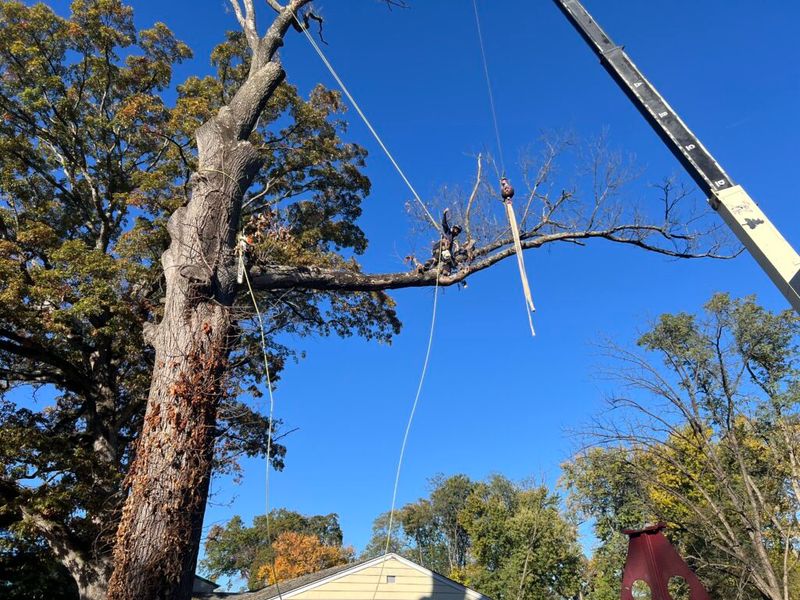
Some vines are simply out of reach. If getting to one means climbing, using a tall ladder, or working near power lines, stop there.
No vine is worth a fall or an electrical injury.
Penn State Extension’s advice on poison ivy removal assumes you can safely work at ground level, which is why a high vine should not be pulled down. University of Maryland Extension recommends a licensed tree expert or certified arborist for dangerous tree work.
A professional can identify the vine, judge the tree’s health, and remove growth without risking your safety. Ask about their credentials, and share your photos so they know what you are dealing with.
Meanwhile, you can enjoy the display from the ground. Red color cannot tell you which vine you have, and a vine on a trunk does not prove the tree is in trouble.
Sometimes the wisest garden tool is a phone number.
Share this story