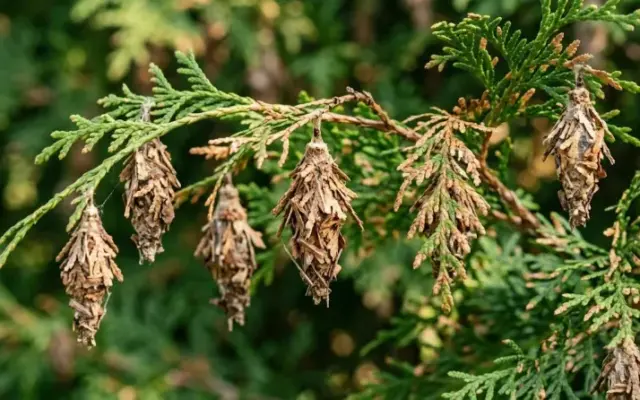
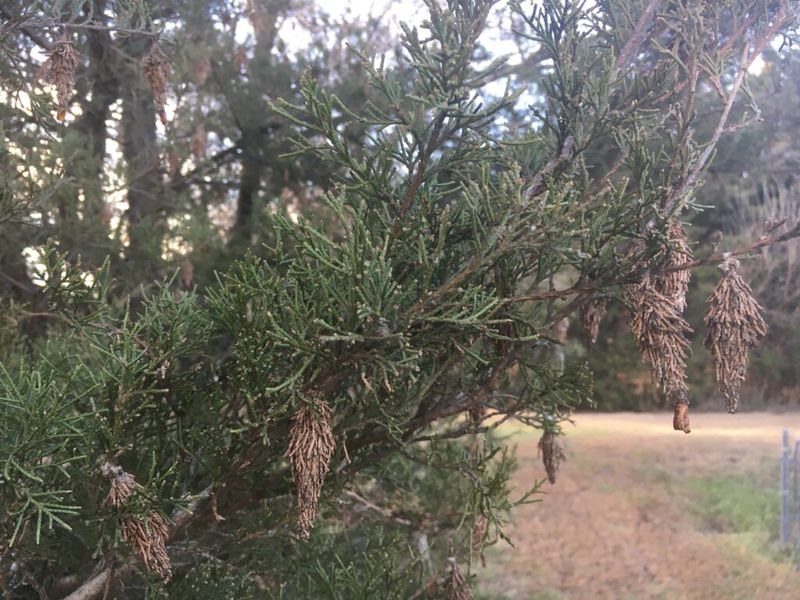
The small brown pouches hanging from your juniper may be bagworm cases, and a female’s case can hold hundreds of eggs waiting for spring. They look a lot like tiny cones, so many people walk right past them.
Some cases hold eggs, though, while others hold something different or nothing at all. Knowing which is which helps you decide what to do and when.
How to recognize a possible bagworm case
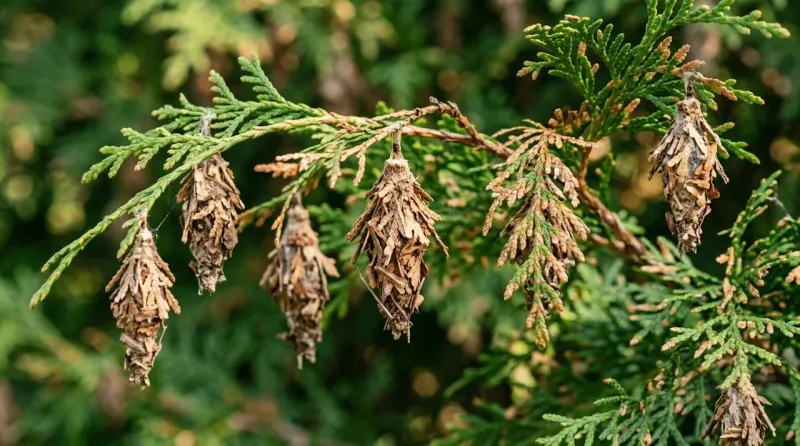
Picture a juniper with small brown, cone-like pouches dangling from its branches. It looks like the tree is decorated with miniature pinecones, but those pouches may be bagworm cases.
Not every pouch is one, so a few details matter before you decide.
Bagworms are moth caterpillars that build portable homes from silk and pieces of the plants they eat. According to University of Maryland Extension, juniper is among their hosts.
The caterpillar adds bits of needles and twigs to the silk, which is why the case blends in so well.
Mature cases are generally spindle-shaped, and they can pass for cones or plant debris. Look closely at the surface.
A bagworm case is a woven bag of silk with foliage pieces attached, often laid in an overlapping pattern. A true cone has hard, woody scales instead.
Check how the pouch hangs, too. Bagworm cases are fastened to the twig with a band of silk, and they often dangle from the branch.
Pull one gently from a low branch and you may notice the tough, papery feel of the silk, as described in University of Delaware guidance.
Resemblance alone is not proof. Other debris can look similar from the sidewalk.
Notice whether several pouches share the same shape and texture, and whether nearby foliage looks chewed. Those clues make a bagworm case far more likely.
Clemson Extension also stresses that these cases are built from silk and plant material, not grown like cones.
What a case holds depends on the bagworm’s stage
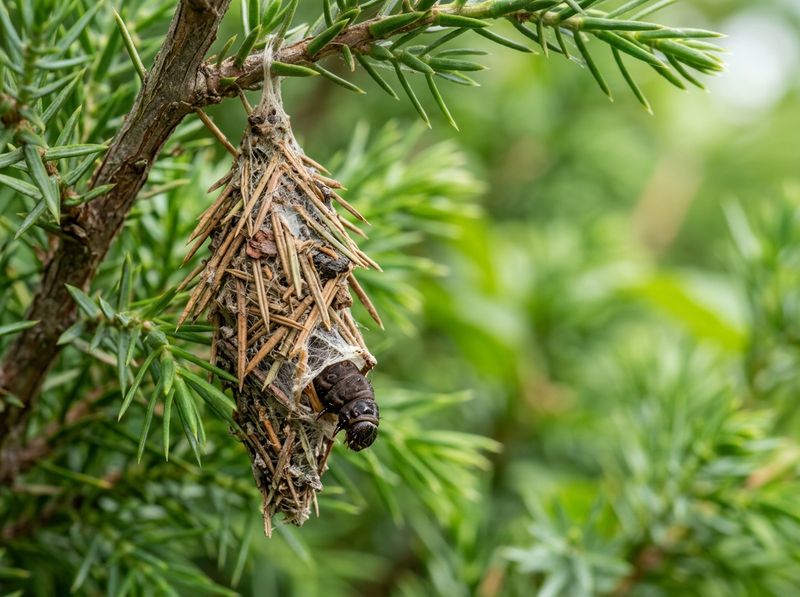
A dangling case does not always hold eggs. What is inside depends on where that bagworm is in its life.
Mixing up the stages is the most common mistake homeowners make.
During the growing season, a case usually holds a feeding caterpillar. It pokes its head out to chew foliage, then pulls back in.
Later the caterpillar seals the case to the branch and turns into a pupa inside. University of Maryland Extension describes this cycle of feeding, pupation, and adult emergence.
Male and female bagworms follow different paths. A male develops into a winged moth, leaves his case, and flies off to find a female.
That leaves an empty case behind, often with a small opening at the bottom. Females stay inside, so their cases are the ones that can end up holding eggs after mating.
Size matters, but it can fool you. Young larvae build small cases early in the season, and those tiny pouches do not hold eggs.
Do not assume every small brown pouch is an overwintering egg case. University of Delaware Extension notes that the larvae enlarge their bags as they grow.
Season gives a useful clue. Bags seen on bare winter branches have usually finished the cycle, while bags on a green plant in summer are probably occupied.
Texas A&M entomologists discuss bagworms in the fall, when females lay eggs and cases begin to settle in for winter.
A fertilized female can leave hundreds of eggs in her case
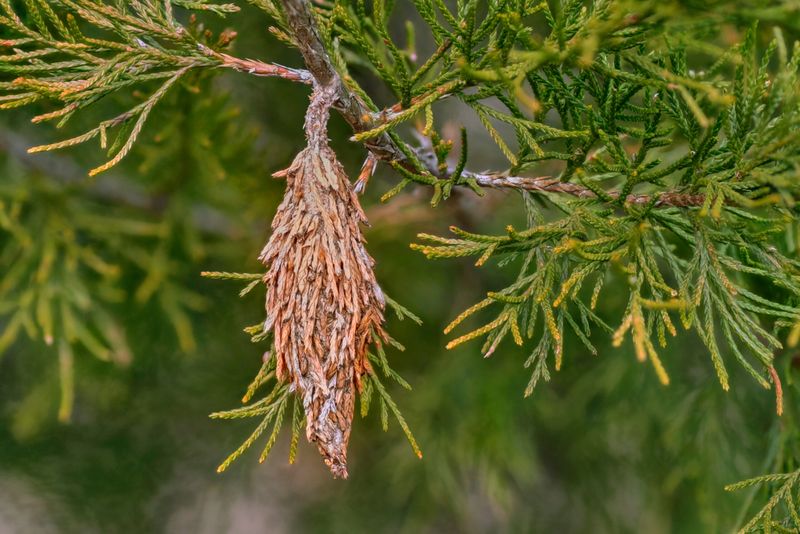
Here is the detail that makes these pouches worth a second look. After mating, a fertilized female lays eggs inside her own case, and the count can run from 200 to 1,000.
That range comes from University of Maryland Extension and matches other university sources.
Those eggs stay put through the cold months. The female’s body shrivels, and the case becomes a protective shelter.
When spring arrives, the eggs hatch and tiny caterpillars crawl out to start the cycle again.
One case can therefore seed a lot of new feeders on a single tree. A few cases left behind can turn into a much bigger problem by early summer.
That is why people take winter bags seriously.
Still, the number belongs to one specific stage. It describes a mated female’s case after egg-laying.
It does not describe every case on your juniper, and it does not promise that every bag holds viable eggs. Some belong to males, some are empty, and some may be old and weathered.
A fresh look at your tree helps. If you find cases that hang on through winter and seem full and firm, a female may well have laid eggs.
University of Delaware Extension also describes eggs overwintering in the female’s case. Treat those bags as possible egg sources rather than as certain ones.
When Maryland bagworms usually hatch
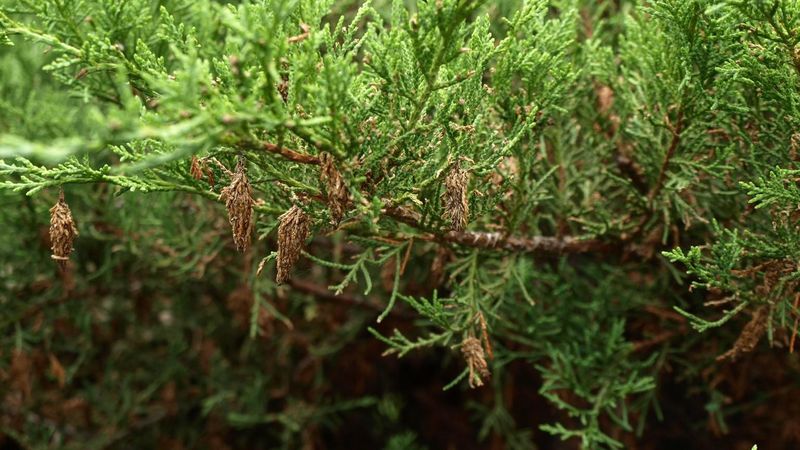
Spring timing is where plans succeed or fail. In central Maryland, bagworm eggs usually hatch in May.
Your yard may run ahead or behind that, so treat May as a general window rather than a promise.
Weather drives the schedule. Warm springs can bring hatch earlier, and cool ones can push it later.
Location matters too, since the Eastern Shore, the mountains, and the Baltimore-Washington corridor warm up at different speeds.
Instead of a fixed date, use local degree-day guidance. University of Maryland Extension points readers to a degree-day forecast that tracks accumulated heat and estimates when emergence begins in your area.
Check it in late April and again through May.
The Extension’s seasonal pest reports also help. In its May 22, 2026 Landscape and Nursery IPM Report, bagworm treatment is discussed in the context of current conditions.
Reading these updates gives you a better sense of what is happening this year.
Once the eggs hatch, the tiny caterpillars build their own small bags and begin to feed. They grow quickly, and their bags grow with them.
Knowing the window means you can finish removal jobs ahead of hatch and watch closely afterward.
Remove reachable overwintering cases before hatch
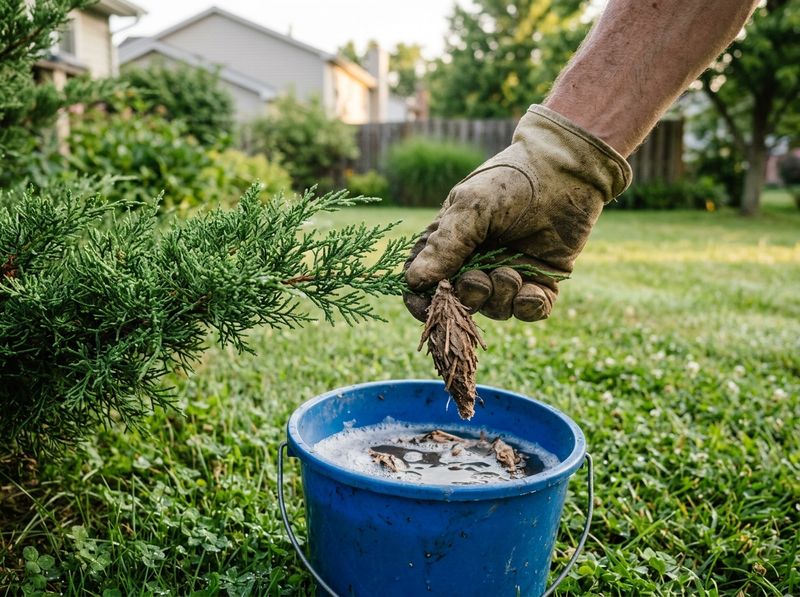
If your infestation is small and the bags are within easy reach, hand removal is a straightforward fix. Pick a day in fall, winter, or early spring, anytime before the eggs hatch.
Bare winter weather makes the cases easier to spot.
Wear gloves and work from the ground or a stable step stool. Pull or snip each case off the branch, and cut the silk band if it holds tight.
University of Maryland Extension recommends this approach for small, reachable infestations.
Then deal with the cases properly. Destroy them or put them in the trash.
Do not toss them on the ground or into a compost pile, because removed cases may still contain viable eggs. Sealing them in a bag before you throw them out is a sensible habit.
Check the whole plant, not just the front. Bags tuck into the inner branches and the back side of a shrub.
Virginia Cooperative Extension also lists hand removal as an option for bagworms.
Keep this separate from spraying in your mind. Removal deals with the overwintering cases, which hold the eggs.
Pesticides work on a different stage, the young caterpillars, so one does not replace the other.
Sprays work on feeding caterpillars, not enclosed eggs
Spraying a winter case will not help. The eggs are sealed inside, so a spray cannot reach them.
Products are meant for the young, actively feeding caterpillars that appear after hatch.
One commonly recommended option is Bt kurstaki, a bacterial product. It targets young caterpillars that eat treated foliage, not eggs enclosed in cases.
That makes timing important, and the hatch guidance in the Maryland IPM report helps you pick the window.
Always read and follow the product label. Confirm that it lists both bagworms and the plant you plan to treat, since not every product is approved for every shrub.
Apply it exactly as directed.
No product is risk-free. Clemson Extension cautions that some insecticides can harm pollinators and other beneficial insects, and even spinosad is not completely harmless.
Avoid spraying plants in bloom, and keep drift away from neighboring flowers.
Tall trees are another story. If the cases are too high to reach safely, skip the ladder.
University of Maryland Extension and local arborists can advise on safer options for large trees.
Let the plant and infestation guide your decision
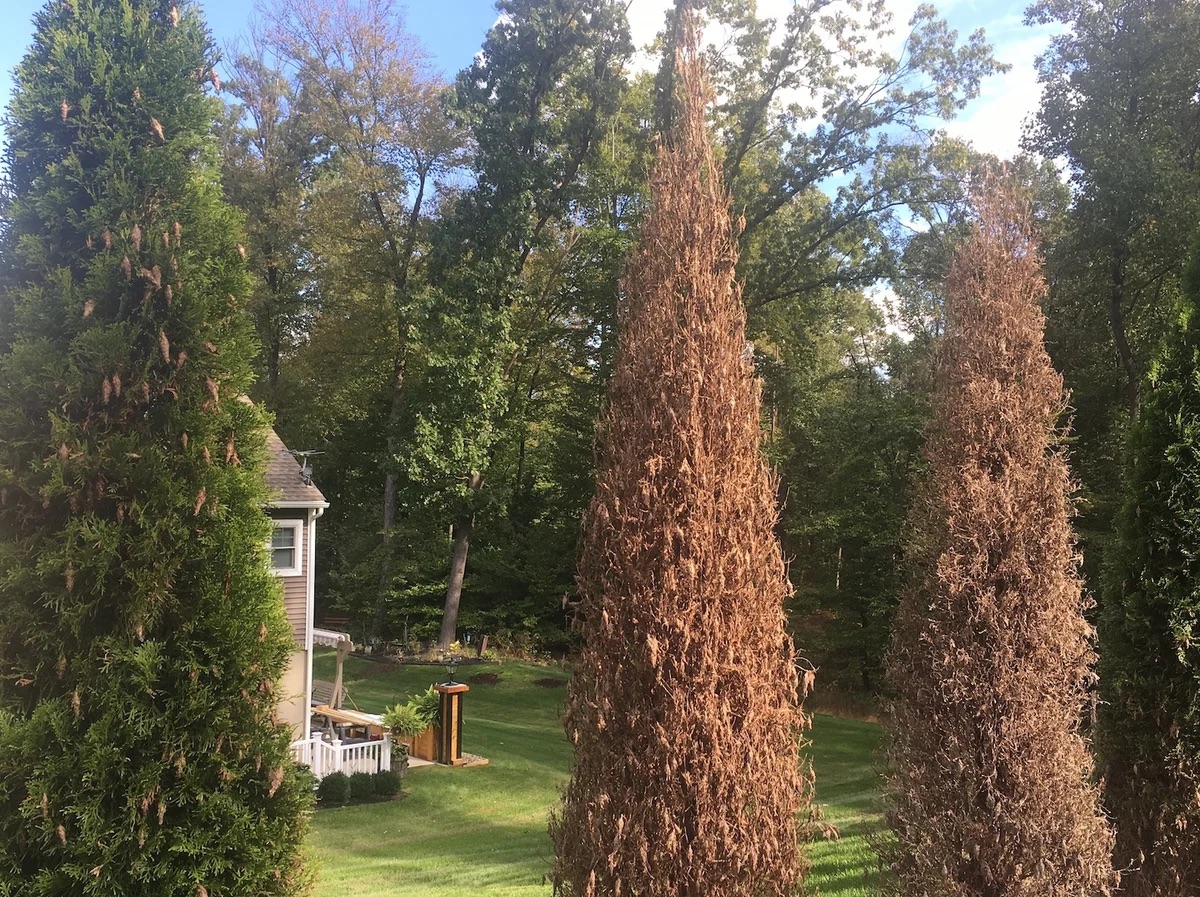
Not every bagworm sighting calls for action. Conifers like juniper suffer most, because heavy feeding can cause lasting foliage loss and may kill heavily infested plants.
Deciduous plants can host bagworms too, but their damage is often less lasting, as University of Maryland Extension explains.
Low populations may not justify spraying. K-State Extension notes that decisions should reflect infestation level and likely plant damage.
The Maryland guidance reviewed gives no universal bag-count threshold.
So look closely at your cases, think about the plant, and choose the action that fits.
Share this story