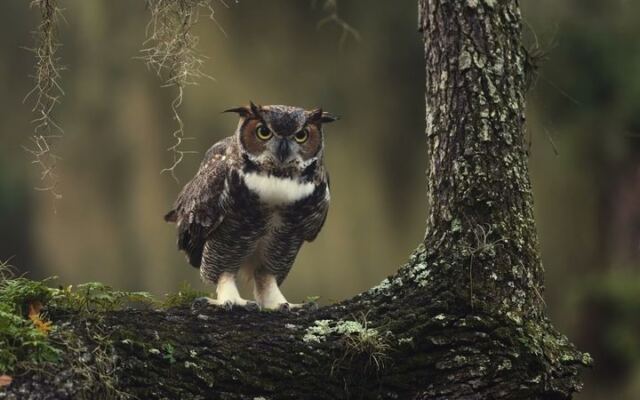
Repeated hooting near your Arizona home most likely means Great Horned Owls are talking to each other. Their deep calls carry far across the desert night, and they are easy to notice when you hear the same pattern again and again.
Knowing what the sound usually means can turn a puzzling noise into something you can enjoy. Here is how to make sense of it and what to do, or not do, in response.
Hooting is how Great Horned Owls communicate
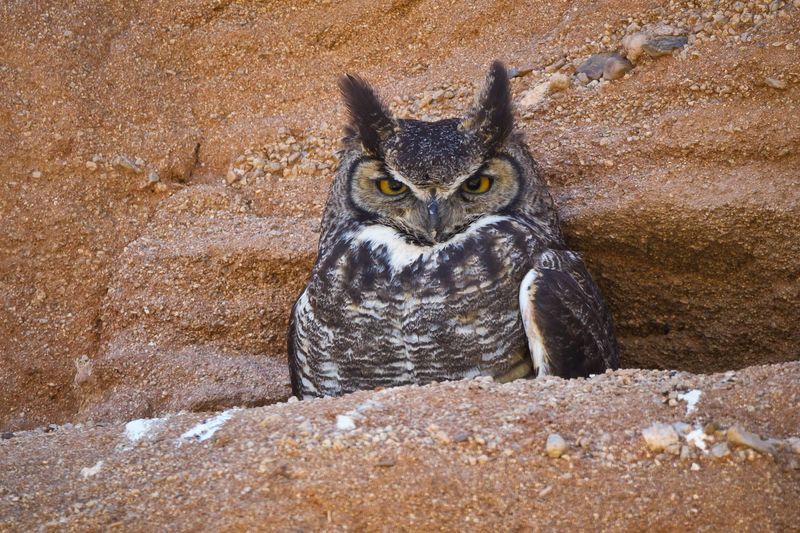
Picture the owl’s hoot as a spoken message sent across the neighborhood. Cornell Lab sound notes describe the classic deep, steady hooting of this species, and the calls are used to advertise and defend a territory.
In plain terms, an owl is announcing that this patch of ground is taken.
Owls do not always hoot alone. Pairs may answer one another, trading calls back and forth, sometimes in a duet where the notes overlap.
That back-and-forth is one reason you may hear what sounds like a conversation outside your window.
A published study of the species, Kinstler’s vocalization research in Ardea, documents several kinds of hoots used in different situations. They include territorial calls, duets, and exchanges between neighboring owls.
That variety shows how much these birds have to say.
So when the hooting repeats night after night, ordinary communication is the most plausible broad explanation. It is a reasonable way to understand the sound, not a diagnosis of what one particular owl is doing at a given moment.
Hearing the same calls again usually means owls are keeping in touch and keeping their space, which is normal desert nightlife.
Why calls are common in fall and winter
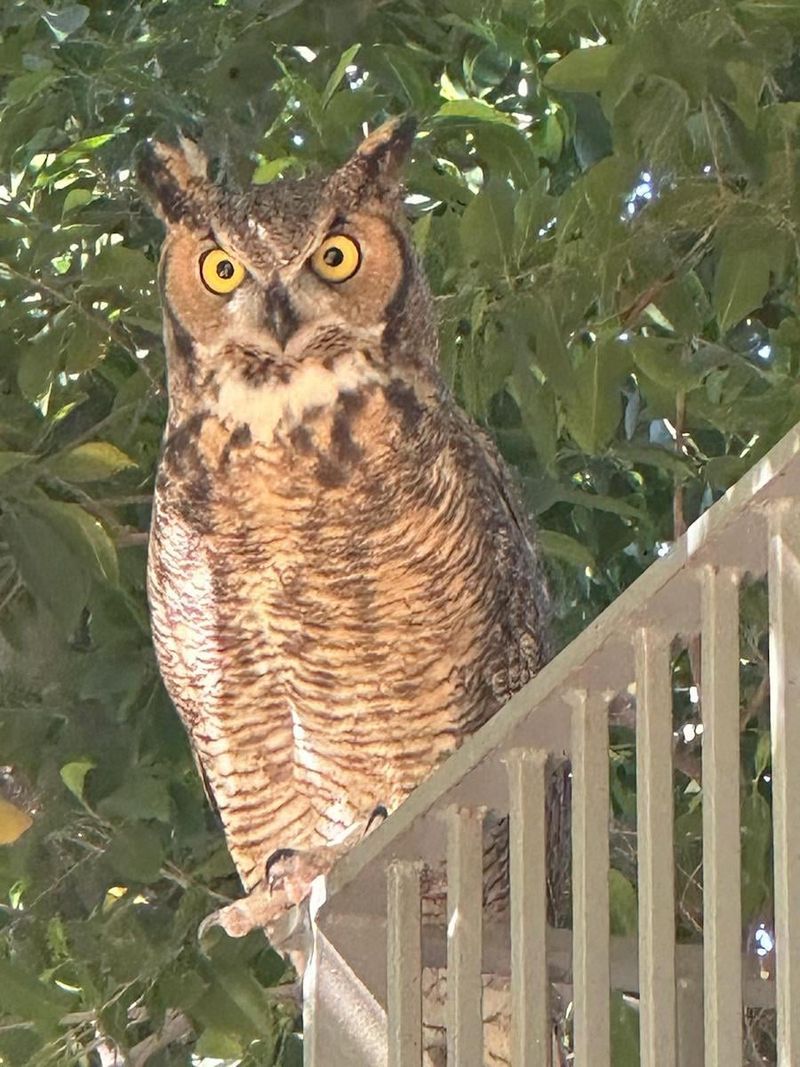
Cooler evenings tend to bring the owls out in voice. The Ardea vocalization study describes territorial hoots as most common in fall and winter.
Great Horned Owls may hoot year-round, but this is the season when many residents suddenly notice them.
There is a local reason that timing matters. According to the Arizona-Sonora Desert Museum, Great Horned Owls in the Sonoran Desert may begin nesting in January or February.
Owls that settle territory questions in the months before can be ready when nesting season arrives.
Still, timing only makes nesting activity possible. Hooting alone does not confirm that a nest is nearby, and a call on a December night does not tell you that eggs are coming to your block.
Owls also hoot simply to hold a territory.
Many owls use an existing stick nest or a ledge rather than building a new one, as the Cornell Lab life history page explains for the species in general. If you want to learn more, you can watch for owls at dusk from a comfortable distance.
Treat the season as a reason to listen, not a reason to worry.
What a hoot can—and cannot—tell you
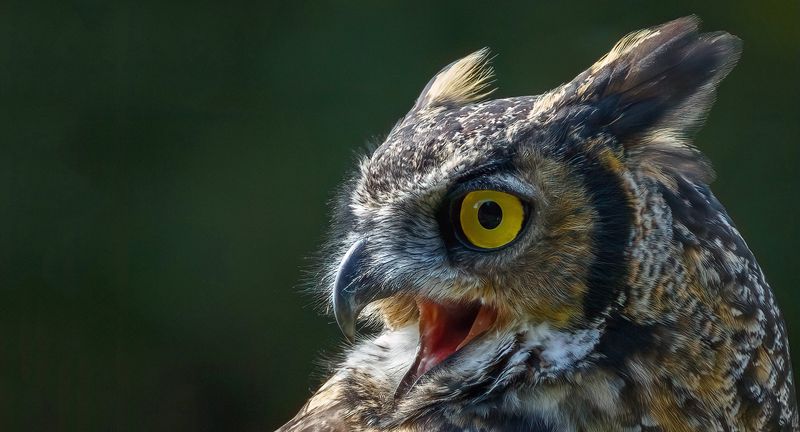
Some conclusions are fair and some go too far. A reasonable reading is that owls are using their voices to mark space or keep in touch.
That fits what researchers have documented about the species.
What a call cannot establish is a longer list. Listening alone cannot tell you whether one owl or a pair is present, whether they are courting, where a nest is, or whether an attack is imminent.
The Ardea study shows that owls use different hoots in different contexts, including duets and neighbor interactions. Sounds that seem alike to our ears can carry different meanings.
Many people also grew up hearing that an owl’s hoot is an omen of bad luck or death. Those stories are part of many cultures and deserve respect as folklore.
They are not biological explanations, though. The documented reasons for hooting involve communication and territory.
Nor does hooting prove mating or a nearby food source. As the Cornell Lab life history notes, the species hoots for a range of reasons.
If you want clues about specifics, you would need to see the birds, not just hear them.
An owl near a home may simply be using its habitat
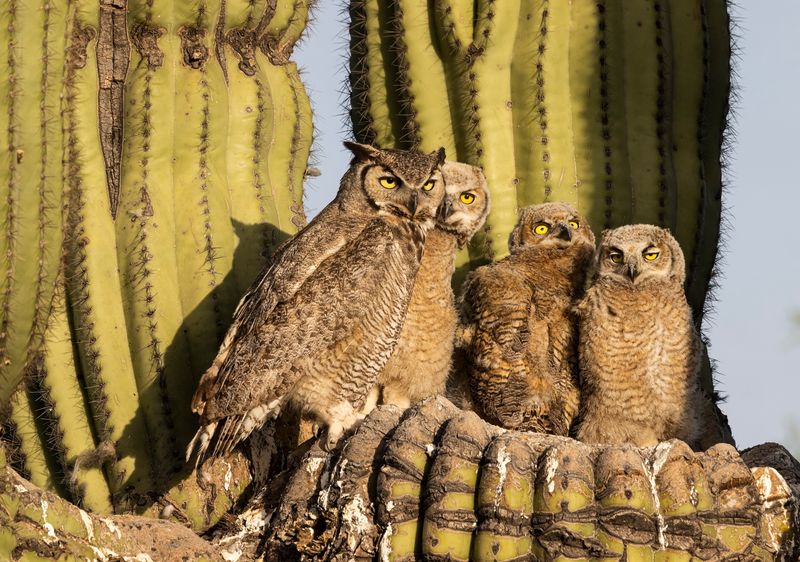
To an owl, a neighborhood can look a lot like good habitat. The Arizona-Sonora Desert Museum notes that Great Horned Owls are nocturnal and occur across many kinds of Sonoran Desert habitat.
Trees, utility poles, wash edges, and tall saguaros all give them places to perch and watch.
These owls also eat a wide range of prey, including rodents and rabbits. That broad menu helps explain why they can do well near people.
A yard with a perch and open ground nearby may simply fall inside an owl’s regular nightly route.
It is tempting to read an owl visit as a sign about your own property. An owl’s presence fits ordinary habitat use and does not prove you have a rodent problem.
Owls move through whole neighborhoods, and many yards are just stops along the way.
If you enjoy having owls around, there is little you need to change. Keep outdoor lighting modest, and let the night stay dark where you can.
Owls hunting nearby are one more sign that the desert still works around your home.
Observe from a distance and take sensible precautions
Enjoying owls is easy when you keep some space. Watch from a distance, and do not approach or disturb a suspected nest.
Hooting itself does not create an immediate risk, so there is no need for alarm.
Nests are another matter. Arizona Game and Fish says raptors may swoop when defending nests or young.
If a bird swoops at you, treat it as a cue to leave and avoid that area.
For small pets, the same agency recommends a sturdy, roofed enclosure when they are outside, or staying out with them. This is sensible general guidance around any raptor.
It does not mean an owl is likely to target an ordinary household pet.
You might also come across a young owl on the ground. An apparently healthy fledgling should be left alone, and pets should be kept away from it.
Its parents are usually nearby and still caring for it.
If a bird looks sick or injured, contact a wildlife rehabilitator. Do not try to pick it up or handle it yourself.
A quick call gets the bird to people trained to help.
Leave protected owls and active nests alone
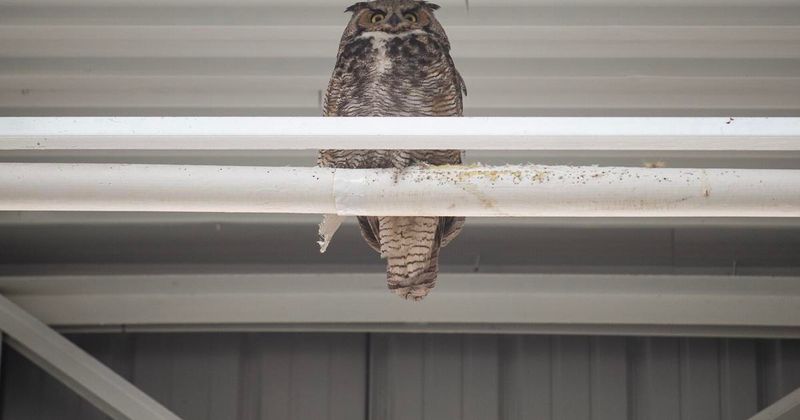
Great Horned Owls have legal protection. They appear on the federal list at 50 CFR 10.13 of protected bird species, which falls under the Migratory Bird Treaty Act.
The U.S. Fish and Wildlife Service explains how that law protects native birds.
In practice, that means you should not trap, harm, possess, relocate, or try to remove an owl. Do not try to scare one away or disturb a nest either.
Do-it-yourself fixes can hurt the bird and get you into legal trouble.
If you have a nest concern, such as a nest over a walkway or a door, contact wildlife authorities before you act. They can tell you what is allowed and what options exist.
A phone call first is the safest route.
The rules on nests need precision. According to Fish and Wildlife Service nest guidance, destroying an active nest with eggs or chicks, or dependent young, requires authorization.
The agency also treats an inactive nest differently, so an empty nest is not automatically off limits in every case. When you are unsure which kind you have, ask before touching anything.
Enjoy the sound without assuming the worst
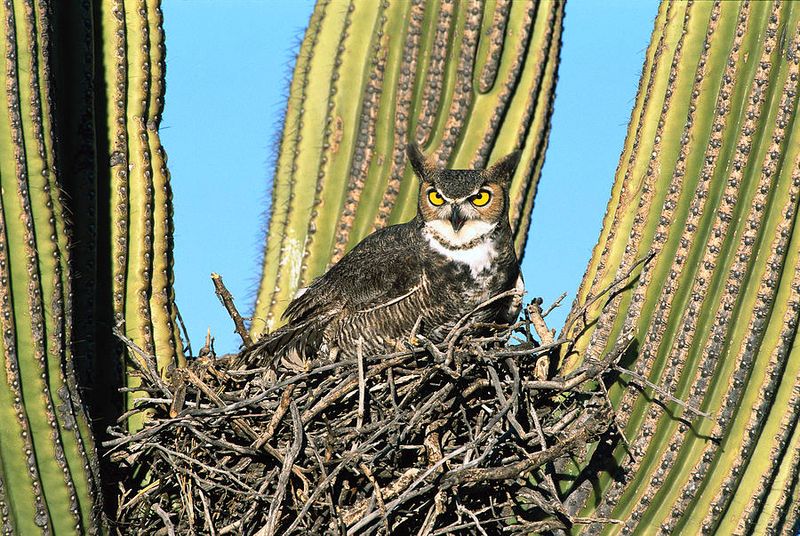
Repeated hooting most plausibly means owls are keeping in touch and holding territory, as Cornell Lab sound notes describe. Seasonal calling does not confirm a nest, so you can listen without worrying.
Keep a respectful distance, and follow Arizona Game and Fish guidance if you find an injured owl or have a nest concern.
Next time the hooting starts, step outside and let your ears do the work. A voice that deep, carried across a quiet desert night, is a pretty good reason to stay up a little late.
Share this story