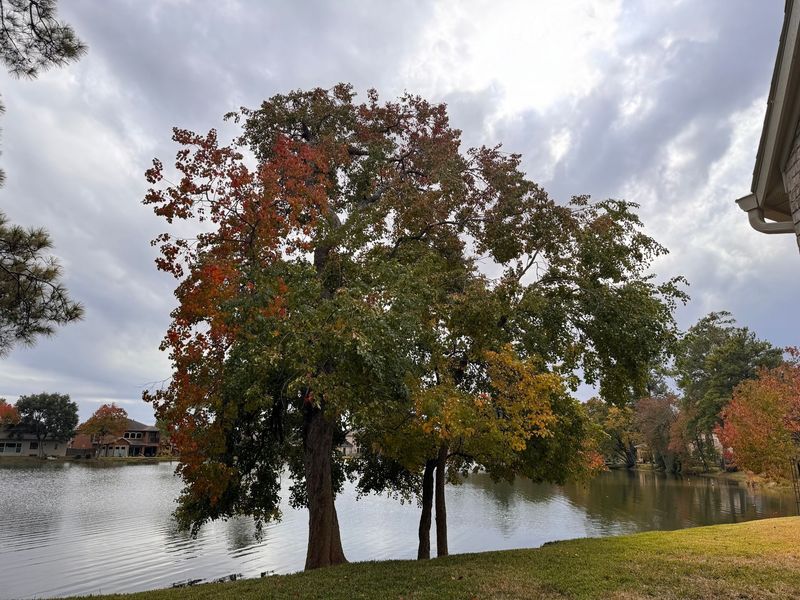
The tree behind the headline is Chinese tallow, a leafy ornamental that drops huge numbers of seeds and keeps showing up in Texas yards. Birds and water carry those seeds to new spots, so seedlings can appear where you never planted anything.
It is most common in Southeast Texas, which makes it a real concern for homeowners there. Learn how to recognize it, what the numbers actually say, and how to keep it from taking over.
The familiar ornamental is Chinese tallow
Plenty of people in Southeast Texas have a Chinese tallow nearby without knowing its name. Its scientific name is Triadica sebifera, and it also goes by tallowtree or popcorn tree.
It was planted for years as a fast-growing shade and color tree, and Texas A&M Forest Service describes it as a popular ornamental that makes abundant seeds spread by birds and water.
That mix of popularity and heavy seed production is why the tree now turns up in yards, along streets, and in other urban areas. A tree that looks pretty in autumn can also drop seeds that sprout in fence lines, flower beds, ditches, and vacant lots.
Not every Texas neighborhood faces the same problem. The tree is concentrated mainly in Southeast Texas, so a homeowner in Beaumont or Houston is far more likely to meet it than someone in Lubbock or Amarillo.
If you live in the Gulf Coast region, though, it is worth checking any unfamiliar tree that sprouts on your property.
Knowing what you have comes first. Pulling or cutting the wrong plant wastes effort, and treating a native tree by mistake can harm something you wanted to keep.
The Trees of Texas guide from Texas A&M Forest Service lists the features that set tallow apart.
The next section walks through those features one at a time. A few minutes with a leaf, a branch, or a seed capsule in hand is usually enough to tell whether you are looking at tallow or something else.
Look for smooth-edged leaves and popcorn-like seeds
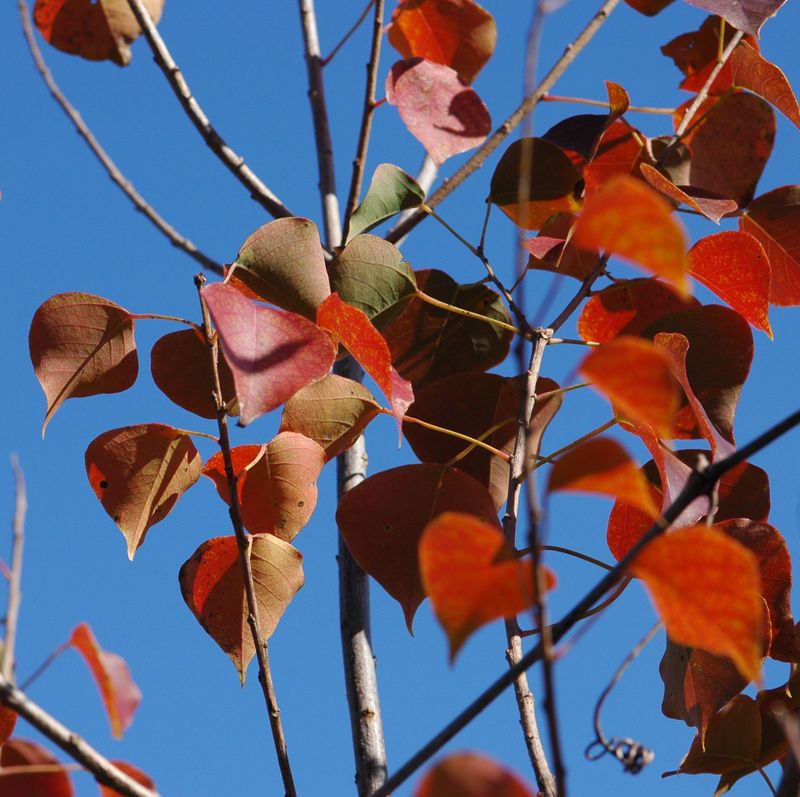
Start with the leaves. Chinese tallow leaves are simple, meaning each leaf blade is a single piece attached to the twig by its own stalk.
They grow alternately along the branch, are generally triangular or diamond-shaped, and have smooth edges with no teeth or lobes.
Fall color is another clue. The Trees of Texas entry for tallowtree notes colors that range from yellow to red or purple.
Those bright shades are part of the reason people planted it.
Then look at the seeds. In fall and winter, three-parted fruit capsules split open to show white, waxy seeds that look a bit like popcorn.
Once the leaves drop, those clusters can stand out on bare branches, which is where the nickname popcorn tree comes from.
Confirm all of these clues before you remove anything. A tree with leaflets arranged along a central stem is not tallow.
Tree-of-heaven, for example, has compound leaves made of many leaflets, as described by Penn State Extension.
Tree-of-heaven is a different invasive tree with its own management issues, so its control advice does not belong in a tallow plan. If your plant has single, smooth-edged leaves and white waxy seeds, you are on the right track.
If you are unsure, take clear photos of the leaves, bark, and any seeds to your county extension office.
Birds and water carry its seeds into new places
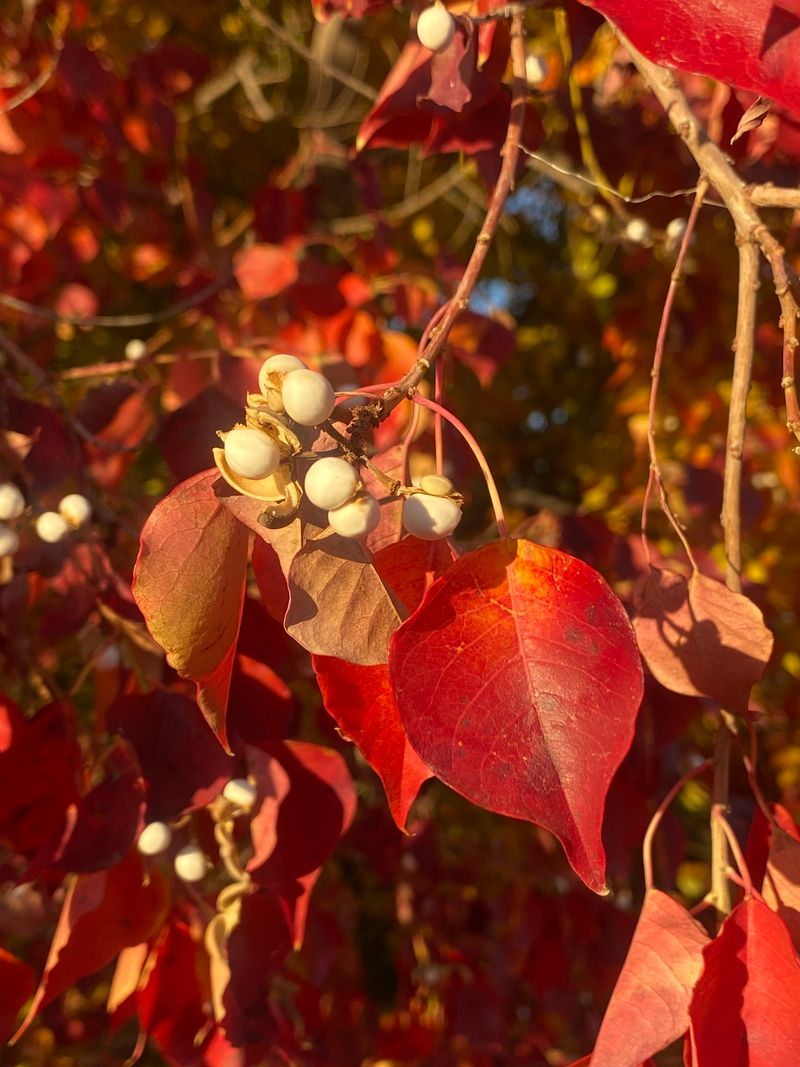
A single mature tallow can produce a huge crop of seeds. According to Texas A&M Forest Service, those seeds are spread by birds and water.
That simple fact explains a lot about how a tree you never planted can appear on your lot.
Birds eat or carry the seeds and drop them wherever they land, such as under a power line, along a fence, or beneath a favorite perch. Water does similar work by moving seeds through ditches, bayous, and low spots after heavy rain.
The white, waxy coating on the seeds is part of what makes them easy to spot, and the capsules open in fall and winter, when the seeds are most visible. The Trees of Texas guide describes this timing and the popcorn-like look.
None of this means every seed reaches a new yard, and no one can promise a particular route from one property to the next. What it does mean is that new seedlings can show up in unexpected corners, sometimes a season or more after a nearby tree dropped its seeds.
That is why checking your yard over time pays off. Walk the fence lines, drainage paths, and shady edges every few weeks in the growing season.
Small plants are much easier to deal with when you catch them early.
What the Texas figures show
Numbers about tallow need their dates and locations attached. The tree is concentrated mainly in Southeast Texas and is not cold-hardy in North or West Texas, so it is not equally common across the state.
Both Texas A&M Forest Service and its Trees of Texas guide point to that regional pattern.
One often-quoted figure is a 38% increase in East Texas. That measure covers 2007 to 2017.
It describes one region over one decade, not what is happening statewide today.
Houston has its own figure. Using the city’s 2015 urban inventory, Texas A&M Forest Service estimated about 5.7 million tallow trees at least one inch in diameter.
Of the trees measured, 81% were on public land.
Read that carefully. It is a 2015 estimate, not a current count, and it does not tell you how many tallows grow in private yards.
Seedlings smaller than one inch across are not part of that total.
So what do these figures give you? They show that tallow is well established in parts of Southeast Texas and that public land holds much of it.
They do not give a current statewide spread rate or a neighborhood-by-neighborhood count. For your own yard, the most useful data is what you see when you walk it.
Pull small seedlings while the soil is moist
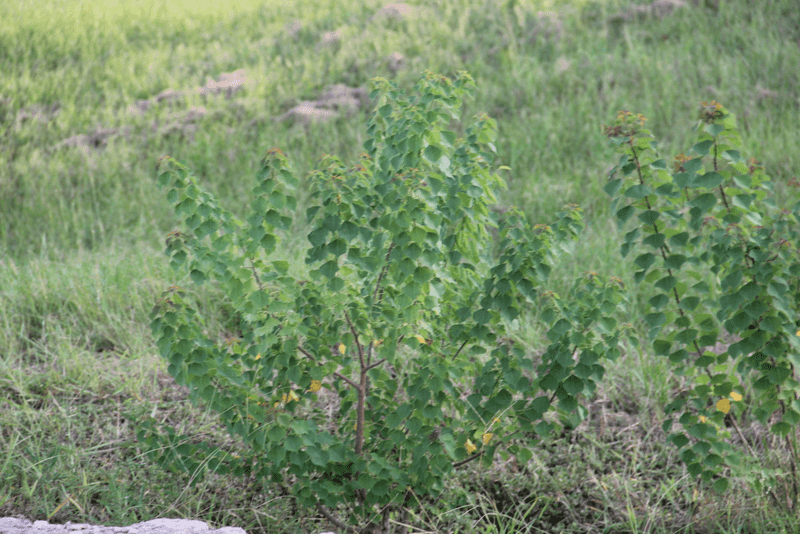
Right after a good rain is the best time to go seedling hunting. Small tallow seedlings can be hand-pulled, and moist soil lets the roots slide out more easily.
The key is to remove the root, because a broken piece left behind may sprout again, as Clemson Cooperative Extension notes.
Grip the stem low, near the soil line, and pull steadily rather than yanking. If the stem snaps and the root stays put, dig around it and lift out what remains.
Wear gloves and wash up afterward, since sap from young trees may irritate skin.
This approach has limits. Hand-pulling works on small plants, not reliably on larger ones, which can regrow from roots and stumps.
The City of Austin’s invasive species plan also stresses monitoring treated spots and removing new seedlings as they appear.
Pulling one seedling does not stop more seeds from arriving. Birds and water may deliver new ones next season, so a clean flower bed this month can have fresh sprouts later.
Make it a routine instead of a one-time job. Check pulled spots every few weeks during the growing season, and pull the newcomers while they are still small.
A few quick minutes of work then can save you a much bigger project later.
Cutting a larger tree may lead to regrowth
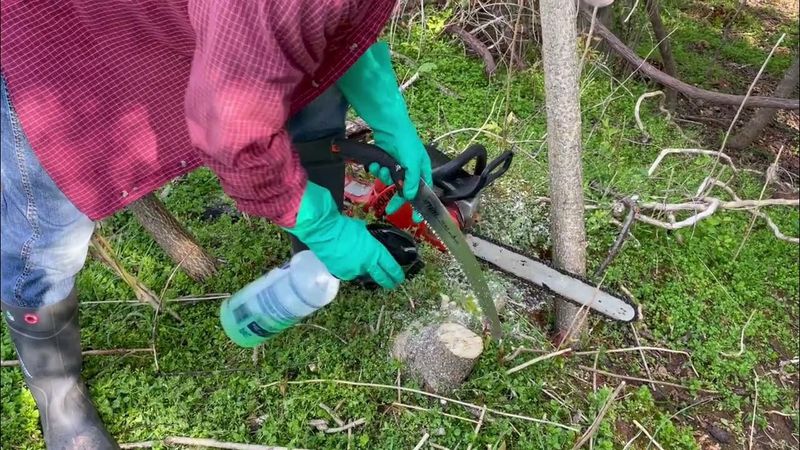
Once a tallow gets big, a saw alone rarely settles the matter. The tree can regrow from stumps and roots, so cutting by itself may lead to a thicket of sprouts.
Clemson Cooperative Extension describes this ability to resprout.
For larger plants, Texas A&M AgriLife’s Brush Busters guidance, published as How to Take Out Tallow Trees, offers herbicide treatments for suitable plants and sites. It is a source of options, not a single recipe that fits every yard, and results vary.
Control depends on the plant and the site. Think about how big the tree is, where it stands, and what grows around it.
A tallow growing next to a prized oak or a vegetable garden calls for different choices than one standing alone at the back of a lot.
Always follow the product label. It spells out where and how the product can be used, and it is the rule you are legally and practically bound to follow.
Consider nearby desirable plants, since some products can injure plants you want to keep.
Water matters too. If the tree is near a pond, ditch, or bayou, use only products labeled for aquatic use.
When the situation feels complicated, a county extension agent or licensed professional can help you pick a plan, and no one can promise a particular result.
Keep checking after removal
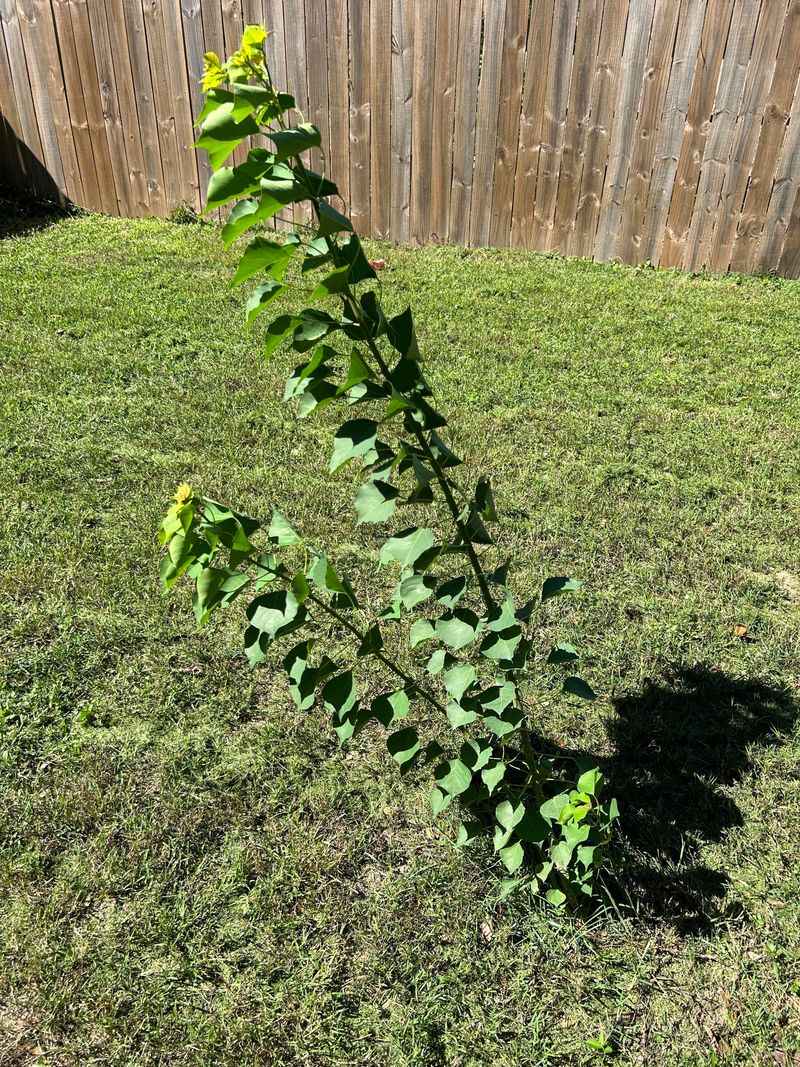
Think of tallow control as a short sequence that repeats. First, confirm the tree’s identity by checking for simple, smooth-edged leaves and white waxy seeds.
Next, pull small seedlings when the soil is moist, and choose site-specific methods for larger plants.
Then comes the part many people skip: inspect the area again. Regrowth from roots or stumps, and fresh seedlings from newly arrived seeds, can show up weeks or months later.
The City of Austin plan recommends monitoring treated areas and removing new seedlings.
Keep safety in proportion. According to Clemson Cooperative Extension, sap from young trees may irritate skin, and the seeds and leaves are toxic if ingested.
Wear gloves, and keep plant parts away from children and pets.
If you use an herbicide, follow the label every time. Near water, use only products labeled for aquatic use.
Texas A&M Forest Service also advises care when managing this plant.
Mark a few dates on the calendar and walk the spot. Winning against tallow is mostly a matter of showing up again.
Share this story