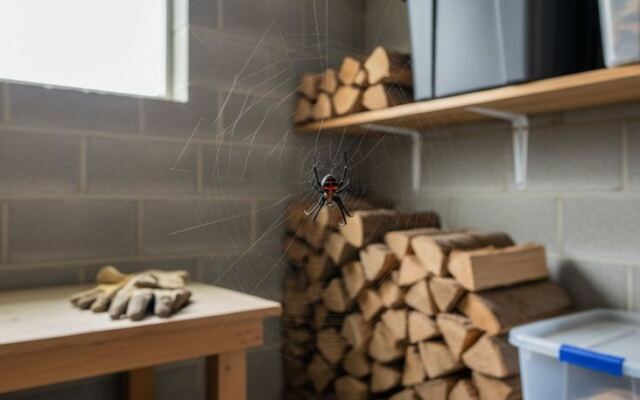
A venomous black widow can settle into a dark, quiet garage corner in Pennsylvania, and the boxes you rarely touch are the kind of spot where spiders sometimes tuck away. The good news is that these spiders are rarely seen in the state, and they are shy.
Still, a bite can hurt a lot, so it pays to know what to look for. A few simple habits can keep you safe when you reach into storage this winter.
Black widows do occur in Pennsylvania
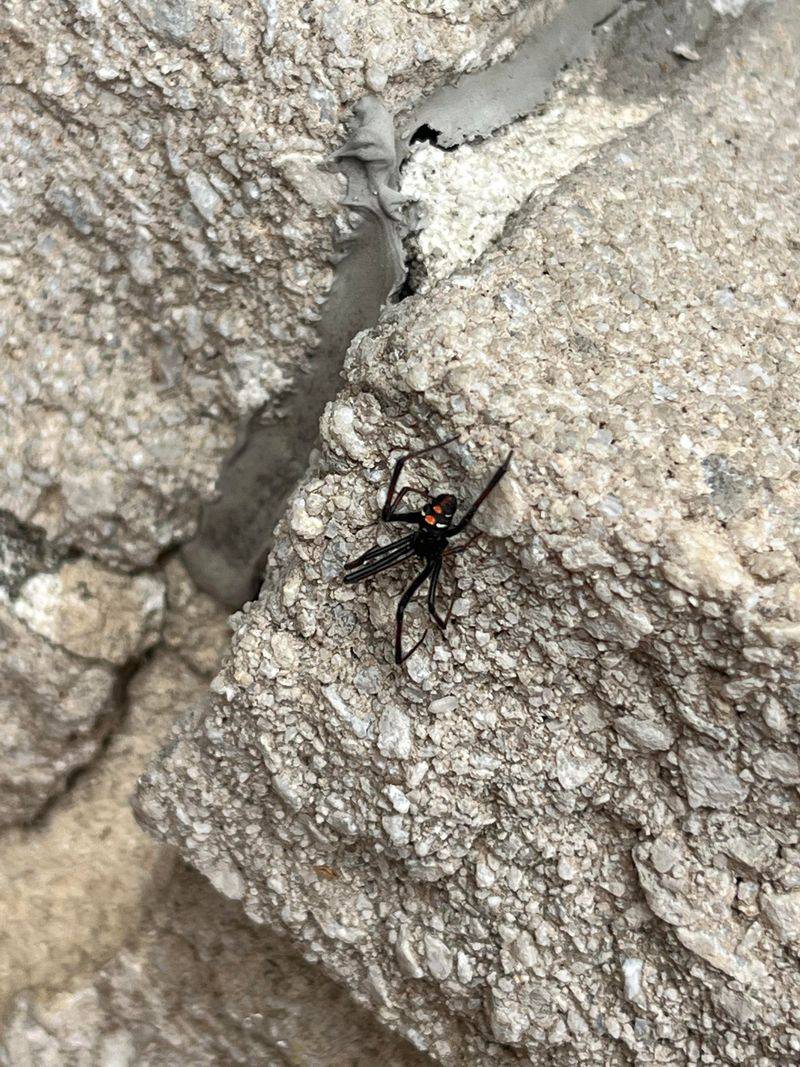
Yes, black widows are part of Pennsylvania’s spider life. Penn State Extension reports that the southern black widow (Latrodectus mactans) occurs in the state, and it says the northern black widow (Latrodectus variolus) is probably present too.
That wording matters. The southern species is confirmed here, while the northern one is a likely resident rather than a firmly documented one.
Both are native spiders, not newcomers hitching a ride from somewhere else.
Being present does not mean being everywhere. Penn State’s guide to spiders of the Northeast describes medically important spiders such as black widows as rarely encountered in Pennsylvania.
Most people here will go their whole lives without meeting one.
So when you hear that a venomous spider lives in Pennsylvania garages, the fair reading is this: a garage can be a place where one might turn up, but it is not a common problem. Think of it as a small possibility worth a little care, not a reason to dread your storage space.
Knowing the baseline helps you stay proportionate. You do not need to treat every cobweb as a threat.
You just need to understand where a black widow could be and how to avoid surprising one.
A sheltered garage can offer a hiding place
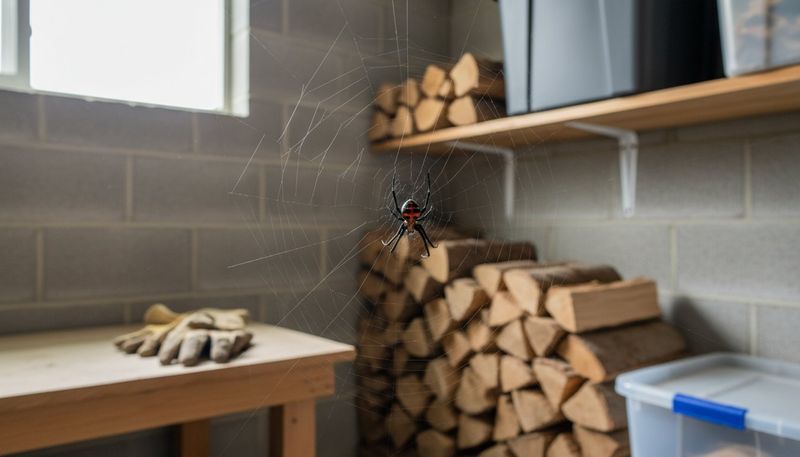
Picture the least-visited corner of your garage: dim, still, and full of gaps. That is the kind of spot a black widow might choose.
Penn State lists the dark corners of barns and garages among the places these spiders can live.
Poison Control adds garage and shed corners, woodpiles, boots, and gloves to the list. What these places share is shelter.
They stay quiet, protected from weather, and rarely disturbed, which suits a spider that prefers to stay put.
Calling a garage possible habitat is not the same as calling it infested. Black widows are rarely encountered in Pennsylvania, and most garages will never host one.
A garage is simply one of several spots where it could happen.
Bites come from contact, not pursuit. CDC and NIOSH guidance notes that most bites happen when a spider is trapped or touched.
A widow is not hunting for people. It may bite defensively if you press it against your skin.
Picture a hand sliding into a glove, or a boot pulled on without a look. Those are the moments when a spider can end up squeezed.
Slowing down for a quick glance removes most of that chance.
What boxes and winter can—and cannot—tell you
Boxes get a lot of blame in spider stories, so here is the fair version. Penn State Extension says spiders in general may be found in undisturbed household items, boxes included.
That is a statement about spiders as a group, not a finding that black widows favor boxes.
Closed containers are still smart. University of California IPM recommends taped-shut boxes to keep widows out of stored belongings.
Treat that as prevention, a way to close off a hiding spot, rather than proof that widows pick boxes.
Winter works the same way. A Mississippi State Extension publication says black widows spend the cold months in protected sites.
So when you pull out holiday decorations or winter gear, you might meet a spider that was already sheltering there.
That does not make winter a proven peak for black widow encounters or bites in Pennsylvania. It simply means cold-season trips into long-closed storage are a time to be a little more careful.
Penn State also warns that firewood brought in from the cold can warm up and rouse overwintering spiders. That caution covers spiders in general, so stack and handle wood with gloves and a bit of attention.
How to spot a possible widow without handling it
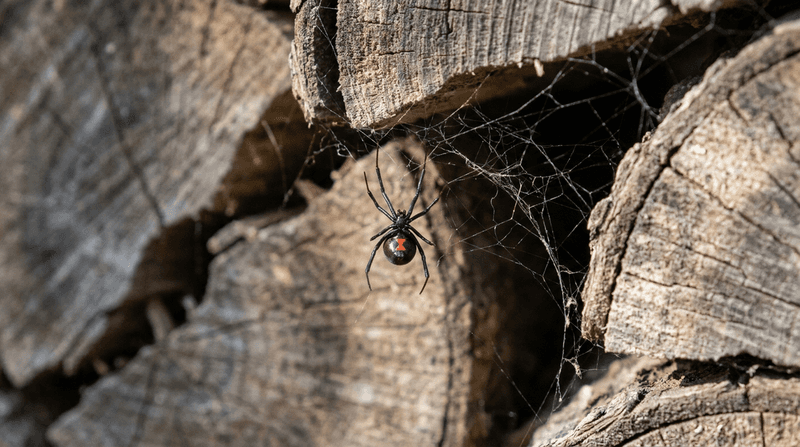
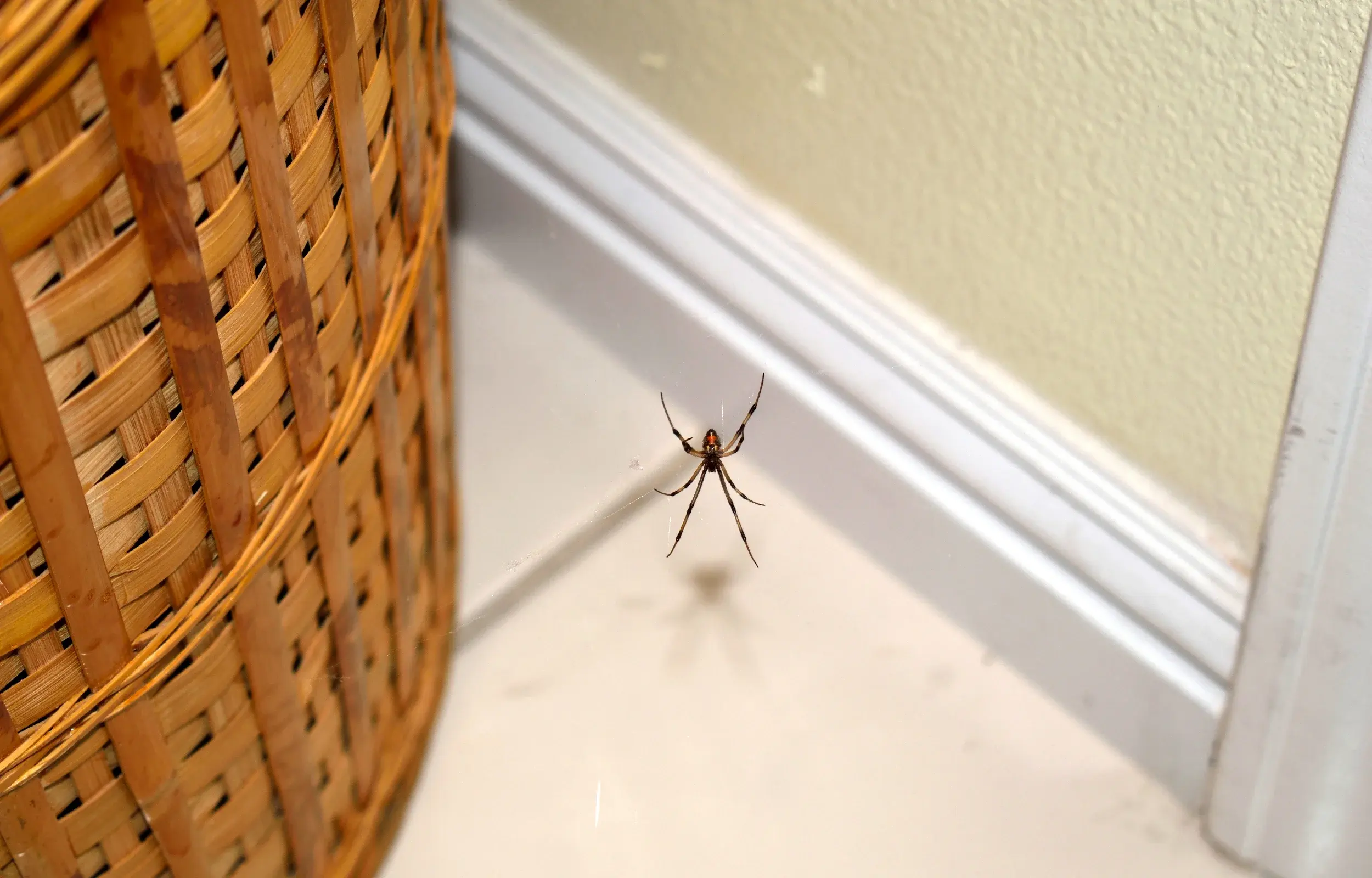
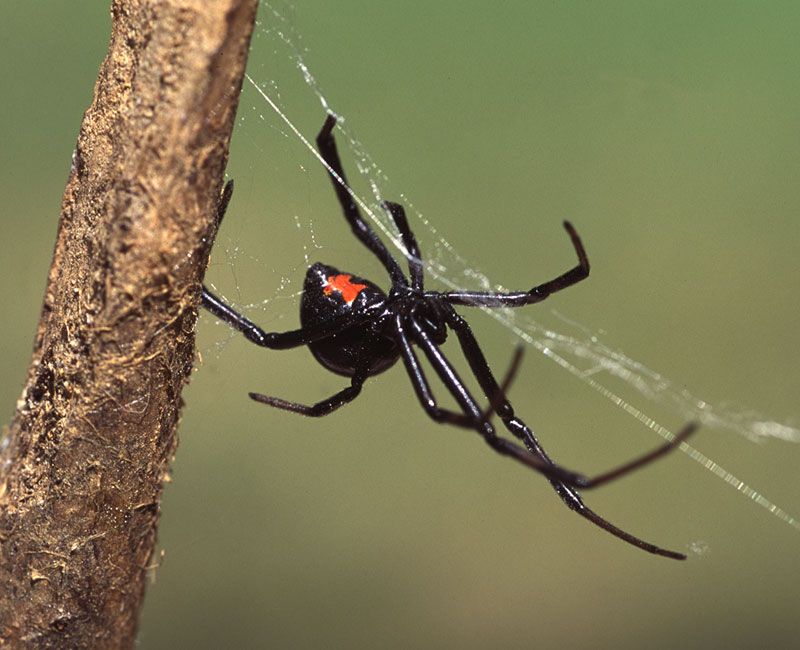
Start with the look of the spider. A female widow is dark and shiny, with a rounded body.
Poison Control notes she carries red or orange markings on her underside.
Those markings are not the same on every spider. They can be an hourglass, a pair of spots, or a broken shape, so an hourglass alone cannot confirm anything.
Likewise, a missing hourglass does not clear a spider.
OSHA guidance describes the same dark, glossy look and stresses protective habits. Her web is often messy and tangled, built in a low, sheltered spot.
If you think you have spotted one, keep your distance. Do not try to catch it, poke it, or pick it up to check.
Handling a suspected widow is the surest way to get bitten.
It also helps to separate two questions. Identifying a spider is one thing, and working out what caused a bite is another.
Not every bite or sting is from a black widow, and many other spiders and insects look alike at a glance.
A photo taken from a safe distance is plenty for a local expert or Poison Control to review. Many spiders found in garages are harmless, and a calm look from afar is the best first step.
Check stored belongings before reaching in
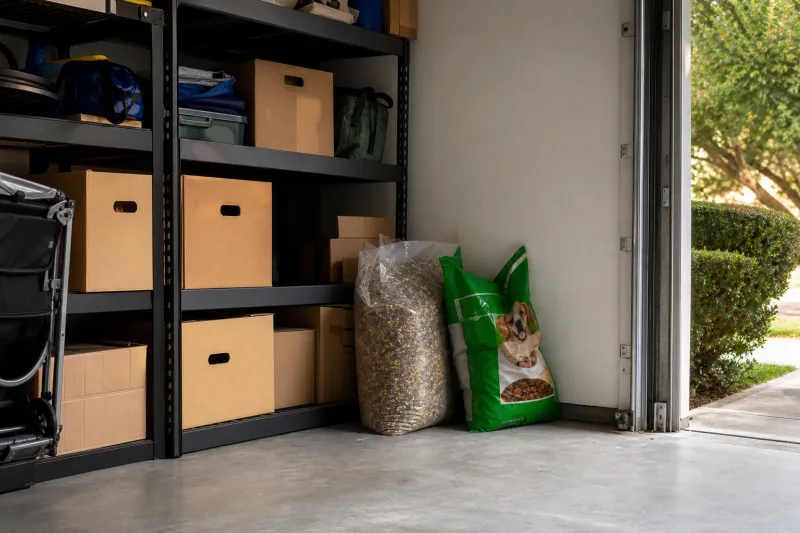
A short routine covers most of the risk. First, put on gloves.
OSHA recommends protective clothing and inspecting or shaking out stored clothing and shoes.
Second, look before you reach. Use a flashlight to peek behind boxes, under shelves, and inside lids.
Lift items rather than sliding a bare hand into a dark gap.
Third, shake out anything that holds a hollow space, such as boots, work gloves, and garden shoes. A quick knock against the floor is enough to dislodge a hidden spider before your foot or hand goes in.
Next, cut down on hiding places. Penn State suggests reducing potential nesting sites and checking stored items, and notes that moving things around now and then disrupts spider habitat.
A yearly sort-through is a good habit.
Then switch seasonal belongings to closed containers. UC IPM suggests taping boxes shut and wearing gloves when you clean up clutter.
Plastic totes with snug lids work well too.
None of this promises a spider-free garage. Spiders can still wander in, and no routine is perfect.
Even so, these steps make surprise contact much less likely, and they cost almost nothing.
When a suspected bite needs medical help
Some symptoms mean you should not wait. First-aid guidance from the American Heart Association and American Red Cross calls for emergency services when a suspected spider bite brings symptoms throughout the body.
Examples include difficulty breathing, muscle rigidity, dizziness, or confusion.
If you are unsure, call Poison Control at 1-800-222-1222. They can advise on a suspected bite and can help with identification questions too.
The call is free and staffed around the clock.
Not every bite is from a black widow, and not every spider bite is dangerous. Still, if you saw a spider that looked like a widow, or you have strong pain, cramping, or sweating after a bite, get advice rather than guessing.
A black widow bite can cause significant pain and body-wide symptoms, but severe outcomes are not the typical result. Poison Control reports no deaths among more than 15,000 black widow exposures in a cited poison-center review, with about 10 percent leading to hospital admission.
Those numbers describe a large group of people, not any one person. They cannot promise that your bite, or a child’s, will be mild, so symptoms still deserve attention.
Black widows are shy, and a little care keeps most encounters from ever happening.
Share this story