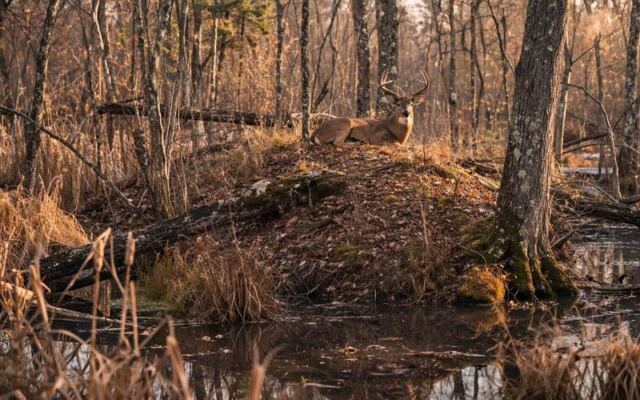
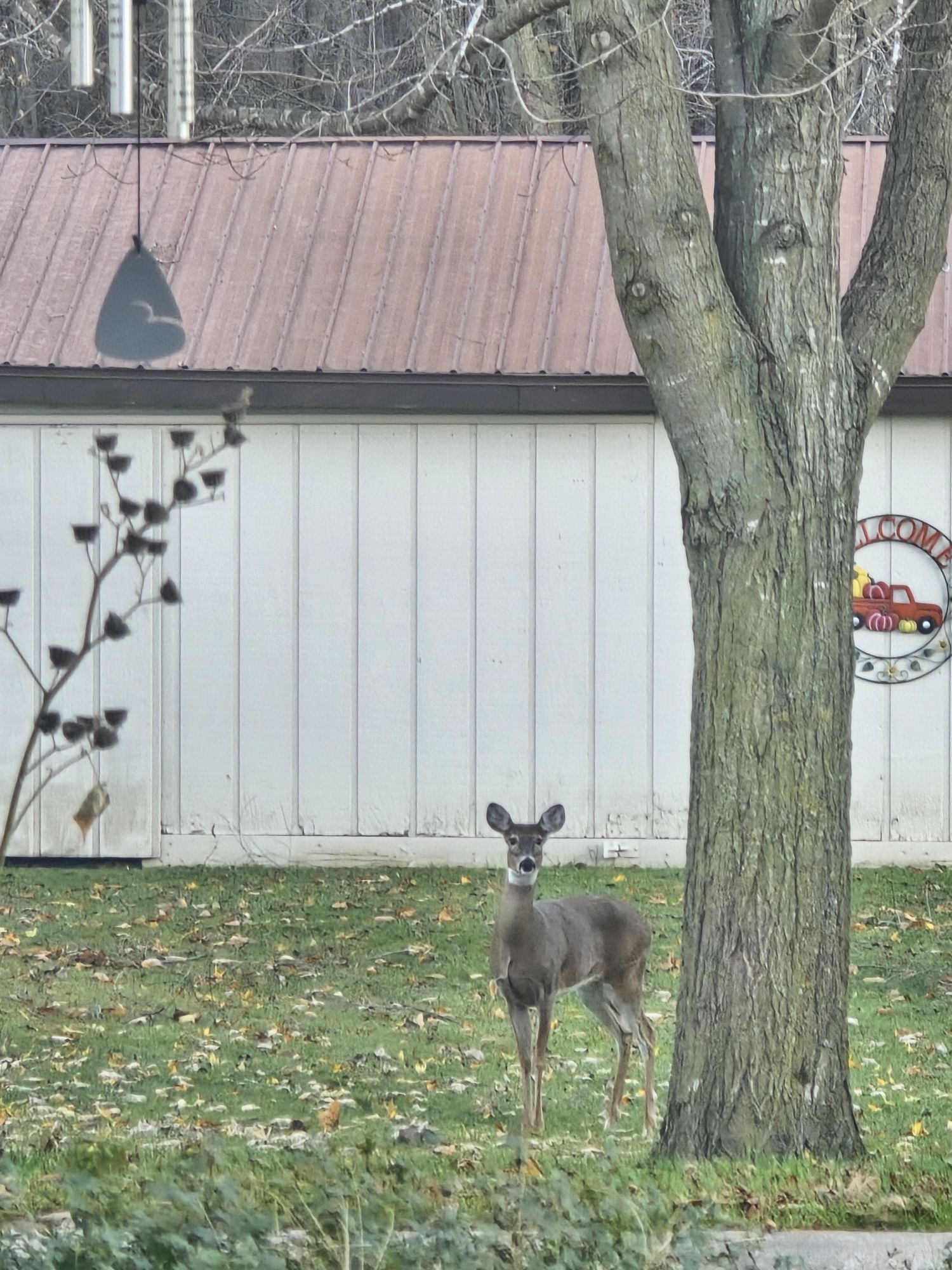
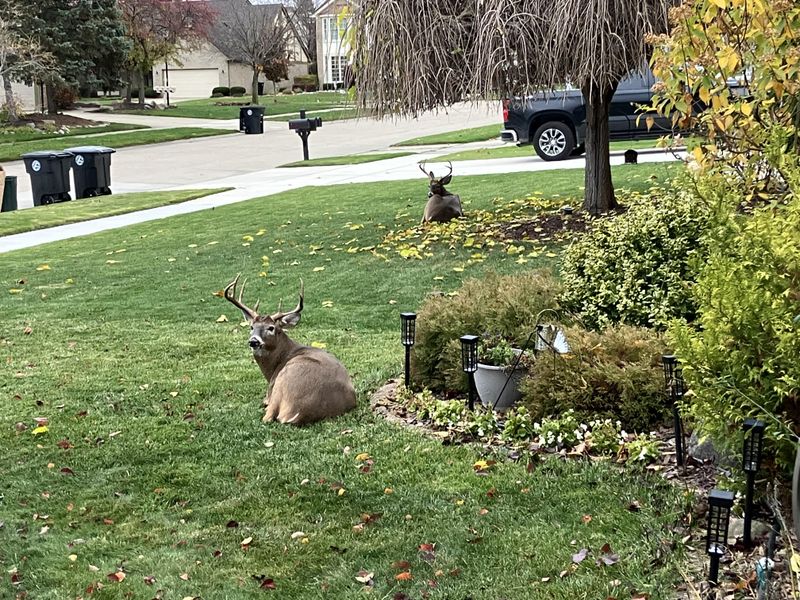
A deer resting in your yard tells you one clear thing: it used your space, and late November is a busy time for deer across Michigan. Breeding season, shelter, nearby food, and winter weather can all shape where deer travel and rest.
A single sighting cannot show why that deer picked your lawn, but it is a good cue to look at your shrubs. Here is what the timing means and how to protect your plants.
Late November means different things across Michigan
Michigan is a long state, and deer do not all follow the same calendar. A Michigan transportation report, citing earlier breeding-date studies, lists mean breeding dates of November 6 in the southern Lower Peninsula, November 15 in the northern Lower Peninsula, and November 20 in the Upper Peninsula.
Those numbers are historical regional averages. They are not a forecast for this year, and they are not a switch that turns on and off at the same moment everywhere.
Some deer breed earlier and some later than the average, so a single date on a chart cannot tell you what is happening in your neighborhood today.
Timing also shifts with latitude. USDA Forest Service notes that breeding in northern white-tailed deer is generally concentrated in November and is linked to day length.
Adult does tend to breed earlier than fawns and yearlings, which can stretch activity past the averages.
So a deer in your yard on a late November morning does not prove the rut is active where you live. It also does not prove the rut is over.
The date simply gives you background for reading what you see.
The rut can change movement without explaining one resting deer
Breeding timing and daily movement are two different things. Day length is a major cue for when breeding happens, according to University of Illinois deer ecology research.
Weather and human activity, on the other hand, can affect how deer move from hour to hour.
Cold weather and moon phase do not set the timing of the rut, so neither one should be treated as its trigger. A cold snap might change when a deer walks through, but it does not move the breeding season.
Rut-related movement is one possible influence on where deer travel. Deer that are covering more ground may pass through places they do not usually visit, and that could include a yard.
Still, one resting deer cannot confirm that cause. Deer also appear at odd hours because of traffic, hunters, dogs, or a quiet corner of a property.
Because breeding in this species runs through much of November, as the Forest Service review describes, the rut is a fair thing to keep in mind. It is just not a diagnosis.
Cover and nearby food can make a place usable
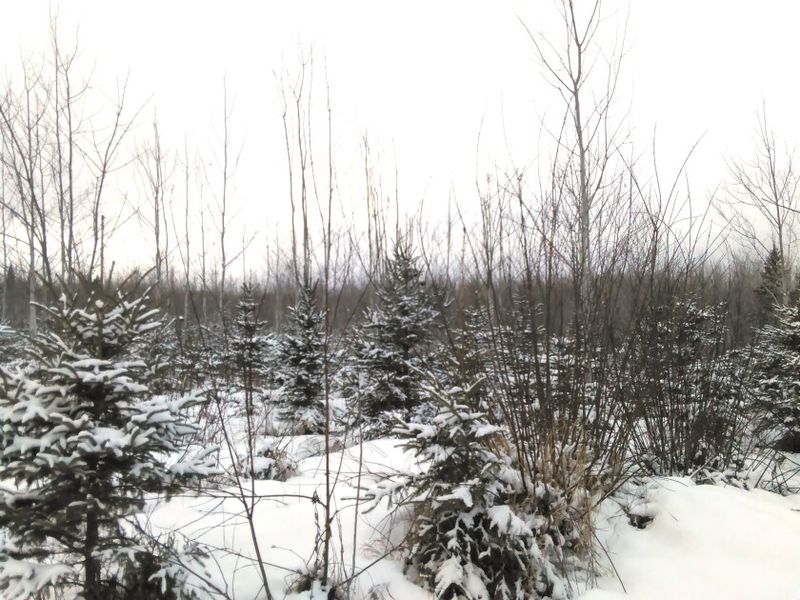
Deer need places to rest out of the wind and within reach of something to eat. Michigan DNR explains in its account of deer wintering complexes that winter deer use depends on the arrangement of food and shelter and on how severe the winter is.
In snowy northern areas, conifer cover can block wind, cold, and deep snow. Nearby deciduous plants can supply browse.
A yard with thick evergreens, a hedge, or a quiet edge near woods might offer a small version of some of these things.
Weather, snow depth, and established movement patterns also play a part. Deer often follow routes they already know, so a yard along a travel path may see visitors for that reason alone.
These are general factors, not confirmed reasons for any one animal. You cannot tell from the porch whether a deer picked your yard for shelter, for food, because of the route it walks, or simply because it was tired.
Looking at what your property offers can help you guess, but treat it as a guess.
One yard sighting is not a wintering complex
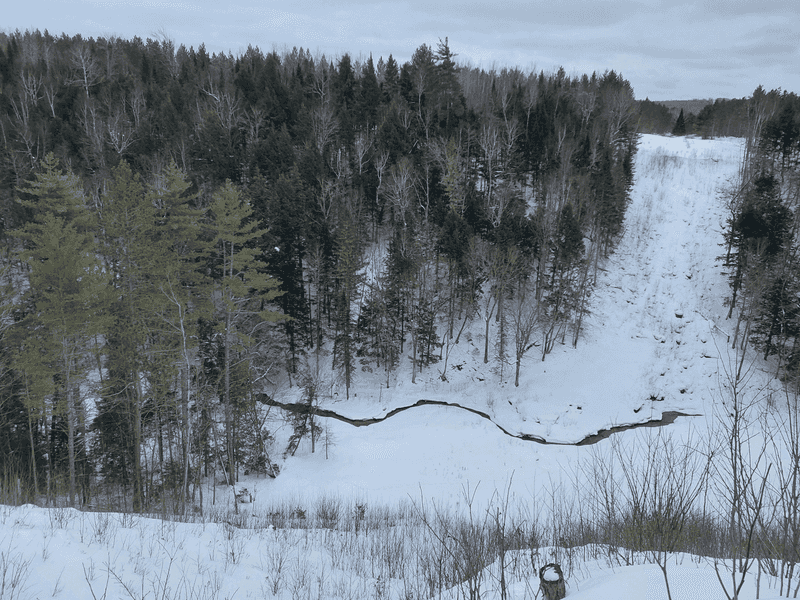
A wintering complex is much bigger than a backyard. Michigan DNR uses the term for a landscape-scale arrangement of winter food and cover, often spread over a large area.
A lone deer resting beside your garage is a very different thing.
DNR also notes that the places where deer concentrate can change from one winter to the next. That means even a known site is not fixed, and a yard cannot be assumed to be one.
The agency’s description is especially about northern, snowy conditions, and it does not suggest every Michigan deer migrates to a winter complex.
A residential yard should not be treated as equal to that kind of habitat. A few shrubs and a fence line cannot match what a large block of cover and browse provides.
What your sighting does establish is simple: a deer used the yard. It does not show the deer has adopted the space for winter, or that it will return tomorrow.
Keep watching, and let repeated signs such as tracks, beds, and browsed twigs tell you more over time.
Which shrubs might deer browse this winter?
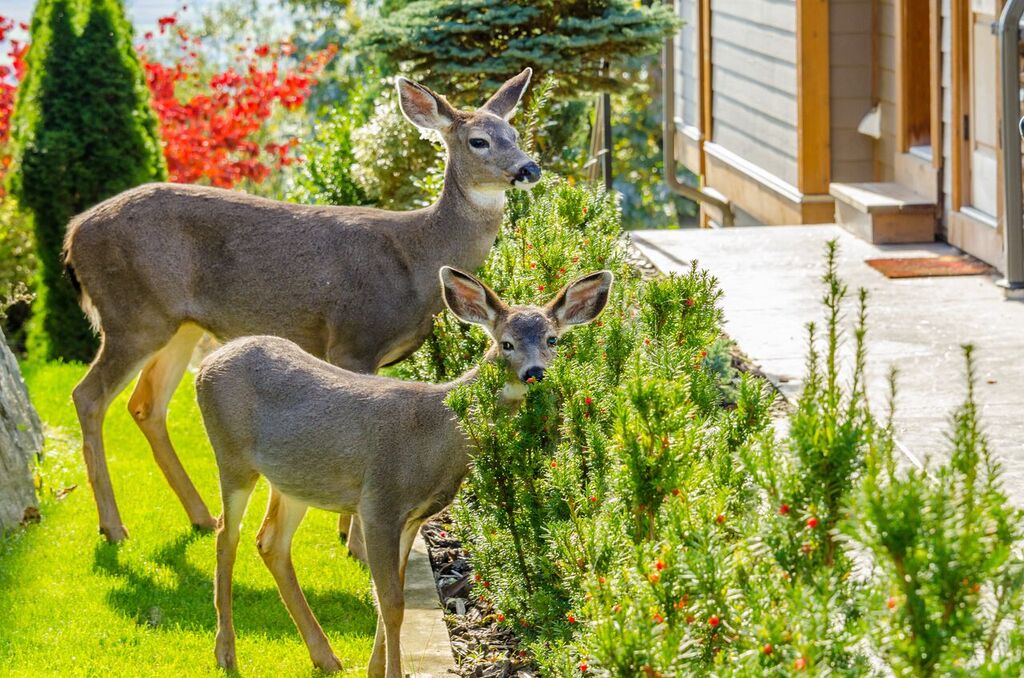
Winter food is limited, so deer may sample landscape plants they ignore in summer. MSU Extension lists arborvitae, yews, rhododendron, holly, and false cypress among the plants deer may eat.
Extension is also clear that no plant is absolutely deer-proof. A shrub labeled resistant can still be nibbled when other food runs short, so treat any list as a guide to watch rather than a guarantee.
It helps to know what kind of damage you are looking at. Browsing hurts shoots and foliage.
Look for ragged, torn tips on twigs, since deer lack upper front teeth and tend to tear rather than snip cleanly.
Buck rubs are different. A buck scraping its antlers can injure trunks or stems, stripping bark from young trees and shrubs.
MSU Extension describes rubs as a separate source of plant injury.
Walk your yard and check the shrubs closest to cover, and any young or prized plants. Knowing whether you have browsing or rubbing will help you pick the right protection.
Physical barriers offer steadier protection for prized plants
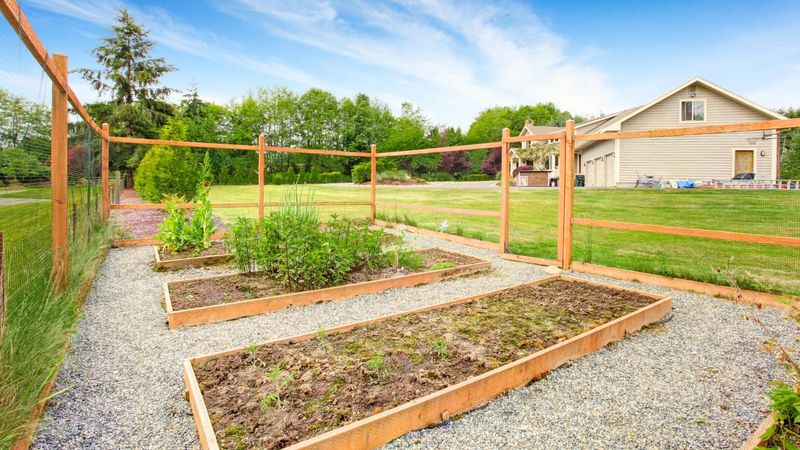
If a plant matters to you, put something solid between it and the deer. Michigan DNR recommends sturdy fencing at least 8 feet high for large areas.
For young plants, individual tree guards or tubes can help.
Physical exclusion is the steadier option because it works whether or not a deer is hungry, curious, or used to your yard. For a single valued shrub, a cage of wire mesh set a little away from the branches can be much easier than fencing a whole lot.
Repellents and motion-activated deterrents may work only briefly. Deer can get used to a spray smell, a flashing light, or a sprinkler that goes off, especially when food is scarce.
No method will prevent all damage, so plan on checking your plants through the winter. Look for fresh tracks, droppings, and browsed tips, and fix gaps in barriers early.
A little attention in December is cheaper than replacing a hedge in spring.
Give the deer space and check your shrubs
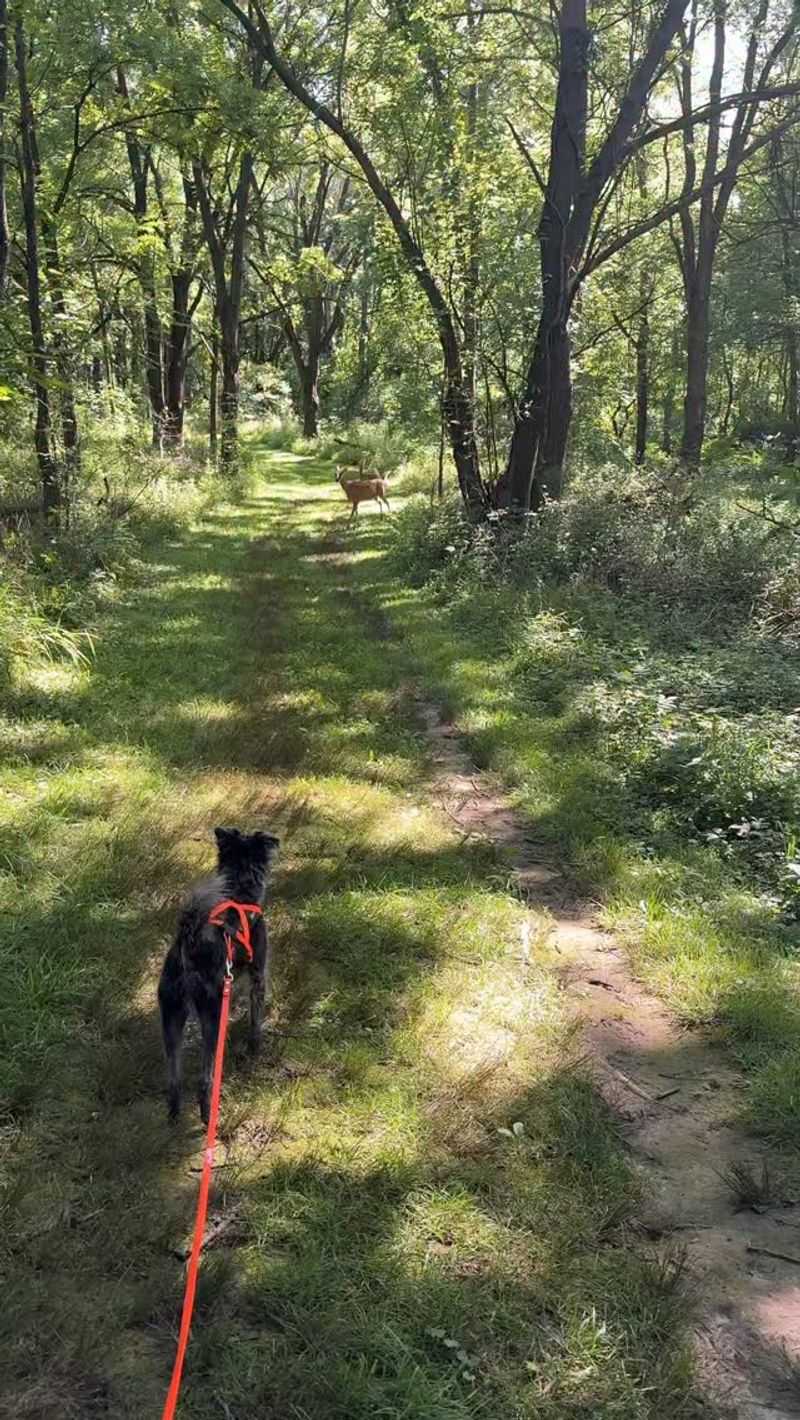
Enjoy the view from a distance, then do a quick walk-through of your shrubs. Protect the plants you would hate to lose, and leave the deer alone.
Do not feed or try to tame them, because Michigan DNR warns that feeding can make deer used to people and raise problems such as landscape damage and car collisions.
Keep dogs leashed or fenced so they cannot chase deer. Do not approach or corner a deer yourself, since a cornered deer can become defensive, and a chase can injure both animals.
Remember what the sighting means. A resting deer shows only that it used your yard, not why it came or whether your property is a wintering area.
Watch, protect, and let the deer move on.
Share this story