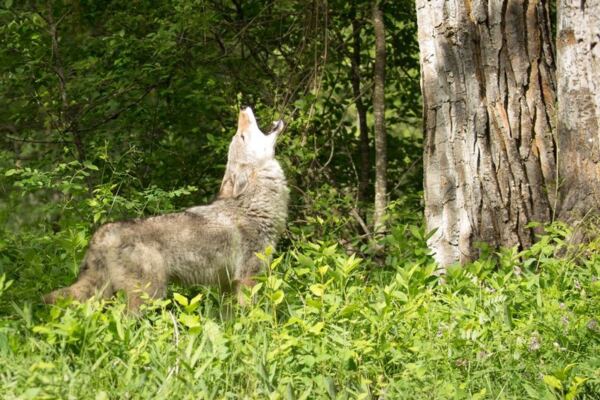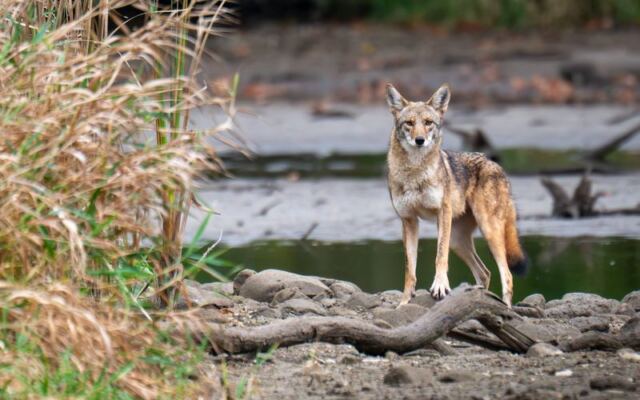
Those yips and howls outside your window are coyotes talking to each other. They tell you coyotes are around somewhere, but they do not tell you how many, what they are doing, or whether your pet is in danger.
Knowing what the sound can and cannot show helps you stay calm and focus on what really matters. A few simple habits around food and pets do far more than counting voices in the dark.
Coyote calls can carry social and territorial messages
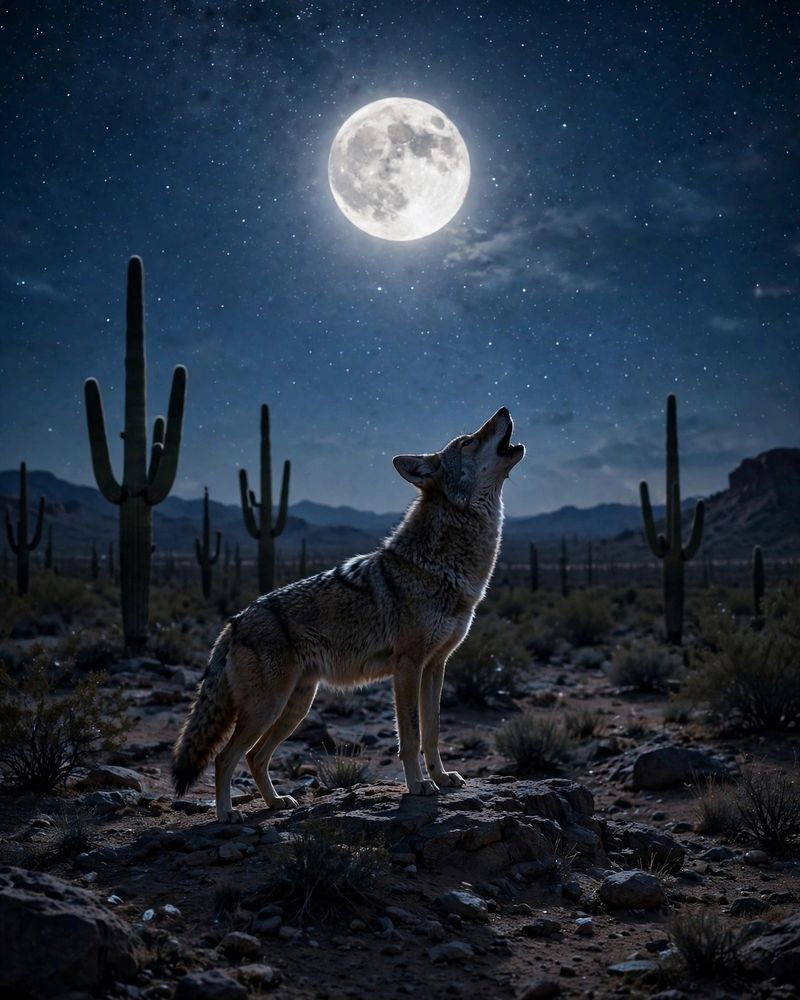
Yips, barks, and howls are how Tennessee coyotes talk. Like many animals that live in family groups, they use sound to stay in touch, and those sounds can serve social or territorial purposes.
According to the Tennessee Wildlife Resources Agency, a typical coyote group is a mating pair and their offspring. That describes a common family setup, but it does not mean every call you hear comes from one tidy family.
Lone animals and other arrangements exist too.
Calls can do a few jobs. Iowa’s wildlife agency explains that vocalizing can announce a group’s presence to other coyotes and help keep family-group bonds strong.
Think of it as a mix of “we live here” and “where is everybody?”
Here is where the sound stops being useful evidence. Standing in your yard, you cannot tell from the noise alone what set a particular call off.
A passing siren, a neighboring group, or a family member answering from across a field could all be behind it.
You also cannot tell whether a given call is an alarm. Some people hear a sharp bark and assume it means danger, but the sound by itself does not reveal that.
Treat the chorus as a sign that coyotes live in your area, and nothing more specific than that.
Why a chorus can sound like a crowd
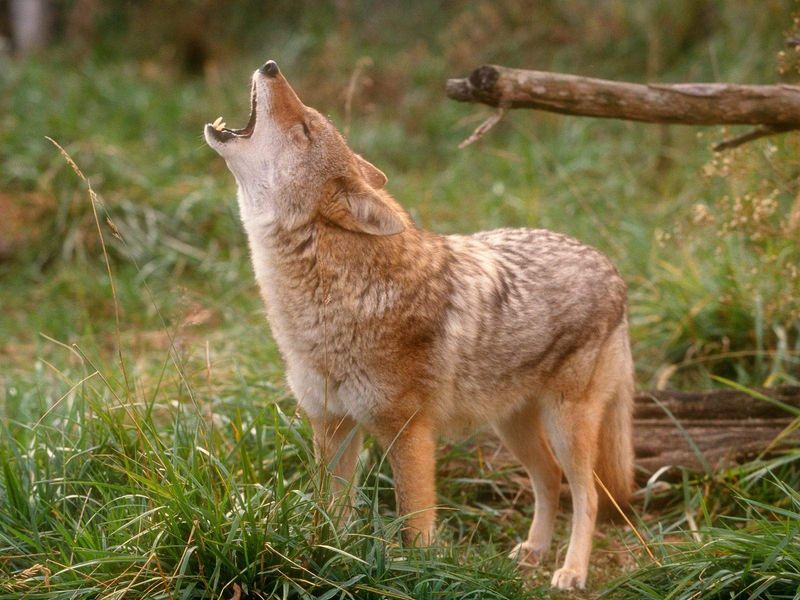
Ask someone to guess how many coyotes are singing, and the guess is often too high. Researchers tested this directly.
In a study of human perception of coyote group size, 427 listeners heard recordings and judged how many coyotes were calling.
The recordings featured between one and four coyotes. On average, listeners overestimated the number by nearly twofold.
So a handful of animals can sound like a whole pack.
Why does this happen? Coyote voices are high, quick, and overlapping, and a single animal can switch between yips, barks, and howls in seconds.
Your ear can easily treat one busy voice as several.
Keep the result in perspective. It describes how listeners did with those particular recordings.
It is a warning against counting by ear, not a formula, so you cannot divide what you hear by two and get the real number.
A practical example: if you hear what seems like ten coyotes behind your fence, the honest answer is that you do not know the count. It could be a few animals or more.
What you can do is plan around the fact that coyotes live nearby, rather than around a number you guessed from the sound.
Nighttime calls fit coyote activity, but not a specific cause
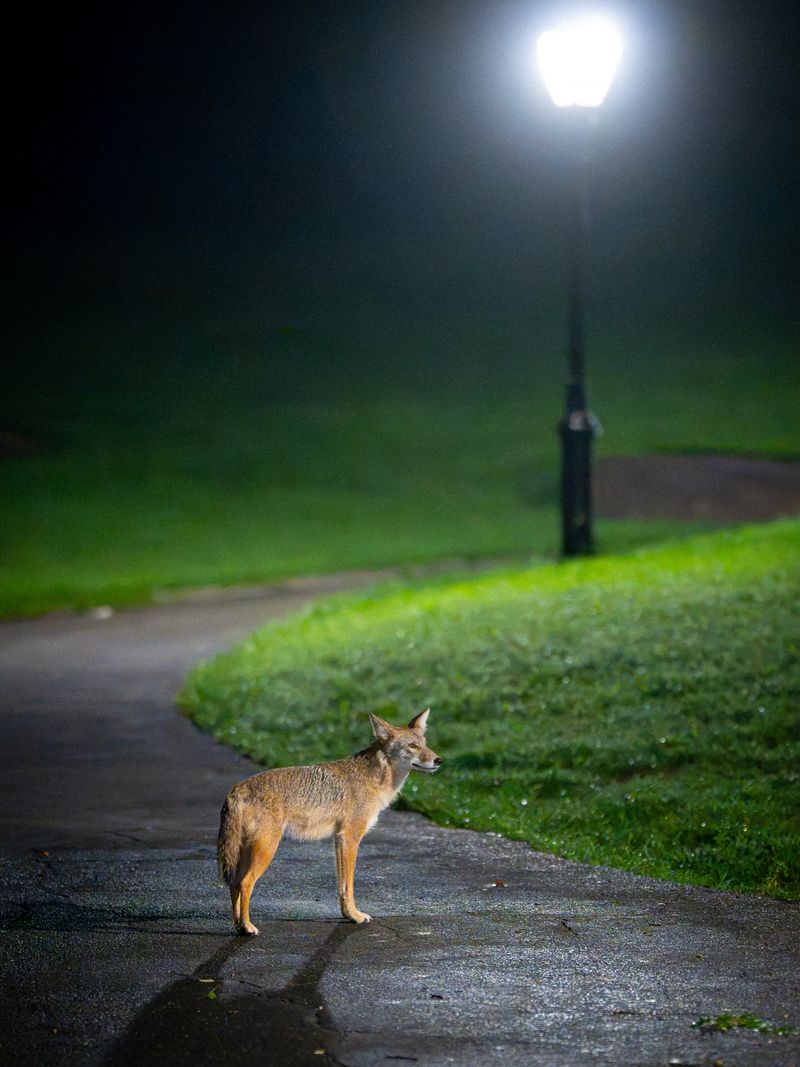
Hearing coyotes after dark is not strange. Tennessee coyotes are chiefly nocturnal, which means most of their activity happens at night, though they can also be active during the day.
TWRA’s coyote page describes both patterns.
Calling tends to cluster at certain times as well. Iowa DNR notes that such vocalizing commonly happens at dusk or during the first hour of darkness.
That timing lines up with the evenings many people are home and listening.
So a nighttime chorus fits normal coyote life. A coyote seen or heard at night is not a sign of sickness, and a coyote seen in daylight is not automatically a problem either.
What the timing cannot do is explain a single call. Knowing it is dusk does not tell you what the coyotes are doing at that moment, or why they started singing.
They could be traveling, meeting up, or answering another group.
If you want a useful habit, treat evening calls as a reminder. Bring pets in, check that food is put away, and carry on with your night.
A chorus does not prove a hunt, a target, or rabies
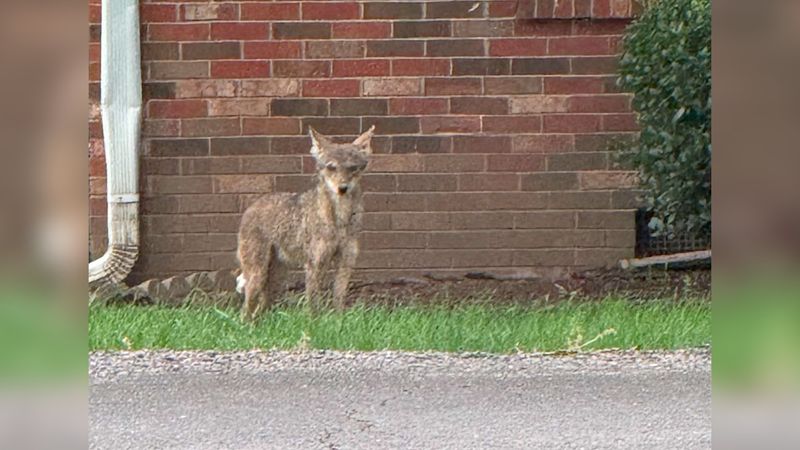
Some assumptions about coyote sounds sound reasonable but go too far. One is that yips mean the animals are hunting.
Another is that a pet is being targeted, or that an attack is coming.
The sources describe calls as communication with social and territorial functions. Neither Iowa DNR nor Tennessee’s agency presents a sound that reliably shows a hunt, a targeted pet, or an immediate threat.
Vocalizations do not establish any of those things.
Rabies is another worry that gets attached to night noise. TWRA states that coyotes are susceptible to rabies but are not rabies reservoir hosts in Tennessee.
In plain words, a coyote can catch the disease, but coyotes are not the animals that keep it circulating in the state.
Howling cannot diagnose disease. A healthy coyote and a sick one can both vocalize, so the sound tells you nothing about health.
That does not mean you should ignore real contact. If an animal actually bites or scratches someone, that is a separate situation covered in the last section.
For a chorus alone, the sensible response is calm preparation, not alarm.
Make your yard less rewarding to visit
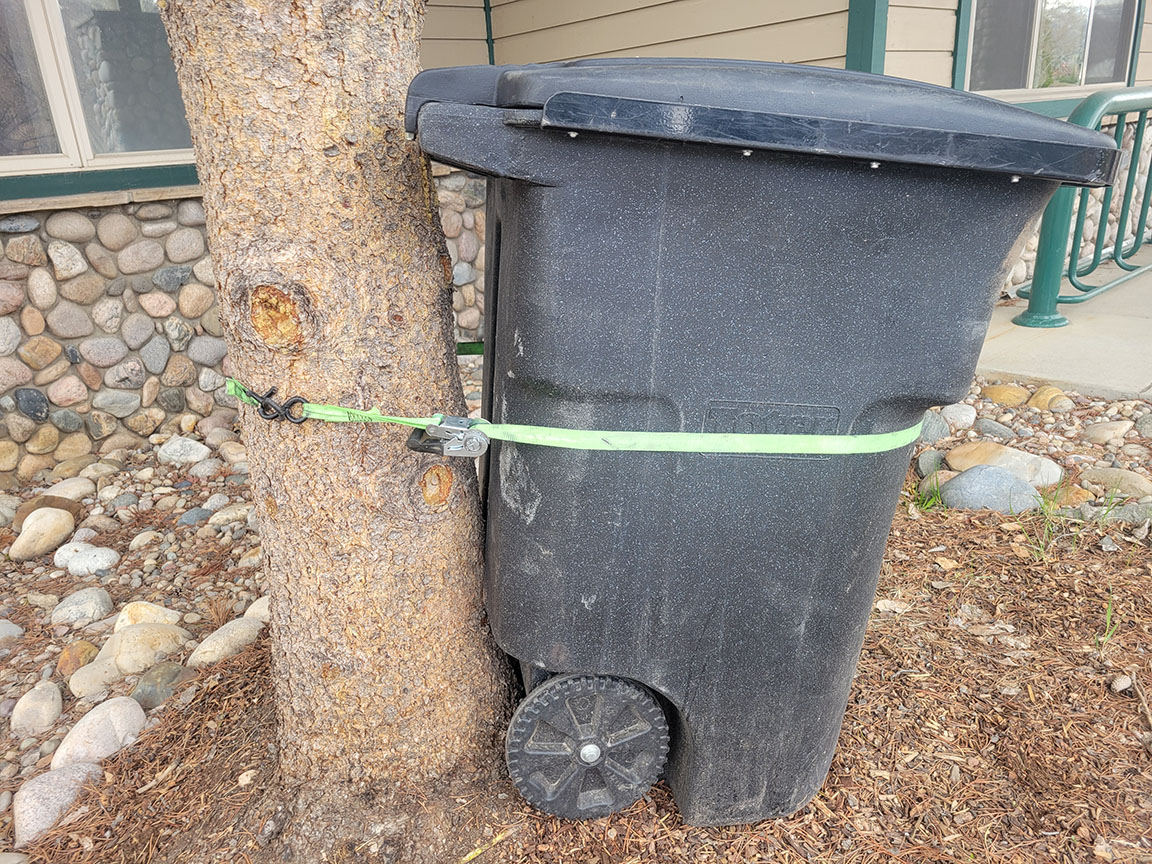
Coyotes are opportunists, and an easy meal makes a yard more interesting. The goal is to give them fewer reasons to stop by.
TWRA advises against feeding coyotes and recommends keeping pets secure.
Start with food you may not think about. Close garbage in sturdy, latched containers, and set them out as close to pickup time as you can.
Bring pet food indoors rather than leaving a bowl on the porch.
Next, sweep up the small stuff. Fallen fruit, spilled birdseed, compost, and leftovers set outside are all accessible food.
A quick walk around the yard before dark can catch most of it.
Pets need attention too. Supervise them outdoors, especially at dusk and after dark, and keep them secured.
Small pets deserve extra care, so consider a leash, a fenced area, or staying close while they are outside.
Be realistic about what these steps do. They reduce reasons for coyotes to visit your property, but they do not promise that coyotes will stop passing nearby or calling.
You may still hear them from the woods behind your house, and that is fine. The difference is that nothing in your yard is inviting them to linger.
If a coyote comes close, make space and get help after a bite
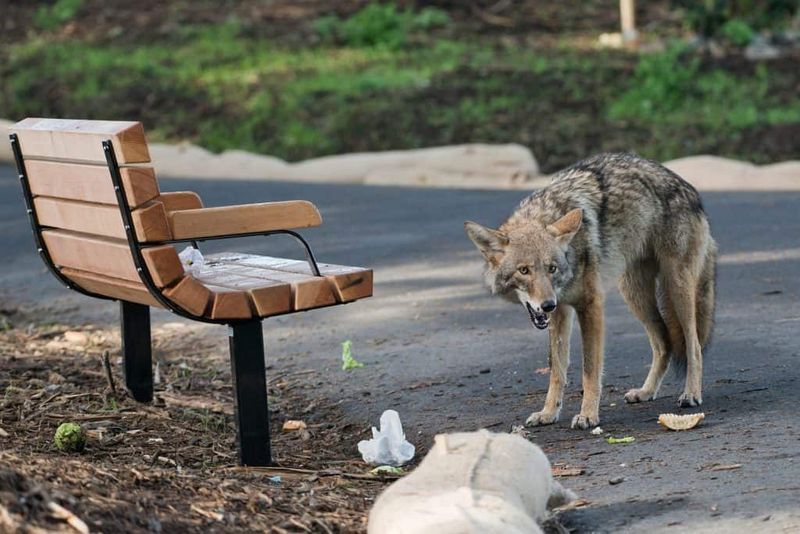
Hearing coyotes is one thing. Having one walk up to you is another, and it calls for action.
Do not approach, feed, handle, or try to capture a coyote.
If one comes too close, Iowa DNR advises making loud noises, shouting, making yourself look large, and throwing objects until the animal leaves. Wave your arms, stand tall, and keep at it until the coyote moves away.
Throw items toward the animal to scare it, not to hurt it.
Judge the moment by what the animal does. A coyote that keeps coming closer, or does not leave when you make noise, matters far more than any chorus from across the field.
Bring pets inside and step back toward the house.
If someone is bitten or scratched, treat it seriously even though coyotes are not rabies reservoirs in Tennessee. CDC guidance says to wash the wound with soap and water for 15 minutes.
Then promptly contact a healthcare or public-health professional about rabies risk.
Let them decide what follow-up is needed. A calm response and a quick phone call beat guessing.
A howl in the dark is just a neighbor clearing its throat. Actions, not the chorus, tell you when to step in.
Share this story