Ohio is full of forests, rocky hills, and old barns, and a few of the creatures hiding there carry venom. Copperheads, rattlesnakes, and black widow spiders all call the Buckeye State home.
They rarely bother people, but knowing what they look like can keep you safe on a hike, in the garden, or while cleaning out the garage. Here is a simple guide to spotting each one before it spots you.
1. Northern Copperhead
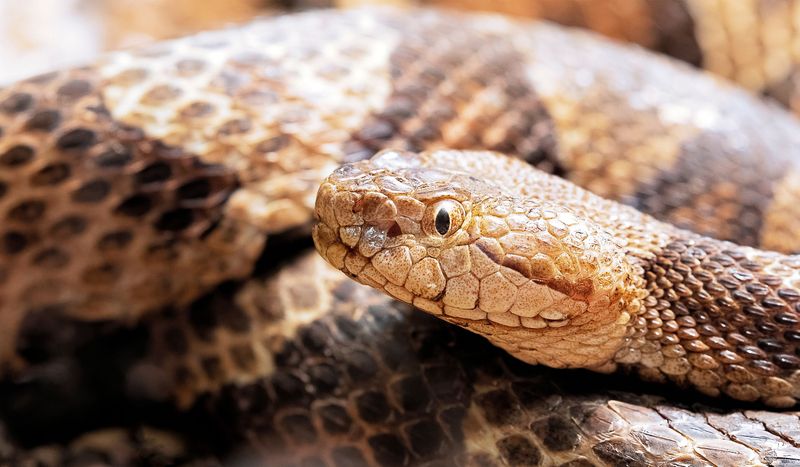
Picture a pile of fallen oak leaves on a hillside in southern Ohio. Now imagine one of those leaves is actually a snake.
That is the copperhead’s whole trick, and it works incredibly well.
Copperheads have a coppery or reddish-brown head with no markings on top. Their bodies show dark, hourglass-shaped bands that look narrow along the spine and wide along the sides.
Many people say the pattern looks like a row of Hershey’s Kisses when viewed from the side.
Adults usually stretch 2 to 3 feet long and have thick bodies. Baby copperheads have a bright yellow or green tail tip, which they wiggle like a worm to lure frogs and lizards close.
Fun fact: freshly crushed copperheads are said to smell a bit like cucumbers.
In Ohio, look for them mostly in the southern and eastern counties, around rocky slopes, woodpiles, and stone walls. Bites are painful but rarely deadly.
Still, watch where you put your hands and feet, and get medical help right away if bitten.
2. Rattlesnakes (Timber Rattlesnake and Eastern Massasauga)

Ohio actually has two kinds of rattlesnakes, and both are rare enough that seeing one is a big deal. The timber rattlesnake and the eastern massasauga are protected in the state.
So if you meet one, admire it from a distance and let it go about its day.
The timber rattlesnake is the big one, often 3 to 5 feet long. Its body ranges from yellow to gray to nearly black, with dark, jagged bands that look like chevrons.
The tail is usually solid black and ends in that famous rattle.
The eastern massasauga is smaller, typically around 2 feet. It is gray or brownish with rows of dark, rounded blotches down its back.
Unlike the timber, it prefers wet prairies, marshes, and bogs, mostly in a few spots in northern and western Ohio.
Both snakes have a triangle-shaped head and cat-like pupils. That buzzing rattle is a polite warning, not an attack.
Back away slowly, and the snake will almost always do the same.
3. Black Widow Spider
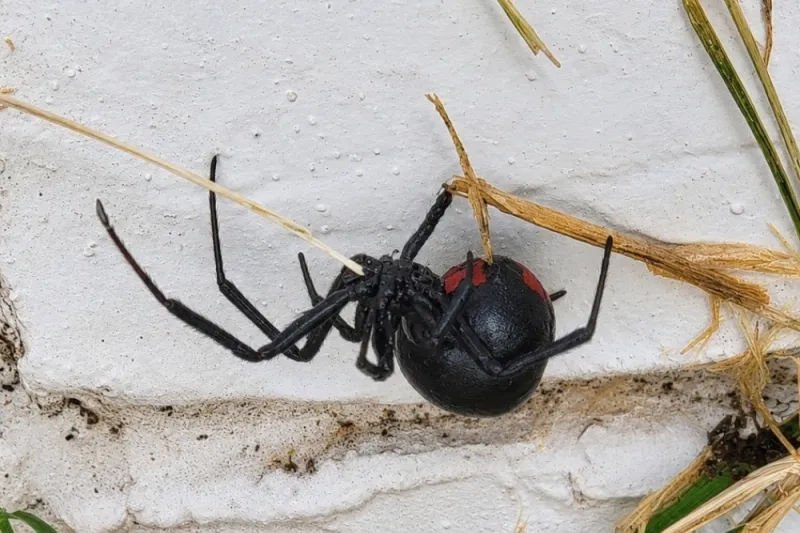
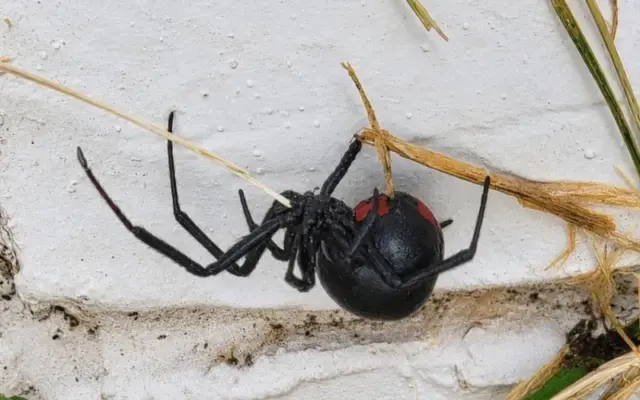
Small, shiny, and dressed in black with a splash of red. The black widow looks like a tiny villain from a cartoon, and honestly, the costume fits.
Ohio’s most common type is the northern black widow. Females are about half an inch long with round, glossy black bellies.
Flip one over, and you will often see a red hourglass, though in northern widows it may be split into two red marks.
Males are much smaller, lighter in color, and harmless to people. The females are the ones to respect.
Their bites can cause muscle pain and cramps, so see a doctor if you think you were bitten.
Black widows build messy, tangled webs in quiet, dark spots. Think woodpiles, sheds, garages, outdoor toilets, and under patio furniture.
Wearing gloves when moving firewood or boxes is an easy habit that saves a lot of trouble.
Did you know? Despite the name, female black widows do not always eat their mates.
It happens far more often in labs than in the wild.
Share this story