Keep people and pets away from the spot, leave the nest alone, and mark or block off the area. That simple first move prevents most yellowjacket stings, because these wasps defend their nests hard when something bumps or shakes them.
Once everyone is safe, you can figure out whether the nest is a real problem or just a neighbor you can steer around. Here is how Missouri homeowners can sort that out calmly.
Keep people and pets away first
Start by treating the spot as off limits. Do not poke, cover, spray, or stand over it to get a better look.
Tell everyone in the house, including kids, guests, and anyone who mows or does yard work, where the suspected nest is.
Marking the area helps a lot. Bright flags, stakes with ribbon, a cone, or a piece of garden fencing set at a generous distance can keep feet and wheels from crossing the spot by accident.
Do this before the next mowing, since the vibration and noise of a mower can set off a nest that nobody noticed. Walk slowly and calmly when you place markers, and keep pets leashed or inside until the area is clear.
Keep an eye on what draws yellowjackets around your yard in the first place. The Missouri Botanical Garden notes that these wasps forage around sweets, fruit, food scraps, and garbage.
Cover trash cans with tight lids, bring pet food indoors, and keep drinks and snacks covered during outdoor meals. Pick up fallen fruit and rinse out soda cans and cups before tossing them.
Fewer foragers around your patio means fewer surprise encounters while you decide what to do about the nest. The Missouri Department of Conservation also advises keeping clear of nests, which is the simplest protection you have right now.
A flight path can point to a nest
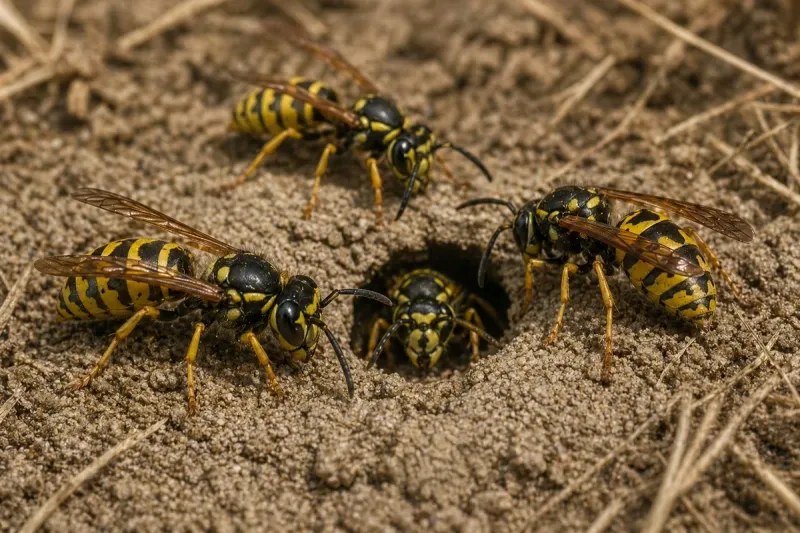
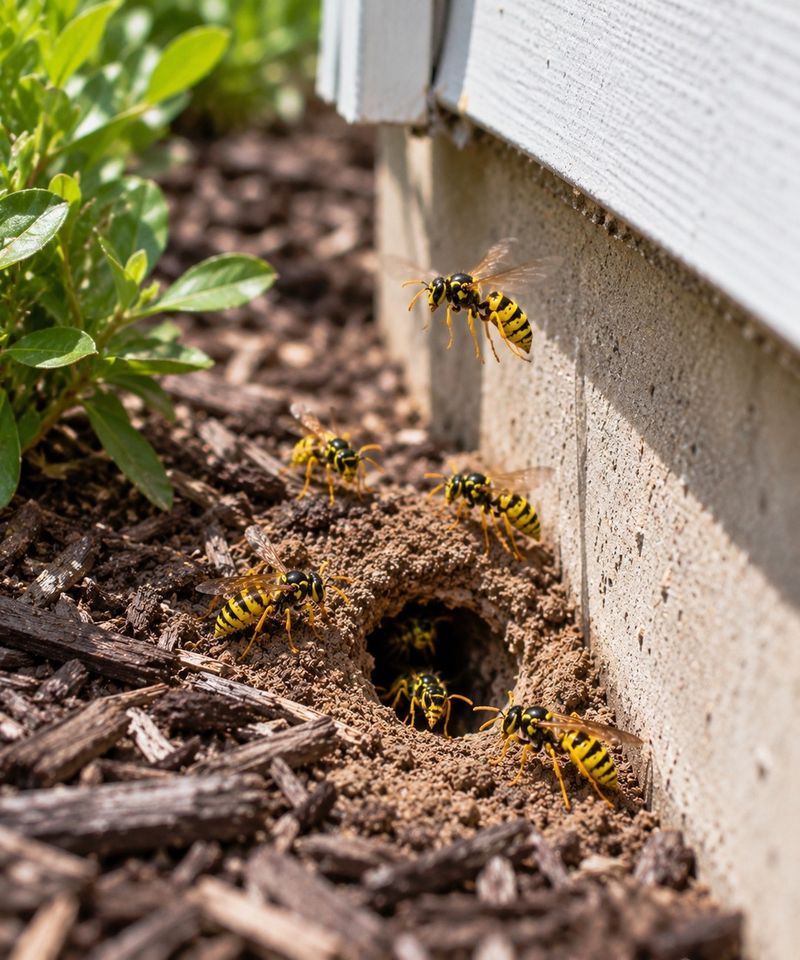
Watch from a distance and you may see wasps repeatedly flying into and out of the same hole or opening. That steady traffic may indicate a nest, though it is not a sure sign.
Stay well back and use your eyes, not your feet, to follow the pattern.
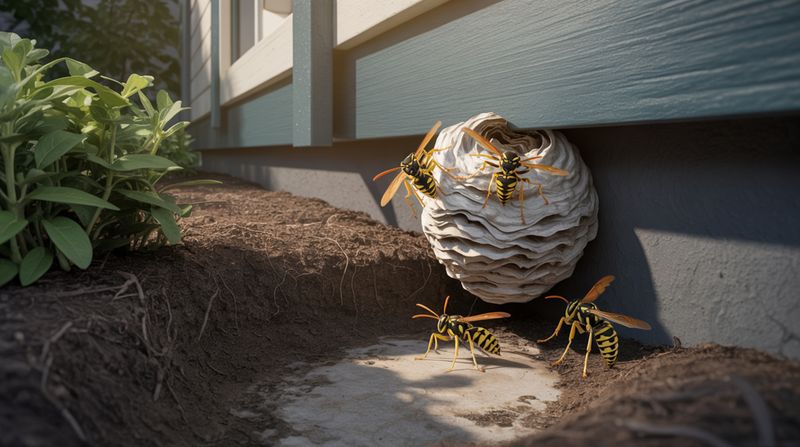
In Missouri, yellowjackets commonly nest underground, often in an old rodent burrow or a small hollow. They can also build in trees, sheds, attics, and cavities inside buildings.
A nest can be hidden, so the only clue may be those flight lines.
Not every stinging insect with yellow and black stripes is a yellowjacket. MU Extension describes several bees and wasps in Missouri, and their habits differ.
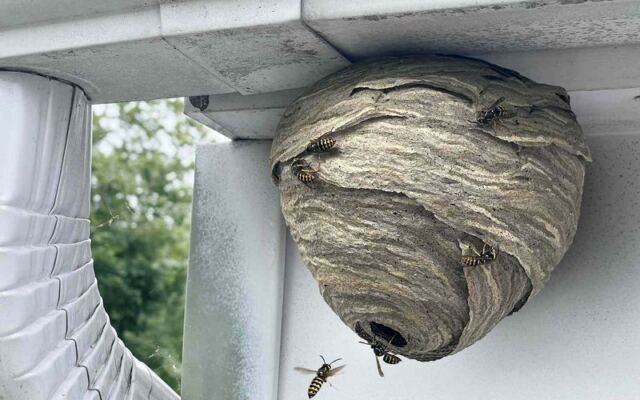
Paper wasps, for example, build open, umbrella-shaped nests under eaves and railings, while yellowjackets tend to be enclosed in a cavity or covered nest. Even one species of yellowjacket in Missouri is often found nesting in buildings.
From across the yard it is hard to tell one insect or one nest from another with confidence. Do not walk closer, lift a board, or shine a light into the hole to check.
If knowing exactly what you have matters for your decision, ask an expert to identify it rather than leaning in for a look.
Call a professional when people cannot avoid the nest
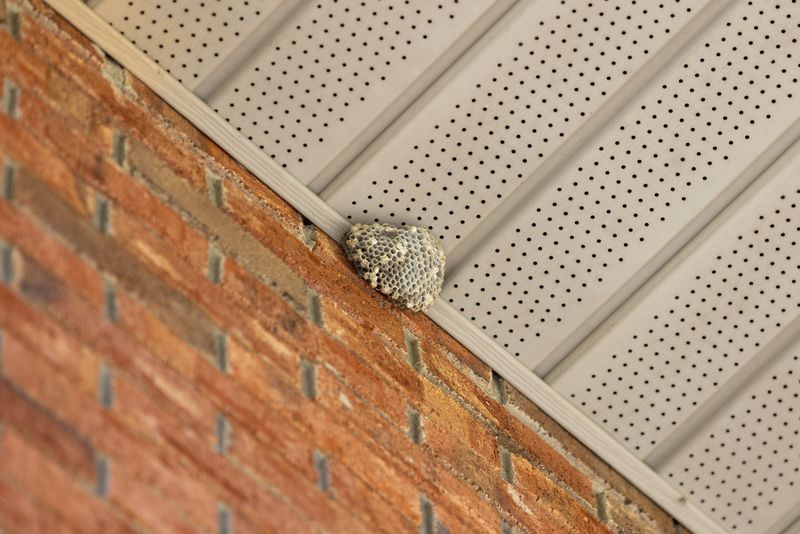
The question that matters most is whether anyone has to walk, mow, or play near the nest. A nest beside a front door, along a sidewalk, under a deck, or at the edge of a play area is a nest people will keep passing.
Sooner or later someone will get too close.
The same goes for a nest inside a wall, attic, or other part of a structure. You cannot mark off or step around something built into the house.
The Missouri Department of Conservation recommends consulting a licensed exterminator to eliminate a nest, and these are the situations where that advice fits best.
Compare that with a nest far out along a fence line or in a back corner nobody visits. If your family can reliably keep clear, the risk is much lower, and removal may not be urgent.
The point is exposure, not the mere presence of wasps.
When staying away cannot manage the risk, the practical next step is a phone call to a licensed pest-control company. Describe where the nest is, how often people pass nearby, and whether anyone in the household has a known allergy to stings.
Meanwhile, keep the area blocked off and do not attempt removal on your own.
A safely isolated nest may wait until freezing weather
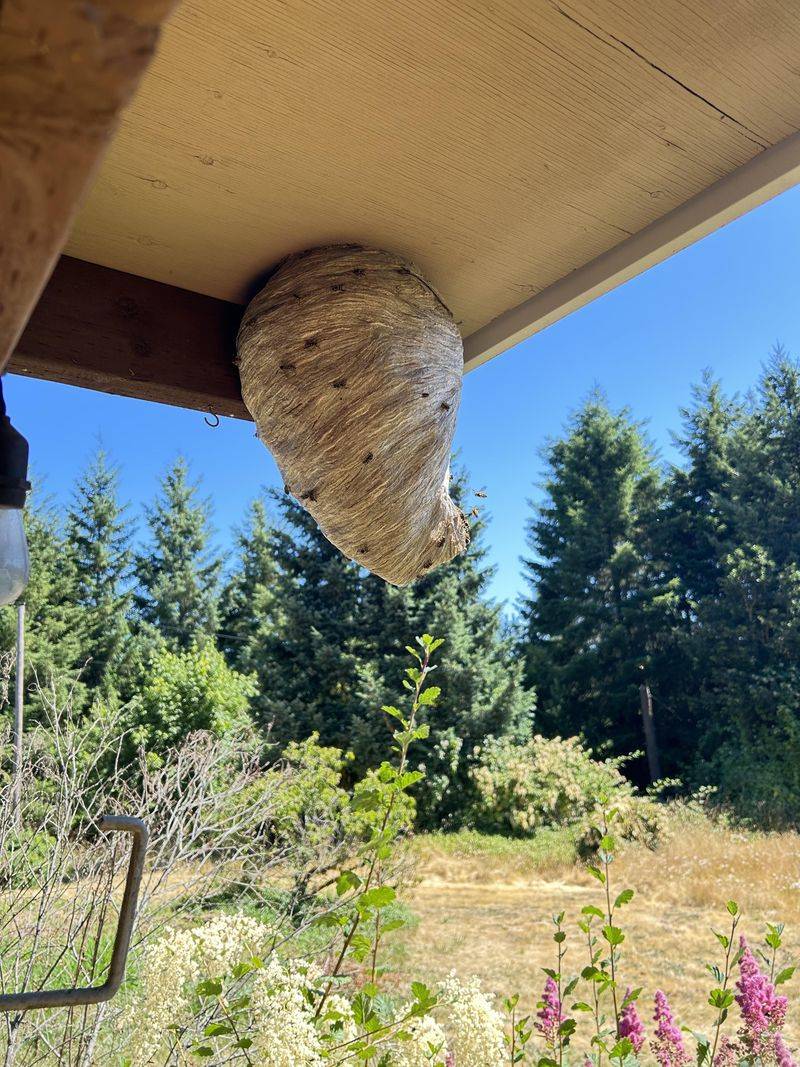
Some nests can simply be left alone. Yellowjackets are predators of other insects, so a colony in a remote corner is doing some useful pest control while you stay out of its way.
The Missouri Department of Conservation notes that colonies die after hard frosts, while fertilized queens survive elsewhere.
Timing matters, though. Colonies grow through the season and are most numerous from midsummer until the first frosts.
That means the late summer and early fall weeks can be the busiest and the touchiest.
Waiting makes sense only if everyone can reliably steer clear. Mark off a safety zone, keep pets and children out, and skip mowing or trimming near the spot.
If people must pass close by, or if something could jostle the nest, waiting is not the right choice and a professional should be called.
Once cold weather ends the colony, old nests usually are not reused. That does not guarantee a quiet yard next year, however.
Michigan State University Extension notes that a favorable location can lead queens to build nearby, so a new nest may form close to the old one. Stay alert in spring and early summer.
Traps and dangerous shortcuts do not eliminate a nest
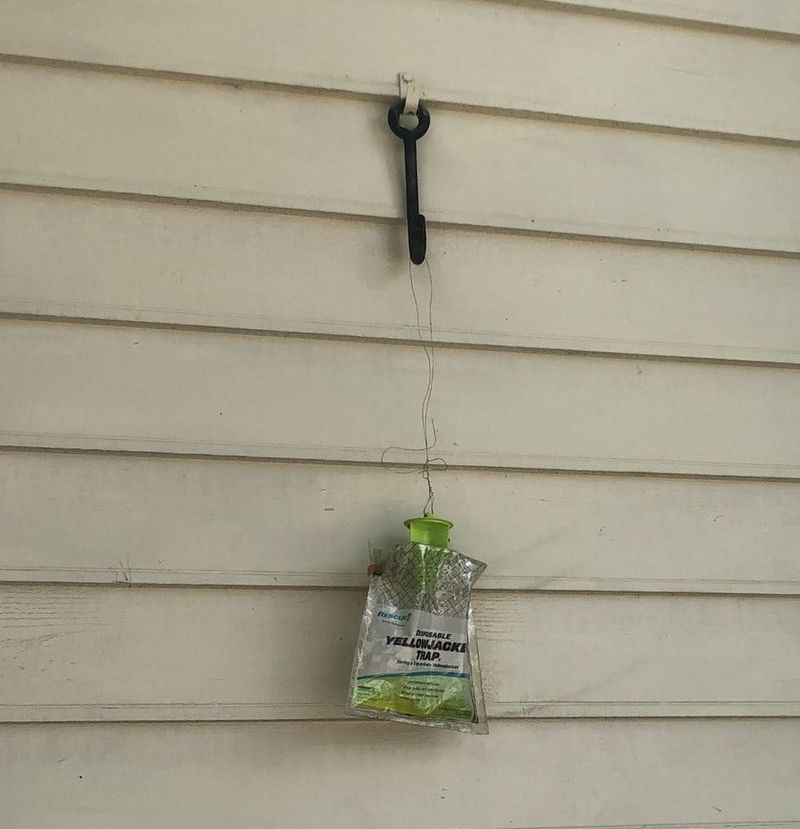
Hardware-store traps look like a handy fix, but they work on foragers, not on the colony. UC IPM says lure traps do not eliminate large populations, and results can depend on the species and where the trap is placed.
A trap may reduce some local foragers, yet the nest keeps producing more.
Fire, gasoline, and kerosene are worse ideas. Penn State Extension warns that fire can spread and cause injury or property damage, and that common fuels can be more toxic than appropriate insecticides.
A disturbed nest also means angry wasps right next to you.
You may hear that hanging a fake paper-bag nest keeps yellowjackets away. Penn State Extension says there is no clear evidence that decoy nests prevent nesting, so treat the idea as unproven.
If the nest is a problem, the safer path is to keep people away and call a licensed professional rather than improvising. If the nest is not a problem, the safest move is often to leave it alone.
Follow the label if you use a pesticide

Pesticide directions are not the same from one product to the next. Whatever you buy, the label on that specific product is the rule book for timing, distance, protective steps, and cleanup.
Do not borrow instructions from an article, a neighbor, or a different brand.
As an example only, the EPA label for one registered wasp and yellowjacket aerosol lists early morning or dusk, a set distance from the nest, and waiting at least 24 hours before removing it. Those details belong to that product alone.
The same label also warns of hazards to people, pets, aquatic organisms, and bees.
Some guidance suggests treating at night, when wasps are less active. UC IPM cautions that wasps may still emerge and sting, and that a spray may not reach a deep underground nest.
Low-activity hours help, but they do not make the job safe by themselves.
Where exposure is significant, such as a nest near a doorway or inside a wall, professional treatment is the preferred option.
Severe sting symptoms need emergency help
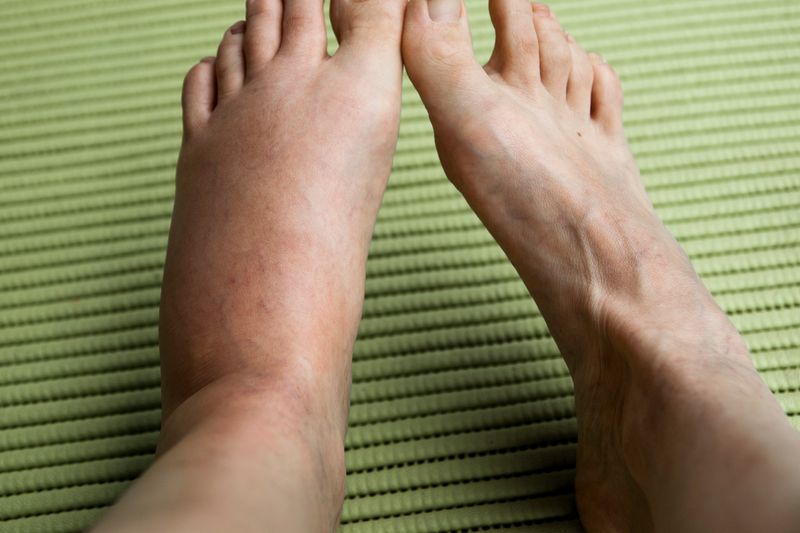
Most stings hurt and swell, but some reactions are medical emergencies. The Missouri Department of Conservation lists breathing difficulty, facial or throat swelling, dizziness, and loss of consciousness among the signs of a severe allergic reaction.
If any of these appear after a sting, get emergency help immediately. Call 911 rather than waiting to see whether the symptoms pass.
If the person has a prescribed epinephrine autoinjector, it should be used as directed. It does not replace emergency care, so help still needs to be on the way.
Do not add home remedies or other treatment steps in the meantime.
Also move the person, and everyone else, away from the nest so no one is stung again while help arrives.
Decide based on whether people can stay clear
Keep clear, mark the spot, and secure food and trash. Then ask one question: can everyone reliably avoid that nest?
If yes, it may be fine to leave it until freezing weather ends the colony, as the Missouri Department of Conservation describes. If no, call a licensed pest-control professional.
A nest you can walk around is a neighbor, and one you cannot is a job for someone with training.
Share this story