Get the latest garden guides in your inbox →
Gardening Latest
  • General Gardening
  • Lawn Care
  • Plant Care
  • Composting
  • Soil Health
  • Backyard
  • Garden Muse Magazine
  • General Gardening
  • Lawn Care
  • Plant Care
  • Composting
  • Soil Health
  • Backyard
  • Garden Muse Magazine
  • News
  • Gardening Calendar
  • Garden Structures
  • Vegetable Garden
  • Vertical Garden
  • Raised Beds
  • Hydroponics
  • General Equipment
  • Community Gardens
Garden Themes
  • Spiritual Garden
  • Hydroseeding
  • Seeding and Laying Sod
  • Artificial Grass
  • Lawn Care Equipment
  • Plants
  • Trees
  • Planting Tools
  • Composting Basics
  • Fertilizer
  • Alternative Growing Mediums
  • Front Yard
  • Backyard Activities
  • Landscaping
Gardening Latest

Explore by state

Which state is your garden in?

Currently viewing Wisconsin

All states

Northeast

  • Connecticut —
  • Delaware 33
  • Maine —
  • Maryland 19
  • Massachusetts 35
  • New Hampshire —
  • New Jersey 19
  • New York 28
  • Pennsylvania 28
  • Rhode Island —
  • Vermont —

Southeast

  • Alabama 19
  • Arkansas —
  • Florida 19
  • Georgia 19
  • Kentucky 33
  • Louisiana 18
  • Mississippi —
  • North Carolina 17
  • South Carolina 32
  • Tennessee 16
  • Virginia 18
  • West Virginia —

Midwest

  • Illinois 18
  • Indiana 20
  • Iowa 32
  • Kansas —
  • Michigan 19
  • Minnesota 18
  • Missouri 18
  • Nebraska —
  • North Dakota —
  • Ohio 19
  • South Dakota —
  • Wisconsin 34

Southwest

  • Arizona 19
  • Colorado —
  • Nevada —
  • New Mexico —
  • Oklahoma —
  • Texas 18
  • Utah —

West

  • Alaska —
  • California 19
  • Hawaii —
  • Idaho —
  • Montana —
  • Oregon —
  • Washington —
  • Wyoming —

No state matches that search.

Site menu

Gardening Latest
  • General Gardening
    • News
    • Gardening Calendar
    • Garden Structures
    • Vegetable Garden
    • Vertical Garden
    • Raised Beds
    • Hydroponics
    • General Equipment
    • Community Gardens
    Garden Themes
    • Spiritual Garden
  • Lawn Care
    • Hydroseeding
    • Seeding and Laying Sod
    • Artificial Grass
    • Lawn Care Equipment
  • Plant Care
    • Plants
    • Trees
    • Planting Tools
  • Composting
    • Composting Basics
  • Soil Health
    • Fertilizer
    • Alternative Growing Mediums
  • Backyard
    • Front Yard
    • Backyard Activities
    • Landscaping
  • Garden Muse Magazine

Explore

  • About GardeningLatest.com
  • Contact Us

Get the latest from the garden

New guides on lawn care, plants and backyard projects, sent when they go up.

Subscribe →

Follow

  • Facebook
  • X
  • Pinterest
  • YouTube
Wisconsin Gardening

Wisconsin Winters Bring Big White Tracks Into Your Yard, and Here’s Which Animal Left Each One

Fresh snow in Wisconsin works like a giant notebook, and every night the local wildlife writes in it.

HB

By Heidi Brandt

November 25, 2026 · 6 min read

Wisconsin Winters Bring Big White Tracks Into Your Yard, and Here’s Which Animal Left Each One
Wisconsin Winters Bring Big White Tracks Into Your Yard, and Here's Which Animal Left Each One

Fresh snow in Wisconsin works like a giant notebook, and every night the local wildlife writes in it. You might step outside with your coffee and spot a line of prints crossing the lawn, circling the bird feeder, or vanishing under the deck.

Learning to read those tracks tells you who shares your yard when you are asleep, and it turns a cold morning into a real-life mystery. Here are ten animals most likely to leave their marks, plus the clues that give each one away.

At a glance

Where
Wisconsin Gardening
Hardiness zone
5 −20 to −10°F
Read
6 minutes
Published
November 25, 2026

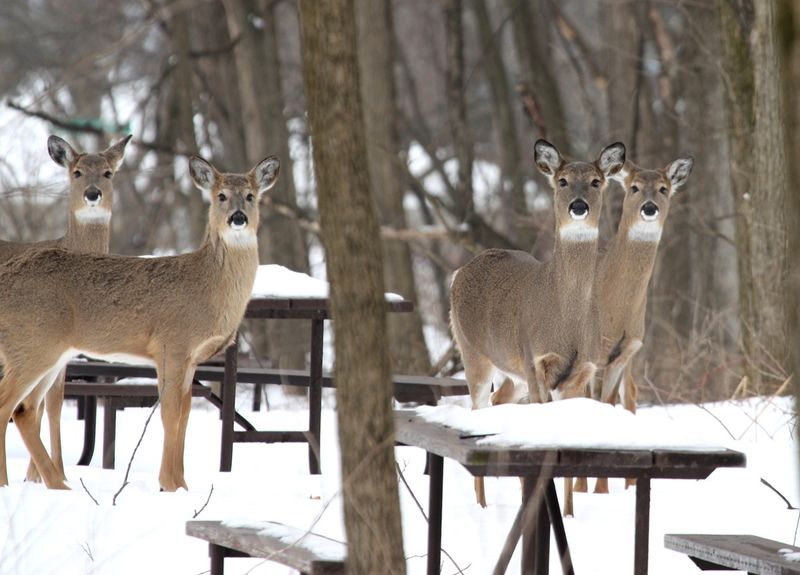
1. White-Tailed Deer

White-Tailed Deer
© The Trail – WordPress.com

Wake up to a trail of little hearts stamped across the garden and you have met Wisconsin’s most famous night visitor. Deer hooves are split into two pointed toes, and together they press a shape that looks like an upside-down heart about two to three inches long.

The pointed end shows the direction the deer was walking. In deeper snow you may also see two small dots behind the main print, made by the dewclaws as the leg sinks down.

Deer tend to follow the same paths night after night, so a packed trail along your tree line is a big hint. Check your arborvitae and hostas too, since nibbled branches with ragged ends usually match the tracks.

2. Eastern Cottontail Rabbit
Eastern Cottontail Rabbit
© Republican Herald

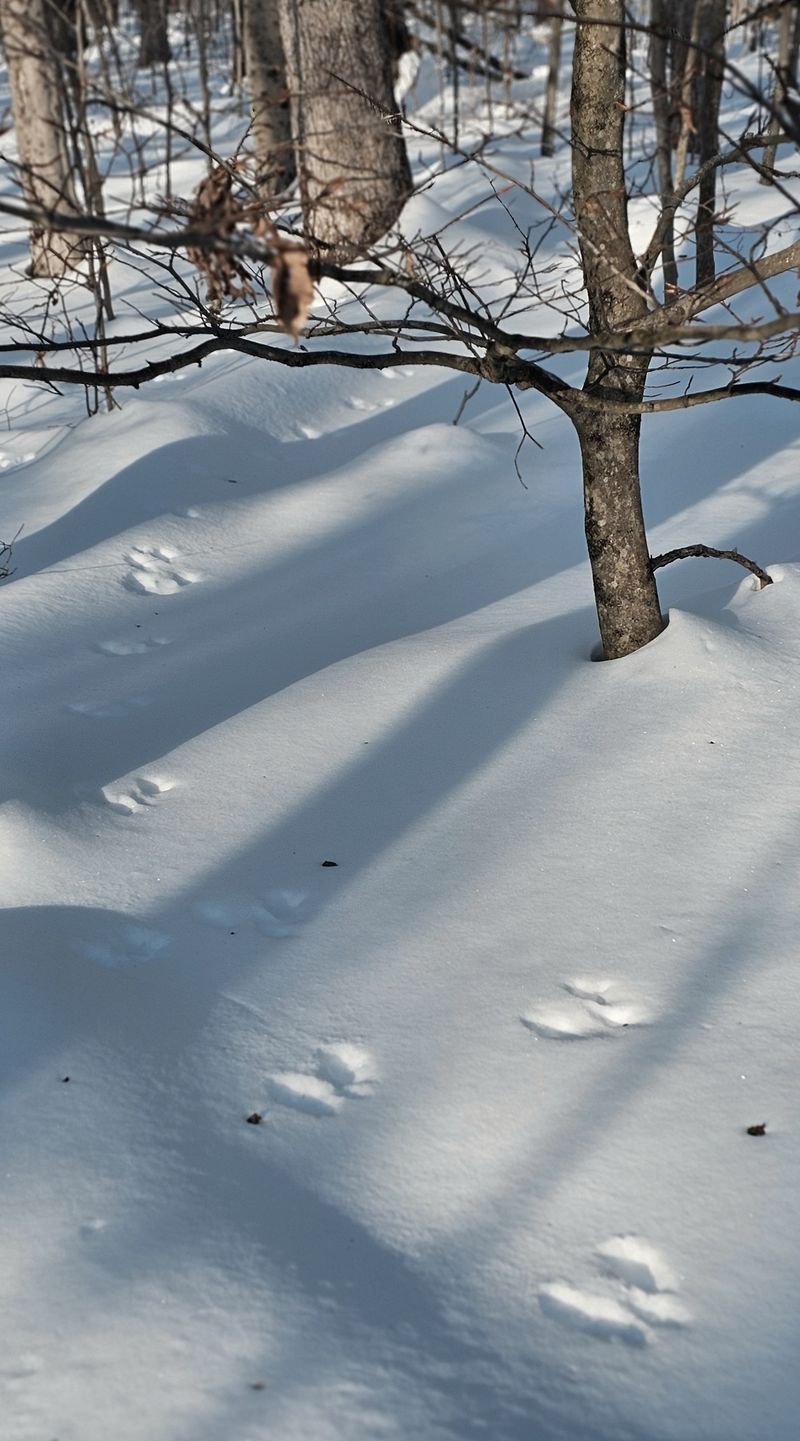
Here is a fun puzzle. The rabbit tracks in your yard look backward, with the big feet landing in front of the small ones.

When a cottontail hops, it plants its two small front paws one behind the other, then swings its long back feet forward and around them. The result is a Y-shaped cluster, with two oval hind prints side by side and two round dots trailing behind.

Look near brush piles, under evergreens, and around the base of young fruit trees. Cottontails love to chew bark in winter, so clean, angled cuts on twigs close to the ground are a matching clue.

3. Red Fox
Red Fox
© Reddit

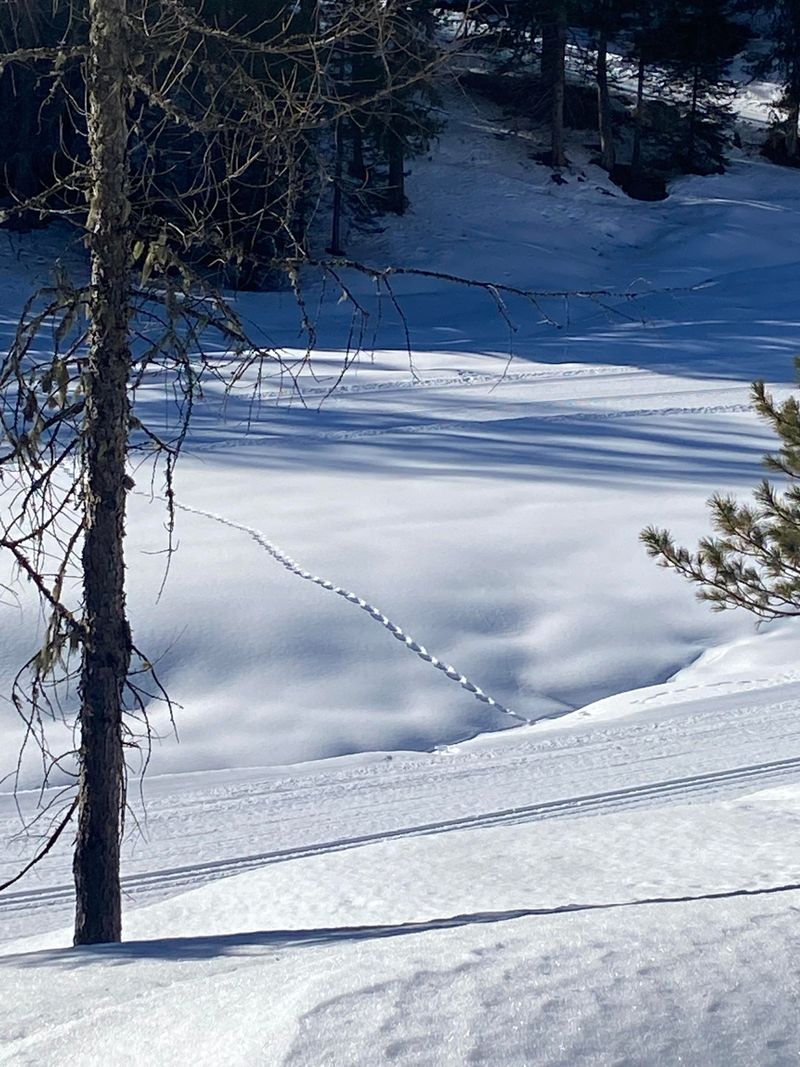
Picture a tightrope walker crossing your lawn at midnight. That is how a red fox moves, placing each back foot almost exactly into the print of the front foot, so the trail looks like one tidy line of dots.

Each print is small and oval, roughly two inches long, with four toes and claw marks. Fox feet are furry in winter, so the edges often look a bit blurry, and you may see a chevron-shaped ridge on the heel pad.

Skunk prints wander, shuffle, and cluster in a jumbled pattern that seems almost lazy.

Foxes hunt mice under the snow by listening, then leaping high and diving nose first. If you spot a messy hole with tracks stopping suddenly beside it, a fox may have pounced right there.

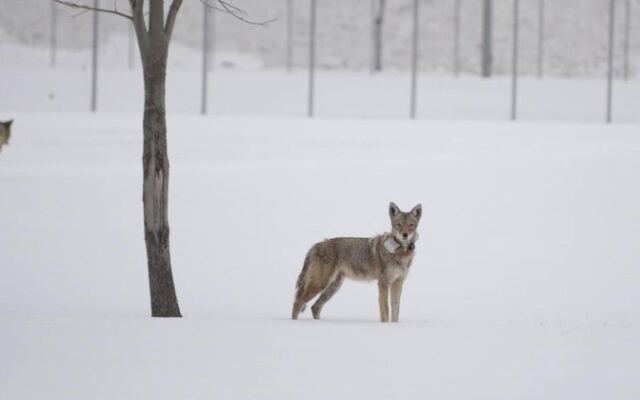
4. Coyote
Coyote
© The Cap Times

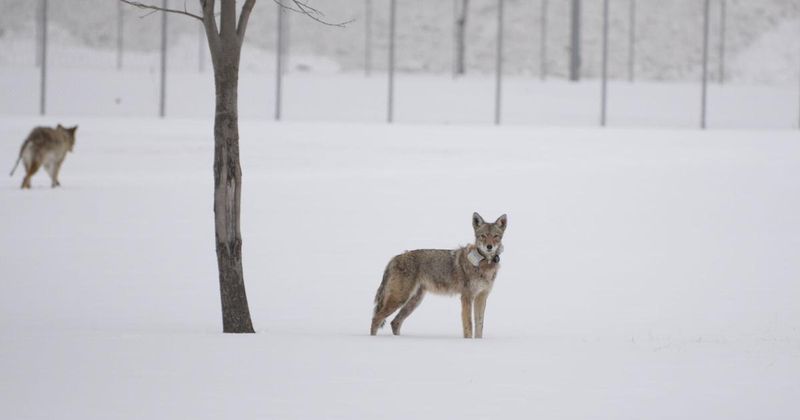
Wondering if a big dog wandered through? Coyote tracks often get mistaken for a neighbor’s pet, but there are ways to tell them apart.

A coyote print is about two and a half to three inches long and shaped like a narrow oval. The two front toes sit close together, and you could draw an X between the toes and the heel pad without touching anything.

Dog prints are rounder and splay out more.

Behavior is the other giveaway. Dogs zigzag, sniff everything, and run in loops, while coyotes travel with purpose in a fairly straight line, saving energy for the long, cold night.

5. Raccoon
Raccoon
© Post Journal

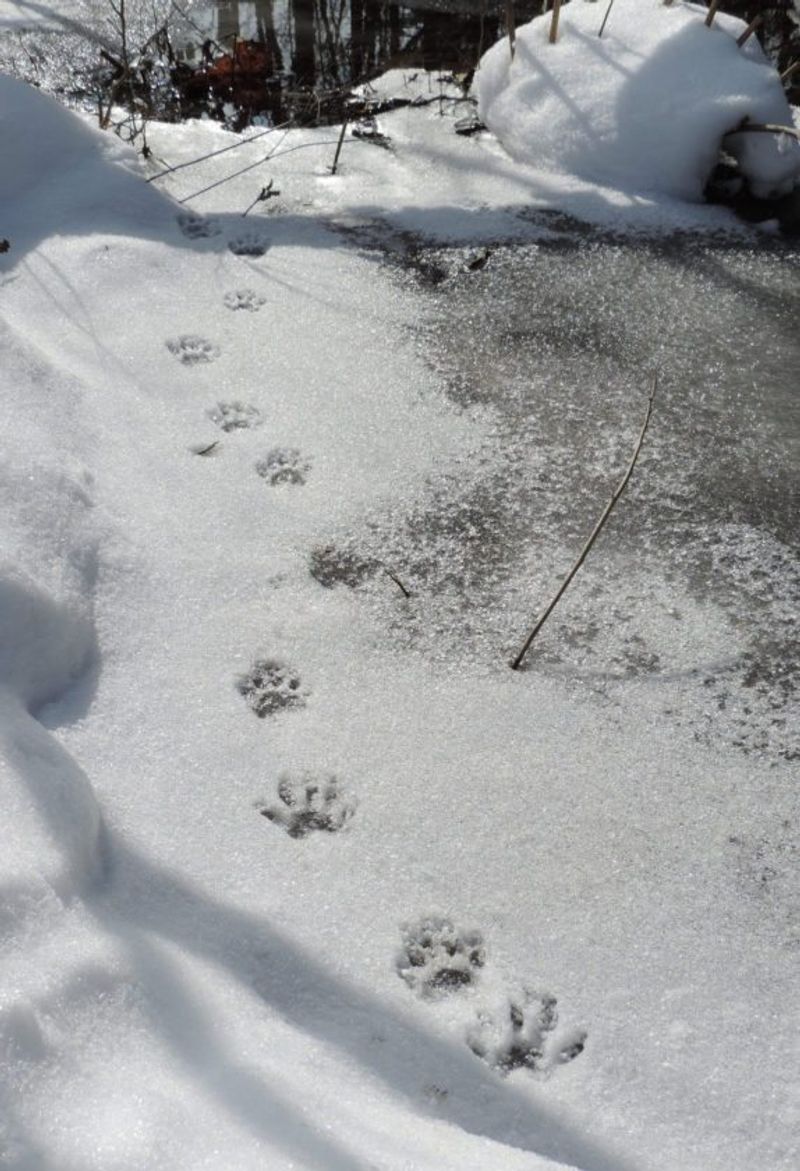
Few prints are as charming as a raccoon’s. They look like a tiny child pressed handprints into the snow, five long fingers and all.

Raccoons have a funny walking pattern where a back foot lands right beside the opposite front foot, so you see prints in pairs. The back feet are longer and show a heel, kind of like a baby’s footprint.

Raccoons don’t truly hibernate. During extreme cold snaps they sleep for days, then pop out on milder nights, so a sudden burst of tracks after a warm-up makes perfect sense.

Follow them and you may end up at your trash cans.

6. Gray Squirrel
Gray Squirrel
© Complete with Dogs…and Cats

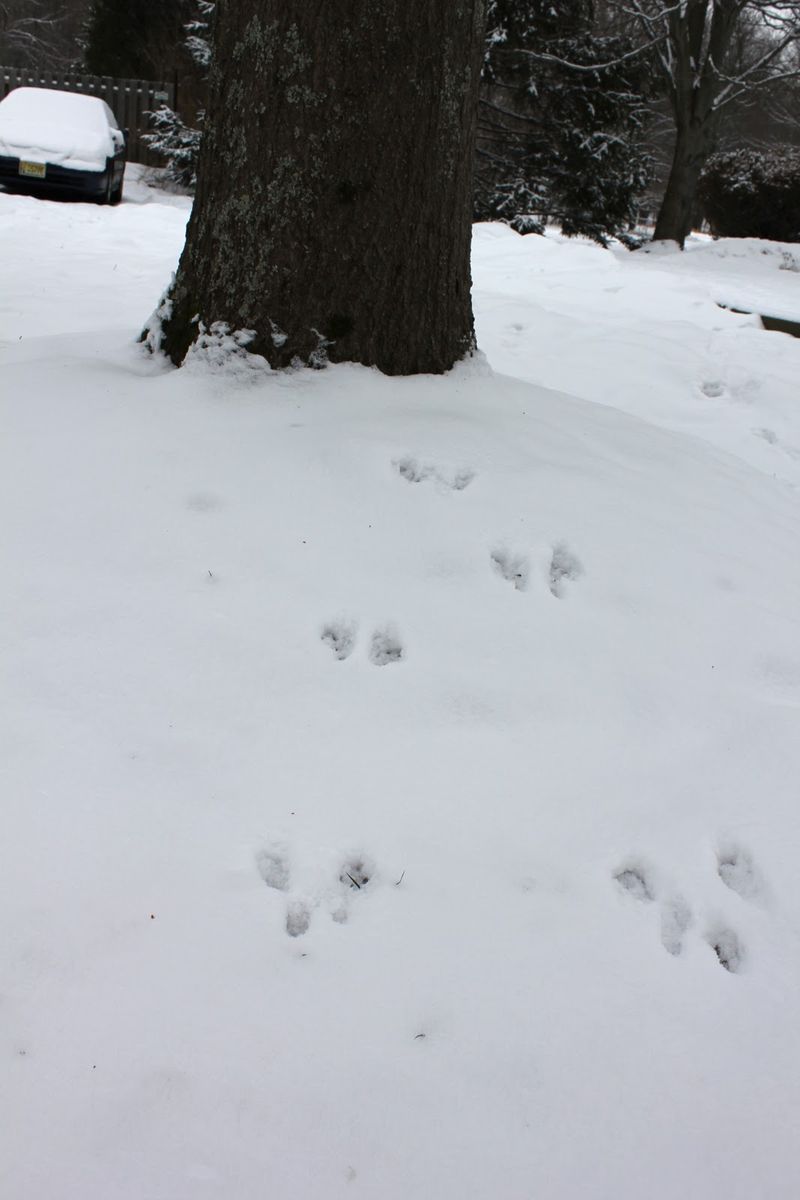
Squirrel tracks tell a story with a clear beginning and end. They almost always start at one tree and finish at another tree, or at your bird feeder.

The pattern looks a lot like a rabbit’s, with the big back feet landing ahead of the front ones. The difference is that a squirrel places its little front feet side by side instead of one behind the other, making a neat box shape.

You might also find small dug-out holes where a squirrel remembered a buried acorn. Scientists think squirrels forget many of their stashes, which means they accidentally plant a lot of Wisconsin’s oak trees.

7. Striped Skunk
Striped Skunk
© The Faunalist

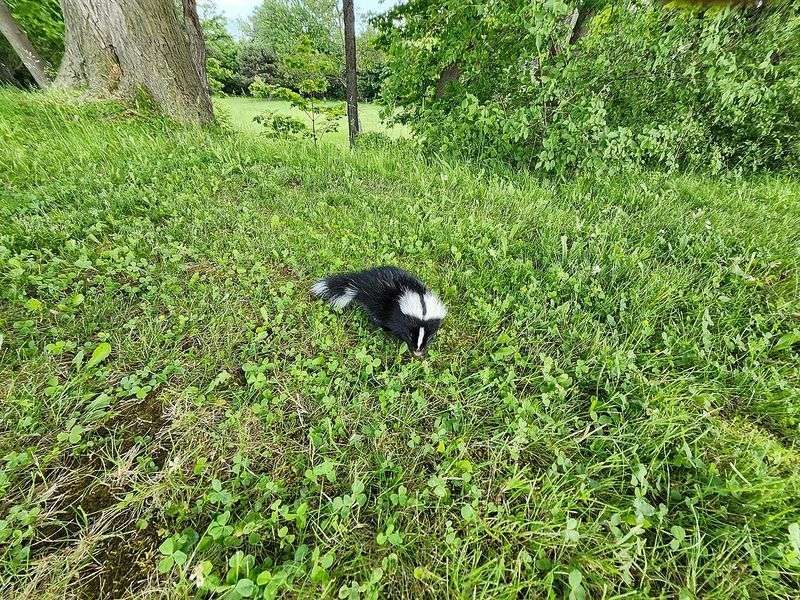
Some tracks look like the animal had no plan at all. Skunk prints wander, shuffle, and cluster in a jumbled pattern that seems almost lazy.

Each foot has five toes, and the front feet show long claws built for digging. The back prints resemble small flat feet with a heel.

Since skunks move slowly, the prints overlap in groups of three or four.

Skunks sleep through the worst cold, often under sheds or decks. When you see fresh tracks in late January or February, it often means mating season has started, and the males are out searching.

Give them space and enjoy the clues from a distance.

8. Wild Turkey
Wild Turkey
© Cool Green Science – The Nature Conservancy

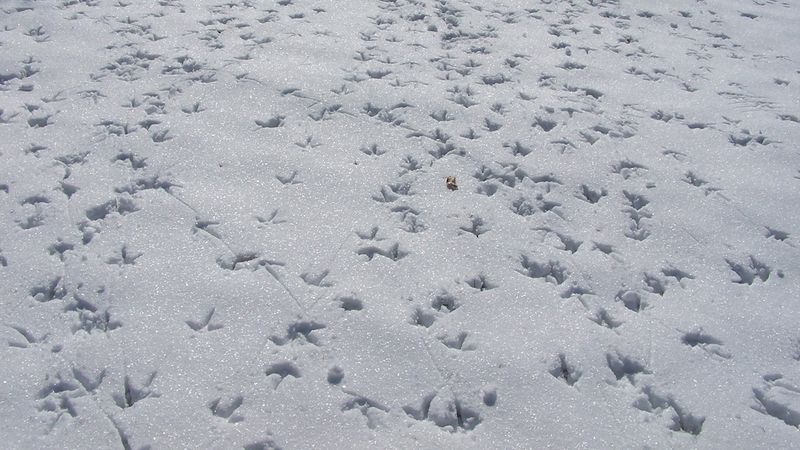
Did you know a wild turkey footprint can stretch over four inches long? That size alone surprises plenty of homeowners who expect a bird track to be dainty.

Turkey prints show three long front toes spread like an arrow, with a tiny back toe that sometimes barely appears. The arrow points backward, opposite to the direction the bird was walking.

Turkeys travel in flocks during winter, so you will rarely find just one trail. Expect a messy crisscross of prints, scratched patches where they hunted for seeds, and maybe wing marks in the snow where one took off into a tree to roost.

9. Opossum
Opossum
© Critter Control

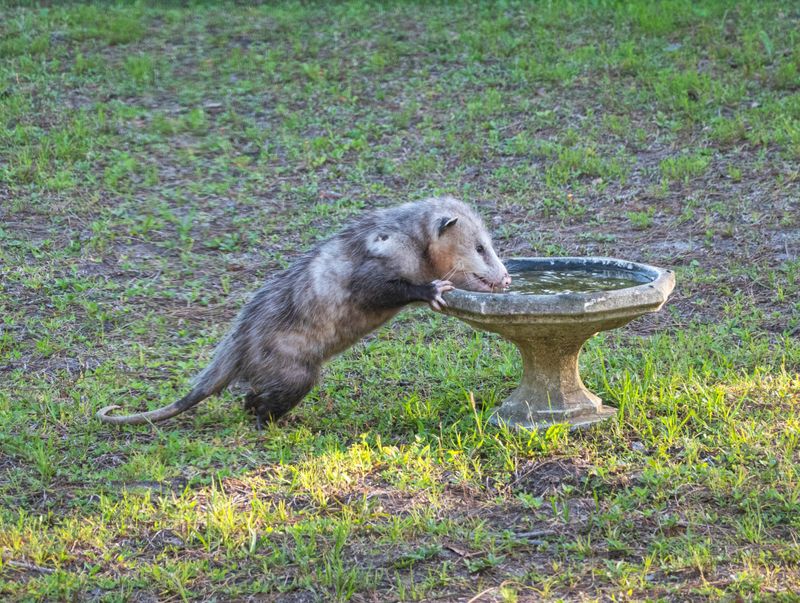
Opossums are newcomers compared to most animals on this list, having spread north into Wisconsin over the last century. Their tracks are some of the easiest to identify once you know the trick.

Look for the back foot. It has a thumb that sticks out sideways like a human hand, and that thumb has no claw.

The front foot spreads into a little star with five toes.

Opossums struggle with harsh cold, and many in Wisconsin have frostbitten ear tips or tails. That is why their tracks often lead to warm spots like porches, garages, or compost piles on milder evenings.

10. Bobcat
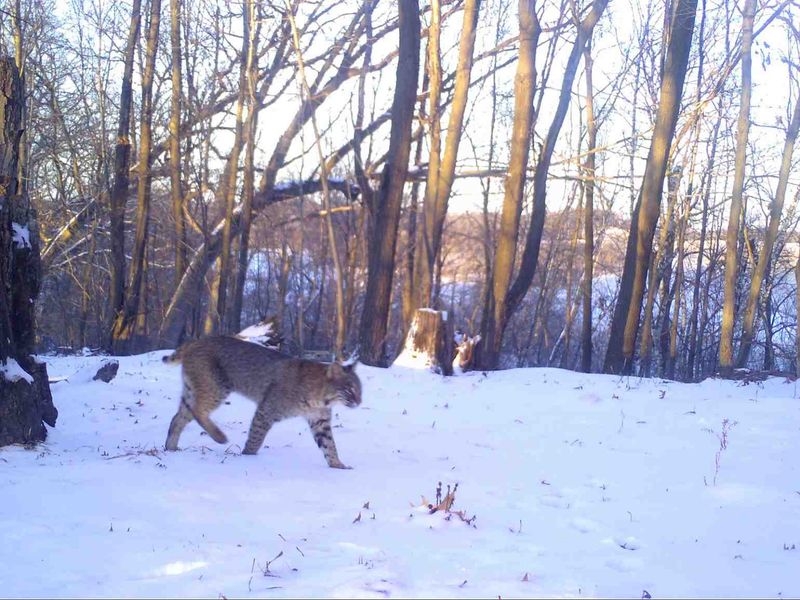
Bobcat
© PBS Wisconsin

Spotting bobcat tracks feels like finding treasure. These quiet cats are more common in northern and central Wisconsin, but they have been moving into more areas in recent years.

The prints are round, about two inches wide, and usually show no claw marks because cats pull their claws in while walking. The big heel pad has three bumps on the back edge, which separates it from any dog family member.

Bobcats tend to stick to wooded edges, brushy creek beds, and rock piles. If you find these prints near your home, you are lucky, so grab a photo with something for scale and maybe share it with your county’s wildlife office.

Share this story
HB

Written by

Heidi Brandt

More from Heidi Brandt →

About Gardening Latest

Gardening Latest provides in-depth guides to maintaining and enhancing your garden and backyard. Learn how to make the most of the space you have and create a beautiful garden.

More about us →

Latest stories

  • California GardeningIf a Gray Fox Keeps Trotting Through Your California Yard This Winter, Here’s What It’s After

    If a Gray Fox Keeps Trotting Through Your California Yard This Winter, Here’s What It’s After

    7 hr ago
  • Arizona GardeningWhen a Gray Fox Trots Through Your Arizona Yard This Winter, It’s on a Mission

    When a Gray Fox Trots Through Your Arizona Yard This Winter, It’s on a Mission

    7 hr ago
  • Texas GardeningNeighbor Vines Crossing Into Your Texas Yard: Texas Tree-Branch Guidance Is Clear, but the Answer for Vines Is Less Settled

    Neighbor Vines Crossing Into Your Texas Yard: Texas Tree-Branch Guidance Is Clear, but the Answer for Vines Is Less Settled

    7 hr ago
  • Wisconsin GardeningWisconsin Neighbors Fight Over Snow Piled on Their Property, and Here’s What the Law Actually Says

    Wisconsin Neighbors Fight Over Snow Piled on Their Property, and Here’s What the Law Actually Says

    7 hr ago
  • Missouri GardeningYellow Jackets Nesting Near Your Missouri Home? This Is What You Should Do First

    Yellow Jackets Nesting Near Your Missouri Home? This Is What You Should Do First

    7 hr ago

Gardening by state

Stories for your state, and the hardiness zone most of it gardens in.

Keep exploring

Read next

All Wisconsin Gardening →
Wisconsin GardeningWisconsin Neighbors Fight Over Snow Piled on Their Property, and Here’s What the Law Actually Says
Wisconsin Gardening

Wisconsin Neighbors Fight Over Snow Piled on Their Property, and Here’s What the Law Actually Says

7 hr ago
Wisconsin GardeningYour Wisconsin Christmas Tree Brings Thousands of Hidden Bugs Inside, and Here’s What Actually Hatches
Wisconsin Gardening

Your Wisconsin Christmas Tree Brings Thousands of Hidden Bugs Inside, and Here’s What Actually Hatches

10 hr ago
Wisconsin GardeningYou’re Sharing Your Wisconsin Yard With Venomous Critters, And Late Fall Is When You’ll Notice Them
Wisconsin Gardening

You’re Sharing Your Wisconsin Yard With Venomous Critters, And Late Fall Is When You’ll Notice Them

16 hr ago

More from Wisconsin Gardening

  • The Invasive Tree Wisconsin Gardeners Keep Pulling Is Still Spreading Through Their Neighborhoods

    Nov 24
  • Here’s Who Actually Pays When a Neighbor’s Tree Smashes Into Your Wisconsin Yard

    Nov 24
Back to top

Leave a response Cancel

Your email address stays private. Required fields are marked with an asterisk.

Gardening Latest

In-depth guides to maintaining and enhancing your garden and backyard: how to make the most of the space you have, and how to make it beautiful.

  • Facebook
  • X
  • Pinterest
  • YouTube

We may earn a portion of sales from products or services that are purchased through our site as part of our affiliate partnerships with retailers.

Explore

  • About GardeningLatest.com
  • Contact Us
  • Terms and Conditions
  • Privacy
  • Editorial Note:
  • FTC Disclosure

Newsletter

New garden guides and seasonal tips, straight to your inbox.

We’ll email you a link to confirm. Unsubscribe any time.

Almost there! Check your inbox and tap the link to confirm.

© 2026 Gardening Latest. All rights reserved.

Back to top