Get the latest garden guides in your inbox →
Gardening Latest
  • General Gardening
  • Lawn Care
  • Plant Care
  • Composting
  • Soil Health
  • Backyard
  • Garden Muse Magazine
  • General Gardening
  • Lawn Care
  • Plant Care
  • Composting
  • Soil Health
  • Backyard
  • Garden Muse Magazine
  • News
  • Gardening Calendar
  • Garden Structures
  • Vegetable Garden
  • Vertical Garden
  • Raised Beds
  • Hydroponics
  • General Equipment
  • Community Gardens
Garden Themes
  • Spiritual Garden
  • Hydroseeding
  • Seeding and Laying Sod
  • Artificial Grass
  • Lawn Care Equipment
  • Plants
  • Trees
  • Planting Tools
  • Composting Basics
  • Fertilizer
  • Alternative Growing Mediums
  • Front Yard
  • Backyard Activities
  • Landscaping
Gardening Latest

Explore by state

Which state is your garden in?

Currently viewing Wisconsin

All states

Northeast

  • Connecticut —
  • Delaware 25
  • Maine —
  • Maryland 11
  • Massachusetts 27
  • New Hampshire —
  • New Jersey 11
  • New York 20
  • Pennsylvania 20
  • Rhode Island —
  • Vermont —

Southeast

  • Alabama 11
  • Arkansas —
  • Florida 11
  • Georgia 11
  • Kentucky 25
  • Louisiana 10
  • Mississippi —
  • North Carolina 9
  • South Carolina 24
  • Tennessee 8
  • Virginia 10
  • West Virginia —

Midwest

  • Illinois 10
  • Indiana 12
  • Iowa 24
  • Kansas —
  • Michigan 11
  • Minnesota 10
  • Missouri 10
  • Nebraska —
  • North Dakota —
  • Ohio 11
  • South Dakota —
  • Wisconsin 26

Southwest

  • Arizona 11
  • Colorado —
  • Nevada —
  • New Mexico —
  • Oklahoma —
  • Texas 10
  • Utah —

West

  • Alaska —
  • California 10
  • Hawaii —
  • Idaho —
  • Montana —
  • Oregon —
  • Washington —
  • Wyoming —

No state matches that search.

Site menu

Gardening Latest
  • General Gardening
    • News
    • Gardening Calendar
    • Garden Structures
    • Vegetable Garden
    • Vertical Garden
    • Raised Beds
    • Hydroponics
    • General Equipment
    • Community Gardens
    Garden Themes
    • Spiritual Garden
  • Lawn Care
    • Hydroseeding
    • Seeding and Laying Sod
    • Artificial Grass
    • Lawn Care Equipment
  • Plant Care
    • Plants
    • Trees
    • Planting Tools
  • Composting
    • Composting Basics
  • Soil Health
    • Fertilizer
    • Alternative Growing Mediums
  • Backyard
    • Front Yard
    • Backyard Activities
    • Landscaping
  • Garden Muse Magazine

Explore

  • About GardeningLatest.com
  • Contact Us

Get the latest from the garden

New guides on lawn care, plants and backyard projects, sent when they go up.

Subscribe →

Follow

  • Facebook
  • X
  • Pinterest
  • YouTube
Wisconsin Gardening

The Invasive Tree Wisconsin Gardeners Keep Pulling Is Still Spreading Through Their Neighborhoods

The tree most likely behind your endless yard weeding is common buckthorn, and it can keep showing up even after you pull…

HB

By Heidi Brandt

November 24, 2026 · 6 min read

The Invasive Tree Wisconsin Gardeners Keep Pulling Is Still Spreading Through Their Neighborhoods

The tree most likely behind your endless yard weeding is common buckthorn, and it can keep showing up even after you pull it. Pulling small plants can work, but new seedlings may come from missed plants, regrowth, or berries from fruiting shrubs nearby.

Knowing where the new growth comes from can save you years of frustration. Here is what Wisconsin guidance and a Minnesota study can tell you, and what they cannot.

At a glance

Where
Wisconsin Gardening
Hardiness zone
5 −20 to −10°F
Read
6 minutes
Published
November 24, 2026

First make sure it is common buckthorn
First make sure it is common buckthorn
© The Daily Yonder

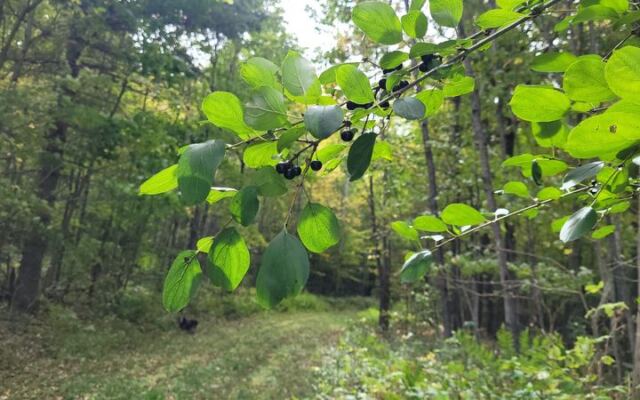
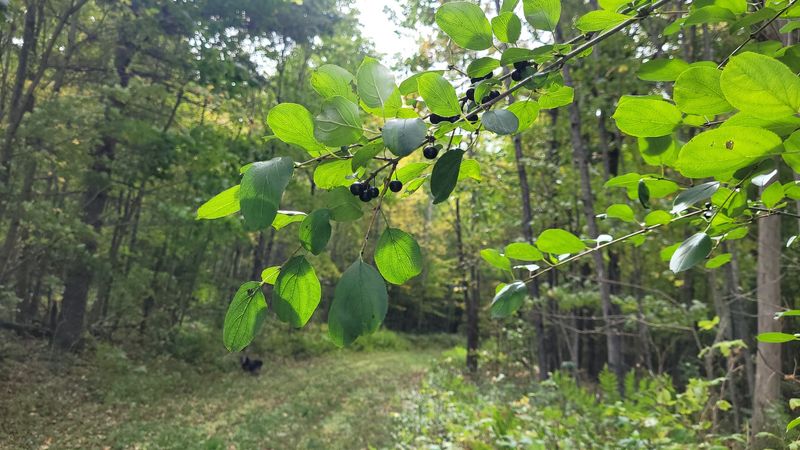
Common buckthorn (Rhamnus cathartica) is the most likely plant behind the headline, but a headline cannot confirm a species. Only a look at the plant itself can do that.

Getting the name right matters, because every control step later in this article depends on it.

According to Wisconsin DNR, common buckthorn is an invasive shrub or small tree. Useful clues include mostly opposite leaves with prominent curved veins, and twigs that are often tipped with a thorn.

Female plants produce dark berries, which are a big part of how the plant spreads.

Not every buckthorn is the problem one. Glossy buckthorn is a different invasive species, and Wisconsin also has native buckthorns.

Some native plums and cherries can look like buckthorn, especially in their bark, so a quick guess can lead you to pull the wrong plant.

If you are unsure, check the leaves, twigs, and berries together instead of relying on one feature. Take clear photos and compare them with the DNR fact page, or ask a local Extension office or DNR contact.

Once you know you have common buckthorn, you can pick the right removal method for each plant size.

Pulling works best while plants are small
Pulling works best while plants are small
© Friends of the Mississippi River

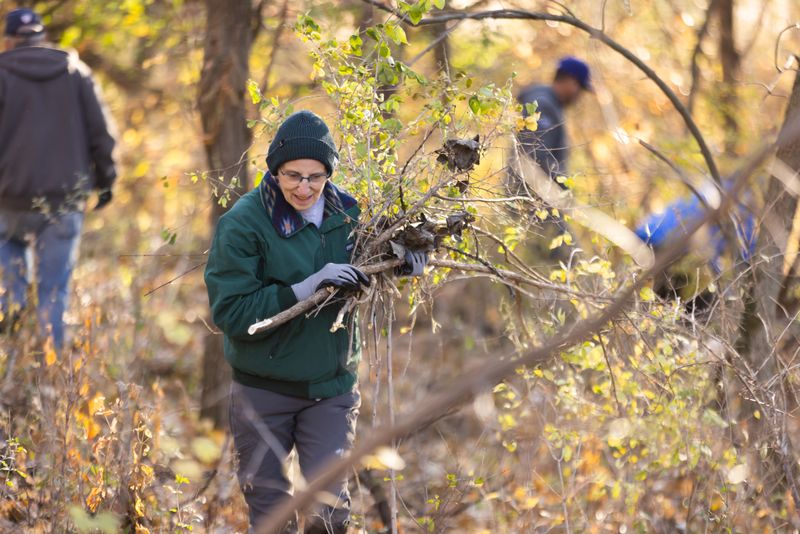
Pulling is a real tool, and it works well on the right plants. A UW Extension fact sheet for Wisconsin says buckthorn up to about 0.4 inches in diameter is easily pulled when the soil is moist.

The key is getting the root crown out, not just snapping off the stem.

In Schuster and colleagues’ paper, nearly all seedling emergence at their deciduous-forest sites happened within two years of removal.

Timing matters too. Pull before the plants make seed, so you are not leaving berries behind.

After a rain, the ground is softer and roots slide out more easily.

This advice is for small plants. Thicker stems may need a digging tool or a leverage tool, and bigger shrubs need a different approach, which comes up in the next section.

Even a perfect pulling job does not promise a clean yard. Seedlings you did not spot can grow up in the same spot.

Seeds can also arrive from fruiting plants nearby. So when new sprouts appear a few months later, it does not mean pulling failed.

It may simply mean the yard is still being supplied with new plants.

Cutting can leave plants ready to resprout
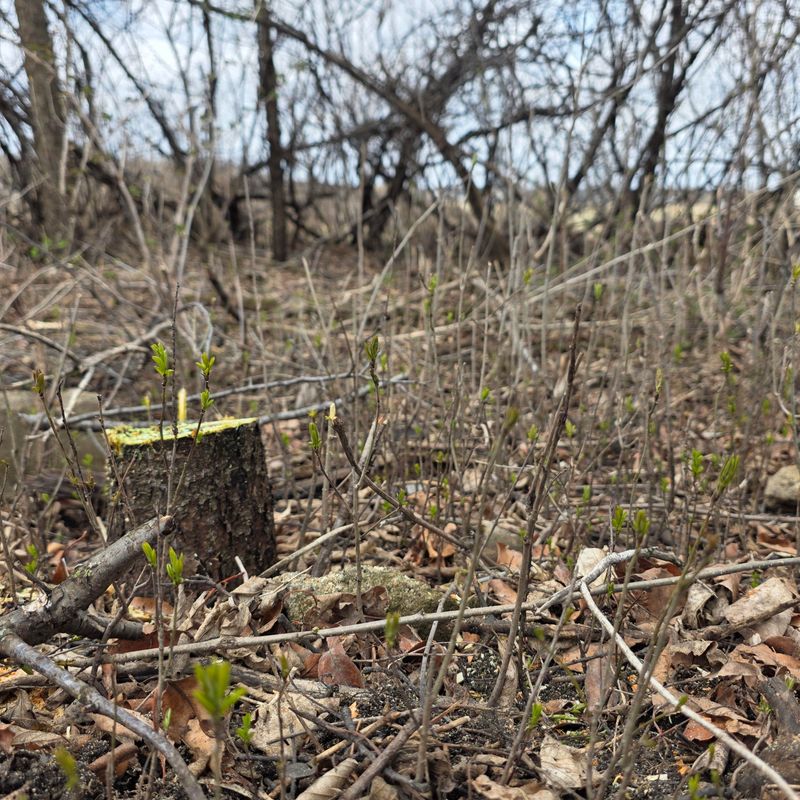
Cutting can leave plants ready to resprout
© Reddit

Cutting a shrub off at the ground is not the same job as pulling a seedling. Pulling a small plant takes the root crown with it.

Cutting an established plant leaves the crown and roots in the soil.

Both Wisconsin DNR and the UW Extension fact sheet point to this difference. Mowing rarely kills established plants, and cutting alone may not either.

A stump can send up new shoots, and those can look like fresh seedlings.

That is why larger buckthorn calls for a different plan. Options include digging out the plant or treating the cut stump, as DNR guidance describes.

The right choice depends on plant size, location, and what grows nearby.

A handy clue helps you tell regrowth from new seedlings. Shoots clustered around an old stump are likely resprouts.

Single small plants scattered across bare ground are more likely seedlings. Each needs a different fix, so look closely before you act.

Fresh seeds can cross a property line
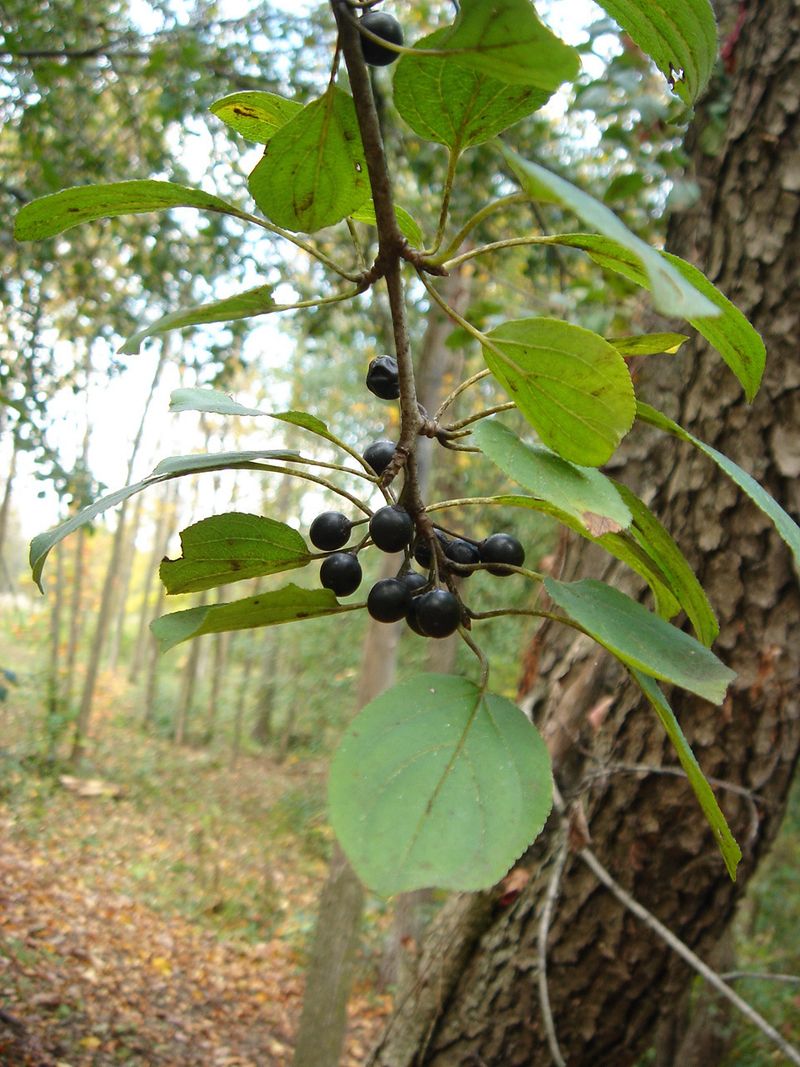
Fresh seeds can cross a property line
© Chicago Living Corridors

Picture a yard with every buckthorn plant removed. Next door, a tall female shrub is loaded with dark berries.

Birds and mammals eat the fruit and drop the seeds elsewhere, including in your clean yard.

Wisconsin DNR describes this berry spread by birds and mammals. That makes nearby fruiting plants a likely local source of seedlings.

The sources reviewed do not measure how fast this is happening across Wisconsin neighborhoods, so treat it as a plausible explanation for your own yard, not a proven statewide trend.

It helps to sort out where new growth comes from. Fresh seed arriving from outside is one source.

Seeds already in the soil that sprout after you clear space is another. Regrowth from cut stumps is a third.

Walk the fence line and look at what grows beyond it. UW Extension advises focusing on fruit-producing plants if you cannot treat everything at once.

Talking with neighbors or nearby landowners can help, since seeds and plants do not stop at property lines.

A Minnesota study narrows the seedbank explanation
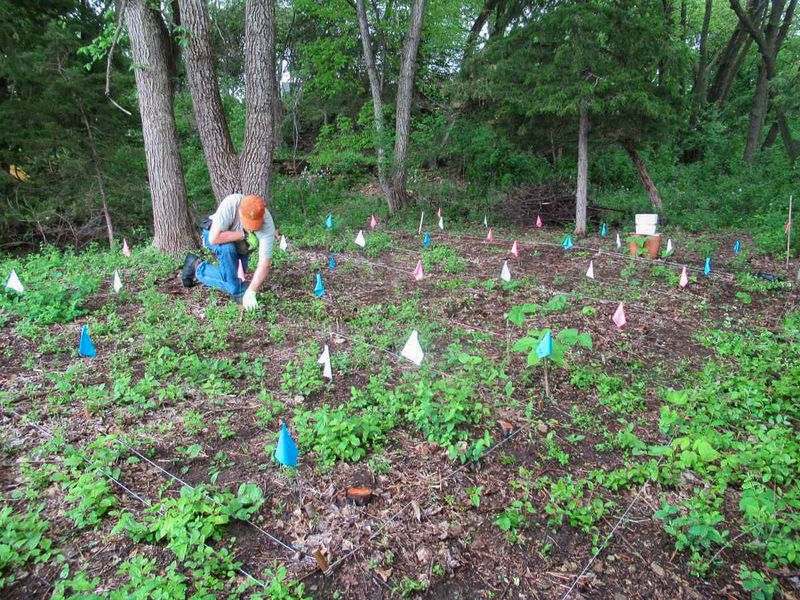
A Minnesota study narrows the seedbank explanation
© Minnesota Invasive Terrestrial Plants and Pests Center – University of Minnesota

Many gardeners hear that buckthorn seeds last for years in the soil. A 2023 study from Minnesota looked at that idea.

In Schuster and colleagues’ paper, nearly all seedling emergence at their deciduous-forest sites happened within two years of removal.

The researchers tied buckthorn coming back more to incomplete removal, an early flush of germination, and seed arriving from outside the site. They found no evidence of a long-lived seedbank there.

That is a different story from the one many people expect.

Older guidance, including the UW Extension fact sheet and other reviews, mentions seed viability of several years. So the question is not settled for every site.

Soil, shade, and weather could all change the results.

The authors suggest two years of intensive early management, followed by targeted follow-up. Treat that as useful evidence from Minnesota forests, not a guaranteed timetable for your Wisconsin yard.

If seedlings show up in year three, check for fruiting neighbors and missed plants before assuming an endless seedbank.

Match control and disposal to the site
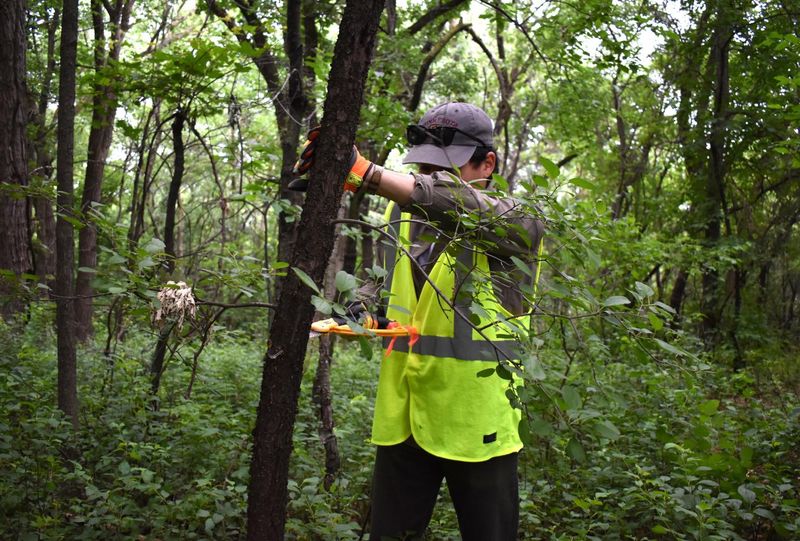
Match control and disposal to the site
© Friends of the Mississippi River

A simple framework works for most yards. Pull small plants with the root crown.

Pick a suitable method for larger ones, such as digging or a cut-stump treatment. Then keep checking for seedlings and regrowth.

If you decide to use herbicide, the product label is your guide. Labels differ by product, site, and application method, so this article does not give rates or mixes.

UW Extension stresses avoiding drift and contact with desirable plants, and it recommends training for more complex jobs. Use extra care near water, and choose a product labeled for that setting.

Disposal depends on the species and the situation. Wisconsin DNR control guidance covers disposal options, and the UW Extension fact sheet also offers handling advice.

One rule applies almost everywhere. Do not carry berries or viable plant pieces to a new place, such as a compost spot at a friend’s property or a wooded lot.

Bag berry-laden branches carefully and follow local disposal rules.

A cleared yard still needs follow-up
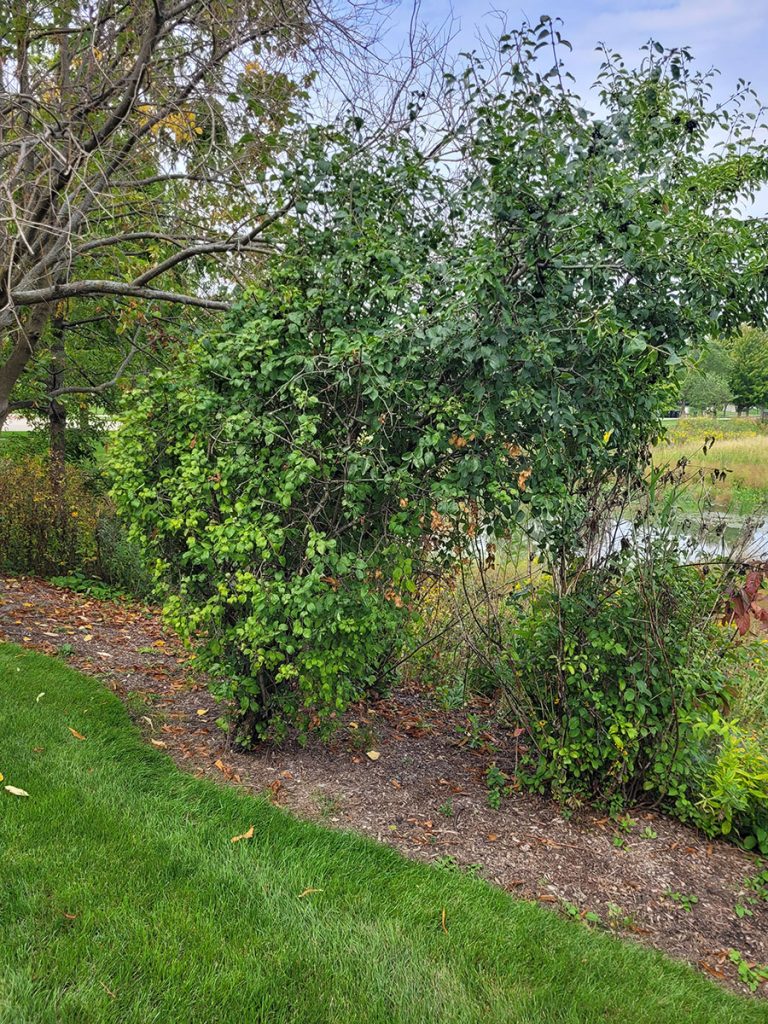
A cleared yard still needs follow-up
© Pizzo Habitat Restoration

Start by confirming the plant, using the DNR identification clues. Pull small seedlings with the root crown, and use a fitting method for larger plants.

Then look again for new seedlings or regrowth, as UW Extension recommends.

Talk with neighbors about fruiting plants near the property line. A shared plan beats a lone effort.

No single cleanup or fixed schedule will guarantee the problem is gone.

Think of it as yard upkeep, like mowing: small, regular checks beat one big push.

Share this story
HB

Written by

Heidi Brandt

More from Heidi Brandt →

About Gardening Latest

Gardening Latest provides in-depth guides to maintaining and enhancing your garden and backyard. Learn how to make the most of the space you have and create a beautiful garden.

More about us →

Latest stories

  • Arizona GardeningA Roadrunner Visiting Your Arizona Yard Is Telling You Something About the Land Nearby

    A Roadrunner Visiting Your Arizona Yard Is Telling You Something About the Land Nearby

    Just now
  • Texas GardeningWho Pays When Your Neighbor’s Tree Limb Smashes Your Roof in Texas

    Who Pays When Your Neighbor’s Tree Limb Smashes Your Roof in Texas

    5 min ago
  • Missouri GardeningMissouri’s Venomous Critters Hide Closer Than You Think, And Fall Draws Them Into Yards

    Missouri’s Venomous Critters Hide Closer Than You Think, And Fall Draws Them Into Yards

    22 min ago
  • Tennessee GardeningWho Actually Pays After a Neighbor’s Tree Crashes Down on Your Tennessee Property

    Who Actually Pays After a Neighbor’s Tree Crashes Down on Your Tennessee Property

    28 min ago
  • Alabama GardeningAlabama’s Southern Short-Tailed Shrew: A Tiny, Seldom-Seen Mammal With Possibly Venomous Saliva

    Alabama’s Southern Short-Tailed Shrew: A Tiny, Seldom-Seen Mammal With Possibly Venomous Saliva

    34 min ago

Gardening by state

Stories for your state, and the hardiness zone most of it gardens in.

Keep exploring

Read next

All Wisconsin Gardening →
Wisconsin GardeningHere’s Who Actually Pays When a Neighbor’s Tree Smashes Into Your Wisconsin Yard
Wisconsin Gardening

Here’s Who Actually Pays When a Neighbor’s Tree Smashes Into Your Wisconsin Yard

2 hr ago
Wisconsin GardeningHere’s How To Recognize Every Venomous Creature That Shares Your Wisconsin Yard
Wisconsin Gardening

Here’s How To Recognize Every Venomous Creature That Shares Your Wisconsin Yard

6 hr ago
Wisconsin GardeningDoes Eating Celery Every Day Change Your Body? What the Evidence Shows
Wisconsin Gardening

Does Eating Celery Every Day Change Your Body? What the Evidence Shows

9 hr ago

More from Wisconsin Gardening

  • Wisconsin Homeowners Can Legally Trim a Neighbor’s Overhanging Tree Branches, but Only Up to the Property Line

    Nov 22
  • Why Is a Red Fox Crossing Your Wisconsin Yard This Winter? Some Possible Explanations

    Nov 21
Back to top

Leave a response Cancel

Your email address stays private. Required fields are marked with an asterisk.

Gardening Latest

In-depth guides to maintaining and enhancing your garden and backyard: how to make the most of the space you have, and how to make it beautiful.

  • Facebook
  • X
  • Pinterest
  • YouTube

We may earn a portion of sales from products or services that are purchased through our site as part of our affiliate partnerships with retailers.

Explore

  • About GardeningLatest.com
  • Contact Us
  • Terms and Conditions
  • Privacy
  • Editorial Note:
  • FTC Disclosure

Newsletter

New garden guides and seasonal tips, straight to your inbox.

We’ll email you a link to confirm. Unsubscribe any time.

Almost there! Check your inbox and tap the link to confirm.

© 2026 Gardening Latest. All rights reserved.

Back to top