Get the latest garden guides in your inbox →
Gardening Latest
  • General Gardening
  • Lawn Care
  • Plant Care
  • Composting
  • Soil Health
  • Backyard
  • Garden Muse Magazine
  • General Gardening
  • Lawn Care
  • Plant Care
  • Composting
  • Soil Health
  • Backyard
  • Garden Muse Magazine
  • News
  • Gardening Calendar
  • Garden Structures
  • Vegetable Garden
  • Vertical Garden
  • Raised Beds
  • Hydroponics
  • General Equipment
  • Community Gardens
Garden Themes
  • Spiritual Garden
  • Hydroseeding
  • Seeding and Laying Sod
  • Artificial Grass
  • Lawn Care Equipment
  • Plants
  • Trees
  • Planting Tools
  • Composting Basics
  • Fertilizer
  • Alternative Growing Mediums
  • Front Yard
  • Backyard Activities
  • Landscaping
Gardening Latest

Explore by state

Which state is your garden in?

Currently viewing Ohio

All states

Northeast

  • Connecticut —
  • Delaware 33
  • Maine —
  • Maryland 19
  • Massachusetts 35
  • New Hampshire —
  • New Jersey 19
  • New York 28
  • Pennsylvania 28
  • Rhode Island —
  • Vermont —

Southeast

  • Alabama 19
  • Arkansas —
  • Florida 19
  • Georgia 19
  • Kentucky 33
  • Louisiana 18
  • Mississippi —
  • North Carolina 17
  • South Carolina 32
  • Tennessee 16
  • Virginia 18
  • West Virginia —

Midwest

  • Illinois 18
  • Indiana 20
  • Iowa 32
  • Kansas —
  • Michigan 19
  • Minnesota 18
  • Missouri 18
  • Nebraska —
  • North Dakota —
  • Ohio 19
  • South Dakota —
  • Wisconsin 34

Southwest

  • Arizona 19
  • Colorado —
  • Nevada —
  • New Mexico —
  • Oklahoma —
  • Texas 18
  • Utah —

West

  • Alaska —
  • California 19
  • Hawaii —
  • Idaho —
  • Montana —
  • Oregon —
  • Washington —
  • Wyoming —

No state matches that search.

Site menu

Gardening Latest
  • General Gardening
    • News
    • Gardening Calendar
    • Garden Structures
    • Vegetable Garden
    • Vertical Garden
    • Raised Beds
    • Hydroponics
    • General Equipment
    • Community Gardens
    Garden Themes
    • Spiritual Garden
  • Lawn Care
    • Hydroseeding
    • Seeding and Laying Sod
    • Artificial Grass
    • Lawn Care Equipment
  • Plant Care
    • Plants
    • Trees
    • Planting Tools
  • Composting
    • Composting Basics
  • Soil Health
    • Fertilizer
    • Alternative Growing Mediums
  • Backyard
    • Front Yard
    • Backyard Activities
    • Landscaping
  • Garden Muse Magazine

Explore

  • About GardeningLatest.com
  • Contact Us

Get the latest from the garden

New guides on lawn care, plants and backyard projects, sent when they go up.

Subscribe →

Follow

  • Facebook
  • X
  • Pinterest
  • YouTube
Ohio Gardening

Brushed a Saddleback Caterpillar in Your Ohio Garden? These First Steps Ease the Sting Fast

If a saddleback caterpillar has touched your skin, the first steps are simple: stop touching it, lift the spines…

MK

By Margaret Kessler

November 25, 2026 · 5 min read

Brushed a Saddleback Caterpillar in Your Ohio Garden? These First Steps Ease the Sting Fast

If a saddleback caterpillar has touched your skin, the first steps are simple: stop touching it, lift the spines off with sticky tape, wash gently, and cool the spot with wrapped ice. These steps can help with the sting, though no step promises quick relief for everyone.

Knowing what to do before you reach into a shrub can save you a lot of misery. Here is how to handle it calmly and when to get help.

At a glance

Where
Ohio Gardening
Hardiness zone
6 −10 to 0°F
Read
5 minutes
Published
November 25, 2026

Where Saddlebacks May Turn Up in Ohio

Where Saddlebacks May Turn Up in Ohio
© loraincometparks

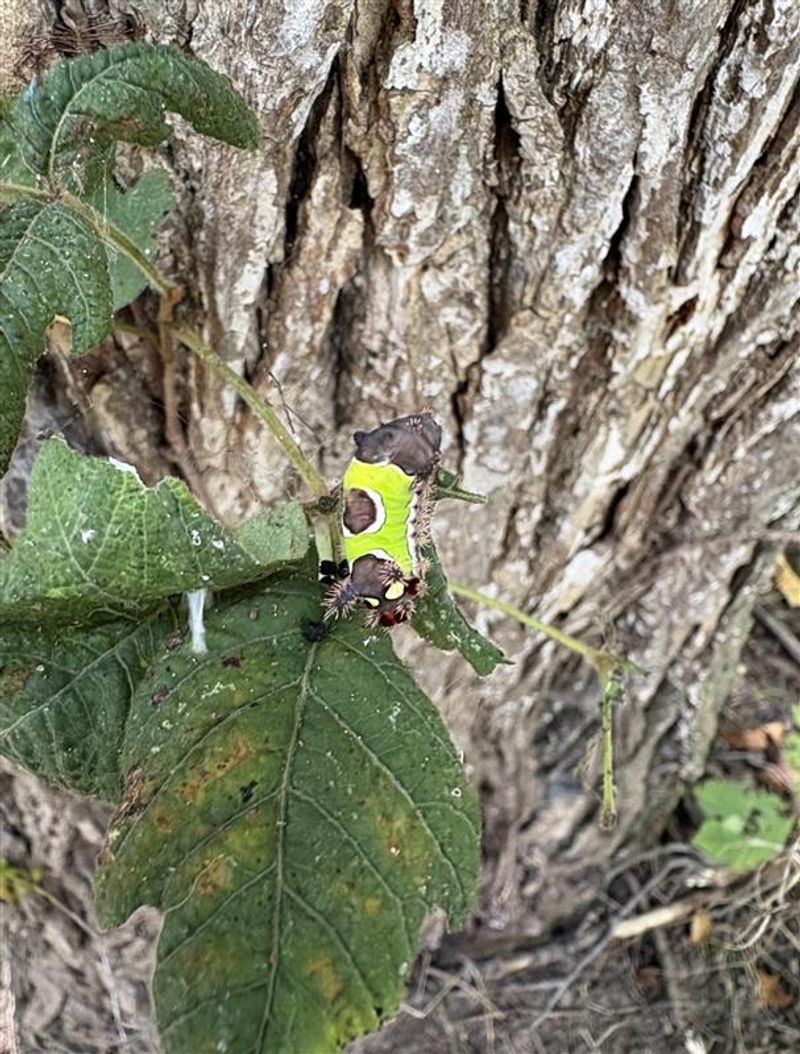
Saddleback caterpillars are documented in Ohio, according to a U.S. Forest Service guide to caterpillars on oaks.

That tells us they live in the state. It does not tell us how often gardeners run into them, and that part is simply not known.

These caterpillars are not picky eaters. They have been reported on oaks, maples, and many other trees, shrubs, and garden plants.

Because they feed on so many plants, University of Florida extension notes are a handy reference for how widely they feed.

Timing is another thing to hold loosely. A West Virginia field guide reports larvae from August through October, and the Forest Service oak guide gives a wider June to October window near Washington, D.C.

Those are regional observations, not an Ohio calendar. Still, late summer and fall are plausible times to meet one while pruning or raking.

Finding a caterpillar on a certain plant will not confirm what it is. Other stinging caterpillars also live in the region, so treat any fuzzy or spiny stranger with caution.

Virginia Cooperative Extension notes that stinging caterpillars rarely show up in numbers large enough to harm plants, so seeing one does not mean an infestation.

What a Saddleback Sting Can Feel Like
What a Saddleback Sting Can Feel Like
© Flickr

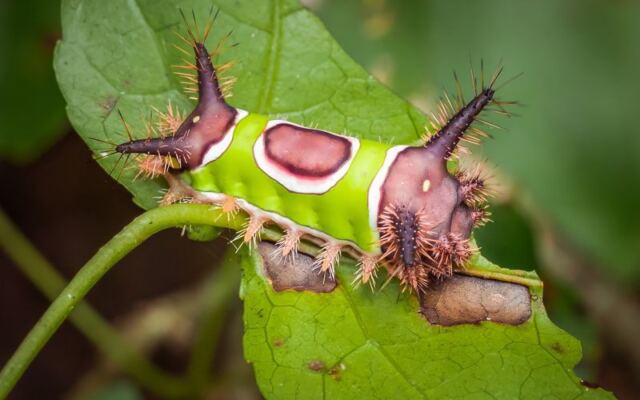
The saddleback’s spines are hollow and carry venom. When they touch skin, they can break off and stay there.

The National Capital Poison Center describes caterpillar stings as causing pain and skin irritation.

MedlinePlus suggests ice in short intervals, such as 10 minutes on and 10 minutes off.

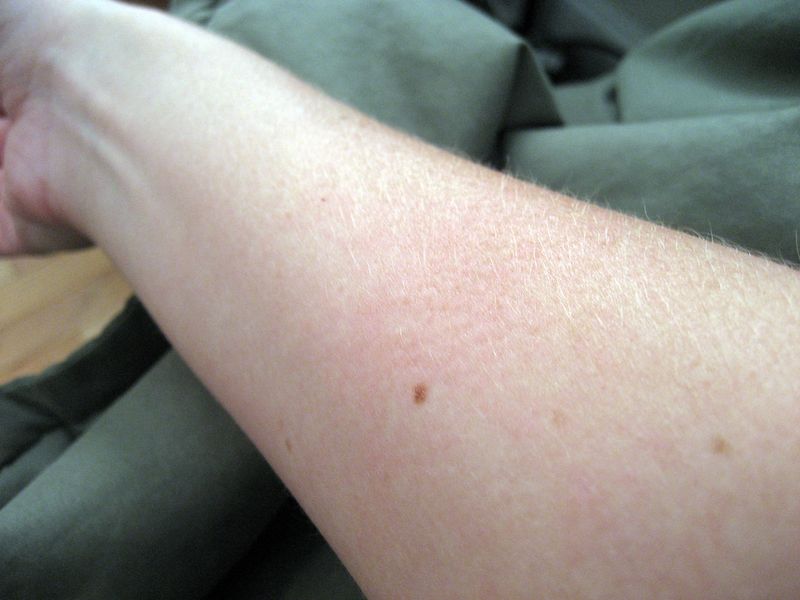
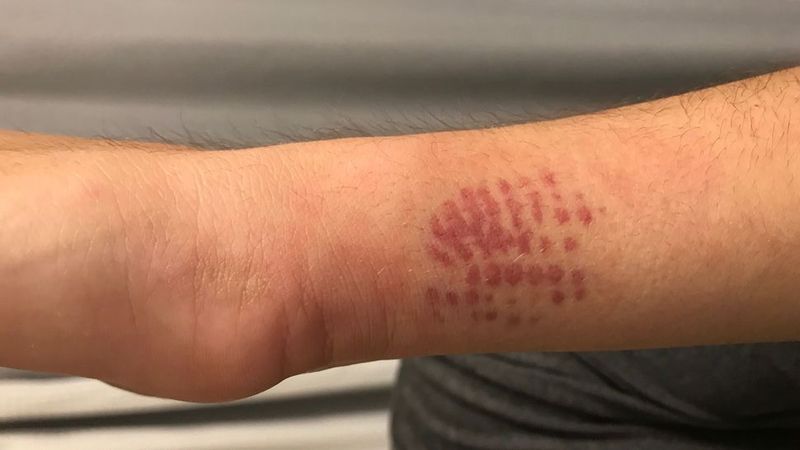
With a saddleback, people report burning pain right away. Redness and swelling can follow, and some people get blisters.

Those are possible reactions, not a checklist every person will have.

Some people feel only a mild sting. Others feel a stronger burn that lingers.

How your skin reacts depends on the person and how much of the caterpillar touched you.

Symptoms alone cannot prove which caterpillar was responsible. Other stinging species in the region can cause similar pain, as University of Florida IFAS Extension describes for saddlebacks.

If you saw a green-saddled caterpillar nearby, that is a clue, but the first-aid steps are the same either way.

Keep Hands Away, Then Lift the Spines
Keep Hands Away, Then Lift the Spines
© Woodland Tree Service

Once you suspect contact, stop and keep your bare hands off the caterpillar. Do not brush it away against your body, and do not rub the sting site.

Rubbing can push spines deeper and spread them.

If the caterpillar is still on you or on a plant, move it with a stick, a tool, or another object. Then turn to your skin.

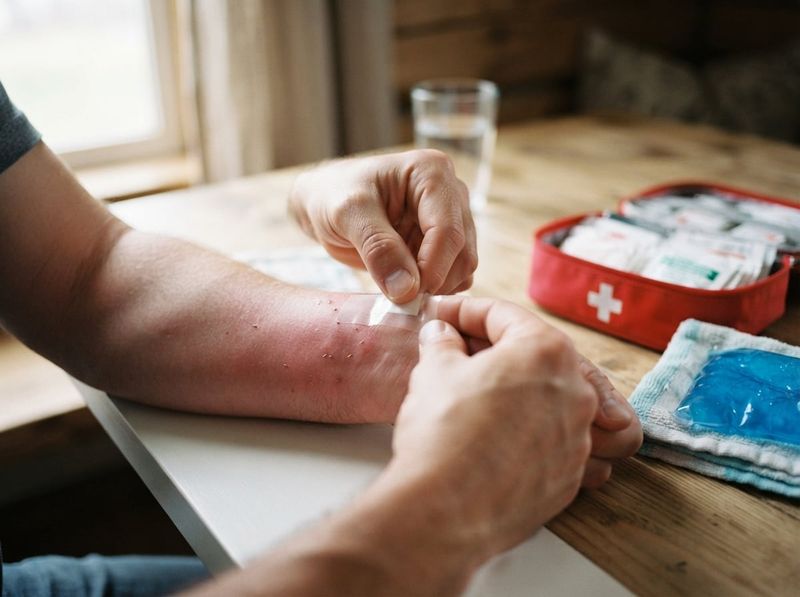
Press sticky tape gently onto the affected area, then lift it away. Do not jerk it.

This can pick up hairs or spines that remain, as described by the National Capital Poison Center.

Use a fresh piece of tape each time and repeat as needed. Then wash the area gently with soap and water, which matches MedlinePlus guidance on caterpillars.

Tape may not catch every spine, and it will not necessarily end the pain. Think of it as a sensible first step rather than a cure.

Keep your gloves and sleeves in mind for the next round of yard work, and wash the clothes that brushed the caterpillar.

Use Wrapped Ice for Comfort
Use Wrapped Ice for Comfort
© GoodRx

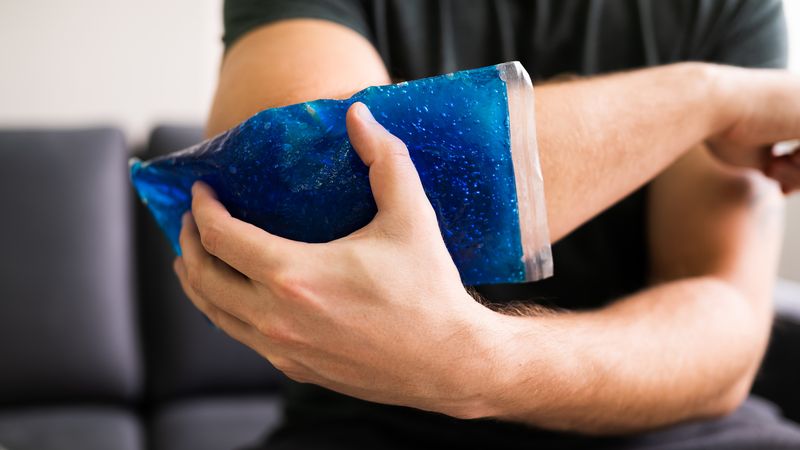
After the skin is cleaned, a cold pack can take the edge off. Wrap the ice in a clean cloth first, and never place ice directly on skin.

MedlinePlus suggests ice in short intervals, such as 10 minutes on and 10 minutes off.

If someone has blood-flow problems, use less time on the skin. A timer helps, since it is easy to lose track when your arm is throbbing.

Ice can ease pain or swelling, but it does not pull out spines. That job belongs to the tape.

Ice also does not guarantee fast relief.

In one case described by Poison Control, several remedies, including ice, did not relieve a saddleback sting until tape was used. So if ice alone is not helping, go back and check that the spines are off the skin.

Know When to Get Medical Help
Know When to Get Medical Help
© KHOU

Most stings stay local, meaning the trouble stays around the spot of contact. Some symptoms are different.

Call 911 for difficulty breathing, fainting, or swelling of the lips, face, or tongue, as both Poison Control and MedlinePlus advise.

Do not treat those signs as ordinary local irritation. They call for an emergency response right away.

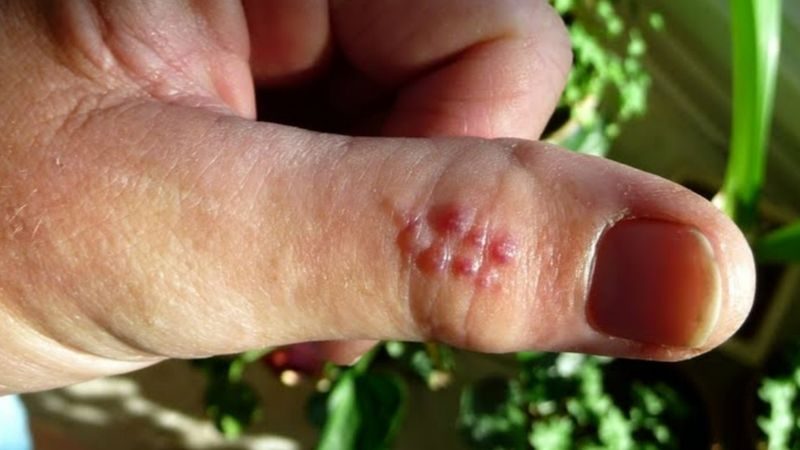
For significant blistering or a suspected localized allergic reaction, get prompt medical guidance. A health professional can tell you what to do next and whether you should be seen.

If any part of the caterpillar gets in an eye, rinse the eye with water and seek prompt medical advice. Do not rub the eye.

For exposure guidance in the United States, you can reach Poison Control at 1-800-222-1222. It is a good number to save in your phone before the next gardening season.

Give Symptoms Time to Change
Give Symptoms Time to Change
© Bay News 9

After first aid, give your body a little time. Pain often improves within hours, but reactions vary, and for some people discomfort lingers longer.

There is no set recovery time that fits everyone.

Keep an eye on the spot. Compare how it looks and feels as the hours pass, and note whether redness is spreading or blisters are forming.

MedlinePlus lists when to contact a provider.

If symptoms worry you or get worse, seek medical guidance rather than waiting it out. You can also call Poison Control, as described by the National Capital Poison Center, for advice on what you are seeing.

A sting is a rough afternoon, not a reason to fear the garden.

Share this story
MK

Written by

Margaret Kessler

More from Margaret Kessler →

About Gardening Latest

Gardening Latest provides in-depth guides to maintaining and enhancing your garden and backyard. Learn how to make the most of the space you have and create a beautiful garden.

More about us →

Latest stories

  • California GardeningIf a Gray Fox Keeps Trotting Through Your California Yard This Winter, Here’s What It’s After

    If a Gray Fox Keeps Trotting Through Your California Yard This Winter, Here’s What It’s After

    11 hr ago
  • Arizona GardeningWhen a Gray Fox Trots Through Your Arizona Yard This Winter, It’s on a Mission

    When a Gray Fox Trots Through Your Arizona Yard This Winter, It’s on a Mission

    12 hr ago
  • Texas GardeningNeighbor Vines Crossing Into Your Texas Yard: Texas Tree-Branch Guidance Is Clear, but the Answer for Vines Is Less Settled

    Neighbor Vines Crossing Into Your Texas Yard: Texas Tree-Branch Guidance Is Clear, but the Answer for Vines Is Less Settled

    12 hr ago
  • Wisconsin GardeningWisconsin Neighbors Fight Over Snow Piled on Their Property, and Here’s What the Law Actually Says

    Wisconsin Neighbors Fight Over Snow Piled on Their Property, and Here’s What the Law Actually Says

    12 hr ago
  • Missouri GardeningYellow Jackets Nesting Near Your Missouri Home? This Is What You Should Do First

    Yellow Jackets Nesting Near Your Missouri Home? This Is What You Should Do First

    12 hr ago

Gardening by state

Stories for your state, and the hardiness zone most of it gardens in.

Keep exploring

Read next

All Ohio Gardening →
Ohio GardeningOhio Homeowners Keep Seeing Red Foxes in the Yard This Winter, and Here’s What’s Going On
Ohio Gardening

Ohio Homeowners Keep Seeing Red Foxes in the Yard This Winter, and Here’s What’s Going On

14 hr ago
Ohio GardeningOhio’s Common Backyard Shrew Is Smaller Than Your Thumb, Yet It Paralyzes Prey With Venom
Ohio Gardening

Ohio’s Common Backyard Shrew Is Smaller Than Your Thumb, Yet It Paralyzes Prey With Venom

20 hr ago
Ohio GardeningCopperheads, Rattlesnakes, And Black Widows All Live In Ohio, So Here’s How To Recognize Each One
Ohio Gardening

Copperheads, Rattlesnakes, And Black Widows All Live In Ohio, So Here’s How To Recognize Each One

23 hr ago

More from Ohio Gardening

  • The Winter Project Ohio Farmers Are Taking On to Bring Barn Owls Home

    Nov 24
  • What a Bald Eagle Circling Over Your Ohio Yard Is Really Telling You

    Nov 23
Back to top

Leave a response Cancel

Your email address stays private. Required fields are marked with an asterisk.

Gardening Latest

In-depth guides to maintaining and enhancing your garden and backyard: how to make the most of the space you have, and how to make it beautiful.

  • Facebook
  • X
  • Pinterest
  • YouTube

We may earn a portion of sales from products or services that are purchased through our site as part of our affiliate partnerships with retailers.

Explore

  • About GardeningLatest.com
  • Contact Us
  • Terms and Conditions
  • Privacy
  • Editorial Note:
  • FTC Disclosure

Newsletter

New garden guides and seasonal tips, straight to your inbox.

We’ll email you a link to confirm. Unsubscribe any time.

Almost there! Check your inbox and tap the link to confirm.

© 2026 Gardening Latest. All rights reserved.

Back to top