Get the latest garden guides in your inbox →
Gardening Latest
  • General Gardening
  • Lawn Care
  • Plant Care
  • Composting
  • Soil Health
  • Backyard
  • Garden Muse Magazine
  • General Gardening
  • Lawn Care
  • Plant Care
  • Composting
  • Soil Health
  • Backyard
  • Garden Muse Magazine
  • News
  • Gardening Calendar
  • Garden Structures
  • Vegetable Garden
  • Vertical Garden
  • Raised Beds
  • Hydroponics
  • General Equipment
  • Community Gardens
Garden Themes
  • Spiritual Garden
  • Hydroseeding
  • Seeding and Laying Sod
  • Artificial Grass
  • Lawn Care Equipment
  • Plants
  • Trees
  • Planting Tools
  • Composting Basics
  • Fertilizer
  • Alternative Growing Mediums
  • Front Yard
  • Backyard Activities
  • Landscaping
Gardening Latest

Explore by state

Which state is your garden in?

Currently viewing Wisconsin

All states

Northeast

  • Connecticut —
  • Delaware 33
  • Maine —
  • Maryland 19
  • Massachusetts 35
  • New Hampshire —
  • New Jersey 19
  • New York 28
  • Pennsylvania 28
  • Rhode Island —
  • Vermont —

Southeast

  • Alabama 19
  • Arkansas —
  • Florida 19
  • Georgia 19
  • Kentucky 33
  • Louisiana 18
  • Mississippi —
  • North Carolina 17
  • South Carolina 32
  • Tennessee 16
  • Virginia 18
  • West Virginia —

Midwest

  • Illinois 18
  • Indiana 20
  • Iowa 32
  • Kansas —
  • Michigan 19
  • Minnesota 18
  • Missouri 18
  • Nebraska —
  • North Dakota —
  • Ohio 19
  • South Dakota —
  • Wisconsin 34

Southwest

  • Arizona 19
  • Colorado —
  • Nevada —
  • New Mexico —
  • Oklahoma —
  • Texas 18
  • Utah —

West

  • Alaska —
  • California 19
  • Hawaii —
  • Idaho —
  • Montana —
  • Oregon —
  • Washington —
  • Wyoming —

No state matches that search.

Site menu

Gardening Latest
  • General Gardening
    • News
    • Gardening Calendar
    • Garden Structures
    • Vegetable Garden
    • Vertical Garden
    • Raised Beds
    • Hydroponics
    • General Equipment
    • Community Gardens
    Garden Themes
    • Spiritual Garden
  • Lawn Care
    • Hydroseeding
    • Seeding and Laying Sod
    • Artificial Grass
    • Lawn Care Equipment
  • Plant Care
    • Plants
    • Trees
    • Planting Tools
  • Composting
    • Composting Basics
  • Soil Health
    • Fertilizer
    • Alternative Growing Mediums
  • Backyard
    • Front Yard
    • Backyard Activities
    • Landscaping
  • Garden Muse Magazine

Explore

  • About GardeningLatest.com
  • Contact Us

Get the latest from the garden

New guides on lawn care, plants and backyard projects, sent when they go up.

Subscribe →

Follow

  • Facebook
  • X
  • Pinterest
  • YouTube
Wisconsin Gardening

Your Wisconsin Christmas Tree Brings Thousands of Hidden Bugs Inside, and Here’s What Actually Hatches

A fresh-cut Christmas tree can bring small creatures into your living room, and a few of them may wake up…

HB

By Heidi Brandt

November 26, 2026 · 6 min read

Your Wisconsin Christmas Tree Brings Thousands of Hidden Bugs Inside, and Here’s What Actually Hatches
Your Wisconsin Christmas Tree Brings Thousands of Hidden Bugs Inside, and Here's What Actually Hatches

A fresh-cut Christmas tree can bring small creatures into your living room, and a few of them may wake up in the warmth. Aphids, adelgids, and praying mantis egg cases are the main ones to know.

Finding a bug on your tree can be a surprise, but most of these visitors are small and harmless. Here is which ones matter and how to shake them out before the tree comes inside.

At a glance

Where
Wisconsin Gardening
Hardiness zone
5 −20 to −10°F
Read
6 minutes
Published
November 26, 2026

What a reported tree count can tell you
What a reported tree count can tell you
© total_impact_pc

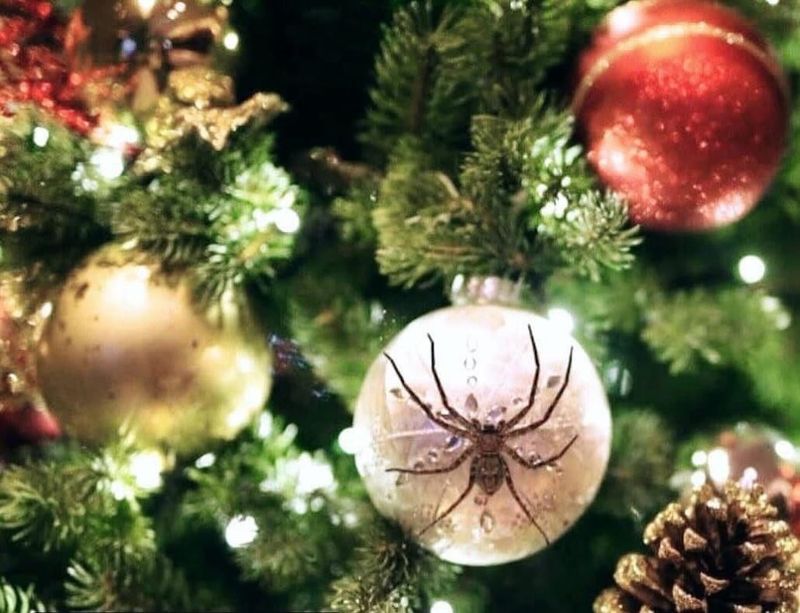
Yes, a fresh-cut tree can carry small arthropods, but a number reported from one place cannot tell you what your own household will find. The figure you may have seen, up to 25,000, comes from reports about some Norwegian trees.

That count included insects, mites, and spiders, many of them tiny.

It was not a Wisconsin sample. It also was not a count of creatures expected to hatch in a living room.

A speck of a mite on a needle is a very different thing from a crawling bug on your wall, and the headline number lumps them together.

Other sources describe a much smaller picture. Penn State Extension says most real trees are free of arthropods.

Meanwhile, Iowa State describes infestations that range from a few insects to several hundred.

Those statements come from different places and describe different things, so they do not add up to a reliable estimate for Wisconsin. What they do tell you is that hitchhikers are possible and usually limited.

The next question is which kinds of hitchhikers can actually become active once the tree warms up.

Warmth affects some tree hitchhikers
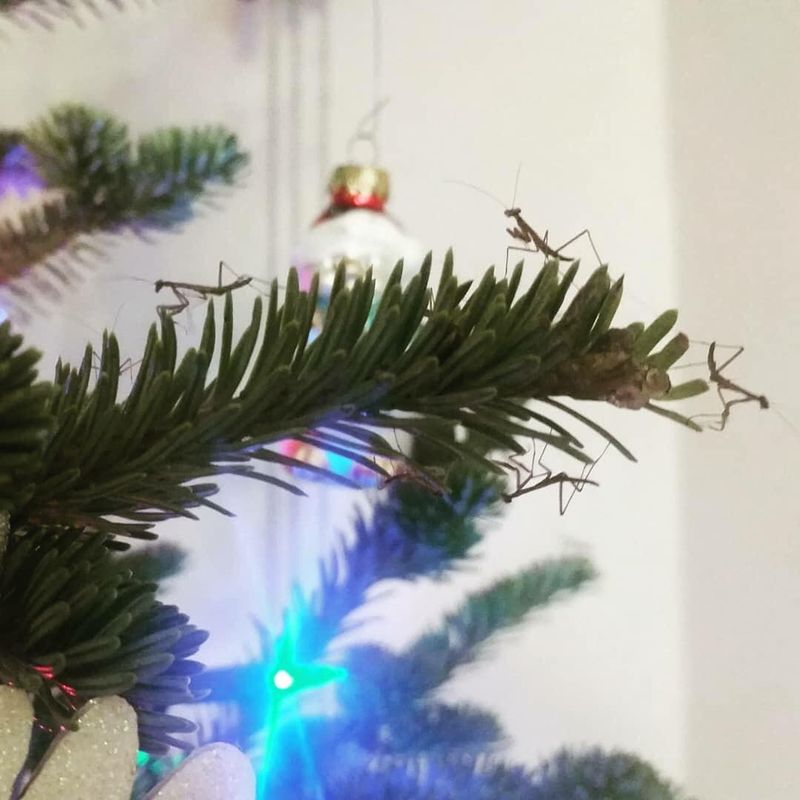
Warmth affects some tree hitchhikers
© Reddit

Picture a tree that spent weeks in freezing air, then stands in a heated room. Some of the small animals resting on it may stir.

Others will not, and warmth never guarantees that anything hatches.

Many lots run trees through a mechanical shaker, and you can do something similar at home by giving the tree a vigorous shake outdoors.

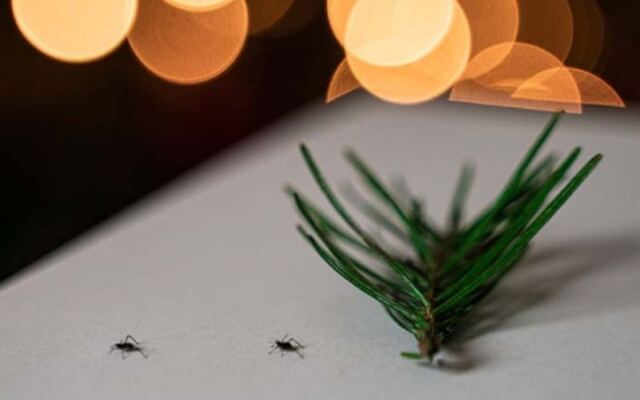
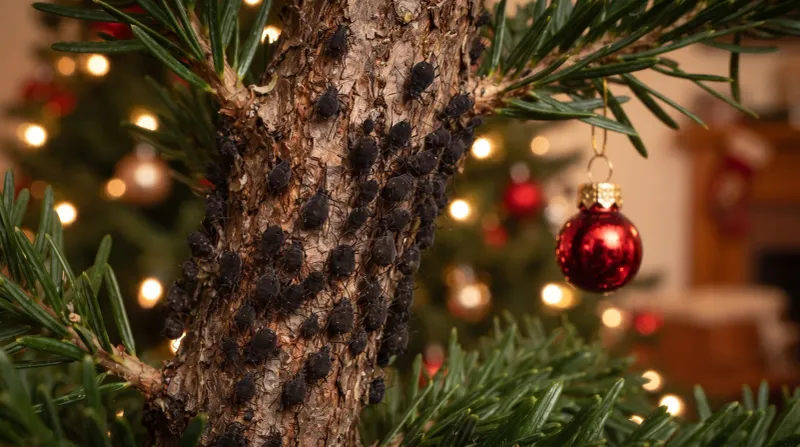
Conifer-feeding aphids are one group that may become active indoors, according to Penn State Extension. They are small, usually dark, and may crawl on branches or nearby surfaces.

Their activity depends on the species and on what stage they were in when the tree was cut.

Praying mantises behave differently. A mantis egg case stays glued to a twig, and the young emerge from it.

A case brought indoors may hatch after several weeks, which means the surprise often shows up well after the tree is decorated.

Not every case will hatch, and not every tree has one. Most insects on a tree do not wake up, leave the branches, or turn into household pests.

Knowing which group you are dealing with makes the whole situation easier to handle.

Aphids may wander, while adelgids stay put
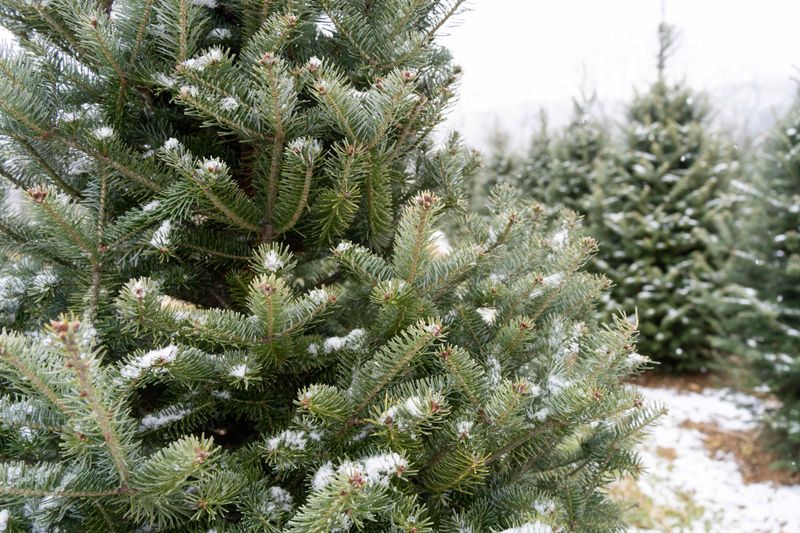
Aphids may wander, while adelgids stay put
© Better Homes & Gardens

Aphids and adelgids look like cousins, but they act differently. Some conifer aphids may become active or wander indoors.

Giant conifer aphids usually stay on the tree, and balsam twig aphid eggs may hatch before the tree is even removed from the field, per Penn State.

The aphids in question are host-specific. That means they feed on conifers and will not move over to your houseplants.

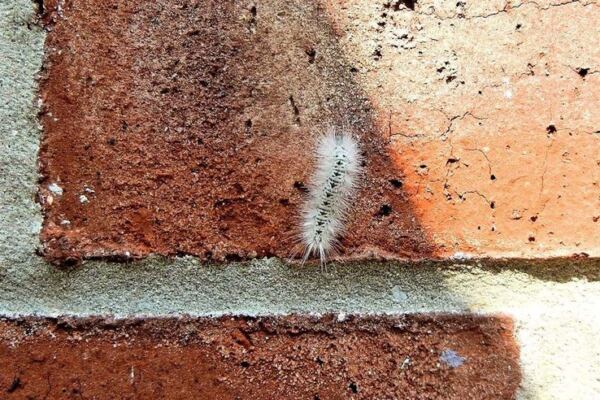
Now look at the branches for cottony white flocking. That fluffy coating can be a sign of adelgids.

The adelgids Penn State describes are sedentary, so they do not leave the tree and crawl around your home.

Both the insects and their waxy covering are harmless. If you spot white fuzz, you do not need to treat it as an emergency.

A wandering dark speck on a windowsill is more likely an aphid, while white fuzz stuck to a twig is more likely adelgids. Keeping the two apart saves you from worrying about the wrong thing.

Look for mantis egg cases on branches
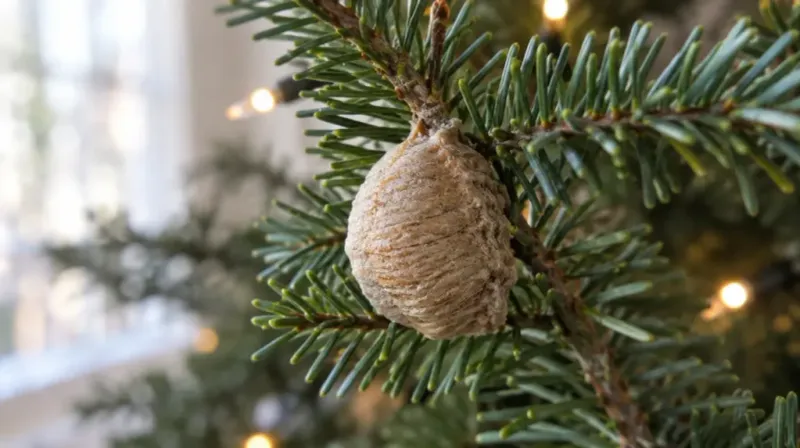
Look for mantis egg cases on branches
© Praying Mantis Facts

A mantis egg case looks like a tan or brown lump of dried foam, about the size of a walnut, stuck firmly to a twig. It does not move and is easy to miss among the needles.

The young mantises emerge from it while the case itself stays attached to the branch.

According to Penn State Extension, a case brought indoors may hatch after several weeks and release dozens of tiny mantises. That does not mean every case will hatch indoors.

The fix is simple. Before the tree comes inside, look over the branches in good light.

If you find a case, cut off the twig that holds it.

Then set the twig outdoors in a shrub or other plant, where young mantises can start life in a better place. Mantises are not a household danger, so this is a small act of tidiness rather than a safety step.

Shake and inspect the tree outdoors
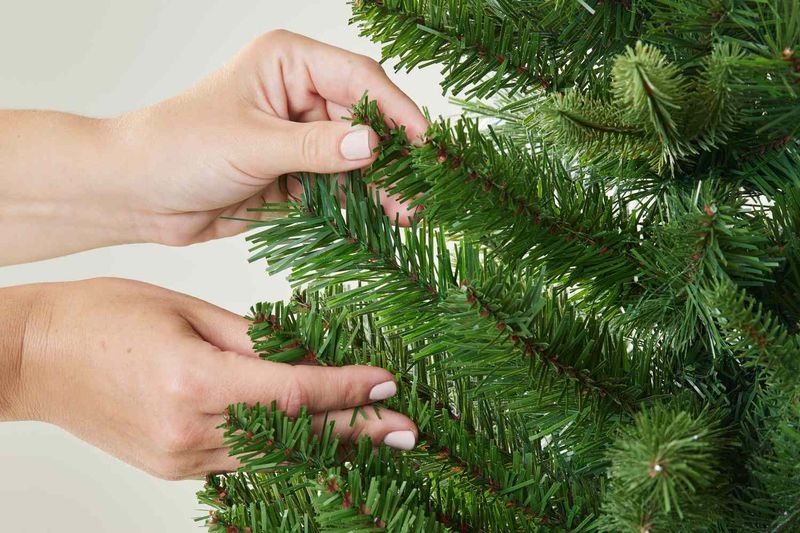
Shake and inspect the tree outdoors
© Better Homes & Gardens

Preparation begins before the tree crosses your threshold. Many lots run trees through a mechanical shaker, and you can do something similar at home by giving the tree a vigorous shake outdoors.

Per Penn State, shaking can dislodge some arthropods, particularly adults.

Shaking only handles part of the job. Egg cases stay glued on, so you still need to look over the branches by hand.

Turn the tree slowly and check the inner branches near the trunk.

Here is a simple routine:

First, shake the tree hard, holding it by the trunk. Second, scan the branches for egg cases and cut off any twig that has one.

Third, look for a bird nest tucked in the boughs and remove it, since nests may harbor mites.

Even after all that, no routine can promise an insect-free tree. The goal is to reduce hitchhikers, not to reach zero.

Doing it outside means anything that falls off lands in the snow instead of your carpet.

Vacuum insects that appear indoors
Vacuum insects that appear indoors
© Homes and Gardens

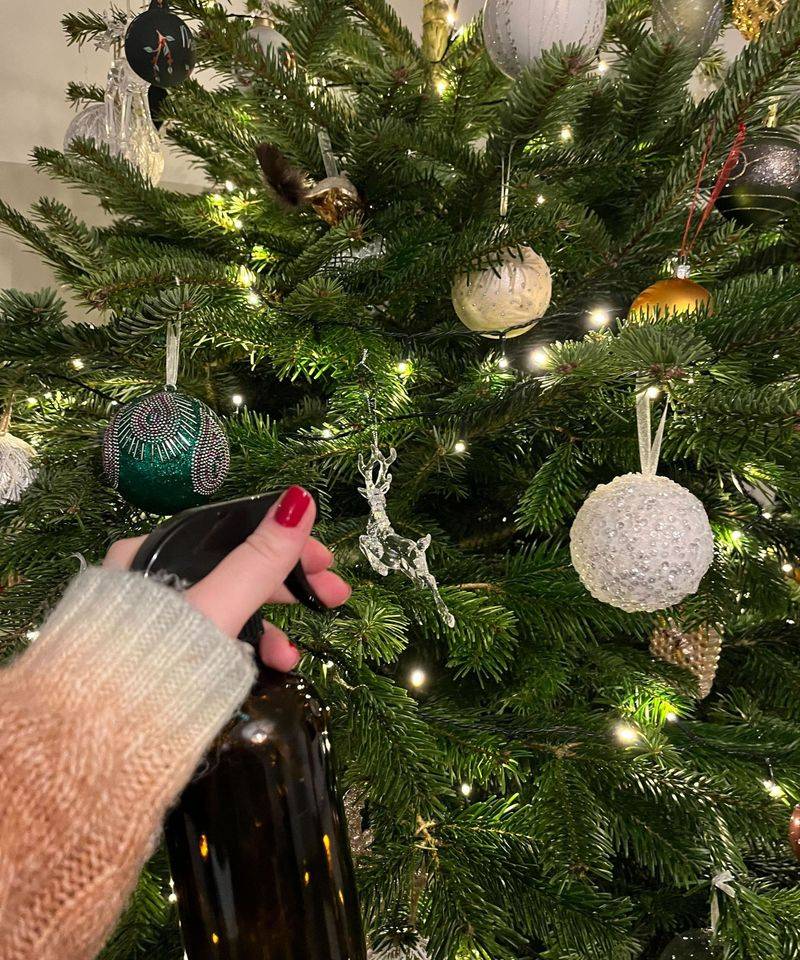
Suppose a few tiny insects show up on a wall or window anyway. Take out the vacuum and pick them up.

This works well for individuals that wander onto nearby walls, windows, or floors, and you do not have to touch the tree.

Penn State says the tree-associated arthropods generally die after a short time indoors. The air is dry and they have no suitable food.

Time is on your side.

Skip the aerosol can. Penn State warns that aerosol sprays are often flammable, usually are not labeled for indoor use, and should not be sprayed on a Christmas tree.

Iowa State’s advice also leans toward nonchemical control.

Ordinary hitchhikers pose no threat to your family or pets. The one separate precaution is a bird nest, which may harbor mites and is best removed before the tree comes in.

Everything else can be handled with a vacuum and a little patience.

Wisconsin reports describe particular pests, not household rates
Wisconsin reports describe particular pests, not household rates
© Nikol Pest Control

Local sources help fill in the picture, though they do not measure how often bugs appear in homes. Wisconsin entomologist PJ Liesch has described conifer aphids as a commonly encountered Christmas-tree insect in the Midwest, and as harmless to people and pets.

That is an observation about one species.

State reports work the same way. In a May 2025 bulletin, DATCP noted white pine aphids commonly found on white pine.

It also said inspectors had not observed the Fraser-fir-specific Cinara aphids discussed there.

Later, an August 2025 bulletin reported a bow-legged fir aphid detection on fir trees at a Wisconsin grower. These are field reports about particular pests and inspections.

They do not show a typical insect load, and they do not show that mantis cases, adelgids, or aphids commonly hatch in Wisconsin homes.

So the practical advice stays the same: shake and inspect outdoors, then vacuum any wanderers. A tree is a piece of the woods, and a visitor or two is a small price for the smell of fir.

Share this story
HB

Written by

Heidi Brandt

More from Heidi Brandt →

About Gardening Latest

Gardening Latest provides in-depth guides to maintaining and enhancing your garden and backyard. Learn how to make the most of the space you have and create a beautiful garden.

More about us →

Latest stories

  • California GardeningIf a Gray Fox Keeps Trotting Through Your California Yard This Winter, Here’s What It’s After

    If a Gray Fox Keeps Trotting Through Your California Yard This Winter, Here’s What It’s After

    7 hr ago
  • Arizona GardeningWhen a Gray Fox Trots Through Your Arizona Yard This Winter, It’s on a Mission

    When a Gray Fox Trots Through Your Arizona Yard This Winter, It’s on a Mission

    7 hr ago
  • Texas GardeningNeighbor Vines Crossing Into Your Texas Yard: Texas Tree-Branch Guidance Is Clear, but the Answer for Vines Is Less Settled

    Neighbor Vines Crossing Into Your Texas Yard: Texas Tree-Branch Guidance Is Clear, but the Answer for Vines Is Less Settled

    7 hr ago
  • Wisconsin GardeningWisconsin Neighbors Fight Over Snow Piled on Their Property, and Here’s What the Law Actually Says

    Wisconsin Neighbors Fight Over Snow Piled on Their Property, and Here’s What the Law Actually Says

    7 hr ago
  • Missouri GardeningYellow Jackets Nesting Near Your Missouri Home? This Is What You Should Do First

    Yellow Jackets Nesting Near Your Missouri Home? This Is What You Should Do First

    7 hr ago

Gardening by state

Stories for your state, and the hardiness zone most of it gardens in.

Keep exploring

Read next

All Wisconsin Gardening →
Wisconsin GardeningWisconsin Neighbors Fight Over Snow Piled on Their Property, and Here’s What the Law Actually Says
Wisconsin Gardening

Wisconsin Neighbors Fight Over Snow Piled on Their Property, and Here’s What the Law Actually Says

7 hr ago
Wisconsin GardeningWisconsin Winters Bring Big White Tracks Into Your Yard, and Here’s Which Animal Left Each One
Wisconsin Gardening

Wisconsin Winters Bring Big White Tracks Into Your Yard, and Here’s Which Animal Left Each One

13 hr ago
Wisconsin GardeningYou’re Sharing Your Wisconsin Yard With Venomous Critters, And Late Fall Is When You’ll Notice Them
Wisconsin Gardening

You’re Sharing Your Wisconsin Yard With Venomous Critters, And Late Fall Is When You’ll Notice Them

16 hr ago

More from Wisconsin Gardening

  • The Invasive Tree Wisconsin Gardeners Keep Pulling Is Still Spreading Through Their Neighborhoods

    Nov 24
  • Here’s Who Actually Pays When a Neighbor’s Tree Smashes Into Your Wisconsin Yard

    Nov 24
Back to top

Leave a response Cancel

Your email address stays private. Required fields are marked with an asterisk.

Gardening Latest

In-depth guides to maintaining and enhancing your garden and backyard: how to make the most of the space you have, and how to make it beautiful.

  • Facebook
  • X
  • Pinterest
  • YouTube

We may earn a portion of sales from products or services that are purchased through our site as part of our affiliate partnerships with retailers.

Explore

  • About GardeningLatest.com
  • Contact Us
  • Terms and Conditions
  • Privacy
  • Editorial Note:
  • FTC Disclosure

Newsletter

New garden guides and seasonal tips, straight to your inbox.

We’ll email you a link to confirm. Unsubscribe any time.

Almost there! Check your inbox and tap the link to confirm.

© 2026 Gardening Latest. All rights reserved.

Back to top