A red fox crossing your snowy yard in Ohio is usually normal winter behavior. These animals stay active all year, and they sometimes hunt in daylight.
Seeing one can feel surprising, but it rarely signals a problem. Here is what a single sighting can tell you, what it cannot, and how to respond safely.
A winter visit can fit normal fox behavior
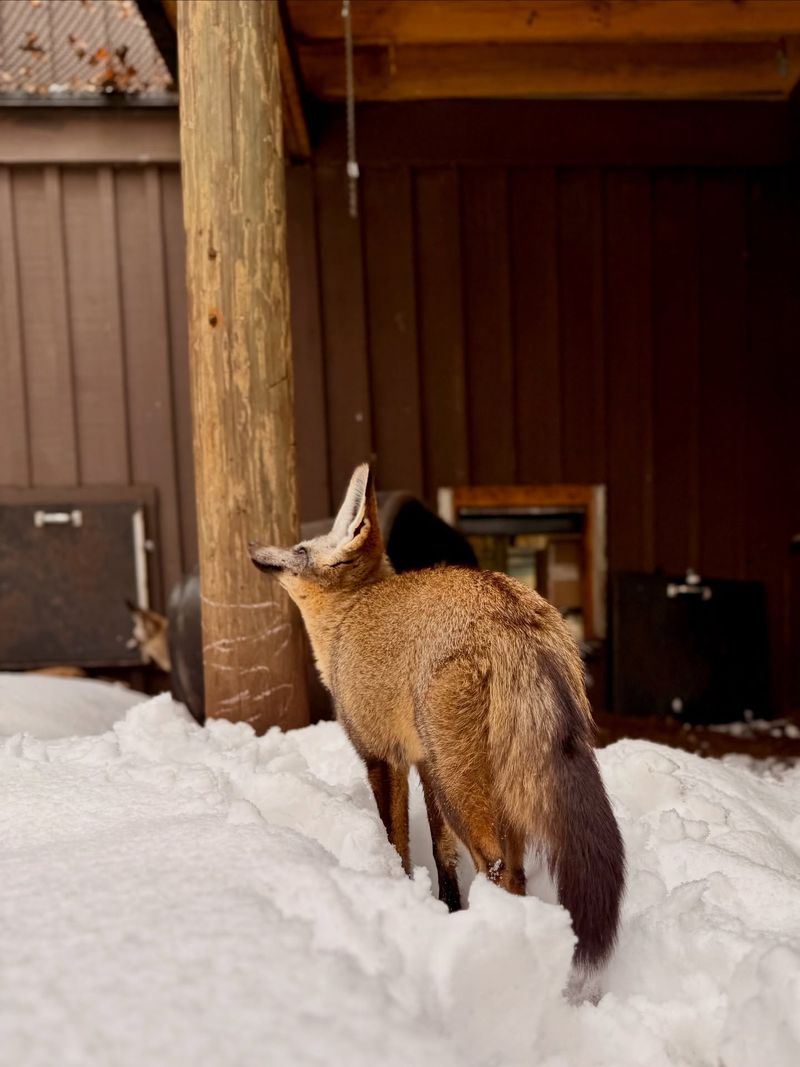
Spotting a red fox in your Ohio yard during winter can be perfectly ordinary. Ohio DNR says red foxes live statewide, and they are most common in central and northwestern Ohio.
That does not mean every neighborhood sees them often.
It is tempting to assume more people are seeing foxes this winter. The evidence reviewed does not establish a statewide increase in homeowner yard sightings this winter.
A single sighting tells you what passed through your yard, not what is happening across the state.
ODNR does track red foxes through an observation measure in its 2024 furbearer monitoring report. That measure is part of the state’s monitoring and survey work.
It does not directly measure statewide homeowner yard sightings, so it cannot tell us how many people saw a fox in their yard.
The report describes observation rates as lower than in earlier decades, with the trend stabilizing over the past decade. Those numbers come from survey effort, not from counting what neighbors see out the window.
The report also raises a possibility: foxes adapt well to towns and cities, and urban foxes may be underrepresented in some observation efforts. That is a possible explanation, not a proven cause, and it is not evidence that Ohio’s fox population is growing.
Foxes stay active and may travel farther in winter
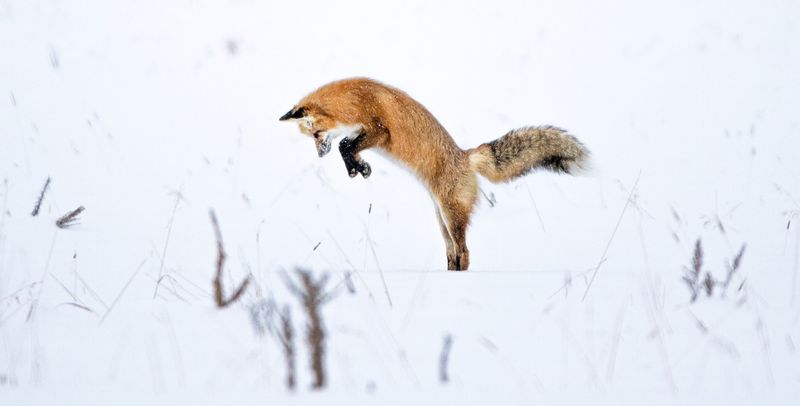
Red foxes do not hibernate. According to Ohio DNR, they stay active all year, though extreme winter weather may make them less active for a day or two.
A fox in January is simply a fox doing what foxes do.
Foxes hunt small animals, and ODNR lists small mammals among their prey. When food supplies dwindle, foxes may extend their usual range.
ODNR also describes them as mostly solitary in fall and early winter, so a lone animal moving around is typical.
Put those habits together and you can see how a fox might cross your property. It may be moving between hunting areas, following a fence line, or cutting through on a longer trip.
Yards are often part of the landscape a fox travels through.
Still, one glimpse has limits. A yard visit can be consistent with normal movement, and it does not prove the fox has a den nearby or uses a regular route.
It also does not show the animal is hungry, and it does not reveal what drew the fox to that spot.
If you want to learn more, notice patterns over time. Seeing the same animal at the same hour for several days tells you far more than a single pass.
Until then, treat a one-time visit as a brief moment in a wild animal’s day.
Daylight alone does not mean a fox is sick

Many people assume a fox out in the daytime must be sick. Ohio DNR notes that red foxes may be seen hunting during the day, so timing alone proves nothing about illness or rabies.
The National Park Service offers a general explanation for winter daytime hunting. In its red fox species spotlight, it ties this activity to rodents moving beneath the snow.
That is a broad description of fox behavior, not the known reason for any particular Ohio sighting.
The Ohio Department of Health does list a normally nocturnal wild animal being out in the day among possible warning signs. Both points can be true.
Daytime presence by itself is not a diagnosis, but an animal acting in an unusual way deserves extra caution, as Ohio health guidance explains.
Think about what the fox is actually doing. A healthy fox usually trots along, watches you, and moves off when you get closer.
Odd behavior, such as stumbling or showing no fear of people, is a stronger reason for concern than the clock.
Either way, keep your distance. You cannot tell whether an animal has rabies just by looking at it, so watch from a window, bring pets inside, and let the fox go on its way.
Make the yard safer without confronting the fox

For an ordinary visit, the best response is a quiet one. Leave the fox alone, do not feed it, and do not walk toward it.
Ohio’s health department advises against approaching, touching, or feeding unfamiliar wild animals.
A few small habits can make your yard less appealing. Keep garbage in secure containers, and do not leave pet food outside overnight.
Treat these as precautions. They are not proof that trash or kibble brought a fox to your yard, and they will not guarantee that foxes stop passing through.
Pets need some thought too. Ohio guidance recommends keeping cats indoors as much as possible.
When dogs and other pets are off your property, keep them leashed and under control.
Here is a simple evening routine. Bring in food bowls, snap the lids on the bins, and check that small pets are inside before dark.
If you let a dog out at night, stay with it and watch the yard.
If you see a fox from a window, there is no need to bang on the glass or chase it. Calmly stepping away is enough.
Foxes tend to move on when they are left undisturbed.
Wash a bite or possible saliva exposure promptly

Seeing a fox is not the same as being exposed to a disease. Exposure means a person was bitten, or an animal’s saliva may have touched broken skin or a mucous membrane such as the eyes, nose, or mouth.
If that happens, wash the wound or scratch immediately with soap and water for 15 minutes. Use plenty of running water and keep going for the full time.
This is the first-aid step described in CDC rabies guidance.
After washing, promptly contact a health professional or your local health department. They can decide whether any further steps are needed.
You do not have to work that out on your own.
It also helps to know why you should not guess. As the Ohio health department says in its rabies and animal bites guidance, rabies cannot be diagnosed by an animal’s appearance.
Public-health officials assess possible exposures, so describe what happened and let them guide you.
If a pet was in a scuffle with a wild animal, avoid touching the pet’s wounds with bare hands and call your veterinarian for advice.
Get professional help with a persistent conflict
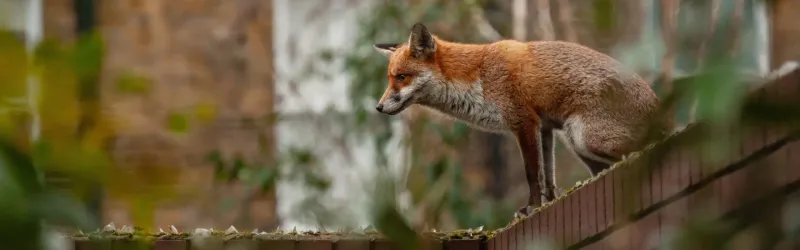
Most fox visits end on their own. If one animal keeps causing trouble, such as repeated problems around a chicken coop or den-like digging under a porch, call Ohio DNR or a licensed nuisance-wildlife operator.
They know the rules and the safe methods.
Skip do-it-yourself trapping or relocation. Under Ohio’s nuisance wild animal control rule, a captured red fox must be released on site or euthanized.
It cannot simply be driven somewhere else and let go.
A professional can look at the specific situation and suggest fixes that fit it, from sturdier fencing to securing outbuildings. That is more useful than guessing.
It also keeps you away from a frightened wild animal.
Keep one distinction clear. A wildlife conflict is a management question for ODNR or a licensed operator.
A bite, or saliva on broken skin or a mucous membrane, is a health question. In that case, wash right away and contact a health professional or local health department, as described in Ohio health guidance.
Most of the time, a fox is just a neighbor passing through, and the calm choice is to let it pass.
Share this story