
Black-And-Red Bugs on Your Sunny Indiana Wall: Fall Clusters May Include Bugs Seeking Winter Shelter
A bunch of black-and-red bugs on a sunny wall can make anyone look twice. In fall, these insects often gather in the warm afternoon light as the weather cools.
Seeing them does not mean your house is under attack. Here is what the cluster tells you, what it does not, and what you can do about it.
Fall warmth draws boxelder bugs to exposed walls
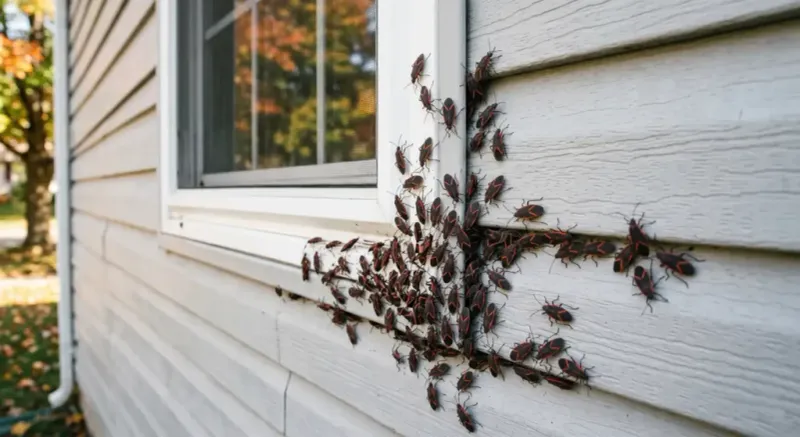
As Indiana temperatures drop in fall, adult boxelder bugs start hunting for protected places to spend the winter. Purdue Extension describes adults looking for cracks and crevices, such as gaps in foundations, around windows and doors, and under siding or shingles.
Walls are also simply comfortable places to sit. The bugs like warmth, and a wall that soaks up afternoon sun can feel like a heated bench on a cool day.
University of Minnesota Extension notes their attraction to warm areas and to buildings with southern or western exposure.
So a crowd on a sun-facing wall is a sign of seasonal activity. Some of those bugs may be scouting for winter shelter, and some may just be basking.
You cannot tell from across the yard which is which, and it would be a stretch to say every bug on the wall is trying to get inside.
Timing helps you read the scene. Clusters tend to show up on bright, mild days and thin out when clouds roll in or evenings turn cold.
The same bugs may reappear the next sunny afternoon, which is normal behavior for this time of year.
Think of the cluster as a seasonal heads-up. It is a good reminder to look over your home’s exterior, but it is not a reason to panic or reach for a spray can.
The next sections explain how to read what you are seeing and what steps make sense.
A wall cluster does not prove bugs are getting inside
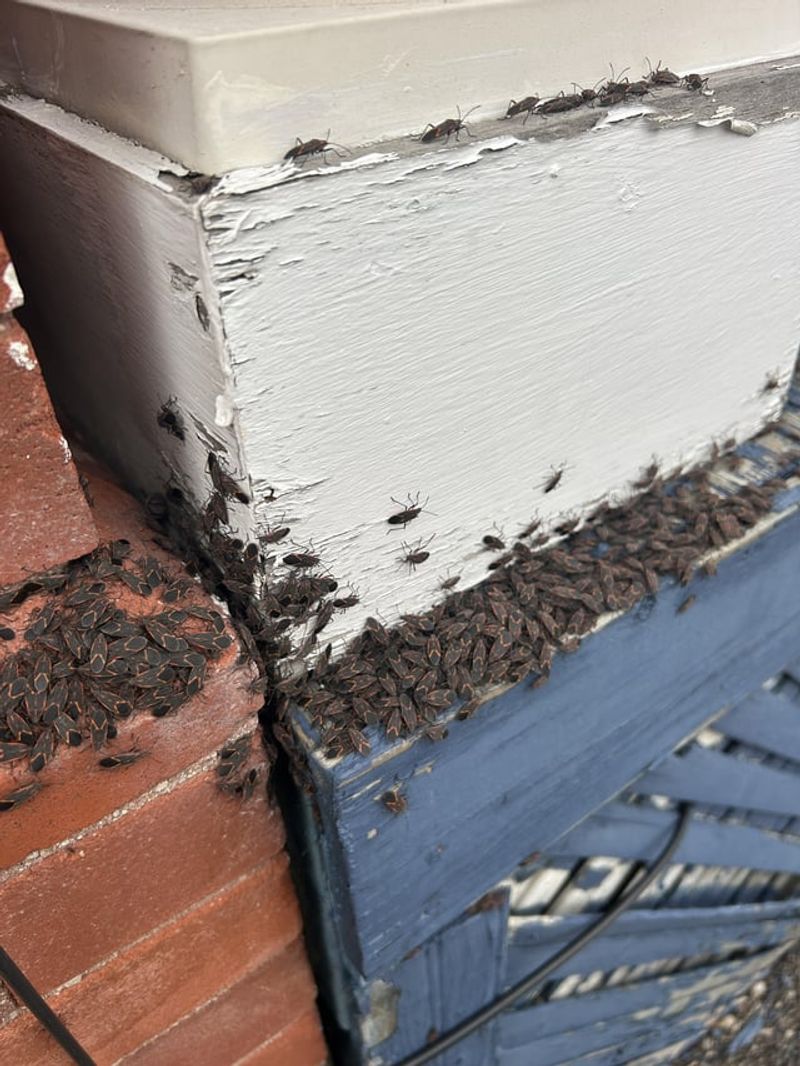
Many homeowners worry that a crowd outside means a crowd is coming indoors. A cluster only tells you that bugs are active near your home.
It cannot confirm that any of them have found a route inside.
Adults that do go looking for shelter use small openings. According to Purdue Extension, they settle into cracks around foundations, windows, and doors, and beneath siding or shingles.
Some slip from those spots into wall spaces or living areas.
A better clue than the cluster itself is what happens near your openings. Watch for bugs crawling along a window frame, disappearing under a loose piece of siding, or lingering around a door gap.
That behavior points to a possible entry route far more than a group resting on open wall.
Inside the house, a single bug on a windowsill is also not a verdict. Occasional strays can wander in on a warm day or follow a gap around a pipe or vent.
Count how many you find and where they show up before drawing conclusions.
If you see only a few indoors and many outside, you likely have a minor nuisance. If bugs keep appearing in one room, check that room’s windows, screens, and trim first.
Walking the outside of the house on a sunny afternoon, flashlight in hand, can show you where bugs are poking around.
Black-and-red coloring is a clue, not a sure identification
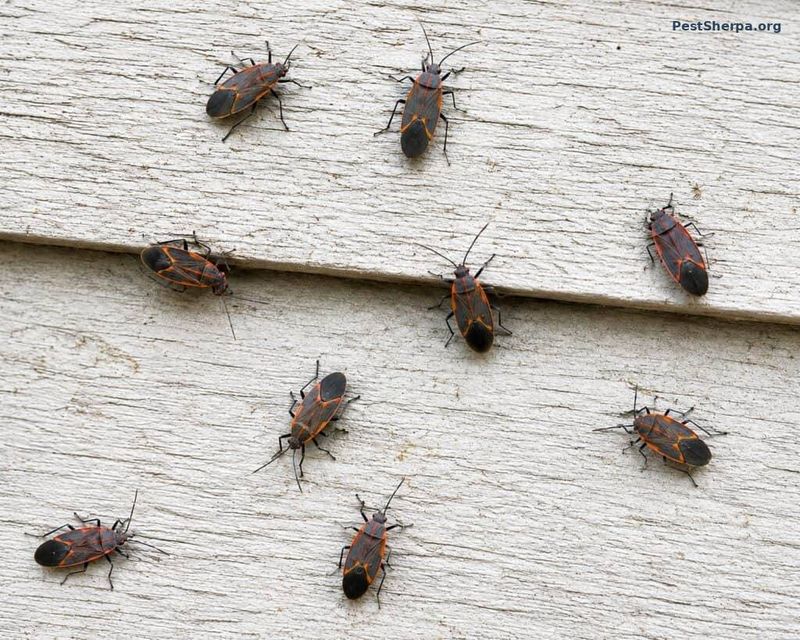
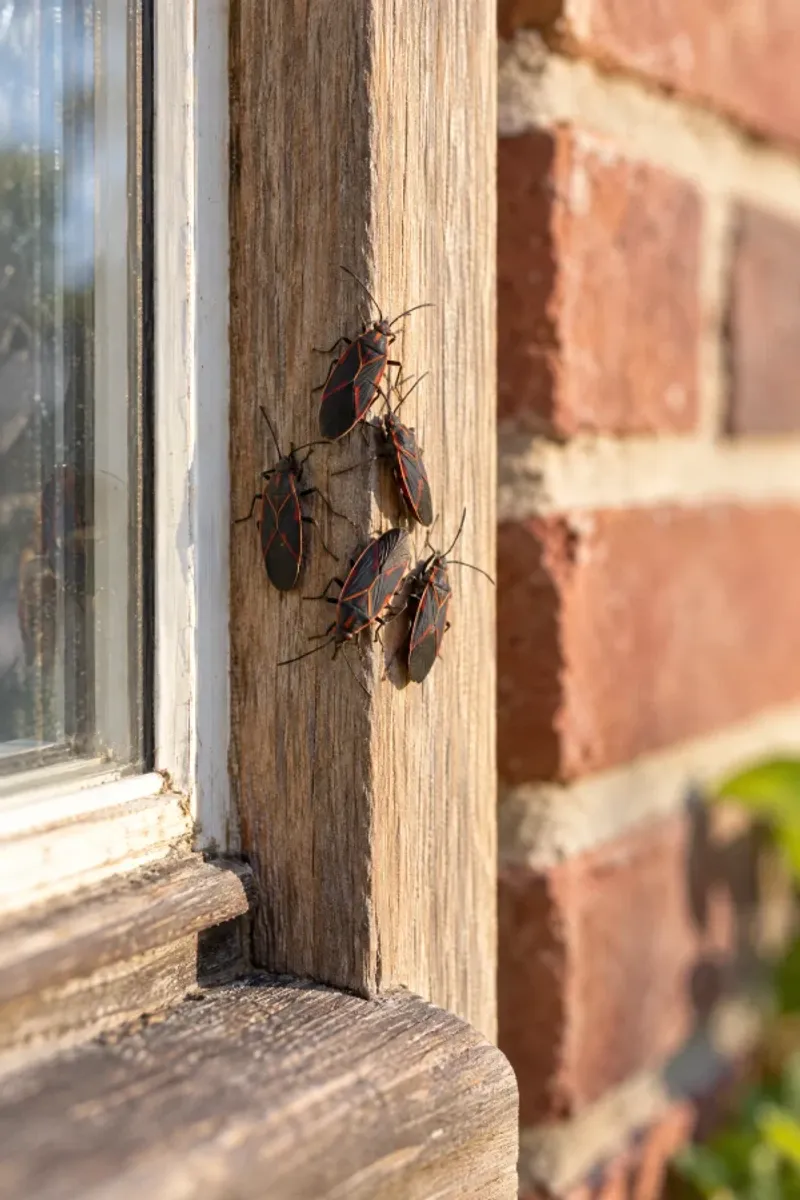
Adult boxelder bugs are dark, often blackish or brownish-gray, with red markings along the body and wings. Young nymphs look different.
According to Purdue Extension, they are brighter red and have no wings, so a clump of tiny red bugs may be the same species in an earlier stage.
Color alone does not settle the question. Milkweed bugs and some other insects also show black and red, and they can be mistaken for boxelder bugs at a glance.
A wall full of look-alikes would call for a different plan than a wall full of boxelder bugs.
If you want to be sure, take a clear, close photo. Try to capture the whole insect from above, with something like a coin next to it for scale.
Good light and a steady hand make a big difference.
You can then share the picture with your county Extension office or another insect expert. They can confirm the species and point you toward advice that fits what you actually have.
Checking the surroundings also helps. Boxelder bugs are often found near boxelder trees and other maples, while milkweed bugs tend to hang around milkweed plants.
A quick look around your yard adds one more clue to the puzzle.
Indoor sightings are a nuisance, not proof of breeding
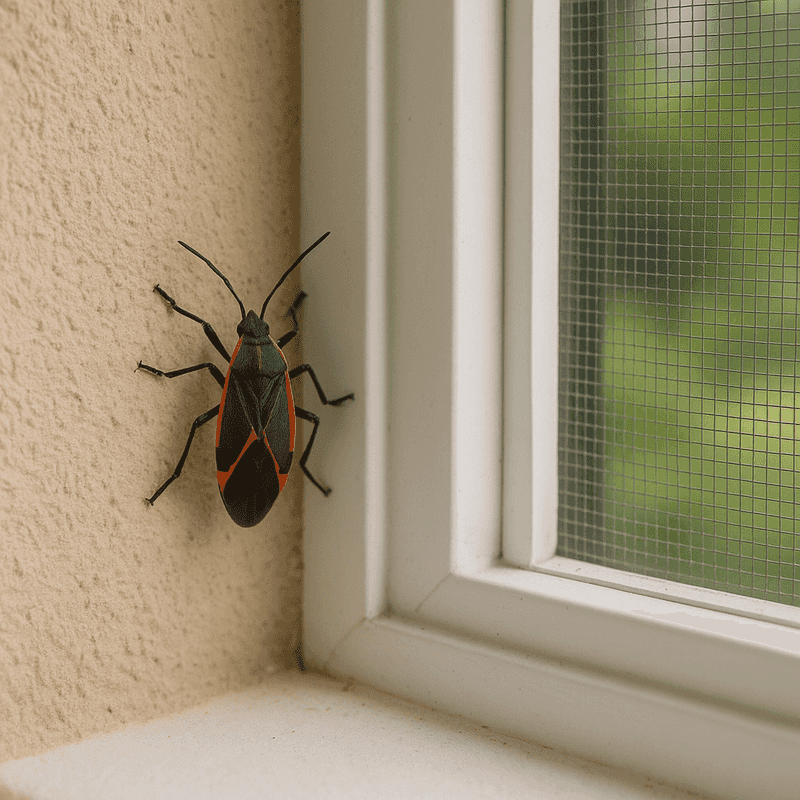
Finding a boxelder bug in the living room is annoying, but it does not mean a colony is growing in your walls. According to Purdue Extension, these bugs do not reproduce inside homes.
An indoor sighting alone does not show that they are breeding there.
Bugs that get in during fall are usually adults waiting out the cold. They may stay still in wall spaces for months, then wake up on a warm winter day and wander toward windows and lights.
That explains why they sometimes appear in the middle of winter.
They do not bite or sting, and they will not damage the structure of your home. Even so, calling them harmless in every respect would be going too far.
University of Minnesota Extension lists them as a nuisance pest, and they can leave droppings that stain surfaces such as curtains and walls.
Crushed bugs can also smell unpleasant, so squashing them on fabric or paint is best avoided. UMass Extension likewise describes them as a nuisance rather than a danger.
A practical way to think about it: a few stray bugs are a housekeeping task. If you keep seeing them in the same spot, treat that as a hint to check nearby gaps and screens.
Sealing gaps can help prevent entry
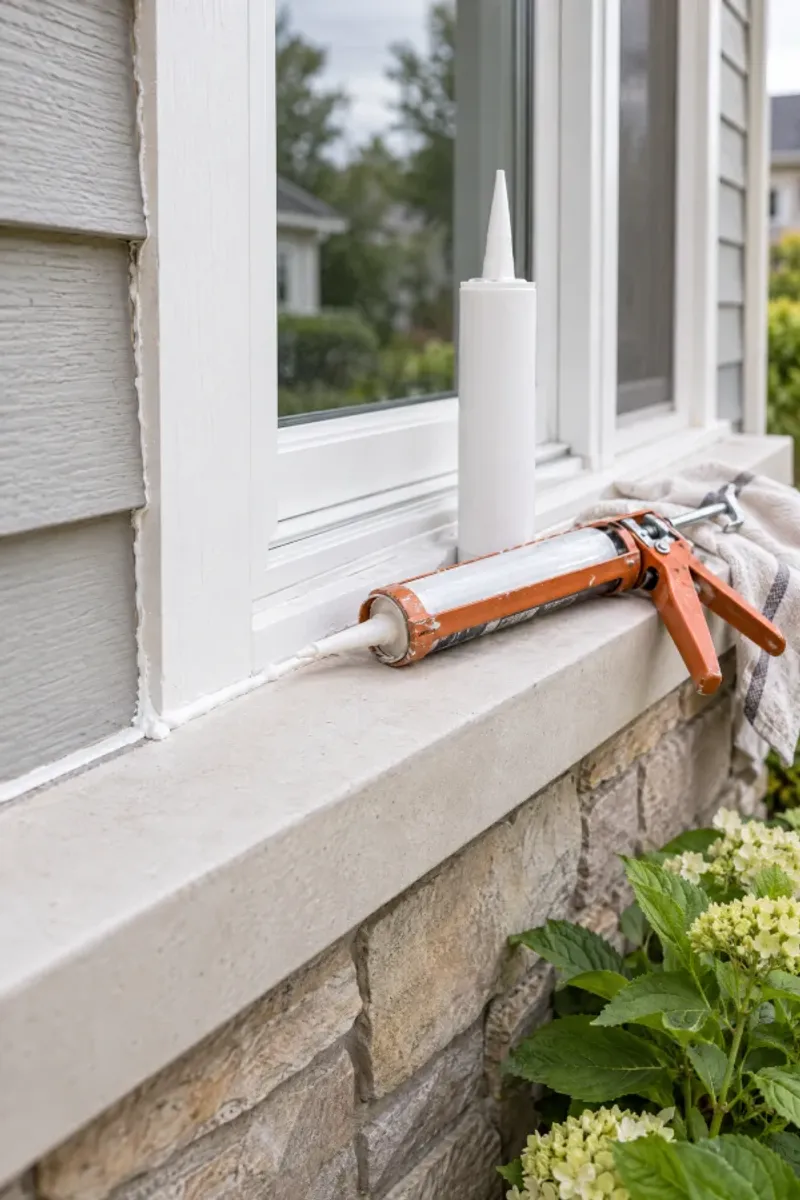
Exclusion is a sensible first step because it works on the route rather than the bug. Start with window and door screens.
Patch small tears and make sure the frames fit snugly.
Next, look for cracks and gaps around windows, doors, siding, foundations, vents, and other possible openings. University of Minnesota Extension recommends making these repairs before the fall clustering period begins.
In Indiana, that usually means late summer is a good time to work, though the exact timing varies by year and by region.
Caulk works well for narrow gaps around window trim and where different materials meet. Weatherstripping or a door sweep can close the space under an entry door.
Fine mesh over vents and other openings can keep insects out while letting air through.
Do not forget spots that are easy to miss, such as utility lines, dryer vents, and the gap where siding meets the foundation. Purdue Extension notes that adults use cracks around foundations, windows, and doors, so these are the places to inspect first.
Sealing does not guarantee that no bug will ever get inside. Tiny gaps are easy to overlook, and older homes can have many.
Still, closing the openings you can find reduces the number of ways in, and it also helps with drafts and other pests.
If you missed the pre-fall window, repairs are still worthwhile. Just be aware that sealing over bugs already hiding in a wall may leave them inside, so expect a few to appear.
Remove indoor bugs physically and use outdoor treatments cautiously
For bugs indoors, the simplest tools are the best. Vacuum them up or sweep them into a dustpan, then dispose of them outside.
University of Minnesota Extension generally does not recommend indoor pesticide treatment, and Purdue Extension also lists vacuuming or sweeping among the best removal methods.
Outdoors, a pesticide is an optional extra, never a replacement for fixing openings. Use only a product whose label allows the site and use you have in mind, and follow the label closely.
Minnesota Extension says outdoor treatment matters most when bugs first begin clustering in late summer or early fall, and that spring spraying does not reduce the following fall’s numbers.
Washing a cluster off a wall with water is a gentler outdoor option. Purdue mentions very hot water, 165 to 180 degrees Fahrenheit, for killing clusters, but that range can cause serious burns, so it is not casual advice.
Plain water from a hose is the safer choice.
Trees come up often. Nearby female boxelder trees can be a food source, and Purdue says removing one or two likely source trees may help.
Bugs can still fly in from elsewhere, and Minnesota Extension does not recommend tree removal as a general control strategy, so cutting down a tree is not a guaranteed fix.
The best next move is a calm walk around your home. Look for gaps, torn screens, and loose trim, and fix what you find.
A cluster on a sunny wall is a seasonal sign to act on, not a verdict on your house.