
Fall Farmers Market Products to Sell Beyond Fresh Produce
Fall farmers markets give sellers a much bigger opportunity than a table piled with pumpkins, apples and late-season vegetables.
By the time mornings turn cold and shoppers start arriving in sweaters, the market has changed. People still want fresh produce, but they are also thinking about soup for dinner, weekend baking, Thanksgiving tables and small gifts they can tuck away for later. A basket of squash may bring them to the stall. A jar of apple butter, a loaf of bread or a bundle of dried flowers can give them another reason to stay.
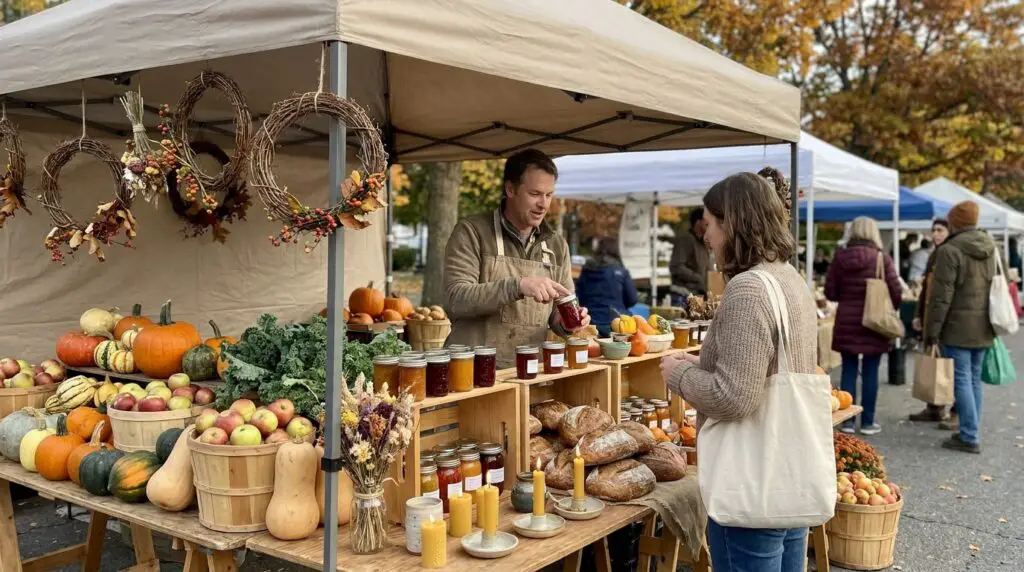
That shift matters for sellers. Fresh produce has a short window, and some crops disappear fast once temperatures fall. Products with a longer shelf life can help fill the table and make better use of what the season gives you. The trick is choosing things that still belong at a farmers market. Shoppers should look at the stall and understand the connection without needing a long explanation.
Fall Farmers Market Products to Sell Beyond Fresh Produce
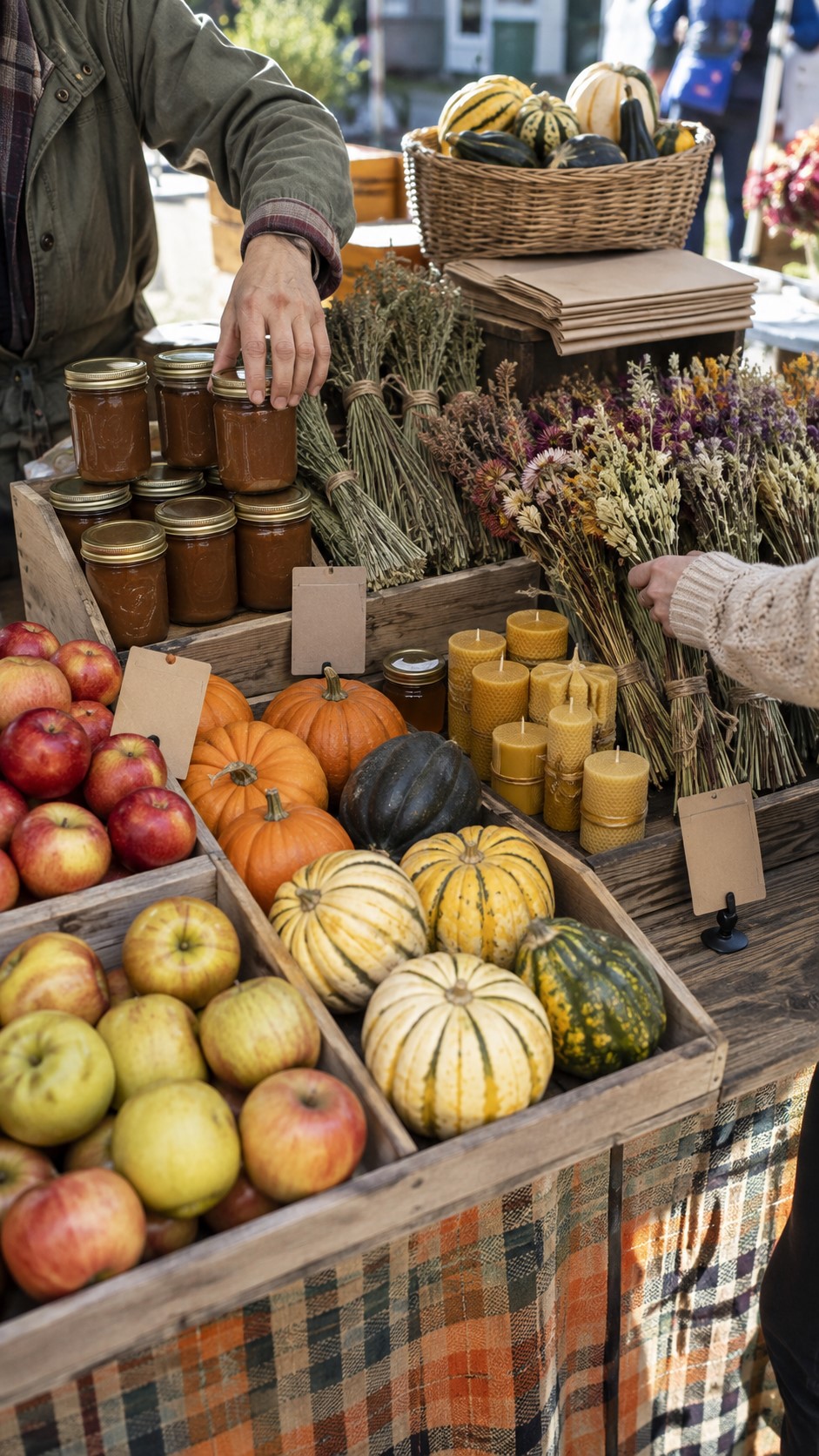
A good fall stall usually has an anchor. For a grower, that may be pumpkins, apples, winter squash, herbs or late greens. Everything else should feel like it grew out of that same world. Preserves made from the harvest make sense. So do dried flower bunches, herb mixes, beeswax candles or a simple wreath made with materials from the garden.
The weaker approach is to add random merchandise because it happens to sell somewhere else. A farmers market has its own character, and shoppers notice when a table starts looking like a flea market with vegetables on one end. Products tied to food, gardens, harvests and the home are easier to understand. They also give the stall a clear point of view, which is useful when a customer has only a few seconds to decide where to stop.
Choosing Farmers Market Products Shoppers Understand Quickly
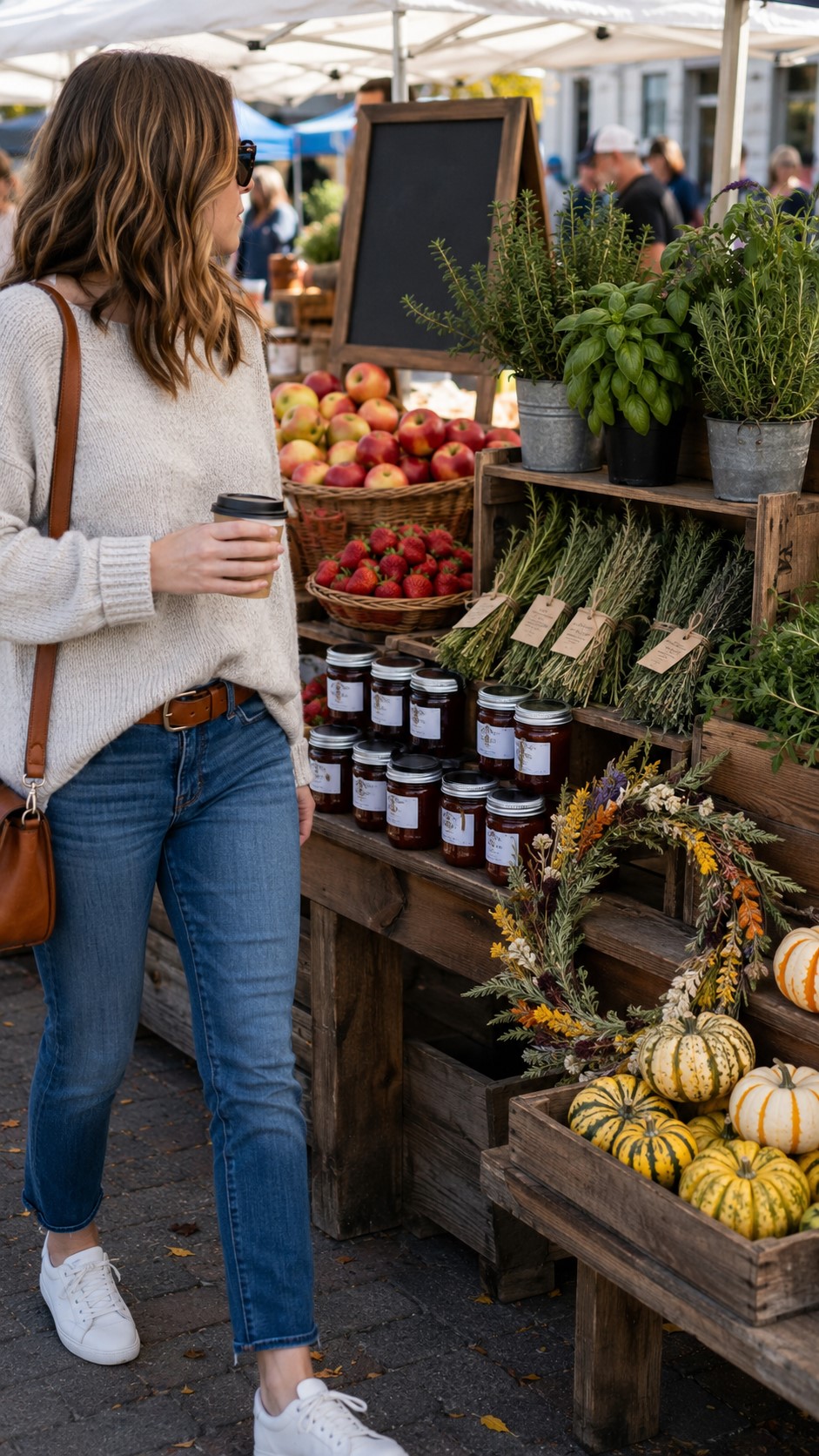
Picture someone walking past with a coffee in one hand and a tote bag in the other. They are scanning ten stalls at once. Your extra products need to read fast. Jam beside berries makes sense. Dried herbs beside fresh bunches make sense. A small autumn wreath beside gourds and seed heads makes sense too.
This is where restraint helps. Three good add-on categories are usually easier to shop than a dozen unrelated ones. Think about what a customer might use later that day, take home for the pantry or give to somebody else. If a product answers one of those needs and still fits the setting, it has earned its place on the table.
Fall Farmers Market Food Ideas to Sell as the Weather Cools
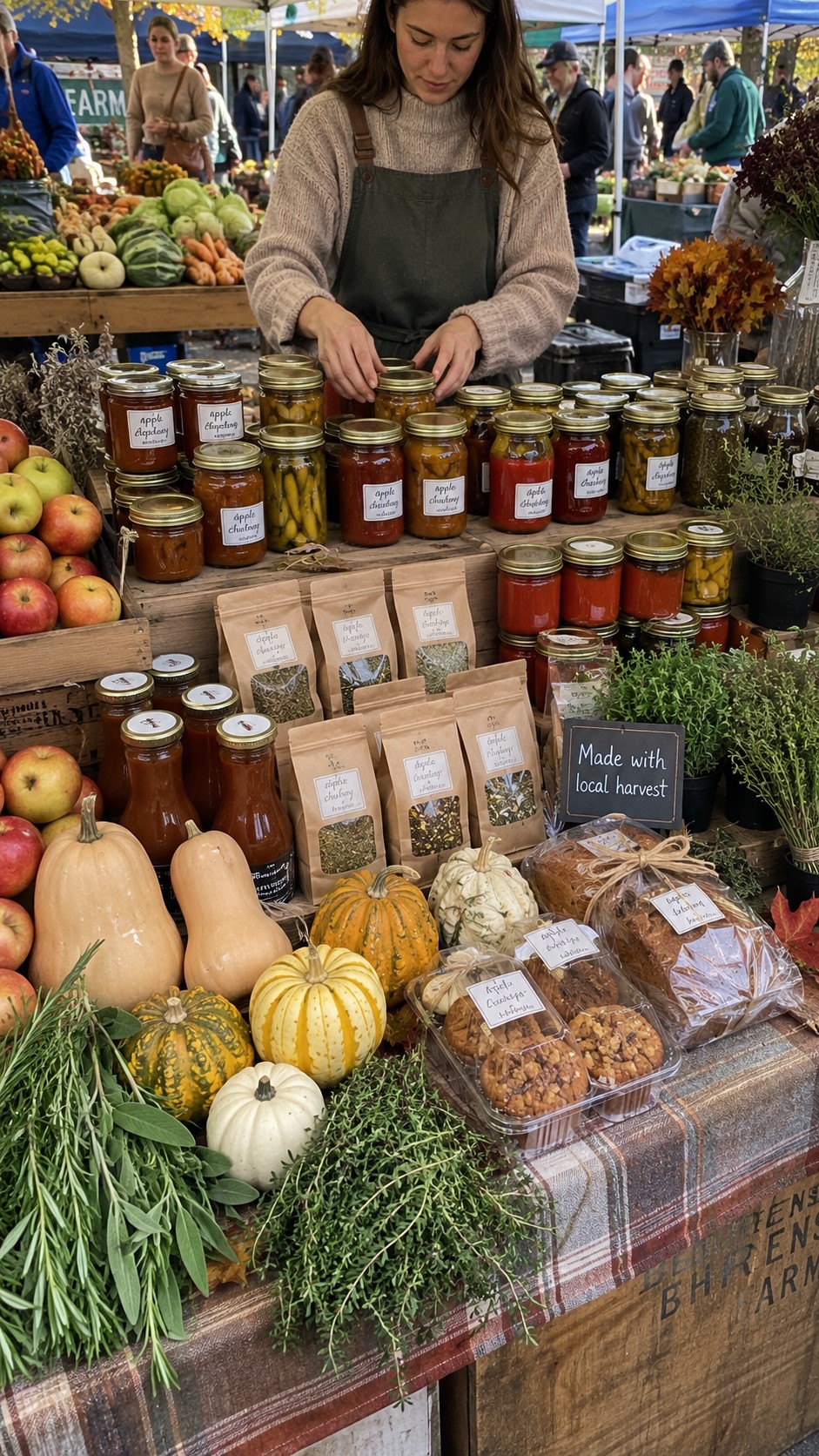
Food is the easiest place to expand because shoppers already arrive expecting to eat. Fall also changes what sounds good. A chilled summer drink loses some appeal on a sharp October morning, while bread, preserves, spiced baked goods and pantry staples suddenly feel right at home.
This can be a smart way to stretch the harvest. Apples can become butter or preserves. Herbs can be dried and sold in blends. Peppers may become sauces or relishes where local rules allow it. The exact possibilities depend on state and local food laws, so check cottage-food rules, labeling requirements and any permits before adding prepared products. A profitable idea on paper is useless if you can’t legally sell it at your market.
Fall Farmers Market Baked Goods for Cold-Morning Shoppers
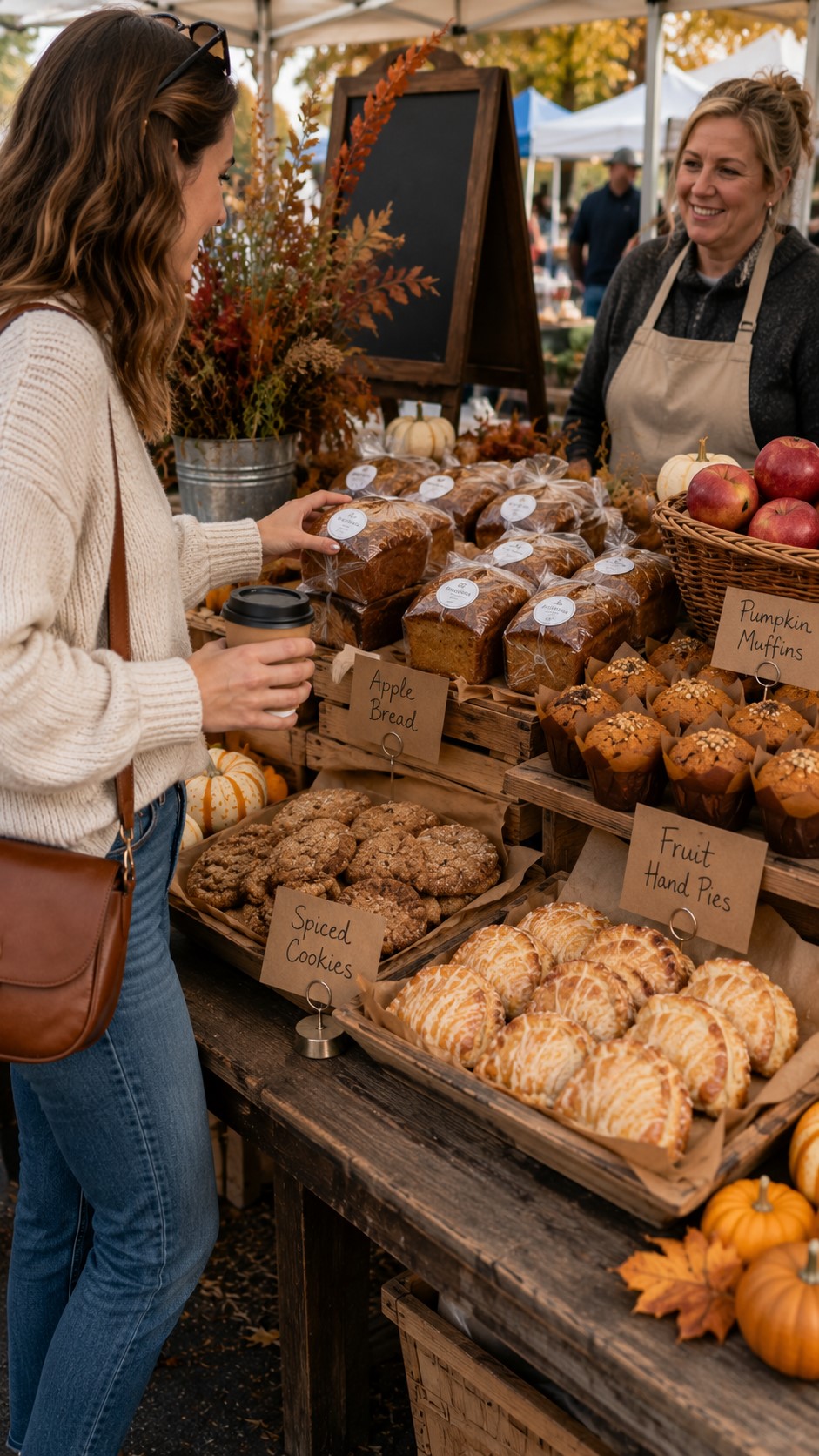
Baked goods have one big advantage at a fall market: they smell and look like the season before a shopper even reads the label. A loaf with apples or pumpkin, a tray of spiced cookies or a simple fruit hand pie can sit naturally beside produce without making the stall feel confused.
Keep the practical side in view. Baked goods need to travel well, hold up for several hours and still look good after the early rush. Packaging should protect the product without hiding it completely. And because labor adds up fast, choose items you can make in batches. A complicated pastry that takes half a day may look impressive, but it can become a bad seller if the price never covers the work.
Homemade Food Items to Sell at a Farmers Market for the Pantry
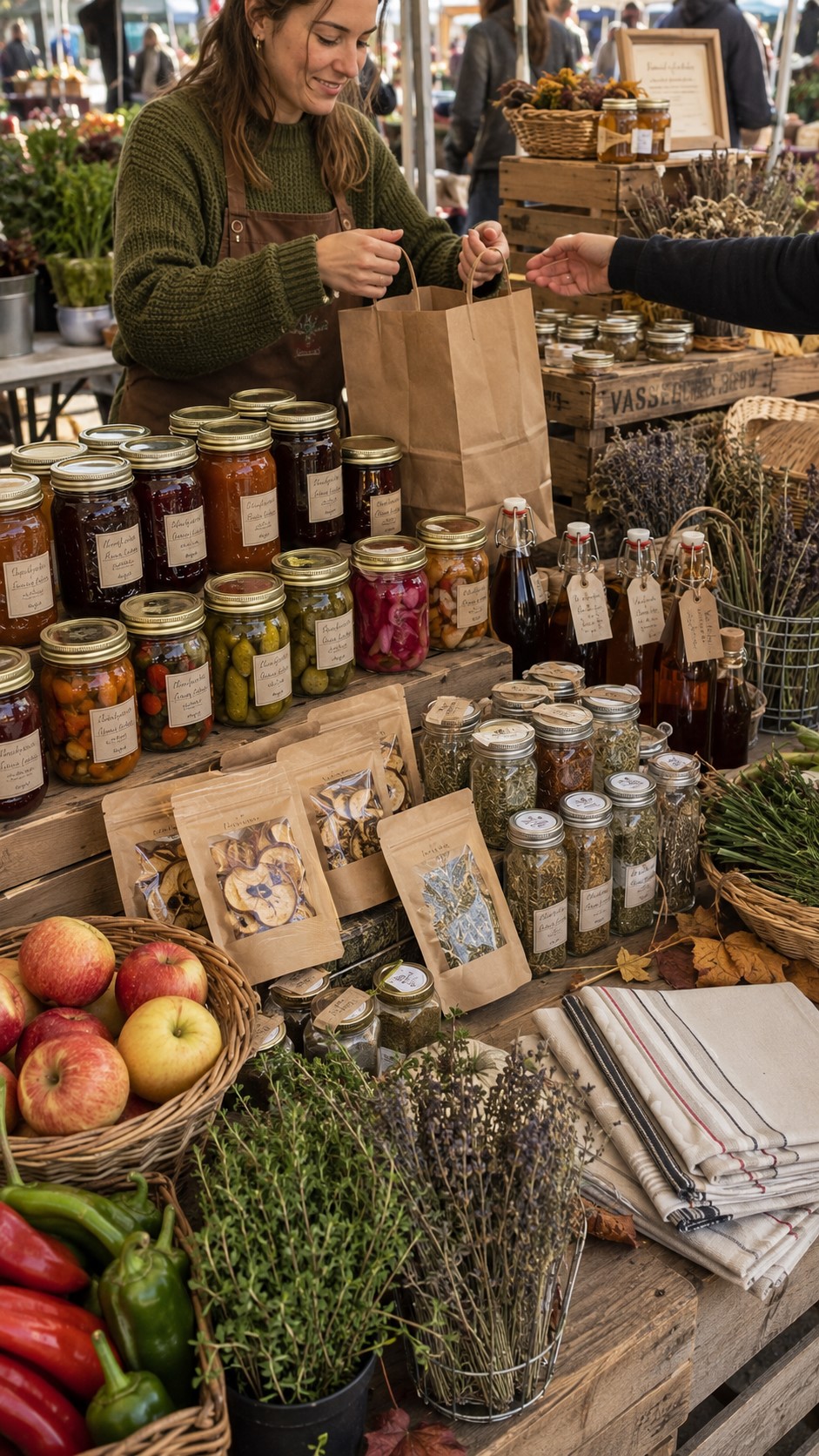
Pantry products can keep earning after the fresh crop is gone. Jams, pickles, dried herbs, syrups, seasoning blends and suitable bottled products can turn part of the harvest into something with a longer selling life. They also appeal to shoppers who like the market but don’t need another bag of vegetables.
Smaller jars can work well because they lower the commitment. Someone may hesitate over a large jar of an unfamiliar relish but take a chance on a smaller size. Gift sets can come later, once you know which flavors people return for. Start with the products you can make consistently, label clearly and replenish without turning the kitchen into a second full-time job.
Fall Farmers Market Best Sellers Can Include Useful Home Goods
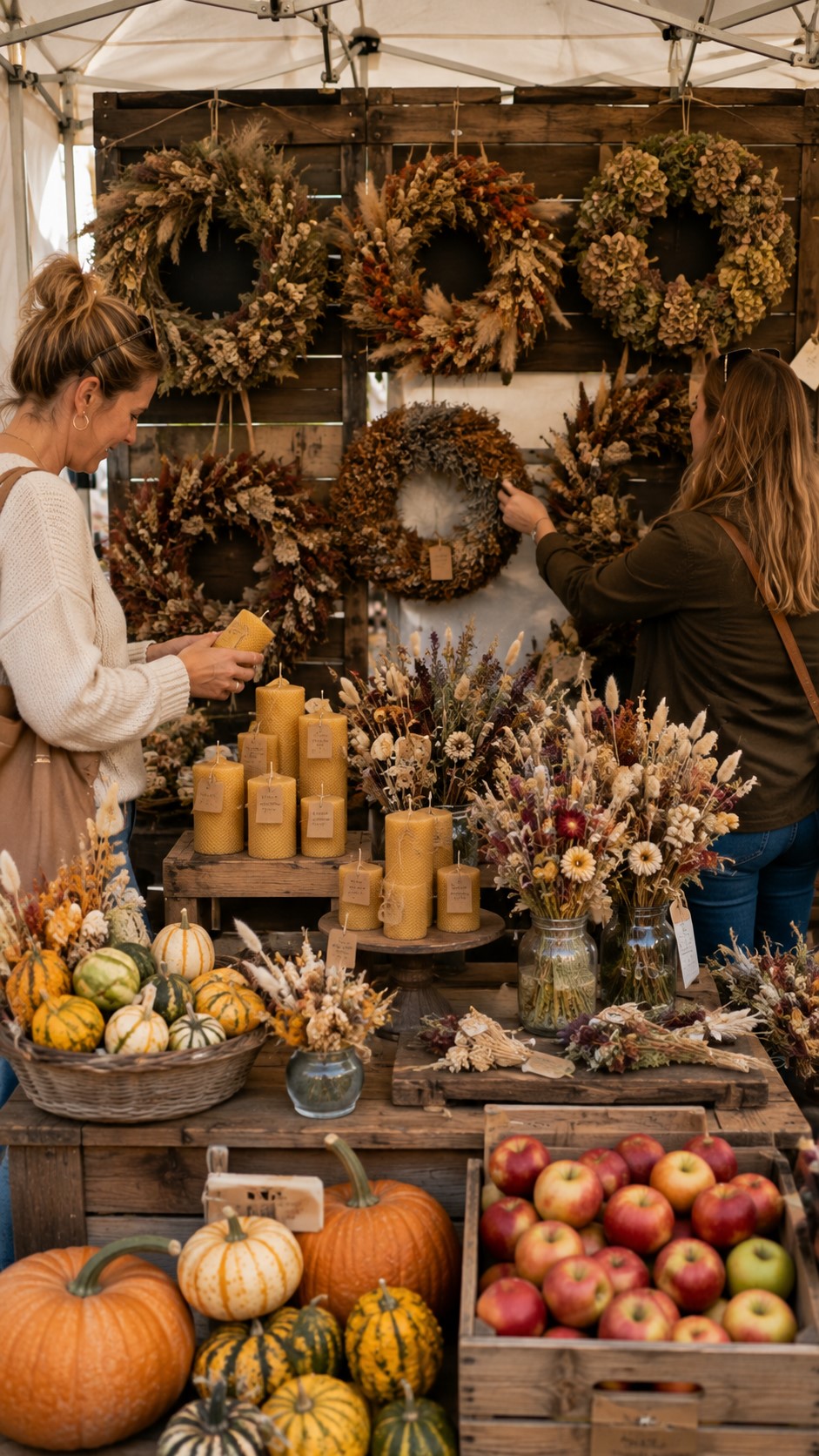
Food gets most of the attention at farmers markets, but fall shoppers are also thinking about the house. Cooler evenings bring candles back onto tables. Dried flowers last longer than summer bouquets. Natural decorations begin appearing on porches and dining tables. These are small shifts, yet they open room for products that sit comfortably beside farm goods.
The connection should stay obvious. Beeswax candles from a farm that keeps bees feel at home. So does a dried arrangement made from flowers grown on the property. A wooden spoon bought wholesale from a distant supplier feels less connected unless the seller has a clear reason for offering it. The closer the product sits to what you grow, raise or make, the easier the story is for a customer to believe.
Handmade Items to Sell at a Farmers Market With a Seasonal Link
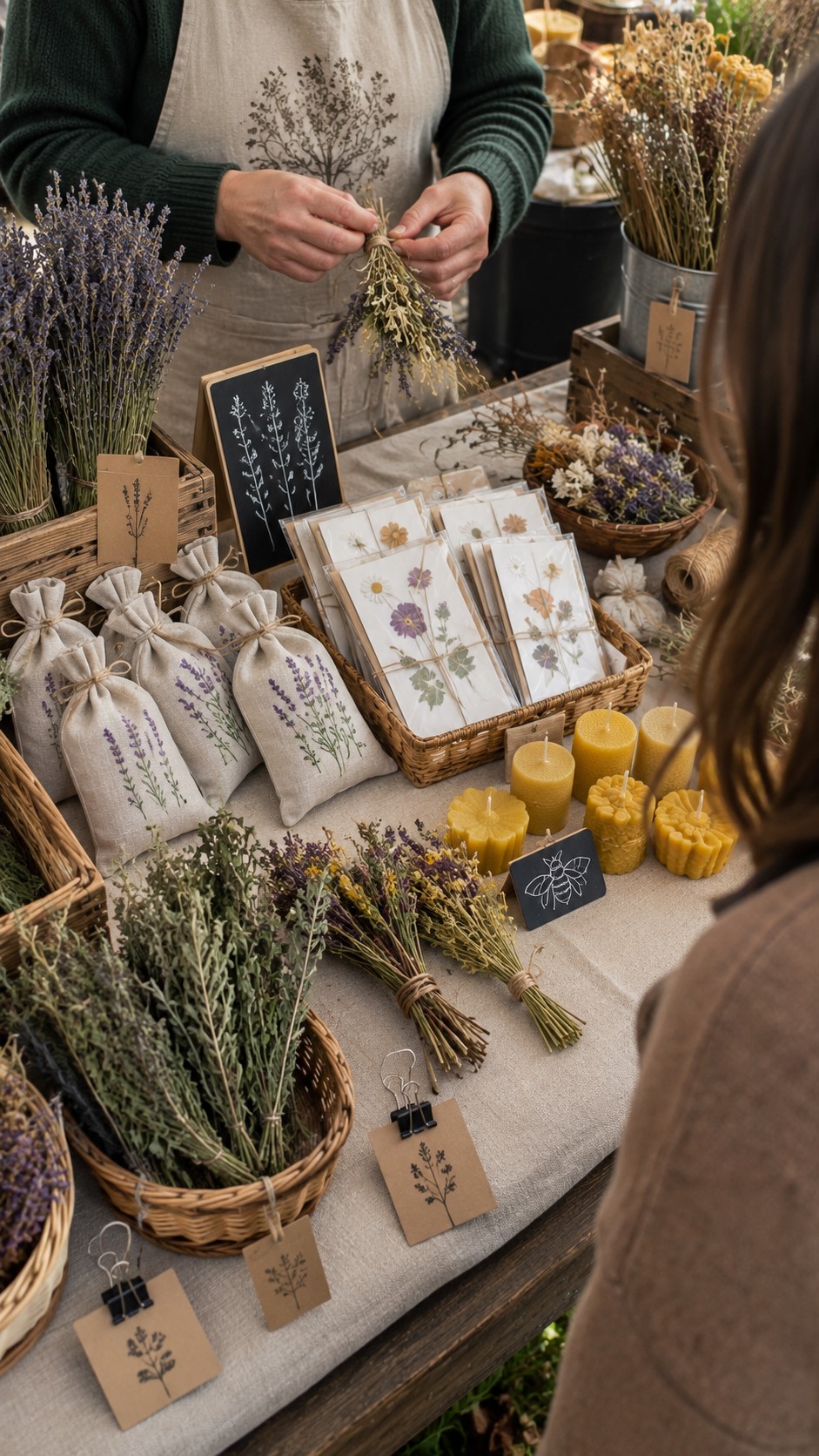
Handmade goods work best when they feel useful or rooted in the season. Dried herb bundles, simple table decorations, seed packets, pressed botanical pieces and small natural ornaments can all fit, depending on what you already produce. A seller with lavender might offer sachets. A flower grower might dry stems for autumn arrangements. A beekeeper could add candles beside honey.
Try not to make every product a separate project. That sounds obvious until market prep takes over the whole week. Products that share materials or production steps are easier to manage. If the same dried flowers can be sold as bunches and used in wreaths, you get more range without doubling the workload.
Fall Farmers Market Crafts to Sell for Autumn Homes
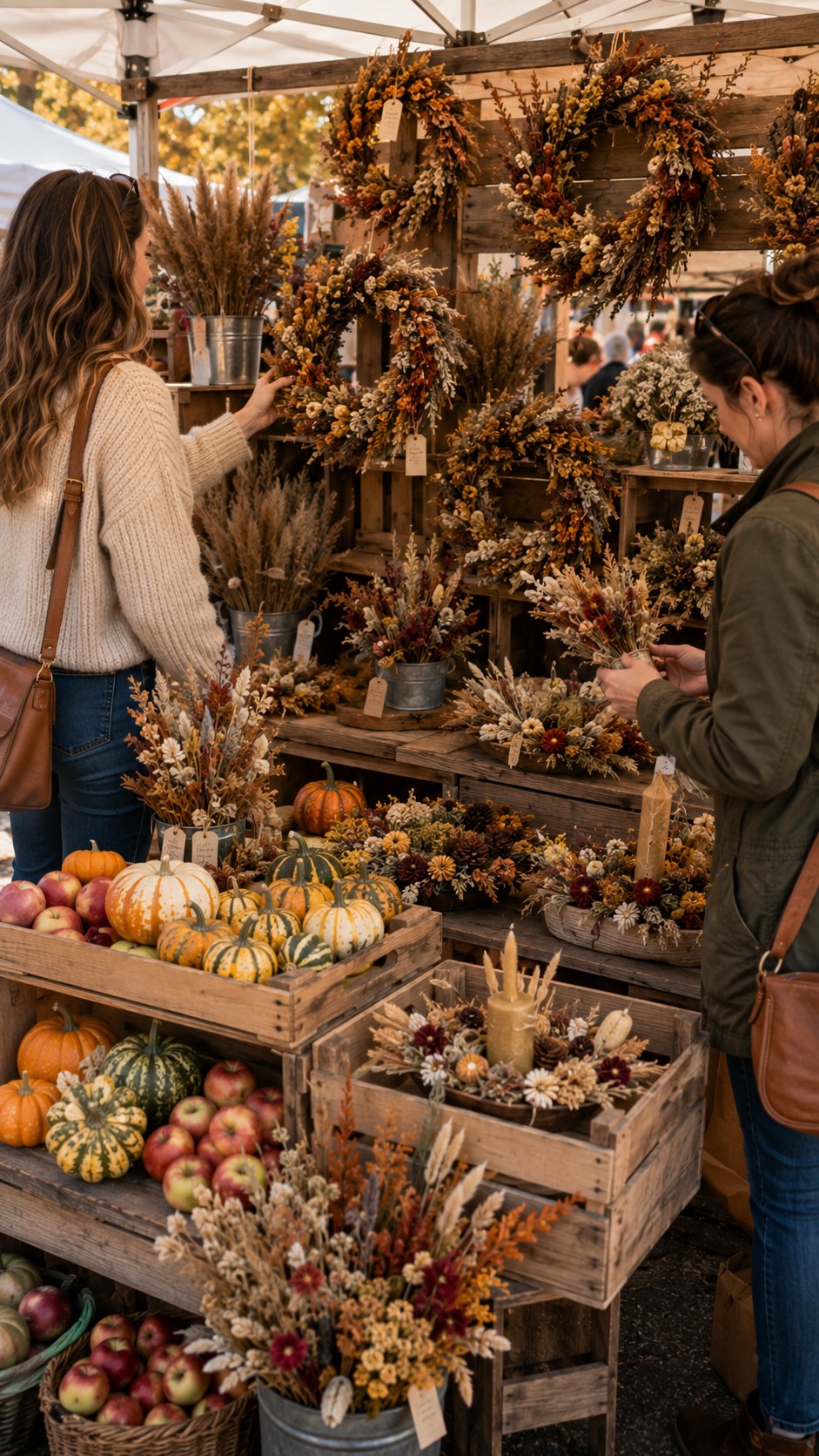
Fall decorating creates another opening, especially when the materials already come from the garden. Dried flower bunches, seed-head wreaths, decorative gourds and small table pieces can feel less like merchandise and more like an extension of the harvest. That is exactly where you want them.
There is no need to cover every inch of the stall in orange ribbon and fake leaves. Real materials often do the work better. A basket of gourds has enough color. A wreath made with grasses and dried seed heads can stand out because it looks like something that belongs to the season rather than something pulled from a storage box. Customers who came for food may stop because they can picture it on their door or table.
Fall Crafts to Sell as Shoppers Start Decorating
Timing changes what people buy. Early in the season, simple dried bunches and small porch pieces may be enough. As Thanksgiving gets closer, table decorations and hostess gifts can become more relevant. Late fall can bring a crossover into winter products if the market stays open long enough.
Watch what customers touch. That sounds basic, but it tells you plenty. A piece may draw comments all morning and still never sell because it is too large, too fragile or too expensive. A smaller version may do far better the next week. Markets are useful testing grounds because you get to see reactions in real time, not just sales numbers after the market closes.
Fall Farmers Market Vendor Ideas for Small Gifts
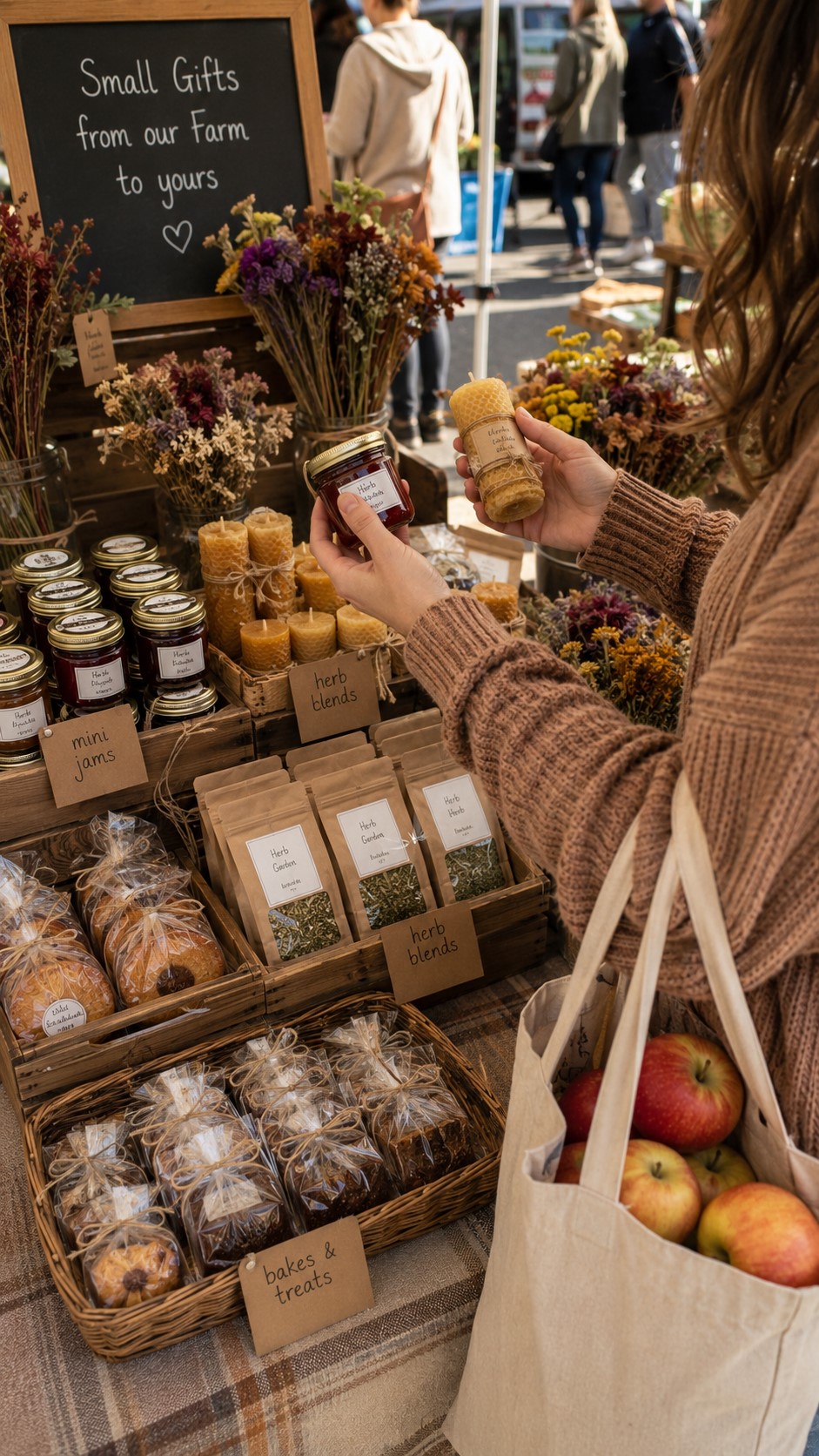
Autumn is when gift buying starts sneaking into ordinary errands. Someone comes for apples and leaves with a jar of preserves for a neighbor. A shopper buying bread for dinner may grab a small herb bundle for a host. These purchases are rarely planned days in advance, which is why modest, easy-to-carry products can work so well.
Think about gifts that don’t create extra work for the buyer. A small jar with a clean label, a dried flower bundle tied neatly or a pair of beeswax candles already feels finished. The customer doesn’t need elaborate wrapping. They need something that looks thoughtful, fits in a tote bag and costs little enough to buy without a committee meeting at the kitchen table.
Farmers Market Items to Sell as Easy Take-Home Gifts
A good gift item usually has three things going for it: it is portable, it looks complete and the price doesn’t cause a long pause. That could mean a small preserve, a mini baked selection, a seasoning blend, a dried flower bunch or a simple pair of candles.
You can also pair products that already sell well. Bread and jam make sense together. Honey and a beeswax candle share a clear connection. Dried herbs and a small recipe card can work if your market permits printed material at the stall. The pairing should feel obvious. If customers need a paragraph explaining why two things belong together, they probably don’t.
Fall Farmers Market Booth Ideas for a Broader Product Mix
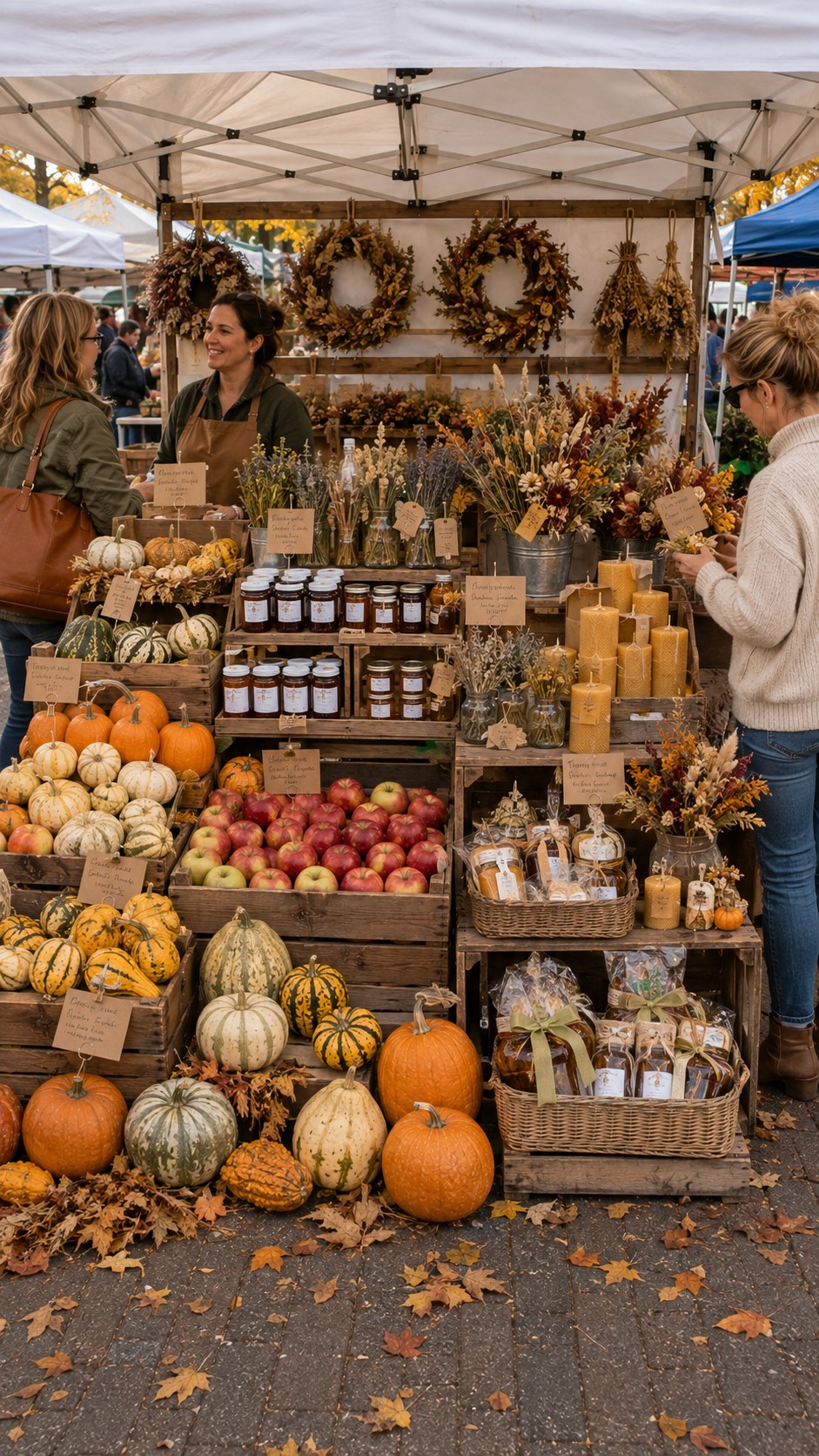
Once you sell more than produce, the table can become messy fast. A crate of squash, six jam flavors, candles, bread and dried flowers all competing for attention can make a stall harder to shop, even if every product is good on its own.
Group items by use. Keep fresh produce together. Give pantry goods their own section. Put home products in another clear area and keep small gifts where shoppers can reach them without leaning over a mountain of pumpkins. Height helps too. Crates and simple risers can lift packaged goods above produce while baskets keep smaller items contained. Leave some open space. A crowded table can make twenty products look like one big pile.
Fall Farmers Market Display Ideas With Clear Product Groups
Your produce can still do much of the visual work. Pumpkins, apples, gourds and leafy greens bring color and texture without extra decoration. Use those natural materials to frame packaged goods rather than burying the table under signs and props.
Labels need to be easy to read, especially for prices. Shoppers are less likely to ask how much everything costs when the market is busy. Clear pricing also saves you from repeating the same answer fifty times before lunch. If you offer samples where rules allow, place them close to the product they belong to. A customer should never have to guess which jar matches the spoonful they just tasted.
Finding the Best Products to Sell at a Fall Farmers Market
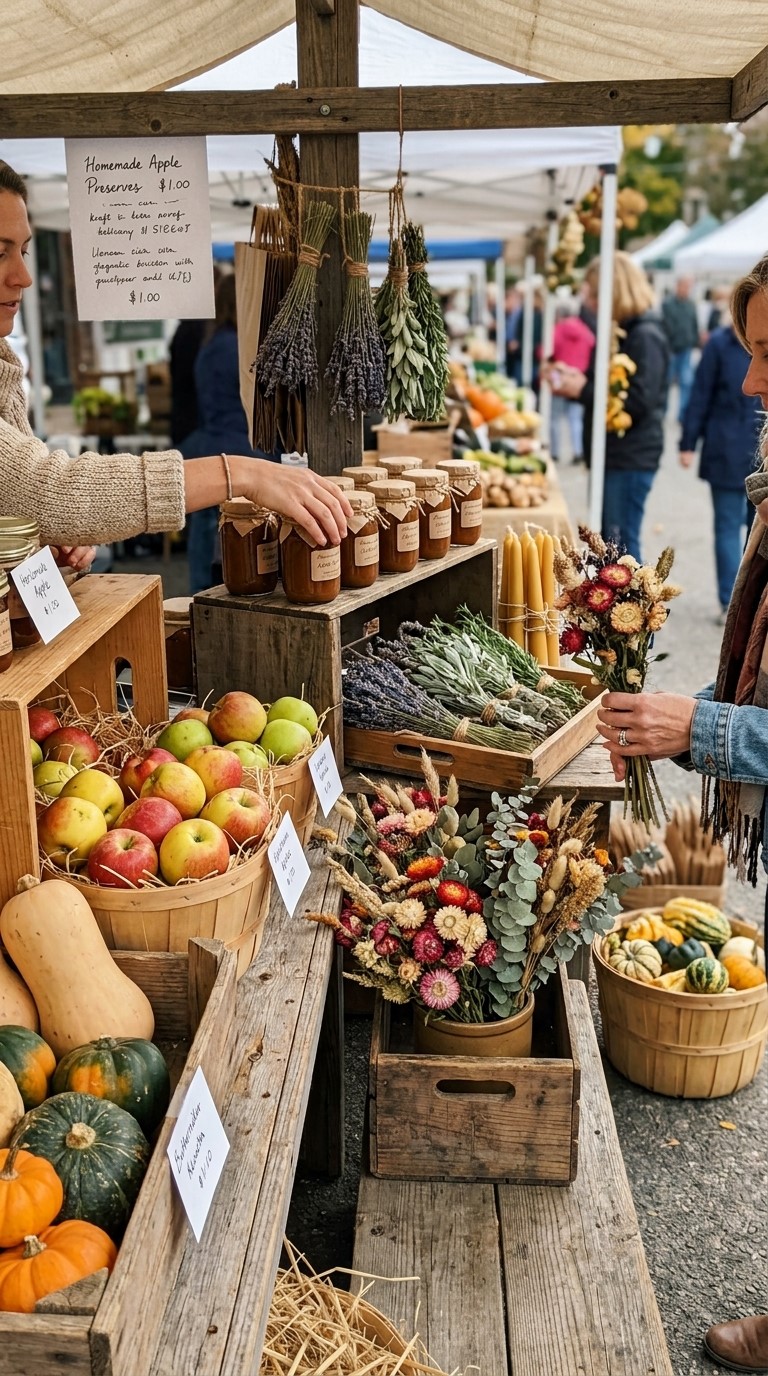
There is no single product that wins at every market. A busy city market, a rural roadside market and a Saturday neighborhood market can attract very different shoppers. Your own production limits matter just as much. A product that sells out but takes ten hours to make may be worse for the business than one that sells steadily and takes an hour to prepare.
Run the numbers before adding anything. Count ingredients, packaging, market fees and the time spent making it. Think about transport and storage too. A delicate product that arrives broken every week will eat into the profit. The strongest additions are usually the ones you can produce without chaos, price with confidence and sell beside your existing goods without confusing the customer.
Testing Fall Farmers Market Items Before Expanding the Range
Start small. Bring one or two new products in modest quantities and see what happens over several market days. One Saturday can be misleading. Weather, local events and even where your stall sits can change traffic.
Pay attention to more than sell-outs. Notice what customers pick up, what they ask about and what they buy together. If people keep pairing your apple butter with bread, there may be room for a small bundle. If a dried wreath gets admired but never purchased, test a smaller version or a lower-cost bunch of the same materials. Let customer behavior do some of the editing for you.
Building a Fall Farmers Market Product Mix Beyond Produce
Fresh produce can remain the reason people know your stall, even when it is no longer the only thing they buy there. A strong fall mix might give one shopper vegetables for dinner, another a jar for the pantry and somebody else a small gift for the weekend. All three purchases still feel connected to the same season.
That is the useful standard for every new idea. The product should belong beside the harvest, be practical to make and give the customer a clear reason to take it home. Once those pieces line up, a fall farmers market table can do far more than sell what came out of the field that week. It can keep working long after the last tomato has disappeared.
