
Low-Maintenance Winter Garden Plants for Those With Busy Schedules
A winter garden shouldn’t become another job waiting for you at the weekend. For anyone with a busy schedule, that simple idea changes the way winter planting should be approached. The prettiest plant at the garden center may lose its appeal if it needs moving indoors before every cold spell, regular deadheading or constant checks after heavy rain. Winter gardening gets much easier when the plants suit the weather, the soil and the amount of time you can realistically give them.
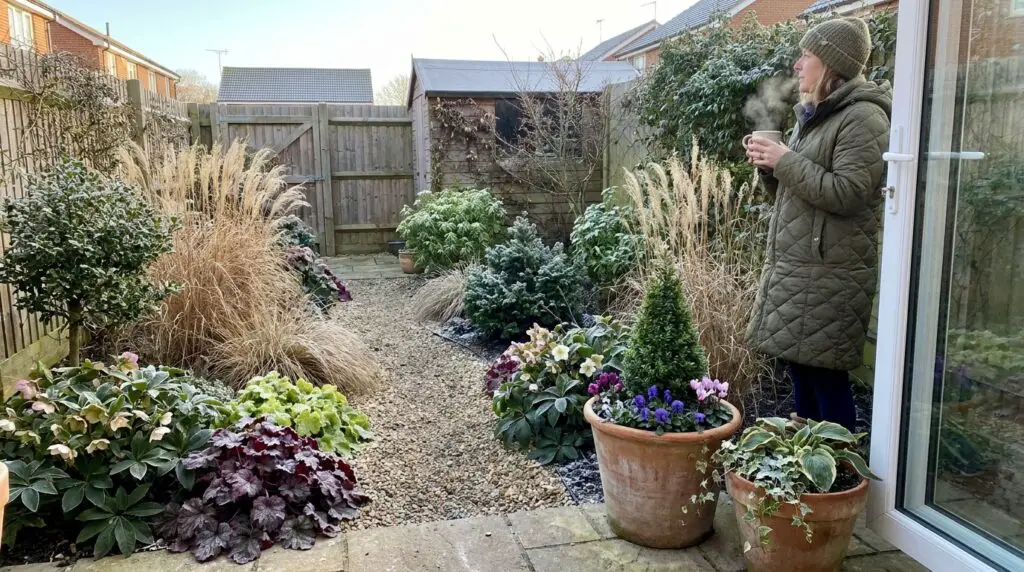
That doesn’t mean settling for a dull garden. Far from it. A small group of hardy plants can give you evergreen foliage, flowers, berries, seed heads and strong shapes through the colder months. The trick is choosing plants that do most of the work themselves.
Start With Low-Maintenance Winter Plants That Fit Your Schedule
Low-maintenance winter plants earn their place by asking for less attention when gardening time is short. A plant that stays outdoors, copes with your normal winter temperatures and doesn’t need frequent pruning will usually be easier to live with than something more delicate.
Before buying anything, think about the jobs a plant may create. Will you need to move it under cover? Does it dislike wet soil? Will every frost send you outside with protective fleece? A plant can be beautiful and still be a poor choice for a busy gardener. Choosing well at the start saves far more time than trying to rescue the wrong plant later.
Choose Low-Maintenance Winter Garden Plants by Their Care Needs
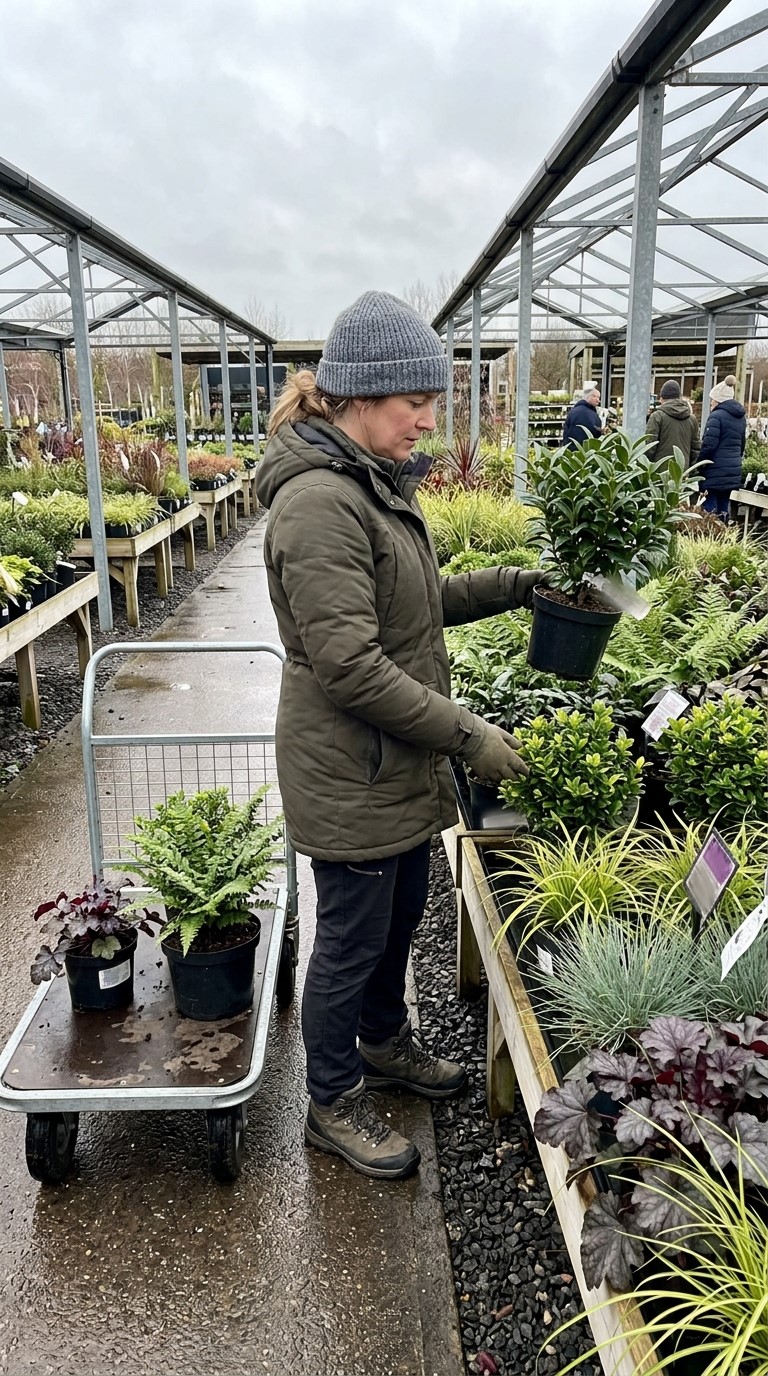
The easiest winter garden plants tend to share a few useful traits. They cope with local cold, tolerate periods of slower growth and don’t need constant grooming to stay presentable. Many established perennials, evergreens and compact shrubs fit that description.
Think about your garden as it actually behaves in winter. One corner may stay damp for weeks while another gets battered by cold wind. Pots near a sunny wall may dry much faster than containers in shade. Matching plants to those conditions cuts down on watering, protection and replacement. It also means you spend less time trying to persuade a plant to live somewhere it clearly dislikes.
Cold Hardy Plants Can Cut Down Frost Protection
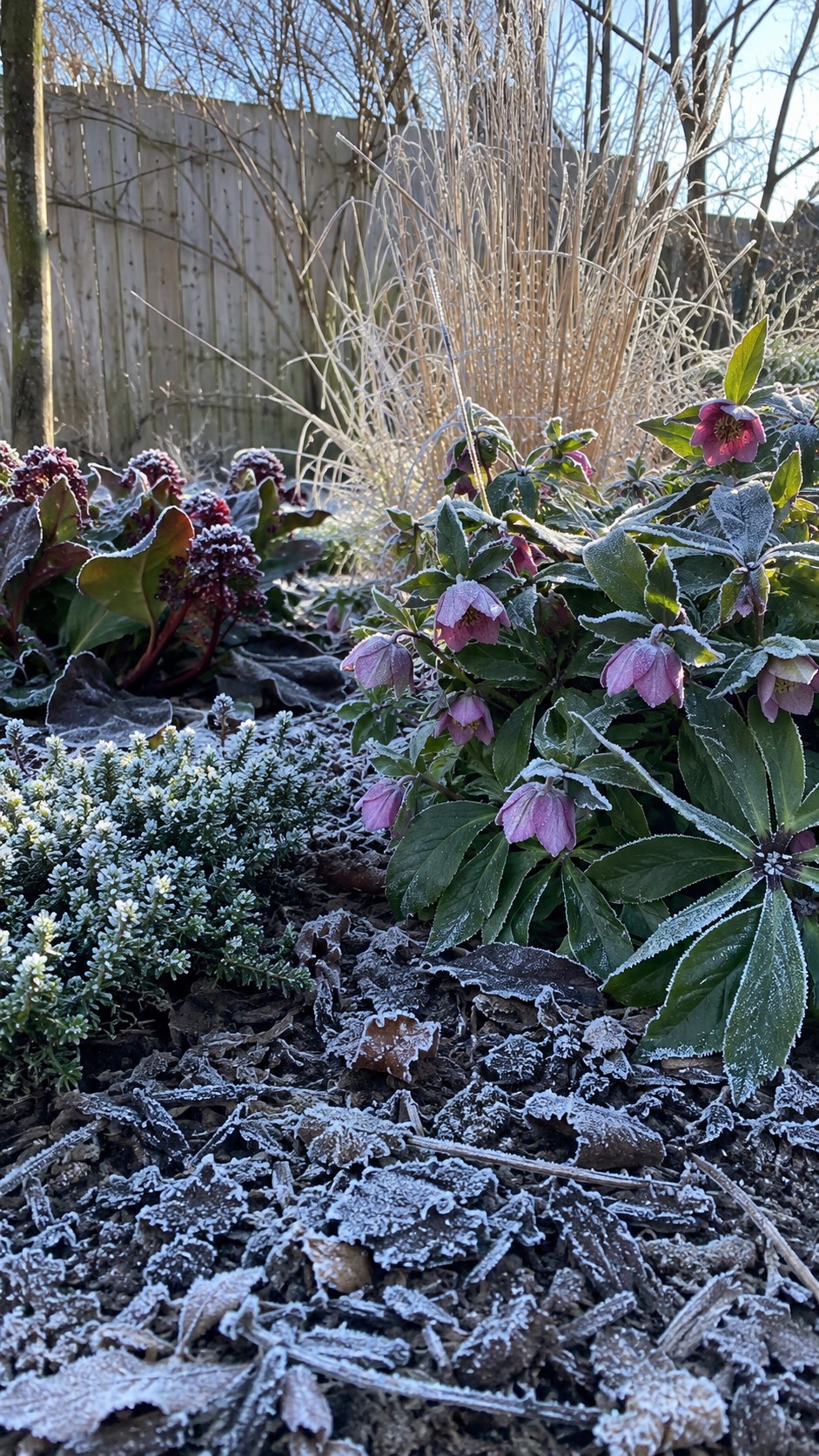
Cold hardy plants are among the best choices for gardeners who don’t want to watch the weather forecast every night. Once established in suitable conditions, they can often remain outdoors through normal winter cold without being repeatedly moved or wrapped.
Hardiness still varies by plant and climate, so local conditions matter. A shrub that sails through winter in one region may struggle somewhere much colder. Site conditions count too. A sheltered courtyard and an exposed front garden can feel like two different climates. Choose plants known to cope with the cold in your area and much of the seasonal fuss disappears before winter gets going.
Build the Garden Around Winter Hardy Plants
Winter hardy plants make a sensible backbone for a garden because they stay put. That sounds almost too simple, but it matters when time is limited. A garden filled with plants that need lifting, moving or replacing can turn into a long list of cold-weather chores.
Hardy evergreens, tough perennials and reliable shrubs give you something permanent to work around. Depending on your climate, plants such as hellebores, bergenia, heuchera, hardy ferns and compact conifers can provide structure with relatively little weekly care. The exact choices will vary, but the principle stays the same: start with plants that already suit winter rather than asking summer-loving plants to struggle through it.
Winter Hardy Plants Give Busy Gardeners a Reliable Base
A useful winter garden doesn’t have to be replanted every few months. Permanent planting reduces the cycle of clearing, shopping and starting again. It also makes the garden feel settled even when flowers are scarce.
Look for hardy plants that hold their shape or foliage through winter. Low shrubs can anchor borders while ferns and leafy perennials fill the spaces between them. Ornamental grasses can also earn their place if you leave the dried stems standing. They need cutting back later, but they don’t demand much during the coldest part of the year. Fewer seasonal replacements mean fewer jobs squeezed into an already busy weekend.
Plants That Survive Winter Save Work in Spring Too
Plants that survive winter don’t only make December and January easier. They can save a surprising amount of work when spring arrives.
Every plant that comes through the cold season in good condition is one less gap to fill. There’s less dead material to remove, fewer replacements to buy and less replanting to do. This is where hardy perennials can be especially useful. Their top growth may die back, but the roots remain alive and growth returns when conditions improve. A winter garden planned around survival rather than short-lived effect becomes easier to manage across the whole year.
Use Evergreen Winter Plants to Keep the Garden Looking Finished
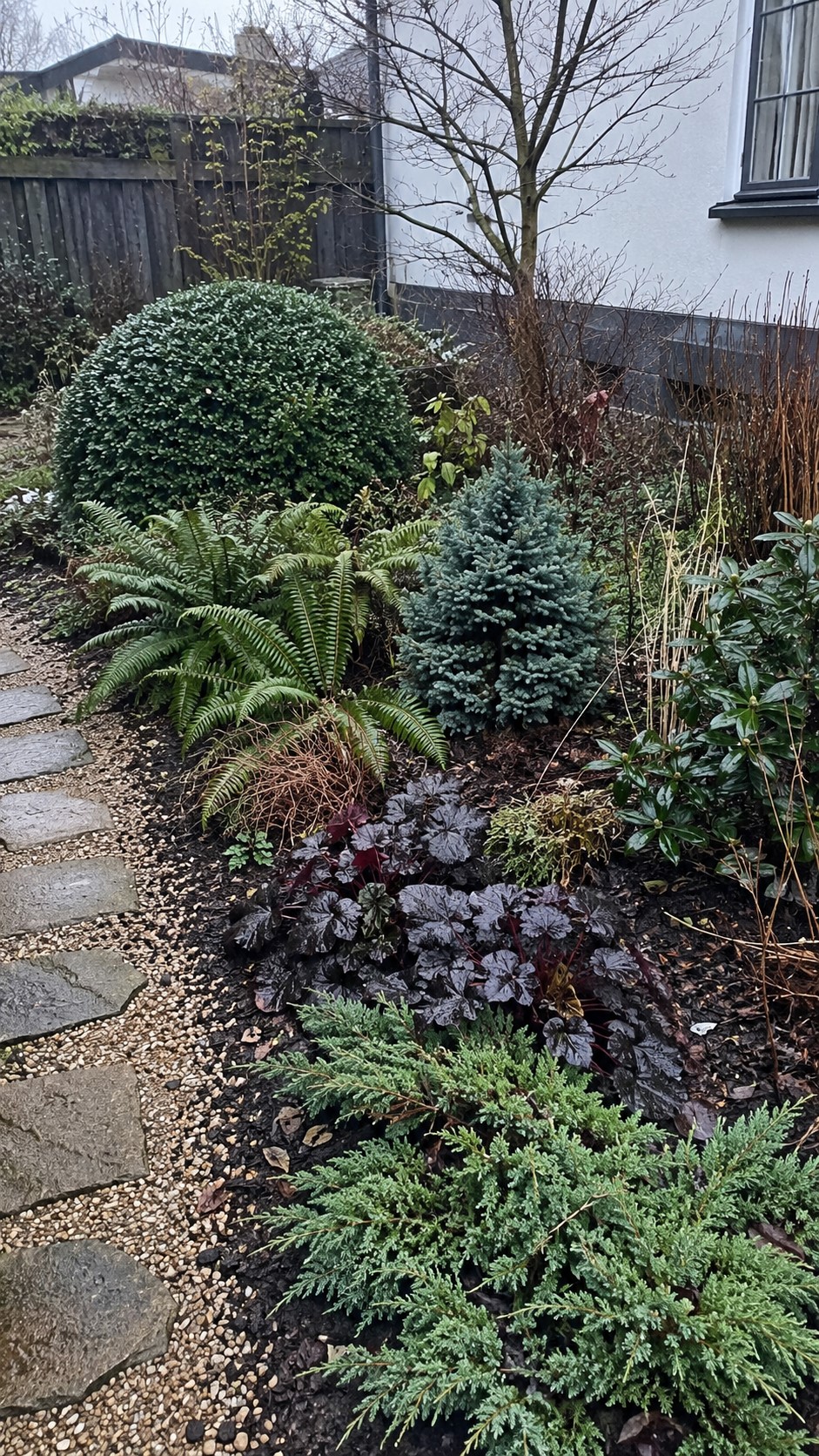
Evergreen winter plants are useful when you want the garden to look cared for without constantly changing it. Their foliage stays in place while deciduous plants lose their leaves and many perennials retreat below ground.
That steady background can make a small garden feel much fuller in winter. It also reduces the pressure to fill every bare patch with temporary color. Compact conifers, evergreen ferns, heucheras, skimmias and other foliage plants can all play this role where conditions suit them. Mix heights and leaf shapes rather than planting a solid block of similar greenery. The result feels more relaxed and needs far less seasonal rearranging.
Evergreen Winter Plants Give Beds Structure With Less Replanting
Structure is what stops a winter garden looking abandoned. A few dependable evergreen plants can define the shape of a border long after summer flowers have faded.
Place them where they can do the most visual work. One rounded shrub near a path, a low evergreen beside steps or a fern tucked beneath taller planting can carry a surprising amount of the garden through winter. You don’t need dozens. In fact, repeating a few reliable plants can make maintenance simpler because their needs are similar. You learn what they like, when they need attention and when they can safely be left alone.
Winter Interest Plants Offer More Than Flowers
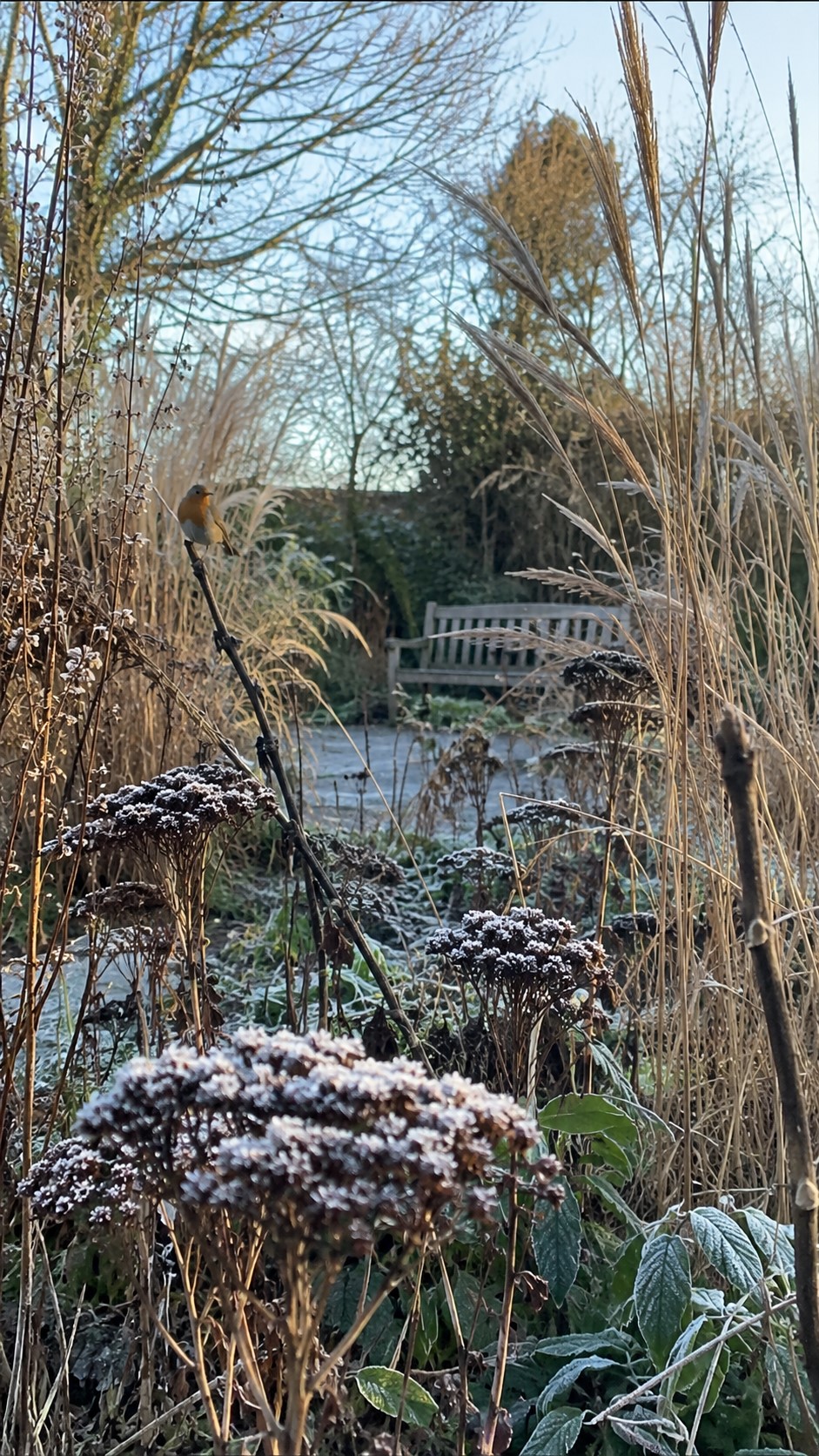
Flowers get plenty of attention, but winter interest plants have other ways to earn their place. Seed heads, bark, berries, evergreen leaves and dried stems can all give the garden character when growth slows.
This approach can also save work. Instead of cutting every perennial down in autumn, leave attractive stems standing where they remain sturdy. Sedums, grasses and other plants with strong dried forms can look good through frost and light snow. Birds may benefit from some seed heads too. You can deal with the old growth later, closer to spring, rather than trying to make the entire garden spotless before winter starts.
Add Winter Flowering Plants Where You’ll Notice Them
Winter flowering plants can bring a welcome flash of color, but busy gardeners don’t need to scatter them everywhere. A small number in the right place often works better than a large seasonal display.
Put flowers where you’ll see them on ordinary days. A pot beside the front door, a small group near the kitchen window or a planting beside a frequently used path will have more impact than flowers hidden at the far end of the garden. Depending on climate, hellebores, winter heathers, violas and other cold-season bloomers can bring life to these spots without asking you to rebuild the whole garden.
Low-Maintenance Winter Flowers Work Best as Focal Points
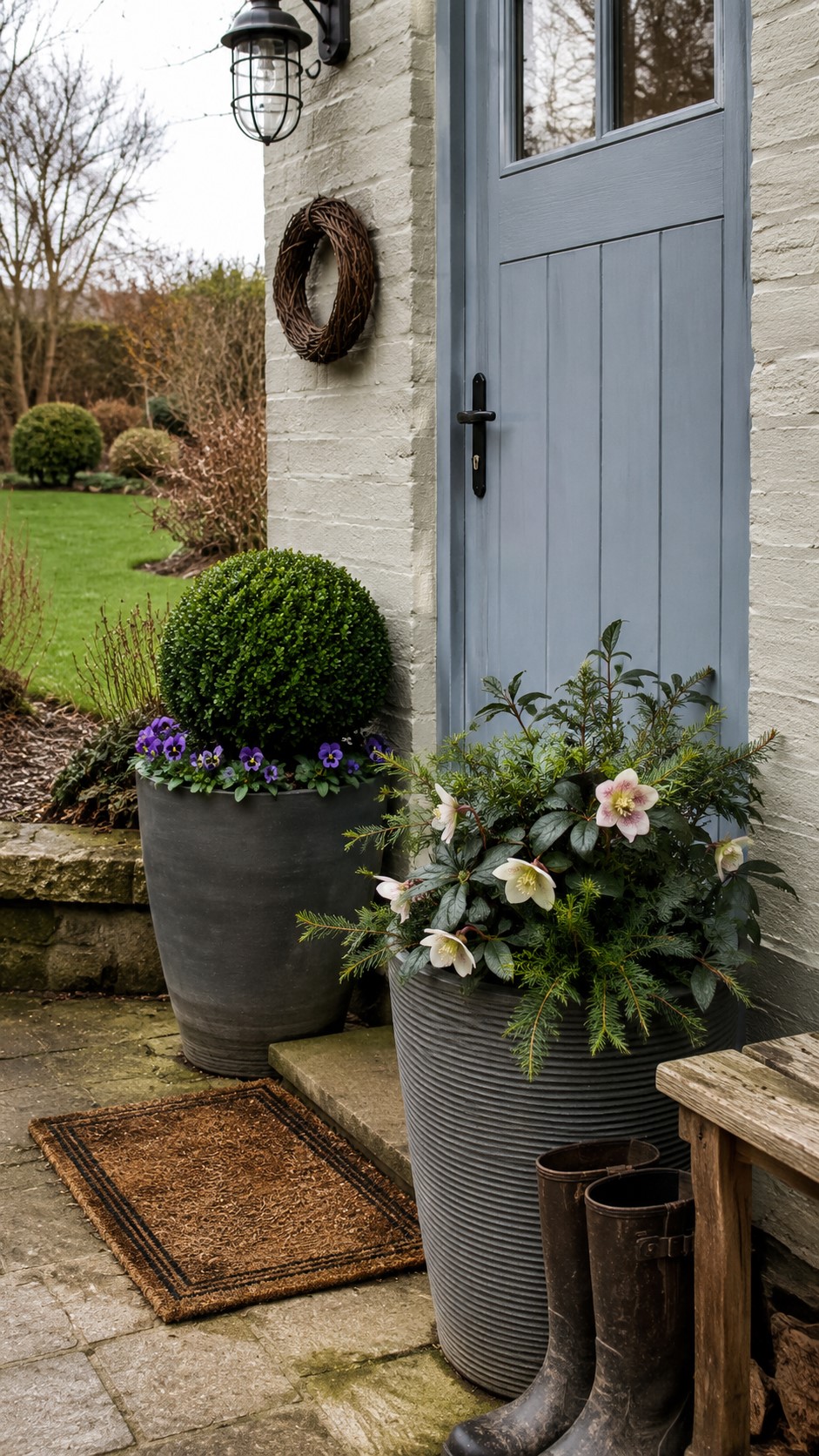
Low-maintenance winter flowers are easier to manage when they’re concentrated in a few small areas. You can keep an eye on them without turning the whole garden into a seasonal display that needs constant attention.
This also makes watering and tidying simpler. A pair of containers near the house is easier to check than eight small pots scattered across the garden. In borders, group flowering plants close enough to read as one display. Their color will feel stronger, and any spent blooms or damaged foliage can be dealt with in one place when you have a spare few minutes.
Pair Winter Flowering Plants With Evergreen Foliage
Winter flowering plants look better when they have something solid behind them. Evergreen foliage gives flowers a background and keeps the space looking useful after the blooms fade.
A hellebore under an evergreen shrub, for example, can make more visual sense than a lone flowering plant surrounded by bare soil. The same idea works in containers. Use one permanent evergreen as the main plant, then add a smaller amount of seasonal color around it. When the flowers finish, you’re replacing only part of the display rather than emptying the whole pot and starting again.
Choose Winter Plants for Pots Outdoors Without Adding More Jobs
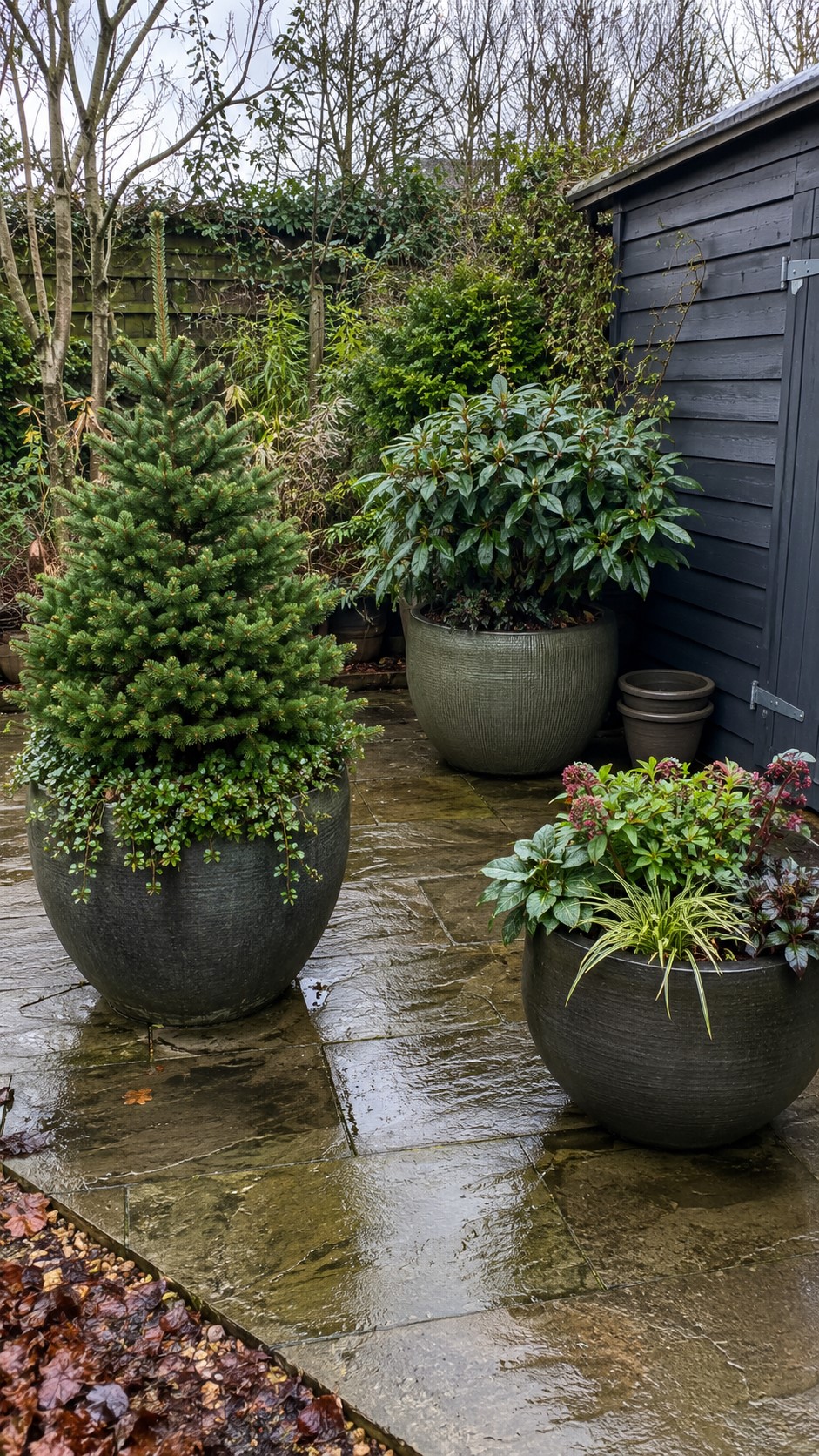
Winter plants for pots outdoors can be wonderfully practical, especially in small gardens, patios and entrances. Containers also come with a catch. Their roots are more exposed to temperature changes and the compost can swing between soggy and dry much faster than soil in a border.
The solution isn’t to avoid pots. It’s to use fewer, better-planned containers. One or two generously sized pots can be easier to manage than a crowd of small ones. They hold moisture more steadily and give roots more protection. Choose frost-resistant containers with good drainage, then fill them with plants that want similar conditions. That alone removes a lot of unnecessary checking.
Winter Container Plants Need the Right Pot First
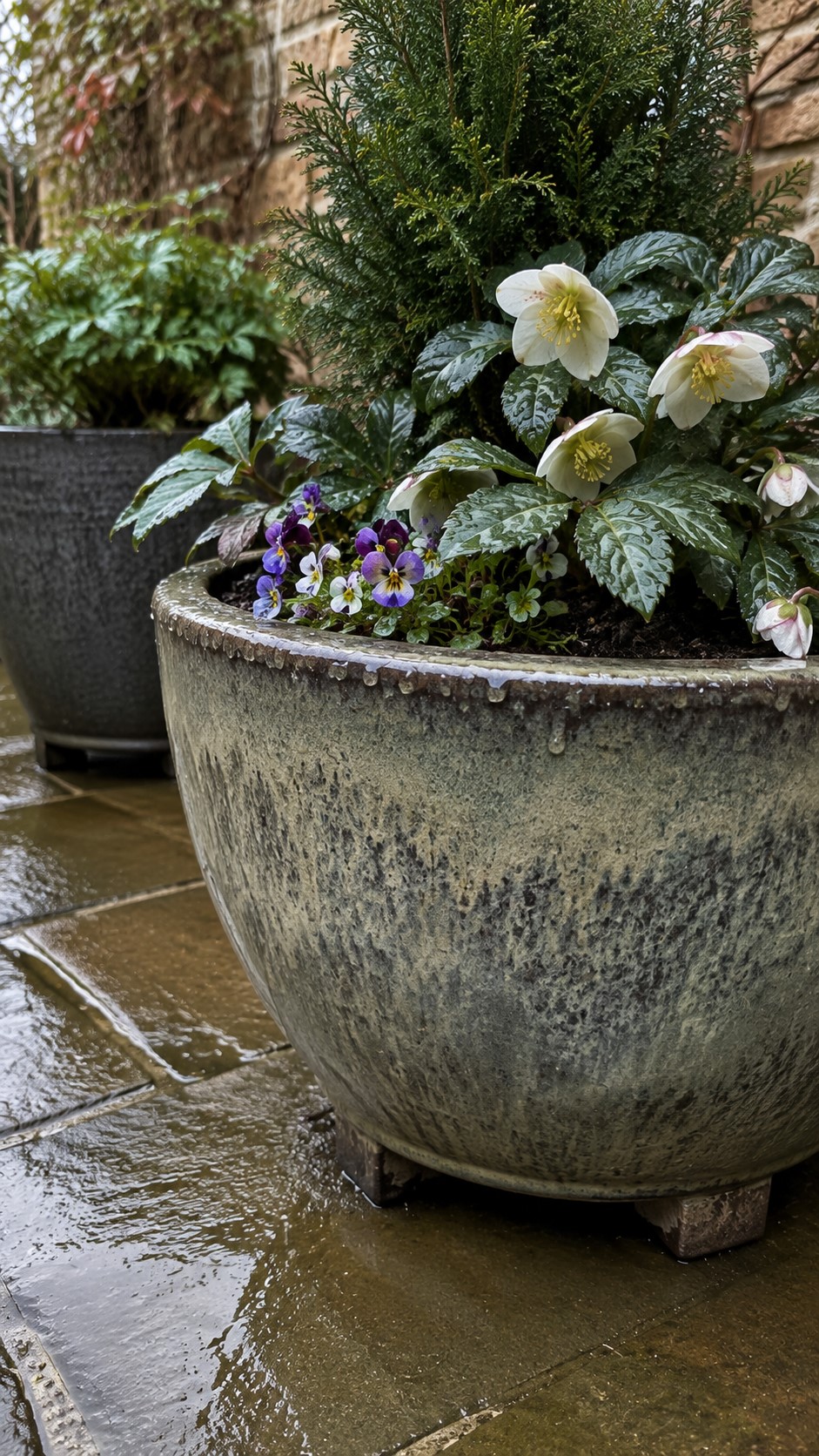
Winter container plants can struggle even when the plant itself is hardy if the pot is poorly suited to cold, wet weather. Drainage is often the biggest issue.
Make sure excess water can escape and avoid leaving containers sitting in water for long periods. Pots raised slightly off the ground can drain more freely, especially during wet winters. Larger containers usually give roots more insulation than tiny pots and they don’t dry as quickly during bright, windy spells. A good container setup buys you breathing room. You still check the plants, but you’re less likely to find a problem every time the weather changes.
Group Winter Plants for Pots Outdoors by Similar Needs
Mixing plants with very different needs creates work. One wants damp compost while another prefers it drier. One tolerates shade while its neighbor starts stretching toward the light. You end up trying to keep everyone happy.
For easier winter containers, group plants that prefer similar moisture, light and drainage. An evergreen foliage plant paired with compatible winter flowers is often enough. Keep the planting simple and leave a little space around the crowns for air movement. You’ll spend less time adjusting watering or replacing plants that were never suited to sharing the same pot.
Evergreen Winter Plants Can Stay in Containers for More Than One Season
Using evergreen winter plants as permanent container anchors can save a lot of replanting. A compact conifer, skimmia or suitable evergreen fern can remain in place while smaller seasonal plants change around it.
This gives you a container that still looks like something when flowers finish. It also spreads the work out. Instead of rebuilding every pot twice a year, you might replace only a couple of plants around the edges. Check the mature size before planting so the evergreen won’t overwhelm the container later. A slow-growing choice is often easier for this kind of long-term setup.
Avoid Hidden Work With Supposedly Easy Winter Garden Plants
Some plants look easy until winter exposes the wrong conditions. Cold isn’t always the main problem. Wet soil, harsh wind and repeated freeze-thaw cycles can cause just as much trouble.
A plant suited to the temperature can still fail if its roots sit in water for weeks. Another may tolerate cold well but suffer badly in an exposed position. This is why site matching matters so much for low-maintenance winter gardening. Spend a little time noticing where rain collects, which corners stay shaded and where cold wind cuts through. That information can save you months of trying to fix problems after planting.
Cold Tolerant Plants Still Need Good Winter Drainage
Cold tolerant plants aren’t automatically happy in wet ground. Many tough plants cope with low temperatures far better than they cope with cold, saturated roots.
If a bed stays soggy through winter, choose plants suited to those conditions or improve drainage before planting. In containers, use drainage holes and a suitable potting mix rather than dense garden soil. This is a small bit of preparation that can prevent root problems later. Busy gardeners benefit most from plants that are allowed to grow in conditions they already like, with fewer rescue missions once bad weather arrives.
Low-Maintenance Winter Plants Should Suit the Garden You Have
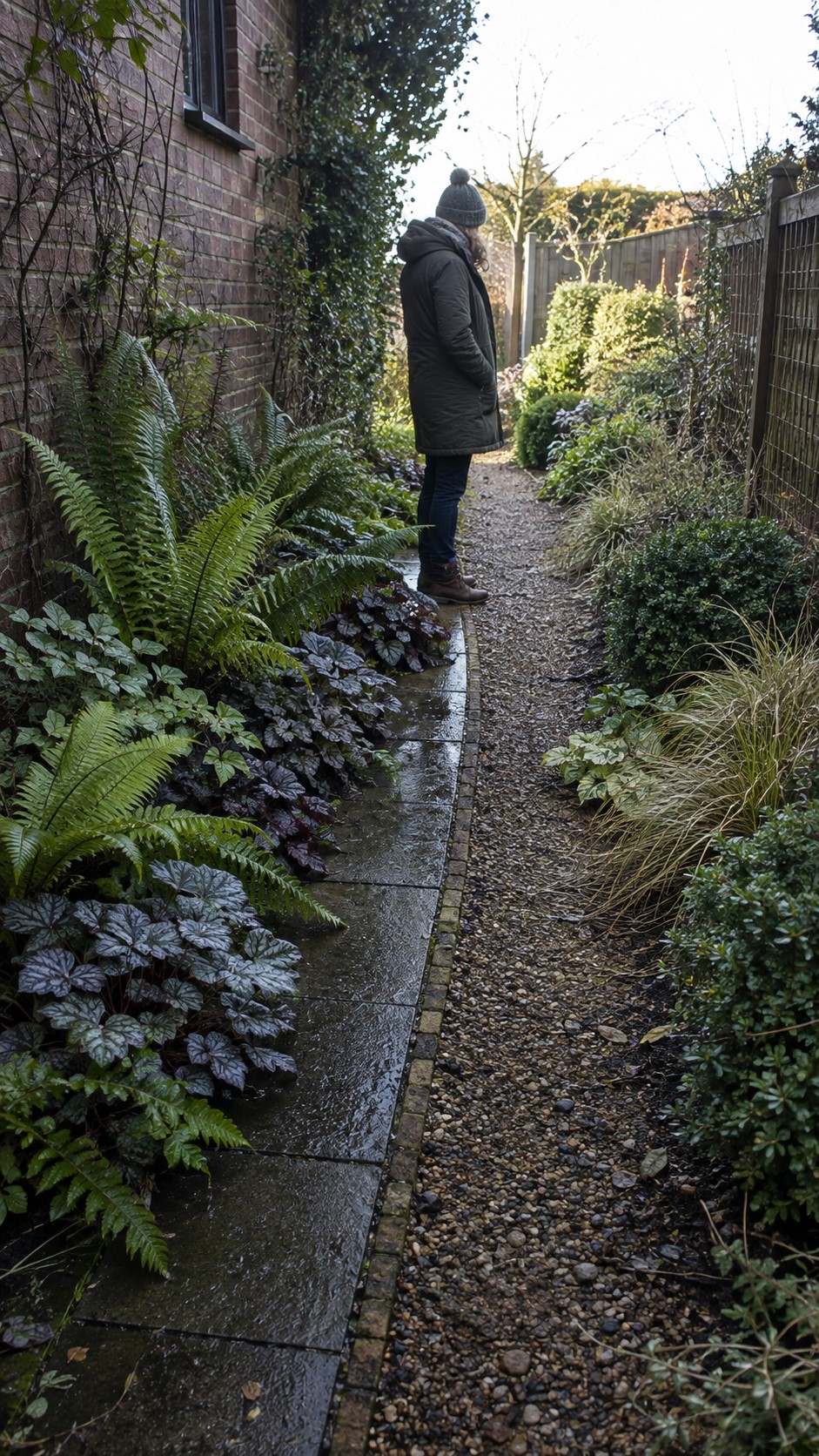
A north-facing courtyard, a windy suburban plot and a sheltered city garden won’t support exactly the same plants. Trying to force one planting idea into every setting usually creates more work.
Pay attention to winter sun, shade, drainage and exposure before shopping. If a corner gets almost no direct light, look for shade-tolerant winter plants. If a front garden takes the full force of cold wind, choose sturdy plants that won’t need constant staking or protection. The easiest garden is usually the one that works with its conditions rather than fighting them week after week.
Create a Simple Routine for Low-Maintenance Winter Garden Plants
Even low-maintenance winter garden plants need the occasional check. The difference is that you shouldn’t have to hover over them.
A simple routine is enough for most established planting. After severe weather, walk through the garden and look for broken stems, toppled pots or standing water. Check containers during dry spells rather than watering automatically. Clear fallen leaves if they smother small evergreen plants or block drainage. That may be all the garden needs for a while. Winter growth is slower, so your maintenance routine can slow down too.
Check Winter Hardy Plants After Rough Weather
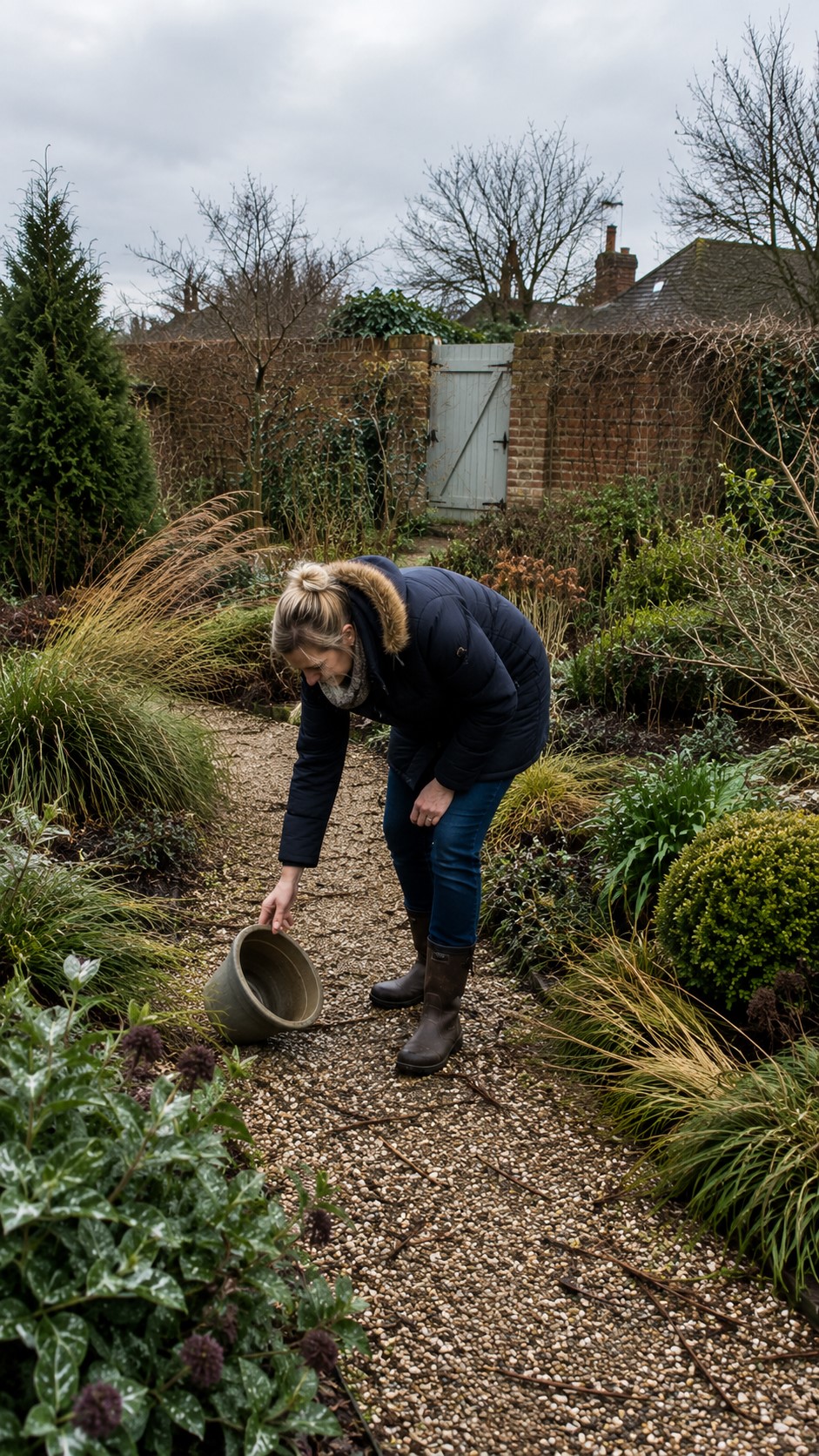
Winter hardy plants are built to cope with cold, but storms and prolonged wet weather can still cause physical damage. A quick inspection after rough conditions is more useful than checking every plant every day.
Look for containers that have blown over, branches bent under snow or water collecting where it shouldn’t. Deal with obvious problems and leave healthy plants alone. This kind of event-based care suits busy schedules because the garden gets attention when something has actually happened. You’re responding to real conditions rather than following a long calendar of jobs.
Water Winter Container Plants According to the Soil
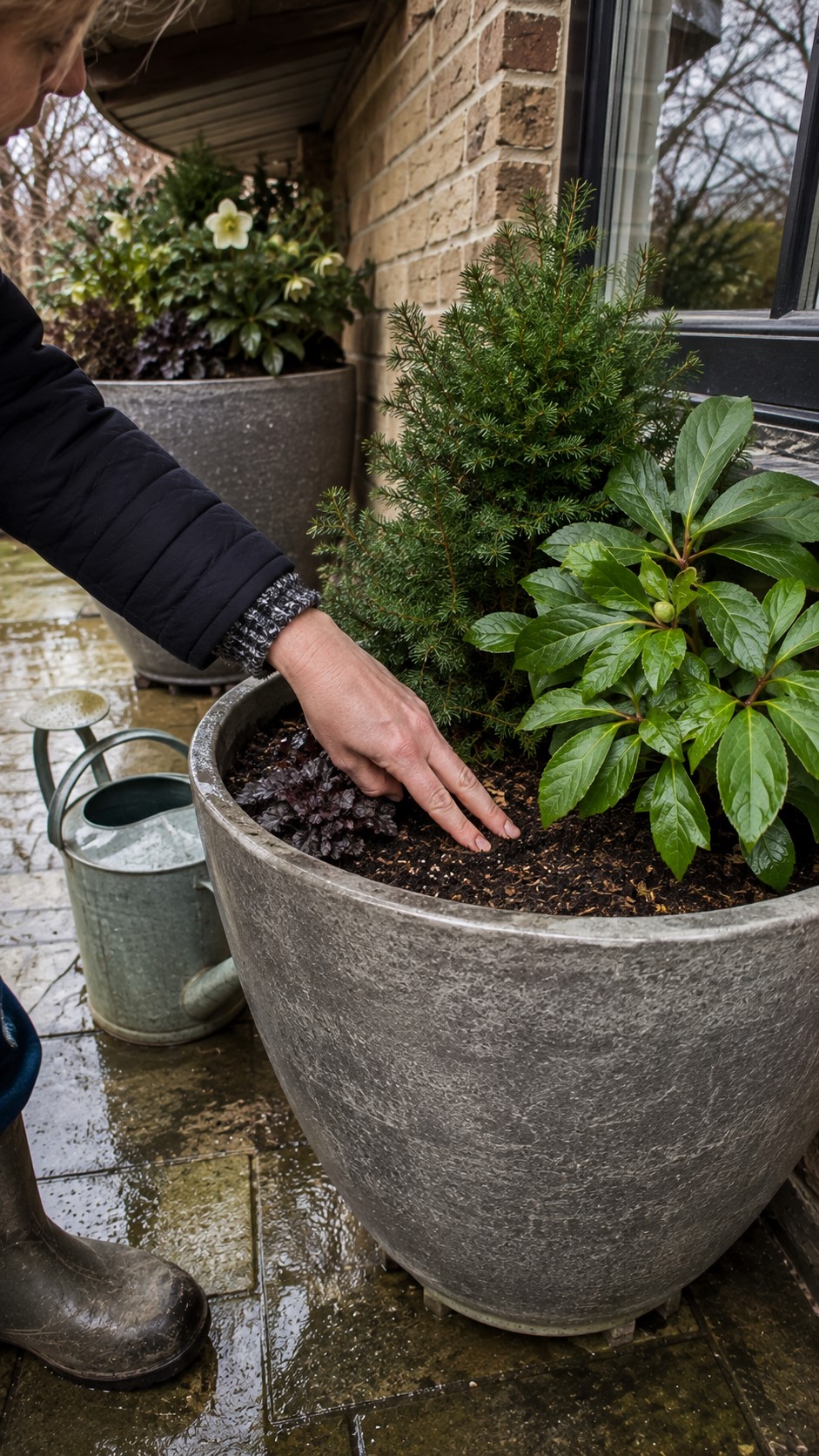
Winter container plants often need less water than they do in summer, but that doesn’t mean they can be forgotten. Sheltered pots under eaves may receive surprisingly little rain while exposed containers can stay wet for days.
Check the soil before watering. Push a finger into the compost or lift a smaller pot to judge its weight. If it’s still damp, leave it alone. This reduces unnecessary watering and lowers the chance of soggy roots. It also keeps winter care simple. You water because the plant needs it, rather than because a particular day of the week has arrived.
Leave Winter Interest Plants Standing a Little Longer
Winter interest plants can save you from one of the biggest seasonal jobs: cutting everything down at once. If dried stems and seed heads still look good and remain sturdy, there’s often no rush to remove them.
Leaving some growth in place keeps borders from looking bare and spreads the cleanup into late winter or early spring. It also means you can tackle the garden in smaller sessions rather than losing an entire weekend to autumn tidying. Remove anything diseased, collapsed or clearly messy, but give the rest a chance to earn its keep through the colder months.
Make Winter Gardening Easier Before Winter Arrives
A low-maintenance winter garden starts with choosing plants that are comfortable where they’re planted. Hardy perennials reduce replacement work. Evergreen winter plants hold the garden together when other growth disappears. A few winter flowers near the house add color where you’ll notice it most.
Containers can fit the same approach if they’re large enough, well drained and planted with species that share similar needs. After that, maintenance becomes a matter of occasional checks rather than constant intervention.
For someone with a busy schedule, that changes the whole feel of winter gardening. You can still have greenery, texture and seasonal color outside the window without spending every free afternoon protecting, replacing or tidying plants. The garden keeps going, even when your week is already full.
