
Farmers Market Pricing: How to Price What You Grow and Make
Selling every jar on your table can still leave you short. The cash looks encouraging until you replace the ingredients, buy another box of jars and remember the hours spent at the stove.
Farmers market pricing needs to cover that work, along with the less visible costs of getting your products in front of customers. A stall fee and a Saturday morning both belong in the calculation.
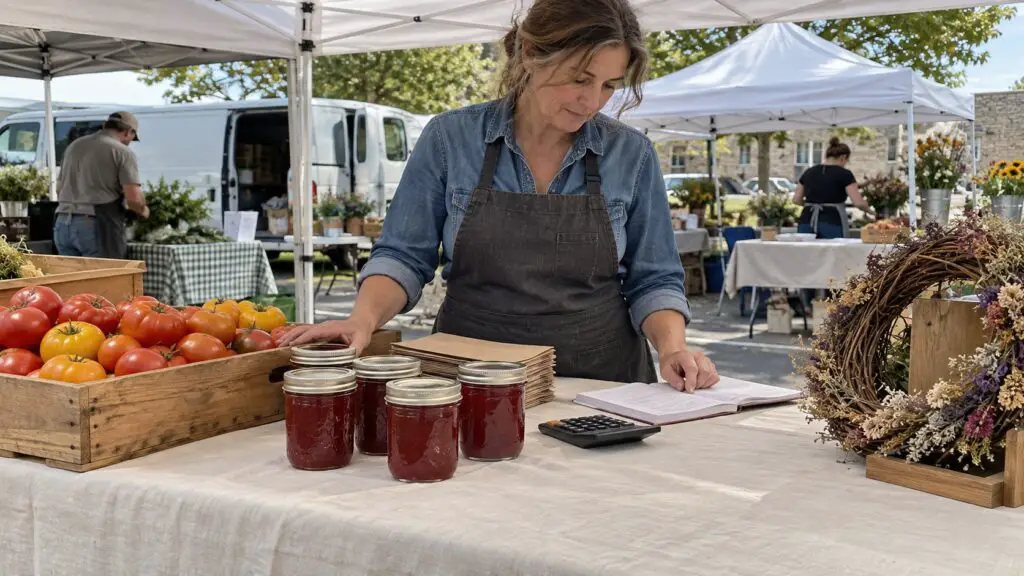
The approach is the same for preserves, fresh vegetables and handmade wreaths: work out what each selling unit costs, allow for profit and check the price against your local market.
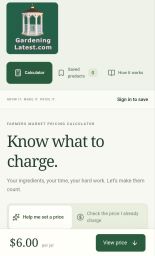
FREE, Fully Featured Pricing Calculator
We’ve built Market & Made, our farmers market pricing calculator, to help you get your pricing right. This comprehesive calculator allows use it to set a new price or check whether the price you already charge leaves enough after your costs and time. It allows you to save your products, use across multiple devices (laptops, cell phones or tablets) so you can work on your prices from home or make adjustments at the market stall!
Start your farmers market pricing with a full cost picture
A rule such as “double the ingredient cost” leaves too much to chance. Two products with identical material costs can take very different amounts of work.
Penn State Extension’s food pricing guide recommends considering the costs of doing business alongside prices for comparable products.1 Start with your own figures before you look across at the next stall.
Count the materials and packaging you use
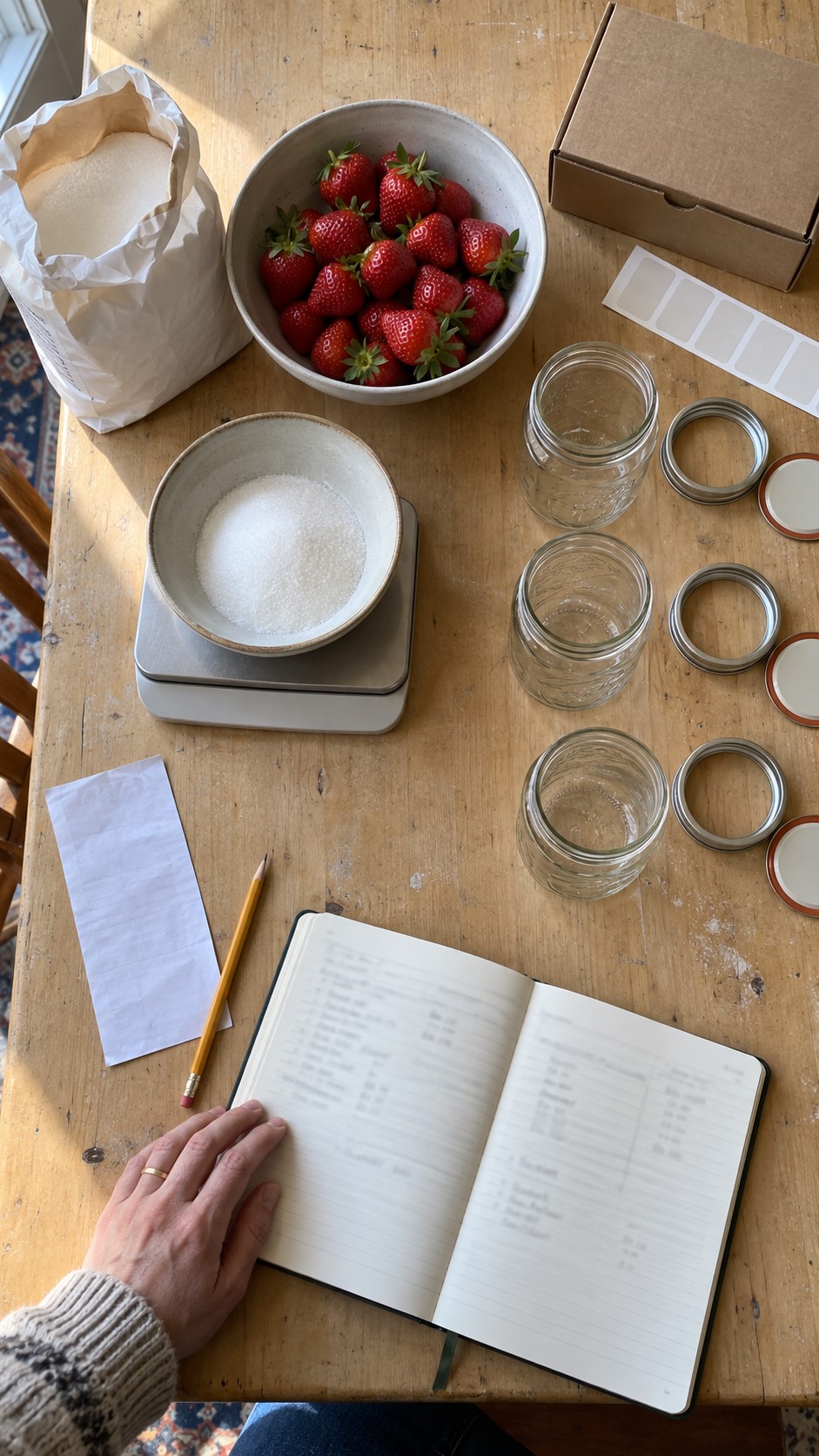
Work with one batch or a defined harvest. For jam, that might be 24 jars. For wreaths, it could be six made together.
Include the ingredients or materials used in that batch, then add the packaging. A jar needs its lid and label. A wreath may need a tag and a protective bag.
Charge the batch for the portion you use. If a $12 roll contains 30 yards of ribbon and you use five yards, the ribbon cost is $2. The rest remains available for another batch.
Homegrown ingredients need a cost allowance too. For fruit you’ve grown, allocate its growing and harvesting costs. If those costs already include your harvesting time, don’t add that time again.
Give your time a dollar value
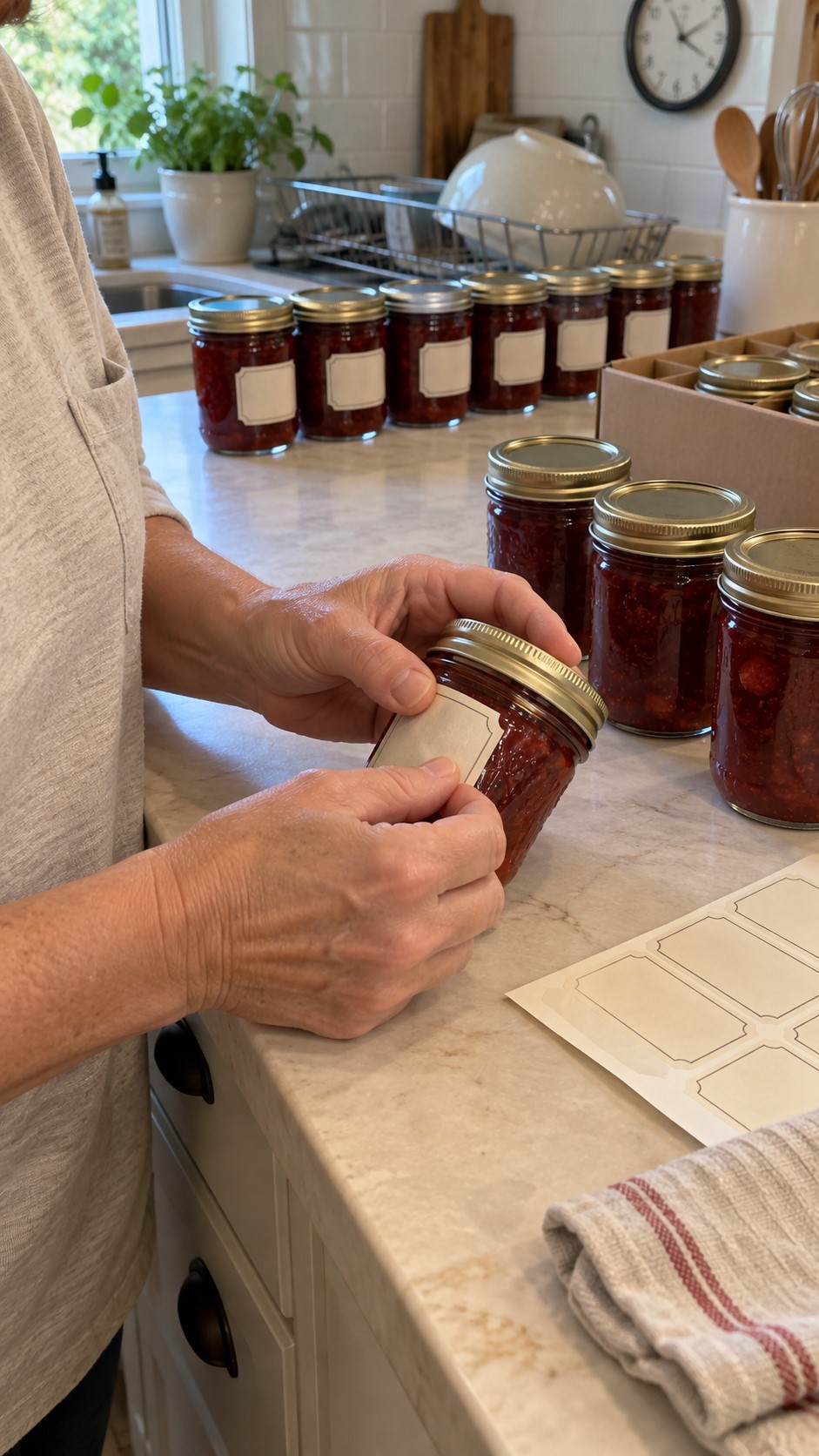
Record preparation, making and cleanup time. Ninety minutes at an illustrative $20 an hour adds $30 to a batch.
Choose an hourly allowance that reflects what you need to earn. Treat it as a cost before you calculate profit. Otherwise, the amount described as “profit” may be the only payment you receive for several hours of work.
Count overlapping work once. If something cools while you label another batch, don’t charge both batches for the same minutes.
Include the cost of being at market
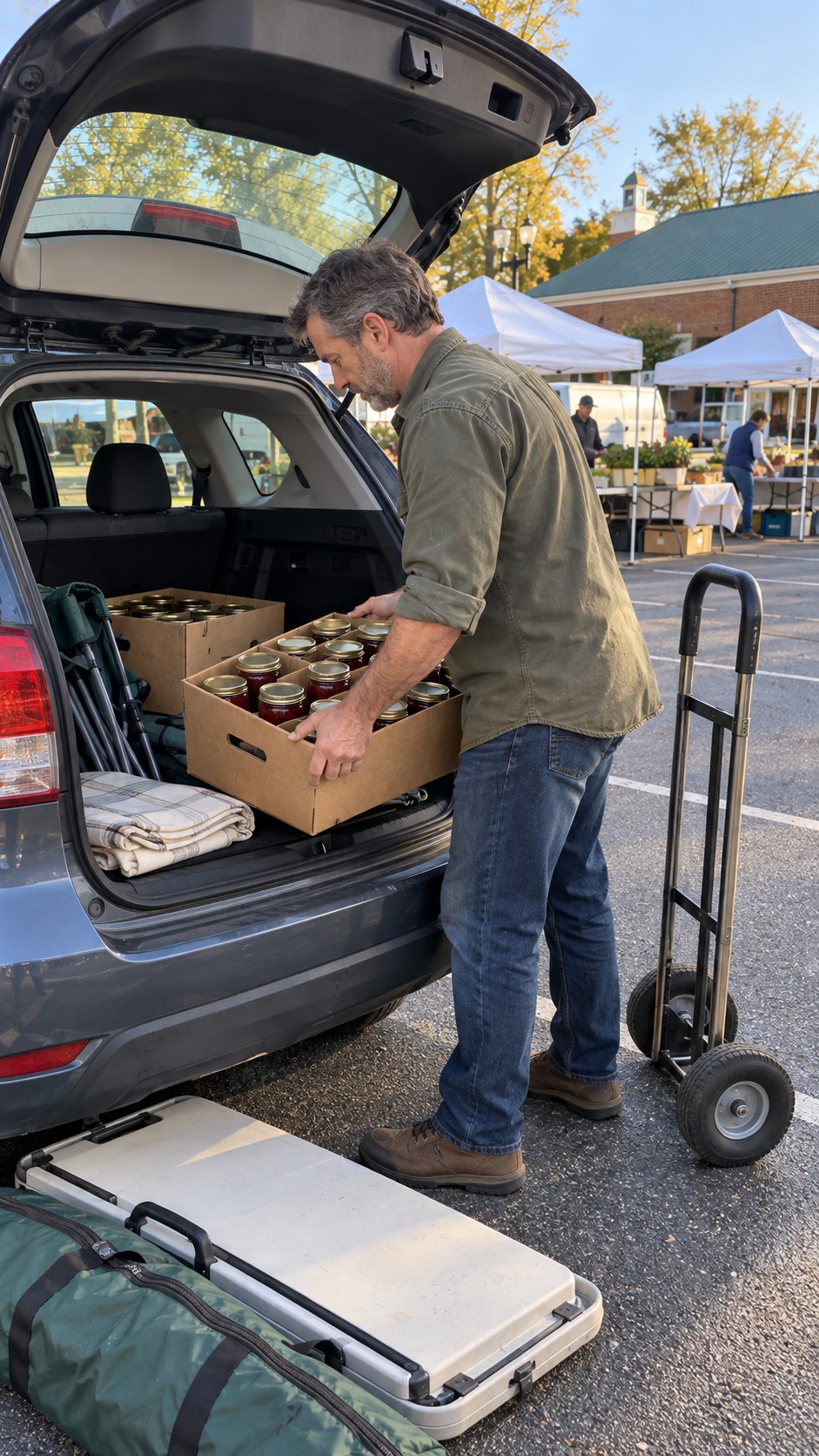
It is important to understand that budgeting guidance includes packing, travel and selling time, as well as booth fees and a share of equipment costs.
Allocate shared expenses across the products you sell. Putting the entire stall fee against your jam and then charging it again against your wreaths counts the same expense twice.
Tools, insurance and other longer-term expenses also need a share in your prices. Spread them across a reasonable period and expected sales volume. One batch shouldn’t have to pay for a table you’ll use all season.
How to price homemade jam: a worked example
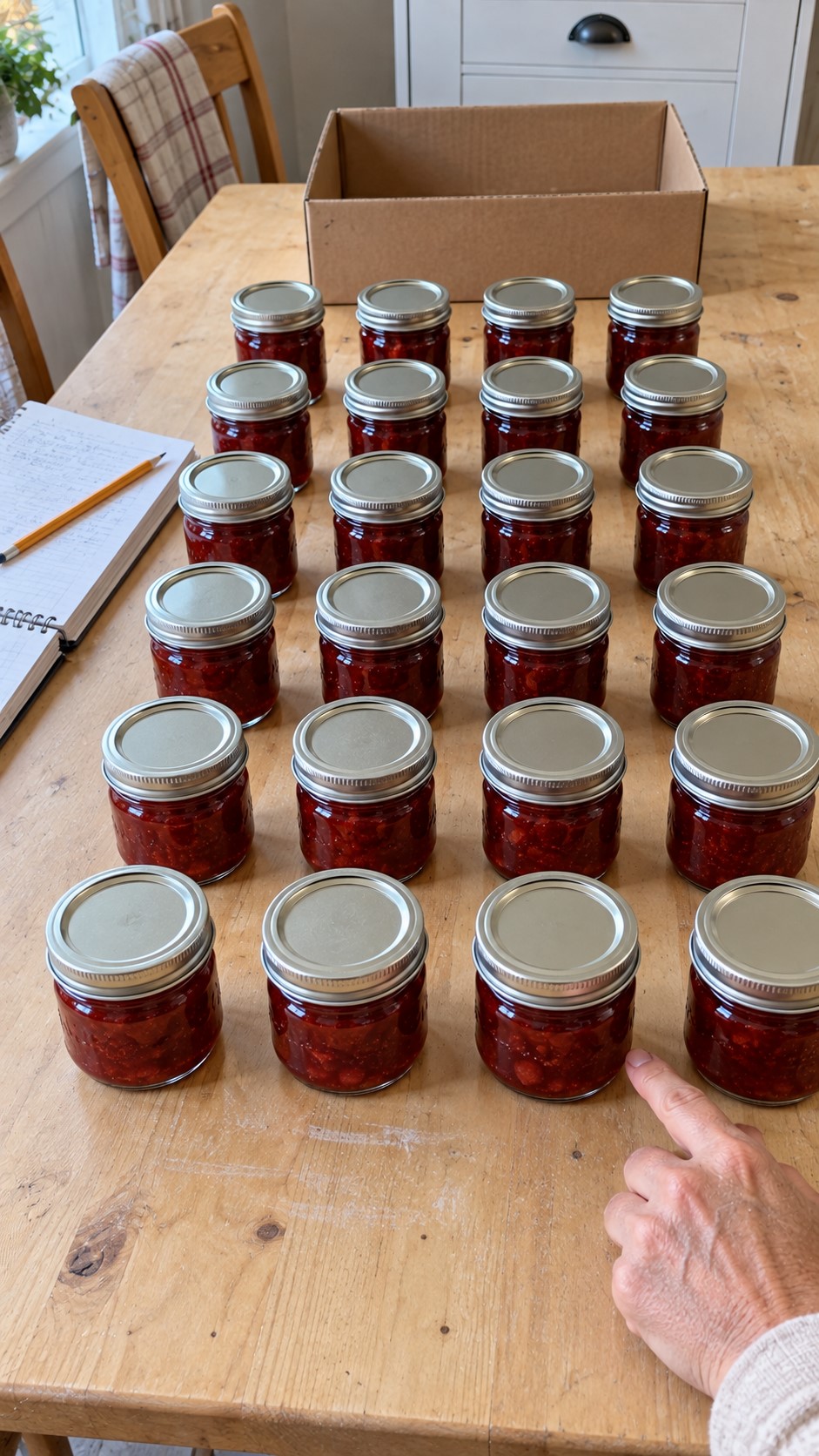
Suppose you make 24 jars of strawberry jam and expect to sell all 24, with none used for samples or lost to spoilage.
These are example inputs, not typical US costs or a recommended selling price. Card fees and sales tax are switched off for this calculation.
| Cost | Amount for the batch |
|---|---|
| Ingredients | $36.00 |
| Jars, lids and labels at $0.75 each | $18.00 |
| Hands-on labor: 90 minutes at $20 an hour | $30.00 |
| Energy | $6.00 |
| Other batch overhead | $6.00 |
| Total production cost | $96.00 |
Divide $96 by 24 jars and the production cost is $4 per jar. Add an assumed market-day allowance of $0.50 per jar and the cost becomes $4.50.
At a $5 selling price, that leaves $0.50 per jar after the included costs. At $6, it leaves $1.50.
Profit margin and markup give different answers
A 25% profit margin means profit accounts for one-quarter of the selling price. With fees and tax excluded, the calculation is:
Selling price = cost per unit ÷ (1 − target margin)
For this example: $4.50 ÷ 0.75 = $6.
Adding 25% to the $4.50 cost gives $5.625 before rounding. That’s a 25% markup, which produces a 20% margin. The percentages describe different relationships.
The University of Maryland Extension explains this cost-margin pricing method. Our calculator does the arithmetic and can account for the payment fees you enter too.
The 25% margin here is an illustration. Your target needs to fit your business, its risks and the price customers will pay. The profit shown is after entered costs and labor allowances, but before income tax and any expenses you’ve left out.
Adjust the costing for produce and handmade goods
The arithmetic stays the same. What you count changes.
Fresh produce: match costs to the harvest you can sell
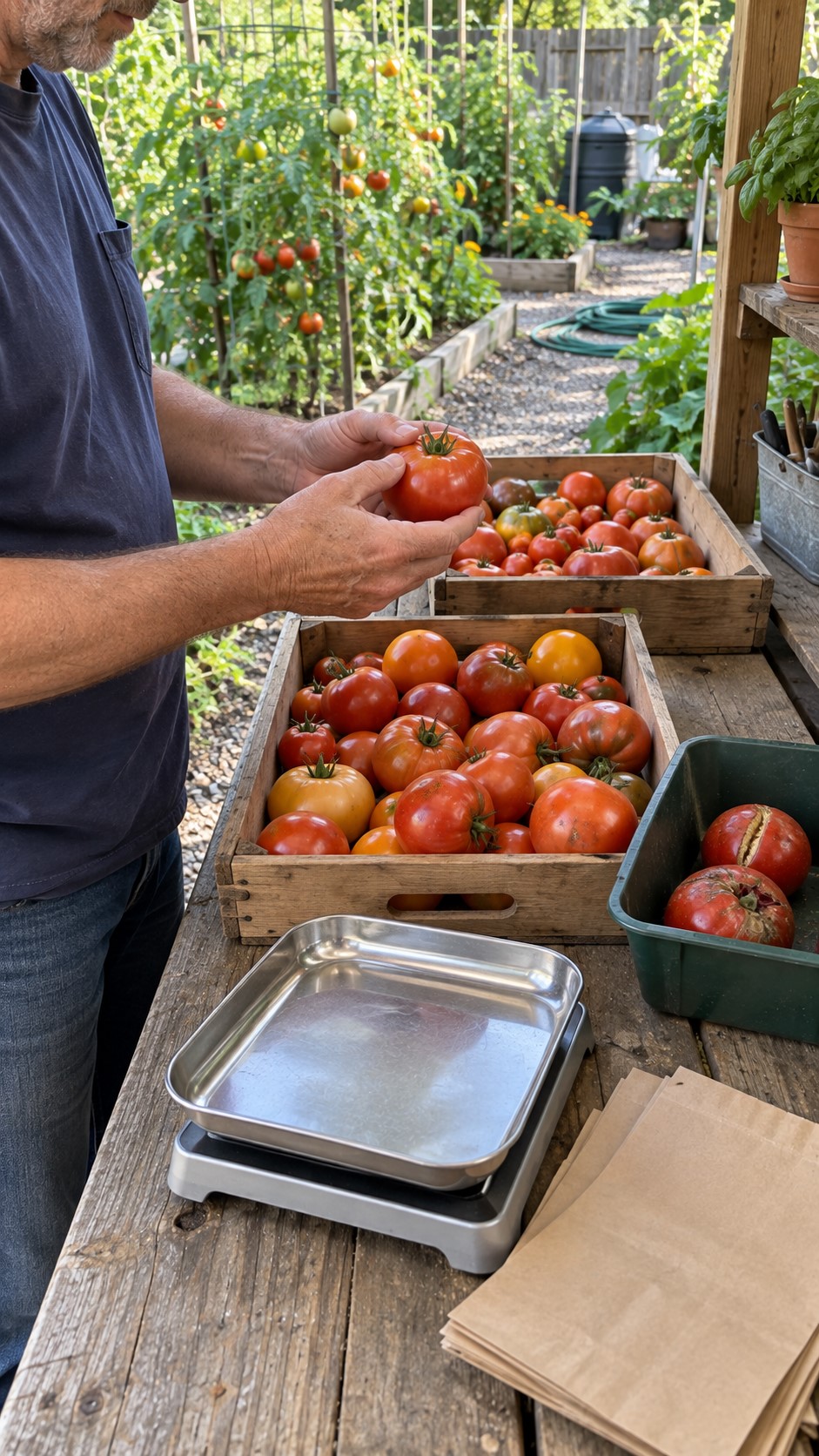
Choose your selling unit first. A pound of tomatoes, a bunch of carrots and a bag of salad leaves each need their own calculation.
Assign growing costs to the harvest they helped produce. Include the relevant share of seeds or plants, growing supplies and water, together with your labor. Keep the time period consistent: an entire season’s costs need the corresponding season’s expected harvest, rather than one picking.
Washing and packing take time too. University of Minnesota Extension includes post-harvest handling and distribution in its analysis of selling costs.3
Allow for produce you expect to discard, but count each loss once. If you’ve already excluded damaged tomatoes from your saleable harvest quantity, don’t subtract them again as spoilage.
Wreaths and other handmade goods: measure the work
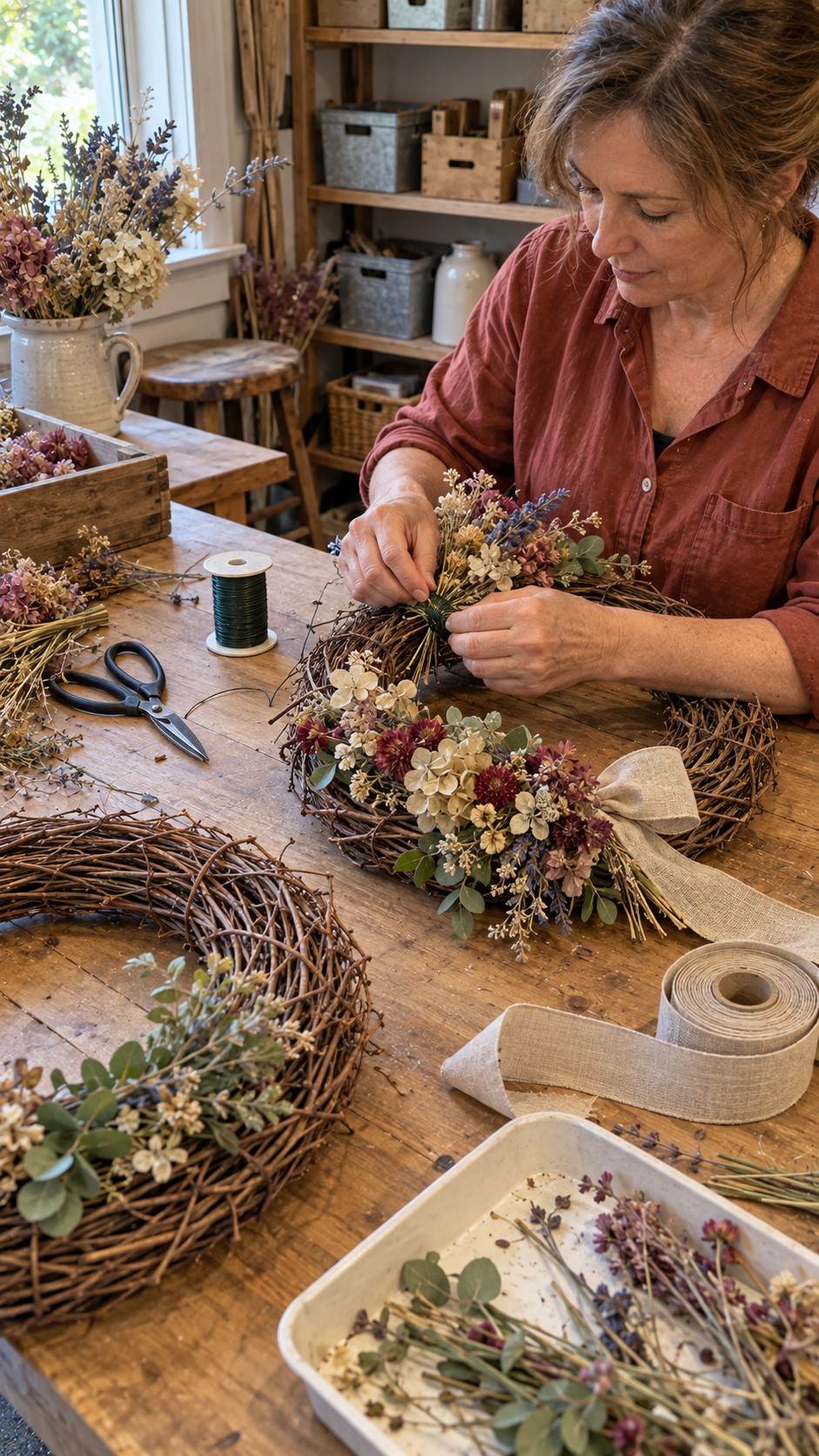
For a door wreath, count the frame, greenery, wire and decorations, plus packaging. Include the time spent collecting materials if you gather them yourself.
Time a finished batch. Small jobs such as trimming stems or attaching tags can disappear from memory by the time you price the result.
If one design takes twice as long as another, calculate it separately. A single flat price for every wreath can hide the work in the more demanding designs.
Stock you can sell later remains saleable stock. A wreath carried home after a quiet morning isn’t automatically waste. Allow for losses when deterioration or a short selling season makes them likely.
Compare local prices without copying them
Once you know your costs, check comparable products at the markets where you plan to sell. Compare the same quantities and notice differences in ingredients, finish and presentation.
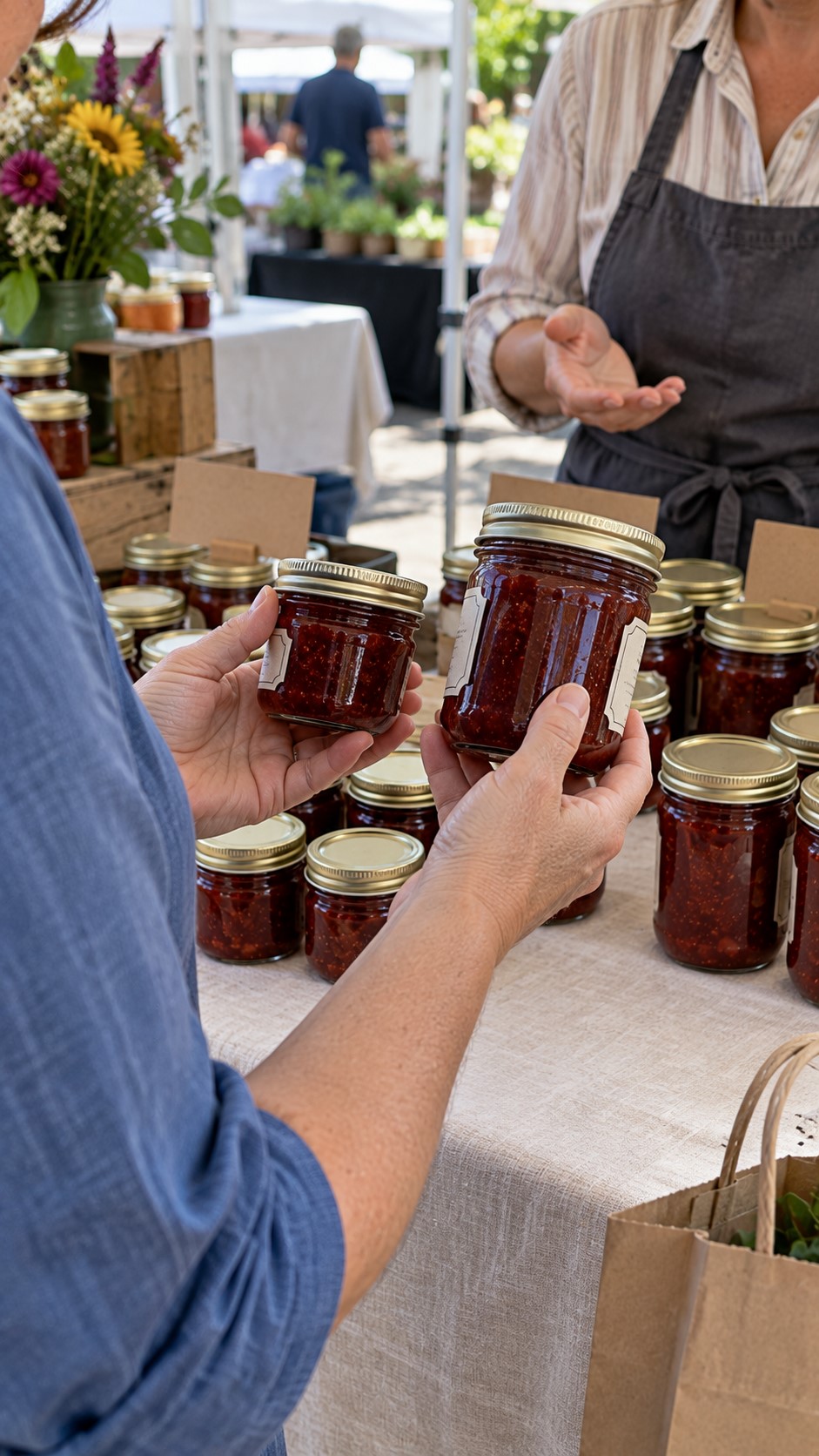
A large jar and a small jar aren’t useful price comparisons until you account for their contents. The same applies to a plain wreath and one with more materials and labor.
Penn State Extension’s retail pricing guidance ties pricing to both costs and customer perceptions. Your neighbor’s price tells you something about the market.2 It doesn’t tell you what your product costs to make.
If customers won’t pay a price that covers your costs, revisit the product. A simpler design, different pack size or less expensive packaging may help. Sometimes a product doesn’t earn its place on the table.
For a higher-priced item, make the difference easy to see. Describe the fruit variety, the jar’s contents or the materials in a wreath. Give shoppers specific information and a clearly displayed price.
How to use our farmers market pricing calculator
Open Market & Made in your phone, tablet or computer browser. The calculator uses US dollars. You don’t need an App Store download or an account to calculate a price.
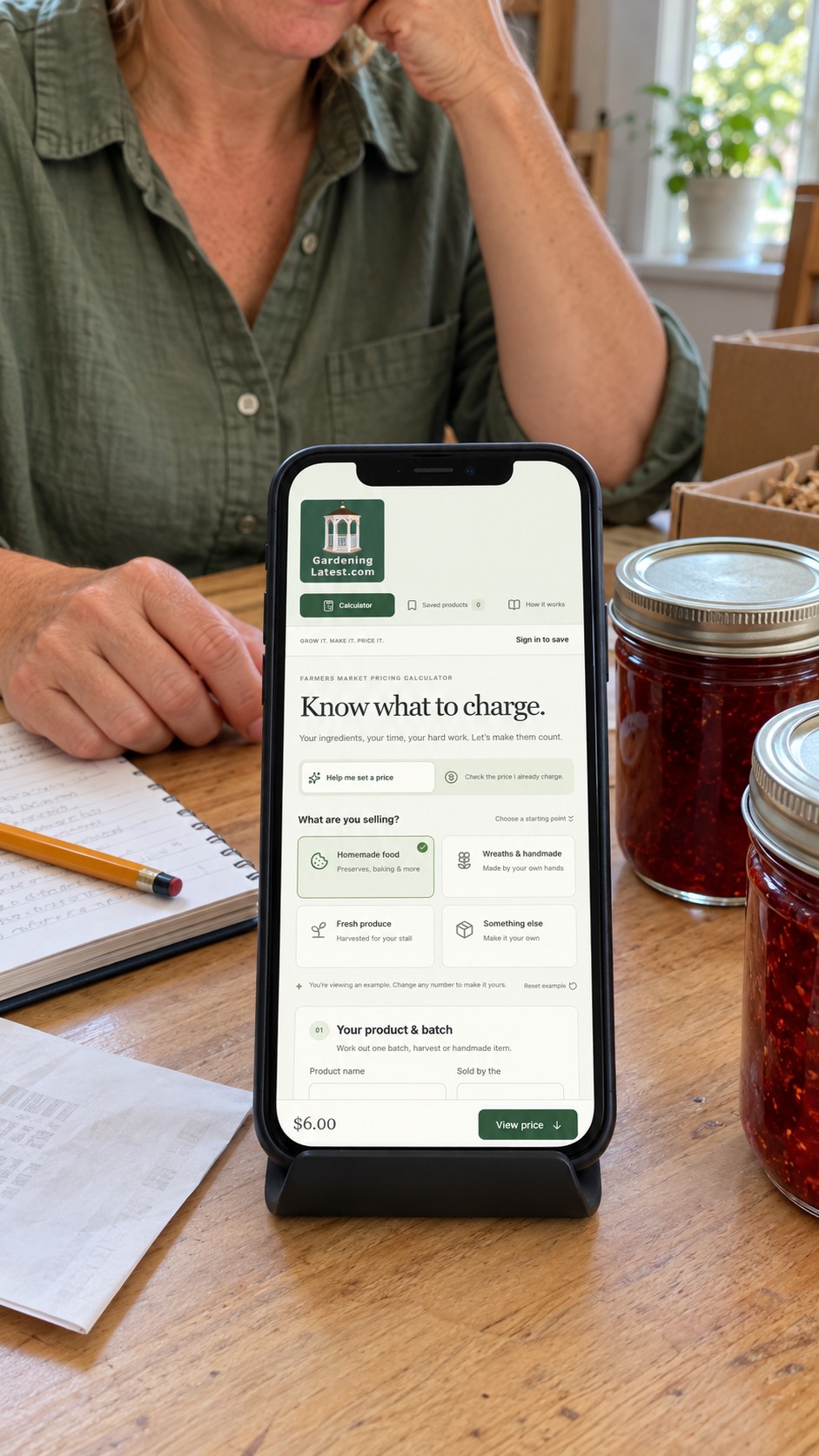
Keep a few receipts nearby and start with one product.
1. Choose whether to set a price or check one
Select “Help me set a price” for a new product or a fresh calculation.
Choose “Check the price I already charge” to enter your current selling price and see the estimated profit or loss after your costs.
Pick a product category: Homemade food, Wreaths & handmade, Fresh produce or Something else. Replace the example figures with your own. The examples demonstrate the calculator, so don’t treat their costs or targets as recommendations.
2. Define your product and batch
Enter a product name and select how you sell it, such as by the jar, wreath, bunch or pound.
Add the finished quantity. Keep every entry in the same selling unit. If you sell cookies by the dozen, a batch of 48 cookies makes four selling units.
Use “Samples or expected spoilage” for units that won’t bring in a sale. The calculator spreads production costs across the units left to sell. Leave out stock you expect to sell at a later market.
3. Enter materials, packaging and time
Under “Materials & packaging,” choose “Enter a total” if you’ve already added up the batch costs. “List each item” lets you enter the pack cost, pack size and amount used for individual materials.
Use matching units for pack size and amount used. The calculator doesn’t convert pounds to ounces or yards to feet. Weight ounces and fluid ounces aren’t interchangeable either.
Enter packaging cost per selling unit. Under “Pay yourself for your time,” add your hands-on minutes and hourly pay.
Then fill in “The other costs,” including energy and this batch’s share of overhead. Put each expense in once.
4. Add your share of market costs and any fees
Enter a market-day allowance per unit, or select “Help me work this out.”
The helper asks for stall fees, travel costs and the time spent traveling, setting up and selling. You also enter the share assigned to this product and how many units of it you expect to sell at one market.
Use a realistic sales estimate. Assigning costs across an optimistic sales volume makes each unit look cheaper. Across your product calculations, the shares of shared market costs should total 100%.
Open “Payment fees & sales tax” if relevant. Use your actual payment provider’s rates, the share of sales paid by card and average items per transaction.
Enter sales tax only when you know the rate and treatment that apply. You can show it as included in the price or added at checkout. The calculator excludes collected tax from revenue and profit. It doesn’t decide which products are taxable or permitted for sale.
5. Read the result and save your product
In price-setting mode, choose “A profit margin” or “A dollar profit per unit.” You can round the suggested price upward to the nearest cent, quarter, half-dollar or dollar.
Check the profit per unit and “Price to cover included costs,” as well as the suggested selling price. The cost-covering figure assumes the costs and sales estimates you entered. It can’t guarantee that a market day will pay for itself.
Select “Save this product” to keep the calculation. Without signing in, saved products stay in that browser on that device. Optional ChatGPT sign-in allows account saving for access on other devices.
In “Saved products,” use “Download backup” to keep a copy you can import again. Browser data can be cleared. If you edit a product offline, open it and save again online to update the account copy.
You can also print results or download them as a CSV for your records. The CSV contains the results, rather than a separate spreadsheet calculator with formulas.
Check what a bundle discount costs you
A discount comes out of the money left after costs.
Return to the jam example, with a $6 selling price and $4.50 cost per jar. Selling three jars for $18 leaves $4.50 after those costs. Offering three for $16 leaves $2.50.
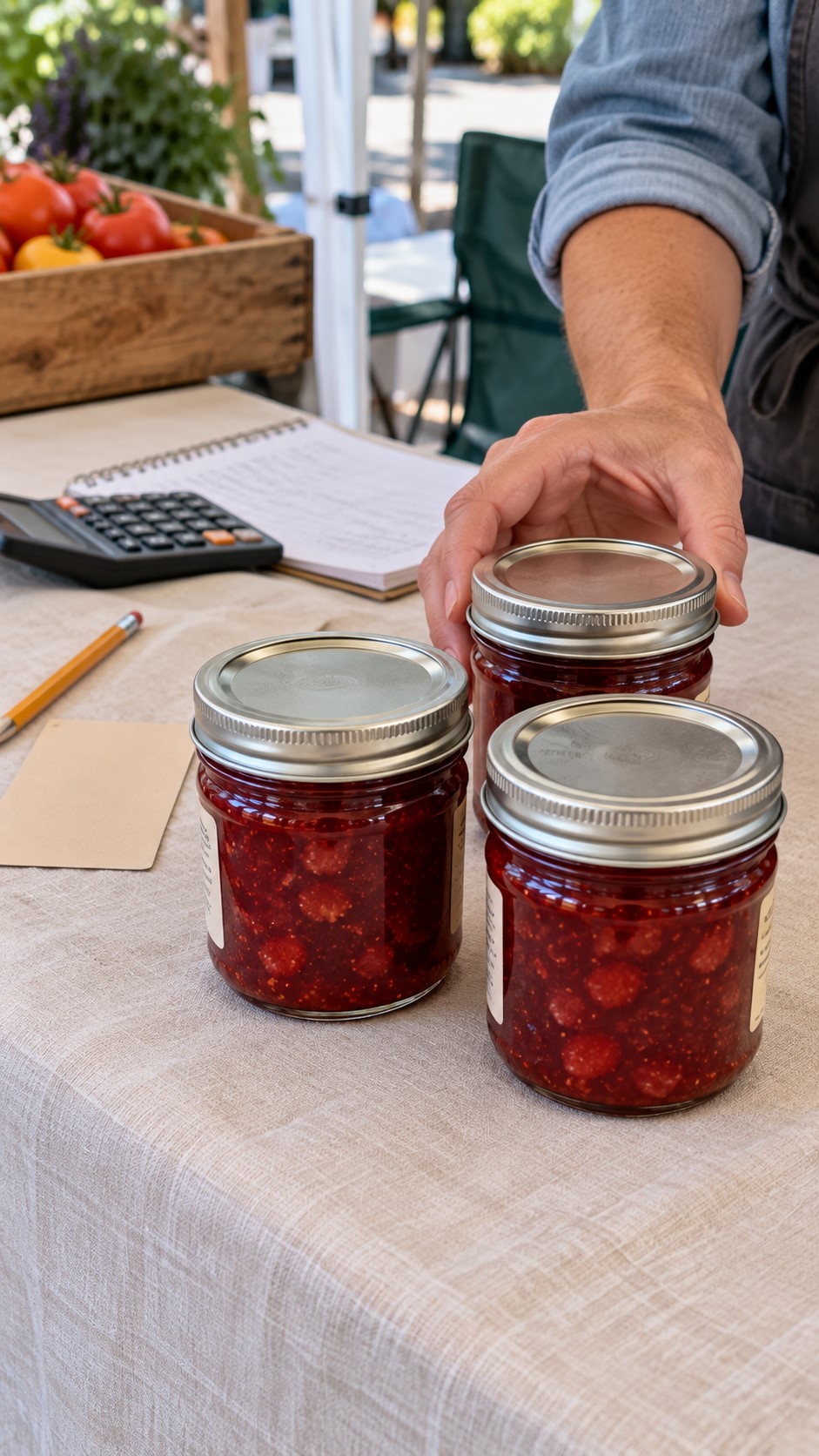
You’ve reduced the customer’s bill by $2 and your profit on those three jars by the same amount. Card fees and tax are still excluded in this example.
Use the calculator’s “Does that bundle still pay?” section before writing a special-offer sign. Enter the number of units and the bundle price. Its fee calculation assumes one bundle per transaction.
An end-of-market discount may make sense for produce that would otherwise spoil. Goods you can sell later deserve a different decision. Check the numbers before making a discount your usual offer.
Give your next price a proper check
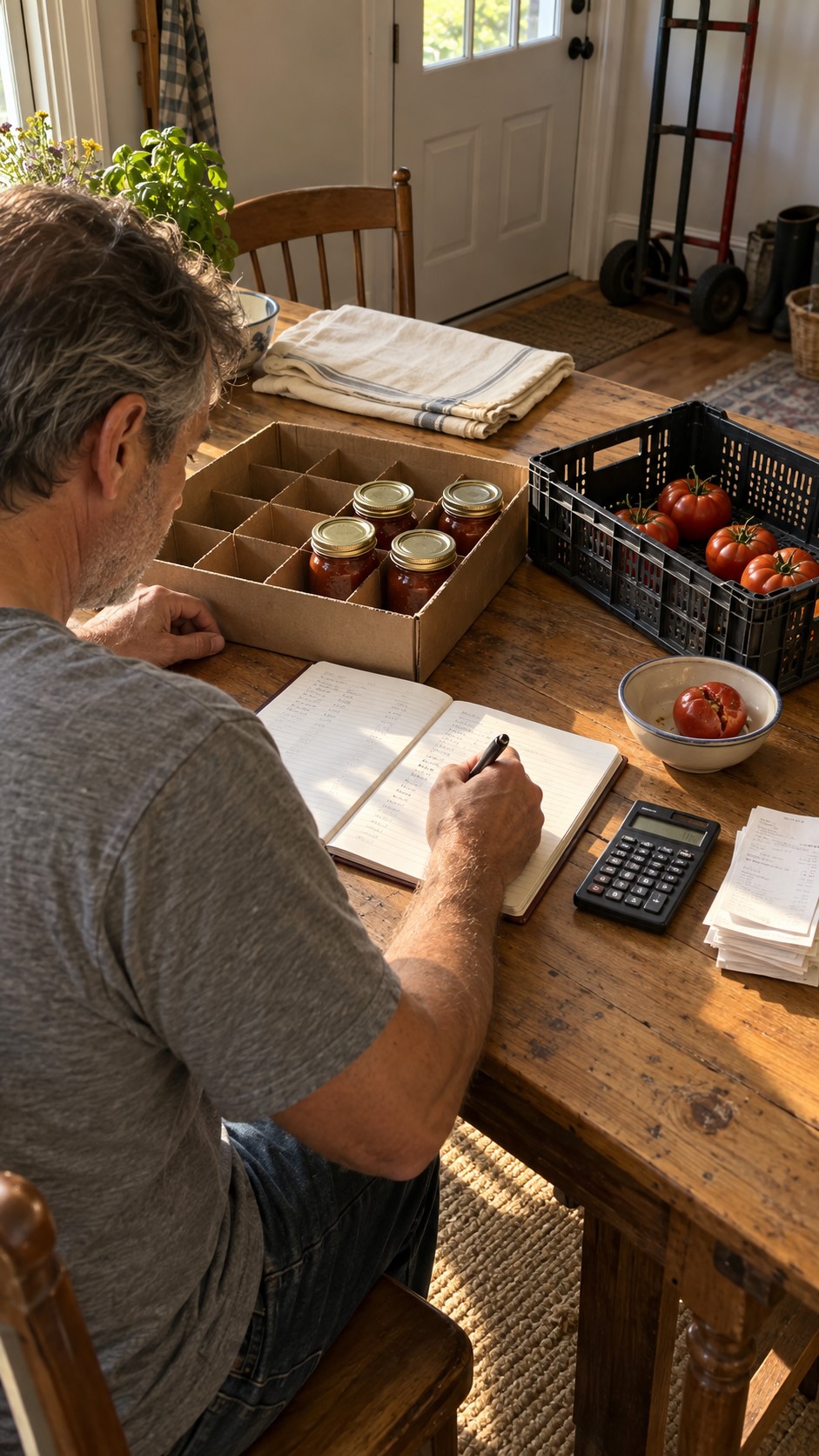
After each market, record what sold, what you brought home and what you discarded. Compare actual selling time and costs with your estimates. Update the calculation when ingredient prices change or a product takes longer than expected.
Start with the item you sell most often. Gather its receipts, measure the work and check its price in Market & Made.
You may keep the price. You may change the size or make a different product. Either way, the next price card will have some figures behind it.
Notes:
- https://extension.psu.edu/food-for-profit-price-and-pricing
- https://extension.psu.edu/retail-farm-market-pricing
- https://extension.umn.edu/agriculture/farm-operations-and-systems/agricultural-business-management/marketing-farm-products/marketing-mix-analysis-for-farm-operators
