
What to Grow in an Unheated Polytunnel in Winter
An unheated polytunnel can still earn its keep when the rest of the garden slows down. A few lettuce leaves tucked into a sandwich or a handful of spinach stirred into supper can make a cold trip down the path feel worthwhile. You don’t need to fill every bed to enjoy those pickings. A small patch of well-chosen winter polytunnel crops gives you somewhere useful to start, with space to learn what works in your garden.
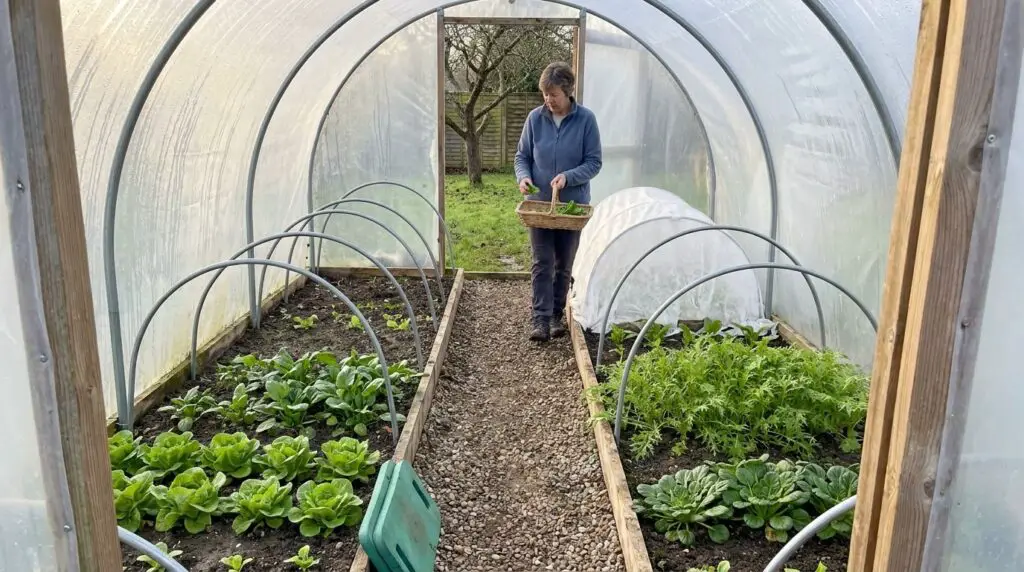
Winter lettuce, spinach and suitable Asian greens offer a good mix of flavours without demanding a heater. The main work begins while there’s still warmth in the soil and enough daylight for plants to put on leaves. Once winter settles in, your job shifts towards protecting that growth and picking at a pace the plants can manage. Some weeks will bring enough for a salad. Others will call for patience.

Download FREE Polytunnel Winter Guide
This FREE, practical 38-page guide will help you keep your polytunnel productive through winter. Discover crop choices, watering advice, frost protection and a simple fleece system, with photos, clear diagrams, growing schedules and handy checklists to help you plan and protect your harvests.
What to Expect From Winter Polytunnel Crops
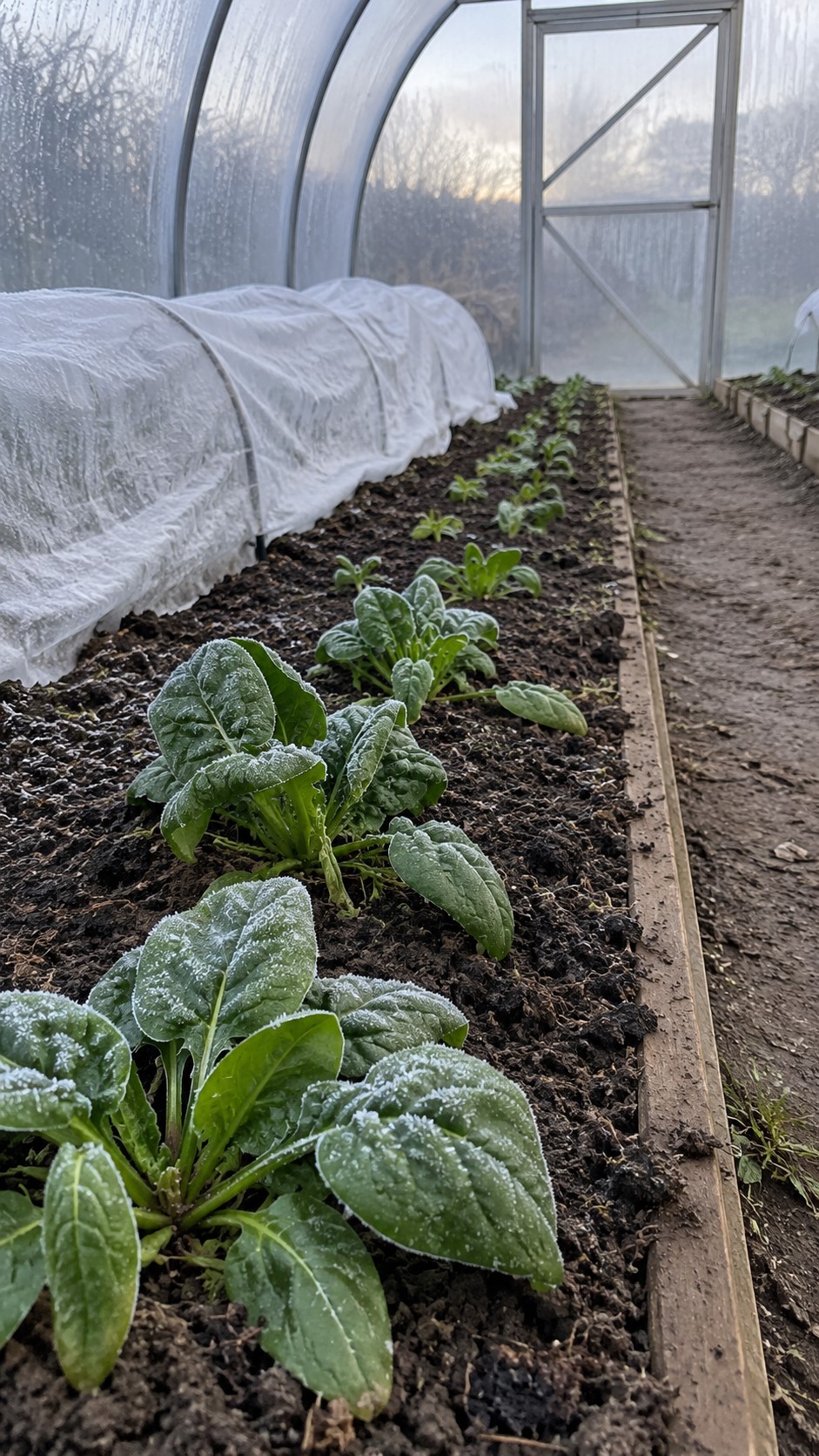
A polytunnel keeps driving rain off the beds and shelters foliage from wind, while sunshine warms the space inside. That protection helps, but an unheated tunnel can still freeze. During a long cold spell, the plants may spend hours below freezing despite looking sheltered behind their plastic cover. A sunny, sheltered garden in a mild district offers different growing conditions from an exposed northern plot, so winter harvests will vary even when gardeners sow the same seed. Survival and a usable harvest are separate things too. A small plant can remain alive through winter while producing almost nothing you can spare for the kitchen.
Daylight sets another limit. When days shorten to around ten hours, many leafy crops make little new growth, particularly when temperatures are low. Think of this as a planning guide rather than a precise switch. Leaves grown during autumn provide much of what you’ll pick through the darkest weeks. Small plants that enter winter with only a few leaves may survive and grow again in spring, but they won’t provide the same winter harvest as established plants.
Choosing Winter Lettuce, Spinach and Asian Greens for Your Polytunnel
Winter Lettuce for Picking a Few Leaves at a Time
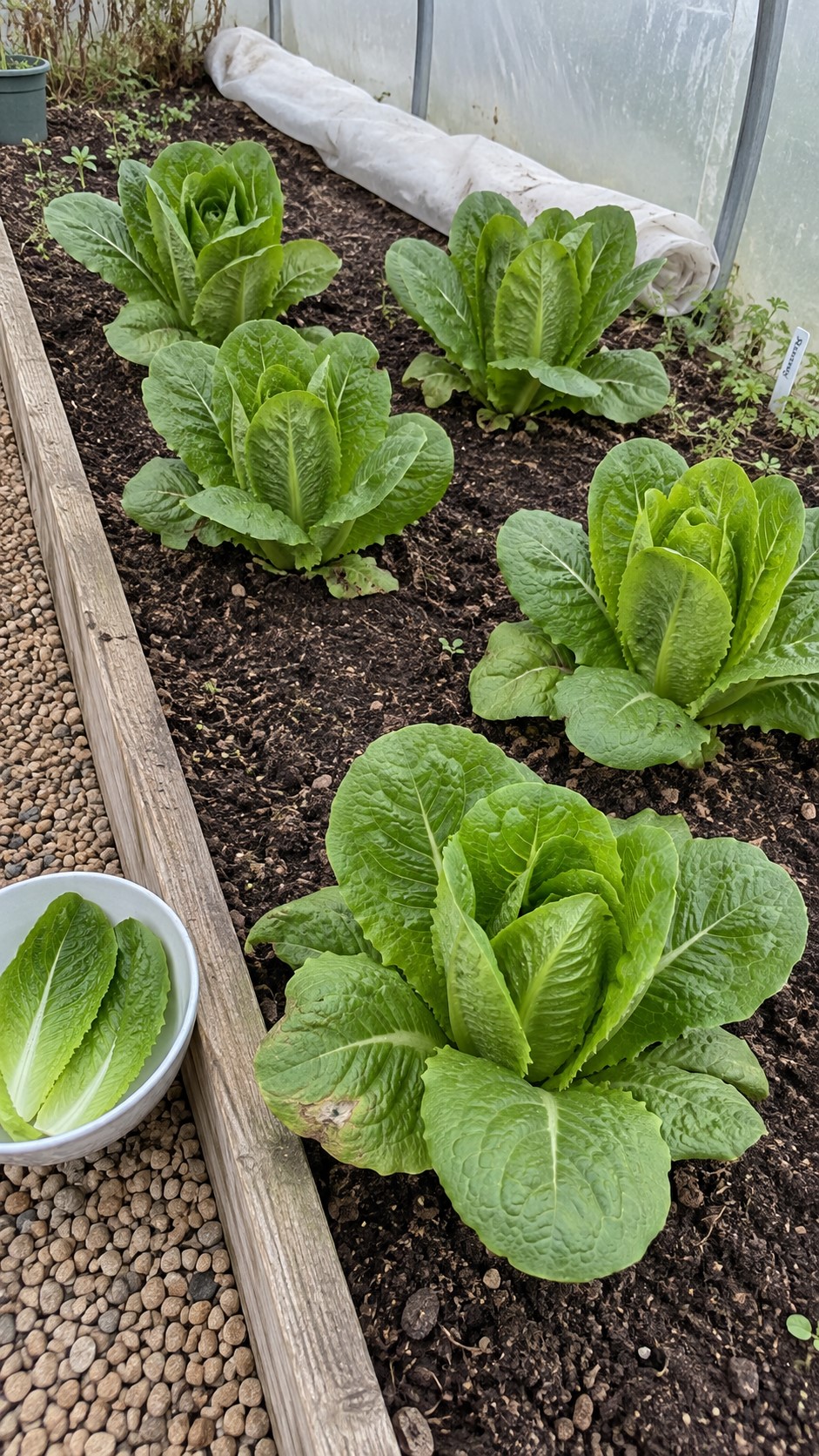
Choose lettuce seed labelled for autumn or winter growing, with guidance for cultivation under cover. Check both the variety and its recommended season. ‘Winter Density’ is one recognised winter variety, although later sowings are often grown for a spring harvest. Read the sowing advice alongside the name. A lettuce described as suitable for overwintering still needs enough growing time if you hope to pick it before spring.
For a household wanting small salads, picking outer leaves is a handy approach. You can gather a little from several plants while leaving their centres to continue growing. Follow the spacing on the packet and leave room to reach between plants without crushing the foliage. Check the lowest leaves as you pick, removing any that have started to decay. A bed you can reach from the path makes these small jobs much easier when the ground outside is wet.
Growing Spinach in Winter Polytunnel Beds
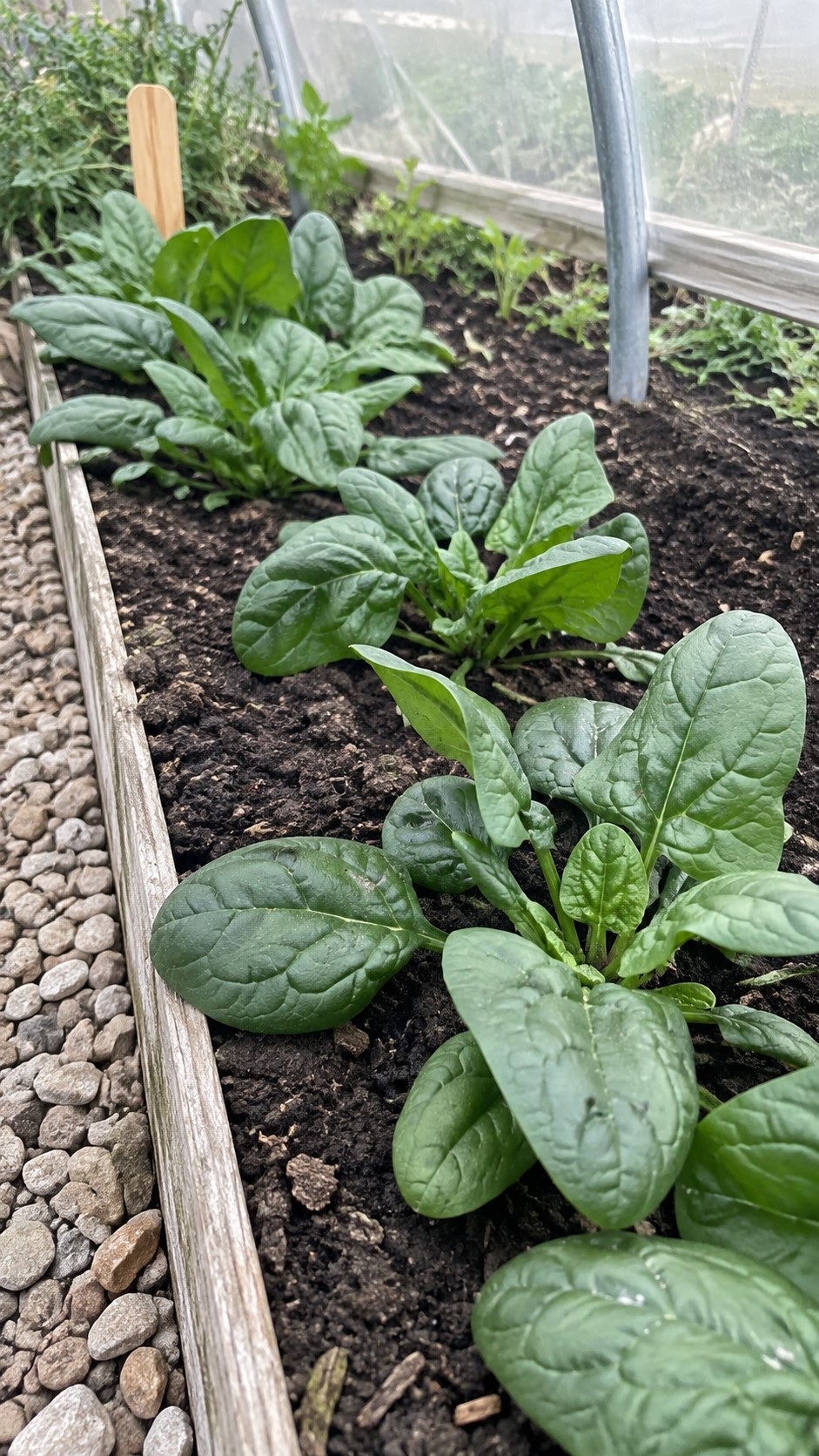
True spinach is a useful partner for winter lettuce because you can eat the young leaves raw or cook the larger ones. Look for varieties recommended for autumn sowing or overwintering. Perpetual spinach is a form of chard, so check the packet if you want true spinach with its softer leaves. The RHS recommends planting autumn-sown spinach in a greenhouse border for winter cropping, with hardy varieties and extra protection suited to the local conditions. If you cook with spinach each week, give it more room than a salad green you haven’t tried.
Sow into prepared soil or start seedlings in modules while other crops occupy the bed. Keep seedlings moving along, planting them before their roots become crowded and handling the root ball with care. Once the plants have enough leaves, pick some of the outer ones and leave the centre intact. Remember how much spinach shrinks in a pan. A short row may supply a handful for an omelette without producing enough for a large cooked side dish.
Mizuna, Tatsoi and Other Asian Greens for Winter
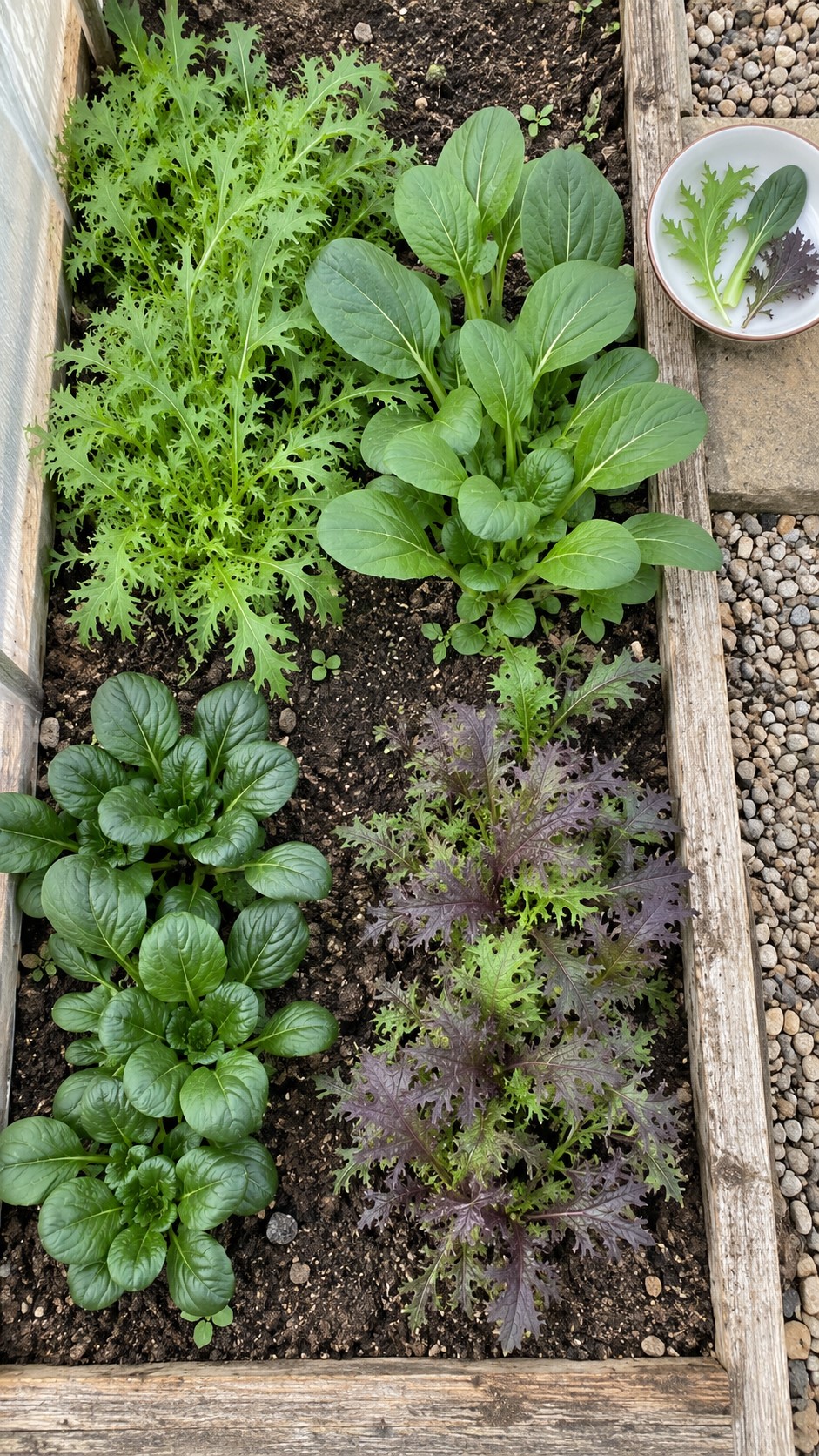
Asian greens add variety to a winter bed without requiring lots of different planting spaces. Mizuna has divided leaves with a mild peppery bite, while tatsoi forms a low cluster of rounded leaves. Komatsuna offers broader foliage for salads when young or cooking as it grows. Mustard greens bring a stronger flavour, so try a small patch before giving them a whole row. A mixture lets you find out which leaves you enjoy eating as well as which plants cope with your winter.
Pak choi is another possibility, but pay attention to its harvest stage. Mature plants held through severe cold can develop poor stem texture, so pick them when they’re ready instead of leaving them indefinitely. Cold tolerance also varies between varieties. For a first attempt, mizuna and tatsoi grown for modest leaf pickings make a sensible starting point. Give the plants room, and expect the gap between harvests to lengthen as the days become colder and darker.
Sow Winter Polytunnel Crops Before the Cold Arrives
Plan Autumn Sowing Around Your Winter Harvest
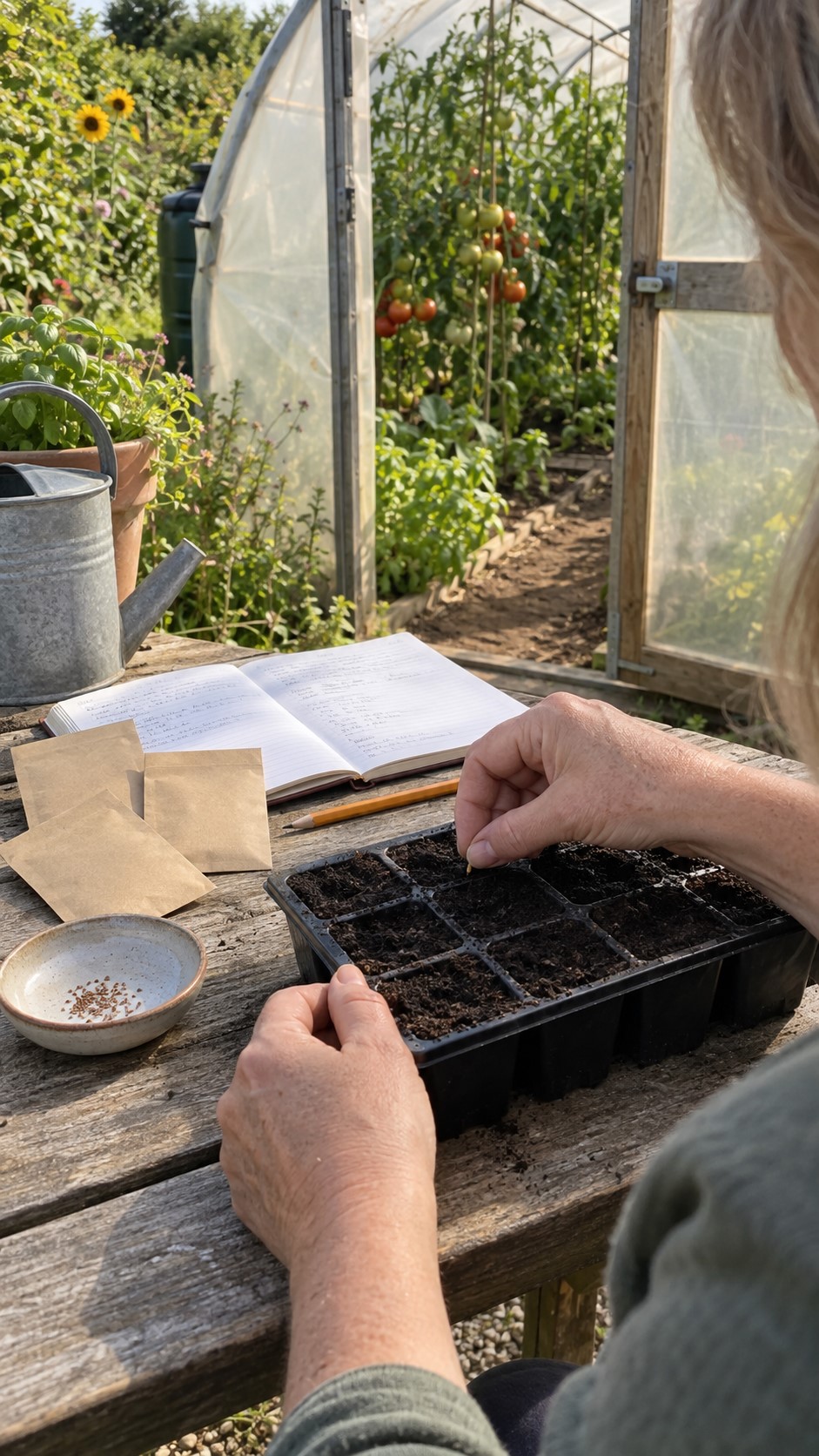
The easiest date to miss is the sowing date. Tomatoes may still be ripening when it’s time to think about winter salad leaves, and an occupied tunnel can make the next crop feel like somebody else’s problem. Put sowing dates on the calendar before that happens. Your aim is to have plants with enough established growth to pick when conditions slow down.
For a temperate UK garden, the following windows offer a starting point. They describe sowing seed, not planting out seedlings. Choose suitable varieties and use their instructions to refine the timing. In cooler or more northerly gardens, earlier sowing within the appropriate window gives plants more time. Mild districts can offer more flexibility, but a late sowing still faces shorter days. Charles Dowding’s Somerset sowing calendar, for example, places many salads for protected winter growing in early to mid-September. If your tunnel loses winter sun to a tall hedge or a neighbouring house, make a note of that too. Shelter alone can’t replace the light needed to build leaves.
| Winter polytunnel crop | Example sowing window for a temperate UK garden | Harvest planning |
|---|---|---|
| Winter lettuce | August to early September | Establish plants for autumn and winter leaf picking. Later sowings may crop in spring. |
| True spinach | August to mid-September | Build leaf growth before the darkest weeks, using an autumn-sowing variety. |
| Mizuna, tatsoi and suitable mustard greens | August to mid-September | Pick autumn leaves and allow longer recovery between winter harvests. |
Give Young Winter Polytunnel Crops Time to Establish
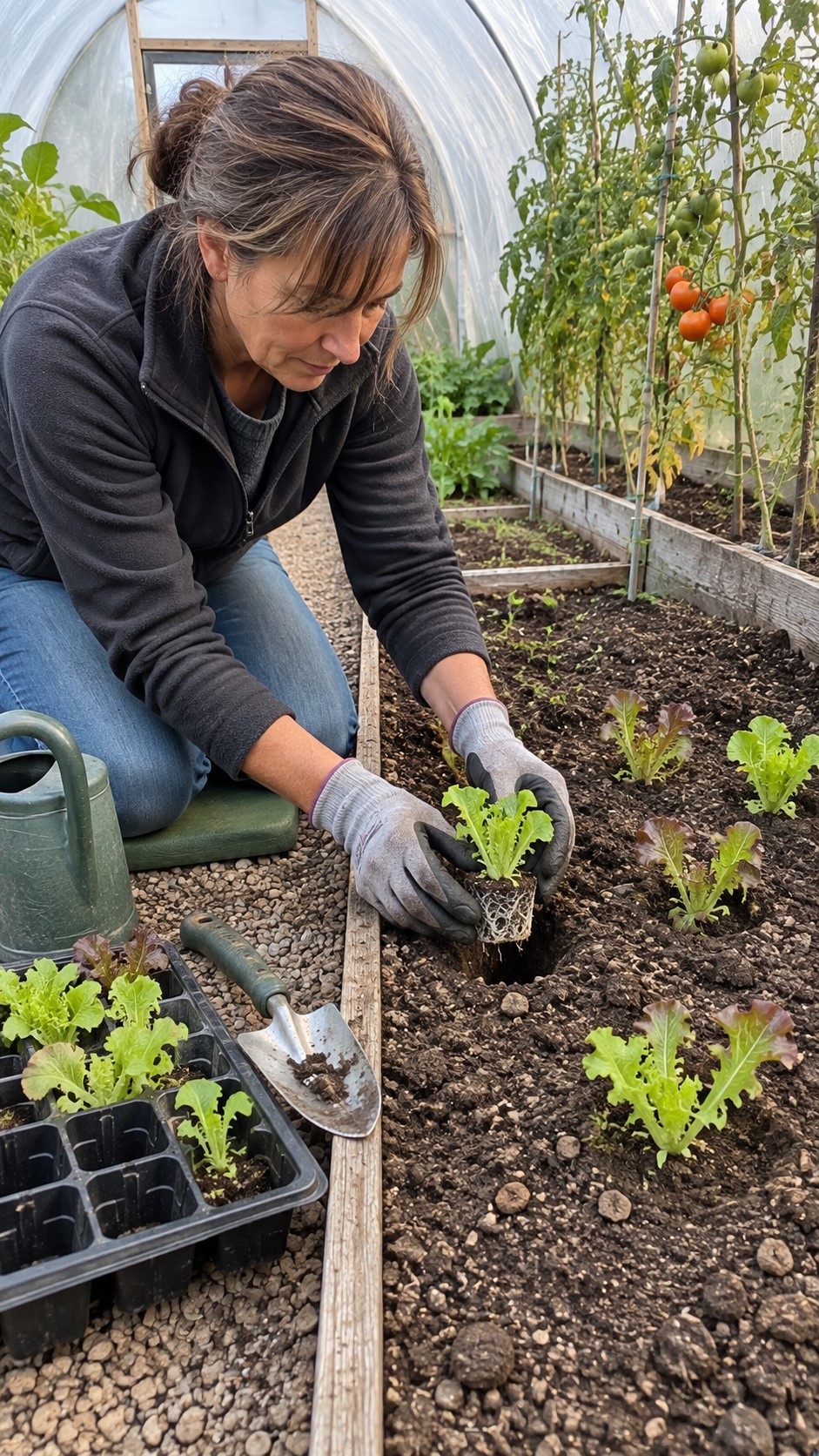
Modules help when the polytunnel is still full of summer plants. Raise a small batch somewhere bright, then transplant when a patch becomes available. Avoid keeping seedlings in tiny cells for weeks while waiting for the last tomato. Clearing one section on time can be worth more to your winter meals than keeping a tired summer plant going. A second small sowing within the suitable window also gives you something to compare with the first. Before sowing, decide which summer row will come out first. That saves you trying to find space for a tray of ready seedlings when the weather has already turned.
Remove old crop remains and weeds before planting, then check the soil. It should hold moisture while allowing surplus water to drain. Break up surface clods where needed and follow the spacing recommended for the variety and your planned harvest size. Water seedlings in, keeping their crowns at the appropriate planting depth. Label each row with the variety and sowing date for next year’s reference.
Protect Winter Polytunnel Crops With Fleece
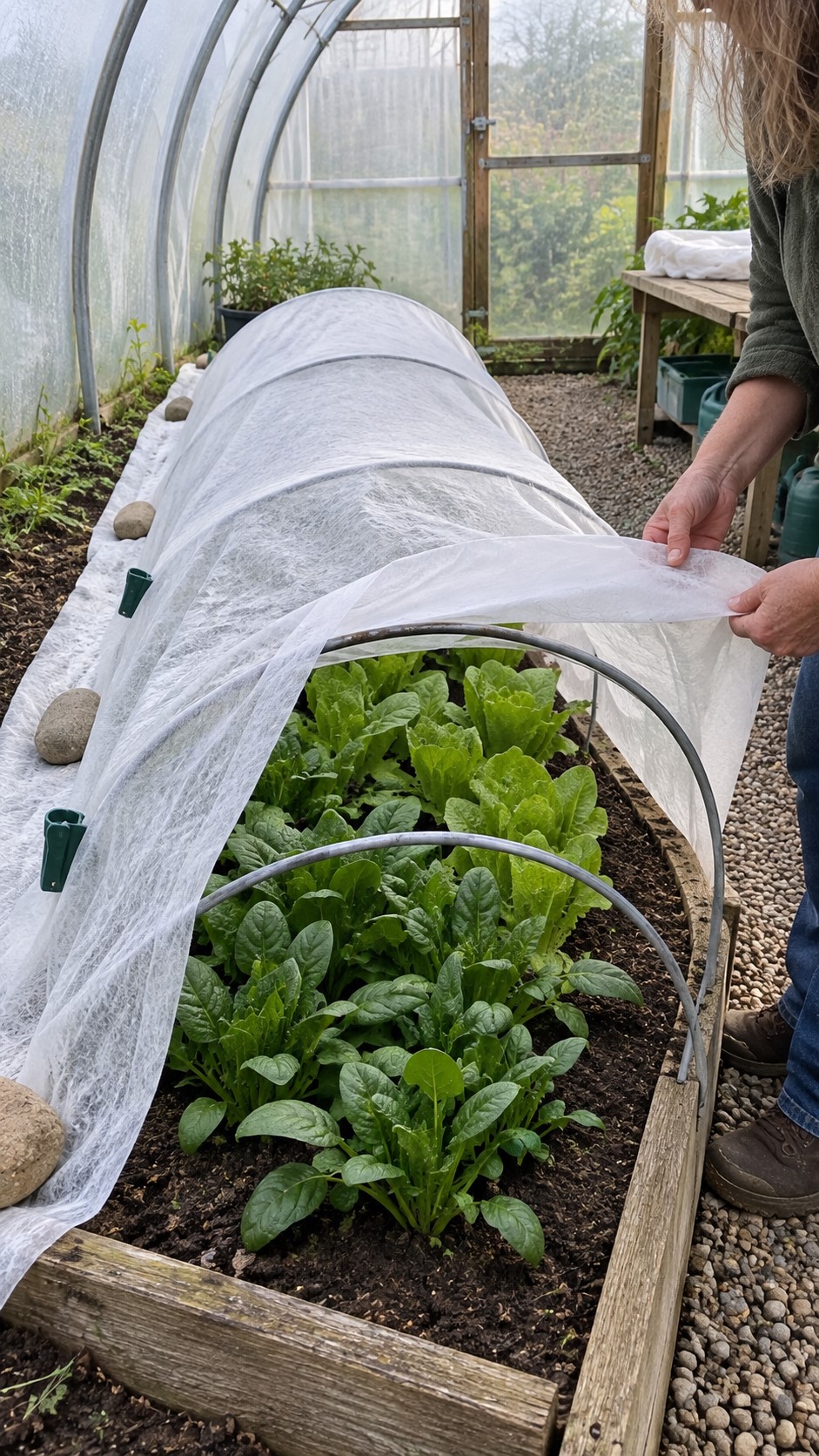
Horticultural fleece adds a second covering around the plants inside your polytunnel. Light fleece can rest over suitable crops, while low hoops help support heavier material and keep it clear of delicate foliage. Cut the cover wide enough to reach beyond the planted area and secure its edges so it stays in position. Leave enough room for the leaves beneath it. A cover that’s easy to lift will also make checking and harvesting less of a chore. Try reaching the middle of the bed before you fasten everything down. You should be able to lift the fleece over a section from the path without standing on the soil or dragging fleece across the plants.
Match fleece weight to the cold protection needed, remembering that heavier material lets less light through. On mild days, lifting the cover gives plants better access to daylight and allows damp air around the foliage to escape. Replace it before a forecast cold night. During colder periods, you may need to keep it in place longer, checking underneath when conditions allow rather than following a fixed uncovering routine.
Fleece has limits. It provides modest protection, and prolonged freezing can still reach the crop beneath it. Keep a minimum-maximum thermometer near plant height, positioned according to its instructions, so you can compare conditions inside with the forecast. Readings taken near the leaves are more useful than guessing from how warm the tunnel feels at lunchtime. Over a season, you’ll learn which beds cool fastest and when your usual covering needs closer attention.
Manage Ventilation and Watering for Winter Polytunnel Crops
Ventilation for an Unheated Polytunnel in Winter
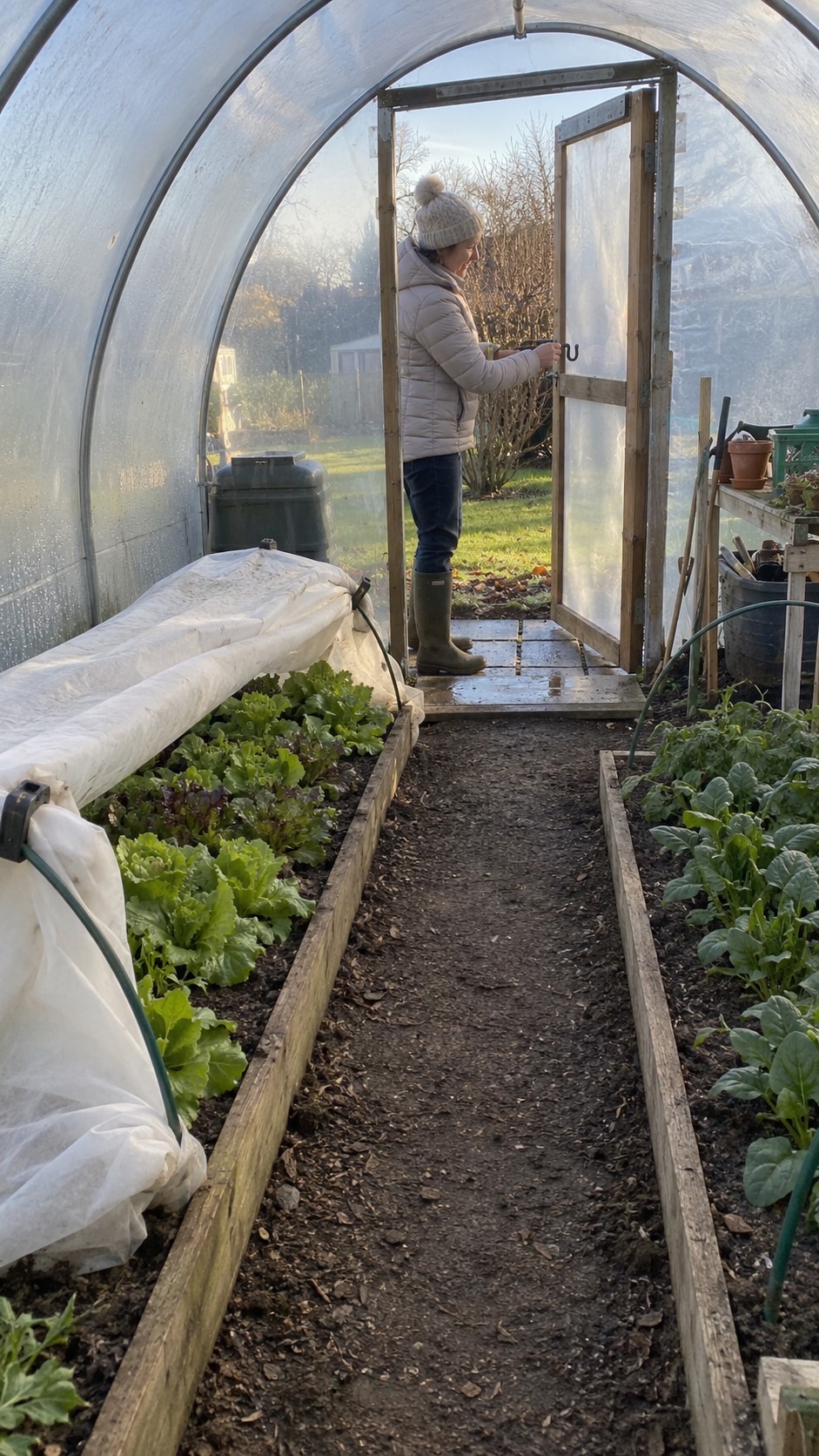
A closed polytunnel can warm up on a sunny winter morning while the garden outside still feels cold. Check the conditions inside and open doors or vents enough to release excess warmth and damp air. A sheltered opening can provide airflow without exposing plants to a harsh wind. On a still, bright day, you may need a wider opening than on a dull, windy one. Watch the thermometer and the plants as you make adjustments, rather than opening everything because the clock says it’s time. As temperatures fall, reduce ventilation and secure the tunnel for the night, taking the forecast into account.
Persistent condensation and leaves that stay wet deserve attention. Air movement helps foliage dry and reduces the conditions that favour fungal disease. Remove decaying leaves instead of leaving them beneath the plants, and clear weeds that crowd the crop. Take a moment to look under the fleece too, where problems can go unnoticed. Fit these checks into a harvesting visit, before you put the fleece back.
Watering Winter Vegetables Without Keeping the Leaves Wet
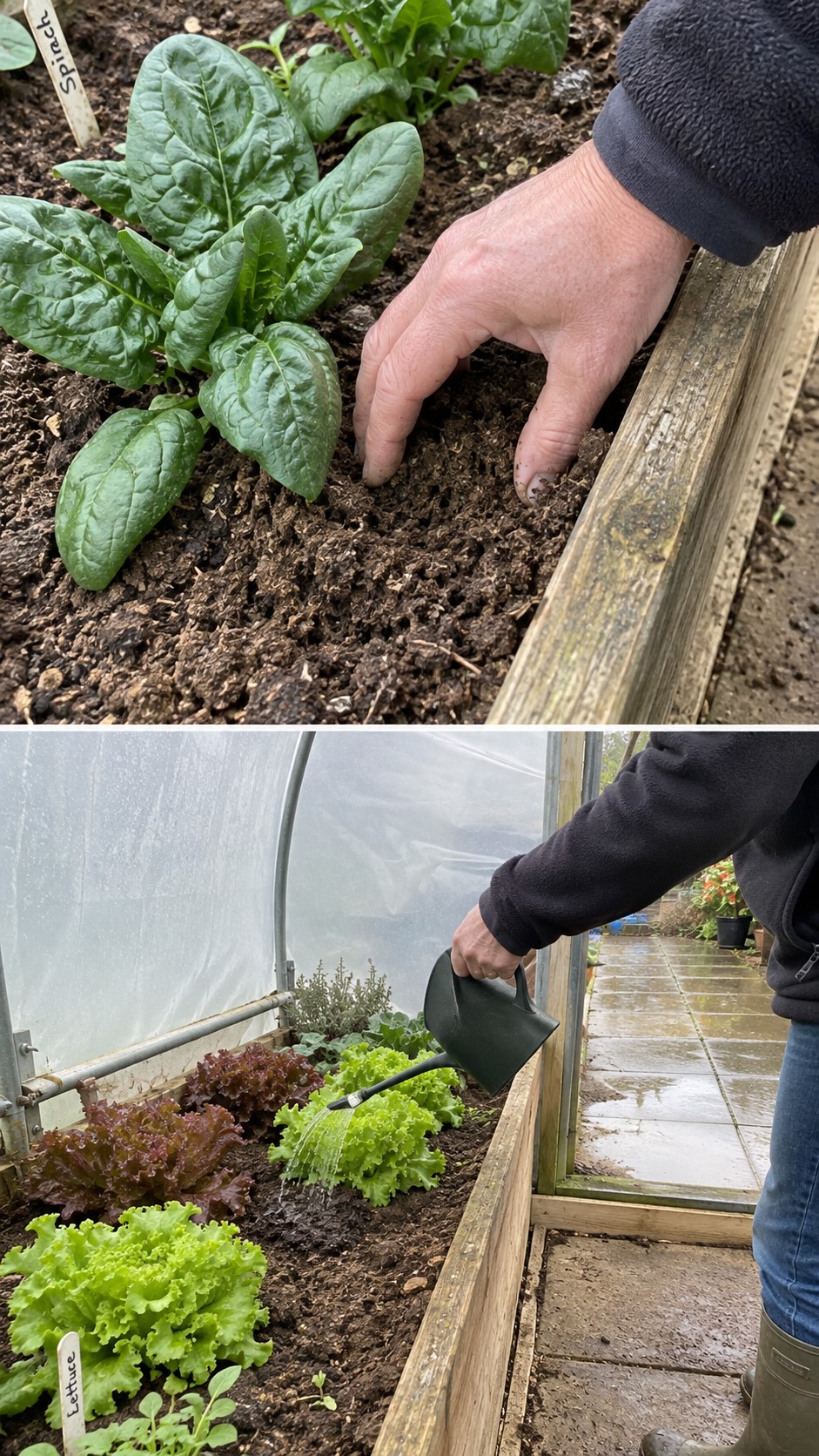
Rain rattling on the cover can fool you into thinking the beds must be wet. Inside, the soil may need water even when the lawn outside squelches underfoot. Check below the surface near the roots before reaching for the watering can. Winter crops use less water as growth slows, but they still need access to moisture. Check more than one spot, especially if part of the bed catches extra sunshine.
When watering is needed, choose a mild morning if possible and direct the water towards the soil. Give it time to soak in and let any splashed foliage dry before evening. Avoid making watering a weekly appointment regardless of what the soil feels like. A run of sunny days may change the demand, while a cold, overcast week can leave the bed moist for much longer. Soil type, sunshine and plant size all change the demand. Let those conditions guide you, and avoid leaving plants with either dried-out roots or soil that stays waterlogged.
Harvest Winter Polytunnel Crops at the Pace They Grow
Pick Winter Salad Leaves After They Thaw
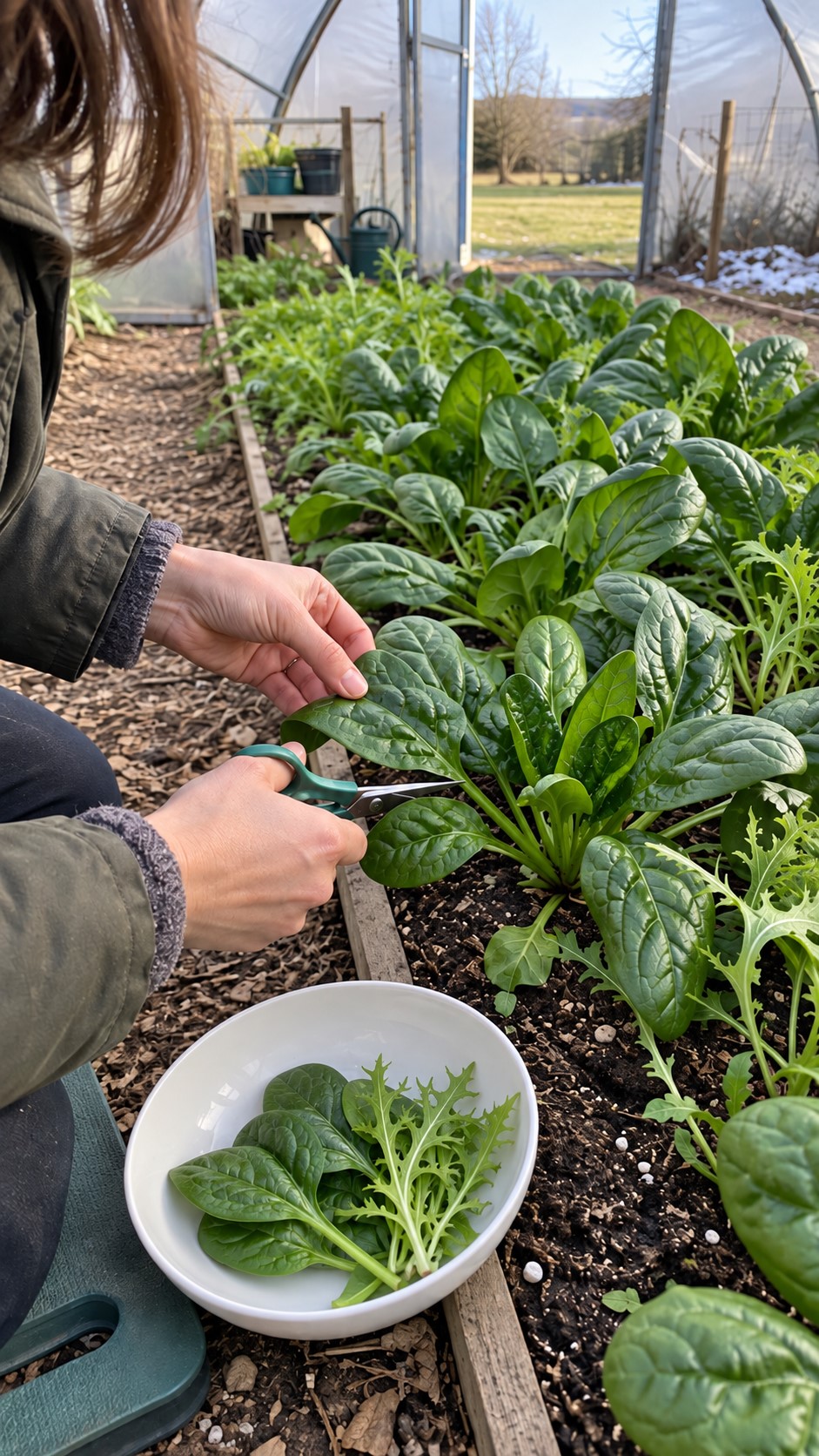
Leave frozen foliage alone until it has thawed. Leaves can be damaged by handling while frozen, and their appearance at dawn doesn’t tell you how they’ll look after the tunnel warms. Come back later if the weather allows. If the plants remain frozen, postpone picking. During spells when the tunnel stays cold throughout the day, leave the crop to recover and use another vegetable for supper.
Once leaves have thawed, choose healthy ones and pick with clean hands or scissors, keeping the growing centre intact. Remove damaged or decaying material when you can handle the plants without further injury. Take only what you’ll use, and wash the harvest before eating. Bring a clean bowl or basket with you so the leaves stay off the soil. Keeping the harvest small also gives you time to check each plant as you go, without feeling that the whole row needs picking because you have started.
Leave Winter Greens Enough Growth to Recover
Spread your picking across several plants and leave plenty of healthy foliage behind. A bed stripped hard in December can take a long time to replace those leaves. Watch the centres for fresh growth before returning for another substantial harvest. The phrase ‘cut and come again’ describes a plant’s ability to regrow, but it doesn’t set a weekly timetable. Winter growth often moves slowly enough that a light picking is all the bed can spare.
Expect the pattern to change through the season. Autumn may offer more generous harvests, followed by a quiet stretch and then fresh growth as daylight and temperatures increase. Some plants will bolt as spring develops, sending up flower stems as their useful leaf harvest draws to a close. Note which crops supplied meals and which struggled. A small bed that gives you occasional salads can still be worthwhile, even if it never replaces the vegetable shopping.
Start Small With Winter Polytunnel Growing
For your first winter, try one suitable lettuce variety alongside spinach and a short row of mizuna or tatsoi. Keep the planting within easy reach and have the fleece ready before you need it. Write down when you sowed and what you picked, including the weeks when nothing was ready. Those details will
What to Grow in an Unheated Polytunnel in Winter
An unheated polytunnel can still earn its keep when the rest of the garden slows down. A few lettuce leaves tucked into a sandwich or a handful of spinach stirred into supper can make a cold trip down the path feel worthwhile. You don’t need to fill every bed to enjoy those pickings. A small patch of well-chosen winter polytunnel crops gives you somewhere useful to start, with space to learn what works in your garden.
Winter lettuce, spinach and suitable Asian greens offer a good mix of flavours without demanding a heater. The main work begins while there’s still warmth in the soil and enough daylight for plants to put on leaves. Once winter settles in, your job shifts towards protecting that growth and picking at a pace the plants can manage. Some weeks will bring enough for a salad. Others will call for patience.
What to Expect From Winter Polytunnel Crops
A polytunnel keeps driving rain off the beds and shelters foliage from wind, while sunshine warms the space inside. That protection helps, but an unheated tunnel can still freeze. During a long cold spell, the plants may spend hours below freezing despite looking sheltered behind their plastic cover. A sunny, sheltered garden in a mild district offers different growing conditions from an exposed northern plot, so winter harvests will vary even when gardeners sow the same seed. Survival and a usable harvest are separate things too. A small plant can remain alive through winter while producing almost nothing you can spare for the kitchen.
Daylight sets another limit. When days shorten to around ten hours, many leafy crops make little new growth, particularly when temperatures are low. Think of this as a planning guide rather than a precise switch. Leaves grown during autumn provide much of what you’ll pick through the darkest weeks. Small plants that enter winter with only a few leaves may survive and grow again in spring, but they won’t provide the same winter harvest as established plants.
Choosing Winter Lettuce, Spinach and Asian Greens for Your Polytunnel
Winter Lettuce for Picking a Few Leaves at a Time
Choose lettuce seed labelled for autumn or winter growing, with guidance for cultivation under cover. Check both the variety and its recommended season. ‘Winter Density’ is one recognised winter variety, although later sowings are often grown for a spring harvest. Read the sowing advice alongside the name. A lettuce described as suitable for overwintering still needs enough growing time if you hope to pick it before spring.
For a household wanting small salads, picking outer leaves is a handy approach. You can gather a little from several plants while leaving their centres to continue growing. Follow the spacing on the packet and leave room to reach between plants without crushing the foliage. Check the lowest leaves as you pick, removing any that have started to decay. A bed you can reach from the path makes these small jobs much easier when the ground outside is wet.
Growing Spinach in Winter Polytunnel Beds
True spinach is a useful partner for winter lettuce because you can eat the young leaves raw or cook the larger ones. Look for varieties recommended for autumn sowing or overwintering. Perpetual spinach is a form of chard, so check the packet if you want true spinach with its softer leaves. The RHS recommends planting autumn-sown spinach in a greenhouse border for winter cropping, with hardy varieties and extra protection suited to the local conditions. If you cook with spinach each week, give it more room than a salad green you haven’t tried.
Sow into prepared soil or start seedlings in modules while other crops occupy the bed. Keep seedlings moving along, planting them before their roots become crowded and handling the root ball with care. Once the plants have enough leaves, pick some of the outer ones and leave the centre intact. Remember how much spinach shrinks in a pan. A short row may supply a handful for an omelette without producing enough for a large cooked side dish.
Mizuna, Tatsoi and Other Asian Greens for Winter
Asian greens add variety to a winter bed without requiring lots of different planting spaces. Mizuna has divided leaves with a mild peppery bite, while tatsoi forms a low cluster of rounded leaves. Komatsuna offers broader foliage for salads when young or cooking as it grows. Mustard greens bring a stronger flavour, so try a small patch before giving them a whole row. A mixture lets you find out which leaves you enjoy eating as well as which plants cope with your winter.
Pak choi is another possibility, but pay attention to its harvest stage. Mature plants held through severe cold can develop poor stem texture, so pick them when they’re ready instead of leaving them indefinitely. Cold tolerance also varies between varieties. For a first attempt, mizuna and tatsoi grown for modest leaf pickings make a sensible starting point. Give the plants room, and expect the gap between harvests to lengthen as the days become colder and darker.
Sow Winter Polytunnel Crops Before the Cold Arrives
Plan Autumn Sowing Around Your Winter Harvest
The easiest date to miss is the sowing date. Tomatoes may still be ripening when it’s time to think about winter salad leaves, and an occupied tunnel can make the next crop feel like somebody else’s problem. Put sowing dates on the calendar before that happens. Your aim is to have plants with enough established growth to pick when conditions slow down.
For a temperate UK garden, the following windows offer a starting point. They describe sowing seed, not planting out seedlings. Choose suitable varieties and use their instructions to refine the timing. In cooler or more northerly gardens, earlier sowing within the appropriate window gives plants more time. Mild districts can offer more flexibility, but a late sowing still faces shorter days. Charles Dowding’s Somerset sowing calendar, for example, places many salads for protected winter growing in early to mid-September. If your tunnel loses winter sun to a tall hedge or a neighbouring house, make a note of that too. Shelter alone can’t replace the light needed to build leaves.
| Winter polytunnel crop | Example sowing window for a temperate UK garden | Harvest planning |
|---|---|---|
| Winter lettuce | August to early September | Establish plants for autumn and winter leaf picking. Later sowings may crop in spring. |
| True spinach | August to mid-September | Build leaf growth before the darkest weeks, using an autumn-sowing variety. |
| Mizuna, tatsoi and suitable mustard greens | August to mid-September | Pick autumn leaves and allow longer recovery between winter harvests. |
Give Young Winter Polytunnel Crops Time to Establish
Modules help when the polytunnel is still full of summer plants. Raise a small batch somewhere bright, then transplant when a patch becomes available. Avoid keeping seedlings in tiny cells for weeks while waiting for the last tomato. Clearing one section on time can be worth more to your winter meals than keeping a tired summer plant going. A second small sowing within the suitable window also gives you something to compare with the first. Before sowing, decide which summer row will come out first. That saves you trying to find space for a tray of ready seedlings when the weather has already turned.
Remove old crop remains and weeds before planting, then check the soil. It should hold moisture while allowing surplus water to drain. Break up surface clods where needed and follow the spacing recommended for the variety and your planned harvest size. Water seedlings in, keeping their crowns at the appropriate planting depth. Label each row with the variety and sowing date for next year’s reference.
Protect Winter Polytunnel Crops With Fleece
Horticultural fleece adds a second covering around the plants inside your polytunnel. Light fleece can rest over suitable crops, while low hoops help support heavier material and keep it clear of delicate foliage. Cut the cover wide enough to reach beyond the planted area and secure its edges so it stays in position. Leave enough room for the leaves beneath it. A cover that’s easy to lift will also make checking and harvesting less of a chore. Try reaching the middle of the bed before you fasten everything down. You should be able to lift the fleece over a section from the path without standing on the soil or dragging fleece across the plants.
Match fleece weight to the cold protection needed, remembering that heavier material lets less light through. On mild days, lifting the cover gives plants better access to daylight and allows damp air around the foliage to escape. Replace it before a forecast cold night. During colder periods, you may need to keep it in place longer, checking underneath when conditions allow rather than following a fixed uncovering routine.
Fleece has limits. It provides modest protection, and prolonged freezing can still reach the crop beneath it. Keep a minimum-maximum thermometer near plant height, positioned according to its instructions, so you can compare conditions inside with the forecast. Readings taken near the leaves are more useful than guessing from how warm the tunnel feels at lunchtime. Over a season, you’ll learn which beds cool fastest and when your usual covering needs closer attention.
Manage Ventilation and Watering for Winter Polytunnel Crops
Ventilation for an Unheated Polytunnel in Winter
A closed polytunnel can warm up on a sunny winter morning while the garden outside still feels cold. Check the conditions inside and open doors or vents enough to release excess warmth and damp air. A sheltered opening can provide airflow without exposing plants to a harsh wind. On a still, bright day, you may need a wider opening than on a dull, windy one. Watch the thermometer and the plants as you make adjustments, rather than opening everything because the clock says it’s time. As temperatures fall, reduce ventilation and secure the tunnel for the night, taking the forecast into account.
Persistent condensation and leaves that stay wet deserve attention. Air movement helps foliage dry and reduces the conditions that favour fungal disease. Remove decaying leaves instead of leaving them beneath the plants, and clear weeds that crowd the crop. Take a moment to look under the fleece too, where problems can go unnoticed. Fit these checks into a harvesting visit, before you put the fleece back.
Watering Winter Vegetables Without Keeping the Leaves Wet
Rain rattling on the cover can fool you into thinking the beds must be wet. Inside, the soil may need water even when the lawn outside squelches underfoot. Check below the surface near the roots before reaching for the watering can. Winter crops use less water as growth slows, but they still need access to moisture. Check more than one spot, especially if part of the bed catches extra sunshine.
When watering is needed, choose a mild morning if possible and direct the water towards the soil. Give it time to soak in and let any splashed foliage dry before evening. Avoid making watering a weekly appointment regardless of what the soil feels like. A run of sunny days may change the demand, while a cold, overcast week can leave the bed moist for much longer. Soil type, sunshine and plant size all change the demand. Let those conditions guide you, and avoid leaving plants with either dried-out roots or soil that stays waterlogged.
Harvest Winter Polytunnel Crops at the Pace They Grow
Pick Winter Salad Leaves After They Thaw
Leave frozen foliage alone until it has thawed. Leaves can be damaged by handling while frozen, and their appearance at dawn doesn’t tell you how they’ll look after the tunnel warms. Come back later if the weather allows. If the plants remain frozen, postpone picking. During spells when the tunnel stays cold throughout the day, leave the crop to recover and use another vegetable for supper.
Once leaves have thawed, choose healthy ones and pick with clean hands or scissors, keeping the growing centre intact. Remove damaged or decaying material when you can handle the plants without further injury. Take only what you’ll use, and wash the harvest before eating. Bring a clean bowl or basket with you so the leaves stay off the soil. Keeping the harvest small also gives you time to check each plant as you go, without feeling that the whole row needs picking because you have started.
Leave Winter Greens Enough Growth to Recover
Spread your picking across several plants and leave plenty of healthy foliage behind. A bed stripped hard in December can take a long time to replace those leaves. Watch the centres for fresh growth before returning for another substantial harvest. The phrase ‘cut and come again’ describes a plant’s ability to regrow, but it doesn’t set a weekly timetable. Winter growth often moves slowly enough that a light picking is all the bed can spare.
Expect the pattern to change through the season. Autumn may offer more generous harvests, followed by a quiet stretch and then fresh growth as daylight and temperatures increase. Some plants will bolt as spring develops, sending up flower stems as their useful leaf harvest draws to a close. Note which crops supplied meals and which struggled. A small bed that gives you occasional salads can still be worthwhile, even if it never replaces the vegetable shopping.
Start Small With Winter Polytunnel Growing

For your first winter, try one suitable lettuce variety alongside spinach and a short row of mizuna or tatsoi. Keep the planting within easy reach and have the fleece ready before you need it. Write down when you sowed and what you picked, including the weeks when nothing was ready. Those details will help you choose next year’s crops and dates. Start with a few seed packets and a marked calendar, and give those winter leaves time to grow.
