
Garden Sheds That Fit Perfectly in Narrow Side Yards
A narrow side yard can become one of the hardest-working storage areas around a home, provided the shed doesn’t swallow the passage in the process. That thin strip between the house and fence often sits half-used, collecting bins, spare pots and garden tools because nobody quite knows what else to do with it. A slim shed can change that. The trick is choosing one that fits the way you already move through the space rather than filling every available inch.
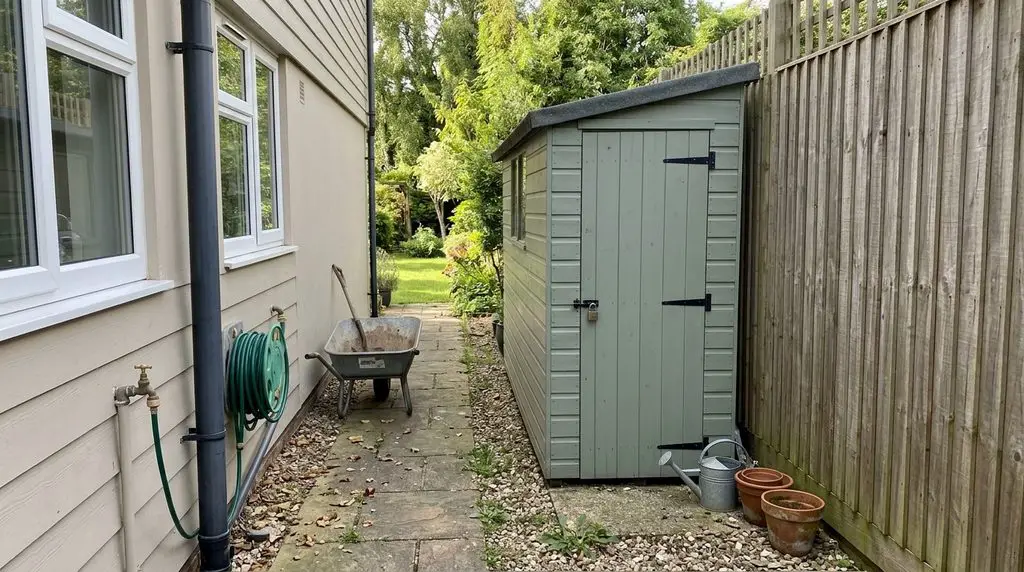
That changes how you shop for a shed. Width still matters, but so do the gate, drainpipes, doors and the wheelbarrow you drag through every spring. A shed can fit neatly on a plan and still annoy you every time you squeeze past it. Narrow garden sheds work best when the remaining passage feels comfortable enough for ordinary garden life. Start there, and the rest of the decisions become far easier.
Download FREE DIY Shed Plans
The free 14-page plan booklet includes technical diagrams, imperial and metric dimensions, materials, cut lists, fastening details and step-by-step instructions for: A 3 x 6 ft freestanding gable shed and a 3 x 8 ft independent lean-to shed.
Start With the Space Before Choosing Narrow Garden Sheds
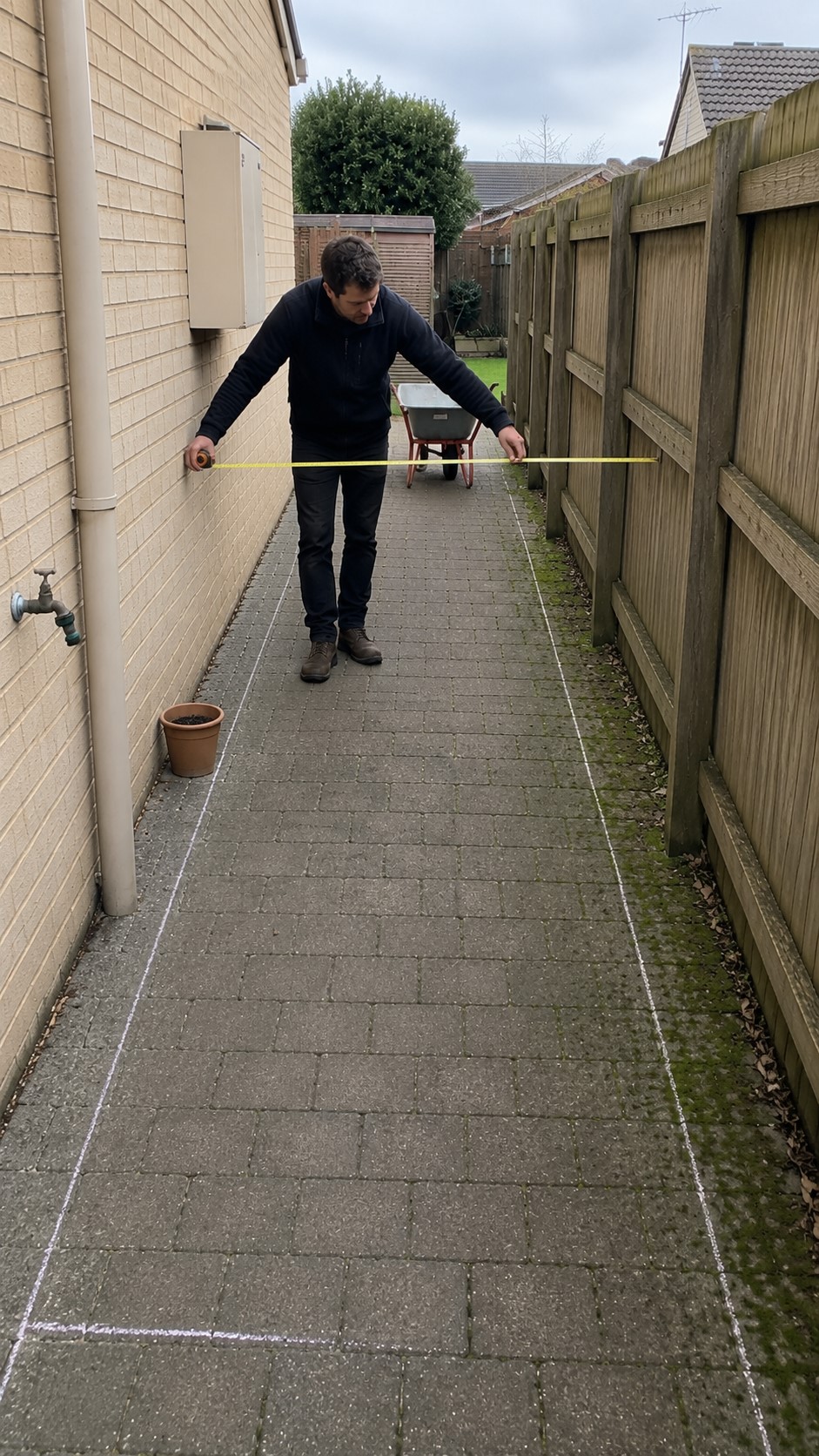
Side yards are rarely as straight and simple as they look from the garden. Fences lean. Walls have pipes attached to them. Gates swing inward. There may be a step near the back door or an outdoor tap exactly where you hoped the shed would sit. Before looking at narrow garden sheds, walk the full length of the space and look for anything that cuts into the usable width.
Measure the gap at several points rather than taking one reading near the gate. A difference of a few inches can change which shed will work, especially when the yard is already tight. Mark the proposed footprint on the ground with string or chalk. Then walk past it carrying something bulky. That rough test tells you far more than a product photo.
Measure the Usable Width for a Narrow Side Yard Shed
The total width between the house and fence isn’t the same as the width available for a narrow side yard shed. Allow room for gutters, drainpipes, utility boxes and anything else attached to the wall. A fence post can steal a surprising amount of space too. You’ll also need enough room to get around the shed for basic cleaning and maintenance.
Think about what moves through the passage during the year. A person may fit through a narrow gap with ease, while a wheelbarrow, garden cart or large recycling bin won’t. If the side yard leads to the main garden, preserving that route should sit near the top of the list.
Check Door Clearance Before Buying a Slim Garden Shed
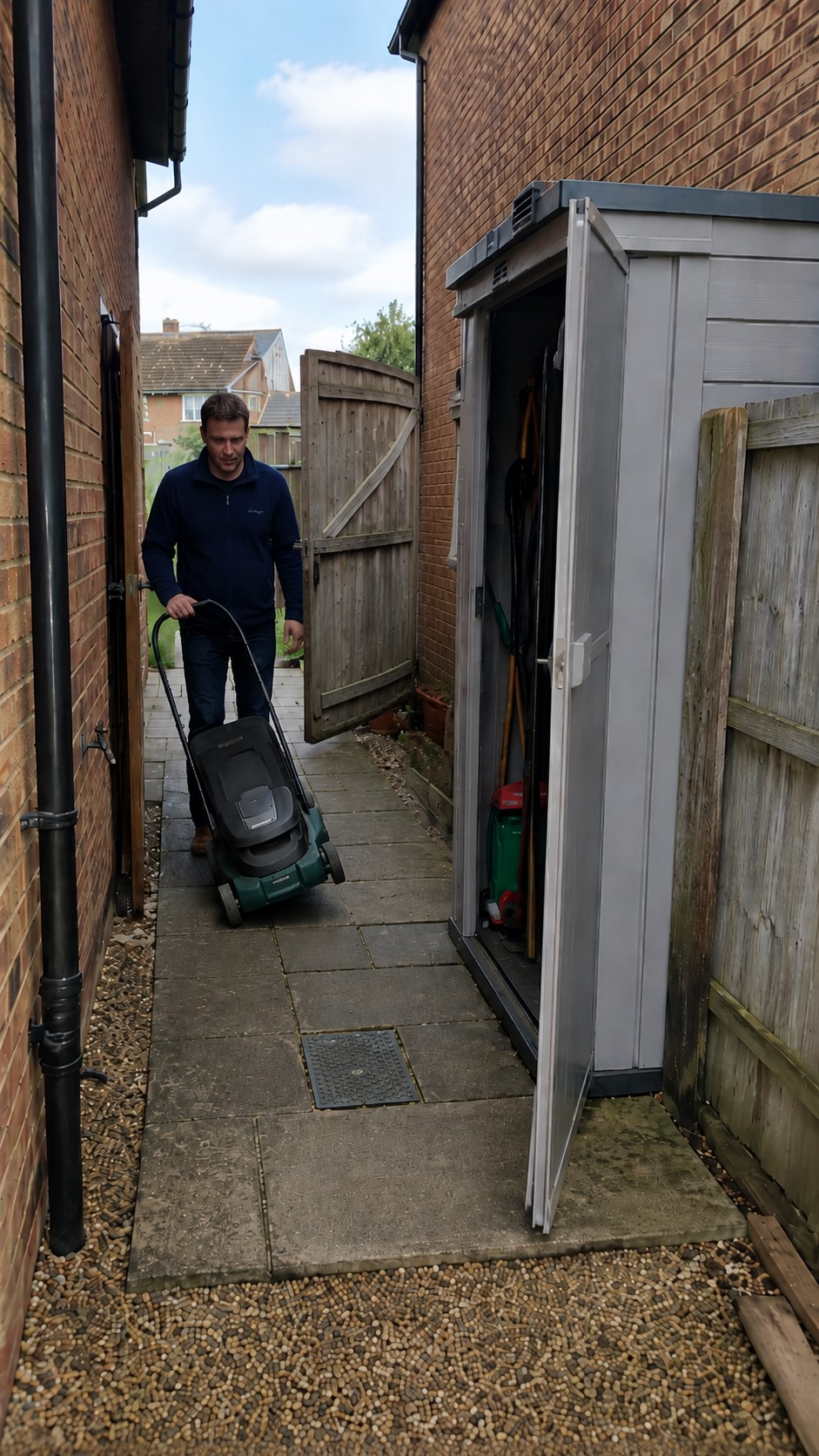
Doors cause more problems in narrow spaces than most buyers expect. A wide double door looks convenient, but it may open directly into the fence or block the remaining walkway. In many side yards, a single door placed at the short end of a slim garden shed is easier to live with.
Sliding doors can also work where swing space is limited, although the shed design needs enough clear wall for the panel to move across. Think about the largest thing you plan to store. A mower or bicycle needs a very different entrance from a collection of hand tools, pots and watering cans.
Slimline Garden Sheds Make Better Use of Restricted Width
A small standard shed and a slimline shed aren’t quite the same thing. Standard compact sheds often reduce every dimension at once, which can leave you with little floor area and not much wall space either. Slimline garden sheds take a different approach. They stay narrow but can run farther along the side of the house or rise higher.
That shape suits a long side passage far better. You can store equipment along one wall while keeping a narrow access strip inside. Long-handled tools can stand upright. Shelving can run above smaller items. For a space where width is the real problem, those proportions make much more sense than a short, boxy shed.
Use Height to Gain Storage in a Slimline Garden Shed
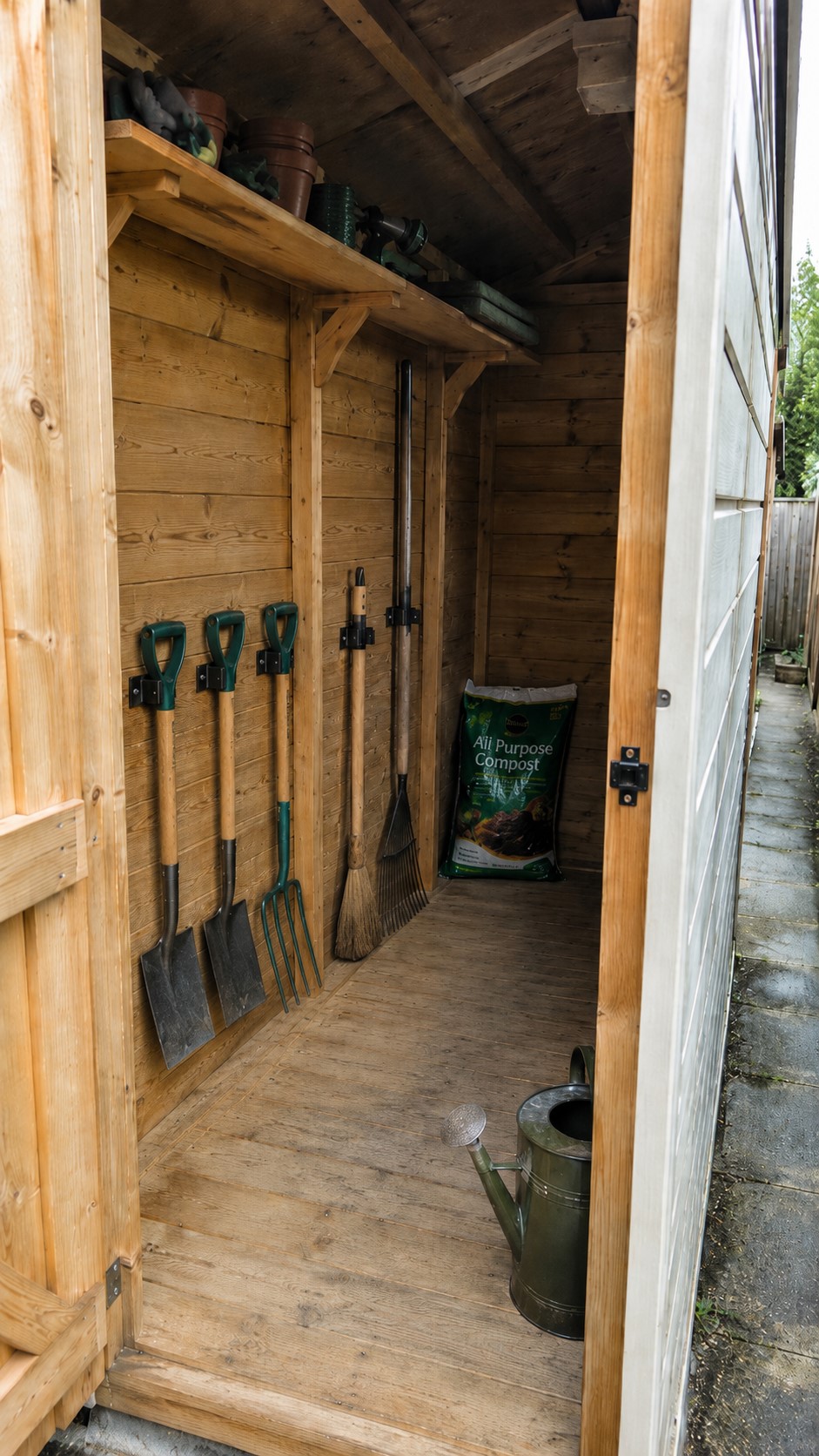
When floor space is scarce, the walls become useful storage territory. A tall slim shed can hold spades, forks and rakes vertically without creating a heap in the corner. Hooks can carry hand tools, kneeling pads and hoses. Shallow shelves near shoulder height can take plant pots, gloves and small garden supplies.
Avoid covering every wall with deep shelves. In a narrow structure, a shelf that projects too far can make the central aisle uncomfortable. Keep the lower section open where possible and place lighter items higher up. The aim is to gain storage from height while preserving enough room to reach the back without turning sideways.
Choose a Shallow Shed for Small Garden Storage
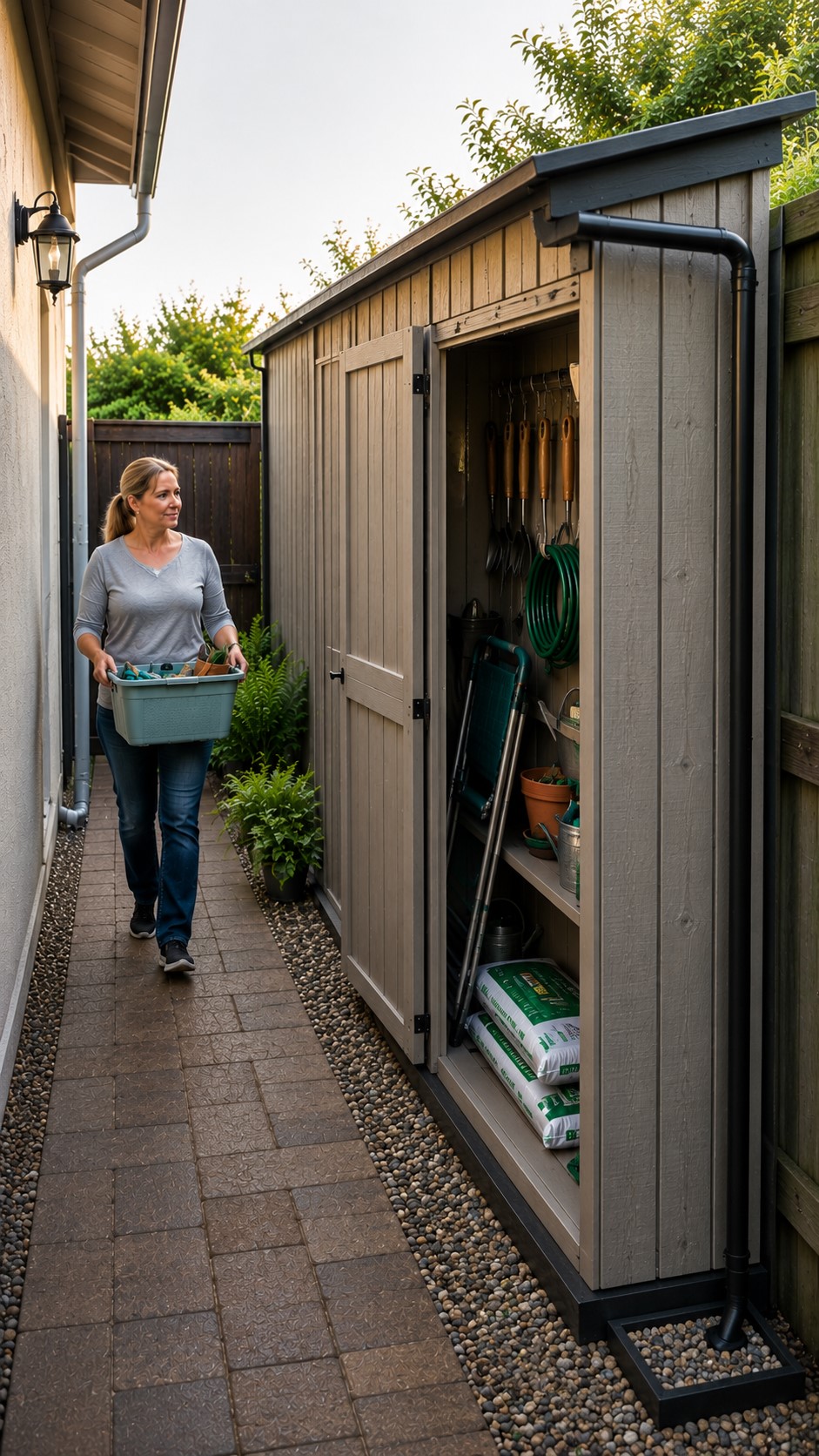
A shallow garden shed works well when you mainly need storage for hand tools, watering equipment, bags of compost and smaller garden accessories. It can sit close to a boundary and leave more of the passage open, which can make the whole side yard feel less cramped.
Before choosing one, measure your bulkiest items. Folding chairs, a pressure washer or a lawn mower can need more depth than expected. There’s little value in buying a beautifully slim shed if the equipment you wanted to hide away won’t fit through the door. A quick list of the largest objects can prevent that mistake.
Side of House Sheds Have to Work Around the Building
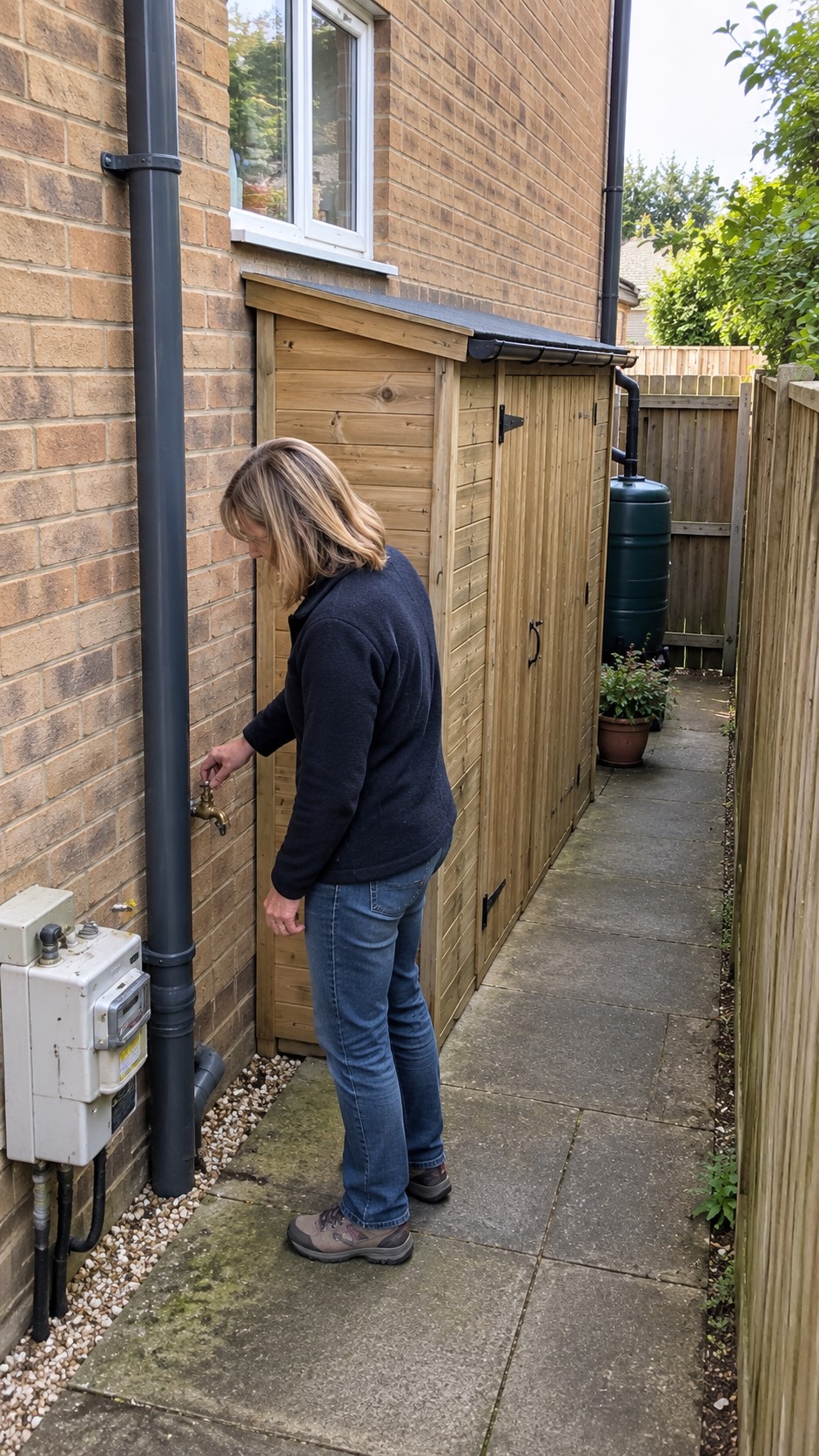
The house wall often looks like the obvious place for a shed, but it may be doing more work than you notice. Windows need light and access. Air vents need to stay clear. Utility meters may require occasional inspection. Outdoor taps, drains and electrical fittings can also sit along the same wall.
Side of house sheds should fit around those features rather than covering them. Leave practical access wherever someone may need to reach the building later. A shed that blocks a meter or makes gutter repairs awkward can become a nuisance long before you run out of storage room.
Position a Side of House Shed Around Windows and Services
Walk along the wall and identify every feature before deciding where the shed starts and ends. Check window openings, downpipes, drains and external fittings. If you have a window overlooking the side yard, think about how much light the shed could remove from the room inside.
Roof position deserves attention too. Rainwater coming off the shed needs somewhere sensible to go. A small gutter can help direct water into a drain or water butt where the layout allows. Leaving a slim maintenance gap can also make it easier to clear leaves and check the wall during wet weather.
Keep a Side Passage Shed Clear of Gates and Everyday Routes
A side passage shed should sit comfortably within the way the space is already used. If the gate opens inward, mark its full swing before placing anything nearby. Check where you stand while unlocking it and whether a bin or wheelbarrow can still turn through the opening.
Corners matter as well. A passage can have plenty of width beside the shed and still become awkward where the path bends into the backyard. Sometimes a slightly shorter shed works better because it leaves turning room near the entrance. Losing a little storage length can make daily access far less irritating.
Narrow Lean-To Sheds Suit Long Spaces Beside a House
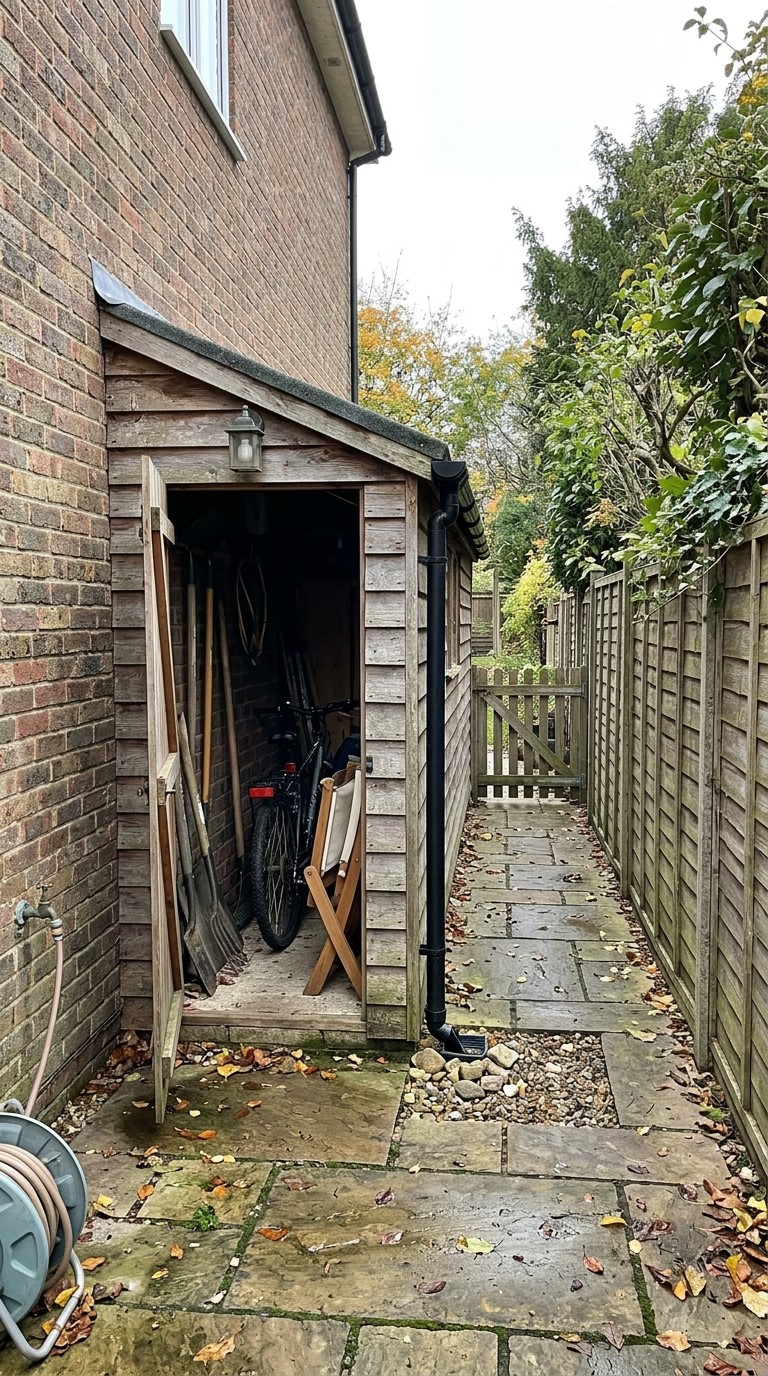
A narrow lean-to shed often looks at home in a side yard because its proportions follow the space rather than fighting it. The single-slope roof keeps the shape simple and the structure can run along a wall or fence without taking up much width.
This type of shed can work for long tools, bicycles and general garden storage, depending on the dimensions. Some designs stand independently while others are made to sit against a wall, so check how the model is meant to be installed. The important part is choosing a version that leaves enough room around doors, gutters and the remaining walkway.
A Narrow Lean-To Shed Uses One Long Wall Well
Long, slim storage can be surprisingly useful. Instead of stacking items behind one another, you can line tools and equipment along the length of a narrow lean-to shed. That makes it easier to reach frequently used items without emptying half the contents first.
The taller wall can also provide space for vertical storage, while the lower side keeps the roof profile modest near the fence. If the shed sits beside the house, check how the roof relates to windows and existing guttering. A neat roofline is helpful, but practical access should come first.
Plan Roof Drainage Around a Lean-To Garden Shed
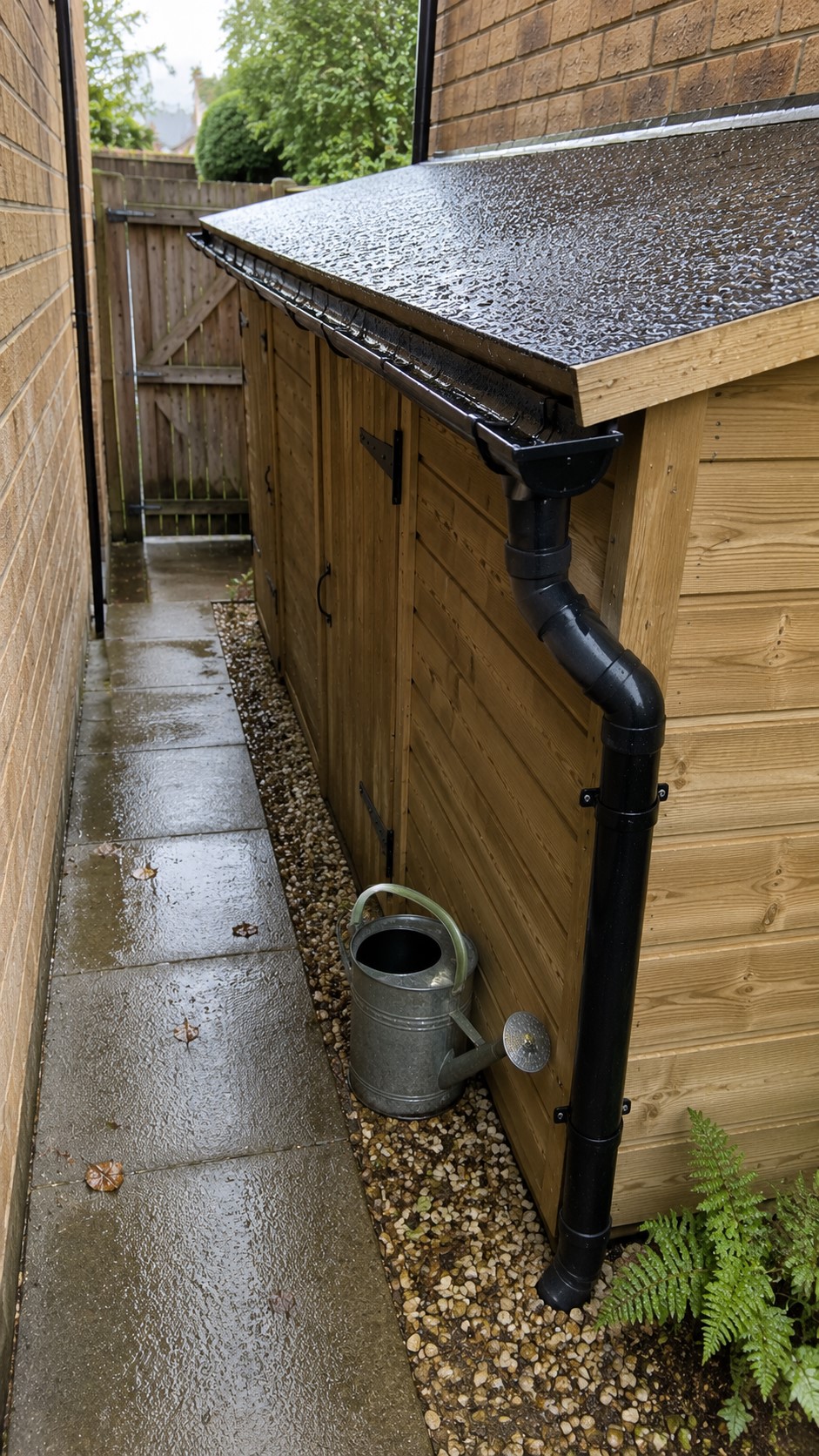
A lean-to garden shed may have a small footprint, but its roof still collects a fair amount of rain. In a narrow passage, poorly directed runoff can splash against the house wall, soak the base of a fence or create a wet strip along the path.
Check which way the roof falls before buying. If the lower edge sits beside the walking route, make sure the gutter and any overhang won’t reduce headroom or shoulder room. Water should be directed somewhere suitable rather than allowed to collect around the shed base. Good drainage also helps the structure last longer.
Small Narrow Garden Sheds Need a Simple Interior
The interior of a small narrow garden shed can become messy fast because there isn’t much spare floor area. One bag of compost left in the middle and a couple of tools leaning across the doorway can make the whole shed feel blocked.
A better setup starts by giving the floor as little work as possible. Long tools go on the wall. Small items sit on shallow shelving. Bulky equipment gets a clear spot near one end. You should be able to open the door and reach commonly used items without shifting piles around first.
Keep the Floor Clear in Small Narrow Garden Sheds
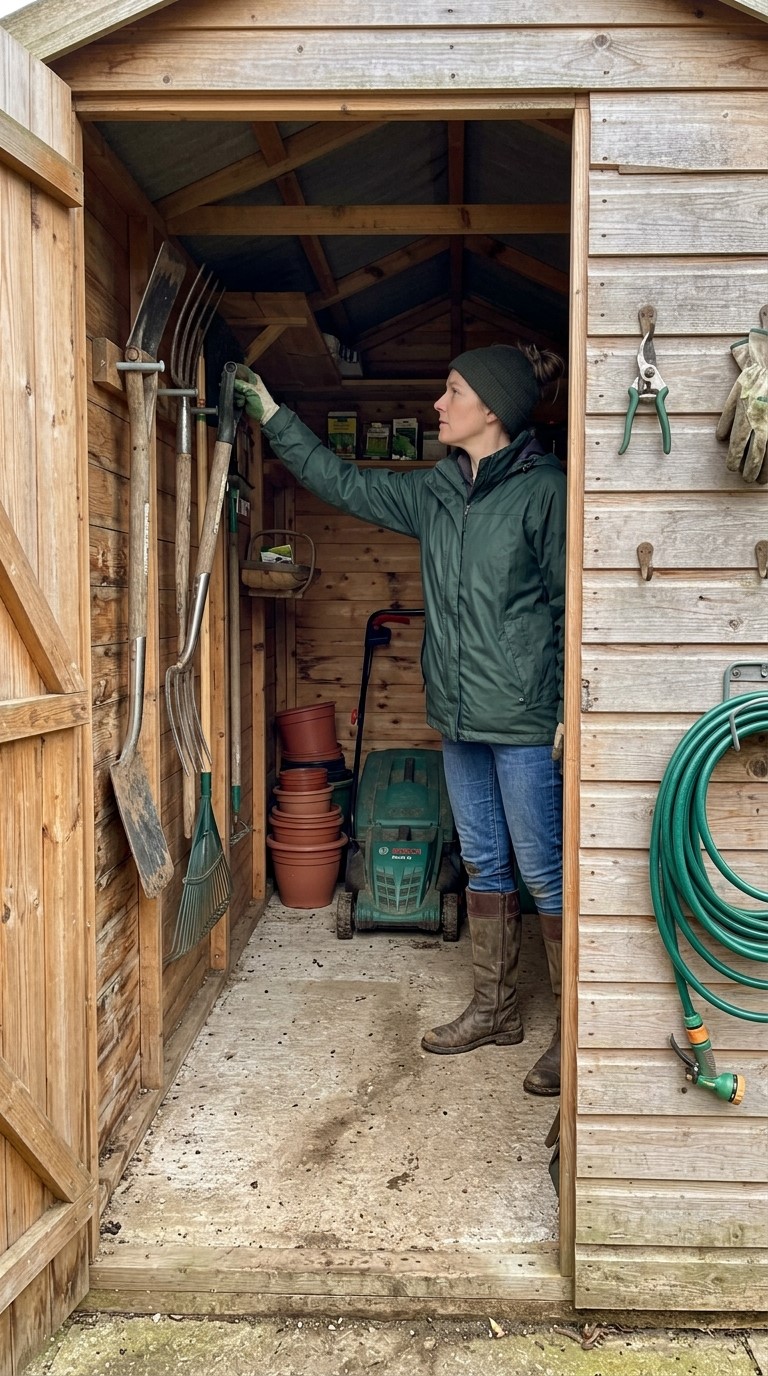
Wall-mounted storage makes a big difference in small narrow garden sheds. Tool clips can hold spades, forks and brooms upright. Hooks can take hoses or hand tools. A narrow rack near the door can keep frequently used items close without taking over the centre.
Leave some free wall rather than filling every surface. A shed still needs enough room for you to stand, turn and lift things out safely. If you have to remove three objects before reaching the item at the back, the storage plan needs another look. Convenience matters more than squeezing in one extra shelf.
Add Shallow Shelving to a Compact Garden Storage Shed
Deep garage shelving rarely suits a compact garden storage shed. It can consume much of the usable aisle and leave awkward gaps behind smaller pots or bottles. Shallow shelves tend to work better because the contents stay visible and easier to reach.
Use them for gloves, plant food, small pots and watering accessories. Keep heavier items lower down and leave the floor space beneath some shelves open for bags, buckets or machines. A mix of hooks and shallow shelves usually works better than trying to make one storage system handle everything.
Narrow Shed Ideas Should Start With What You Need to Store
It’s easy to get distracted by shed finishes, roof styles and clever interiors before asking the simplest question: what actually needs to go inside? Narrow shed ideas work better when they start with the contents.
Make a rough list before comparing models. Include long tools, lawn equipment, bikes, folding chairs, cushions, pots and anything currently taking up space in the garage. Measure the largest pieces. Once you know what the shed must hold, you can judge whether you need height, extra length, a wide doorway or more shelf space.
Pick Narrow Shed Ideas for Garden Tools and Equipment
Garden tools are relatively easy to store in a narrow footprint because so many of them can stand vertically. Rakes, spades and hoes can line one wall, while smaller hand tools fit on hooks or a narrow shelf. Bags and buckets can sit underneath.
Larger equipment changes the equation. A mower needs enough width at the entrance and enough floor area to turn into position. A wheelbarrow needs length as well as doorway clearance. Measuring these pieces first can save you from choosing a shed that looks roomy online but becomes crowded as soon as the first machine goes inside.
Choose Space Saving Garden Sheds for Bikes and Bulky Items
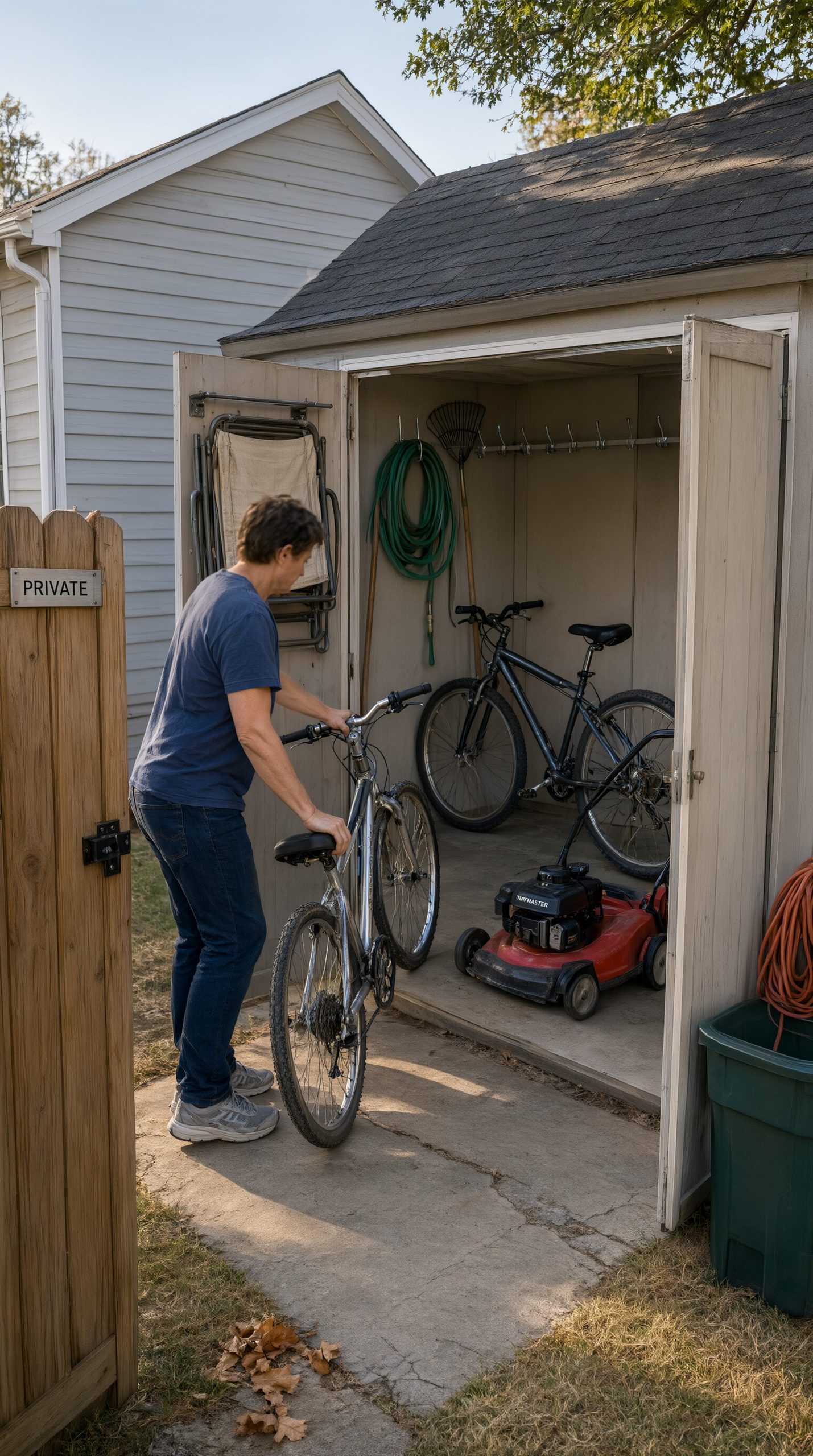
Bikes, folding furniture and larger garden equipment need more careful planning because they don’t compress neatly into shallow storage. Space saving garden sheds can still work, but the internal length and door position become more important than the headline capacity figure.
For bicycles, measure from wheel to wheel and include the handlebars. Wall hanging may suit a taller shed, provided lifting the bike feels practical. Folding chairs can often sit vertically behind hooks. Bulky items should have a clear route to the door so one stored object doesn’t trap everything else behind it.
Make a Narrow Garden Shed Sit Quietly in the Side Yard
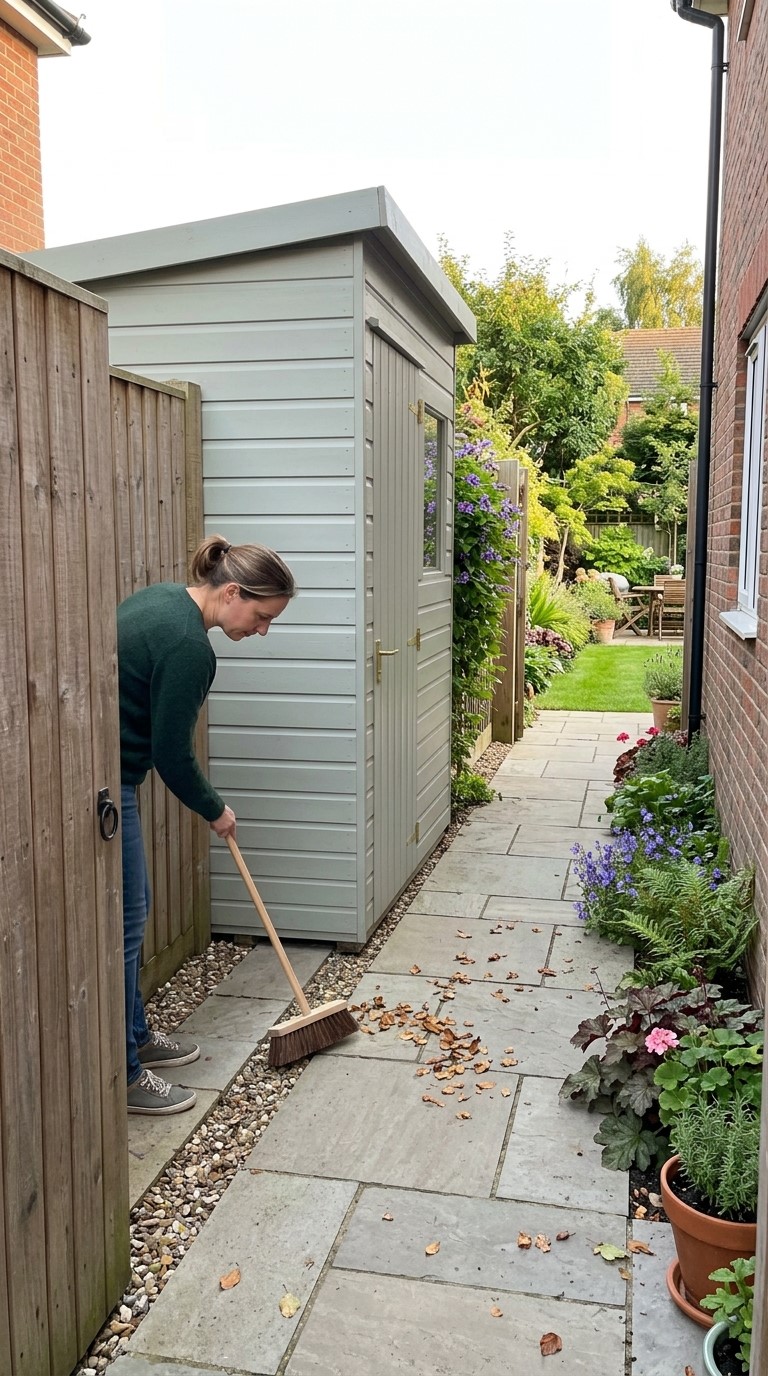
A shed beside the house may spend most of its life out of sight, but its finish can still change how the passage feels. Dark colors can recede against dark fencing, while pale finishes can stop an enclosed strip from feeling heavy. There’s no single correct choice. Look at the surfaces already there.
Simple usually works well in a narrow setting. Large decorative handles, deep trim and projecting roof details can steal useful inches. A cleaner shed face leaves the passage easier to move through and creates fewer spots for sleeves, tools or bins to catch as you walk past.
Use Simple Finishes on a Slimline Storage Shed
A slimline storage shed often looks better when it relates to either the fence or the house rather than trying to become a feature on its own. Matching a dark fence can make the shed blend into the boundary. A pale grey or soft green can work beside lighter walls.
Check the hardware as closely as the wall finish. Handles should be easy to grip without sticking far into the walkway. Hinges, locks and door stops all need enough clearance. These small details seem minor in a showroom, but they become much more noticeable when the walkway is only a few feet wide.
Keep Access Around a Narrow Garden Shed Easy to Maintain
The narrow gaps around a shed can collect leaves, cobwebs and damp debris. Leave enough room to sweep or reach the areas that will need occasional cleaning. Tiny unusable spaces between the shed and fence tend to become dirt traps.
Plants also need watching. A climbing plant or shrub can look harmless at first and then push across the doorway once it grows. Keep ventilation openings clear and make sure nothing blocks the roof drainage. A side yard is easier to manage when the shed doesn’t create little inaccessible pockets all around it.
A Better Way to Use a Narrow Side Yard
The best narrow garden shed is often smaller than the maximum structure the space could hold. Leaving a little more walking room can make a bigger difference to daily life than gaining another shelf inside. You still need to carry bins through, reach the backyard and move garden equipment without scraping along the fence.
Measure the side yard, then measure the things you want to store. Check the gate, door swing, roof drainage and wall fittings before ordering anything. Slimline garden sheds, shallow sheds and narrow lean-to designs can all work well, but each solves a slightly different problem. Pick the shape around the way you use the space, and that awkward strip beside the house can become genuinely useful storage.
