
Pumpkins, Potions and Pastries: Top Halloween Product Trends Taking Over Farmers Markets
October farmers markets are turning into small seasonal worlds filled with garden pumpkins, potion-style drinks, spooky pastries and handmade goods. The change feels right at home between baskets of apples and late-season flowers. A shopper may arrive for a squash, pause over an amber bottle of blackberry syrup and leave carrying a ghost-topped pastry for the drive home. Halloween has found its way into the market without losing the warm, local character people came for.
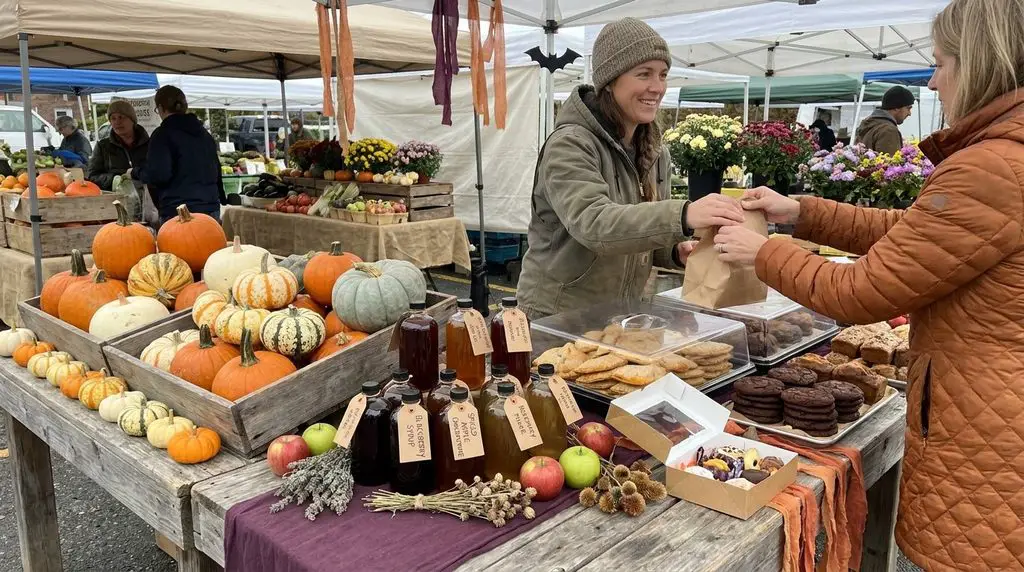
The strongest stalls build on that character. Their Halloween products grow out of harvest colors, kitchen ingredients and materials that already belong in a Home and Garden setting. Pumpkins provide the familiar starting point. Bottled “potions” bring a little theatre, while pastries offer the quickest treat. Handmade pieces fill the gaps. Together, these products turn an ordinary October shop into something people remember and may return to before the month is over.
Halloween Farmers Market Ideas Are Turning Stalls Into Seasonal Worlds
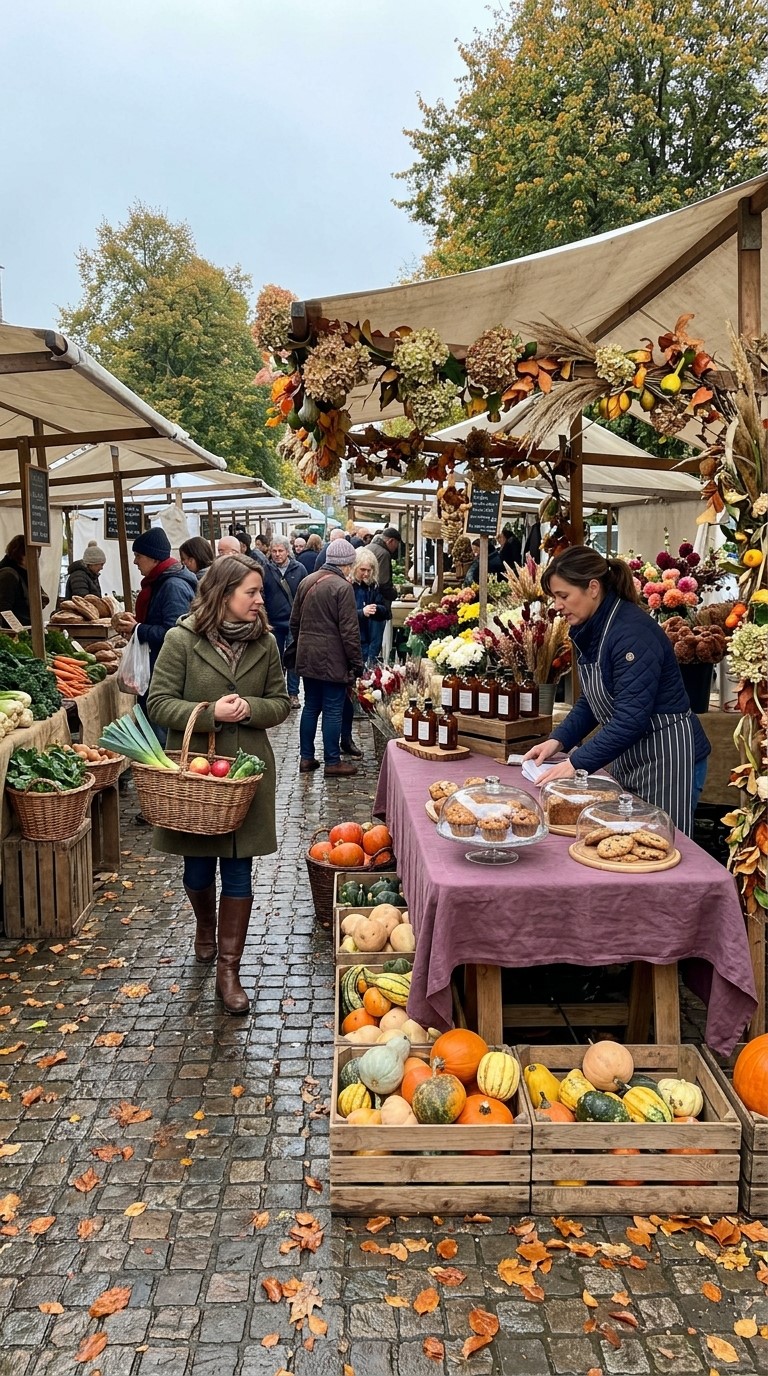
A good Halloween stall feels collected rather than decorated within an inch of its life. Crates of gourds sit beside spice mixes. Dried hydrangeas rise behind paper bags of cookies, while dark bottles catch the pale morning light. Each part makes sense on its own, yet the whole table has a clear October mood. This approach also keeps the seller’s regular products visible. A market stall should still look like a place to buy food, plants and handmade goods.
The shift suits the way many people decorate at home. They want pieces that can sit on a kitchen shelf, brighten a porch or become part of a weekend meal. A mini pumpkin, bottle of spiced apple syrup and small pastry box can all leave the same stall. None needs to shout. Their shared colors and ingredients do much of the work, which is useful news for sellers who don’t fancy hauling a plastic graveyard to market at six in the morning.
Seasonal Farmers Market Products Start With Familiar Harvest Cues
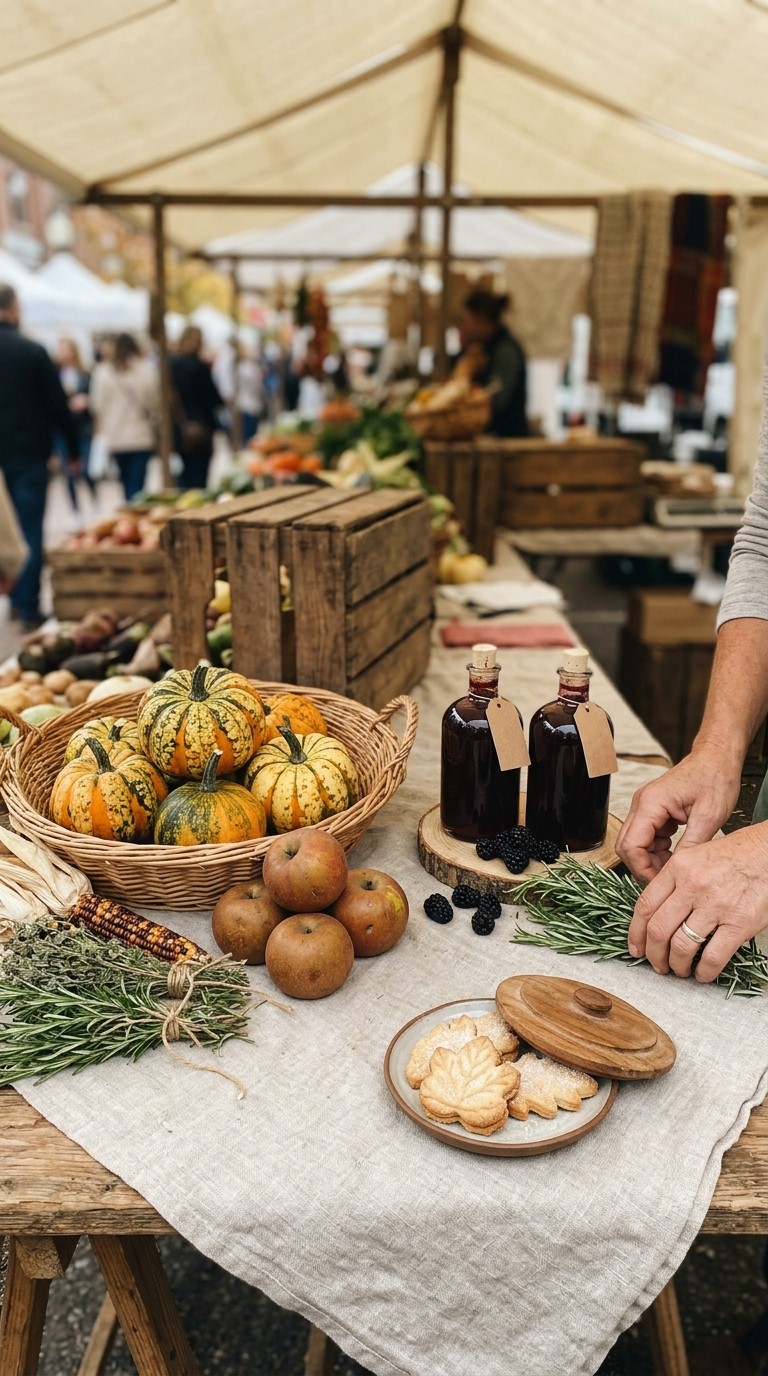
Pumpkins, apples, dried corn and late herbs give unusual Halloween products a believable setting. A row of potion bottles looks less like party-store stock when it stands beside rosemary bundles and blackberries. The same applies to decorated cookies placed near pears or small gourds. Natural harvest cues reassure shoppers that the seasonal theme grew from the market itself. Wooden crates, shallow baskets and washed linen add texture without pulling attention away from the goods.
A Spooky Market Display Builds Curiosity Before the First Purchase
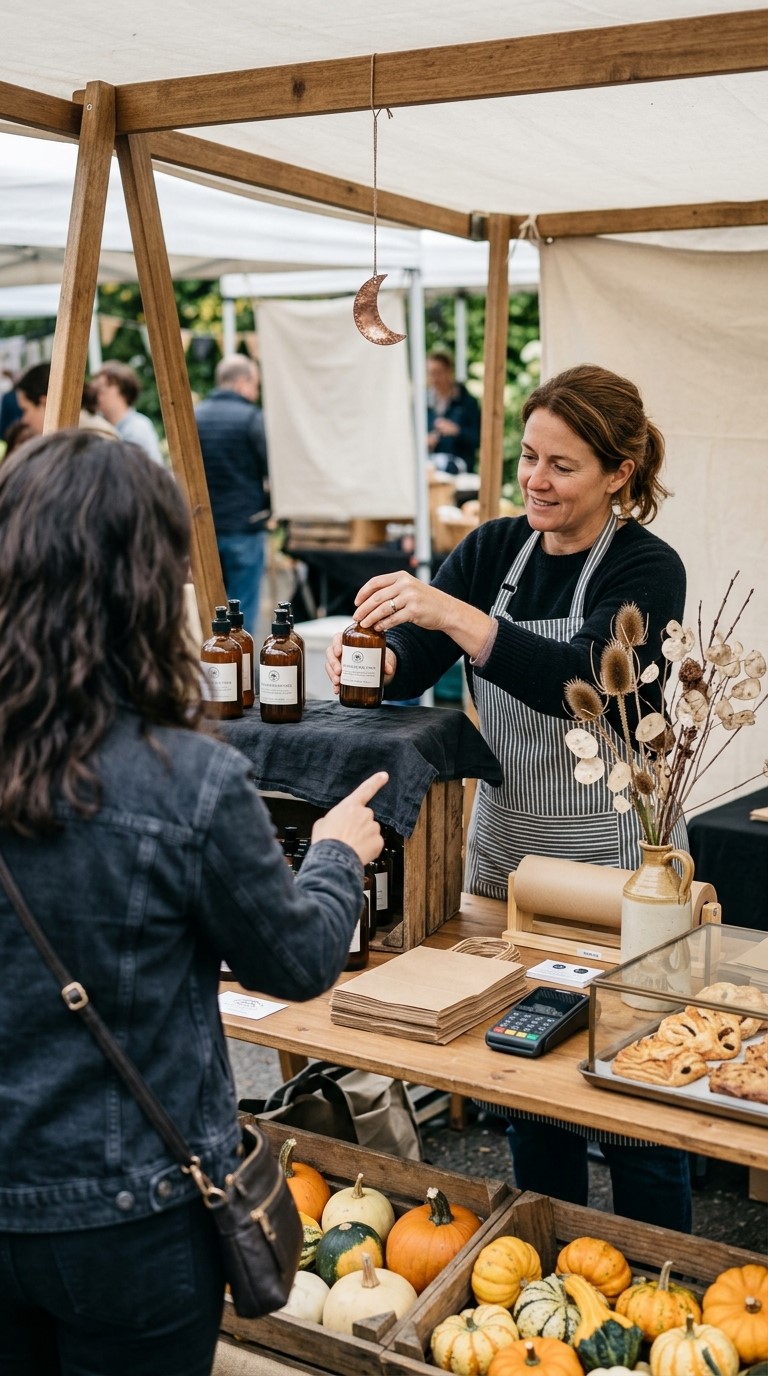
Spooky market display ideas work best when customers can still see what they’re buying. Black cloth beneath one raised section, amber glass and a few dried seed heads can create enough atmosphere. Height matters more than clutter. Bottles at the back, pastries at hand level and pumpkins near the front make the table easy to read. Cheap cobweb and piles of plastic spiders usually make food look less appealing, which rather defeats the point.
Pumpkin Products to Sell at Farmers Markets Can Start in the Garden
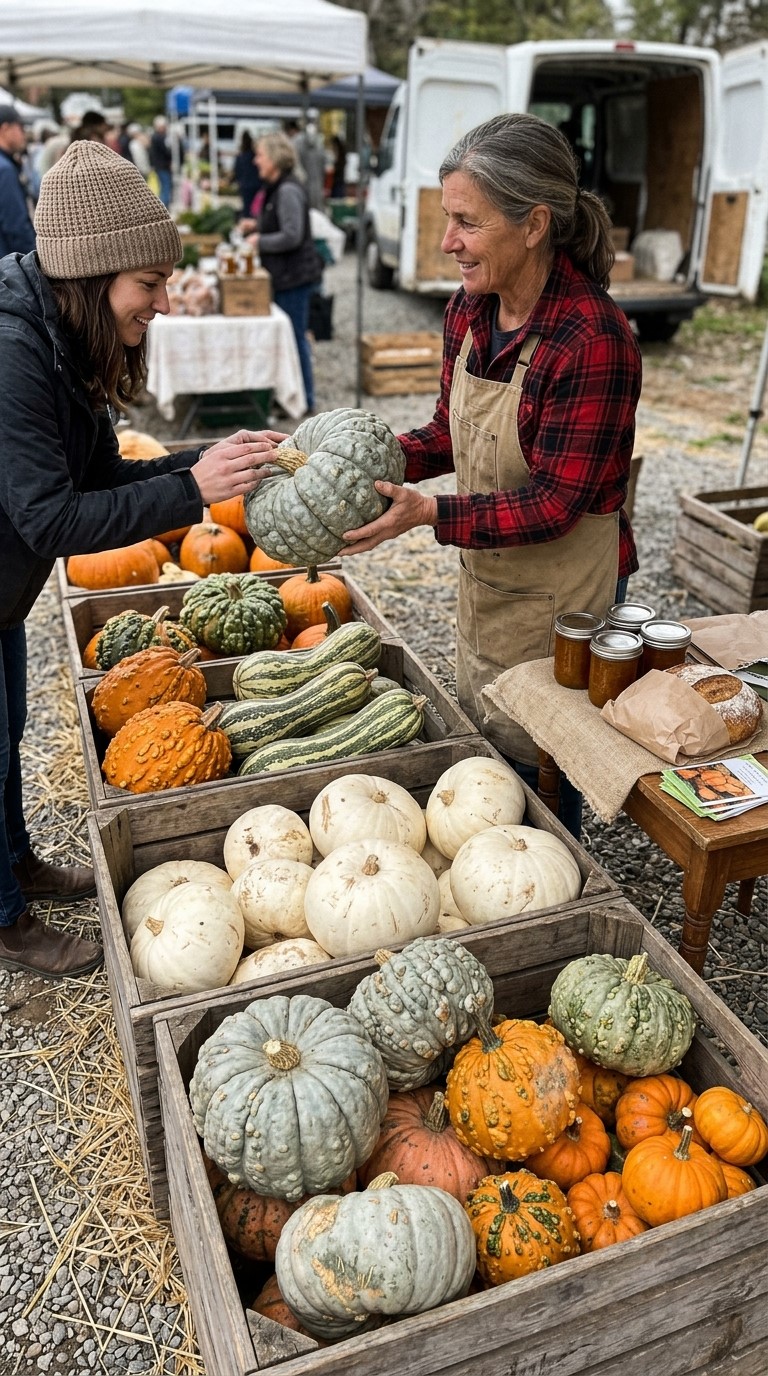
Pumpkins remain the easiest bridge between gardening and Halloween. They arrive with their own color, shape and seasonal meaning, so they need little explanation. Yet the familiar orange carving pumpkin is only one option. White, blue-grey, striped and knobbly varieties give shoppers more choice for indoor bowls, porch groupings and dinner-table displays. Sellers can also connect fresh pumpkins with baked goods, preserves or small decorations made from the same harvest.
Mini Pumpkin Products Make Easy Take-Home Fall Decor
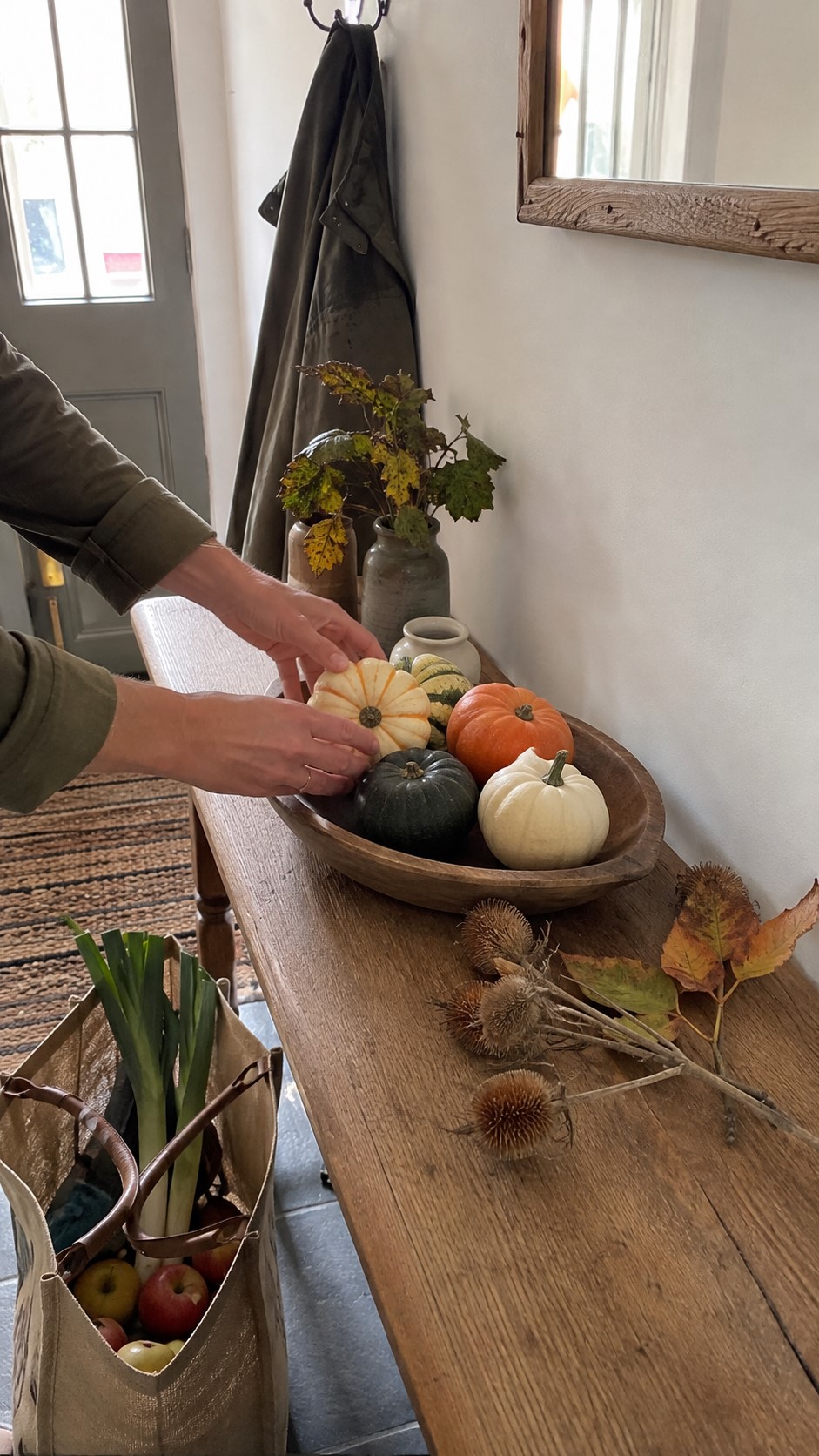
Mini pumpkin products suit shoppers who have limited space or don’t want to carry a heavy load. Mixed groups of three or five can combine pale, deep green and orange varieties. A simple paper band or shallow produce tray keeps them together without hiding their shapes. Small pumpkins also work in arrangements with dried flowers, moss or seed heads, provided the natural materials are clean and the finished piece can survive the trip home.
Decorated pumpkins are moving away from thick paint, glitter and glued-on clutter. A fine botanical pattern, muted color wash or small handwritten tag keeps the produce recognizable. That matters at a farmers market. People enjoy seeing the stem, ribbing and odd little marks that make each pumpkin different. Care advice can be included on a small card, covering dry storage, gentle handling and the need to check the base for soft spots.
Pumpkin Baked Goods Carry the Harvest Into the Bakery Basket
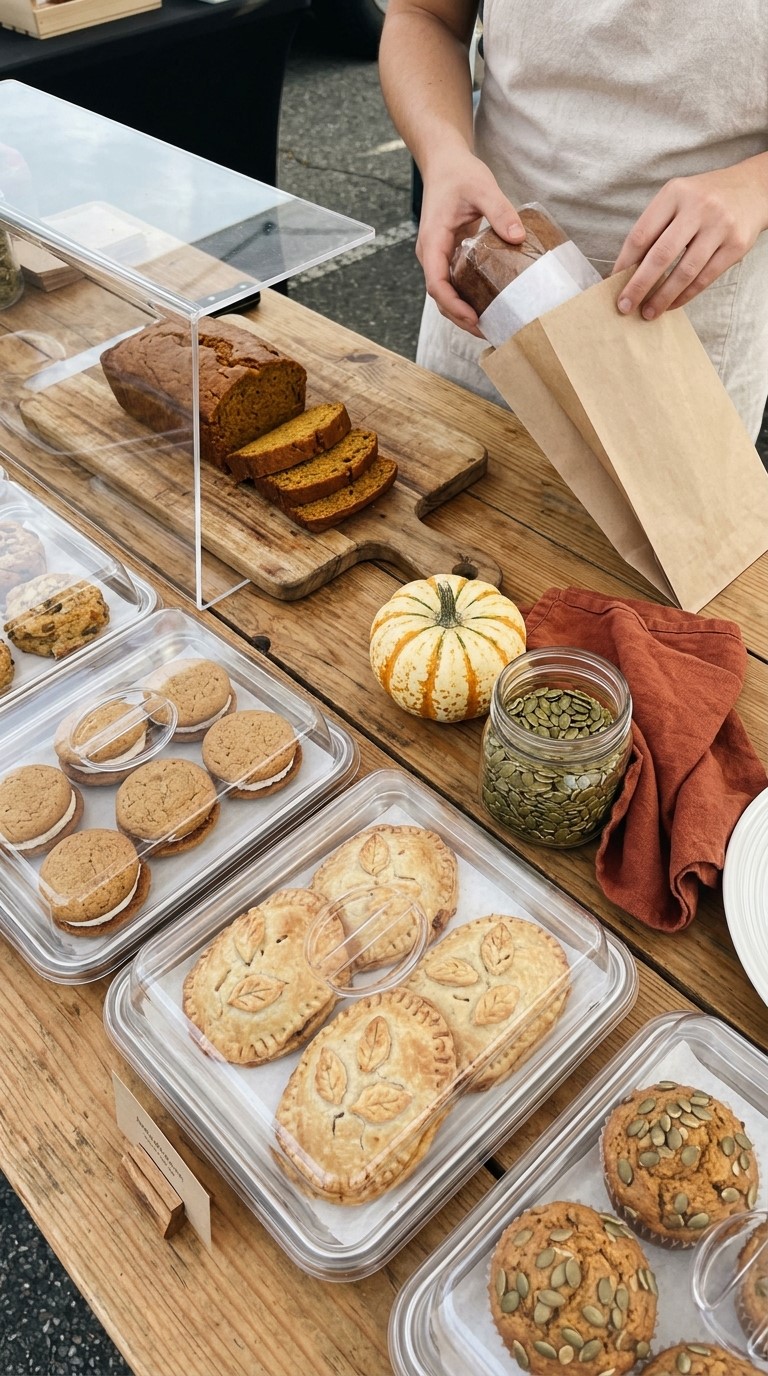
Pumpkin baked goods bring the scent of the season into the stall. Loaves, muffins, hand pies and sandwich cookies travel well and feel familiar enough for an easy purchase. The flavors can move beyond plain pumpkin spice. Ginger adds heat, toasted seeds bring crunch and dark chocolate gives the softer pumpkin flavor some backbone. Maple works too, though pouring it into every October bake can make a whole table taste oddly similar.
Presentation needs a light touch. A pastry-cut leaf, dark icing line or scattering of pumpkin seeds signals the season without burying the food. Clear wrapping or a paper window lets shoppers inspect texture and portion size. Sellers also need ingredient lists, allergen details and storage guidance that meet their local rules. Halloween names can be funny, but “Witch’s Slice” still needs to tell a customer whether it contains nuts.
Witchy Products to Sell at Markets Give the Booth a Potion-Shop Mood
The potion trend works because it turns useful pantry products into small objects of curiosity. A bottle of blackberry shrub, spiced apple concentrate or rosemary syrup already has rich color. Give it a strong name and place it beside herbs or fruit, and the Halloween link becomes clear. The trick is keeping the product understandable. Customers shouldn’t have to study a label for five minutes before learning that the mysterious purple liquid belongs in sparkling water.
Halloween Drinks Borrow From Witch Potion Drinks and Garden Flavors
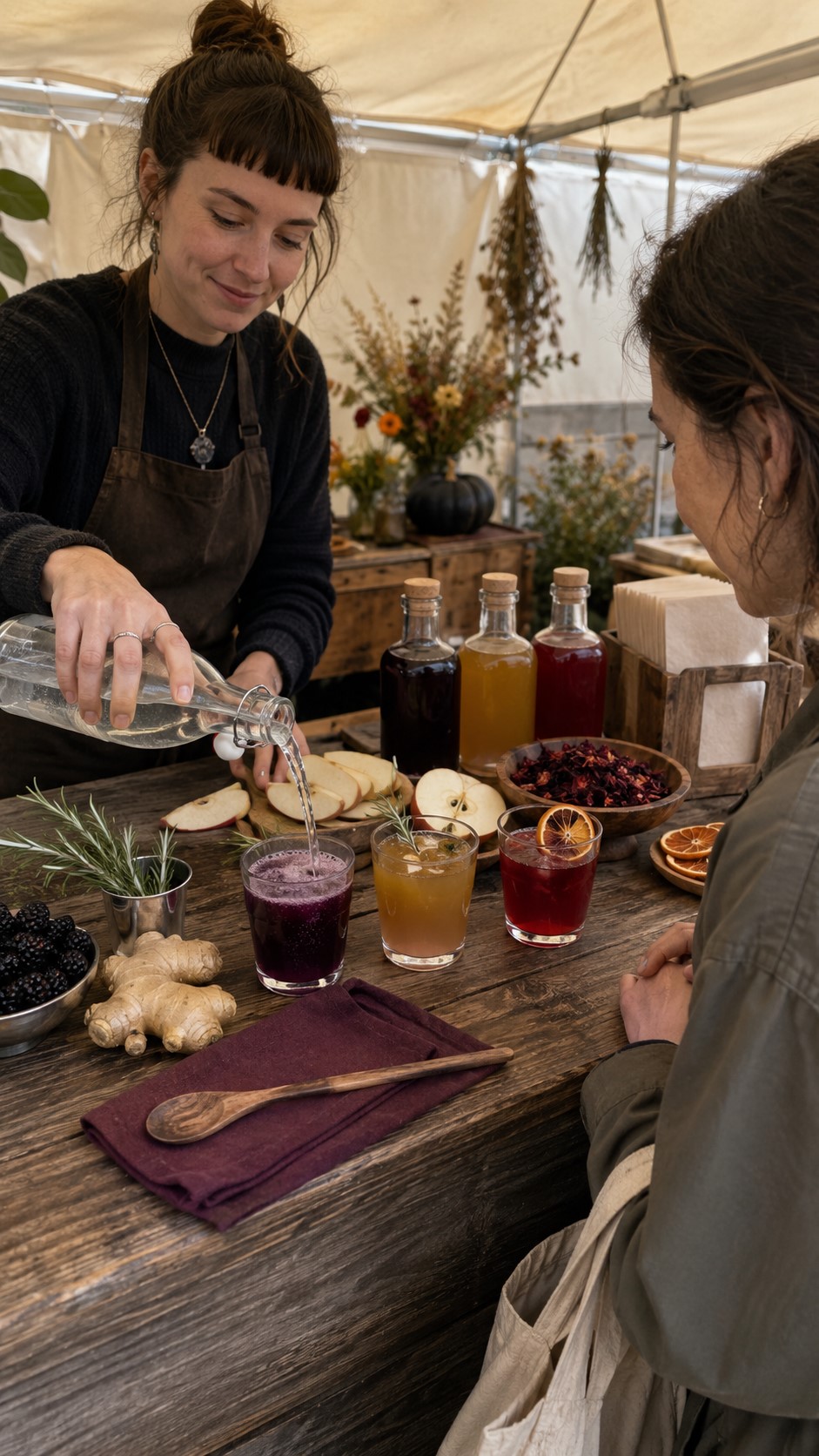
Halloween drinks can draw on ingredients that feel at home in autumn gardens and kitchens. Blackberry, apple, ginger and rosemary produce deep colors and bold scents. Tea blends might combine hibiscus with dried citrus, while cocoa mixes can use cinnamon or mild chilli. Bottled syrups and dry drink mixes are practical because customers can use them later for a party, movie night or cold evening at home.
Small bottles make sense for shoppers trying an unfamiliar flavor. A trio might include a dark berry syrup, an apple spice mixer and a herbal option, with clear serving suggestions on each label. Sampling can help when market rules allow it. Health claims need to stay off herbal products unless they meet the relevant requirements. “Garden sage tea” tells people what they are buying. “Sleep spell” creates questions a cheerful label can’t answer.
An Apothecary Market Booth Gives Bottled Goods a Stronger Story
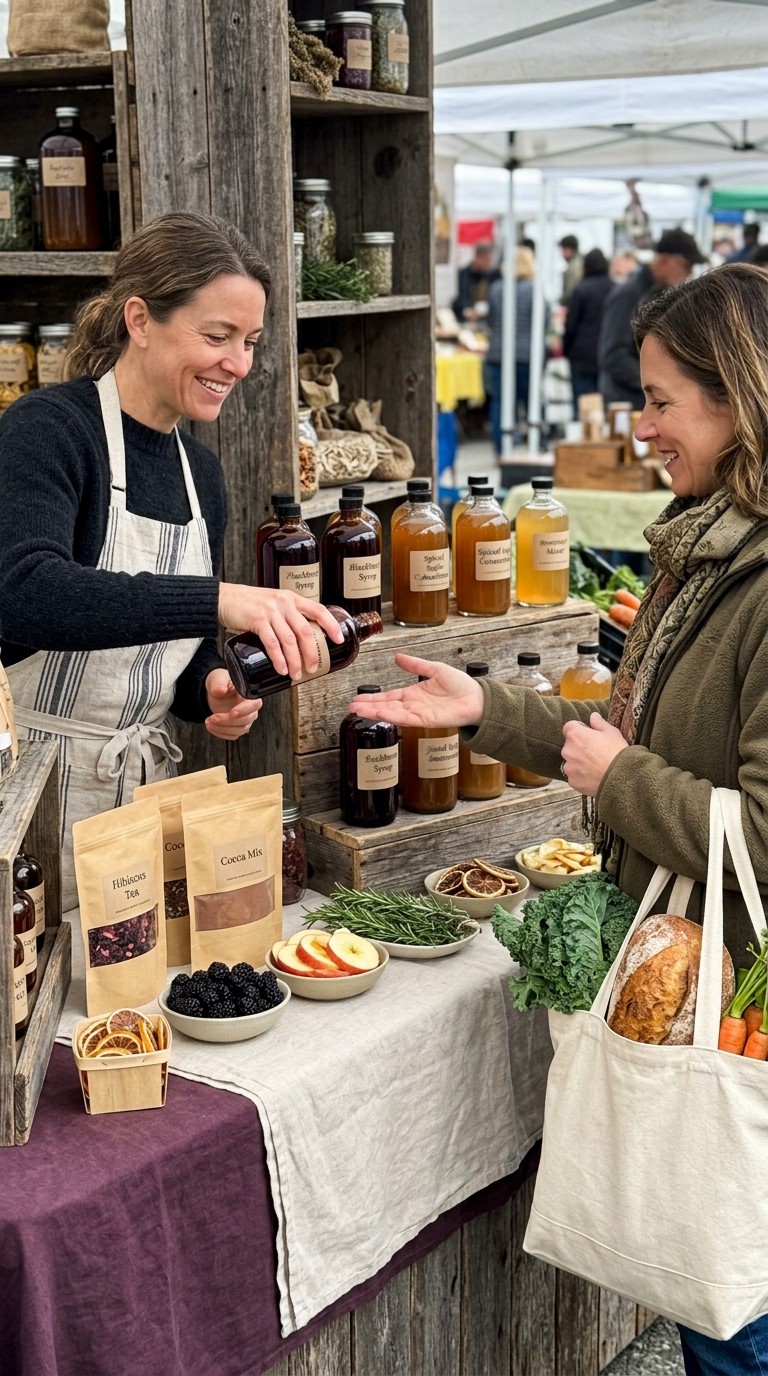
An apothecary market booth can look handsome with very little fuss. Amber bottles, wooden risers, clean labels and small bunches of dried herbs set the tone. Good lighting is more useful than a heap of props, especially on a grey morning. Keep decorative script for a short product name and use a plain font for flavors, ingredients and directions. A customer should get the joke, understand the product and find the price in a few seconds.
Halloween Baked Goods for Farmers Markets Are Moving Center Stage
Baked goods have become the social part of the Halloween stall. People buy them for children, office tables, neighbours or the walk back to the car. They also give bakers room to play without asking customers to commit to a large decoration for the house. The products seeing the most attention tend to be portable and easy to recognize, with one detail that makes them feel tied to October.
Farmers Market Pastries Mix Autumn Flavors With Spooky Decoration
Farmers market pastries can carry seasonal flavor without looking like children’s party food. Apple hand pies with small cut-out faces, pear turnovers marked with pastry leaves and maple buns with dark sugar all fit the setting. A chocolate cookie shaped like a bat can sit beside them, but a table full of black icing soon becomes heavy. Warm browns, fruit reds and pumpkin shades give the eye somewhere softer to land.
Single portions are useful for immediate eating, while larger pies and loaves serve people planning a weekend lunch. Offering both gives the stall some range without requiring twenty different recipes. Texture matters in an outdoor setting. Delicate decorations may suffer in damp air or wind, so firm glazes and pastry details are safer than tall frosting. Covered displays protect food while allowing customers to see the layers, fruit and finish.
Halloween Treat Boxes Turn Small Bakes Into Ready-Made Gifts
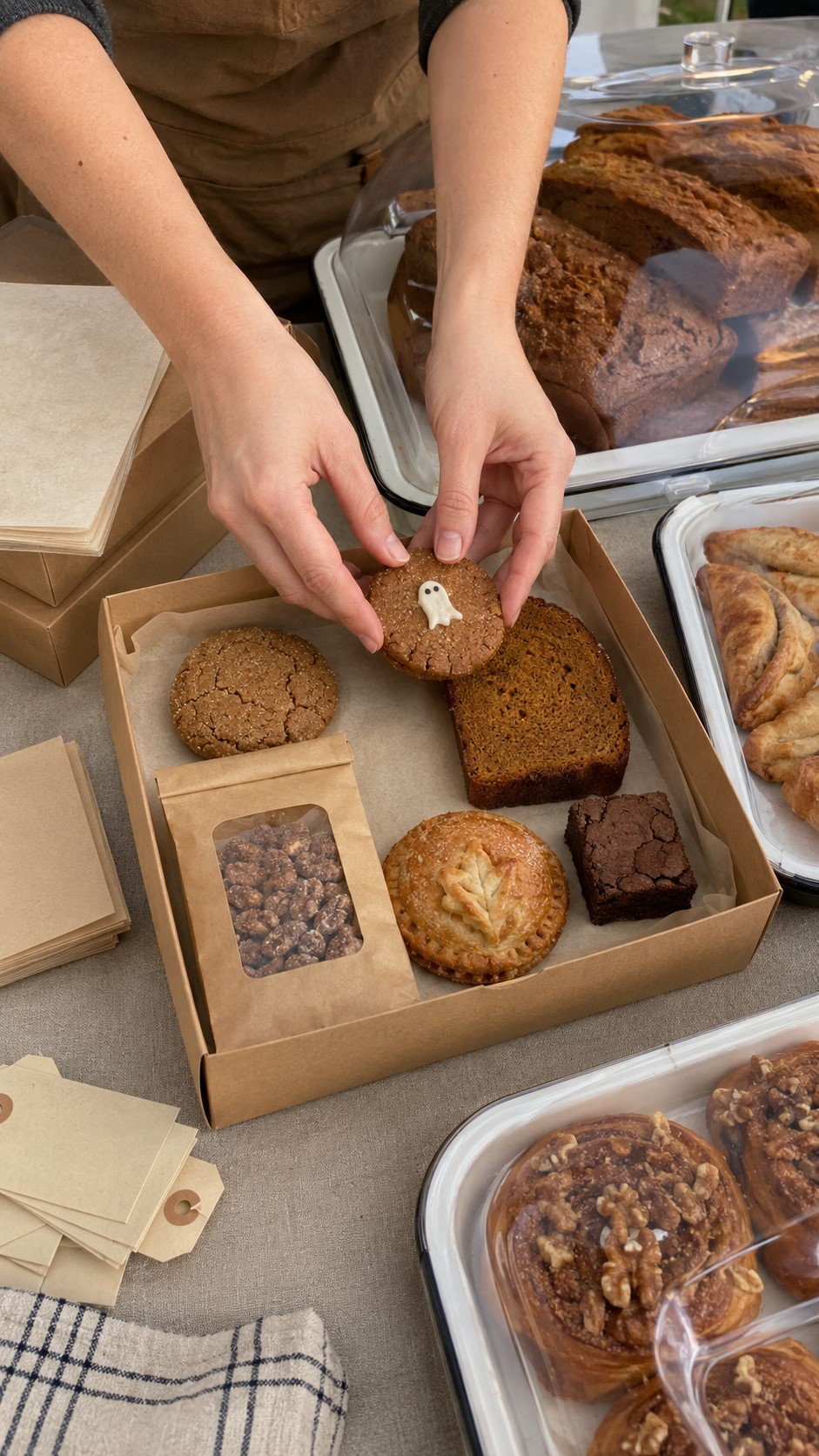
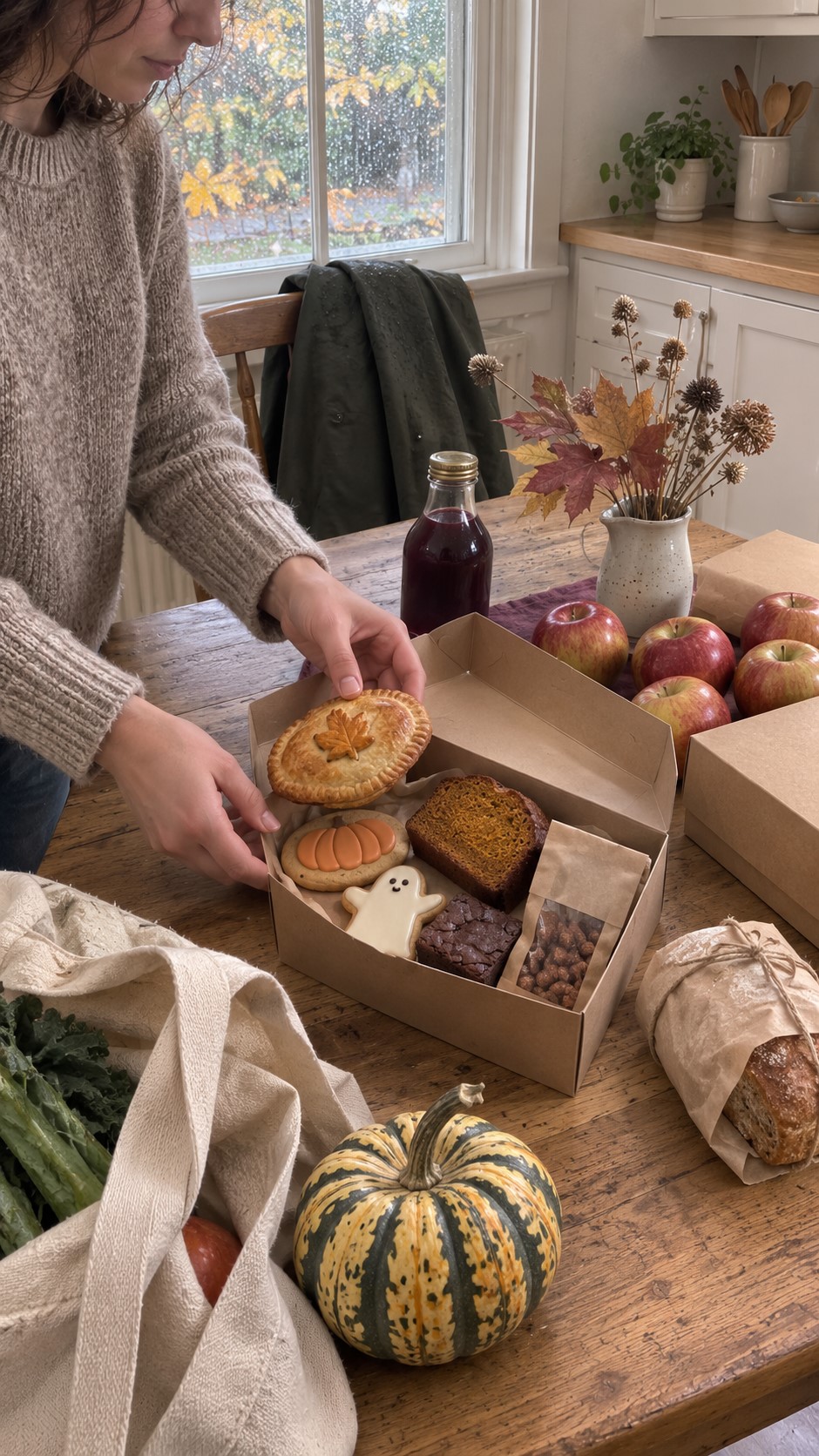
Halloween treat boxes solve a familiar problem for shoppers who want something seasonal but can’t choose one item. A box might hold two decorated cookies, a pumpkin loaf slice, a brownie and a small bag of spiced nuts. Different shapes make the selection feel generous. The portions can remain modest, which gives customers a chance to taste several products and may introduce them to something they would have passed by alone.
Packaging should protect the goods before it tries to look clever. A shallow kraft box with a food-safe liner keeps pastries from sliding into one another. A clear window helps, as does a label placed where it won’t cover the contents. Deep plum, faded orange or moss green can carry the Halloween mood without relying on cartoon graphics. Boxes also need clear use-by, storage, ingredient and allergen information.
Handmade Halloween Products Extend the Market Beyond Food
Food may draw the first crowd, but handmade Halloween products give people another reason to slow down. Dried arrangements, beeswax candles, botanical soaps and fabric pumpkins sit comfortably near produce when their materials share the same autumn colors. They also appeal to shoppers who have already bought their groceries. Market policies vary, so sellers should check which nonfood goods are allowed before planning a table full of stock.
Halloween Crafts to Sell at Farmers Markets Can Sit Beside Produce
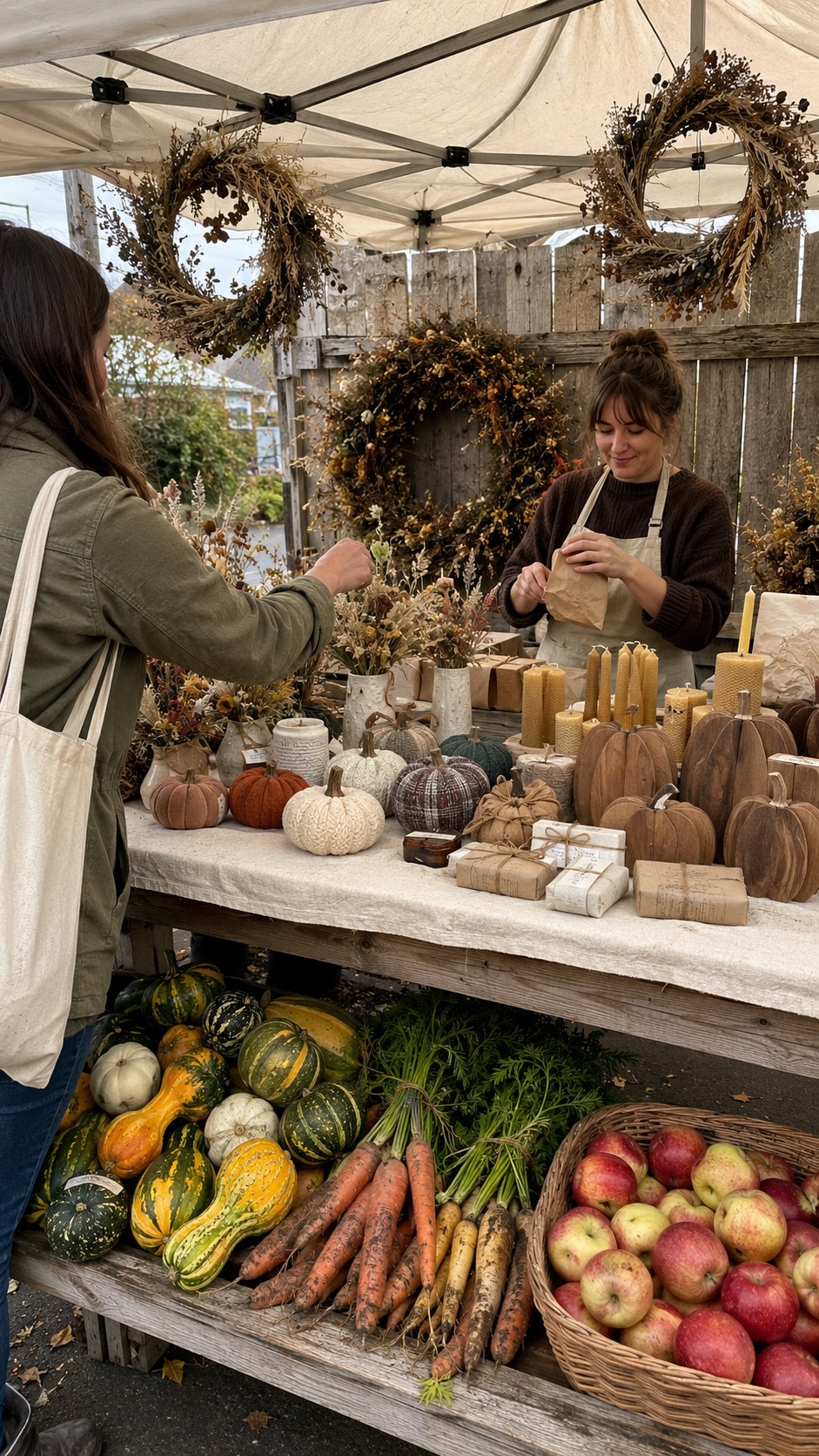
Halloween crafts to sell at farmers markets feel most convincing when they have some connection to the garden or home. Dried gourd decorations, seed-head wreaths, pressed botanical pictures and small wooden pumpkins all belong beside harvest produce. Natural variation becomes part of their appeal. A crooked stem or weathered seed pod looks right here. Perfectly matching plastic pieces tend to feel out of place among muddy carrots and hand-shaped bread.
Scale deserves thought. Large wreaths and porch arrangements create height, but small hanging decorations, candle holders and table pieces are easier impulse purchases. A seller can use one larger item to catch the eye, then place compact versions within reach. If candles, soaps or body products join the range, their labels need the same care as food labels. Ingredients, safe-use directions and local selling requirements still apply during spooky season.
Halloween Gift Items Give Shoppers More Reasons to Browse
Small Halloween gift items work well when they’re ready to hand over. A mini dried arrangement, boxed candle, paper-wrapped soap or jar of spice mix can suit a host, neighbour or teacher. Pairing products can help too. Herbal tea beside a honey jar makes sense, as does a pastry box near a small pumpkin. The pairing should feel natural and useful. Shrink-wrap bundles of unrelated leftovers rarely fool anyone.
Halloween Farmers Market Products Work Best as One Connected Collection
A Halloween stall becomes easier to understand when its products share a few clear links. Those links might be an ingredient, a color or a material used across the table. Pumpkins can appear fresh, baked and printed on a label. Blackberries can flavor syrup and stain icing a dark purple. Repetition gives the display rhythm and helps a wide mix of goods feel as though they came from the same seller.
A Farmers Market Booth Setup Links Pumpkins, Potions and Pastries
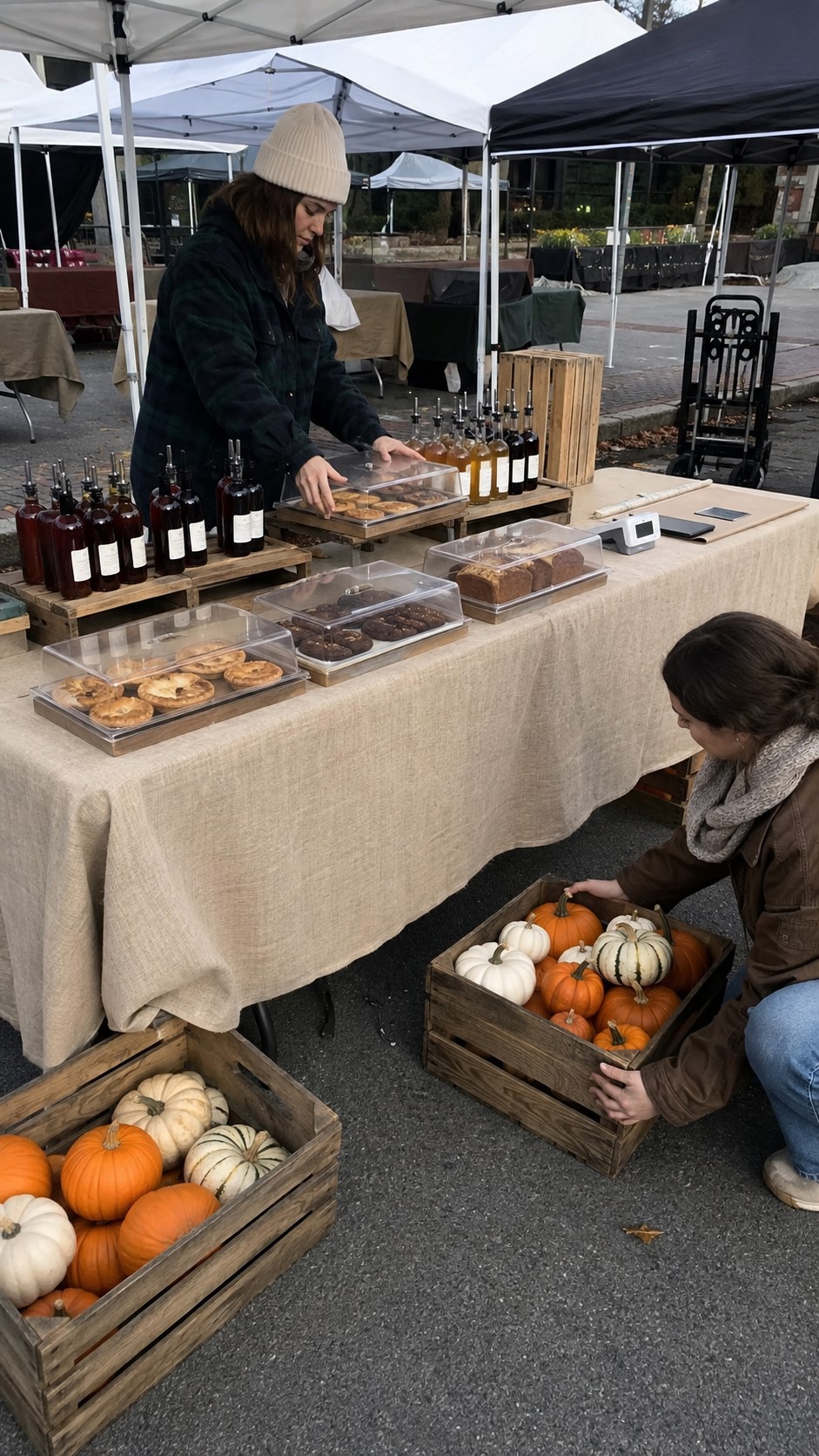
A practical farmers market booth setup starts with weight and height. Pumpkins can hold the front corners or sit in low crates beneath the table. Bottles work well on secure risers at the back, where light can pass through them. Pastries belong near the center at a comfortable viewing height. Leave a clear area for wrapping purchases and taking payment. A beautiful table becomes annoying fast when there’s nowhere to put a paper bag.
Related products should sit close enough for the connection to register. Pumpkin bread near striped squash makes immediate sense. Rosemary syrup can stand beside herb bundles, while a treat box may sit near small gift items. Food still needs protection from soil, dried plant debris and frequent handling. Keeping display pumpkins on a lower level and wrapped goods above them preserves the market look without creating a hygiene headache.
Farmers Market Packaging Ideas Carry the Halloween Mood Home
Farmers market packaging ideas can repeat the stall’s colors without turning every item into a costume. Kraft paper, muted labels, cotton twine and reusable glass suit the setting. One small bat, moon or pumpkin motif is enough to mark the season. Clear wording matters more. Product names, ingredients, allergens and directions should remain easy to find, while packaging needs to handle grease, damp weather and a crowded shopping bag.
Fall Market Product Ideas Are Making October Shopping Feel Special
The appeal of these fall market product ideas lies in how comfortably they connect garden, kitchen and home. Fresh pumpkins lead to baked pumpkin treats. Herbs become tea or syrup, while dried seed heads return as decorations. Each product carries part of the October mood, yet it still has a practical life after the market closes. That balance keeps Halloween fun without making the stall feel disposable or overdone.
And shoppers notice the feeling as much as the individual goods. They come home with a pumpkin for the step, a pastry for later and a small bottle tucked into the bag. The market has given them dinner, decoration and a story from one cold morning outdoors. As seasonal markets keep growing beyond fresh produce, Halloween offers sellers a chance to connect what comes from the garden with how people eat, decorate and gather at home.
