
Selling Produce at Farmers Markets: How Gardeners Can Turn a Big Harvest Into a Better Market Day
The truck is packed before sunrise. Tomatoes are rolling in shallow crates, basil is wrapped in damp towels and a folding table is wedged against the back door because of course it doesn’t fit the way it did last night.
By the time you pull into the farmers market, the garden suddenly feels less romantic. Those rows of beans and baskets of cucumbers have become something else: stock. Real stock. The kind that has to look fresh, sit in the heat, catch a stranger’s eye and leave the table before everyone starts packing up.
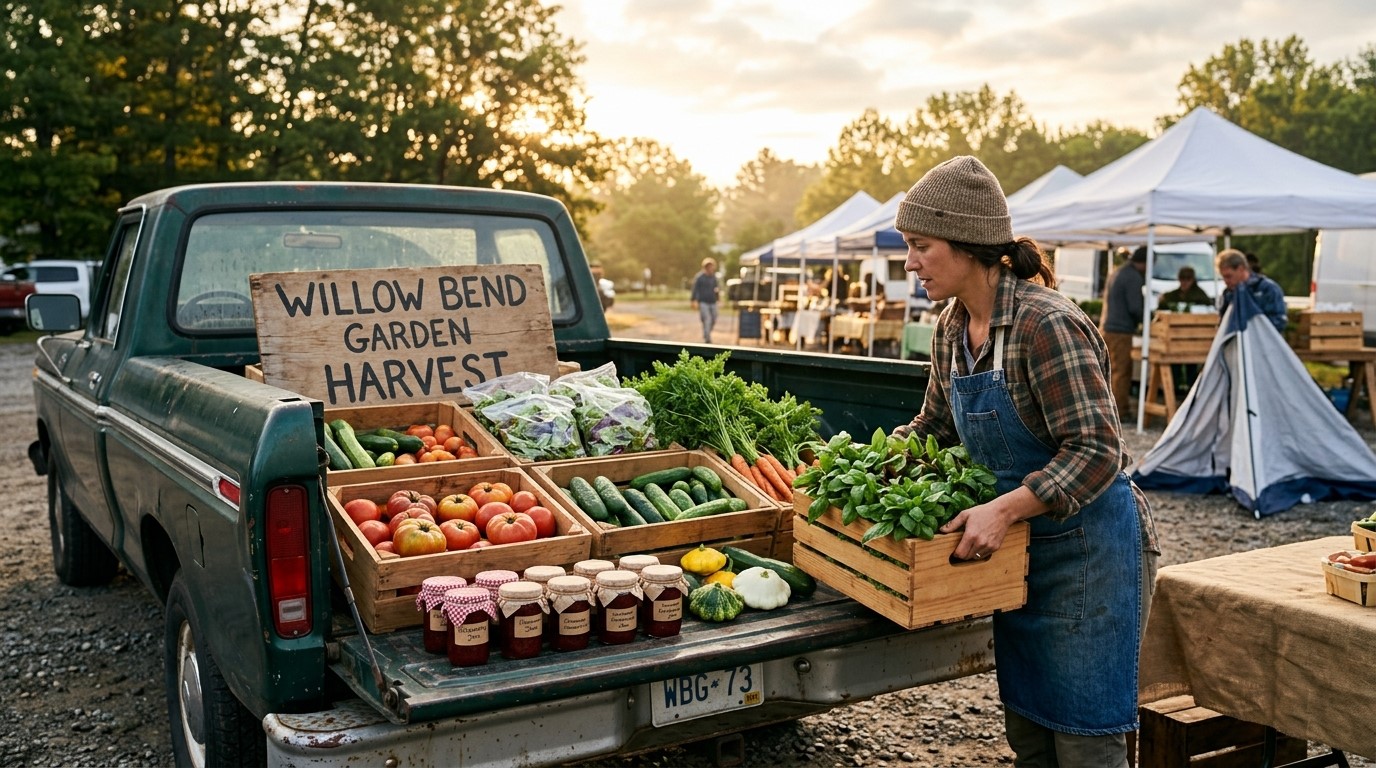
For homesteaders and home gardeners, selling produce at farmers markets can be a useful way to turn extra harvests into income. It can also feel awkward the first time. You know how to grow food. Selling it asks for a different set of habits: clear pricing, a tidy table, good timing and the nerve to say, “Yes, those are $4 a bunch.”
Selling Produce at Farmers Markets Starts Before Market Morning
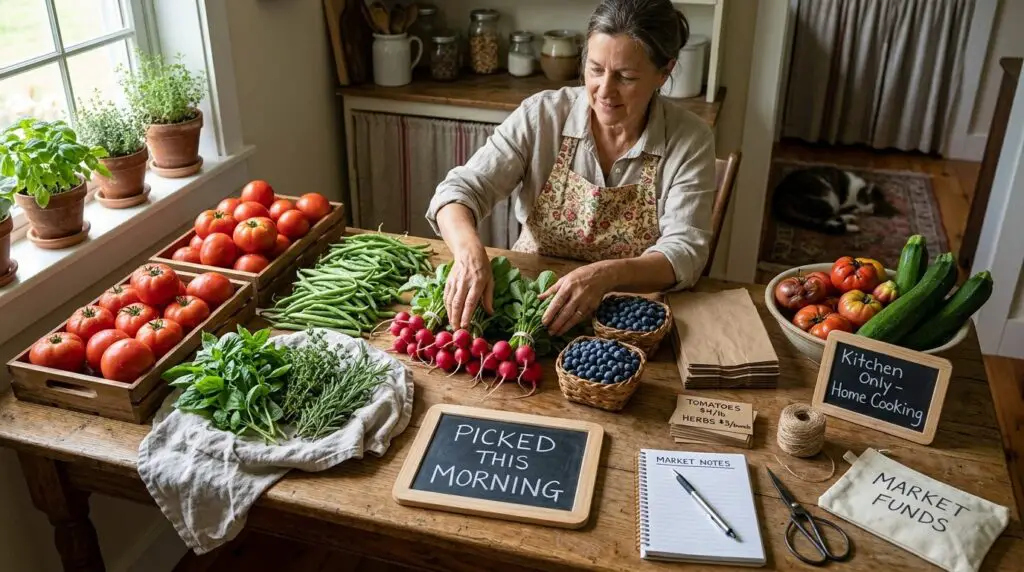
The best market tables are not built at the market. They start in the garden, usually with a basket in one hand and a bit of judgment in the other. Some vegetables are worth selling. Some are better for soup, chickens or the compost pile. That sounds harsh, but shoppers are not buying your effort. They are buying what they can take home and use.
Think of selling produce at farmers markets as editing the harvest. You want firm tomatoes, clean greens, crisp herbs and vegetables that look like they were picked by someone who cared. Huge squash, bruised peppers and limp lettuce may still be food, but they do not belong at the front of a table where first impressions do most of the work.
Selling Garden Produce Begins With What You Can Pick Well
Selling garden produce gets easier when you stop trying to bring everything. A few strong crops can do more for your table than a messy spread of whatever happened to ripen. If your cherry tomatoes are sweet, your basil looks full and your cucumbers are coming in steadily, that may be enough for a first market.
Pick with the shopper in mind. Bunch herbs neatly. Trim beet greens if they are ragged. Brush dirt from onions. Keep salad greens cool and avoid washing tender produce so hard that it bruises before you arrive. The goal is not perfection. It is freshness that feels believable, the kind that makes someone think about dinner before they even ask the price.
Farmers Market Vendor Checklist Items to Sort Early
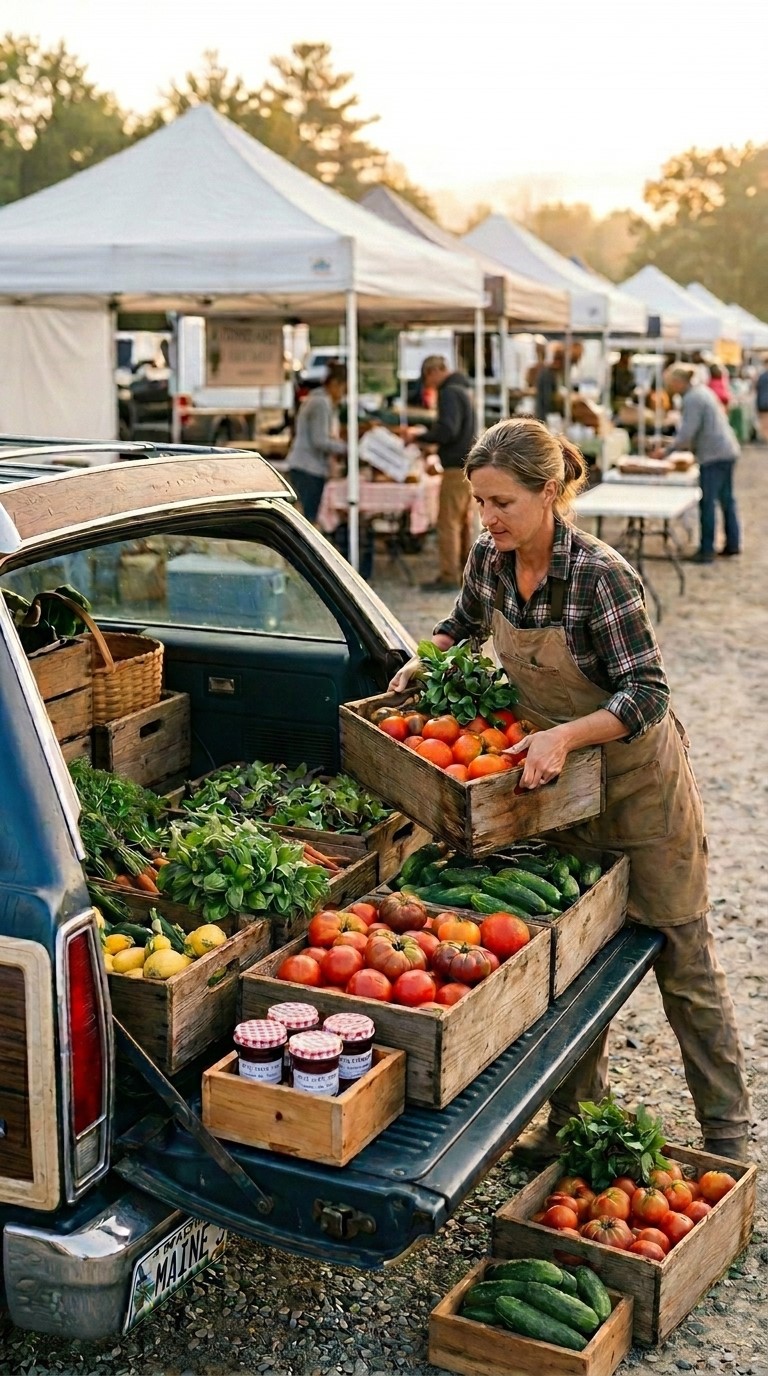
A farmers market vendor checklist should start with the boring things, because boring things are what ruin market mornings. Before you sell, check the market application, stall fee, arrival time, parking rules, table size and whether you need a canopy. Ask about local rules for selling produce, eggs, honey, cut flowers or any prepared food.
Then pack the practical items: tablecloth, price signs, bags, small bills, card reader, water, scissors, tape, marker, clips, notebook, shade cloth and a cooler for tender crops. You do not need a fancy booth. You do need a setup that lets you work without digging under crates while three people wait to pay.
What to Sell at Farmers Market When Your Garden Is Full
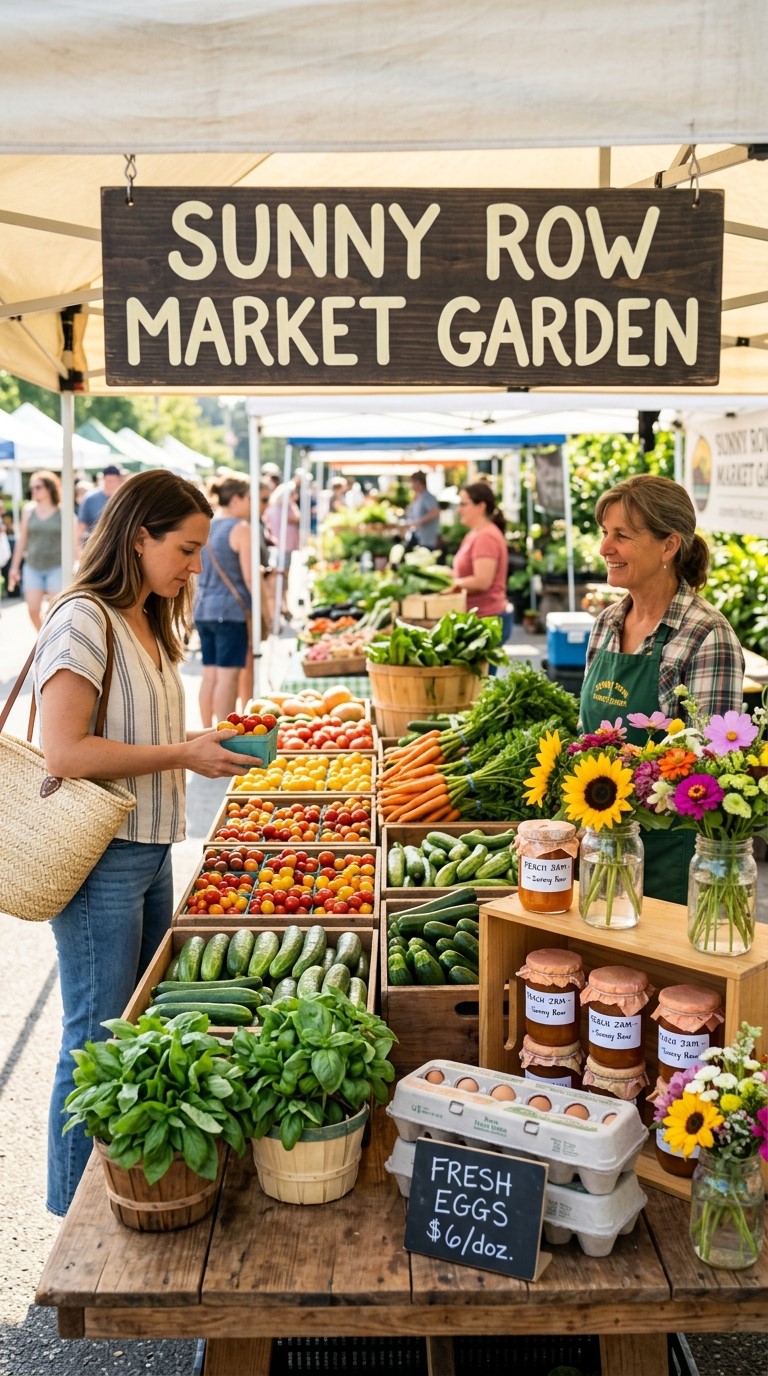
The question of what to sell at farmers market usually arrives in the middle of a glut. Suddenly the beans are coming in hard, the zucchini has lost all sense of decency and every counter in the kitchen has tomatoes on it. A full garden feels generous until it becomes a storage problem.
Start with produce people already know how to use. Tomatoes, cucumbers, peppers, beans, lettuce, herbs, onions, potatoes, squash and seasonal fruit all have an easy place in home cooking. Shoppers are more likely to buy something familiar, especially if they can picture how it fits into lunch, dinner or a weekend canning project.
What to Sell at a Farmers Market for Fast First Sales
What to sell at a farmers market depends on the season, but beginners usually do well with produce that looks abundant and simple to use. Cherry tomatoes in pints, basil bunches, salad bags, cucumbers, zucchini, garlic, herbs and cut flowers can all feel approachable. Smaller items also give shoppers a low-pressure way to buy from you.
Herbs deserve special mention. A small bunch of basil, mint, parsley or dill can make a plain table smell alive. People may not have planned to buy herbs, but the scent changes their mind. Put them where shoppers can see them and keep the stems fresh. Wilted herbs look sad fast, and sad herbs are hard to rescue.
Selling Vegetables at Farmers Market With Freshness in Mind
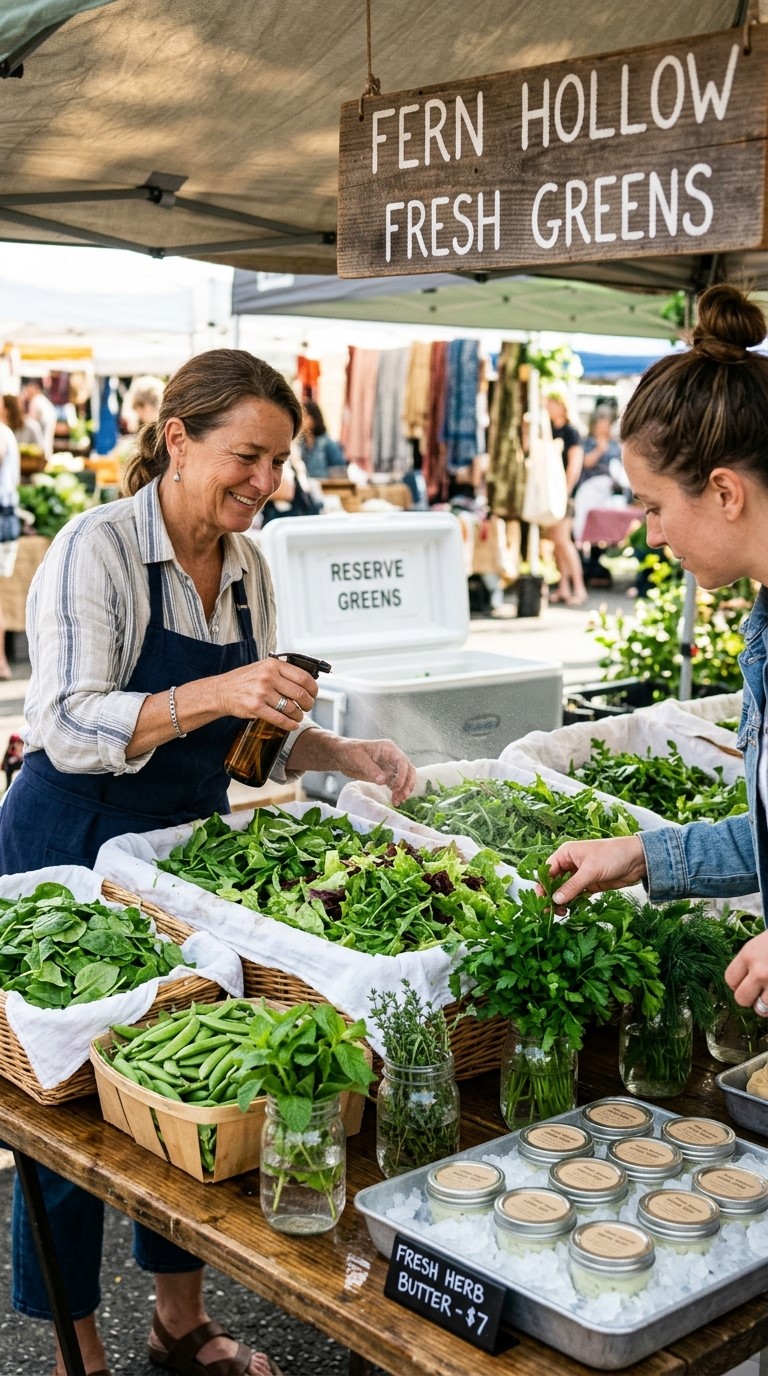
Selling vegetables at farmers market is partly about timing. Pick too early and you may lose quality. Pick too late and you will be packing in a panic. Greens, herbs and tender vegetables are often best harvested close to market time, then kept cool. Root crops, onions and winter squash can be sorted earlier.
Be honest about what travels well. A basket of perfect ripe tomatoes may look wonderful at home, then arrive cracked if the road is rough. Delicate lettuce may need a cooler. Beans can handle more movement, but they still need shade. Your table should look like the garden at its best, not like the garden survived a car accident.
Farmers Market Pricing Produce Without Feeling Awkward
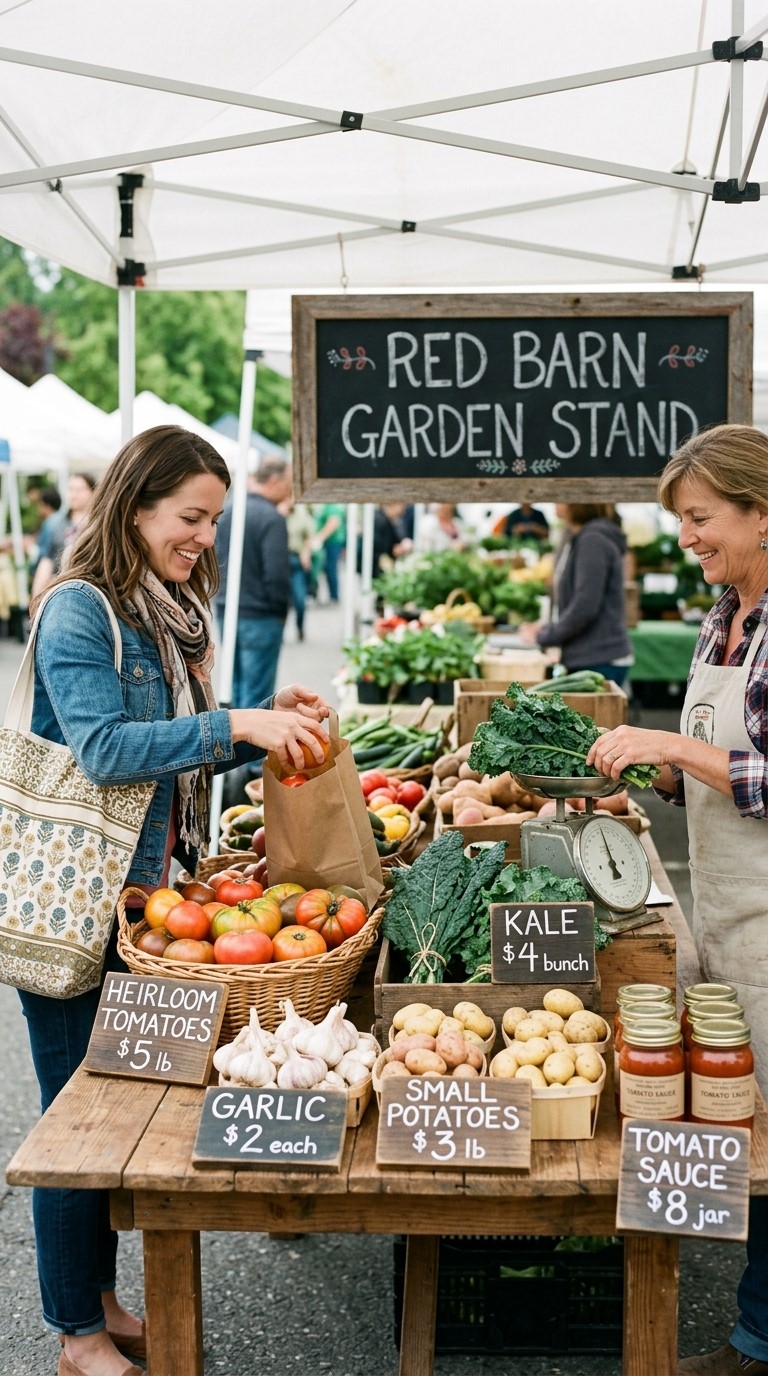
Farmers market pricing produce is where many gardeners suddenly get shy. They remember the cost of seeds, compost, water, mulch, tools, fuel and their time, then price everything like they are apologizing for taking up space. That is a bad habit. A shopper who wants fresh local produce expects to pay for it.
Look around before setting prices. Visit the market as a customer, check nearby farm stands and notice how produce is sold: by bunch, pint, pound, bag or piece. You do not have to be the cheapest table. In fact, being too cheap can make your produce look less desirable and train shoppers to undervalue your work.
Farmers Market Pricing Produce by the Work Behind It
Farmers market pricing produce should account for more than the vegetable in front of you. A bunch of carrots carries the cost of the seed, thinning, weeding, watering, harvesting, washing and tying. A pint of cherry tomatoes carries weeks of care, plus the time spent picking each small fruit without crushing it.
That does not mean every crop needs a dramatic backstory. It means you should stop treating garden surplus like a favor. If your produce is clean, fresh and fairly grown, price it with a steady hand. Shoppers can feel hesitation. Clear prices make the table calmer for everyone, including you.
Pricing Vegetables for Market With Signs People Can Read
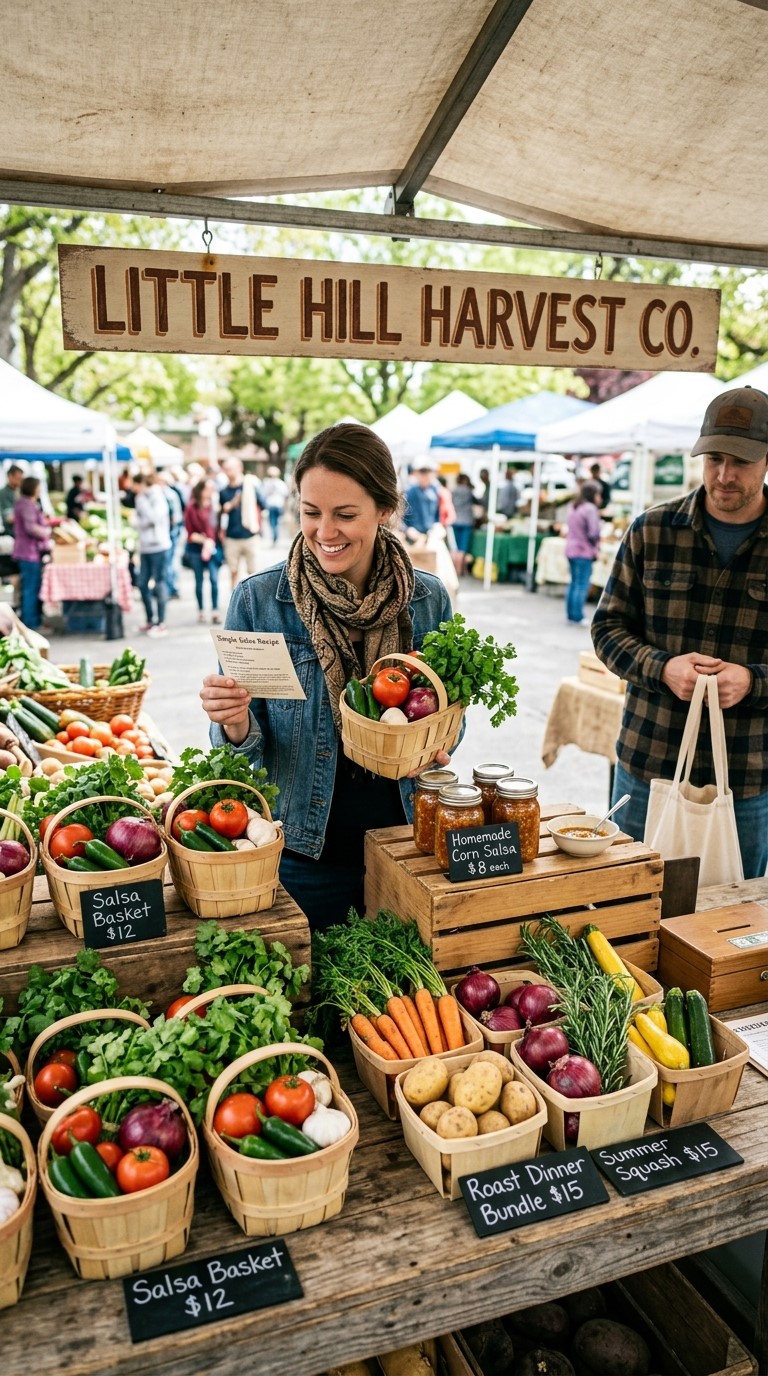
Pricing vegetables for market works best when nobody has to ask basic questions. Small signs should sit right beside each item. Use plain wording: “Cherry tomatoes, $4 pint,” “Basil, $3 bunch” or “Cucumbers, 2 for $3.” If you use a scale, make the price per pound easy to see.
Bundle pricing can help shoppers buy more without feeling talked into it. A salsa basket with tomatoes, peppers, onions and cilantro makes sense. So does a soup bundle with carrots, potatoes and herbs. People are tired. When your table solves dinner, even in a small way, produce feels less like an errand and more like relief.
Farmers Market Produce Display That Makes People Stop
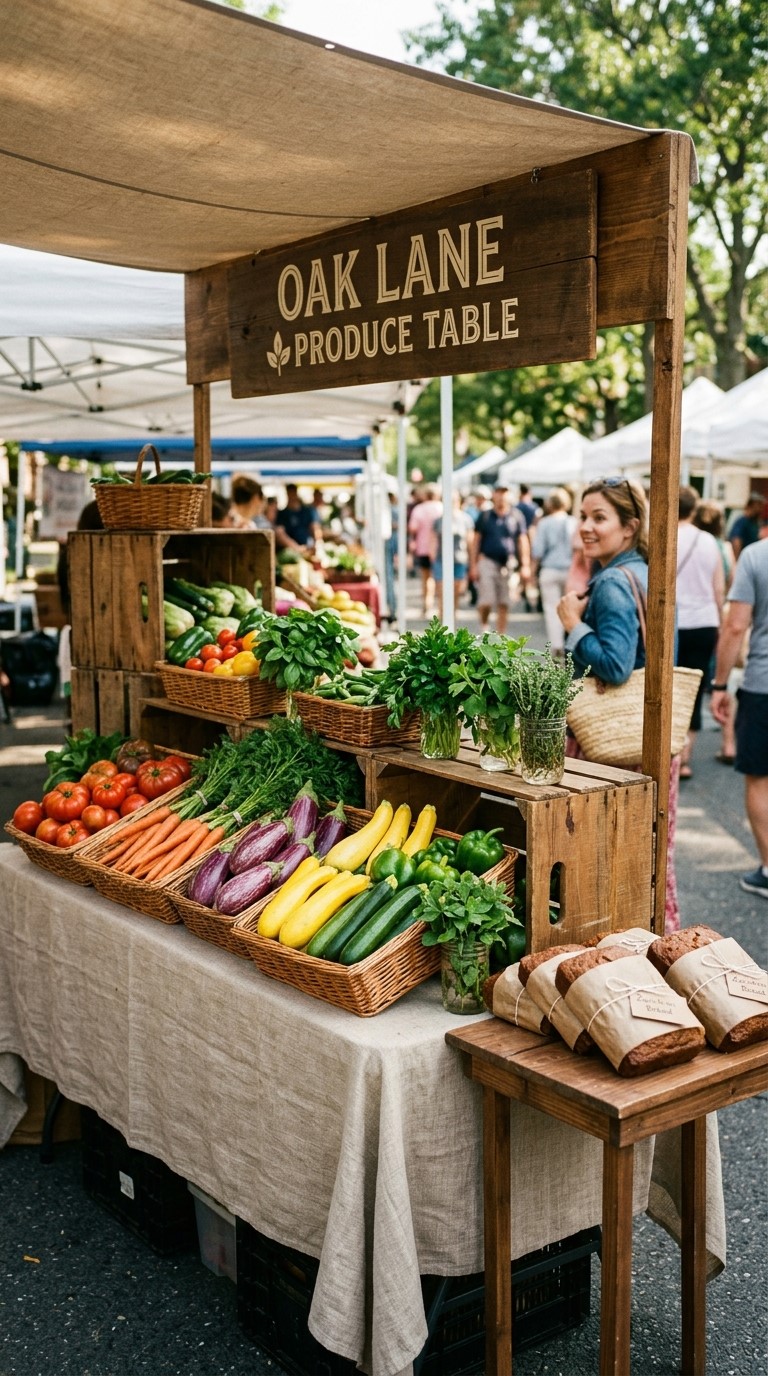
Farmers market produce display is not about decorating for the sake of it. It is about helping people understand what you are selling before they drift past. A flat table with scattered vegetables can look picked over, even when the produce is good. Height, color and order do a lot of quiet work.
Use crates, baskets and shallow trays to lift produce closer to eye level. Put the prettiest items near the front. Keep colors together so they feel generous: red tomatoes in one place, green herbs in another, yellow squash in a clean basket. A table that looks full and cared for makes people slow down.
Farmers Market Produce Display With Height, Color and Shade
A farmers market produce display needs shade as much as style. A beautiful pile of lettuce will not help you if it wilts before midmorning. Keep greens and herbs away from direct sun, use coolers for backup stock and bring out smaller amounts at a time when the weather is hot.
Think like a shopper walking past. What can they see from ten feet away? A sign with your stall name helps. So do baskets tilted forward, bunches facing the aisle and a tablecloth that hides storage underneath. The produce should be the star, but the table has to give it a decent stage.
Produce Display Ideas for Small Harvests That Still Look Full
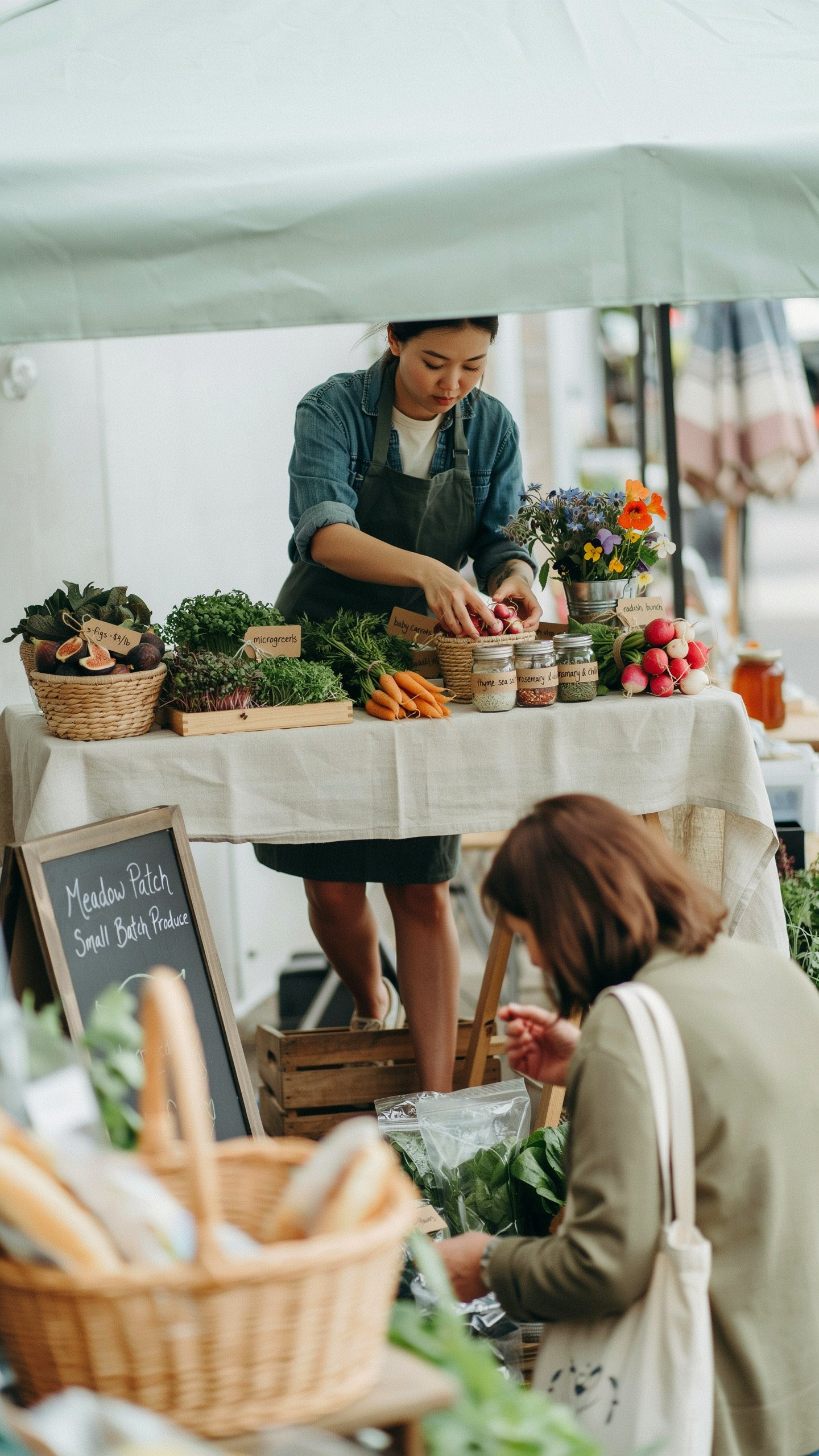
Produce display ideas matter most when your harvest is small. Three baskets spread across a long table can look lonely. The same harvest grouped on a shorter table, raised on crates and arranged in smaller containers can look generous enough to shop from.
Remove empty containers as the day goes on. Top up from a cooler when you can. If something sells down to the last few pieces, move it into a smaller basket. This is not trickery. It is table care. A neat late-morning display tells shoppers you are still open for business.
Farmers Market Booth Setup for Gardeners Selling Alone
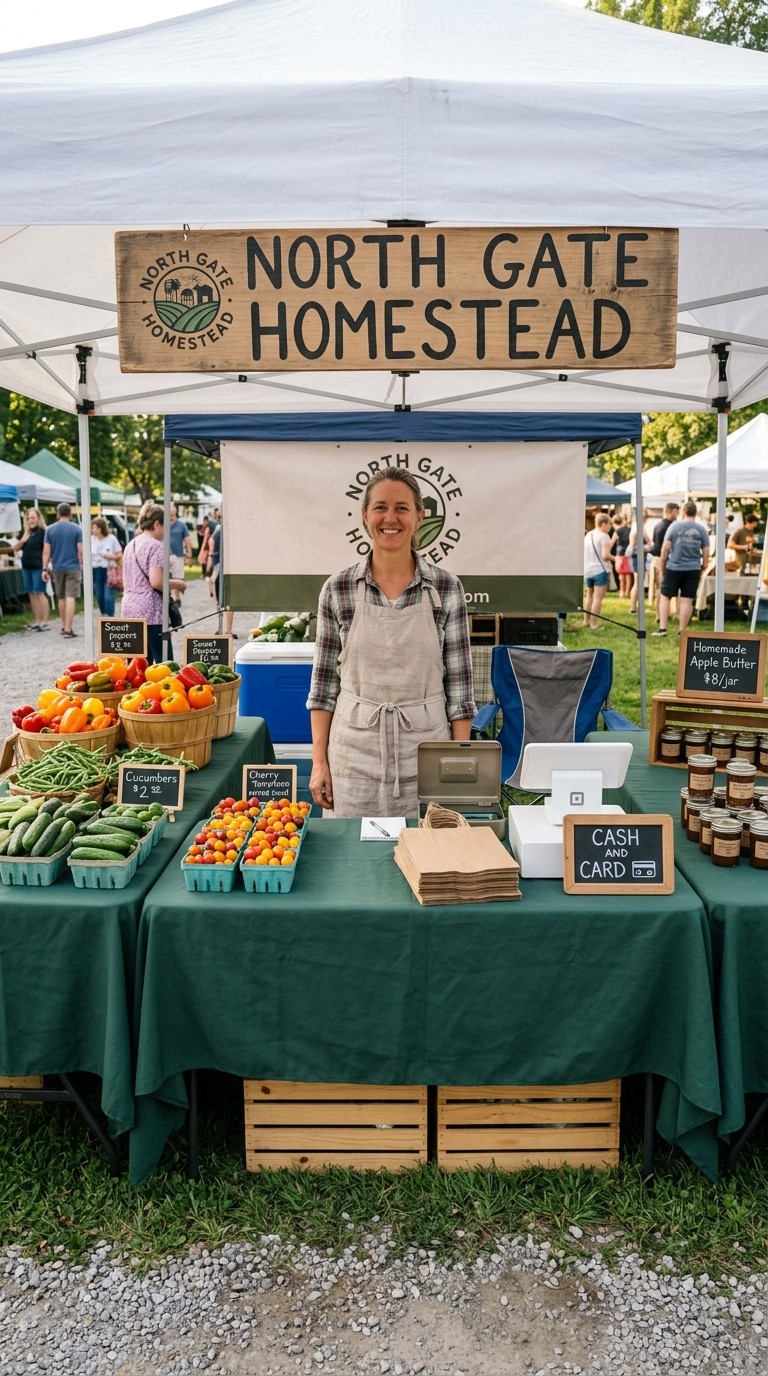
A farmers market booth setup should make one person look prepared. If you are growing, loading, selling and packing alone, your booth has to help you. The table should be easy to reach from behind. The money area should be obvious. Bags should not be buried under the cucumbers.
Place impulse items near the front, heavier produce toward the center and fragile items in shade. Keep your checkout area at one end with a cash box, card reader, paper bags and a small payment sign. If the line gets busy, you need your hands free and your brain not wrestling with a missing marker.
Farmers Market Booth Setup With a Simple Table Plan
Farmers market booth setup begins with flow. Shoppers should be able to look, choose and pay without leaning over your boxes or asking where the prices are. If you have one table, group by use: salad items together, cooking vegetables together and herbs close to anything they pair with.
Keep a small open space for customers to set items while paying. That tiny detail can save a lot of fumbling. If you sell delicate produce in pints or bags, stack extras behind you, not under the customer’s elbow. A simple table plan makes you look calmer than you may feel.
Farmers Market Table Setup for Weather, Bags and Payment
Farmers market table setup has to respect weather. Wind knocks over signs. Heat wilts greens. Rain softens cardboard. Bring clips, weights, waterproof price cards if possible and more bags than you think you need. A canopy is helpful, but only if it is safely weighted.
Payment should be plain. Cash is useful, but many shoppers expect card or phone payment. If you accept them, say so on a small sign. Keep change sorted and do a quick practice run before the market opens. Nothing drains confidence like learning your card reader is dead while someone is holding three bunches of carrots.
Farmers Market Selling Tips for Talking to Shoppers
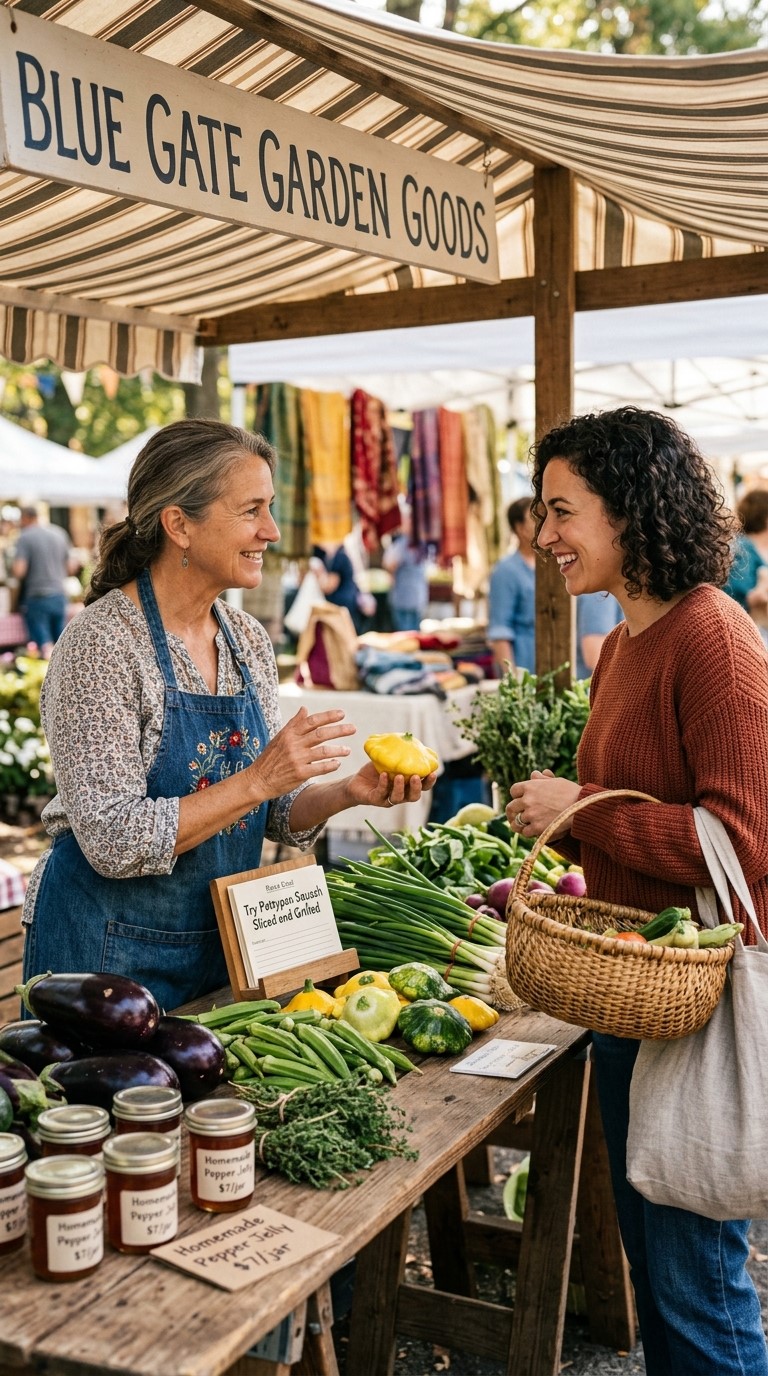
Farmers market selling tips often make the talking part sound too polished. Most gardeners do not need a sales script. They need a few real sentences they can say without feeling ridiculous. “Those tomatoes were picked last night” is enough. So is “That basil is good with the yellow tomatoes.”
Stand up when you can. Look available, not desperate. Let people browse without jumping on them, but do not disappear into your phone either. Shoppers often want permission to ask a question. A relaxed greeting gives them that opening.
Farmers Market Tips for Vendors Who Hate Feeling Pushy
Farmers market tips for vendors should leave room for quiet sellers. You do not need to charm every person who passes. You do need to be warm when someone pauses. Try simple lines that fit the produce: “The smaller cucumbers are the crispest this week” or “Those beans cook fast.”
Recipe suggestions help because they are useful. If someone picks up eggplant and looks unsure, offer one quick idea. Roasted with garlic. Sliced for the grill. Cooked down with tomatoes. Do not turn it into a cooking lecture. One good use is often enough to make the sale.
How to Sell More at Market With the Story of the Harvest
How to sell more at market often comes down to giving shoppers a reason to care. Local produce already has a story, but it needs to be short. Tell people when something was picked, what variety it is or why you grew it. “These are Sungolds, and they usually go first” says plenty.
People like buying from someone connected to the food. They like knowing the basil came from your backyard beds or the beans came from the row that would not quit. Keep it conversational. A little detail makes the produce feel personal without making the shopper feel trapped.
Selling Garden Produce Without Bringing Half of It Home
Selling garden produce comes with a hard truth: some of it may come back with you. That does not mean the day failed. It means you need a plan for the last hour, the leftovers and the next planting season. Wasted produce feels awful, especially when you know what went into growing it.
Near the end of the market, consider simple bundles if the rules allow it. A dinner bag, preserving box or herb bundle can move produce that might otherwise sit. Be careful with deep discounts if you plan to return each week. You want to sell the day’s harvest without teaching shoppers to wait you out.
Local Produce Selling Tips for End-of-Day Decisions
Local produce selling tips should include what happens after the market closes. Some sellers preserve leftovers, donate them, feed animals or use them for family meals. Others bring less the next week. Decide before you leave home what you will do with unsold produce so you are not making tired choices in a hot parking lot.
Track what came home. If the kale barely moved but the cucumbers sold out by nine, that is useful. If people kept asking for cilantro, flowers or smaller tomato baskets, write it down. Memory lies after a long market day. A notebook tells the truth.
Market Garden Vegetables to Grow More of Next Season
Market garden vegetables should earn their space. Once you have sold for a few weeks, your planting plan may start to change. You may grow more cherry tomatoes because they sell fast, more herbs because they take little table space or fewer giant squash because everyone avoids eye contact with them.
This is where a home garden begins to think like a small market garden. You still grow what you love, but you also pay attention to what people buy. The next season can be planted with fewer guesses and better timing, especially if you know which crops sell early, which need shade and which sit too long.
Homestead Farmers Market Ideas for Repeat Customers
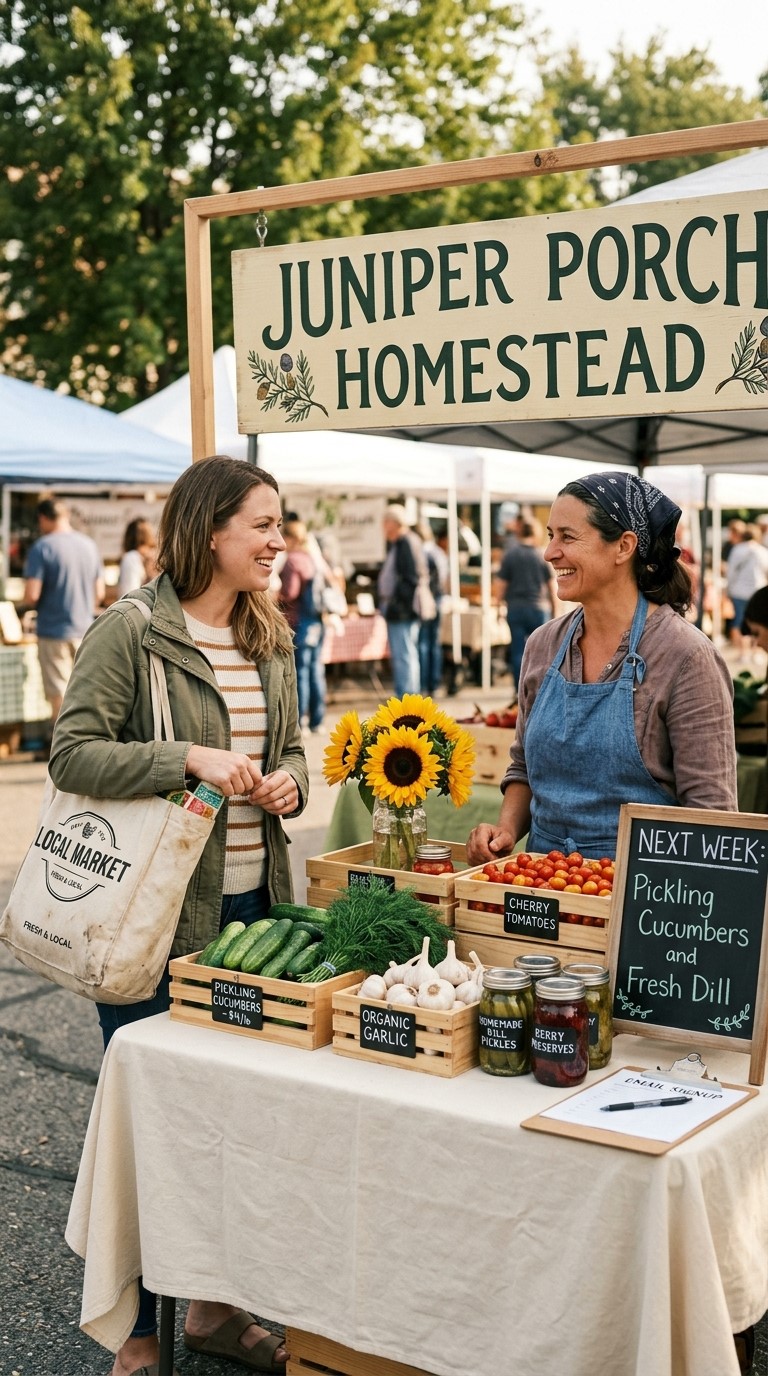
Homestead farmers market ideas work best when they make your table easy to recognize. A simple stall name, the same tablecloth each week, neat signs and a few regular crops can help shoppers find you again. You do not need a polished brand package. You need to look like yourself, but organized.
Repeat customers often come back for small reasons. The tomatoes were sweet. The herbs lasted all week. You remembered they wanted pickling cucumbers. The table felt friendly. Selling at a farmers market is local in the most literal way. People see you, then they see you again.
Homestead Farmers Market Ideas That Make Your Table Memorable
Homestead farmers market ideas can be simple. Choose one thing people start to associate with you: excellent basil, tidy salad bags, pretty flower jars, unusual tomatoes or good cooking tips. That small point of recognition matters more than having twenty different products.
A chalkboard with next week’s likely harvest can help. So can a small sign with your garden or homestead name. If the market allows it, share where people can find your weekly harvest list online. The goal is not to become loud. It is to become easy to remember.
Backyard Farm Income Grows From Trust
Backyard farm income is rarely built in one dramatic morning. It grows through repeat sales, fair prices and produce that holds up once people get it home. If a shopper buys greens that wilt by dinner, they may not return. If the herbs stay fresh and the tomatoes taste like summer, they will look for you next week.
Trust is practical. It sits in clean crates, clear prices, honest answers and a seller who does not pretend every vegetable is perfect. If something is best used today, say so. People respect that. And when they trust you, they buy with less hesitation.
Selling Produce at Farmers Markets Gets Easier With a Repeatable Plan
Selling produce at farmers markets will probably feel strange the first time. You may bring too much of one crop, forget a sign, underprice something or discover that your prettiest display wilts in the sun. Fine. Market selling has a learning curve, and the garden rarely hands over perfect conditions.
What matters is having a repeatable plan. Pick carefully. Pack the night before where possible. Price clearly. Set up so shoppers can understand the table. Talk like a real person. Write down what sold, what did not and what people asked for. That is how a nervous first market turns into a better second one.
Farmers Market Selling Tips for the Next Harvest
Farmers market selling tips only matter if they come back to the garden. After each market, look at your notes before planting more. Maybe you need extra basil, more salad mix, fewer oversized zucchini or better succession planting so everything does not arrive in one exhausting week.
The garden will start to feel different once it has customers attached to it. A row of beans is no longer just a row of beans. It is Saturday morning stock, dinner for someone down the road and maybe a small envelope of cash in your market box. That is a satisfying trade for a gardener with more harvest than counter space.
Selling Produce at Farmers Markets Can Shape Next Season’s Garden
Selling produce at farmers markets does more than clear extra vegetables. It teaches you what your local shoppers value. Some markets love heirloom tomatoes. Some want herbs, eggs and salad greens. Some are full of people who will buy anything if you tell them how to cook it.
By the next season, your garden may still look like home, but it will be a little wiser. The beds will hold more of what sells, less of what comes back and maybe one crop you grow just because people smile when they see it. That is a good kind of market plan. Practical, personal and rooted in the soil you already know.
