
Thanksgiving Centerpiece Ideas Using Things From Your Garden
Your garden can still dress the Thanksgiving table long after its summer flowers have faded. Those papery flower heads beside the fence, copper leaves beneath the oak and pinecones along the path are worth a second look. Gather a few in a shallow bowl and you have the beginnings of a centerpiece with the colors of the season and a connection to the place you call home.
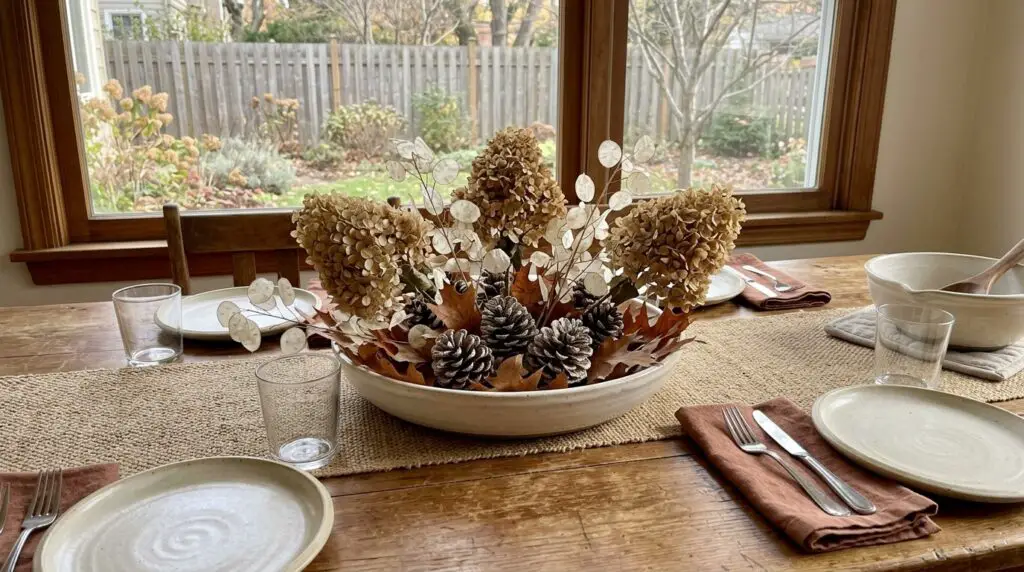
The pleasure is in working with what you find. A low arrangement of dried flower heads, fallen leaves, pinecones and seedpods suits an ordinary dining table, leaving space to see the person across from you. And if frost has already flattened the tender plants, there are still options. These Thanksgiving centerpiece ideas include a simple arrangement to follow and ways to adapt it when the garden has turned brown or disappeared beneath snow.
Gather Garden Materials for Natural Thanksgiving Centerpieces
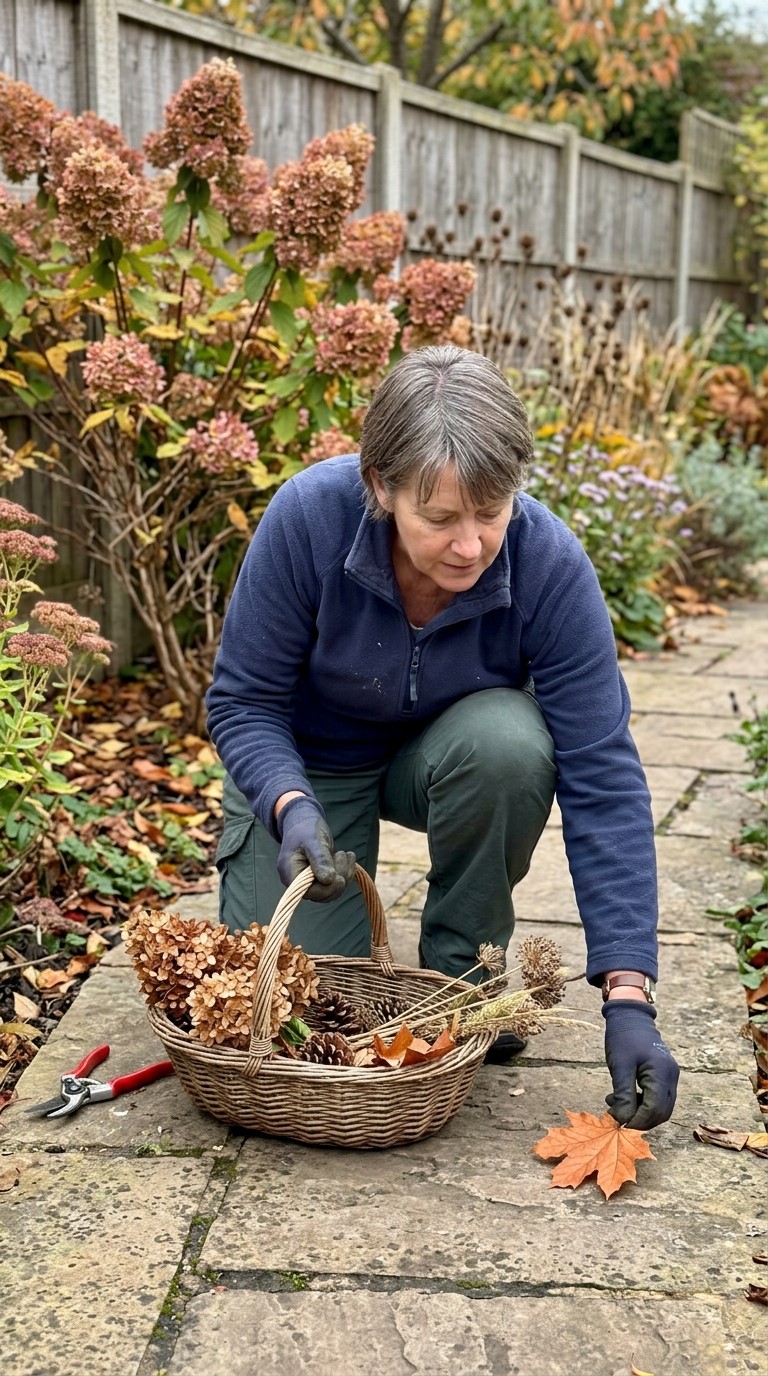
Take a basket and clean pruners outside on a dry day, after dew has cleared. It is obviously recommended that you gather dry materials without insect or disease damage. Damp pieces deteriorate faster, while dried stems can be fragile, so she suggests collecting a few extras. Choose enough for one small display and leave the rest of the garden in place. A handful of good specimens gives you plenty to work with.
Choose Dried Flower Heads for Soft, Full Fall Centerpieces
Dried flower heads give the arrangement its main shape. If you grow panicle hydrangeas, look for papery heads that still hold together when touched. Dried yarrow offers smaller, flatter clusters, while flowers saved indoors earlier in the season can fill gaps in your collection. Handle each specimen by its stem and leave behind anything that collapses into dust. Faded cream, muted pink and tan all work here. You can separate an oversized branching head into smaller clusters to fit a shallow bowl.
Find Color in Fallen Leaves for Thanksgiving Table Decor
Look for fallen leaves with intact edges and surfaces free of mold or blotchy decay. Maple leaves may bring yellow or red into the display, while oak leaves offer copper tones and useful curves. Choose a few sizes so you can tuck small leaves between flowers and use broader ones near the rim. Brown leaves deserve a place in the basket too. Against a cream bowl or pale dried flowers, their veins and curled edges become part of the decoration.
Give Rustic Centerpieces Shape With Pinecones and Seedpods
Small and medium pinecones add solid shapes beside the softer flower clusters. Seedpods contribute finer details: the pale discs of honesty or an open iris capsule, for example, if you recognize them growing in your garden. A seedpod is the casing that held seeds, while a seed head is the spent flowering structure. Both can be useful. Stick to plants you can identify and inspect them before bringing them inside, as UConn’s garden decorating guidance recommends. Leave unfamiliar pods and berries outside.
Prepare Your Garden Finds for a Homemade Thanksgiving Centerpiece
Sort and Air-Dry Natural Table Decorations
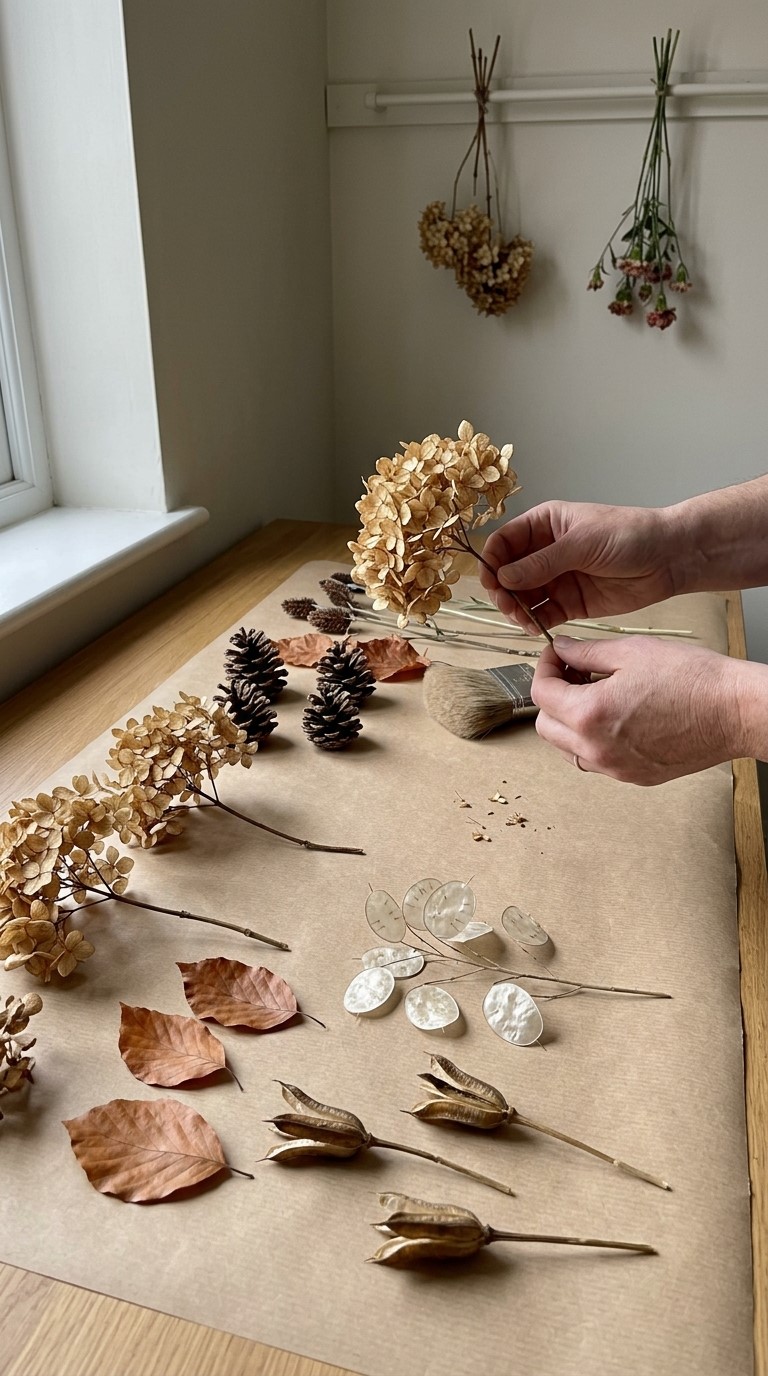
Spread your collection on paper somewhere dry and ventilated, with space between pieces. Brush loose soil from sturdy cones and inspect the folds of leaves for insects. Fragile flowers need a lighter touch, so hold them over the paper and let loose debris fall away. Set damp pieces apart from the dry ones. Frost does not dry or clean plant material, and a cone collected from wet ground may hold moisture between its scales even when the outside looks ready.
Give sound but damp materials time to dry before using them. Discard anything moldy or soft instead of packing it into the bowl. If you are drying suitable freshly cut flower stems in advance, tie small bunches and hang them in a warm, dry place with good airflow. With dried bouquets you should always allow at least a week, sometimes longer as indoor conditions vary. Start ahead of Thanksgiving if your flowers still need that preparation. Leave space around each bunch so air can reach the stems, and choose a spot where passing shoulders or opening doors will not knock the flowers.
Prepare Fallen Leaves for a Low Autumn Arrangement
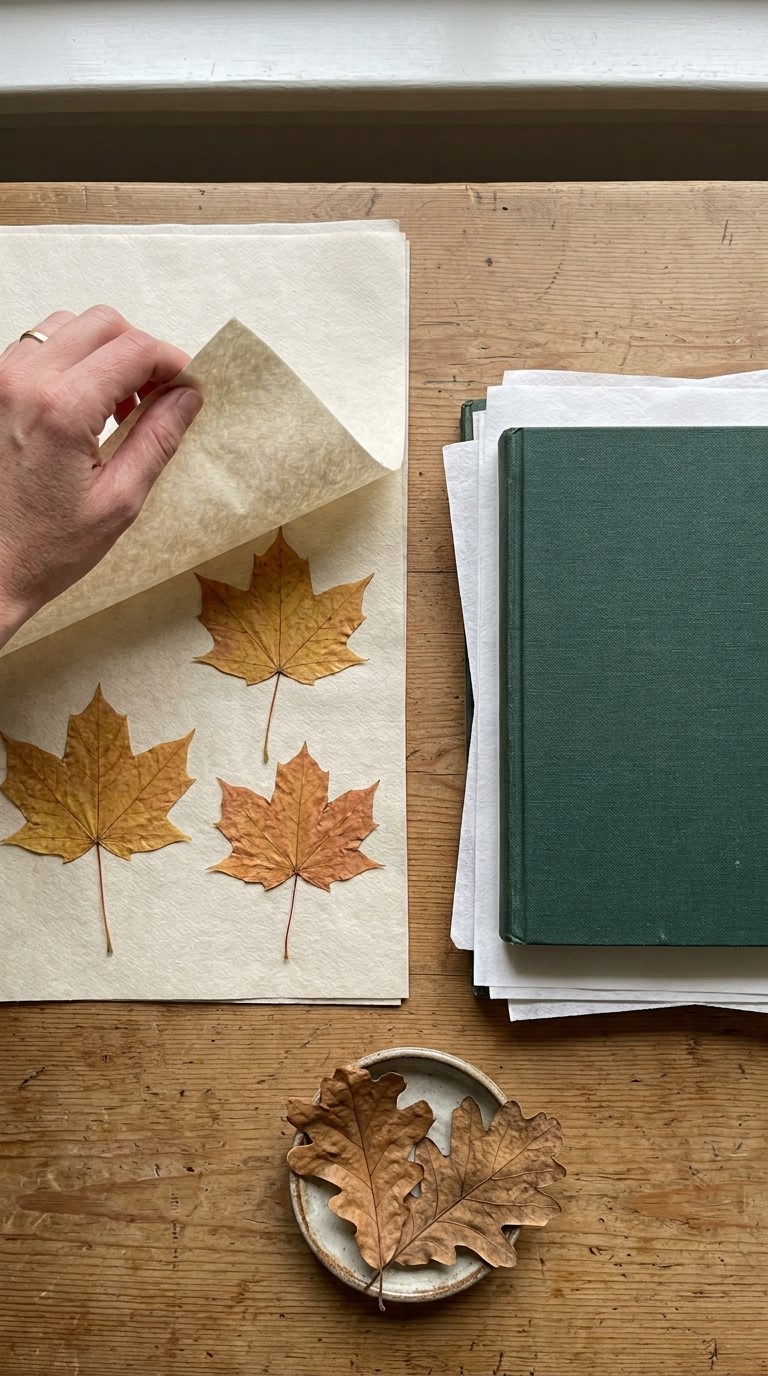
Dry, curled leaves can go into the display as they are. For flatter leaves, choose specimens that still bend, place them between sheets of absorbent paper and weigh them down with a book. Protect the book from moisture, check the paper and replace it if damp, then leave the leaves until dry. Brittle leaves tend to crack when forced flat, so let those keep their curves. Set aside a few spare leaves and flower clusters for any last-minute replacements.
Build a Low Thanksgiving Centerpiece With Four Garden Materials
Choose a Shallow Bowl for Your DIY Thanksgiving Centerpiece
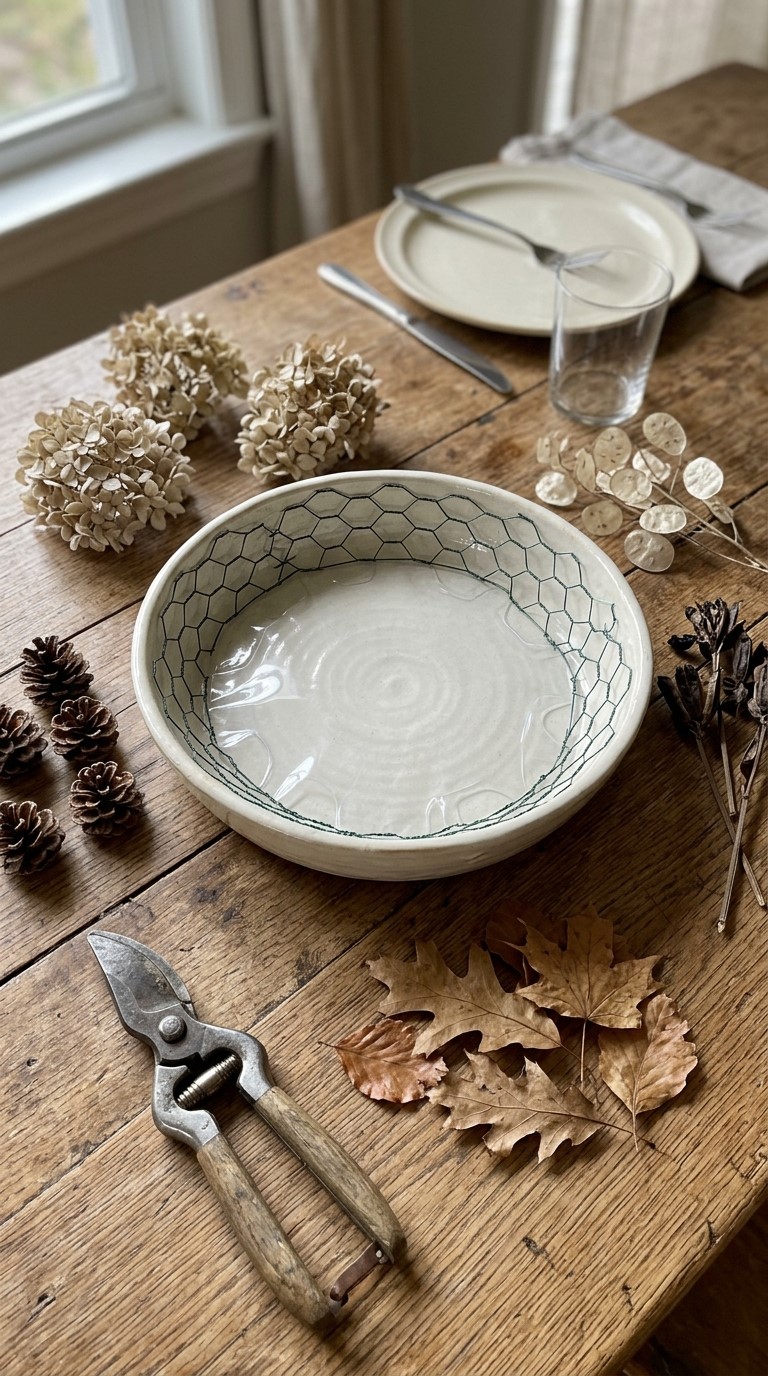
Start with a container you already own: a shallow ceramic bowl, a low basket with an insert or a decorative tray with a raised rim. A bowl roughly 12–14 inches across makes a useful example, although your table should decide the size. Put it between two place settings before adding anything. If it crowds the plates while empty, choose something smaller. A stable base matters more than an elaborate container, especially when someone reaches past it with a serving dish.
For that size of bowl, gather three modest flower clusters, around five small pinecones, several seedpod stems and a loose handful of leaves. Treat these as starting amounts, since the pieces will vary. Lay them in separate piles so you can compare their sizes. If one branching flower head dwarfs everything else, divide it into smaller clusters before you begin. Broad flower heads and cones can nest together without extra support. If thin stems keep slipping, fit a small, folded piece of reusable wire mesh inside the bowl. Fold sharp edges inward and keep the support below the rim, where the flowers will cover it. Protect a scratch-prone container with an insert beneath the wire.
Combine Dried Flowers, Pinecones and Seedpods in a Low Table Arrangement
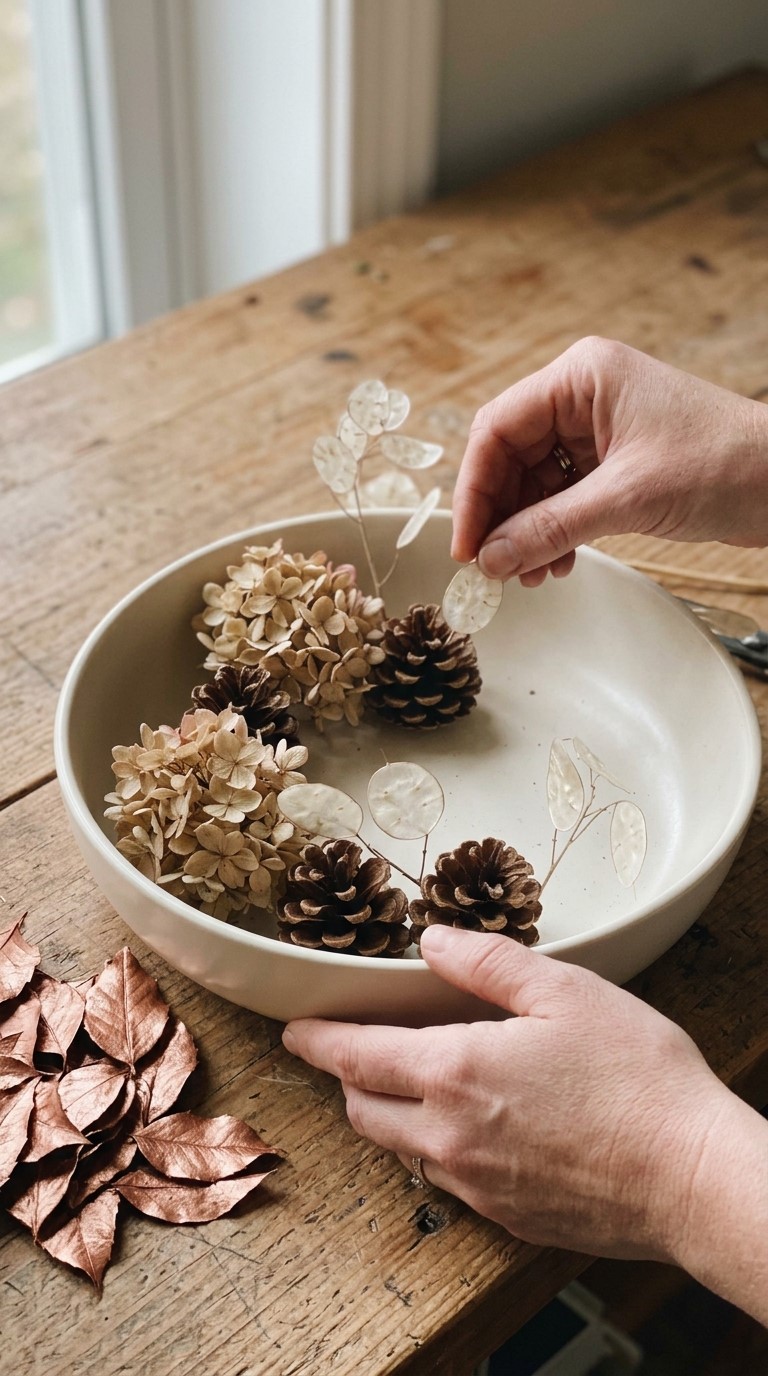
Place the largest flower cluster a little off-center, then add the others nearby, leaving gaps between them. Keep the stems short so the flowers sit close to the bowl. Nestle pinecones into the gaps, resting their bases against the container or other sturdy pieces. Turn a few sideways. Then pause. Check that the arrangement feels settled before adding the smaller details.
Add the seedpods next, cutting their stems a little at a time. Angle them across the arrangement so some point toward the rim and others sit between flower clusters. A few can rise above the flowers, but avoid building a tall spike in the middle. If one stem refuses to stay put, move it to a narrower gap or into the mesh support. Keep the papery parts free of pressure so they retain the shape that caught your eye outside.
Finish with the leaves, sliding their stems beneath cones or between flower stems. Let several leaf edges show around the bowl and place a few smaller leaves farther in. This carries their color through the display. If you have copper leaves, repeat that color in two or three places rather than gathering it all on one side. Stop before every gap is filled. A glimpse of the bowl between the materials gives each flower head and cone room to be seen.
Check Your Thanksgiving Centerpiece From Every Seat
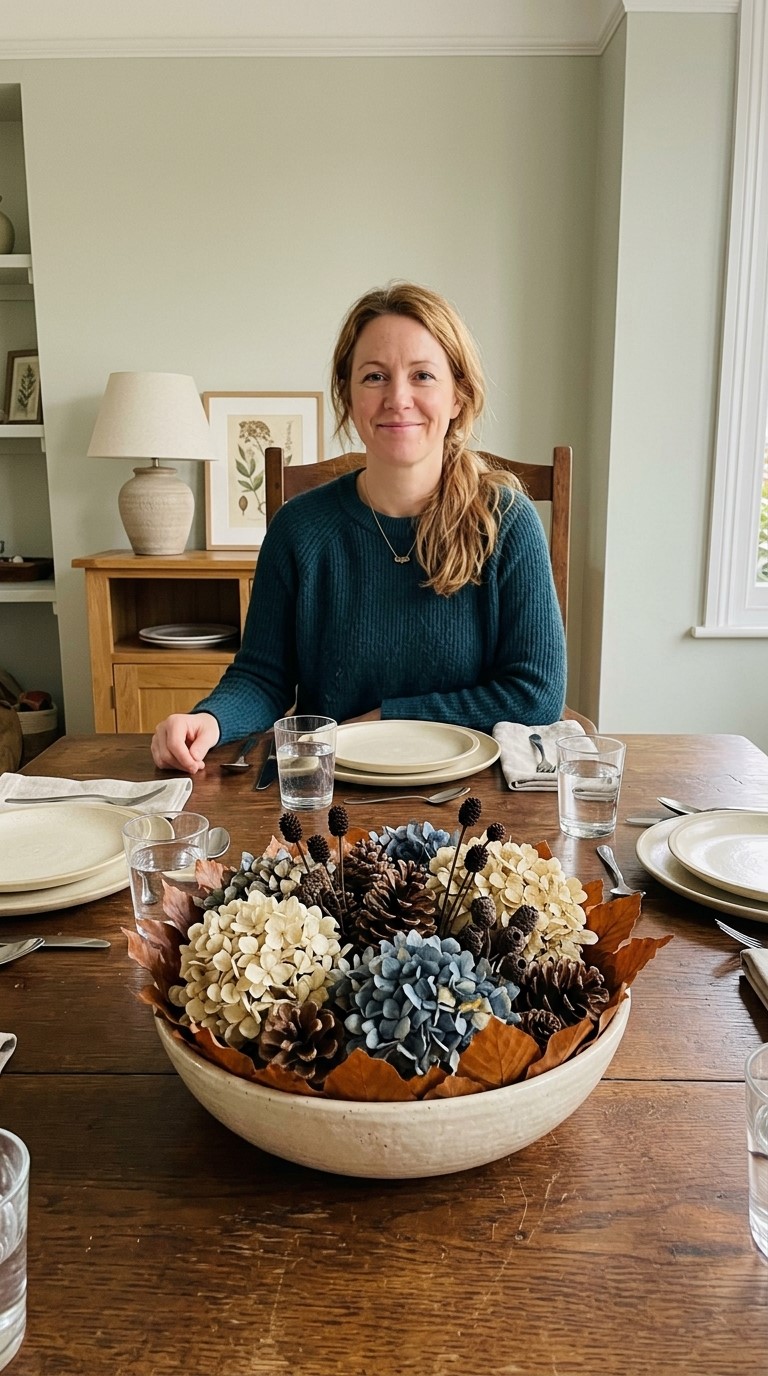
Turn the bowl as you work, then sit down to judge the finished height. Around 6–8 inches above the tabletop is a useful starting point for this low design, but the seated view is the better test. Shorten stems that cross someone’s face or reach toward a glass. Lift and set down the container to check for rolling cones. If leaves fall out or the display looks crowded, remove a few pieces. You can save them for a smaller arrangement elsewhere.
Adapt Your Thanksgiving Centerpiece Ideas for a Garden After Frost
A frosty morning can change the garden’s appearance without leaving every plant in the same condition. Some flower heads remain firm while others soften, and fallen leaves may be dry beneath one tree but soaked beneath another. Let the condition of each piece guide your choices. The same low arrangement can work with different proportions of flowers, cones and leaves, so you can adjust it to the materials your own garden offers that week.
After a Light Frost, Use Fallen Leaves in Natural Thanksgiving Centerpieces
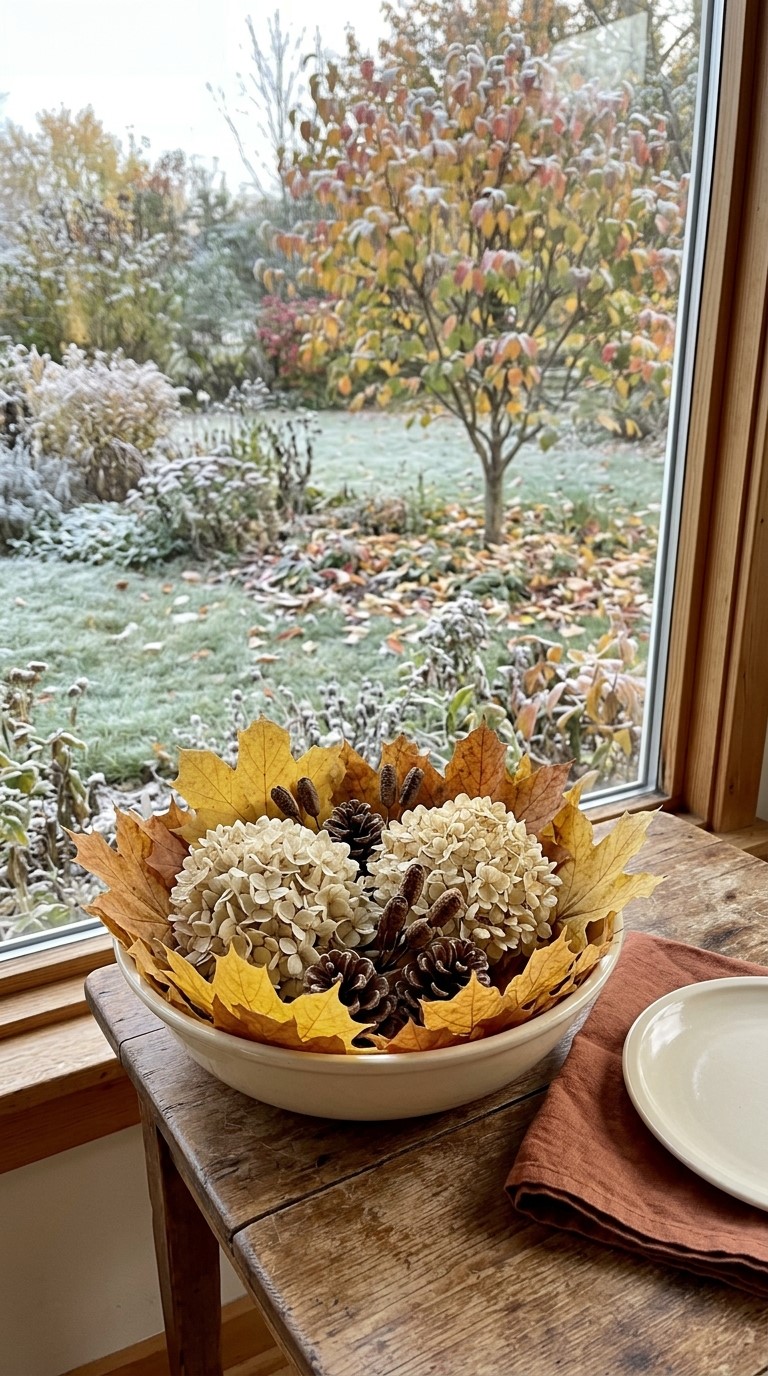
For a garden that still has some autumn color, make the leaves the main attraction. Arrange pale dried flower clusters in a cream bowl, nestle small pinecones between them and tuck copper or yellow leaves around the sides. Add a few short seedpod stems for detail. Gather after frost and dew have cleared, once the materials are dry, and pass over flowers with soft or damaged tissue. You only need a few good leaves to carry color through this version.
After Repeated Frosts, Make a Rustic Thanksgiving Centerpiece With Dried Materials
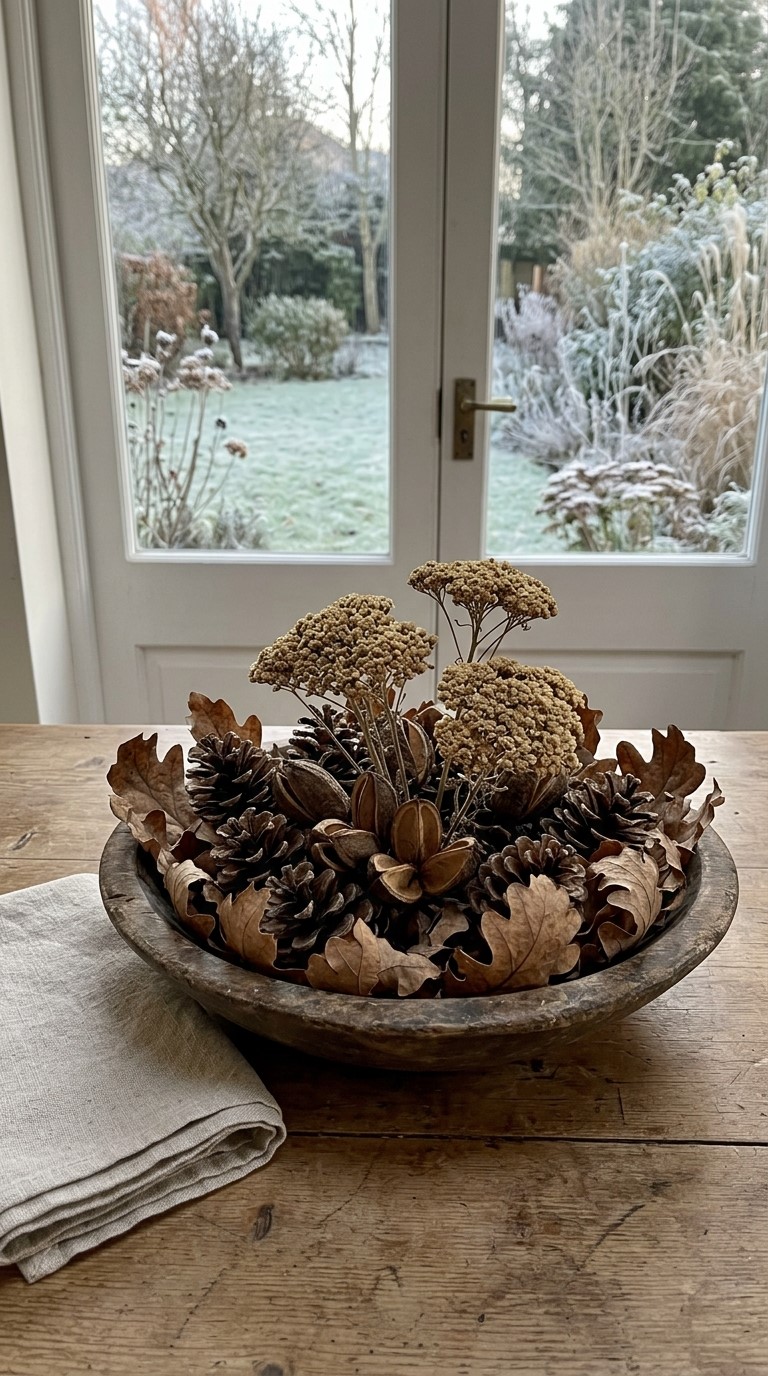
When the garden has turned brown, work with differences in texture. Put sturdy pinecones and woody pods beside any dry flower heads still holding their shape, then tuck sound brown leaves around the edge. Pale ceramic makes the darker pieces easy to see, while a wooden bowl gives the whole display a warmer look. Use fewer flowers if the remaining heads are fragile. A smaller bowl filled with sound materials will be easier to arrange than a large one needing damaged pieces to fill it.
When the Garden Is Wet or Snow-Covered, Use Stored Garden Finds for Fall Centerpieces
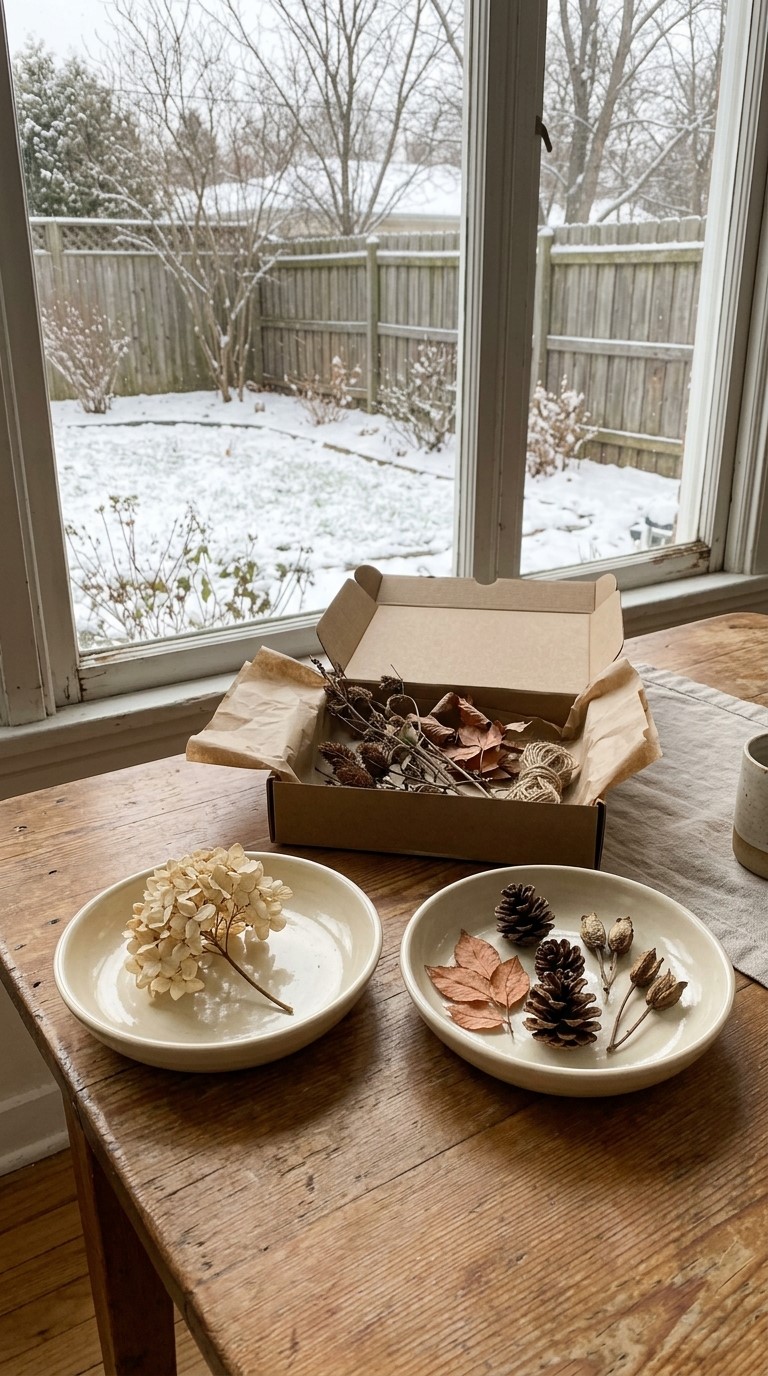
Bring out the flowers you dried earlier, the pinecones saved in a box and any pressed leaves tucked away indoors. Check their condition before arranging them, then use the same method in a compact bowl. If supplies are limited, try two or three little dishes with a flower cluster and cone in each. A missing ingredient is fine. When you have only one good flower head, give it a bowl of its own and fill a neighboring dish with cones and leaves. Matching containers help connect the two. For next year, save a modest collection during dry autumn weather, when you can choose good specimens without searching through snow or wet leaf piles.
Set the Table Around Your Natural Thanksgiving Centerpiece
Leave Serving Space Around Low Thanksgiving Centerpieces
Place the plates, glasses and largest serving dishes on the table before settling on the centerpiece’s position. Leave enough room to pass a bowl or set down the gravy without nudging a seedpod. One compact display suits a small table, while several little bowls can run along a longer one with gaps for food. Keep the garden materials inside their containers. Loose leaves scattered between place settings may look appealing in a photograph, but they soon get in the way during dinner.
A plain runner or the bare tabletop gives the arrangement a calm background. Pick up a leaf color in your napkins, then let the garden materials provide the detail. For evening light, use battery-operated candles beside the bowl. Dried flowers and leaves are combustible, so keep them away from flames and hot surfaces, with room around the display for hands and serving spoons.
Care for Dried Flower Centerpieces Before and After Dinner
An arrangement made entirely from dried materials needs no watering or misting. Keep it in a dry spot away from kitchen steam, splashes and direct heat until you set the table. Before guests arrive, check for loose seeds or crumbling petals and replace any pieces that have deteriorated. Its useful life will vary with the materials and indoor conditions. Let its appearance guide you, especially if you assembled it several days before the meal and the house has been busy with cooking.
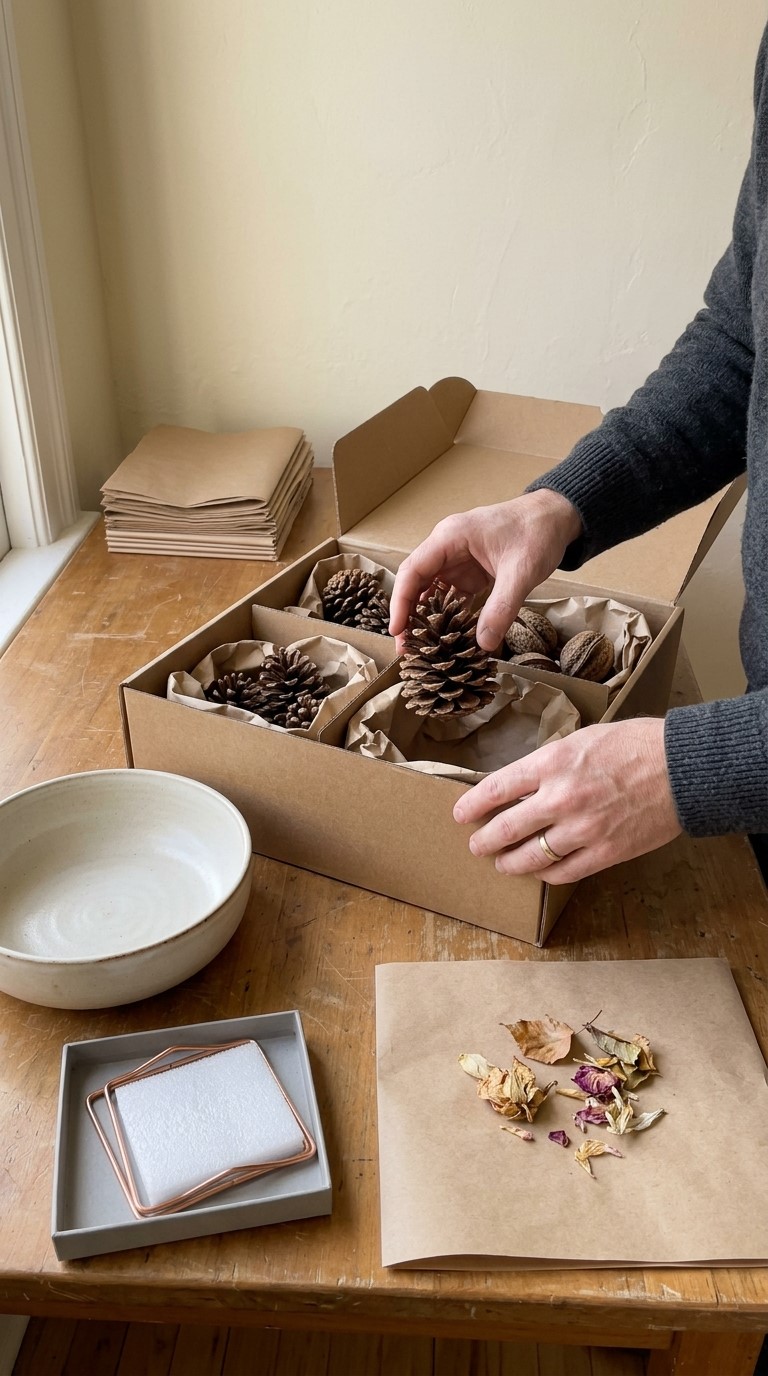
After Thanksgiving, lift out the strongest cones and pods if you want to use them again. Once everything is dry, store them in a box somewhere dry, with paper separating fragile pieces. Flower heads that have become too brittle can go, along with damaged leaves. Remove wire and other supports before composting suitable untreated plant material, and keep diseased pieces out of the home compost pile. The bowl is then ready for whatever comes next on your table.
A Thanksgiving Centerpiece From the Garden You Know
There is something pleasing about seeing a familiar garden plant beside the dinner plates. You watched that flower head change color through late summer, or swept those leaves from the path a few days ago. In a low bowl, their shapes become easier to notice: the fine veins of an oak leaf, the scales of a pinecone or the curve of an empty pod. Those details give the table a connection to your home and the season outside.
Choose your bowl before your next garden walk and keep its size in mind as you gather. Bring back a few dry, sound pieces, arrange the largest first and let the smaller ones settle around them. You can change the combination as the weather changes and save ideas for next autumn. Even after frost, a homemade Thanksgiving centerpiece gives you a reason to look at the garden again and bring a little of it indoors.
