
Those Giant Mosquito-Looking Bugs at Your Georgia Porch Light May Be Crane Flies
You flip on the porch light and a huge, wobbly insect with legs like stilts bumps into the bulb. It looks like a mosquito that hit the gym, and nobody wants that landing on their arm.
Many Georgia homeowners wonder if these bugs are dangerous. Here is what they might be, what they do, and what you can do about them.
The oversized mosquito may be a crane fly
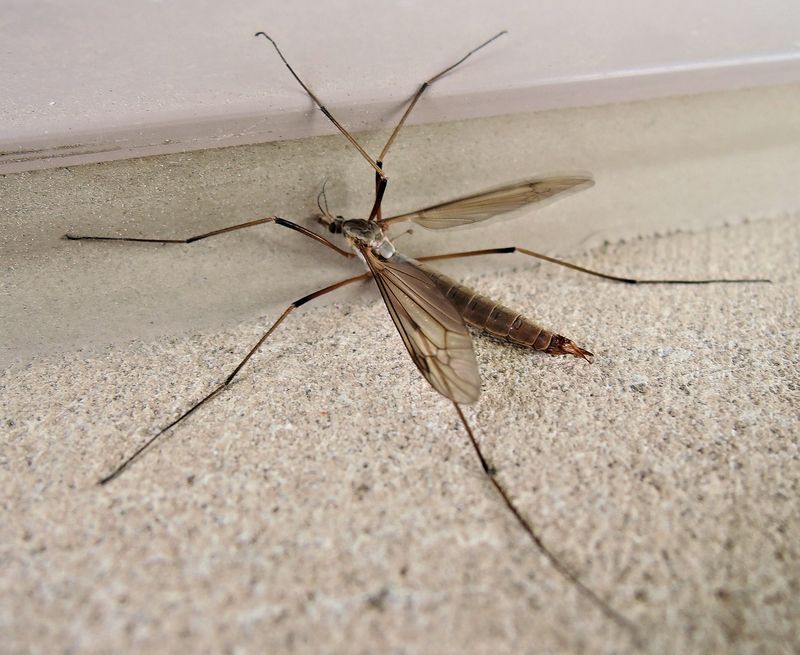
Picture a mosquito the size of a small moth, drifting slowly with legs trailing behind it. That is a fair description of many crane flies.
University of Georgia Extension describes crane flies as long-legged insects with slender bodies, and says some of them look like large mosquitoes.
That makes a crane fly a sensible guess when a big, gangly insect shows up near your porch light. It is only a guess, though.
Crane flies are true flies, but they are a different kind of fly from mosquitoes, even if the shape looks similar at a glance.
Without a photo or the insect itself, nobody can say for sure what is bumping your bulb. A written description such as “big, skinny, long legs” can fit more than one kind of insect.
Being near a light does not settle it either, because lots of night-flying insects are drawn to lights.
Still, the long, delicate body is a good clue to keep in mind. Utah State University Extension also describes crane flies as slender insects with very long legs.
If you can snap a clear picture or safely catch one in a jar, you will have a much better shot at a real answer.
A closer look can separate crane flies from mosquitoes
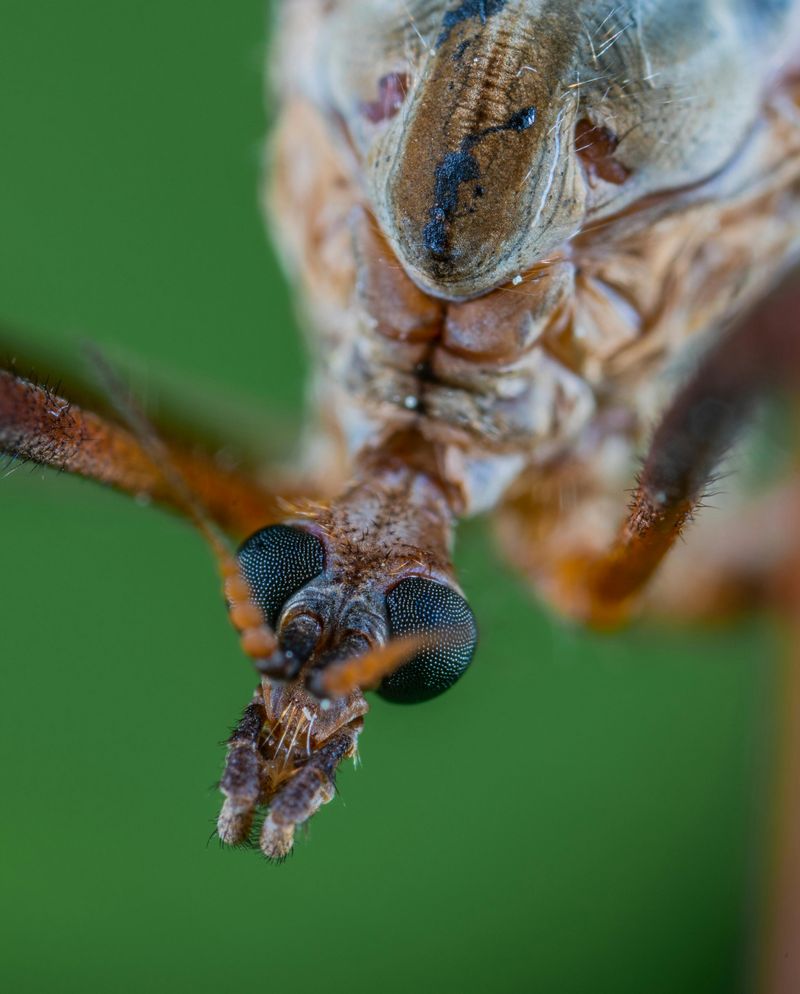
Mouthparts offer one of the most helpful clues. A mosquito has a piercing, tube-like mouth built for taking blood.
According to Utah State University Extension, crane flies lack those piercing mouthparts.
The catch is that you have to see them. A mouth that small is hard to spot with the naked eye, especially on a bug that will not hold still under a porch light.
A sharp, close-up photo taken with a phone camera is often the easiest way to look.
Detailed identification may need that kind of clear close-up. A blurry glimpse at night will not do the job.
If you cannot get a good photo, a local county Extension office may be able to help when you bring in a specimen.
Be careful about leaning on other clues. Long legs alone do not prove an insect is a crane fly, and neither does hovering near a light.
Several insects share those habits, so treat them as hints and not as the final word.
Adult crane flies do not bite people
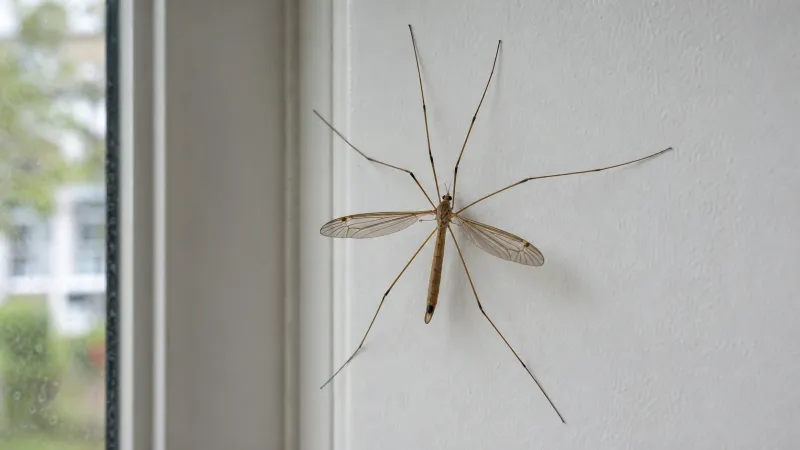
Here is the good news. Adult crane flies do not bite people, according to UGA Extension.
If the insect on your porch really is an adult crane fly, you can relax.
That reassurance is about adults only. It also depends on the insect actually being a crane fly, which is why a photo matters.
Adult crane flies often do not feed at all. Some may sip nectar, but they are not out to find a meal from you.
Their time as flying adults is generally short and is focused on mating and egg-laying.
That brief schedule helps explain why you may see them for a few days or weeks and then not at all. They are not moving in for the season.
They are busy finishing their life cycle.
So when one wobbles past your face, it is more likely clumsy than dangerous. Gently shooing it toward the yard works just fine.
The “mosquito hawk” nickname overstates their role
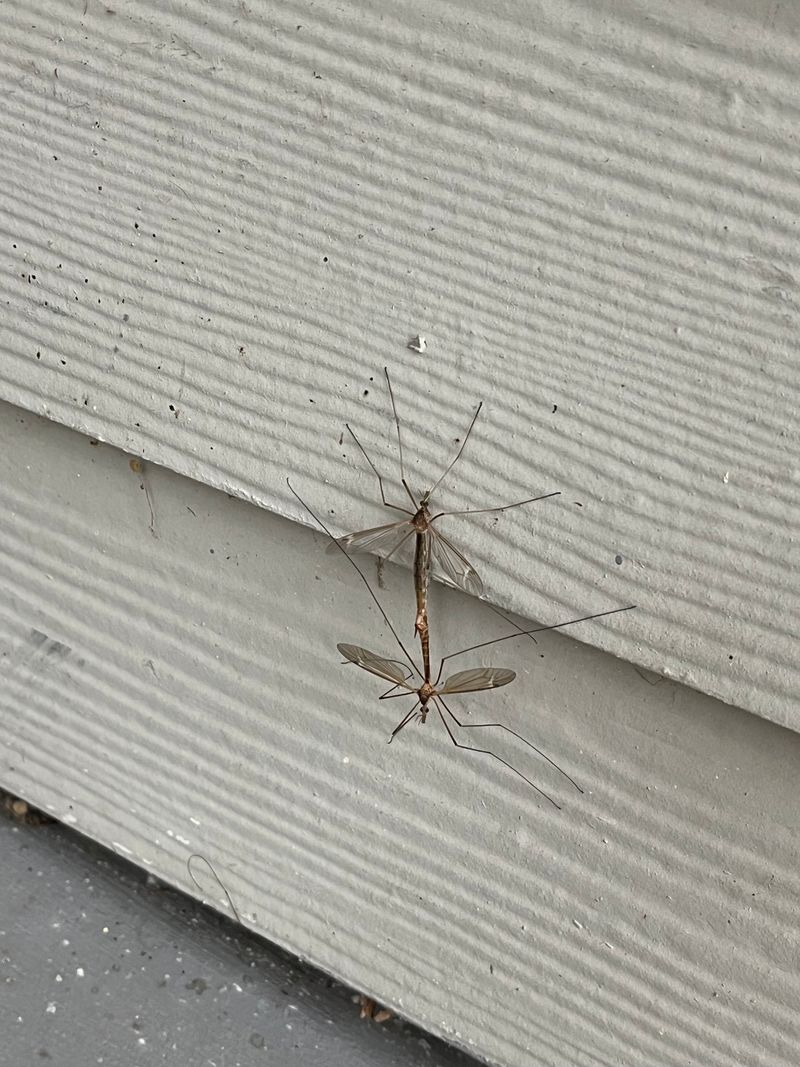
You may have heard crane flies called “mosquito hawks.” It sounds like they patrol your porch and snap up mosquitoes. That is a myth when it comes to adults, which do not hunt mosquitoes.
There is a narrow exception, and it involves the young stage. The University of Kentucky Entomology crane fly page notes that larvae of some species are predatory and may eat mosquito larvae.
Notice how limited that is. It applies to some species, and it applies to larvae living in the right kind of wet habitat, not to flying adults.
So a crane fly bumping your light is not helping you with the mosquitoes biting your ankles. If mosquitoes are a problem, dumping standing water and using screens are better places to put your effort.
The nickname is catchy, but it sends people in the wrong direction. Enjoy the crane fly as a curiosity, not as a bodyguard.
A porch-light gathering does not explain itself
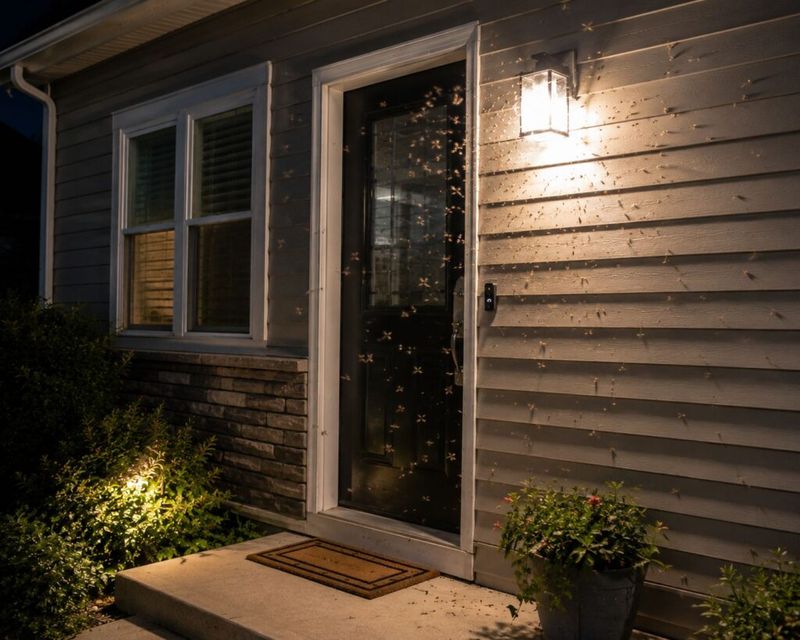
Crane flies may show up around lights, and plenty of people have noticed it. Why they gather at your particular porch light is a harder question to answer.
A 2024 study in Nature Communications looked at flying insects in general. It proposed that artificial lights can disrupt how insects orient themselves in flight, which may leave them circling a bulb.
That is a proposed explanation, and it covers flying insects broadly. It does not prove why crane flies in particular end up at any one Georgia porch.
Other things could play a part, like the time of year, nearby damp ground, or how bright your bulb is. Nobody can tell from one porch which factor is at work.
If the crowd at your light bothers you, Maryland Extension suggests switching the light off or trying a yellower bulb may help. That is advice from Maryland, not a Georgia test, and it is no guarantee.
Adult visitors do not prove a lawn problem
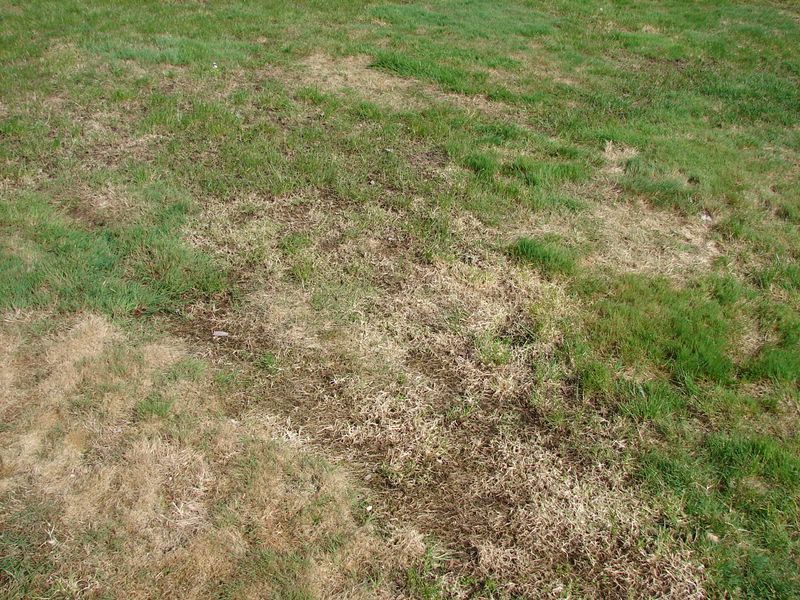
Lawn care is where crane flies get a more mixed reputation. UGA Extension says some crane fly larvae can damage grass roots.
That is about the young stage living in the soil, not the adults at your porch. Being harmless to people does not mean every life stage is harmless to turf.
The reverse matters too. Seeing adult crane flies by a light is not evidence that your yard has an infestation.
Adults can fly in from elsewhere, and a few visitors say very little about what is happening under your grass.
Not every larva harms lawns, either. Only some do, so the risk depends on the species.
If you notice thin, yellowing, or weak patches of turf, look at the grass itself. A local Extension office can help you work out whether insects, disease, drought, or something else is behind it.
Simple steps are enough for most porch encounters
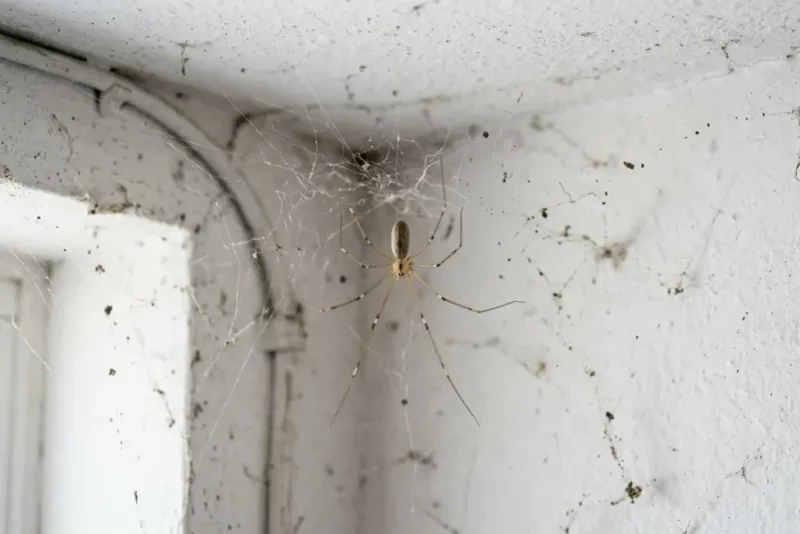
Most porch encounters call for patience, not products. Utah State University Extension recommends fitted screens and keeping doors and unscreened windows closed to keep them out.
If one gets inside, control is typically unnecessary.
For the crowd at the light, Maryland Extension says switching the light off or trying a yellower bulb may help. Treat that as an option worth trying, not a promise.
Skip the sprays for adults. UGA Extension recommends no intervention for adult crane flies.
So the big-legged visitor at your light may well be a crane fly, and if it is, adults do not bite. A photo is still the only way to be sure.
Either way, the porch light show usually ends on its own.