
That Speedy Long-Legged Bug Racing Across Your New Jersey Basement Floor Is Actually On Your Side
You flip on the basement light and something with a lot of legs shoots across the floor. Most people jump, and some reach for a shoe.
But the common house centipede is a hunter of other small creatures that most of us would rather not share a house with. Here is what it is, what it does, and what to do when you see one.
What is racing across the basement floor?
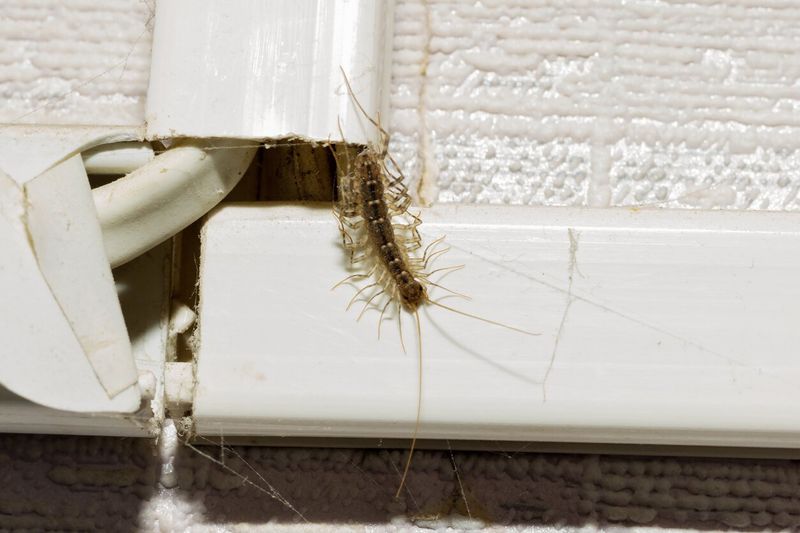
Most likely, you are looking at the common house centipede, Scutigera coleoptrata. Speed alone does not settle it, though, because other centipedes and some other many-legged critters can move quickly too.
The better clues are in how the animal looks.
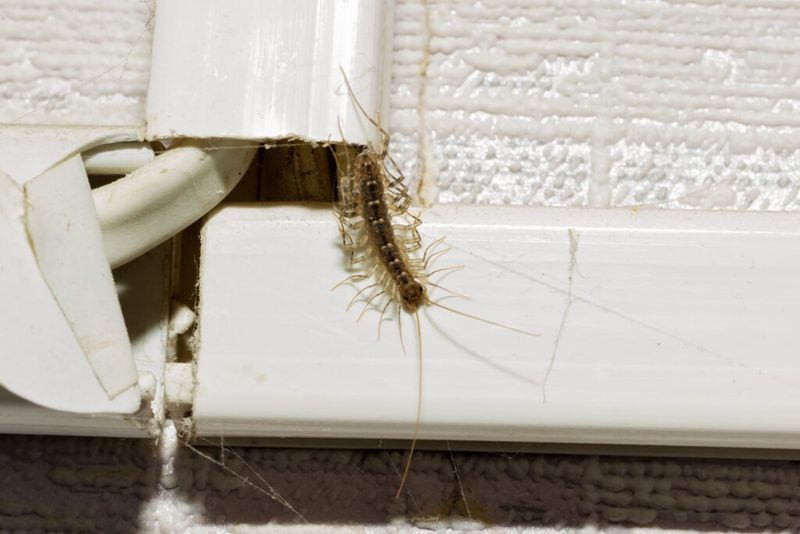
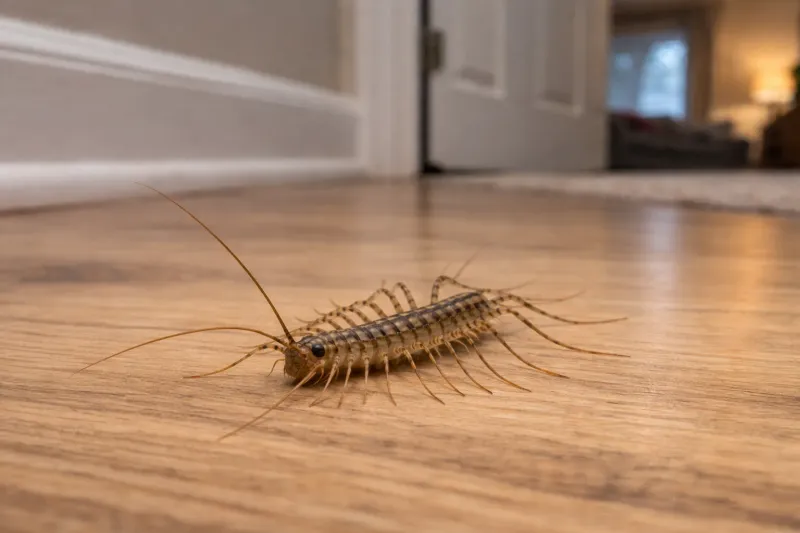
According to Penn State Extension, adults have 15 pairs of long legs. The body itself is only about 1 to 1.5 inches long, but the legs and antennae stretch out so far that the whole animal can look several inches across.
That wispy, long-legged look is what makes it seem so much bigger than it really is.
Check the color and shape too. A house centipede has a slim, tan to grayish body with darker stripes, and its back legs trail behind it.
If what you saw does not match that description, treat the identification as a maybe rather than a sure thing.
These animals like cool, dark, damp places, so a basement is a natural fit. They tend to forage at night, which is why many people only spot one when they flip on a light at odd hours.
They also hide in closets, crawl spaces, and bathrooms.
New Jersey is simply where you happen to be reading this. Nothing here suggests the state has more of these centipedes than anywhere else.
A basement with some moisture and plenty of shadowy corners is the real draw, no matter the zip code.
It hunts household arthropods, but it is no pest-control service
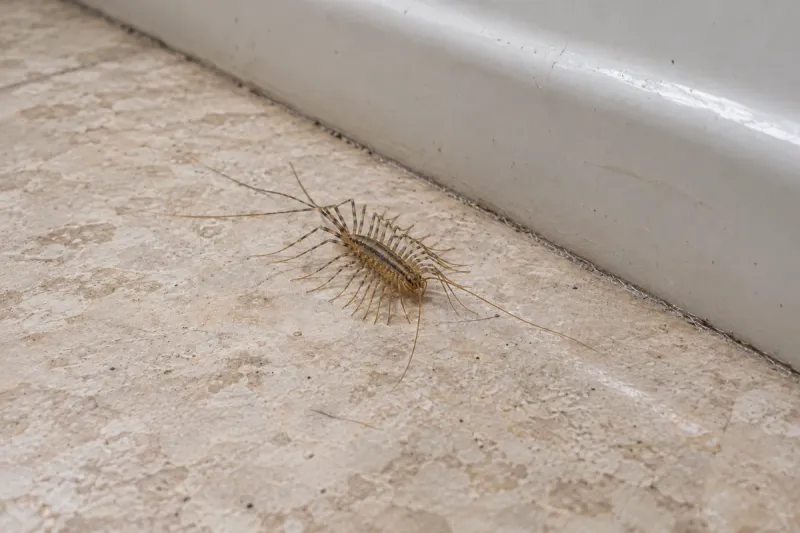
Here is the part that earns the centipede its friendly reputation: it is a predator. Sources including Penn State Extension list cockroaches, silverfish, spiders, and other small arthropods among its prey.
The Missouri Department of Conservation also describes it as a hunter of household insects and spiders.
Notice what that tells you and what it does not. It tells you what a house centipede can eat.
It does not tell you how many it eats, or whether one centipede makes any real dent in the bugs sharing your home.
So think of it as a limited ally, not a pest-control service. If a roach wanders into its path, the centipede may well deal with it.
But nobody has shown that a centipede can clear out a roach problem, and it should never replace proper treatment if you actually have an infestation.
That is also why the title’s phrase works best as a bit of fun framing. The animal is on the hunt, and some of its targets are things you would not want around.
Just do not count on it to do the job for you.
It is a bit like having a stray cat in the yard. Nice if it chases a mouse now and then, but you would not call it a mouse-control plan.
Its venom is real, but the usual risk to people is low
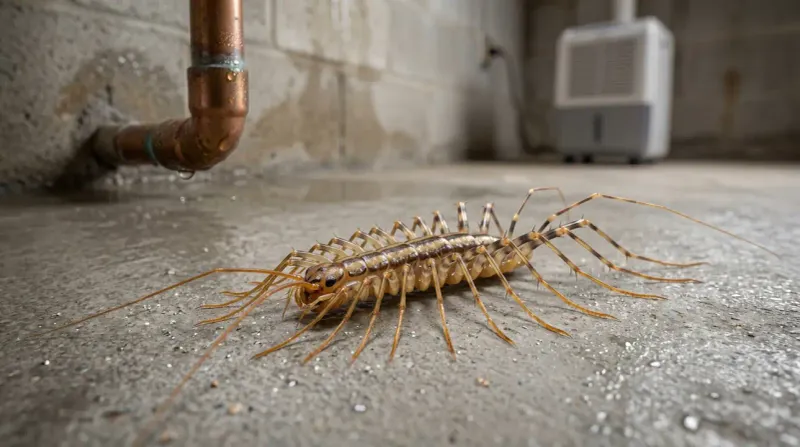
Yes, house centipedes are venomous. They use modified front appendages to deliver venom into their prey, which is how they take down a fast-moving spider or roach.
That fact sounds alarming, but it does not mean an ordinary encounter is a serious hazard for you.
Sources such as Poison Control and the University of Minnesota Extension describe the risk from these centipedes as low. Stings are unusual.
If one does happen, it can cause local pain, redness, or swelling, most often when someone handles the animal or traps it against skin.
A University of Kentucky Entomology publication covers centipedes found around homes, and the house centipede’s small size and weak bite hazard set it apart from the big tropical species people sometimes picture. Bite stories about those larger centipedes should not be pinned on this one.
Low risk is not the same as no risk, so skip the bare-handed rescue. Use a cup or a piece of paper, or let it be.
Allergic reactions to stings are possible with any venomous animal. MedlinePlus notes that trouble breathing or throat swelling needs urgent medical attention.
For other questions, Poison Control can advise at 1-800-222-1222 in the United States.
One sighting is not a pest diagnosis
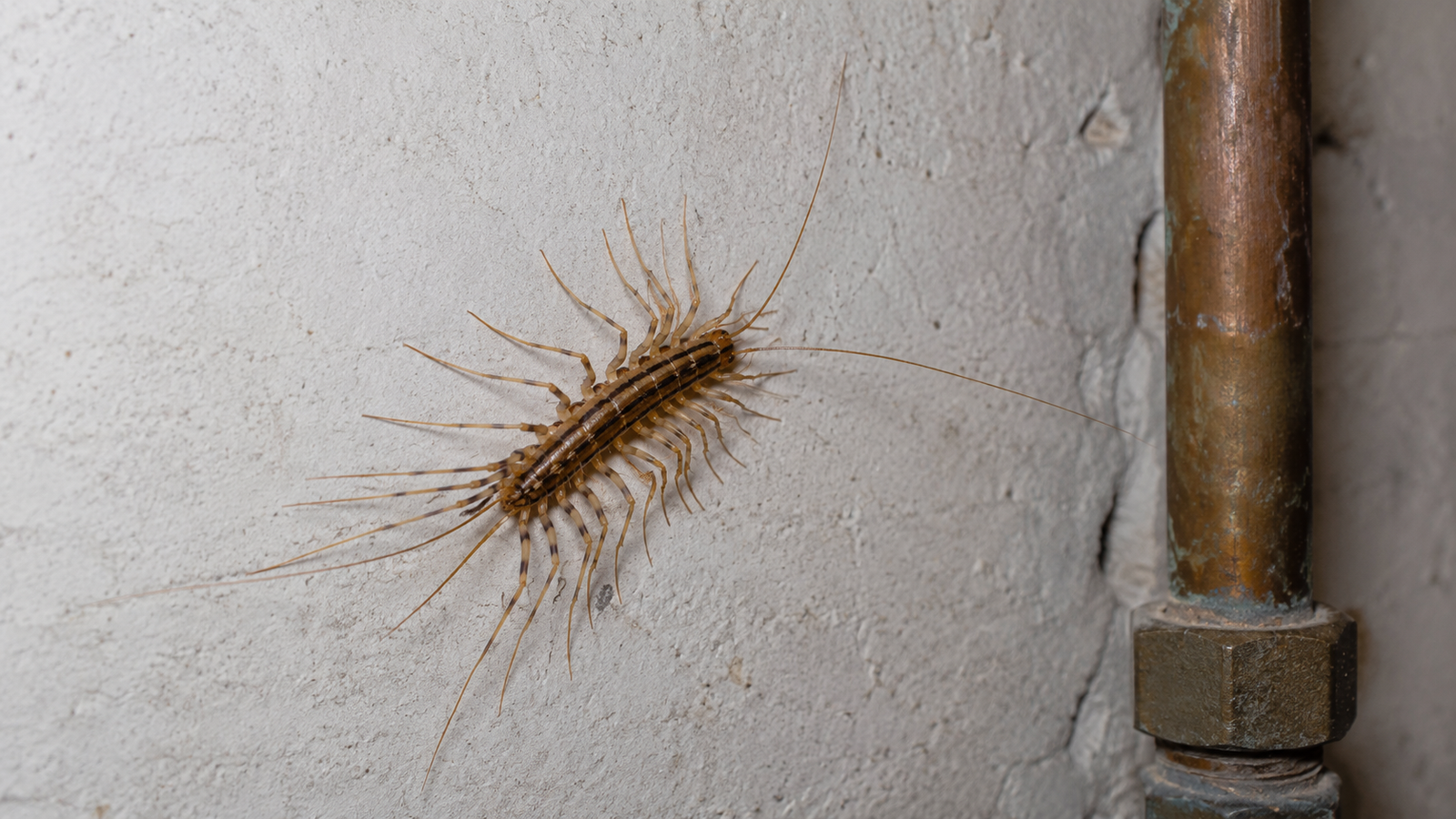
Spotting one centipede tells you very little about what else is in the house. It may mean there is prey around, or it may mean the spot is damp, or both.
Which one it is cannot be read from the centipede itself.
That matters because it is easy to jump to conclusions, such as assuming roaches or silverfish must be everywhere. Penn State Extension and Clemson University Extension both point out that centipedes go where there is food and shelter, which is not proof of any particular pest.
So look instead of guessing. Check for damp walls, leaky pipes, wet corners, and gaps where the foundation meets the floor.
A flashlight and ten minutes can tell you a lot.
Sticky traps are a handy next step. Set a few along baseboards and in corners, then see what turns up after a week or two.
UC IPM guidance supports using monitoring to learn what else is living there.
If the traps come back with silverfish or spiders, you have a clue. If they stay mostly empty, the damp conditions may be the bigger story.
Either way, you are working from facts.
Moisture and entry points are the practical targets
For a single centipede, the easy move is to remove it. Scoop it into a cup, nudge it onto a tissue or paper, or vacuum it up.
Then carry it outside if you like.
To cut down on repeat visits, go after what draws them in. Fix leaky pipes and faucets, run a dehumidifier if the basement stays clammy, and clear clutter from damp areas where they like to hide.
University of Minnesota Extension lists these steps as ways to make a home less welcoming.
Next, seal cracks and gaps around the foundation, windows, doors, and pipes. A tube of caulk and some weatherstripping go a long way.
Cardboard boxes stacked on a damp floor are a favorite hiding spot, so moving them to shelves helps too.
Keep the sticky traps going, as Penn State Extension suggests, and deal with any other pests they reveal. If you find silverfish or roaches, those are their own problem to solve.
Professional help can make sense if an inspection turns up a separate pest problem, or if centipede sightings keep bothering you after you have dealt with moisture and entry points. There is no magic number of sightings that decides it.
As for sprays, UC IPM says pesticide use for centipedes is rarely justified. If you ever do consider one, read the label and use only a product labeled for the site and pest you are treating.
A cautious ally is still worth understanding
The house centipede is a fast hunter that eats some creatures you would rather not live with, as Penn State Extension explains. Its sting risk is usually low according to Poison Control, though not zero, so leave it unhandled.
And per UC IPM, the smart response starts with damp spots and other pests rather than a spray can.
Treat each sighting as a nudge to look around, not a verdict. Your basement is telling you something about itself, and the centipede is just the messenger with too many legs.