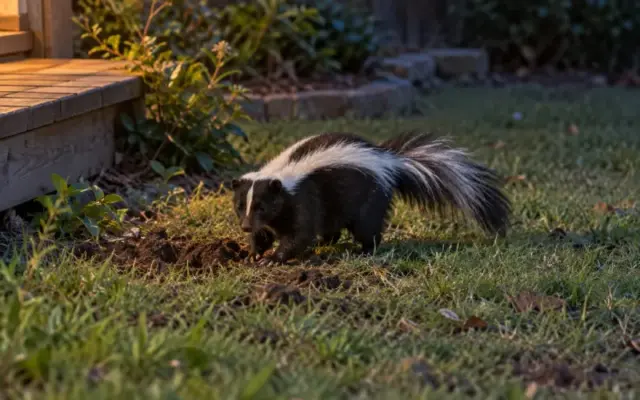
You step outside on a cold November evening and catch a strong, musky smell near the porch. Your first thought may be that a skunk has settled in for the winter.
That could be true, but a smell by itself does not tell the whole story. Here is how to check for real signs, stay safe, and get the right help in Massachusetts.
Odor alone cannot prove a skunk has moved in
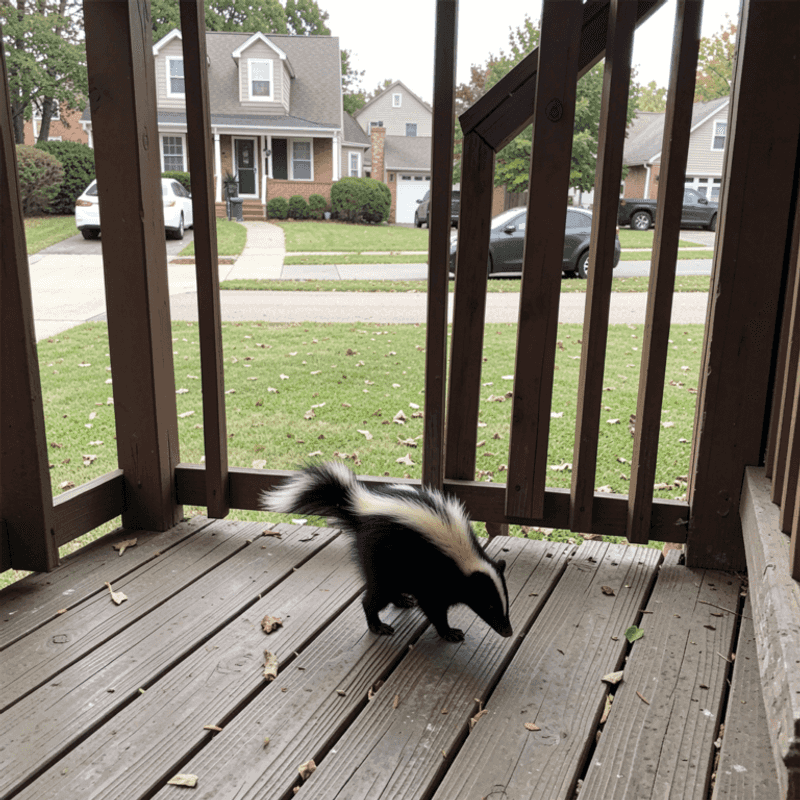
A musky odor near your porch can point to skunk activity, but it cannot show that a skunk lives underneath or arrived because winter is coming. Penn State Extension cautions that smell is not a reliable way to tell whether a skunk is present or absent.
So the nose is a good alarm bell, but a poor detective.
Think about what else could explain the smell. A skunk may have sprayed a dog, a raccoon, or a threat while passing through your yard last night.
The scent can hang around for a while even if the animal kept walking and never settled in.
There is a real difference between a smell under the porch and an occupied den. An occupied den means an animal is returning to rest in that space.
Passing activity means an animal was nearby at some point, and nothing more.
That difference matters because the next steps are not the same. If you assume a den and rush to block the opening, you could trap an animal inside.
If you assume nothing is there and ignore the signs, a real problem could grow.
The goal of this article is to help you slow down and gather more clues. You will learn why skunks might use sheltered spaces, how to watch safely from a distance, and when to call a professional.
A calm, step-by-step approach protects your home, your family, and the animal.
Why might a skunk use the space under a porch?
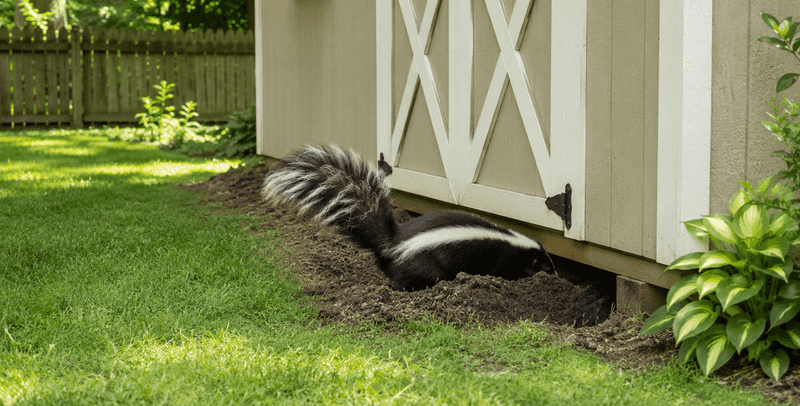
Porches and decks make attractive shelter because they are dry, dark, and out of the wind. The UC Statewide IPM Program notes that skunks may use spaces beneath structures for resting and denning.
A gap beside the foundation or a dug-out spot under the steps can look like a ready-made home.
Cold weather can change how skunks behave, but it does not mean every skunk picks a new porch den in late fall. Skunks live across Massachusetts and use many kinds of resting places, including burrows, brush piles, and hollow logs.
Your porch is only one possibility among many.
Skunks are also not true hibernators. MassWildlife explains that they sleep to save energy when temperatures stay below freezing, yet they can be active on nights when it stays above about 30 degrees Fahrenheit.
That means you might see or smell one on a mild December night.
A MassWildlife winter update also describes reduced activity in winter and occasional communal denning. These are general patterns across the state.
They cannot tell you what is going on under one particular porch, so you still need to look for signs at your own home.
Look for a pattern, not a single clue
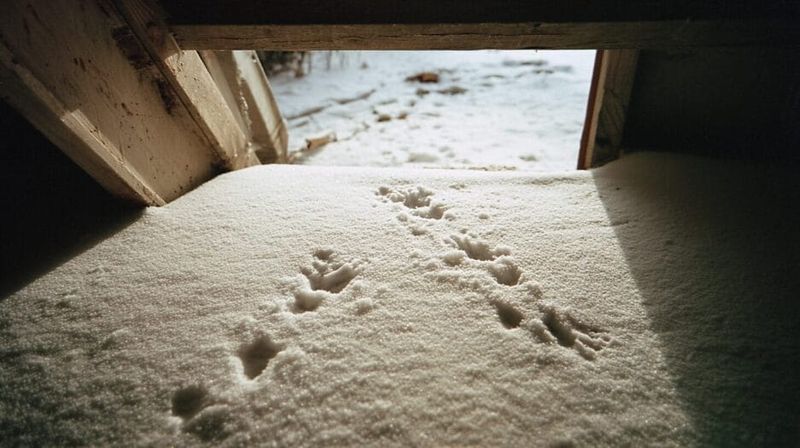
Good detective work means collecting several clues over a few days. From a safe distance, such as a window, watch for an animal repeatedly going in and out of the same spot near dusk.
Also look for fresh digging or disturbed soil near a possible opening.
Tracks can help, but only as part of the bigger picture. MassWildlife’s track guide shows that several species leave five-toed prints, so a print alone does not name a skunk.
Combine it with other signs before drawing a conclusion.
Odor still counts as one clue among others. Because Penn State Extension warns against relying on smell alone, pair it with sightings, tracks, or digging.
A strong smell with no other signs may simply mean a skunk passed through.
Keep your distance the whole time. Do not crawl under the porch with a flashlight, poke at the opening, or try to get a closer look at an animal.
Skunks can spray when frightened, and any wild animal may carry disease.
Keep notes or take photos from a safe spot. Writing down dates, times, and what you saw will help a wildlife professional if you need to call one.
Massachusetts kits arrive in late spring
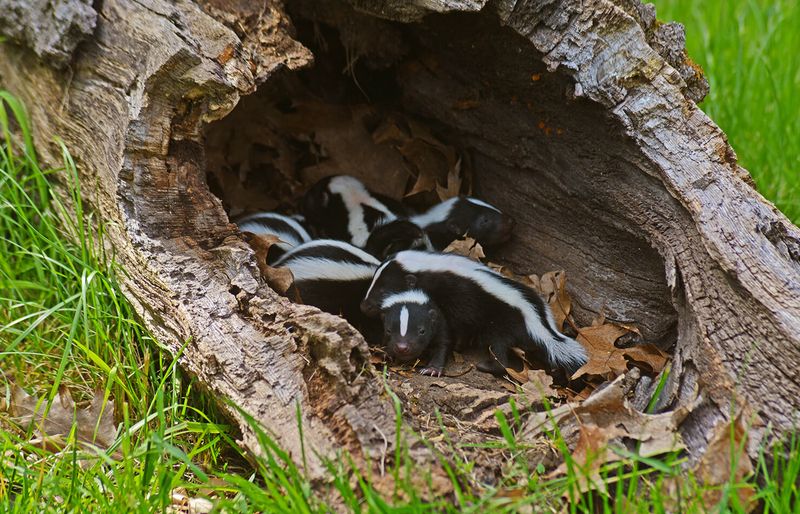
Knowing the local calendar helps you plan. According to MassWildlife, striped skunks generally breed from February through March.
Females give birth to 2 to 10 kits from late April to early June, and the kits stay in the den for roughly 6 to 8 weeks.
These are seasonal ranges, not exact dates. They also do not mean that a fall odor predicts a spring litter.
A smell in November tells you nothing about whether a female will use your porch to raise young months later.
The timeline matters because young kits cannot leave on their own. UC guidance warns that a one-way door will not work for kits that cannot yet walk.
Closing off the den at the wrong time could leave helpless babies trapped inside.
For that reason, do not treat spring as a simple deadline you can beat with a do-it-yourself fix. If you think a den is under your porch, the safest plan is to confirm what is happening before you change anything.
A professional can help you judge whether kits might be present.
Humane exclusion starts with knowing the den is empty
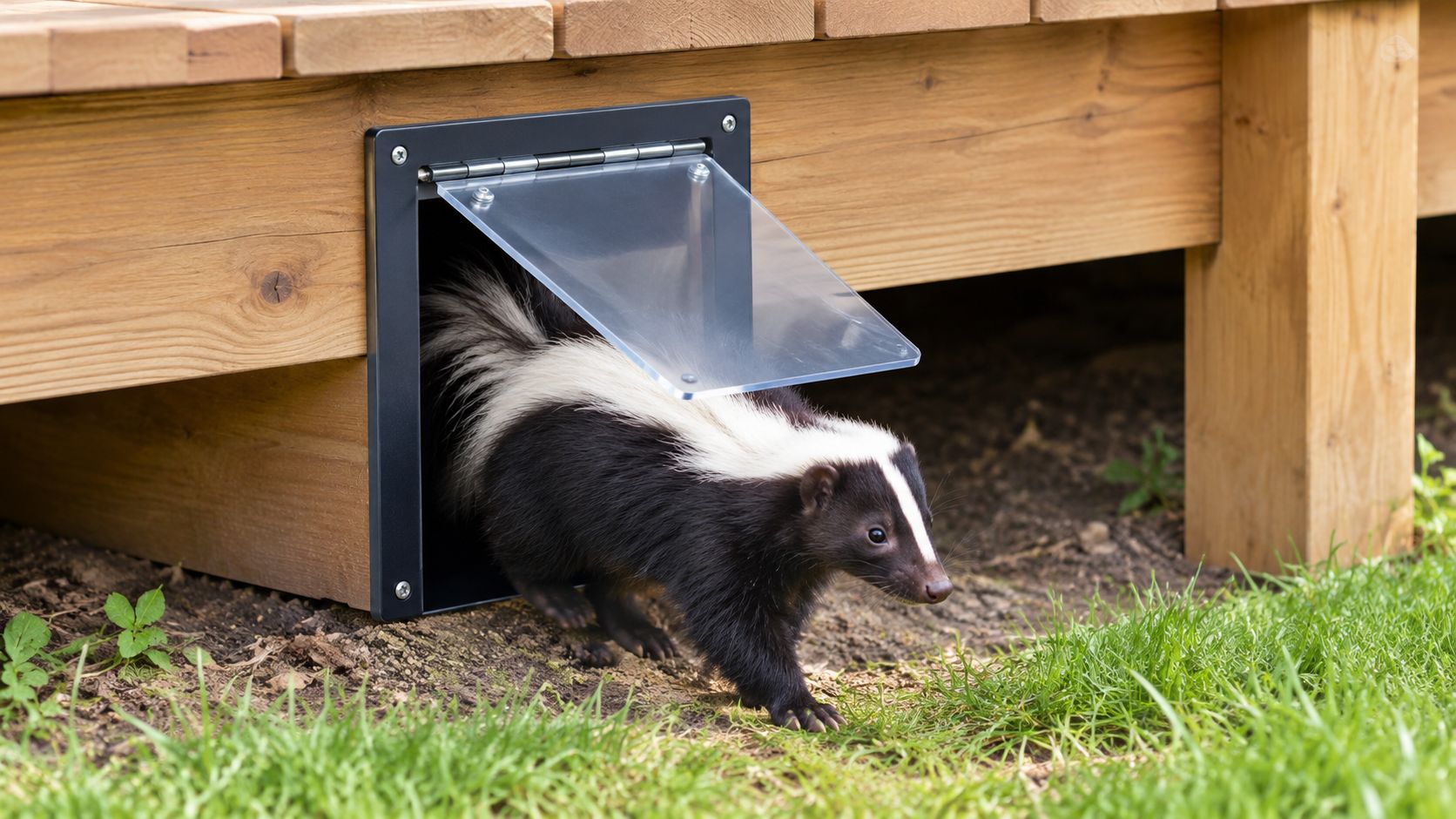
Before any entrance is closed, you must be sure the animals are out. Sealing an occupied space can trap a skunk or its young, which is cruel and can lead to bigger problems.
Patience at this stage protects everyone.
The UC Statewide IPM Program describes tracking down the entrance and using an outward-opening one-way door so an animal can leave but not return. This is general wildlife-management guidance, not Massachusetts legal advice.
It also will not work for kits that cannot yet walk.
Never use smoke, chemicals, or poison to drive an animal out, and do not crawl beneath the porch to check. Skunks that act strangely may be sick, and Massachusetts guidance on sick or hurt wildlife advises against approaching them.
When you are unsure whether an animal is inside, whether kits could be present, or how to close the space safely, call a professional. Problem Animal Control agents are the right contact in Massachusetts, and skunks are among the species they may handle.
For local handling or legal questions, MassWildlife or a PAC agent can give you answers that fit your town and situation.
Close the invitation only after the animals leave
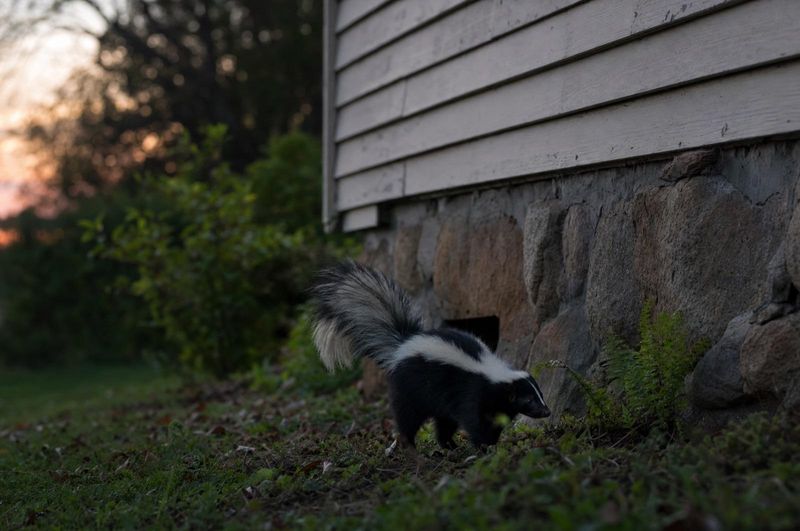
Once the space is confirmed empty, make it less appealing. MassWildlife’s skunk page points to food sources as a draw, so secure garbage, bring pet food indoors, and keep spilled bird-feeder seed from piling up.
Then close crawl-space access with sturdy materials, as Mass.gov’s wildlife-conflict guidance suggests.
Do not trap a skunk and drive it somewhere else. Massachusetts prohibits moving wildlife off your property.
If a conflict continues, contact a Problem Animal Control agent.
Keep people and pets away from wild skunks at all times. Bring dogs in at dusk if you know a skunk is around, and never try to handle or corner an animal.
If someone is bitten or scratched, Mass.gov’s rabies guidance says to wash the wound right away and contact a health care provider or your local board of health. If a pet may have been exposed, call your veterinarian to talk through next steps.
Verify first, then choose the safest next step
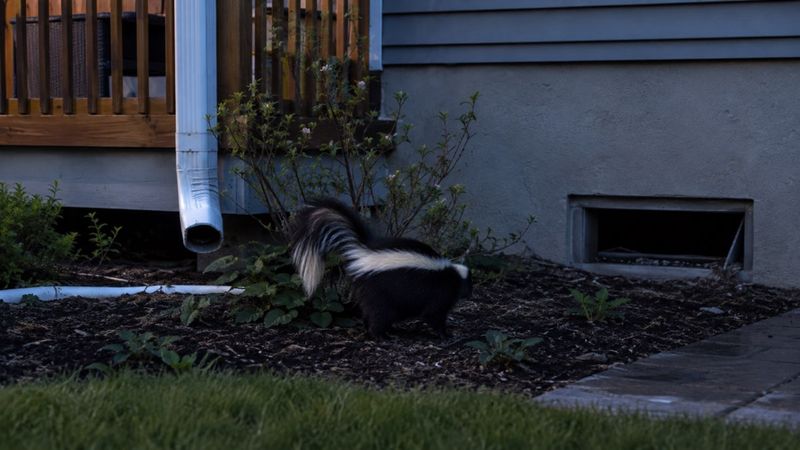
A musky smell is a reason to look closer, not proof of a winter den. As Penn State Extension notes, odor alone can mislead you.
Watch from a distance and gather more signs before acting.
If you cannot tell whether animals have left, or kits might be inside, hold off on sealing anything and call a Problem Animal Control agent. A smell tells you to pay attention, and patience is what keeps everyone safe.
Share this story