
Eating Celery Every Day In Massachusetts? Here’s What It Does To Your Body
Celery sits in many Massachusetts fridges and gardens, often as a crunchy snack or a soup starter. Plenty of online posts claim that a daily stalk can change your body in big ways.
Is that true, or is celery simply a handy vegetable? Here is what the numbers and the research actually say.
Massachusetts celery has a season, not a special effect
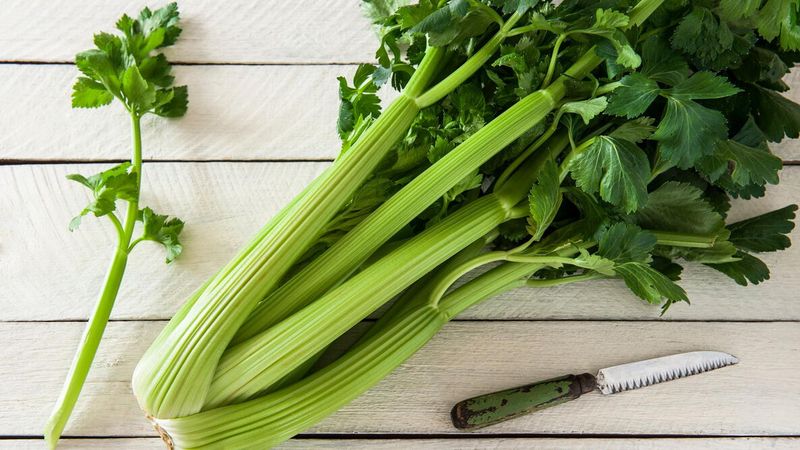
Walk through a New England farm stand in late summer and you may spot tall green bunches of celery stacked beside corn and tomatoes. The Massachusetts produce availability calendar lists locally grown celery as in season from July through October.
That window is about what you can find fresh from nearby farms.
It is not a sign that celery grown here does anything different inside your body. A stalk from a Massachusetts field and a stalk shipped from elsewhere are the same vegetable when it comes to health.
Local celery may simply be fresher, easier to find in season, or fun to buy from a grower you know.
Home gardeners can take note of how picky the plant is. UMass describes celery as a long-season crop that grows best in cool conditions.
That helps explain why harvest comes later in the year than for many other garden crops.
So the Massachusetts link is about timing and growing, not about a special health effect. If you grow it, expect patience.
If you buy it, expect the best local supply in the months from midsummer into fall.
What celery provides in an ordinary serving
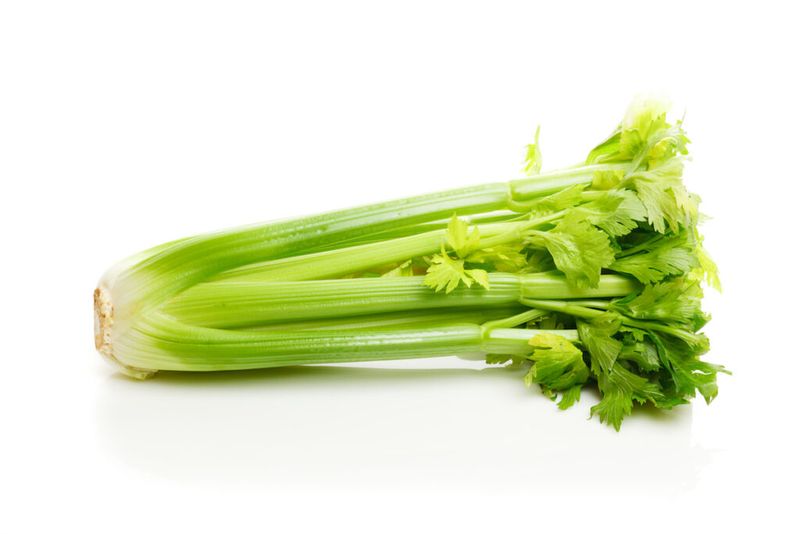
Crunch is the first thing you notice about celery, and water is a big reason for it. USDA’s record for raw celery lists about 16 calories, 1.6 grams of dietary fiber, and 80 milligrams of sodium per 100 grams, and the stalk is mostly water.
You can see the details in the USDA nutrient data for raw celery.
Keep in mind that these are reference values for 100 grams, which is a little under a few medium stalks depending on size. They are not guaranteed amounts for every stalk or every plate.
Growing conditions, stalk size, and how much you trim can all shift the real numbers a bit.
Celery is low in calories, but it is not calorie-free. It also is not a complete food.
One vegetable cannot supply everything your body needs, and celery has modest amounts of many nutrients compared with a varied mix of produce.
The sodium is worth a glance if you watch salt closely, though raw celery is a small source compared with processed foods. Dips, peanut butter, and salted toppings can change the picture quickly.
The plain stalk is a light, crisp base that you can build on however you like.
A daily habit adds a vegetable, not a guaranteed body change
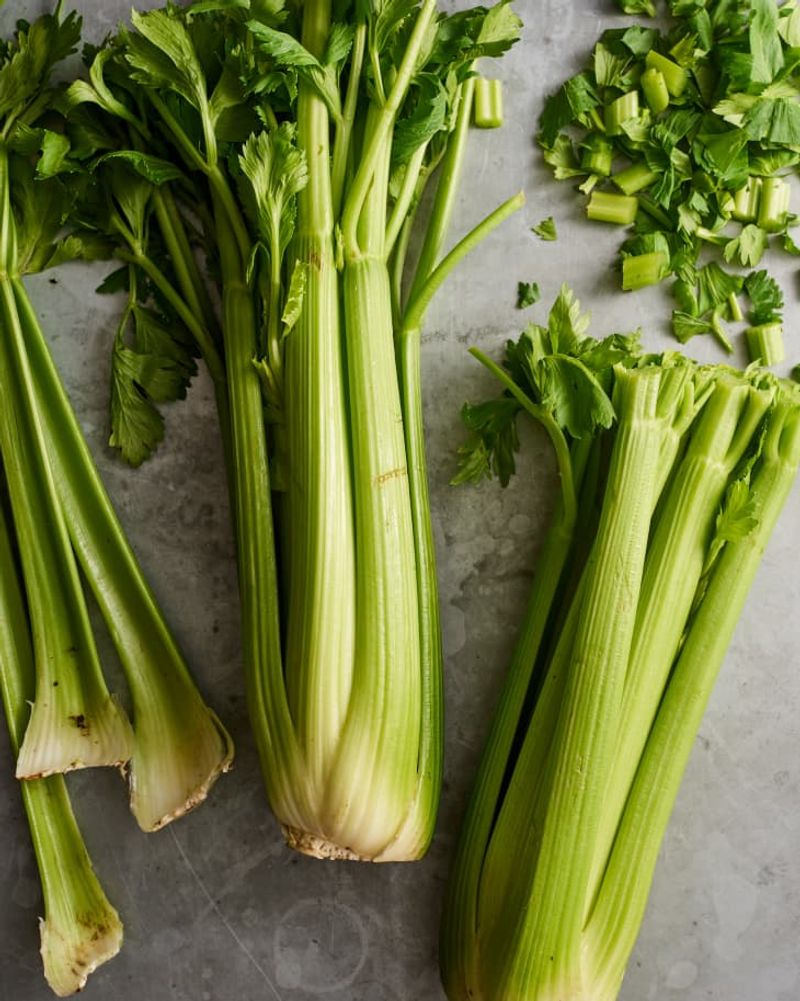
Picture a month of celery with lunch. What you would most likely gain is one more low-calorie vegetable, some water, and a little fiber, as shown in the USDA reference values.
That is a real, useful contribution to a meal, but it is a modest one.
No one has set a daily celery target, and there is no magic number of stalks. Celery is also not a promised way to change your weight, digestion, or disease risk.
If you notice changes, they probably come from the bigger pattern of what else you eat and do.
Federal advice points the same way. The Dietary Guidelines for Americans, 2025-2030 stress eating a variety of vegetables and fruits, not leaning on a single food.
A practical example: if celery is the only vegetable you eat each day, adding spinach, broccoli, or squash would do more for variety than adding a second stalk. Celery works best as a crunchy helper, not the star of the plate.
Research on celery preparations does not prove benefits from everyday stalks
A 2025 review pooled 10 randomized trials with 511 participants. In the 2025 systematic review and meta-analysis, the researchers reported some improvements in blood pressure, fasting glucose, and triglycerides.
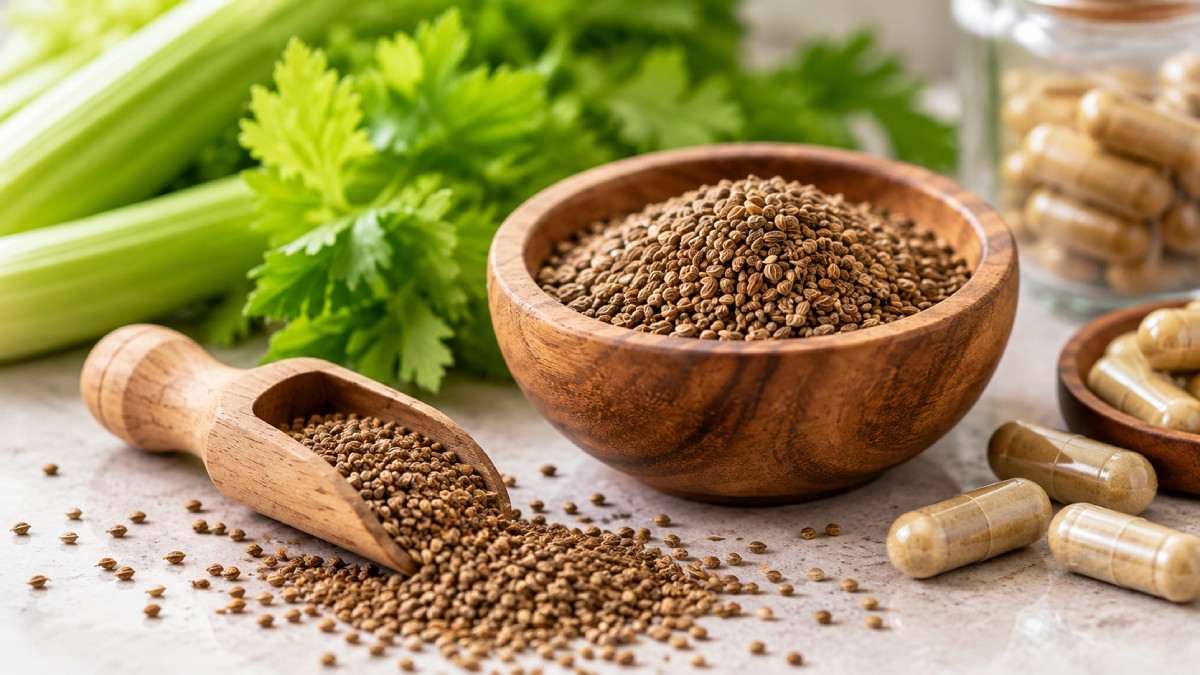
Before you reach for another stalk, look at what was tested. The studies included celery preparations and seed products, not just everyday servings of stalks.
The authors also noted that the trials differed a lot from one another, the samples were small, and better trials are needed.
A separate study gives a clear example. A clinical trial of celery seed extract gave 52 adults with hypertension 1.34 grams per day in capsules.
That is a concentrated supplement, which is very different from crunching on fresh celery at lunch.
So the research is interesting, but it does not show that fresh celery stalks lower blood pressure, blood sugar, or triglycerides. It also does not make celery a replacement for medical care.
If you take medicine for high blood pressure or diabetes, keep taking it as directed and talk with your clinician before adding celery seed products.
Celery juice is not a shortcut
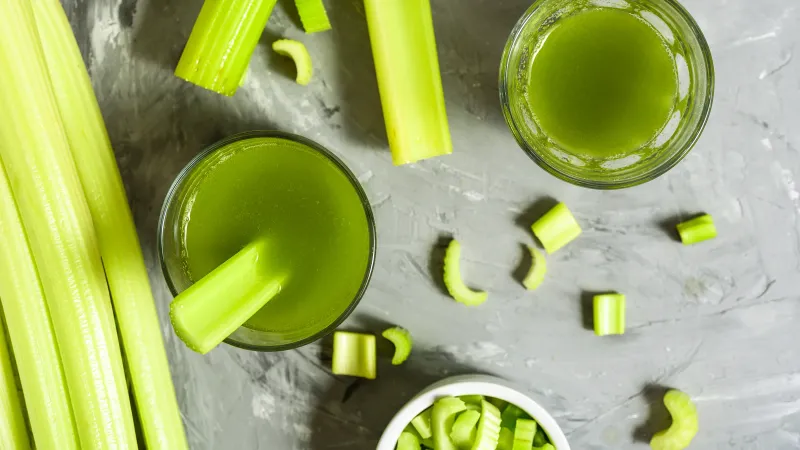
Social media loves a tall glass of green celery juice, often with big promises attached. One of the most common is that it detoxes the body.
The NCCIH guidance on detoxes and cleanses says compelling evidence does not support detox diets for weight management or toxin removal.
Another popular idea is that celery has negative calories. Tufts explains in its Myth of the Month on negative-calorie foods that no such food exists.
Celery is low in calories, not calorie-free.
Juicing also changes the food. According to Mayo Clinic on juicing, most juicing removes fiber, and juice is not shown to be healthier than whole fruits and vegetables.
Blending is a different story from juicing. If you blend celery and drink it without straining, the fiber stays in the glass.
If you enjoy the taste of celery juice, that is fine, but whole stalks or an unstrained blend keep more of what the vegetable naturally contains.
Make celery one part of a varied plate
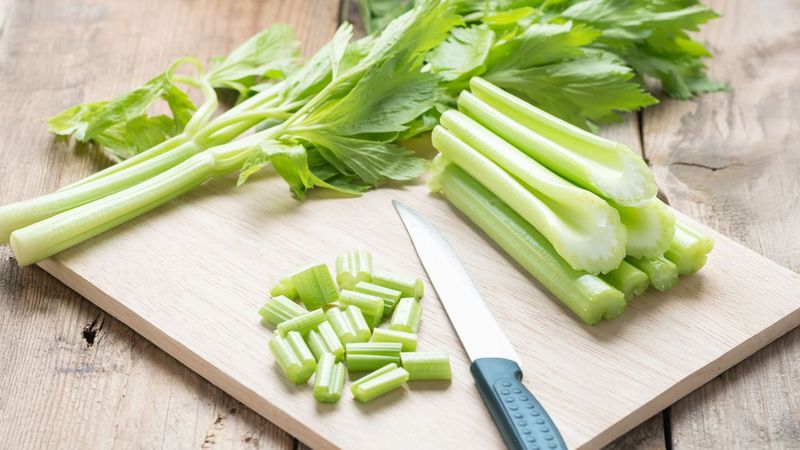
The simplest plan is to let celery share space with other produce. Toss it into soup, slice it into tuna salad, or pair it with carrots and peppers for a snack tray.
Following the federal dietary guidance to eat a variety of vegetables and fruits means celery is one good choice among many, with no set daily amount.
In Massachusetts, you can rotate with the seasons. Celery fits in late summer and fall, while other local vegetables can take over the plate at different times of year.
That rotation naturally brings in more colors and textures.
Wash it before you eat it, even if it came from your own garden. The FDA’s produce-cleaning tips say to rinse under plain running water and gently rub the produce.
Skip the soap and skip commercial produce wash. FDA advises against both.
Plain running water and a little gentle rubbing are enough, and a clean towel afterward makes the stalks ready to chop.
Who should be cautious?
For some people, celery is not a harmless snack. It can cause food-allergy symptoms, and in some cases the reaction can be severe.
The Thermo Fisher celery allergen reference covers the allergy and the compounds involved.
If you ever notice itching, swelling, hives, or trouble breathing after eating celery, stop eating it and get medical advice. Severe symptoms need urgent care.
Celery can also hide in soups, spice blends, and prepared foods, so label reading helps.
Photosensitivity is a separate concern. Celery compounds can make skin more sensitive to sunlight, but this is especially noted in people who routinely handle celery, such as farm or kitchen workers.
It is not a typical result of eating a stalk.
Celery is a decent everyday vegetable for most people, yet it is still a food that deserves attention if your body says no.