You rake them up every fall, and someone probably told you they would ruin your soil. That warning is not as solid as it sounds.
Pine needles can be a free, handy mulch for many Pennsylvania beds, as long as you know their limits. Here is how to use them well and where to be careful.
Pine needles are acidic, but surface mulch rarely changes soil pH
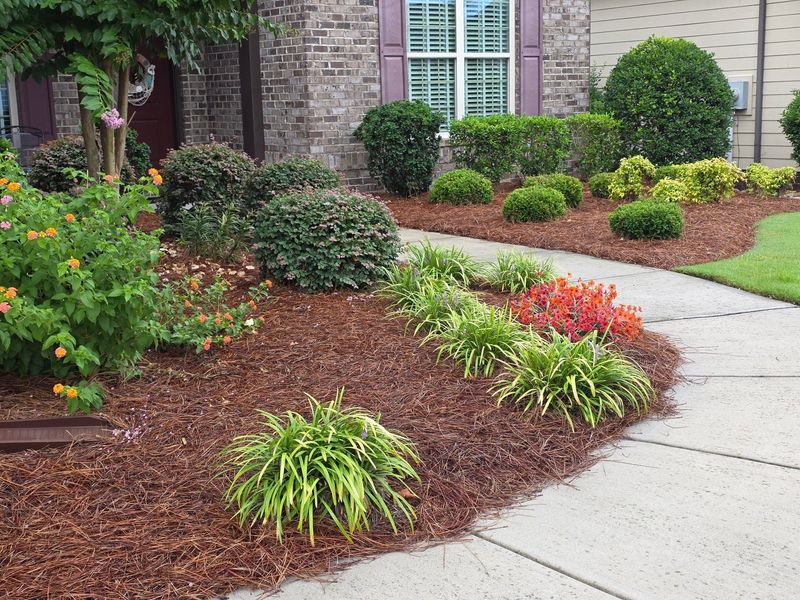
Yes, pine needles are acidic. That fact is where the scare story starts, and it is also where it goes off track.
A material being acidic is not the same as it changing the soil underneath when you lay it on top as mulch.
According to guidance from UNH Extension, even a 2 to 3 inch layer of pine mulch will not change soil pH enough to measure. For most home beds, that means a layer of needles on the surface is unlikely to turn your soil sour overnight.
There is a catch, though, and it keeps this from being a never-ever rule. A USDA Agricultural Research Service study found no pH increase in its field experiment that could be pinned on pine straw alone at a typical application rate.
But in container treatments where the mulch was mixed into topsoil, pH dropped by as much as 0.48 units. The authors suggested checking pH from time to time where pine straw or pine bark is used.
So what should you do? If you are just spreading needles on top of a bed, you can relax.
If you plan to dig them in, use them year after year, or grow plants that are fussy about pH, test your soil first. And if you want to change your soil’s pH on purpose, a soil test will tell you far more than a pile of needles ever could.
What a layer of pine needles can do for a garden bed
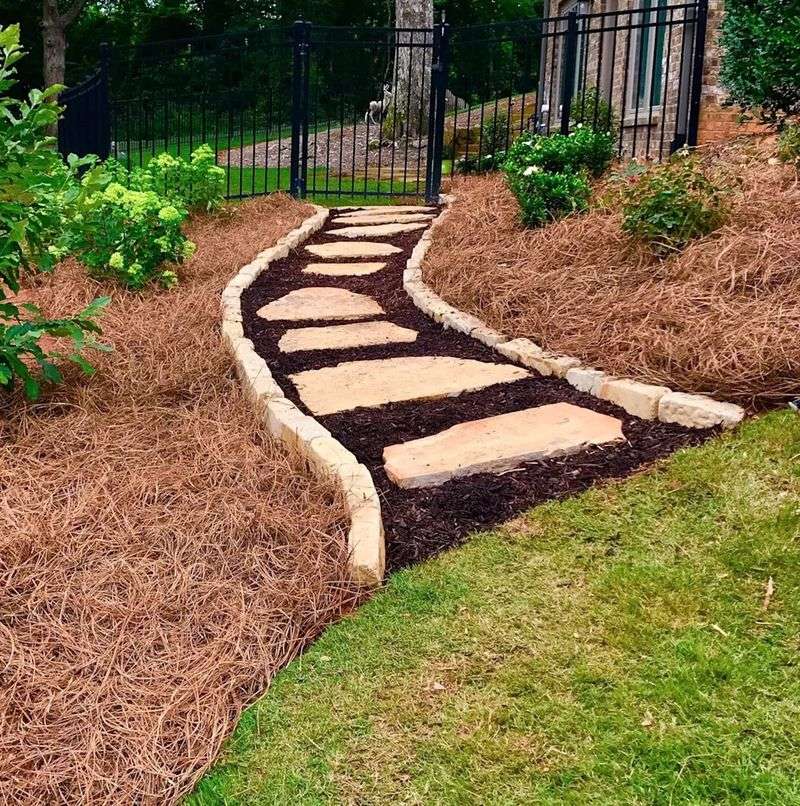
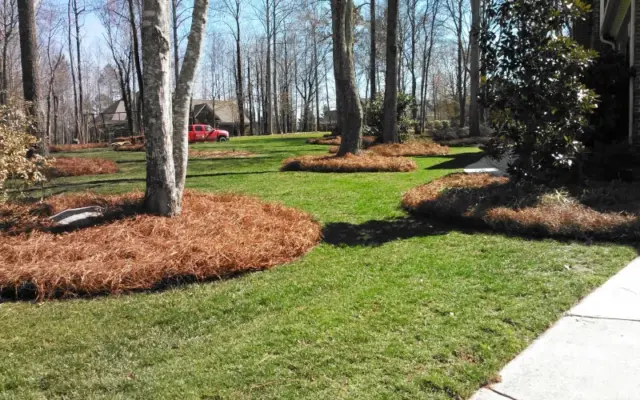
Think of a layer of needles as a blanket for your soil. Penn State Extension lists pine needles among suitable organic mulches in its home garden soil guidance, which is a good sign they belong in many yards.
The first payoff is moisture. A covering over bare soil slows evaporation, so beds may need water a little less often during a dry stretch.
Needles also let rain trickle through their loose, springy texture instead of shedding it.
Weeds are the second benefit. A thick, even layer blocks some of the light that weed seeds need to sprout, so you may pull fewer of them.
Notice the word some, though. Persistent perennial weeds and seeds that blow in on top of the mulch can still show up, so keep a hand weeder nearby.
Third, needles help even out soil temperature. They cushion roots from hot summer sun and from sudden chilly swings in spring and fall.
None of this makes pine needles magic. They will not fix poor drainage, replace fertilizer where plants truly need it, or guarantee a healthy garden.
Think of them as one solid, free option among several organic mulches, and a good match for many beds.
Use an even layer and keep it off trunks
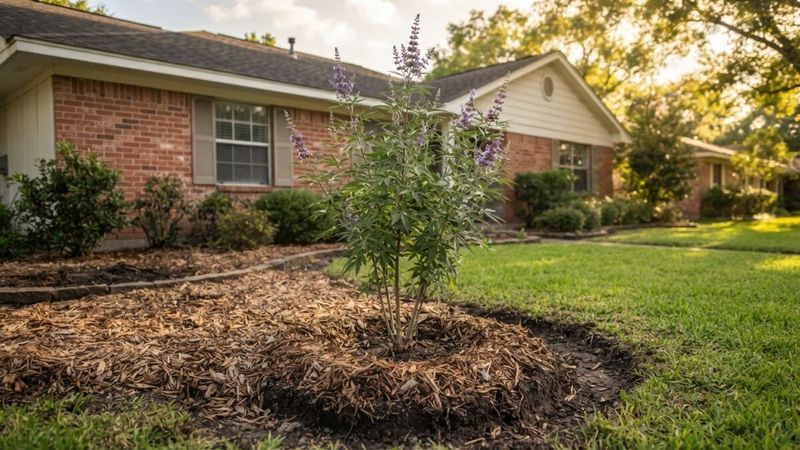
Depth matters more than most people think. Penn State recommends a uniform layer 2 to 4 inches deep, and that total includes any mulch already sitting in the bed.
If last year’s needles or bark are still there, measure first and add only what is needed to reach that range.
Why not pile it on? Too much mulch can hold excess moisture against roots and stems and limit airflow to the soil.
Plants can struggle in those conditions, so more is not better.
Spacing is just as important. Following Penn State’s advice on mulching landscape trees, keep mulch about 3 to 5 inches away from tree and shrub stems or trunks.
Mulch touching bark stays damp, which invites rot and gives pests a cozy hiding place.
Here is a simple routine. Rake the old mulch back and look at what is left.
Spread new needles in a flat, even layer rather than a tall mound. Then pull a bare ring of soil around each trunk or stem, so you can see the base of the plant clearly.
Skip the volcano shape you often see around street trees. A flat, wide layer does the job better and is kinder to the plant.
Winter mulch works best after the ground freezes
Winter mulching is its own job, separate from the routine mulch you put down in spring. The timing surprises many gardeners.
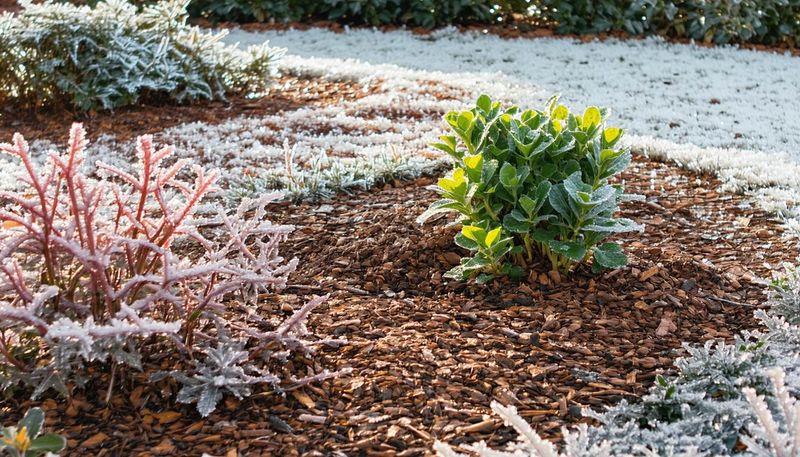
Penn State’s November garden tips advise applying winter mulch after the ground freezes, with the goal of reducing damaging freeze and thaw cycles.
Those cycles are the real troublemaker. When soil freezes, thaws, and freezes again, shallow roots can get pushed upward, leaving young plants exposed.
A layer of needles added once the ground is frozen helps keep the soil steadily cold instead of bouncing around.
Notice what that means. The idea is not to keep soil or plants warm all winter.
It is to keep temperatures steady.
Who needs it most? According to Penn State, its perennial care guidance points to newly planted or divided perennials and tender plants.
Well-established beds usually do fine without extra winter cover, so you can skip the work there.
In spring, do not yank everything off at once. Remove winter protection gradually as the weather settles, so plants adjust instead of facing a sudden change.
Needles are light and easy to rake back, which makes that step simple.
Near the house, dry needles raise a different concern
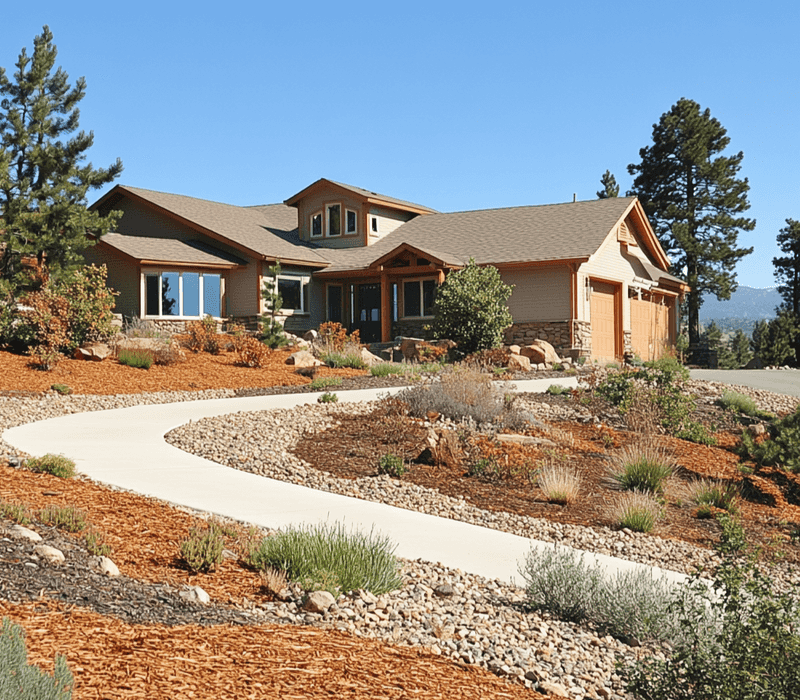
Pine needles have a downside that has nothing to do with soil: they burn. Dry needles are combustible, and in fire-prone places they can help flames spread, especially if they pile up right next to a building.
The University of Nevada Extension covers this in its defensible space guide. It recommends clearing pine needles from the zone 0 to 5 feet around homes, and it adds more limits for landscapes dominated by pines.
Keep that advice in context. It was written for defensible space in wildfire country, so it is not a universal Pennsylvania rule.
Most Pennsylvania yards are not facing the same fire conditions as the western states.
Still, it is a smart reminder. If you live in or near a wildfire-prone area, such as dry woodland edges, check with your local fire authority before using needles near structures.
Local guidance beats general advice every time.
A practical step even for everyone else is to keep the strip right along your foundation free of piled-up dry needles and leaves. Use stone, gravel, or bare soil there, and save the needle mulch for beds farther from the walls.
Choose mulch based on the bed and its risks
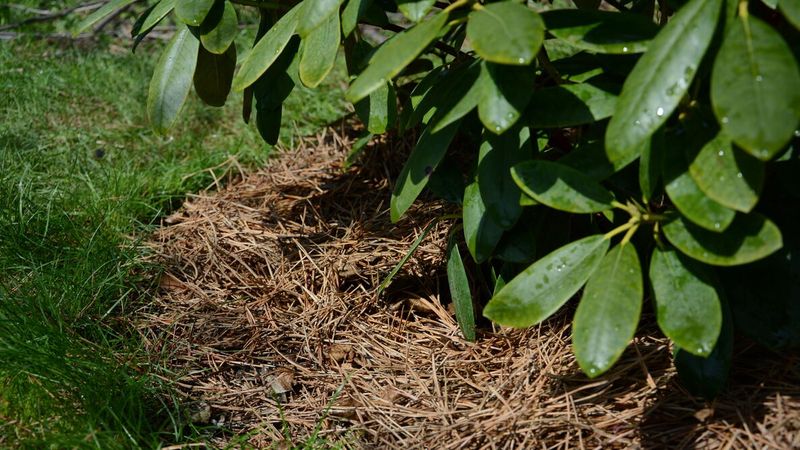
Here is a quick way to decide. Walk your yard and look at each bed on its own.
Beds away from the house, filled with ordinary plants, are good candidates for fallen needles.
Next, check the basics from Penn State’s home garden advice: a flat 2 to 4 inch layer, counting what is already there, with space left around stems and trunks.
If you grow plants that care a lot about pH, or you plan to mix mulch into the soil, run a soil test before you commit. The UNH Extension guidance is reassuring for surface use, but a test removes the guesswork.
Save winter mulch for new plantings and tender plants. And near the house, think about fire, especially if you live in a dry, wooded area, and read the Nevada defensible space advice alongside your local fire rules.
Those needles in your rake pile are not trash. They are a free tool that works best when you know where to use it and where to hold back.
Share this story