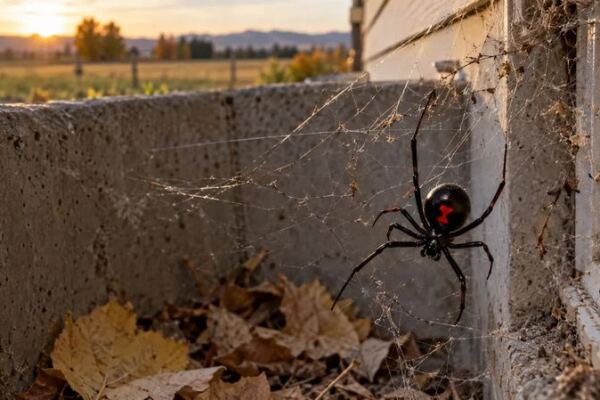
A strange chorus of yips and howls drifts through the window at midnight, and suddenly you are wide awake. It is natural to wonder how close the animals are and whether your pets are safe.
Coyote calls tell us some things, but they leave out a lot more than most people think. Knowing the difference can help you stay calm and take steps that actually matter.
A chorus is communication, not a clear announcement
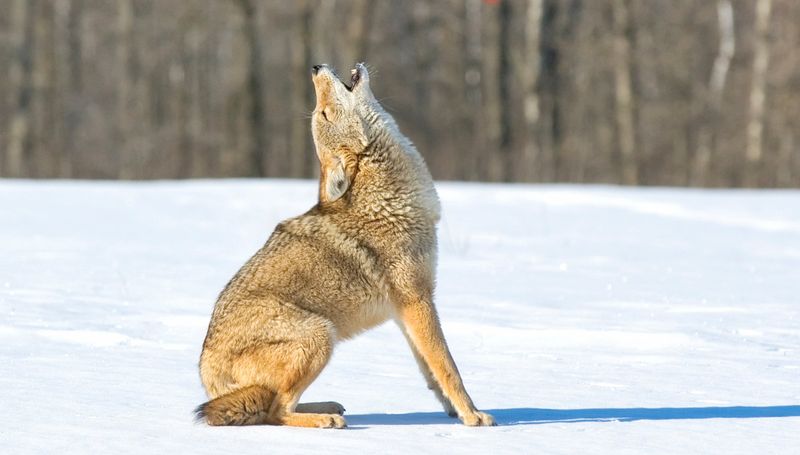
Night air carries an odd mix of howls, yips, and barks, and it can feel like the animals are announcing something. In reality, coyotes use these sounds to talk to one another.
According to the South Carolina Department of Natural Resources, calls commonly communicate location or gather individuals, and they may also help coyotes maintain territories.
Think of it a bit like people calling across a big park to find each other. One voice says, I am over here, and another voice answers.
Nothing in that exchange tells a human listener what happened, only that coyotes are making noise within earshot.
That is the most solid thing a chorus can tell you. Vocalizing coyotes are somewhere within hearing range.
It does not mean a particular event has taken place, and it does not work as a news bulletin about the neighborhood.
It also helps to know how these animals usually operate. SCDNR says coyotes typically hunt alone or in pairs, so a noisy group at night is not a sound of a pack closing in on prey.
Calling and hunting are separate activities, and the sounds you hear are far better explained by coyotes keeping in touch.
The same state agency notes that trains, airplanes, or sirens can set off vocalizations. If you notice a siren pass by just before the howling starts, that may be the trigger, with no special meaning behind it.
With that starting point in mind, the next sections look at what sound cannot reveal, such as distance, group size, and intent.
Could the coyotes be farther away than they sound?

Your ears are not great at measuring distance in the dark. A howl that seems to come from just beyond the fence might actually be coming from a field far down the road.
Sound bounces, bends, and fades depending on trees, buildings, and the weather.
Research cited in a peer-reviewed paper on coyote group size reports that coyote howls may carry as far as 3.2 kilometers, which is about 2 miles, under some climate conditions. That is a possible distance, not a measurement of any one caller.
It also does not mean every howl travels that far.
What this tells you is practical. A loud, clear howl is not proof that the animal is in your yard or even on your street.
Sound alone cannot place a coyote at a spot on the map.
The reverse is also true. A faint call does not guarantee the animals are far away, because terrain and wind can muffle a nearby caller.
Your ears can say that coyotes are calling, but they cannot give you an address.
If you want to know whether coyotes are actually passing through your property, look for things you can verify, such as a clear daytime sighting or a camera image. Walking out into the dark to find the source is not a good way to answer the question, and it puts you and your pets in an unfamiliar situation for no real gain.
Why a chorus can sound like a bigger group

Two or three coyotes can sound like a crowd. Their voices overlap, rise and fall, and mix yips with howls, so your brain tends to hear more animals than are there.
A playback study from southern Texas put this idea to the test.
In that Texas playback study, 427 participants listened to recordings of one to four coyotes and guessed how many animals they heard. On average, people overestimated the number by nearly twofold.
That result is a good reason to be skeptical of any quick head count. If a chorus sounds like ten coyotes, it may be a much smaller number.
A few animals can fill the night with sound.
There are limits to what the study shows. It used recordings, it took place in one region, and it tested the group sizes of one to four.
It does not prove that every listener, or every real backyard soundscape, will overcount by the same amount, so please do not treat nearly twofold as a formula for dividing what you hear in half.
The takeaway is simple and practical. Without seeing the animals, you cannot say how many are calling.
Leave the counting alone, and focus on the steps you can control, which come up in the sections ahead.
What a howl does not tell you

It is easy to attach a story to a sound. A howl at 2 a.m. can feel like a warning, a celebration, or a threat.
Calls alone support none of those readings.
SCDNR describes coyote calls as communication, and it notes that loud noises can trigger them. A howl does not prove a kill, and it does not show that a den sits beside your house or that an attack is coming.
It also does not mean the coyotes are answering you.
Calls happen for multiple reasons. Movement activity usually peaks during the late winter breeding season, and howling may be more frequent then, according to University of California pest management guidance.
Even so, coyotes call at other times of year, so one noisy night cannot tell you the season, whether pups are around, or where a den might be.
Even deliberate calling does not produce uniform results. A Michigan field study, described in research on vocal responses from coyotes, found that responses to broadcast calls varied with factors such as whether the coyotes were residents and how far away they were.
In other words, coyotes do not react to sound in one predictable way.
So when a chorus starts, the honest reading is modest. Coyotes are communicating, and you cannot tell much more than that from your bedroom window.
Treat the sound as background information, not as proof of an emergency.
Hearing calls is no reason to investigate

When the howling starts, curiosity can tug at you. Resist it.
Do not go looking for the animals, and do not call toward them to see what happens, since a sound is not a good reason to head into the dark.
SCDNR notes that predator calls can attract coyotes, which is one more reason to stay quiet and stay put. Your time is better spent on simple habits around the house.
The SCDNR coyote guidance for suburban and urban settings suggests a short list of steps for reducing attractants and protecting pets:
Feed pets during the day, and pick up food bowls before dark. Keep cats indoors.
When walking dogs, use a short leash.
Picture a typical evening. The dog finishes dinner at five, the bowl comes inside before sunset, and the cat is already curled up on the couch.
By the time the chorus starts, the routine is done and nothing is sitting outside to draw attention.
These steps are sensible habits, not guarantees. They do not promise that coyotes will stay away from your yard.
They simply cut down on easy temptations and keep your pets closer to you.
If you want extra peace of mind, step outside only briefly and with a leashed pet when needed, then head back in. Hearing calls from inside the house is not a reason to change much beyond those basic precautions.
A sighting is different from a sound
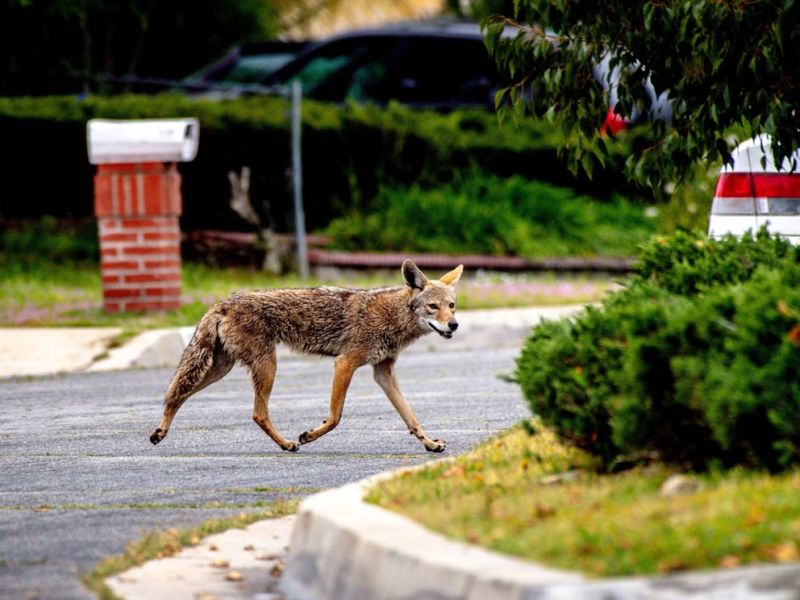
Hearing a coyote and seeing one are two very different experiences. A call tells you little about a particular animal.
A sighting lets you observe what the coyote is actually doing.
If you do see one, keep people and pets at a safe distance. Do not feed it, and do not walk toward it.
Bring pets inside, and give the animal room to move along on its own.
An ordinary sighting is not a sign that something is wrong. Coyotes live across South Carolina, and one crossing a yard or road is not automatically behaving abnormally.
SCDNR describes them as animals that move several miles within their home range daily, so seeing one now and then is not shocking.
What matters is whether the animal looks out of character. CDC wildlife guidance says to keep away from wildlife and contact animal control if an animal is acting strangely or out of character.
That advice is general, and it does not diagnose any condition.
The same goes for a call. A howl is not a sighting, and it does not show that an animal is behaving unusually.
Keep the two observations separate, and save the phone call to animal control for what you can actually see.
Listen without reading more into the sound
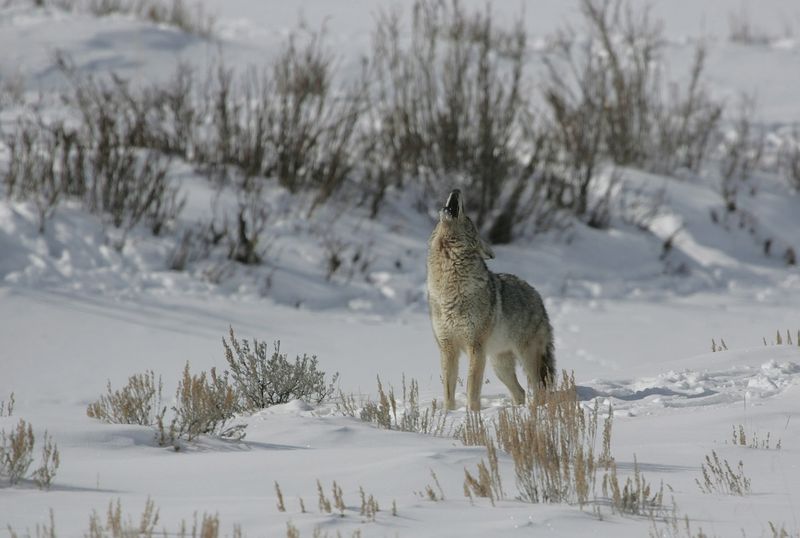
A chorus can tell you that coyotes are communicating within hearing range, and that is about all. It cannot give you a dependable head count, a precise location, or a warning about a specific event.
Keep pet routines tight by following SCDNR advice, and if you see an animal acting strangely, use CDC guidance to keep away and call animal control.
The night sounds can stay just that, a wild voice in the dark that you are free to enjoy from indoors.
Share this story