Few sounds make you stop and listen like a deep hoot drifting through a cold Georgia night. Many people wonder if the owl is courting, guarding its turf, or nesting close to the house.
Owl calls can offer real clues, but they have limits. Knowing what those limits are helps you enjoy the sounds without guessing wrong or bothering the birds.
Fall nest-site searching does not explain every call
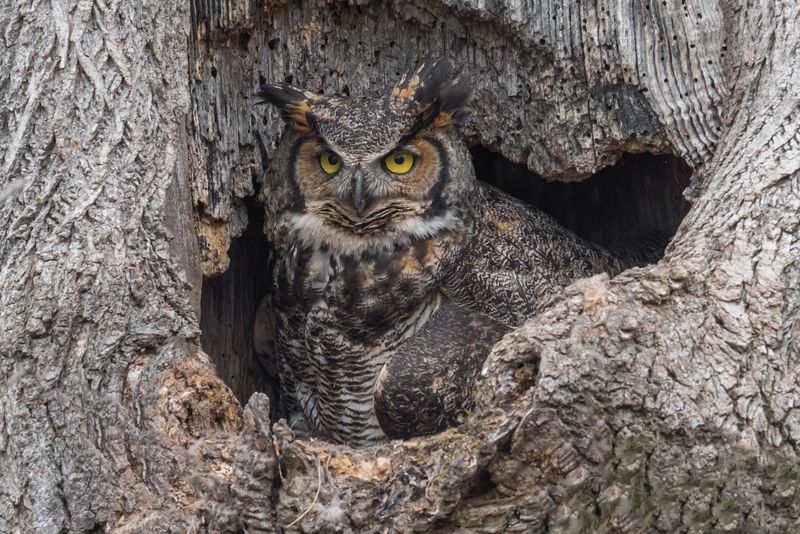
Autumn nights can get surprisingly noisy, and it is tempting to assume every hoot has a neat explanation. Georgia DNR reports that Great Horned Owls may begin looking for nest sites as early as September.
That is a documented seasonal habit, and it helps explain why these owls can be active around neighborhoods well before winter.
Georgia DNR also notes that Great Horned Owls defend their nesting territory from other owls and hawks. So there are two real behaviors in the picture: scouting for a place to nest and guarding a territory against rivals.
Both are well documented for the species.
Here is where the limit comes in. Knowing that these behaviors happen in fall does not tell you that a particular hoot you heard on a particular night marks territory or signals courtship.
Those facts describe what the owls do over a season, not what one call means. An owl could be calling for reasons you simply cannot see from your porch.
Think of it like hearing a dog bark in the distance. You know dogs bark at strangers, at squirrels, and out of excitement, but the sound alone does not reveal which one is happening.
Owls are similar. A fall call is a clue that an owl is around, nothing more.
A better approach is to write down the date, the time, and what the call sounded like. Over several weeks, those notes may show a pattern, and that pattern is more useful than any single night’s hooting.
Great Horned Owl courtship typically occurs in December and early January
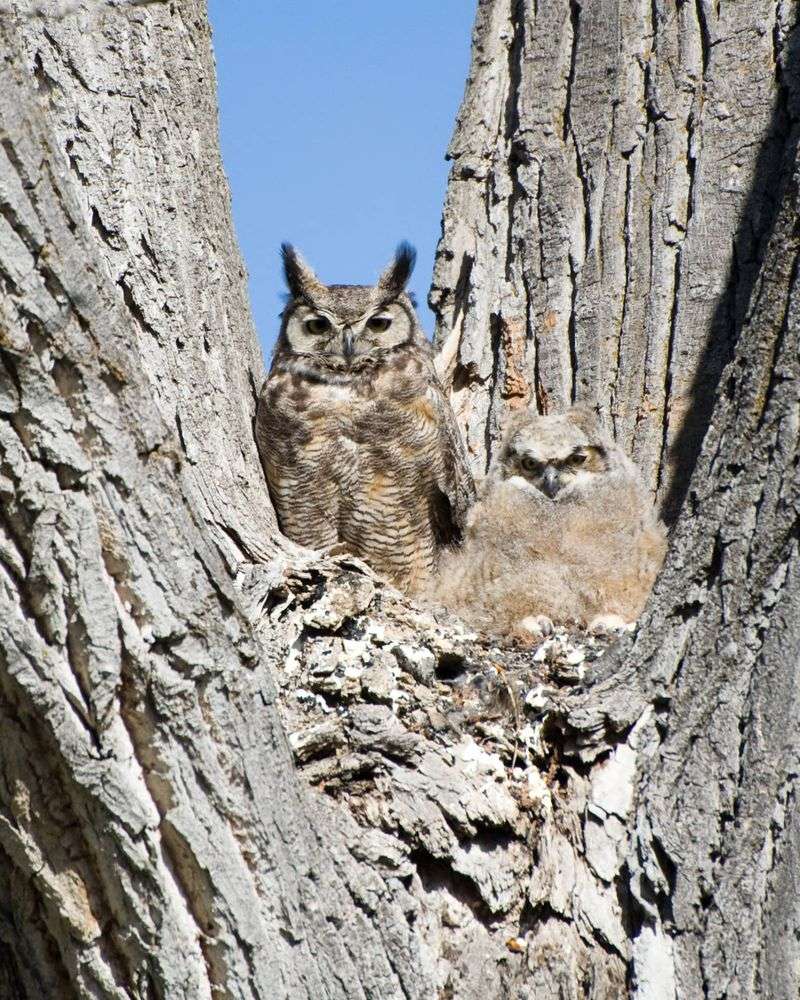
Winter is when Georgia’s Great Horned Owls typically court. Georgia DNR says courtship typically occurs in December and early January.
That is a general timing for the species, so individual pairs can differ.
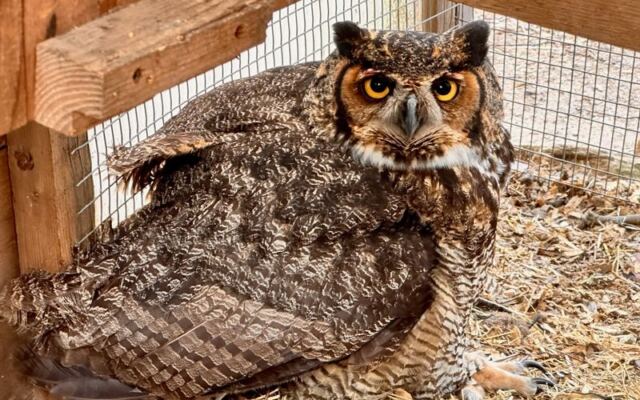
Cornell’s Great Horned Owl sound guide describes their deep hoots as a way to advertise territory. The same hoots that mark out space can therefore be heard during the courtship window, which is one reason a single call is hard to read.
Pairs may also duet, trading hoots back and forth. In a duet, the female’s voice is higher-pitched than the male’s.
If you hear two slightly different pitches answering each other, that is a nice detail to notice.
Still, treat all of this as background, not a translation. A deep hoot on a December night fits the courtship season, but it cannot prove that the owl is looking for a mate at that moment.
It might be defending space, answering a neighbor, or doing something you will never witness.
The timing is most useful as a way to set expectations. If you hear back-and-forth hooting in midwinter, you are listening during the stretch when Great Horned Owls are typically at their most socially active, and that is a good reason to simply enjoy it.
The species changes what a winter call may mean
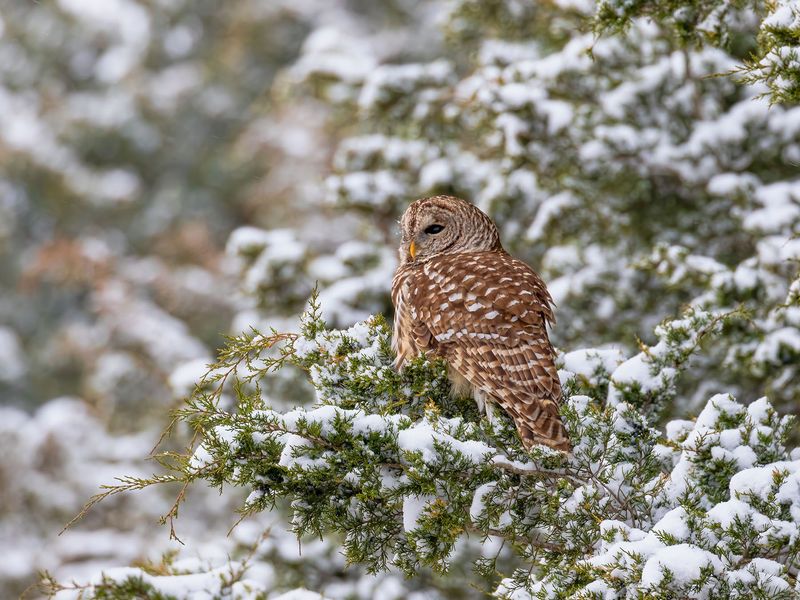
Two owls can call on the same January night and mean quite different things. Great Horned Owls typically court in December and early January, according to Georgia DNR.
Barred Owls follow a different rhythm.
Cornell’s Barred Owl life history page describes these owls as territorial year-round. A pair holds ground in every season, so calls in fall or winter are part of everyday life for them.
That means hearing a Barred Owl in November or February does not by itself point to courtship. It may simply be a resident bird keeping in touch with its mate or announcing that the area is taken.
The season on the calendar tells you less than you might expect.
This contrast shows why two questions come before any guess: which owl is it, and what was happening around the sound? A loud, lively chorus in the woods behind your house could be Barred Owls going about their normal business.
A deeper, steadier hooting in midwinter might be a Great Horned Owl, though even then you are working with a clue.
If you cannot tell the species, that is perfectly fine. Saying you heard an owl, and nothing more, is more accurate than claiming you know what it wanted.
Call patterns offer clues, not a sure identification
Putting a name to a night voice takes practice. The Barred Owl is the easiest to recall, since Cornell’s Barred Owl sound page describes the familiar “who cooks for you” pattern.
Many Georgians learn that rhythm as children.
The Great Horned Owl sounds different. Cornell’s Great Horned Owl page points to lower, stuttering hoots.
Compared with the Barred Owl’s rolling phrase, it is deeper and more broken up.
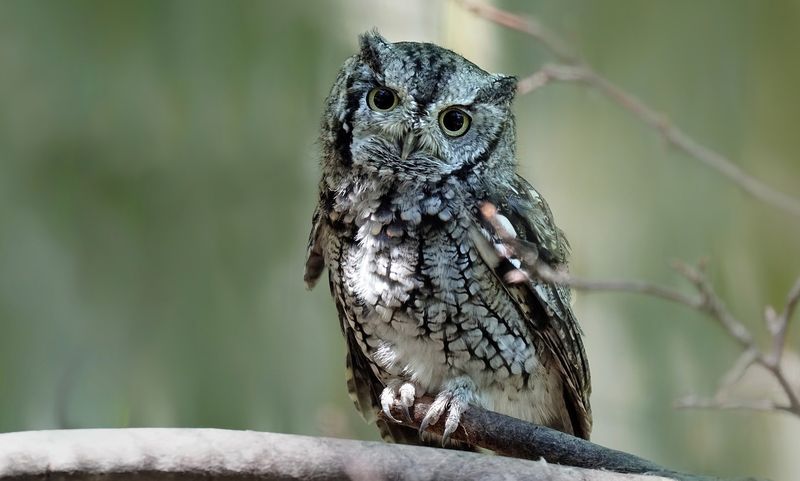
Then there is the small Eastern Screech-Owl. Cornell’s screech-owl guide notes that it often gives a trill or a descending whinny, which can sound more like a horse than a hoot.
These differences can help you narrow down who might be calling. If you hear a whinny, you can rule out a deep hoot.
If you hear a rhythmic phrase, a Barred Owl becomes a good candidate.
What the sounds cannot do is reveal the caller’s exact purpose or where it is sitting. Sound carries oddly through trees, across fields, and around houses, so a voice that seems close may be far away.
Treat your identification as a good guess and your sense of location as rough.
If you want to improve, listen on quiet nights and compare what you hear with recordings played at home during the day, away from the birds.
Not every owl vocalization is a courtship or territory call
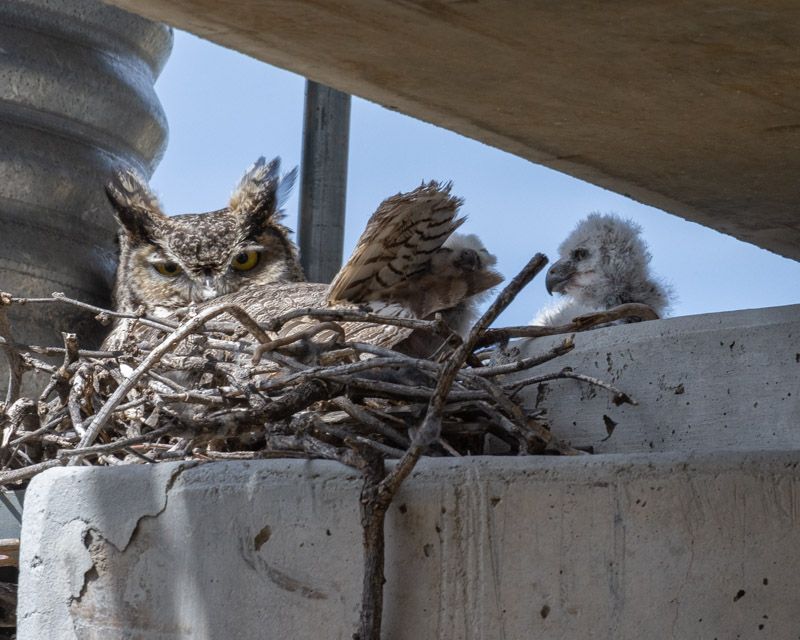
Owls do more than hoot. Cornell’s Great Horned Owl sound guide notes that the young give piercing, scream-like calls when begging for food.
If you hear a harsh shriek, a hungry youngster may be the source.
Adults can scream too. They may do so to defend a nest, which is a very different message from a soft courtship hoot.
The sound is sharp, and it can be unsettling on a still night.
These examples show why it is risky to give every owl noise a single social meaning. A hoot might be about territory or a mate.
A scream might be about food or defense. Another sound might be something else entirely.
For a listener, the practical lesson is to describe what you heard before deciding what it means. Was it a deep hoot, a rolling phrase, a trill, or a scream?
Was it a single call or an exchange? Those details are more reliable than a guess about motive.
It also helps to remember that you are hearing only a slice of owl life. Much of their communication happens out of sight, in the dark, and between birds you cannot see.
Leaving some of it a mystery is part of the fun.
A call near your home does not confirm a nearby nest
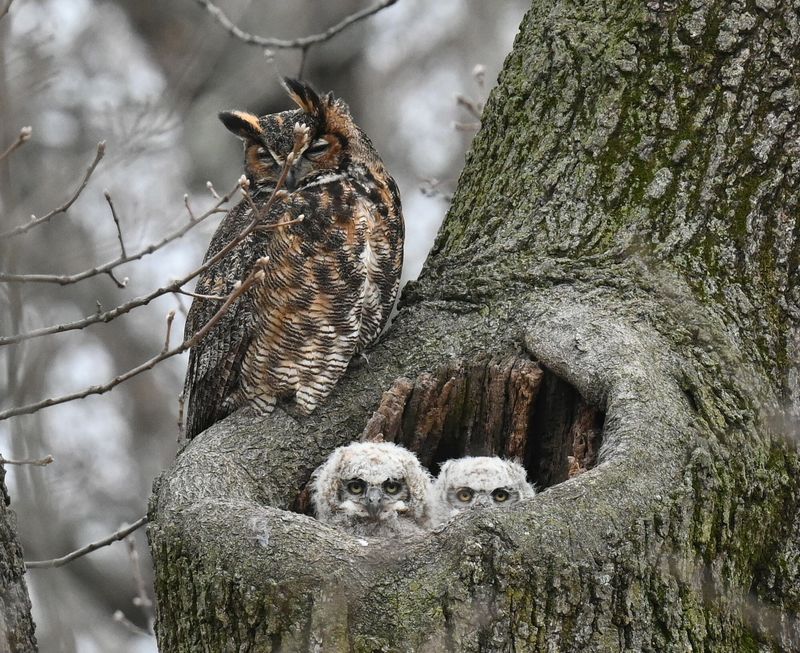
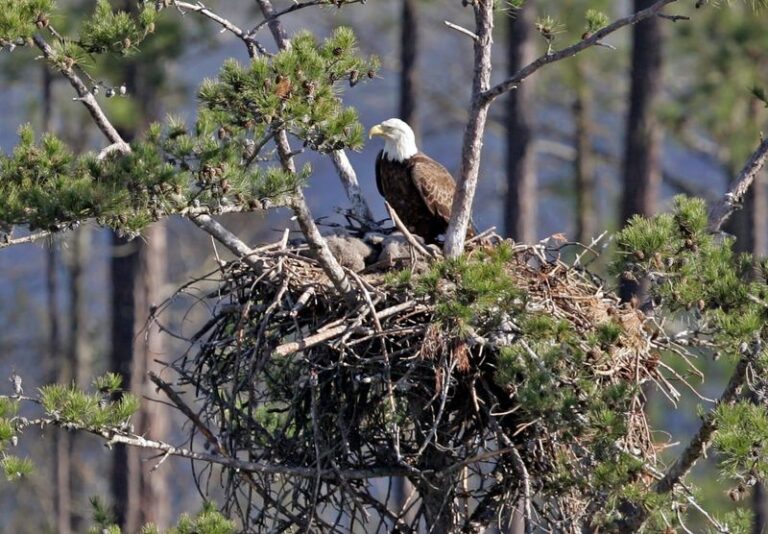
Great Horned Owls really can live close to people. Georgia DNR notes that they may nest in suburban yards and neighborhoods.
That makes it natural to wonder if the owl you hear has set up house nearby.
Hearing a call from your yard, though, does not establish that the bird is nesting there. Owl voices travel a long way, especially on cold, quiet nights.
The caller could be well beyond your property line, perhaps in woods or a neighboring lot.
An owl might also be passing through, hunting, or answering another owl. A single call gives you almost no information about where a nest might be, or whether one exists at all.
For that reason, there is no need to go looking. Wandering around in the dark with a flashlight can stress the birds and will probably not tell you anything anyway.
Searching for a nest is not something to encourage.
A calmer approach is to treat the sound as a sign that owls use your area in some way. You can enjoy that from a porch or window, and let the birds decide how they use the space.
If you ever do notice a nest by chance, simply keep your distance.
Listen from a distance and leave wildlife in place
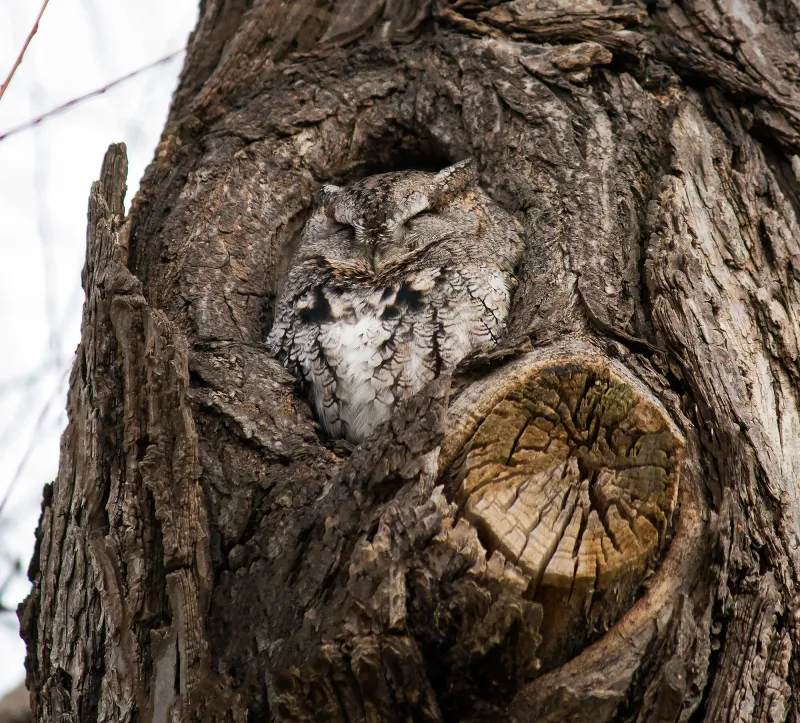
The best way to enjoy owls is quietly. The International Owl Center’s respectful observation guidance discourages approaching a suspected nest, using flash or loud noises to draw an owl closer, or repeatedly playing owl calls.
Playback can provoke a response and disturb the birds.
That last point matters, because recordings are easy to find on a phone. Playing them to lure or locate an owl may feel harmless, but it can pull a bird away from its normal activity.
Listening without interfering is kinder and, often, just as rewarding.
Staying back from a suspected nest is just as important. Nesting owls can be easily stressed, and getting closer for a better look is not worth the risk to the birds.
Sometimes a bird really does seem to be in trouble. If an owl looks injured or genuinely orphaned, do not handle it, move it, or try to care for it yourself.
Georgia DNR advises leaving wildlife alone in most cases, and it provides a hotline plus a county-by-county list of permitted rehabilitators.
Before calling, take a moment to watch from far away. A young owl on the ground may still be tended by its parents.
If it truly needs help, the DNR resources will point you to trained people who can step in.
Treat winter hoots as clues, not a coded message
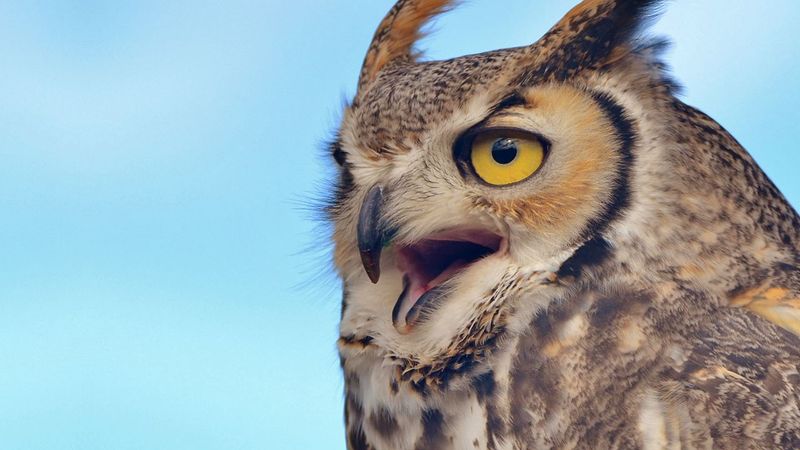
Great Horned Owls typically court in December and early January, per Georgia DNR, while Barred Owls may call territorially year-round. Different vocalizations can serve different jobs, too.
A call alone cannot prove a precise message or a nearby nest. Still, the sound is a gift on a cold night.
Listen, jot a note, and let the owl keep its secrets.
Share this story