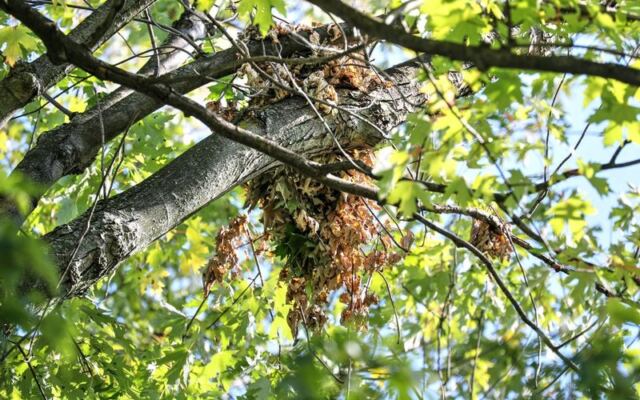
Once the oaks drop their leaves, a bulky clump of leaves can suddenly appear high in the bare branches. Many people assume it is a bird nest, but it could also be a squirrel drey, which is a tree-squirrel nest.
Telling the two apart from the ground takes a little detective work, and the clues are not always clear. Here is what to look for, what to leave alone, and how to protect any animals that might be living up there.
Leaf drop can make a hidden nest easier to see
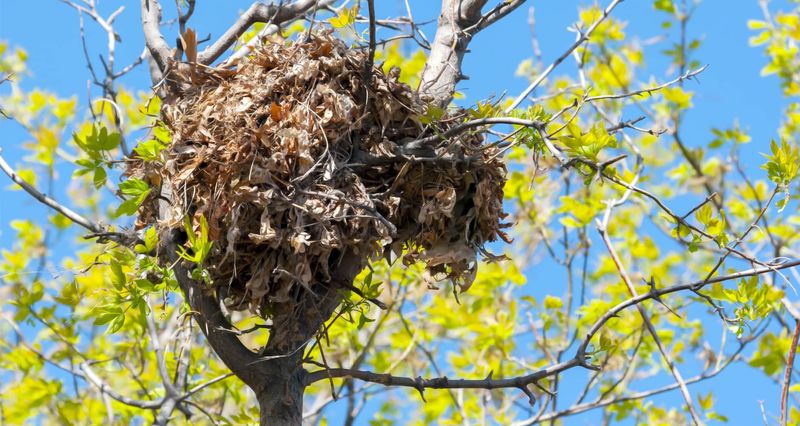
Walk under the same oak in July and again in December, and you may swear something new has moved in. Often it has not.
Thick summer leaves can hide a bulky bundle, and once a deciduous tree drops its foliage, the shape stands out against the sky.
That better view tells you nothing about when the nest was built. A clump you notice in November may have been there since spring, or even longer.
Not every oak hides one, and not every fall reveals one, so a bare tree with no bundle is perfectly normal.
Bird experts at the National Audubon Society have written about how to tell whether a tree nest belongs to a squirrel or a bird, and their approach is a good model for homeowners. Treat what you see as a clue, not an answer.
Notice the size, the shape, the materials, and where it sits, then draw a careful conclusion.
A squirrel drey is a reasonable guess for a leafy bundle. It is only one of several possibilities, though, and the rest of this article shows how to weigh them without climbing, poking, or disturbing anything.
What makes a leafy ball look like a squirrel drey?
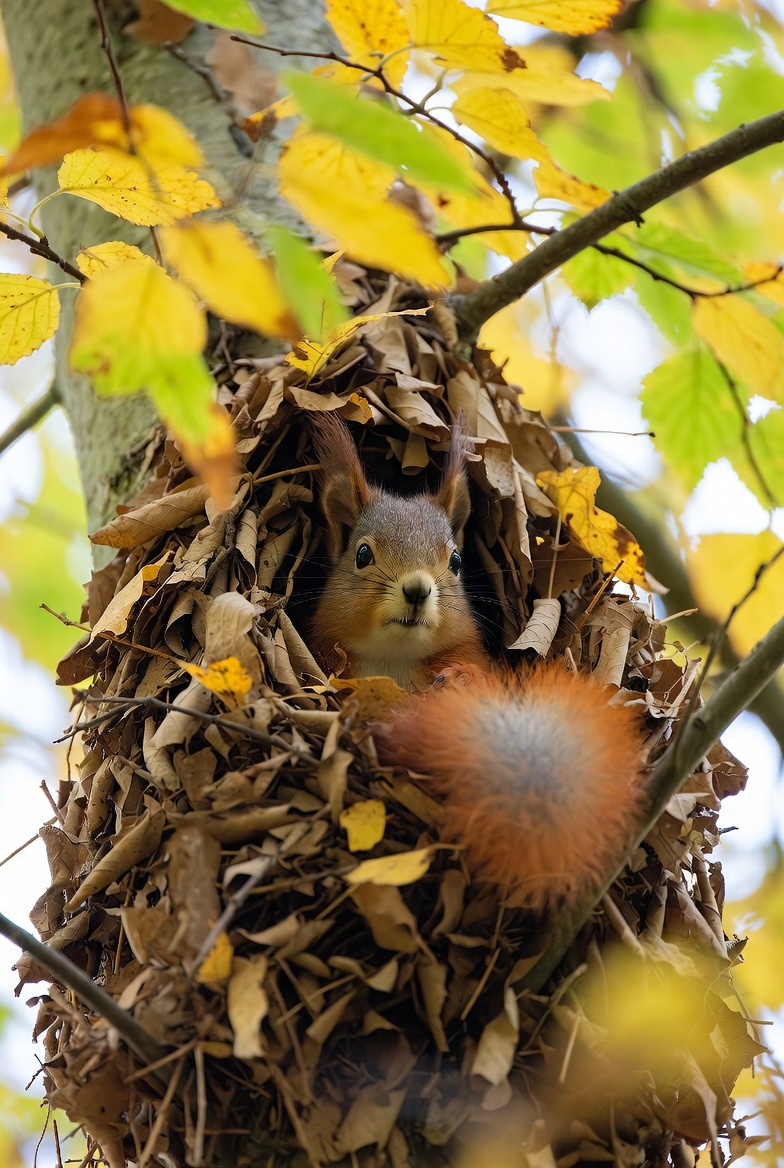
Three clues tend to point toward a drey. The first is shape: a roughly ball-like mass rather than an open bowl.
The second is material, since the outside is made mostly of leaves, sometimes with twigs mixed in. The third is placement, because these bundles are often tucked into a sturdy fork where branches meet the trunk or split.
When all three show up together, a squirrel drey is a sensible guess. Audubon’s guide to telling squirrel nests from bird nests describes this kind of leafy, rounded structure as a typical tree-squirrel nest.
Still, none of these clues works as a test. A leafy ball is a hint about the builder, not proof of it.
Some bird nests include leaves, and a strong branch fork is a popular spot for many animals.
Try looking at the bundle the way you would look at a puzzle. Is the outline round and closed, or does it have a visible open top?
Does it look like a mass of loose leaves packed together, or like a woven arrangement of sticks? Binoculars from the ground can help, and so can a photo you zoom in on later.
If you can, note how it holds together. A tight, compact ball with a tidy outline suggests deliberate building.
Calling it a possible drey, rather than a definite one, keeps your conclusion honest.
Large bird nests remain a plausible alternative
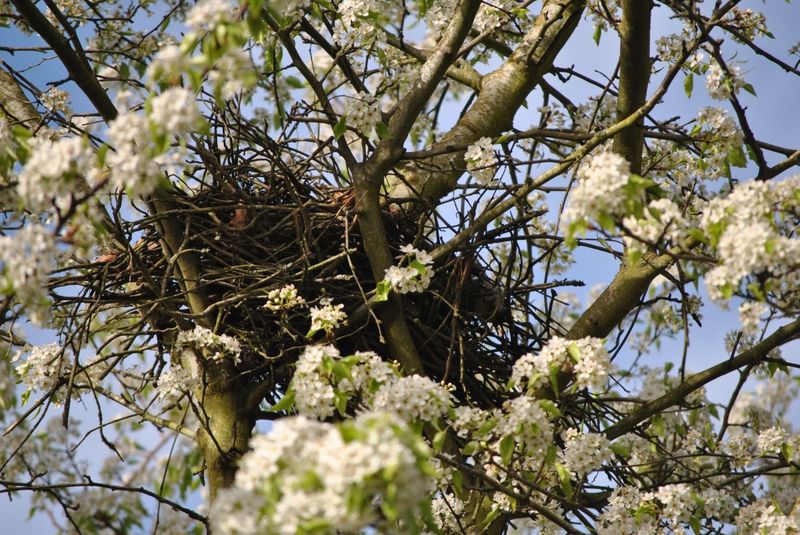
Big does not mean squirrel. Plenty of birds build conspicuous nests high in trees, and size or height alone cannot settle the question.
Crows are a good example. The Cornell Lab of Ornithology explains in its American Crow life history overview that crows build substantial nests made of sticks with an inner cup.
That stick framework and cup differ from a rounded bundle of leaves.
Hawk nests add another wrinkle. They are also large, and they can include leaves among the other materials, so a bit of leafy material does not rule out a raptor.
Audubon’s guidance on comparing squirrel and bird nests encourages looking at the whole structure rather than leaning on one feature.
From the ground, ask a few questions. Does the nest look like a closed ball or an open platform?
Is it mostly sticks or mostly leaves? Can you spot a cupped top?
Watching for a while may also help, since birds visiting a nest tell a different story than a squirrel hauling in leaves.
If the answers conflict, accept that you may not be able to name the builder. Mixed clues are common, and an honest maybe is better than a confident guess.
North Carolina gray squirrels use cavities too
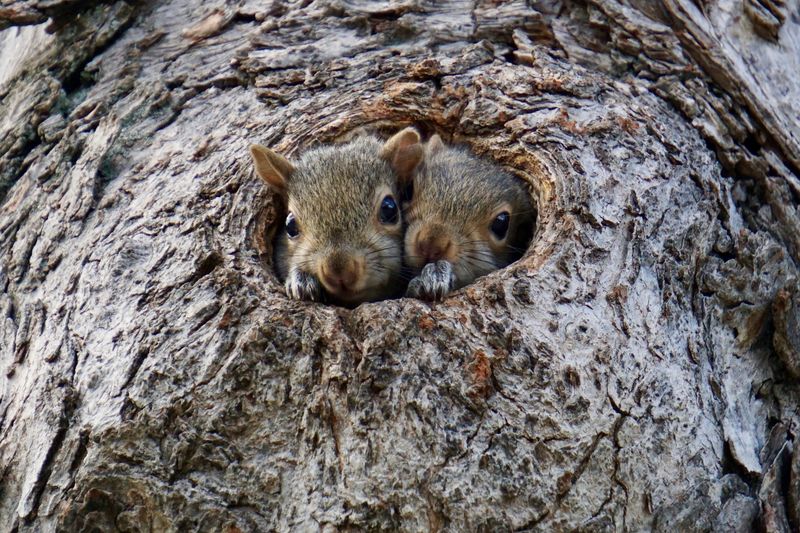
The gray squirrel is the most common squirrel in North Carolina, and it is active all year. According to the North Carolina Wildlife Resources Commission’s gray squirrel profile, these squirrels use leaf nests as well as tree cavities.
That second part matters for anyone scanning the treetops. Cavities offer better protection from the elements than a bundle of leaves, so a squirrel may choose a hollow over a drey when one is available.
A tree with no leafy ball could still be home to squirrels.
The reverse also holds. Seeing a leafy bundle does not mean you have found where every squirrel in the yard sleeps.
One animal may use more than one spot, and a drey may sit empty for long stretches.
So when you scan an oak, look at more than the branches. Check the trunk and larger limbs for holes, broken-off stubs, or dark openings.
A squirrel slipping in and out of a hole is a pretty clear sign that the cavity is in use.
Keeping both options in mind will make your guesses better. A leafy ball is one kind of squirrel home, and a hollow in the wood is another.
A fallen nest calls for patience, not handling
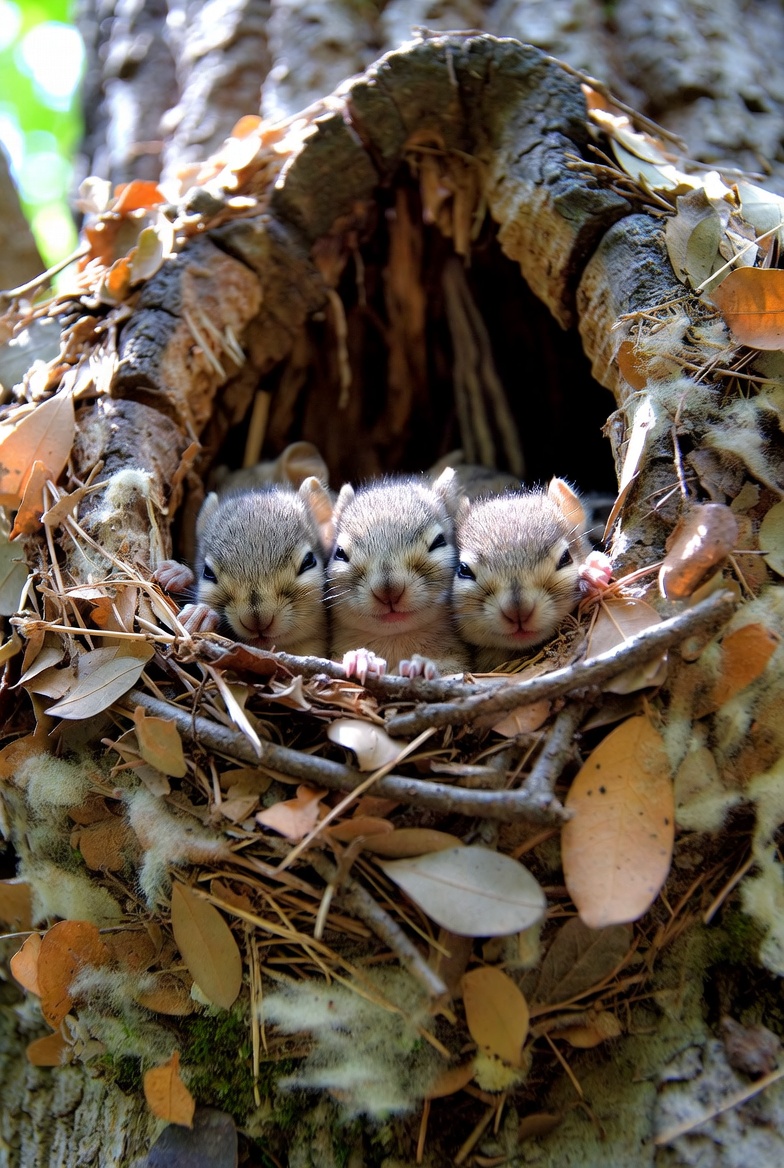
Strong wind and storms can knock a drey out of a tree. If a young squirrel turns up on the ground afterward, the urge to scoop it up is strong, but the best first move is to wait.
The North Carolina Wildlife Resources Commission, in its gray squirrel guidance, advises leaving a young squirrel alone for 24 hours to see whether the mother returns. Squirrel mothers often come back for their young, and a person standing nearby can keep her away.
Give her space. Keep children and pets indoors or well back, and watch from a distance, such as through a window.
If the mother does not return, or the animal is clearly hurt, the same guidance says to contact a licensed wildlife rehabilitator. They have the training, permits, and food to care for wild animals properly.
Do not try to raise the squirrel yourself.
The fallen bundle of leaves can stay put, too. Pulling it apart will not tell you anything useful, and it may disturb animals that are still nearby.
Check before pruning or disturbing a possible nest
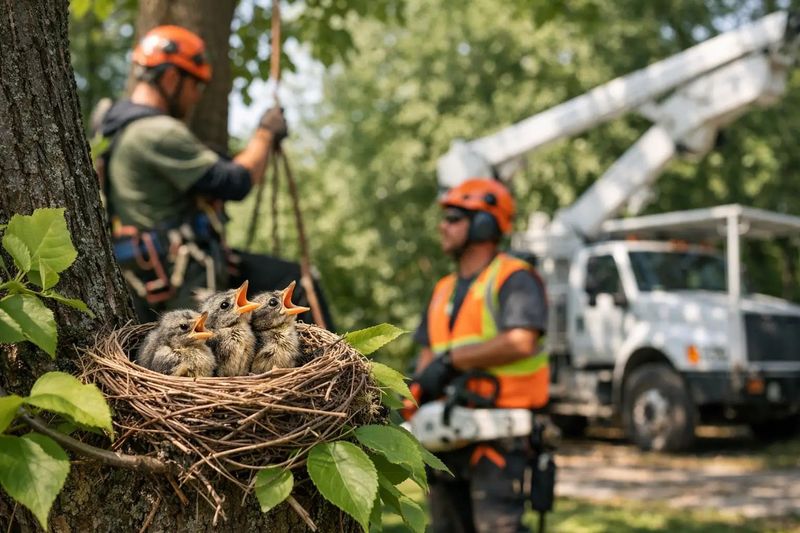
Uncertainty is a good reason to slow down. Before cutting branches, take a few minutes to scan the tree from the ground and look for nests and signs of wildlife, such as animals coming and going.
The Tufts Wildlife Clinic suggests in its yardwork considerations that if a nest appears occupied, you should consider postponing the work until the young have grown. If the job cannot wait, hire a wildlife-aware arborist who knows how to check for and work around active nests.
Bird nests add a legal layer. The U.S.
Fish and Wildlife Service explains on its bird nests page that most migratory-bird nests receive federal protection while they are in use, and it advises avoiding activities that could harm birds, eggs, or chicks. That does not apply to every nest or every bird, which is one more reason not to decide on a guess.
So do not climb up, poke into, or pull down a suspected nest to find out what it is. If you cannot tell whether a nest is active, treat it as if it might be.
Often the tree can wait a few weeks, and the delay costs you very little.
Observe from the ground and leave uncertainty intact
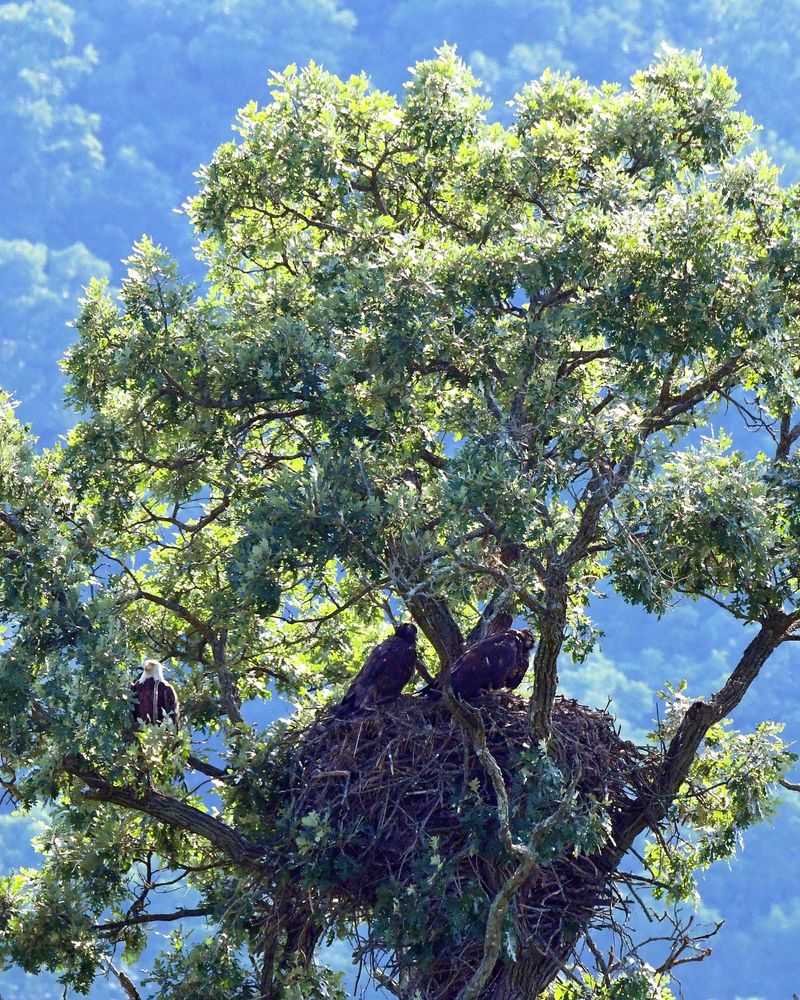
A leafy ball in a bare North Carolina tree may well be a squirrel drey, but how it looks cannot rule out a bird nest. Crows and hawks build conspicuous nests too, as Audubon’s nest guide makes clear.
Watch from the ground, keep your distance, and let any nest that might be in use stay undisturbed, since federal protections for many bird nests apply while they are occupied.
Some mysteries are more fun when you leave a little of them unsolved.
Share this story