Get the latest garden guides in your inbox →
Gardening Latest
  • General Gardening
  • Lawn Care
  • Plant Care
  • Composting
  • Soil Health
  • Backyard
  • Garden Muse Magazine
  • General Gardening
  • Lawn Care
  • Plant Care
  • Composting
  • Soil Health
  • Backyard
  • Garden Muse Magazine
  • News
  • Gardening Calendar
  • Garden Structures
  • Vegetable Garden
  • Vertical Garden
  • Raised Beds
  • Hydroponics
  • General Equipment
  • Community Gardens
Garden Themes
  • Spiritual Garden
  • Hydroseeding
  • Seeding and Laying Sod
  • Artificial Grass
  • Lawn Care Equipment
  • Plants
  • Trees
  • Planting Tools
  • Composting Basics
  • Fertilizer
  • Alternative Growing Mediums
  • Front Yard
  • Backyard Activities
  • Landscaping
Gardening Latest

Explore by state

Which state is your garden in?

Currently viewing New York

All states

Northeast

  • Connecticut —
  • Delaware 18
  • Maine —
  • Maryland 4
  • Massachusetts 21
  • New Hampshire —
  • New Jersey 4
  • New York 14
  • Pennsylvania 14
  • Rhode Island —
  • Vermont —

Southeast

  • Alabama 4
  • Arkansas —
  • Florida 4
  • Georgia 5
  • Kentucky 18
  • Louisiana 3
  • Mississippi —
  • North Carolina 2
  • South Carolina 17
  • Tennessee 1
  • Virginia 3
  • West Virginia —

Midwest

  • Illinois 3
  • Indiana 6
  • Iowa 17
  • Kansas —
  • Michigan 4
  • Minnesota 3
  • Missouri 3
  • Nebraska —
  • North Dakota —
  • Ohio 5
  • South Dakota —
  • Wisconsin 19

Southwest

  • Arizona 4
  • Colorado —
  • Nevada —
  • New Mexico —
  • Oklahoma —
  • Texas 3
  • Utah —

West

  • Alaska —
  • California 4
  • Hawaii —
  • Idaho —
  • Montana —
  • Oregon —
  • Washington —
  • Wyoming —

No state matches that search.

Site menu

Gardening Latest
  • General Gardening
    • News
    • Gardening Calendar
    • Garden Structures
    • Vegetable Garden
    • Vertical Garden
    • Raised Beds
    • Hydroponics
    • General Equipment
    • Community Gardens
    Garden Themes
    • Spiritual Garden
  • Lawn Care
    • Hydroseeding
    • Seeding and Laying Sod
    • Artificial Grass
    • Lawn Care Equipment
  • Plant Care
    • Plants
    • Trees
    • Planting Tools
  • Composting
    • Composting Basics
  • Soil Health
    • Fertilizer
    • Alternative Growing Mediums
  • Backyard
    • Front Yard
    • Backyard Activities
    • Landscaping
  • Garden Muse Magazine

Explore

  • About GardeningLatest.com
  • Contact Us

Get the latest from the garden

New guides on lawn care, plants and backyard projects, sent when they go up.

Subscribe →

Follow

  • Facebook
  • X
  • Pinterest
  • YouTube
New York Gardening

These Venomous Animals Share Your New York Backyard, Here’s How To Spot Them

Your New York backyard is home to more than squirrels and robins. A handful of creatures living under rocks, in woodpiles…

E

By Elyanna

November 22, 2026 · 6 min read

These Venomous Animals Share Your New York Backyard, Here’s How To Spot Them
These Venomous Animals Share Your New York Backyard, Here's How To Spot Them

Your New York backyard is home to more than squirrels and robins. A handful of creatures living under rocks, in woodpiles, and inside garden sheds carry venom they use to hunt or defend themselves.

Most of them want nothing to do with you, but knowing what they look like can save you from a painful surprise. Here is a friendly guide to the venomous neighbors you might meet and how to tell them apart.

At a glance

Where
New York Gardening
Hardiness zone
7 0 to 10°F
Read
6 minutes
Published
November 22, 2026

1. Timber Rattlesnake

Timber Rattlesnake
© Q105.7

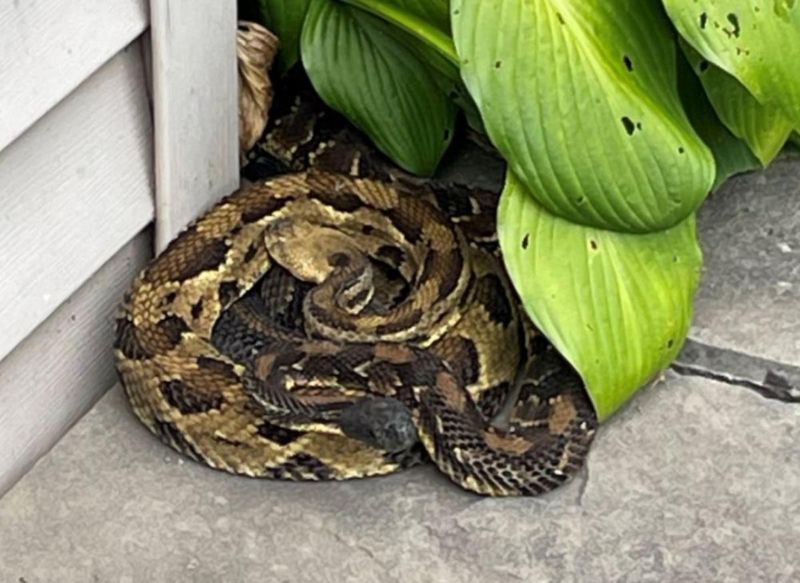
Picture a sunny rock ledge in the Catskills on a September afternoon. Stretched across it, perfectly still, might be the largest venomous snake in the state.

Timber rattlesnakes can grow over four feet long, yet they are famously calm.

Look for dark, zigzag bands called chevrons across a body that can be yellow, tan, or nearly black. The tail is solid black and ends in a rattle.

A broad, triangle-shaped head sits on a narrow neck.

These snakes are listed as threatened in New York, so harming one is illegal. If you hear a buzz, freeze, find the sound, and back away slowly.

Give it a few feet of space and it will usually slide off without a fuss.

2. Eastern Massasauga Rattlesnake
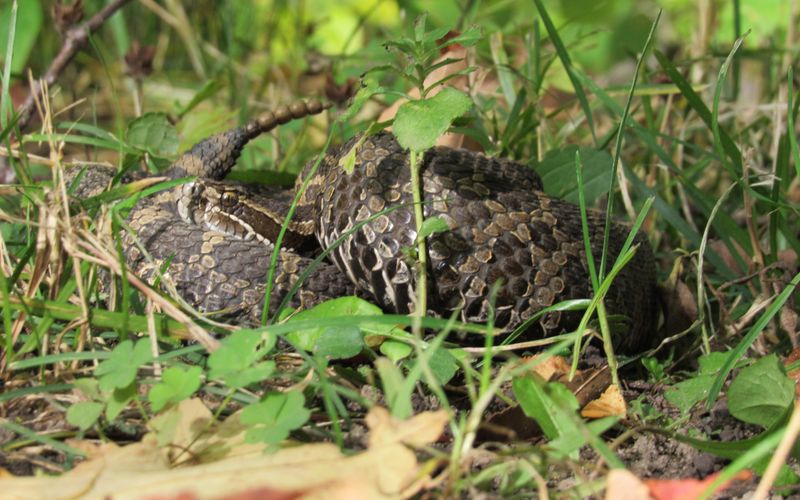
Eastern Massasauga Rattlesnake
© Oakland County Blog

Few New Yorkers will ever see one. The eastern massasauga survives in only a couple of wetland spots near Syracuse and Rochester, making it one of the rarest reptiles in the state.

It is a small, chunky rattlesnake, usually under three feet. Its gray or light brown body is covered in dark, rounded blotches, and its rattle is tiny, so the warning sounds more like an insect buzz.

Because it is endangered, any sighting is special. Snap a photo from a distance and consider reporting it to the state Department of Environmental Conservation.

Their biologists love hearing about these secretive swamp dwellers.

3. Northern Copperhead
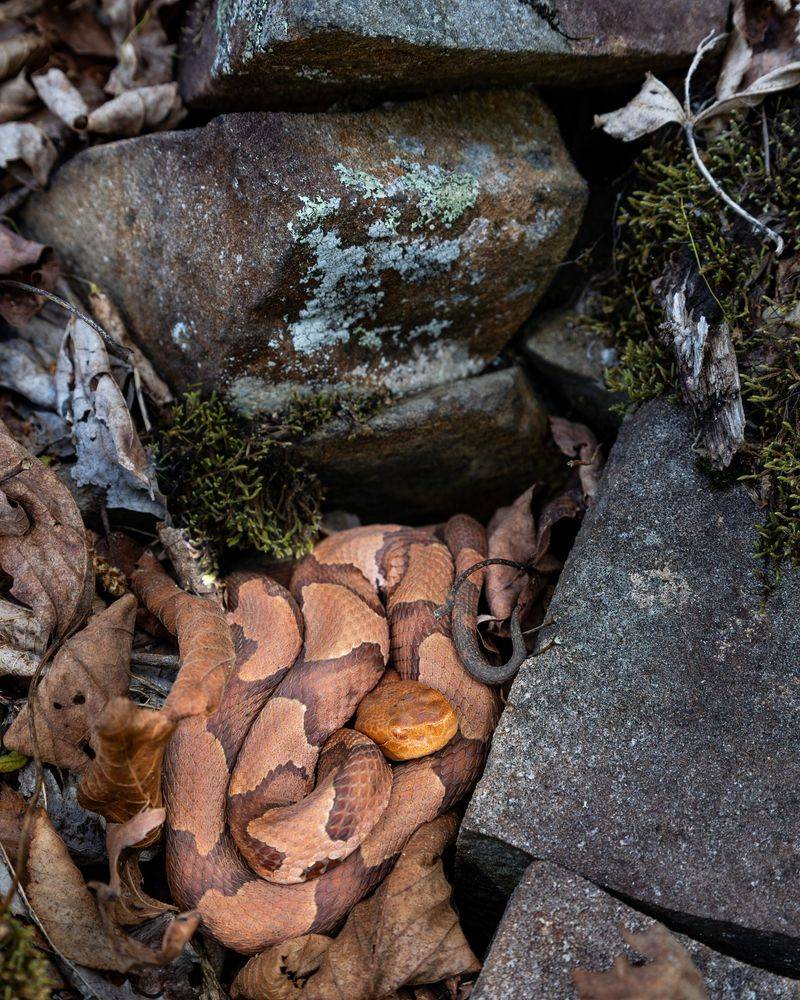
Northern Copperhead
© mlotterhand

Hourglasses. That is the shape to remember.

A copperhead’s coppery-tan body is crossed with darker bands that are wide on the sides and skinny along the back.

In New York, copperheads show up mostly in the lower Hudson Valley and southeast counties. They love leaf litter, old stone walls, and woodpiles, where their colors blend in almost perfectly.

The body mixes reddish brown with yellow, and it often nests inside hollow trees, wall spaces, or old barns.

Most bites happen when someone reaches into a pile without looking. Wear gloves when moving firewood, and use a flashlight on warm summer evenings.

Fun fact: young copperheads have bright yellow tail tips they wiggle like worms to lure frogs.

4. Northern Black Widow Spider
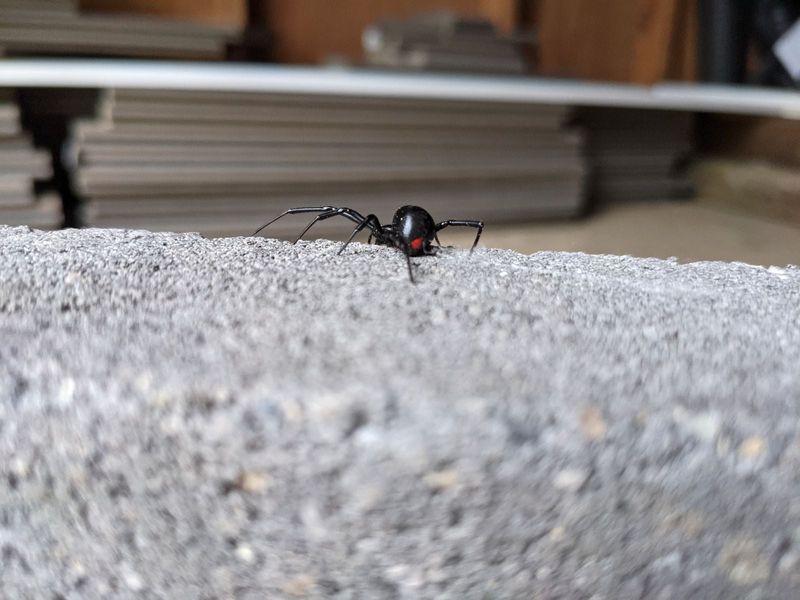
Northern Black Widow Spider
© Reddit

Shiny as a drop of ink, the female northern black widow hides in dark corners of sheds, garages, and under patio furniture. She is small, about half an inch, but her venom packs a real punch.

Flip her over and you will see a red hourglass, though on this northern species it is often split into two pieces. She may also have a row of red dots down her back.

Bites are rare and almost never deadly, but they can cause muscle cramps and pain. Shake out gloves and shoes left outdoors, and call a doctor if you think you were bitten.

5. Yellow Jacket
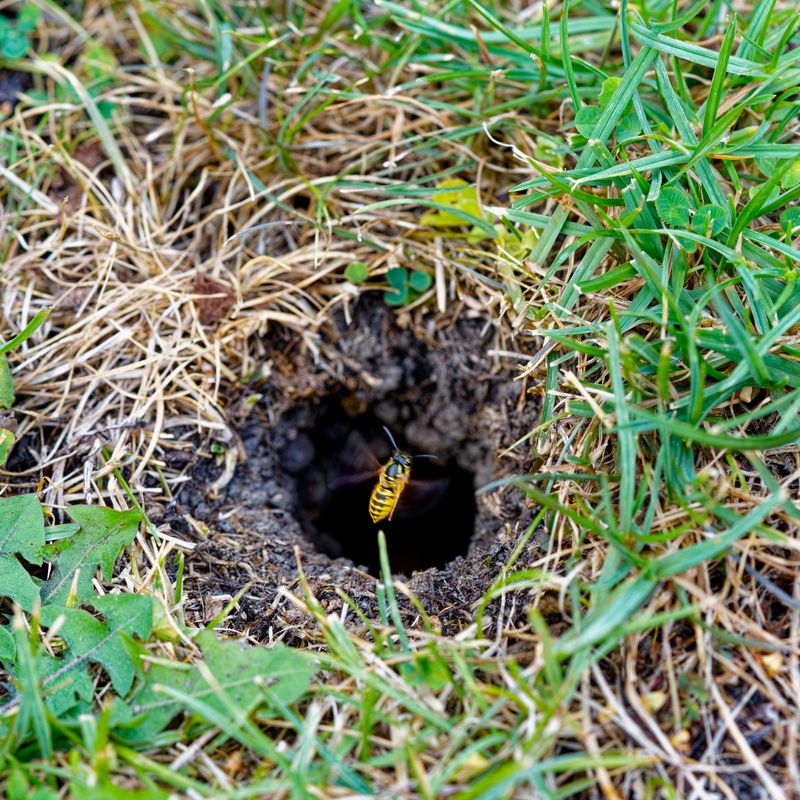
Yellow Jacket
© Gardening Know How

Ever had a picnic crashed by a striped guest that just would not leave your soda alone? Meet the yellow jacket, the boldest stinger in the backyard.

They are smaller and sleeker than honeybees, with shiny bright yellow and black bands and almost no fuzz. Many build nests underground, so a hole in the lawn with wasps zipping in and out is a big clue.

Unlike bees, yellow jackets can sting again and again. By late August their colonies are huge and cranky.

Cover drinks, keep trash sealed, and never mow over a nest you have spotted.

6. Bald-Faced Hornet
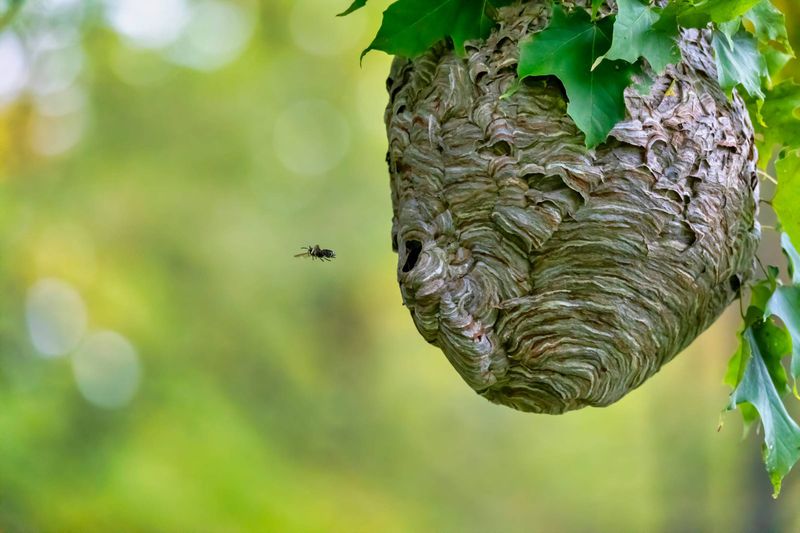
Bald-Faced Hornet
© Standard Pest Management

Here is a twist: the bald-faced hornet is not actually a hornet. It is a type of yellow jacket dressed in a tuxedo of black and ivory white.

You will usually notice the nest first. It is a gray, papery ball that can be as big as a basketball, hanging from tree branches, bushes, or the eaves of a house.

These insects guard their home fiercely and will chase intruders. If you find a nest near a doorway, call a pest professional instead of grabbing a broom.

Nests left alone empty out on their own once winter frost arrives.

7. European Hornet
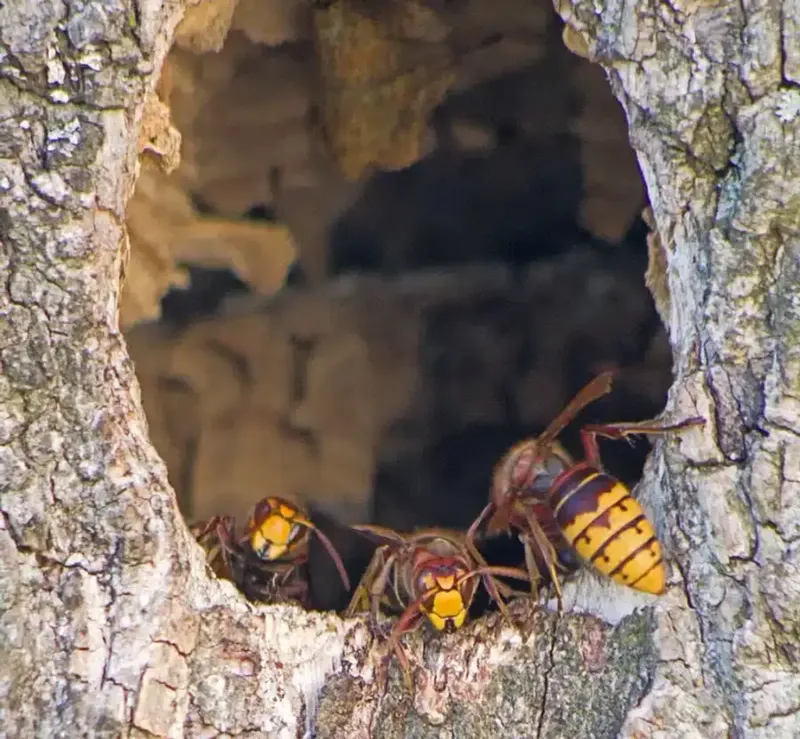
European Hornet
© Better Termite

Hear a loud buzz bump against your porch light at night? That could be a European hornet, the only true hornet in New York and one of the few wasps that flies after dark.

At over an inch long, it looks a bit alarming. The body mixes reddish brown with yellow, and it often nests inside hollow trees, wall spaces, or old barns.

Thankfully, these big insects are less aggressive than yellow jackets unless their nest is bothered. They also eat lots of garden pests.

Turning off outdoor lights at night keeps them from hanging around your door.

8. Honeybee
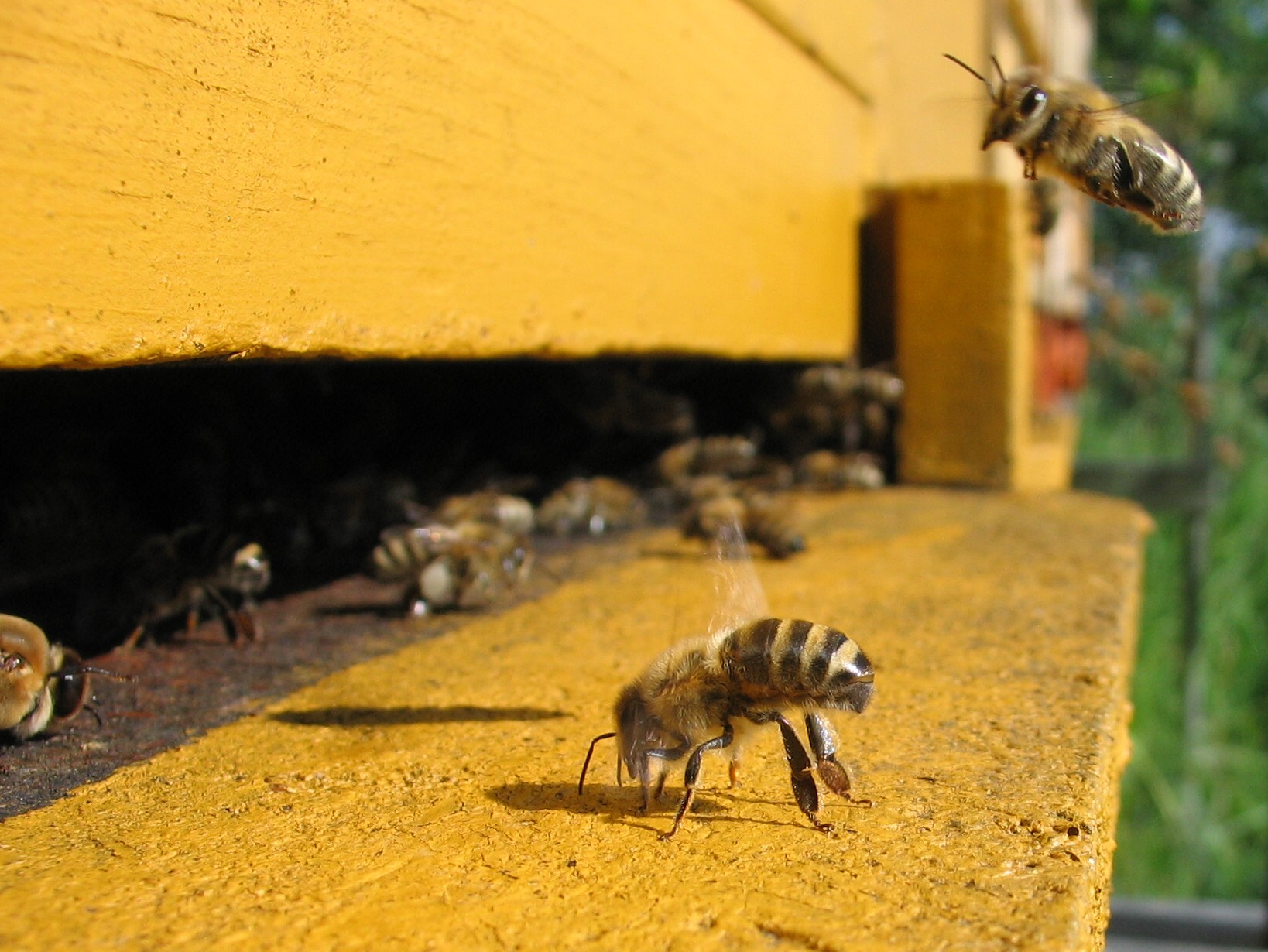
Honeybee
© Wikipedia

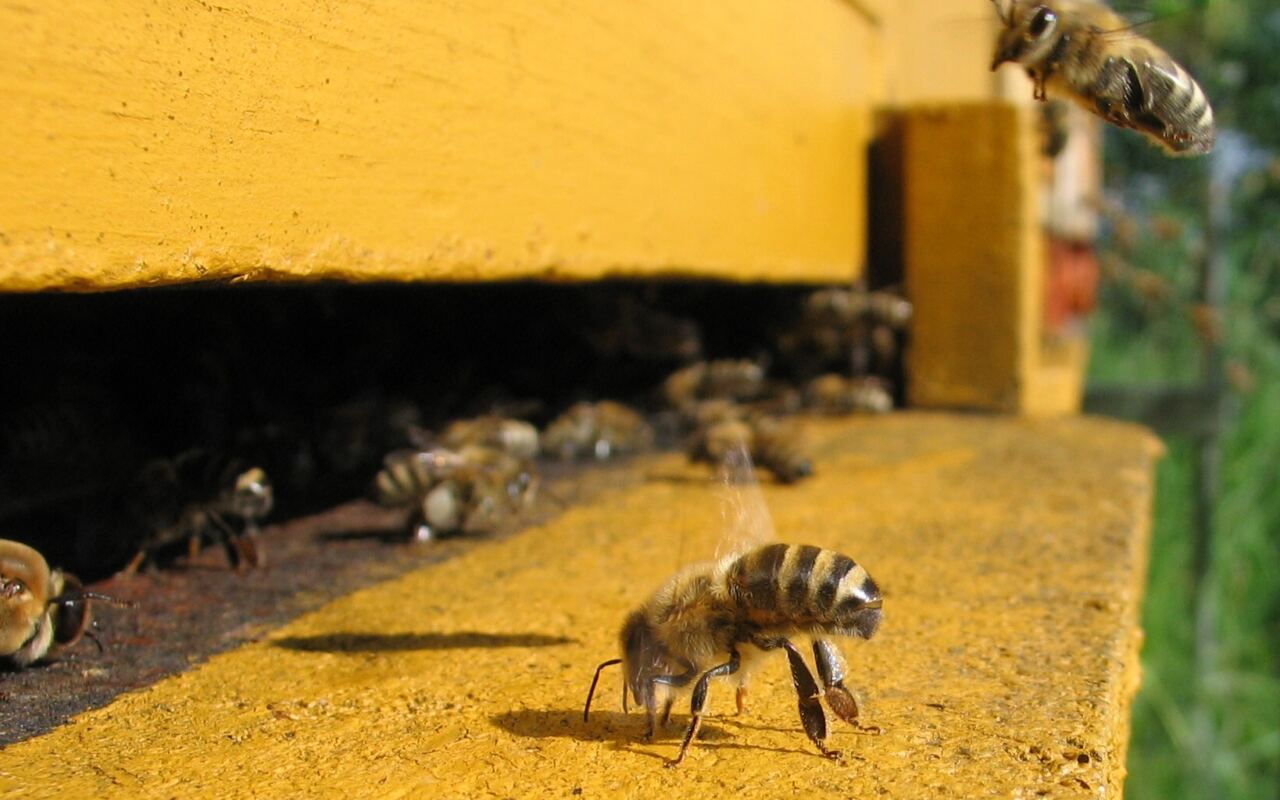
Sweet as they are, honeybees still carry venom. Every worker has a barbed stinger that stays in your skin, and the bee dies after using it.

Honeybees are fuzzy and golden brown with soft stripes, very different from shiny wasps. You will find them buzzing over clover, dandelions, and garden flowers from spring to fall.

Most people only get a sting when they step on a bee barefoot. Scrape the stinger out with a fingernail quickly.

If someone has trouble breathing or swelling spreads, that is an emergency, since some people are allergic.

9. Northern Short-Tailed Shrew
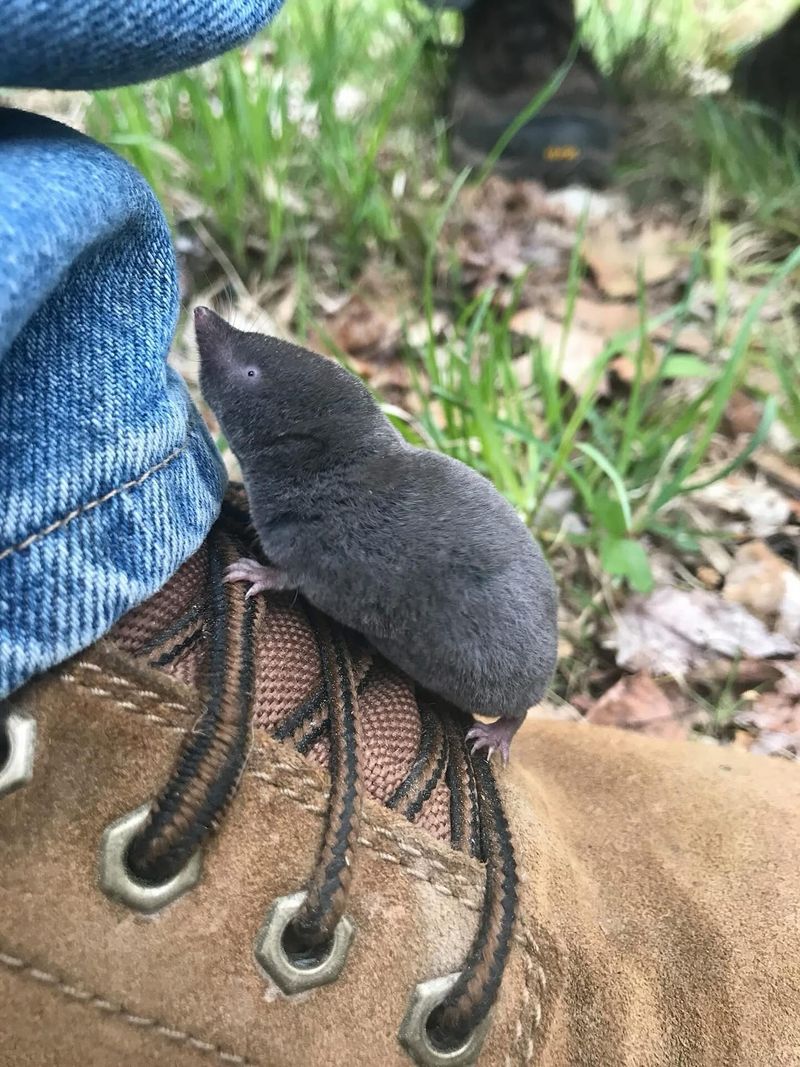
Northern Short-Tailed Shrew
© nysdec

A mammal with venom? Believe it.

The northern short-tailed shrew, a tiny gray critter smaller than your palm, has toxic saliva that helps it paralyze worms, insects, and even small mice.

It looks like a stubby mouse with velvety slate-gray fur, a pointy nose, tiny hidden eyes, and a short tail. Cats sometimes bring them to the doorstep but rarely eat them because of their musky smell.

A bite to a human only causes mild pain and swelling. Still, if you find one, scoop it with a shovel instead of your hands.

Scientists say this shrew even stores paralyzed snacks alive for later, like a little pantry.

10. Puss Caterpillar and Saddleback Caterpillar
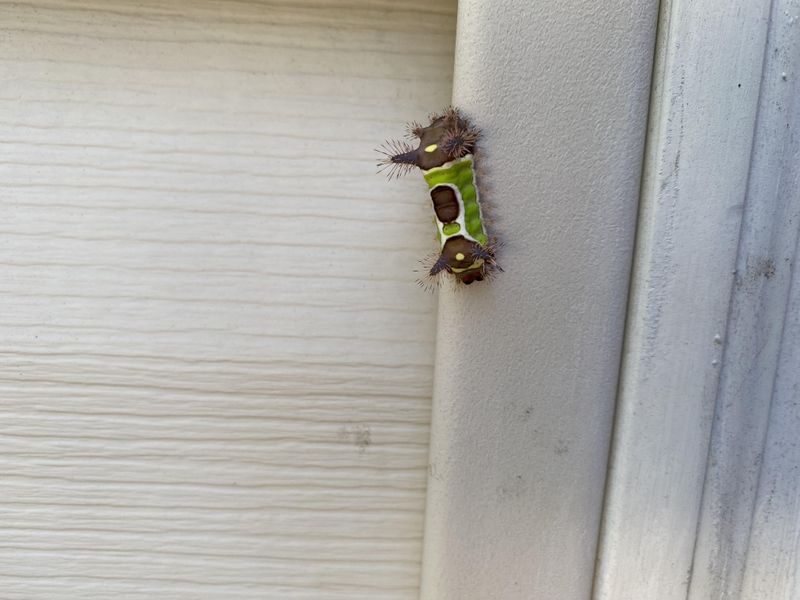
Puss Caterpillar and Saddleback Caterpillar
© Reddit

Cute and fuzzy can be a trap. Some caterpillars hide venomous spines that sting like a nettle times ten, and kids are the most common victims.

The saddleback caterpillar is easy to spot. It is brown with a bright green patch that looks like a little saddle blanket with a brown dot in the middle.

Spiky horns stick out from both ends.

The puss caterpillar looks like a tiny furry toupee, but it is mostly found farther south, with rare sightings near the southern edge of the state. Teach children to look but not touch.

If stung, press tape on the skin and pull it off to lift out broken spines.

Share this story
E

Written by

Elyanna

More from Elyanna →

A passion for lavender! From a young age, Elyanna has had a passion for lavender. It began at the age of two when her mother walked her through fields of lavender in Norfolk England. This ignited her interest; she has grown harvested and learned about this beautiful herb.

About Gardening Latest

Gardening Latest provides in-depth guides to maintaining and enhancing your garden and backyard. Learn how to make the most of the space you have and create a beautiful garden.

More about us →

Latest stories

  • Massachusetts GardeningBrushed Against a Browntail Moth Caterpillar in Your Massachusetts Garden? Here’s What to Do Right Away

    Brushed Against a Browntail Moth Caterpillar in Your Massachusetts Garden? Here’s What to Do Right Away

    3 min ago
  • Ohio Gardening9 Backyard Features Ohio Towns Are Quietly Starting to Ban

    9 Backyard Features Ohio Towns Are Quietly Starting to Ban

    19 min ago
  • Indiana GardeningThat Crusty Tan Blob On Your Indiana Shrub Branches Is Something You Want To Keep

    That Crusty Tan Blob On Your Indiana Shrub Branches Is Something You Want To Keep

    25 min ago
  • Pennsylvania GardeningThe Smells Pennsylvania Deer Avoid And The Ones That Pull Them Into Your Garden

    The Smells Pennsylvania Deer Avoid And The Ones That Pull Them Into Your Garden

    30 min ago
  • California GardeningCalifornia Counties Are Cracking Down on These Garden Plants That Nurseries Still Sell

    California Counties Are Cracking Down on These Garden Plants That Nurseries Still Sell

    38 min ago

Gardening by state

Stories for your state, and the hardiness zone most of it gardens in.

Keep exploring

Read next

All New York Gardening →
New York GardeningYour Neighbor’s Leaves Keep Blowing Into Your New York Yard, So Who Has To Rake Them?
New York Gardening

Your Neighbor’s Leaves Keep Blowing Into Your New York Yard, So Who Has To Rake Them?

3 hr ago
New York GardeningWhere and When New York Homeowners Should Hang an Owl Box
New York Gardening

Where and When New York Homeowners Should Hang an Owl Box

Yesterday
New York GardeningCrabgrass Prevention for New York Lawns: Why Spring Timing Usually Matters Most and Fall Is a Narrow Option
New York Gardening

Crabgrass Prevention for New York Lawns: Why Spring Timing Usually Matters Most and Fall Is a Narrow Option

Yesterday

More from New York Gardening

  • Can You Remove a Small Stump by Hand? A New York Homeowner’s Guide

    Nov 18
  • These Everyday Foods Are Actually Against The Law To Grow In New York Yards

    Nov 18
Back to top

Leave a response Cancel

Your email address stays private. Required fields are marked with an asterisk.

Gardening Latest

In-depth guides to maintaining and enhancing your garden and backyard: how to make the most of the space you have, and how to make it beautiful.

  • Facebook
  • X
  • Pinterest
  • YouTube

We may earn a portion of sales from products or services that are purchased through our site as part of our affiliate partnerships with retailers.

Explore

  • About GardeningLatest.com
  • Contact Us
  • Terms and Conditions
  • Privacy
  • Editorial Note:
  • FTC Disclosure

Newsletter

New garden guides and seasonal tips, straight to your inbox.

We’ll email you a link to confirm. Unsubscribe any time.

Almost there! Check your inbox and tap the link to confirm.

© 2026 Gardening Latest. All rights reserved.

Back to top