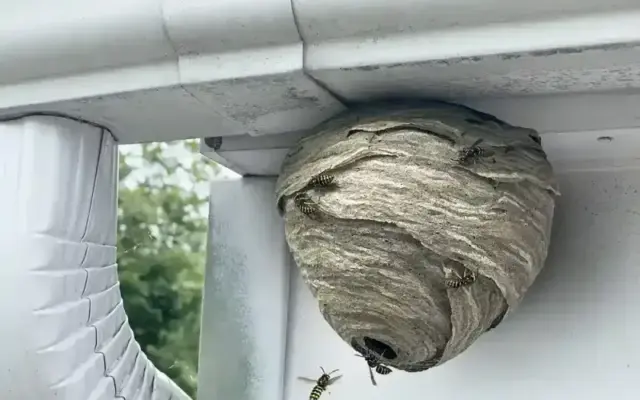
Once hard frost arrives in Michigan, a yellowjacket colony is on its way out, and the wasps you have been dodging all summer start to disappear. Michigan State University Extension says that after a couple of hard frosts, yellowjackets should no longer pose an issue.
Most of the nest dies, but a few new queens slip away to wait for spring. Here is what happens inside, who survives, and what to do about the nest you can see.
A hard frost is a turning point, not an off switch
Michigan guidance gives a simple rule of thumb: after a couple of hard frosts, yellowjackets should no longer pose an issue. That wording matters.
Michigan State University Extension describes frost as part of the colony’s end-of-season shutdown, and workers eventually die from cold and starvation.
Notice the word eventually. A single chilly night is not a guaranteed overnight cutoff, and there is no exact temperature that kills every wasp at once.
Some nests hold on for a while after the first frost, especially when the weather swings back to mild afternoons.
Other Upper Midwest guidance agrees. University of Minnesota Extension notes that nests may stay active until freezing temperatures kill the old queen and workers.
So the practical picture is a gradual wind-down rather than a switch being flipped.
Inside the nest, the food supply drives much of this. Cold weather slows insects that the workers hunt and cuts off the sweet foods they gather, so the workforce that feeds the young begins to fail.
As feeding stops, the colony loses its ability to function.
Not everyone in the nest meets the same fate, though. Some members die as the colony ends, while a small group of newly mated queens leaves to survive the winter somewhere else.
The next sections trace who is who and where the survivors go.
The workers, males, and original queen die
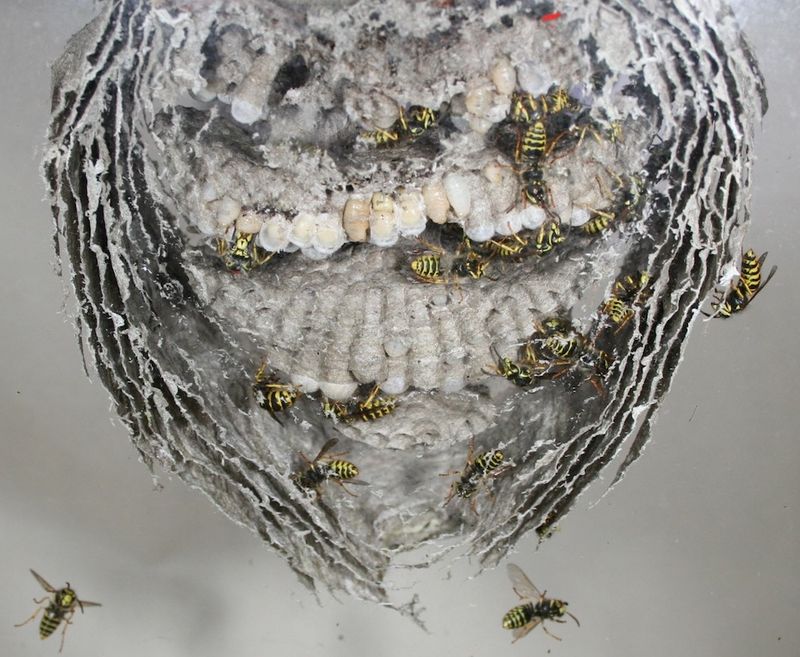
Picture the nest in late fall as a busy factory losing its power. The workers, which are the many daughters that built the nest and fed the young all summer, eventually die from cold and starvation.
According to Michigan State University Extension, this is how the working colony comes to an end.
Males have a shorter job. They appear late in the season, mate with the new queens, and die afterward.
They do not carry the colony through winter.
The original queen, the one who started the nest alone in spring, does not spend the winter inside it either. Freezing temperatures kill her along with her workers, which is the pattern University of Minnesota Extension describes for the Upper Midwest.
A common story says the queen rides out winter in the nest, waiting for warm days. That is not how the normal Michigan cycle works.
The old colony does not keep humming along at low speed through the cold months.
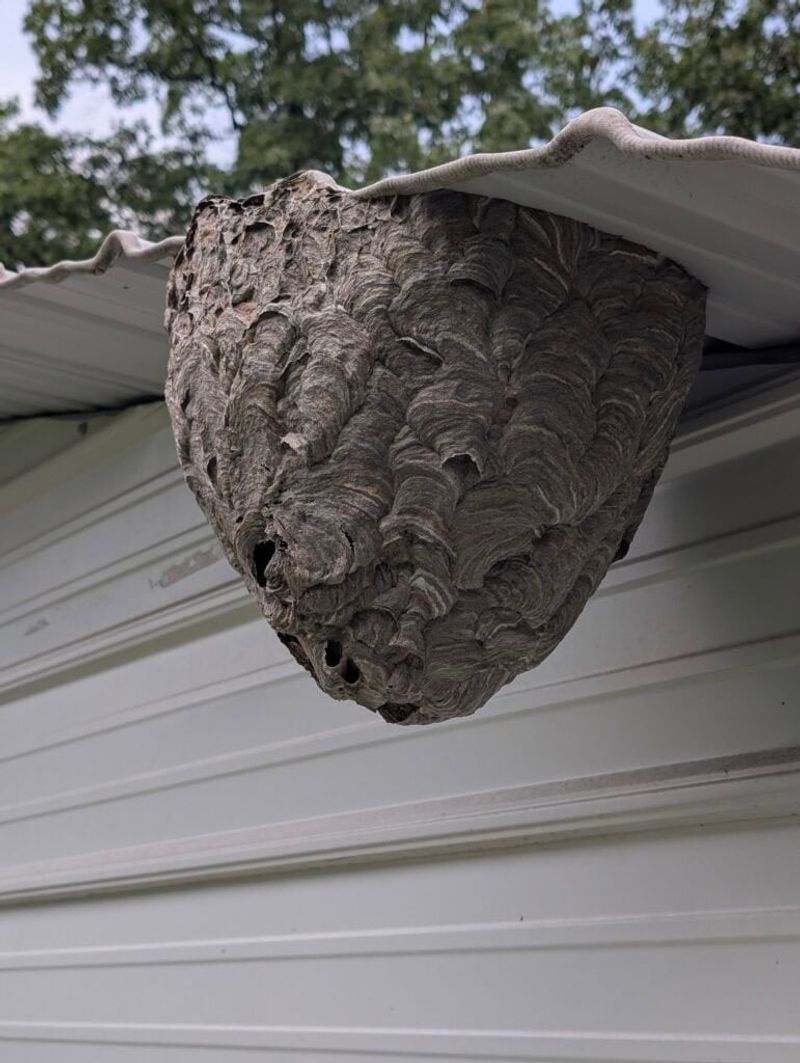
If you find a quiet, empty nest in winter, you are looking at a leftover shell. The colony that built it is gone, and nobody inside is waiting for spring.
New queens survive away from the nest
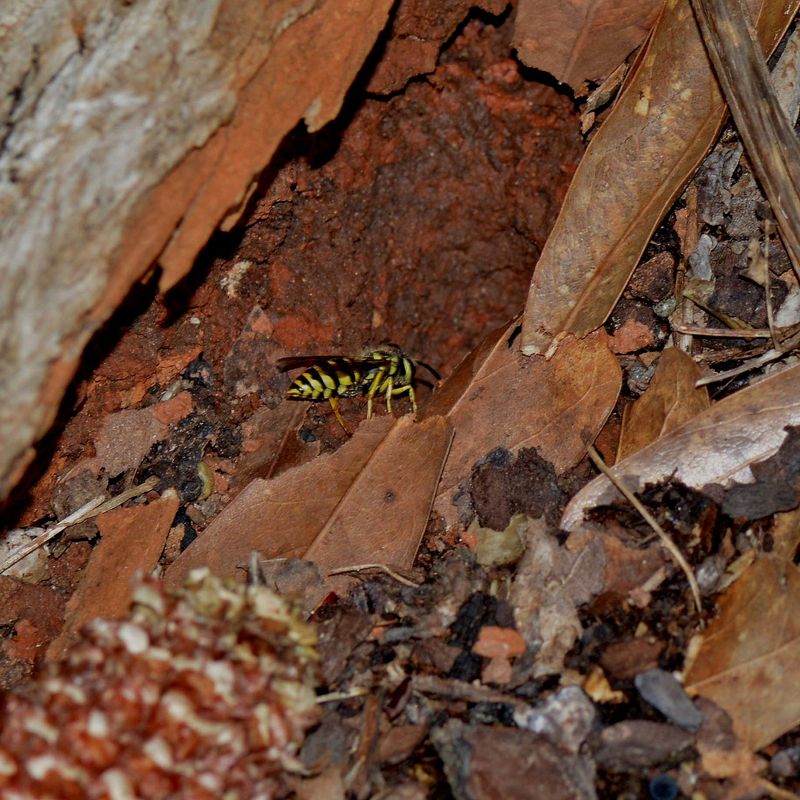
The survivors are the newly mated queens. Late in the season, they leave the nest where they were born and head out alone.
Michigan State University Extension says these queens overwinter elsewhere, not in the old nest.
Each queen looks for a protected spot, such as under bark or in another sheltered site. She does not huddle with a crowd.
She spends the cold months by herself, waiting.
That sets her apart from every other wasp in her colony. The original queen, the workers, and the males do not make it through a Michigan winter.
Only the mated young queens carry the species forward, as University of Minnesota Extension also describes.
When spring warms up, a surviving queen starts over. She picks a site and builds a new nest on her own, rather than restoring the old colony.
Her first workers hatch later, and the cycle begins again.
Spotting a lone wasp in a woodpile or under loose bark in cold weather is not a sign of a hidden colony. It is far more likely a single queen sleeping through winter, best left alone.
Why yellowjackets may still appear after frost
Seeing a wasp after frost can feel like proof that the old rules failed. It is not.
Frost still ends colonies, but the effect depends on where a nest sits.
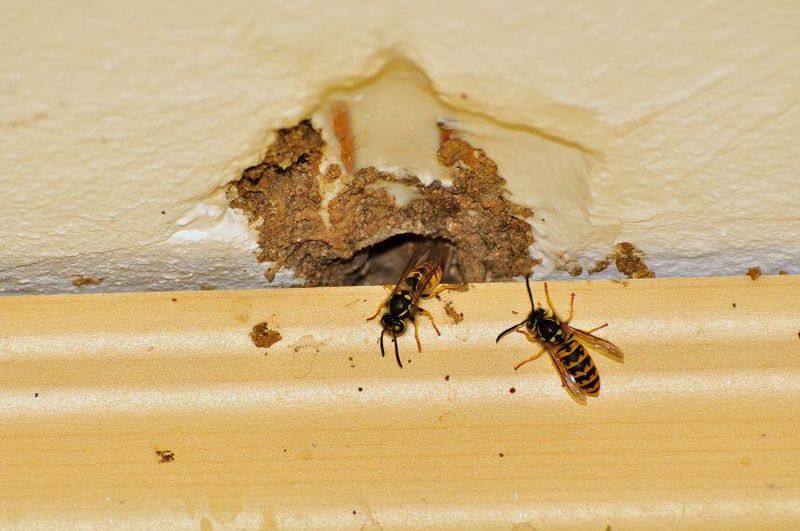
Yellowjackets may nest underground or in building cavities, according to Michigan State University Plant and Pest Diagnostics. A ground nest or a nest inside a wall can feel cold differently from an exposed one, so it may last a bit longer.
That is also why wasps sometimes turn up indoors. Iowa State University Extension notes that wasps may show up inside after frost.
They may be coming from a wall nest or another sheltered site, and they can still sting if they are warm enough to move.
Keep the bigger picture in mind. A wasp flying around a heated room does not mean the old colony will reproduce through winter.
The nest is still on its way out.
Remember too that nests can stay active until freezing temperatures kill the old queen and workers. If wasps keep coming out of one spot in your wall, treat it as an active nest and avoid swatting or blocking the opening.
The old nest is not normally reused
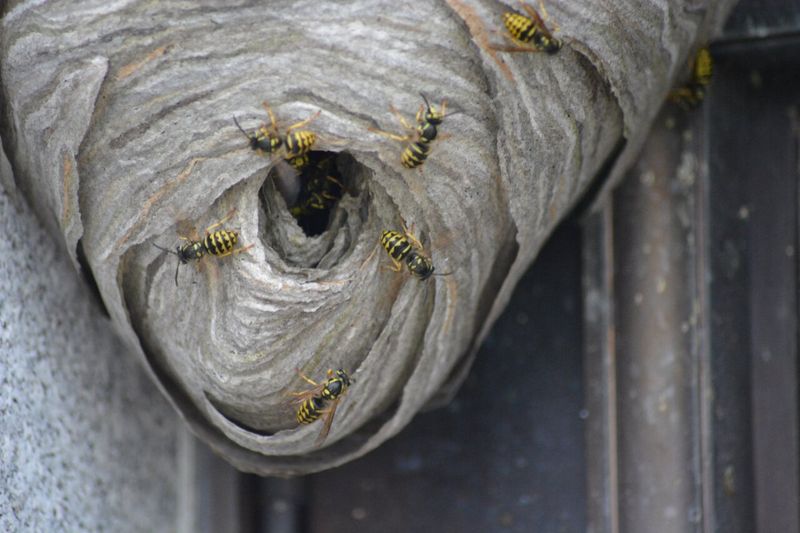
Here is a detail that clears up a lot of worry: the nest and the spot are two different things. Michigan State University Plant and Pest Diagnostics says yellowjackets do not normally reuse an old nest the following year.
A new queen builds from scratch.
So the paper shell left behind from this year is not a head start for anyone. Next spring’s queen starts with nothing and makes her own small nest, adding workers and combs as the season rolls on.
The location is another story. If a site stays favorable, such as a sheltered bank, a quiet cavity, or a protected corner, a new nest may be built in the same general area.
A queen may like the same kind of place that last year’s queen did.
That means a new colony near your yard next summer does not prove the old nest or colony returned. It is a different queen and a brand new nest.
Once the weather has been cold for a while and no wasps are coming or going, an abandoned nest is generally just an empty shell.
Keep clear of an active nest
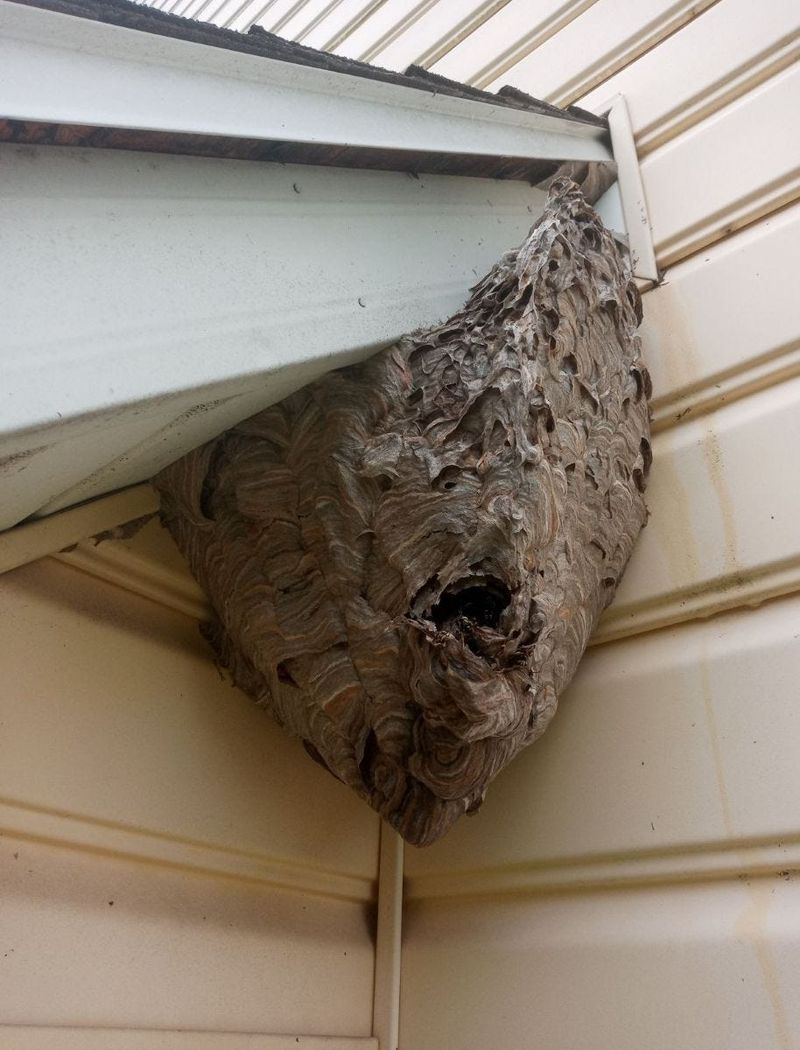
If an active nest is out of the way, waiting can be a reasonable choice. Michigan State University Extension points out that keeping clear and letting the colony end naturally avoids the risks of removal.
This works only if people and pets can stay away from it.
If the nest is near people or pets, or in a spot that is hard to reach, consider a pest professional. Oregon State University Extension also advises avoidance, and calling a professional when the nest is a risk.
Some do-it-yourself shortcuts make things worse. Do not plug an active nest entrance.
Virginia Cooperative Extension warns that trapped wasps may look for another way out, and that can lead them into a building.
Skip fire, gasoline, flooding, and other improvised treatments as well. They are dangerous to you and the yard, and they often leave angry wasps behind.
If you do use a pesticide, follow the label exactly. When in doubt, hand the job to someone with the right gear and training.
A new nest can appear next spring
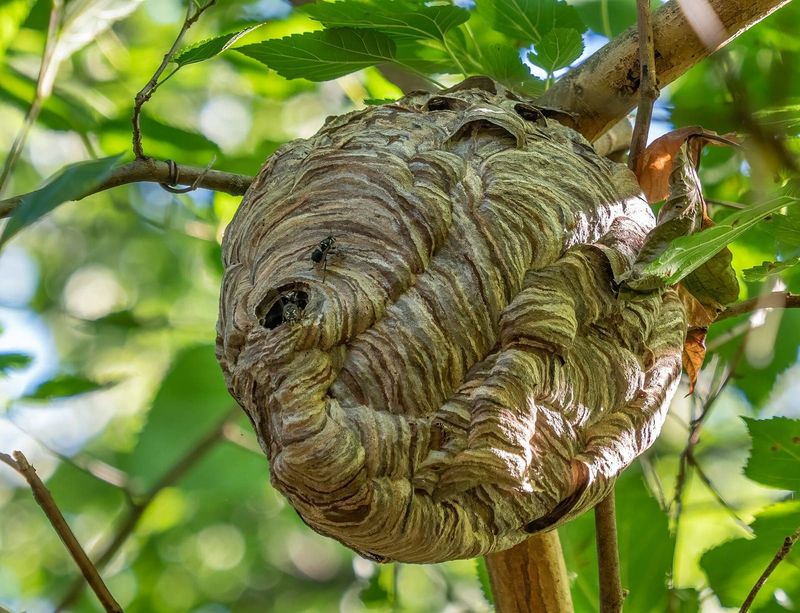
The story comes down to a handful of steps. The old colony ends, newly mated queens overwinter elsewhere, and those queens build new nests rather than reviving the old one.
As Michigan State University Plant and Pest Diagnostics explains, a favorable area may attract a new nest, though not the same one.
So an empty nest is a finished chapter, while a good location can invite a new beginning. Winter wipes the slate clean, and spring writes a new page.
Share this story