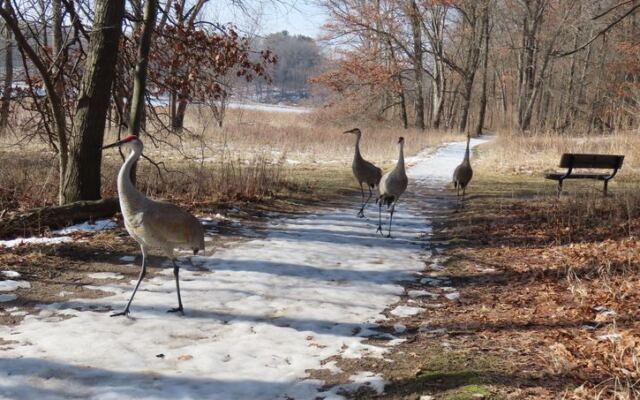
A pair of tall, gray birds strolls across your lawn again, and this time you start to wonder why they picked your yard. Sandhill cranes are big, loud, and hard to ignore, so repeat visits get people talking.
The answer is usually simpler than a mystery, and it can help you decide how to enjoy the birds and protect your grass. Here is how to read the clues.
What does a repeat visit actually mean?
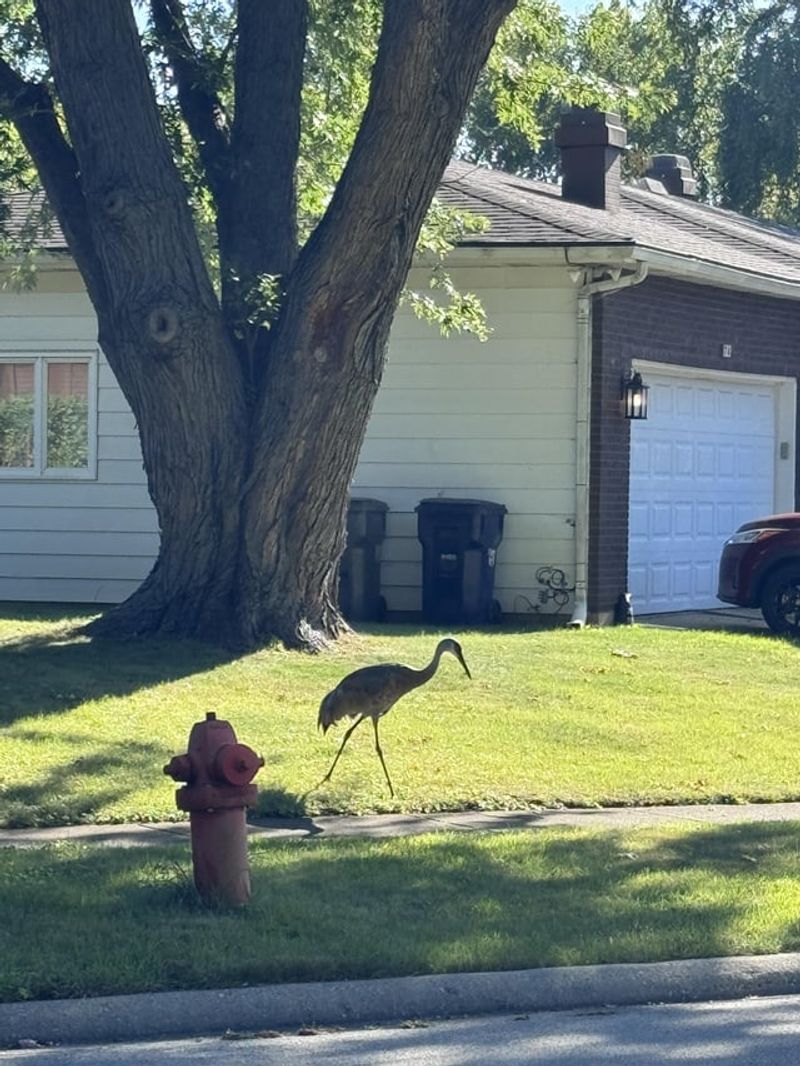
Most of the time, cranes that keep coming back are following food and habitat. Your yard may simply be a reliable place to find a meal, and it may sit close to open land or water that suits them.
That is the plain, evidence-based answer.
Plenty of people feel something deeper when a crane appears. Some see it as a sign, a comfort, or a reminder of someone they miss, and that personal meaning is real to the person who feels it.
It just is not something wildlife science can confirm, so it helps to keep the two ideas separate.
According to Michigan State University Extension, cranes are more likely to visit yards near wetlands or farmland, and they may return over several weeks. Feeders or other steady food sources can pull them in as well.
That pattern fits a bird making practical choices, not delivering a message.
So the better question is what your yard offers. Is there spilled seed, fresh sod, or open ground next to a marsh or field?
Once you know that, you can decide how you want to respond, whether that means watching quietly, adjusting a few habits, or protecting a patch of new grass.
Michigan also sees plenty of crane traffic each year. The Michigan Department of Natural Resources notes that cranes move south through the state in fall, so a sighting often fits into a much bigger seasonal picture.
Seeing them is a treat, and understanding why they stopped makes it even better.
A yard can be a feeding stop without being a nesting site
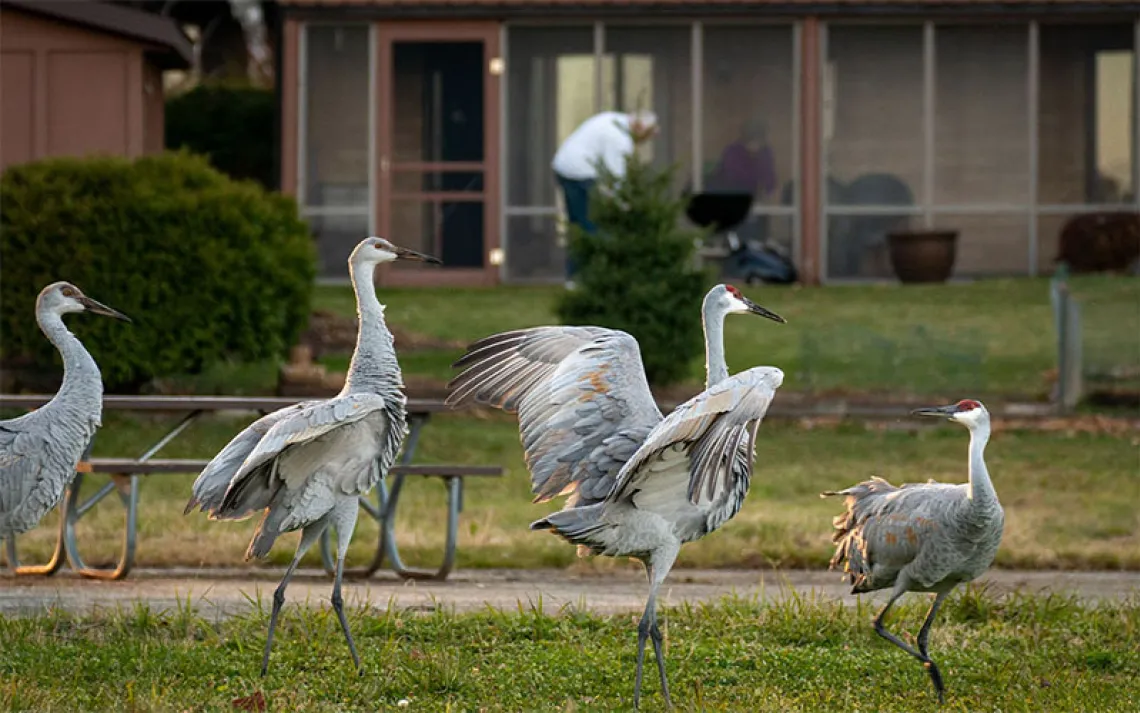
Think of your lawn as a roadside diner. Cranes eat seeds, grains, berries, insects, and other small animals, so open ground with a few of those items can be worth a stop.
The U.S. Fish and Wildlife Service describes them as birds that forage in fields, pastures, and other open areas.
Location matters too. A yard near a wetland or farm field is a short walk from other food, which makes it easy to add to a daily route.
The birds may feed on your grass in the morning and be back in the marsh by afternoon.
That is why a visit does not tell you where the birds sleep or raise chicks. Sandhill cranes generally nest in wetlands and marshy habitat, which most lawns are not.
A crane standing in your yard is eating, resting, or passing through, and the nest, if there is one, is probably somewhere wetter nearby.
Cranes may also dig for insect larvae in turf, especially in newly seeded lawns, as USDA wildlife damage guidance explains. Some people hope this means free grub control.
A crane may eat some larvae, but nothing guarantees a meaningful or lasting drop in pests, and the digging can leave torn-up turf behind.
If you want a clue about what is drawing them, look at the ground. Fresh seed, loose soil, spilled birdseed, or a berry bush can all explain the stop without any nesting involved.
Season offers clues, not a verdict
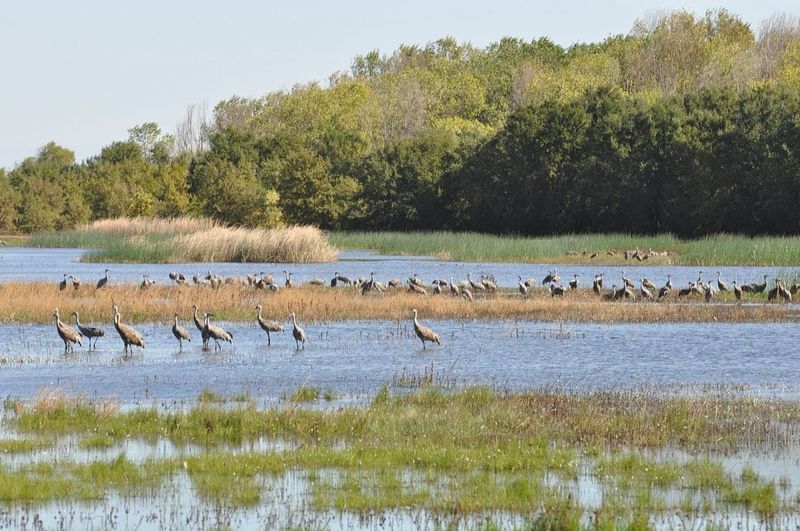
Timing can help you make sense of a sighting, but it cannot settle the question. Each fall, cranes move south through Michigan, and the Michigan DNR describes that migration as one of the state’s wildlife spectacles.
Groups often gather near wetlands before moving on, so an autumn visit may be part of that pause.
Still, you cannot tell from repeat sightings alone whether the birds are passing through or live nearby during the breeding season. A fall visit might be migration, and a spring or summer visit might have a local explanation.
The calendar gives context, not proof.
Visits can also last a while. MSU Extension notes that cranes may return to the same yard for several weeks, which can make a short stopover feel like a permanent arrangement.
The same caution applies to nesting. Sandhill cranes generally build nests in wetlands and marshy habitat, according to the U.S.
Fish and Wildlife Service. Seeing a crane on your property does not mean a nest is hidden in your shrubs or flower beds.
A useful habit is to keep notes. Jot down dates, times, and how many birds show up, and you will start to see whether the visits follow a seasonal pattern.
Those notes are far more useful than guessing, and they are handy if you ever need to ask an expert for advice.
Enjoy the visit without inviting closer contact
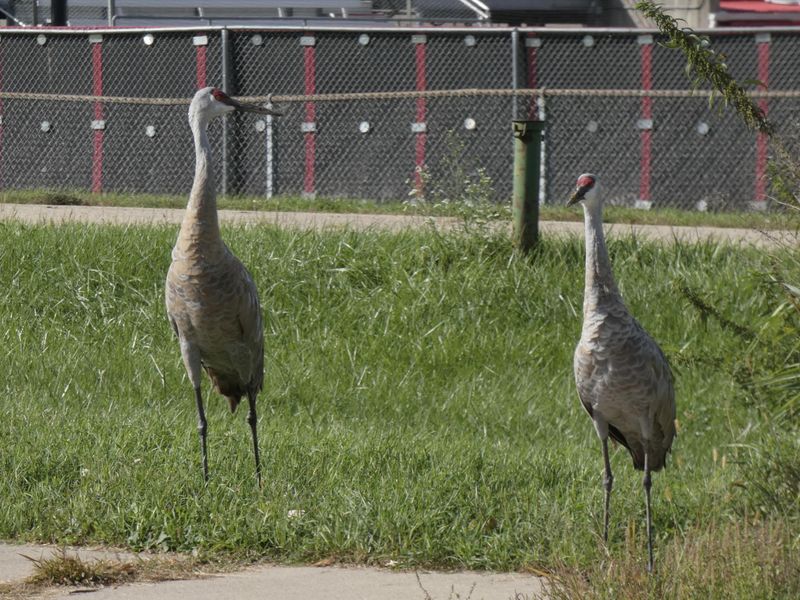
Cranes are fun to watch. They stride slowly, tilt their heads, and sometimes call in a rolling, rattling voice that carries for a long way.
A window, porch, or the edge of the patio makes a fine front-row seat.
The U.S. Fish and Wildlife Service advises watching wildlife from a distance and not disturbing or touching it.
Binoculars or a camera with a zoom lens let you see details without crowding the birds. If a crane stops feeding and stares at you, or changes how it is walking, you are too close.
Extra room matters in some situations. Cranes can act aggressively in some contexts, including when defending territory, and young birds may be nearby even when you cannot see them.
Keep kids and pets well back, and never walk toward a nest or try to handle a crane.
The species profile from U.S. Fish and Wildlife also reminds us that these are large wild birds with strong bills.
They do not need our help to find a meal or stay safe.
A few simple habits keep the experience calm. Watch through glass when you can, move slowly, and keep dogs indoors or on a leash.
If the birds walk off, let them go, and you will likely get another visit.
Remove reliable food before reaching for deterrents
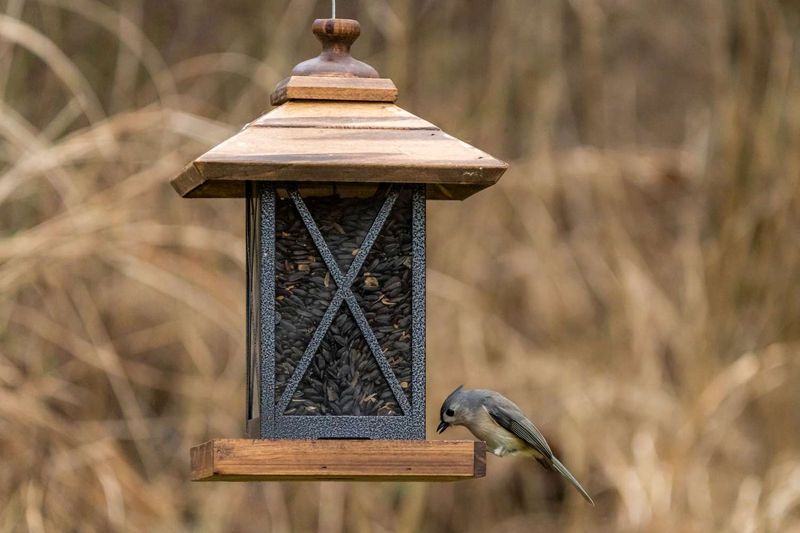
If the birds are becoming a bother, start with the buffet. MSU Extension recommends removing feeders or making them inaccessible and cleaning up spilled seed.
A ground full of cracked corn or sunflower hulls is an open invitation.
That includes seed that falls from hanging bird feeders. A crane does not care whether the food was meant for chickadees.
If you love your songbird feeders, consider using trays or catchers that keep seed off the ground, or pause feeding for a few weeks.
Feeding wildlife on purpose causes trouble too. The U.S.
Fish and Wildlife Service warns that food handouts can encourage animals to approach people closely. A crane that expects food may walk right up to a door or a child, and that is bad for both sides.
It is tempting to jump to gadgets next. Be careful, though, because MSU Extension says scare devices tend to be ineffective or only work for a short time, since birds get used to them.
Stationary owl decoys are unlikely to work, and repellents are not dependable either.
Do not try to chase or harass the birds as a shortcut. Taking away food is slower, but it addresses the actual reason they came.
If visits continue after the food is gone, you can move on to protecting the parts of the yard that matter most.
Protect vulnerable turf and ask before escalating
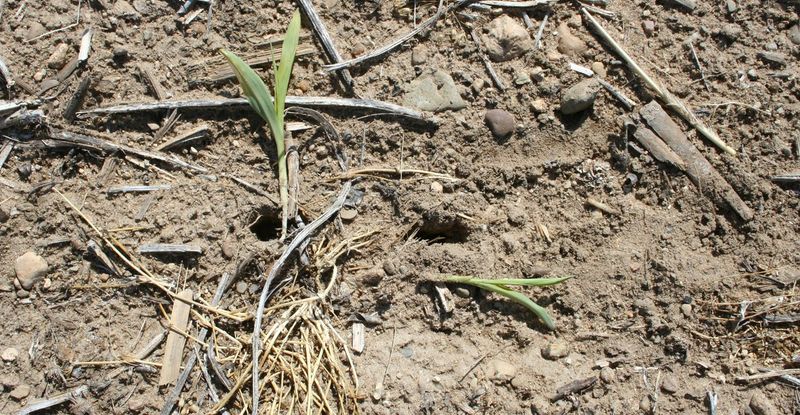
Before taking action, look at the damage. MSU Extension says small patches of disturbed sod may be easy to repair, so a few pecked spots may call for a rake and some seed rather than a major plan.
The MSU Extension guidance is a good place to start.
Newly seeded areas are more vulnerable. You can temporarily cover them with fine mesh row cover or a secured chicken-wire tunnel, then remove the cover once the grass is established.
This protects the part of the yard that matters rather than trying to treat the whole property.
Cranes may dig for insect larvae, and USDA wildlife damage guidance notes this happens most often in newly seeded turf. That digging can look like pest control, but it does not guarantee lasting results, and it can leave holes behind.
If you are thinking about bird-control measures beyond covers and cleanup, contact the Michigan DNR first. The Michigan DNR permit guidance says bird-control work in Michigan requires authorization, and migratory bird control also needs federal permission.
Federal law matters here as well. The Migratory Bird Treaty Act restricts taking protected migratory birds without authorization.
So skip improvised hazing or traps, and ask the DNR what is allowed for your situation.
Read the visits as clues about the landscape
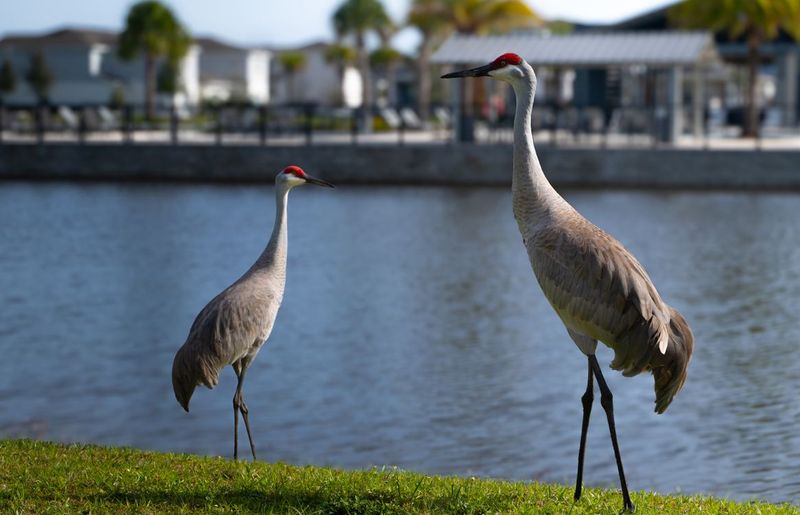
When cranes keep coming back, your yard and its surroundings are probably offering something useful, such as food, open ground, or a short walk from a wetland. MSU Extension points to those ordinary pulls, not hidden nests or messages.
Watch from a distance, skip the feeding, and protect fresh turf only if you need to. Whatever meaning you take from the sight is yours to keep.
A crane on the lawn is mostly a map of what the land provides.
Share this story