A red fox that keeps showing up in your New York yard is most likely treating it as part of its home range, a place to look for food or a handy path from one spot to another. That is an ordinary wild animal habit, not a sign or a message.
The visits alone cannot tell you whether someone nearby is feeding the fox or whether it has a den close by. Here is what the fox may be doing, and what you can do to stay safe and keep the peace.
A fox may be using the yard as part of its route

Picture the world from a fox’s point of view. Your yard may be one stop on a regular loop that includes neighboring lawns, a wooded edge, a drainage ditch, and a quiet street.
Foxes are mobile animals, and a returning visitor is most plausibly using your property as habitat, a foraging area, or a familiar route.
This is not as unusual as it may feel. New York DEC reports that red foxes live in nearly every county in the state, and they use suburban landscapes for both habitat and prey.
Towns, villages, and even busy residential blocks can fit into a fox’s range if there is enough food and cover nearby.
Animals tend to repeat paths that work. A fence line that is easy to slip under, a patch of tall plants that offers cover, or a gap between houses can become part of a regular trip.
If the route is safe and the surroundings offer something useful, the fox will likely keep passing through.
It is tempting to read more into a repeat visitor, but a fox has no special message for you. Its comings and goings come down to ordinary wildlife behavior such as moving through its territory, hunting, and resting.
You may never know the exact reason, and that is fine.
What you can do is look at your yard the way a fox might. Notice where food, cover, and easy travel routes overlap.
That simple check will help you make sense of the rest of this article.
Food and shelter can make a yard useful
Dinner for a fox is rarely just one thing. According to DEC’s red fox profile, the diet includes small mammals, birds, insects, carrion, and some fruit, and it shifts with the season and local prey.
Birds and eggs can be on the menu too, so a fox is not a guaranteed pest controller, and it will not necessarily leave other wildlife alone.
A yard can offer several of these foods at once. Mice and voles may live in brush piles, insects fill the lawn in summer, and fallen fruit or accessible scraps can add to the options.
Even if you never see the fox eating, it may be checking these spots as part of its regular rounds.
Cover matters as much as food. Dense shrubs, woodpiles, tall grass, and the shadows along a fence give a fox a way to move without being seen.
Quiet corners also make good resting spots during the day.
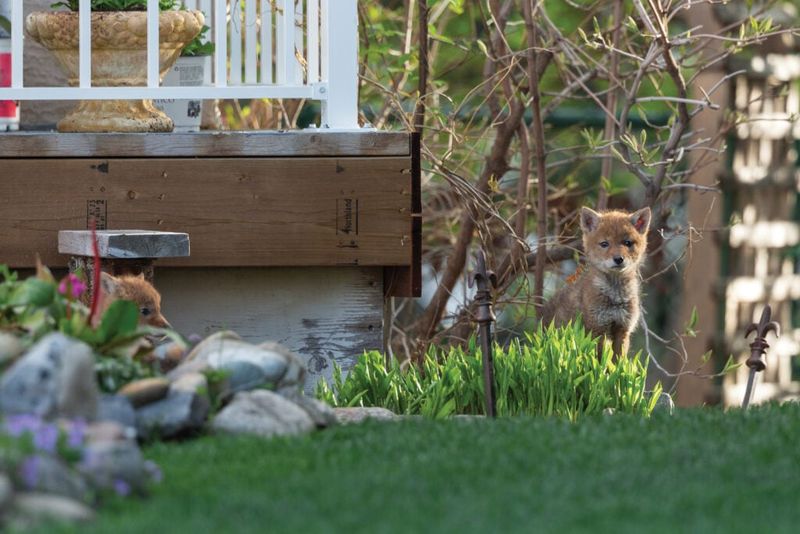
Some shelter is more than a place to pass through. A DEC Conservationist article notes that foxes may den under sheds or in other sheltered places.
That makes a shed, deck, or porch worth a careful look from a distance.
A den is only one possibility, though. Many foxes cross yards with no den anywhere near, so repeated visits alone do not prove one exists.
Look for clues like a regular entrance, worn dirt, or signs of activity around one spot before drawing conclusions.
A sighting cannot answer every question
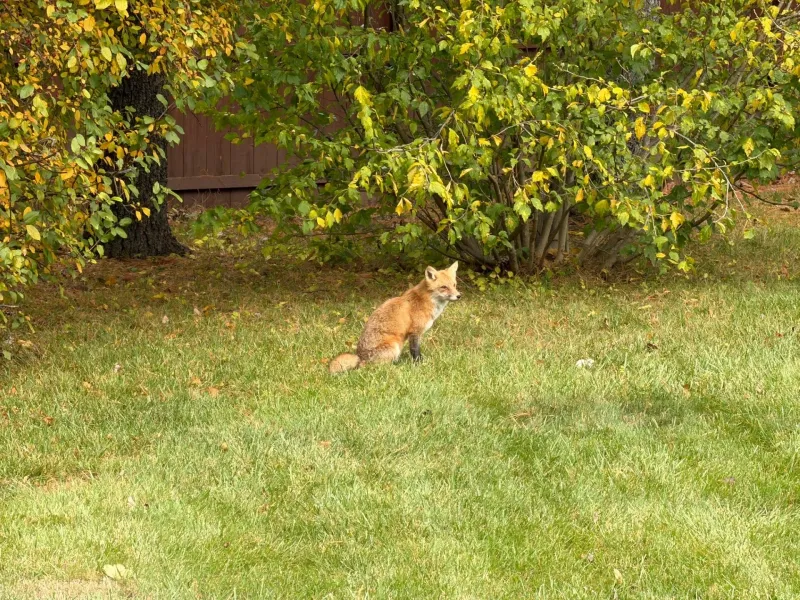
Seeing a fox three evenings in a row feels like a pattern, and it is. But a pattern of visits does not tell you why the fox comes.
Someone nearby might be feeding it, or it might have grown used to people, or it might have a den close by. Each of those is a possibility, and none can be confirmed from sightings alone.
Think of it like watching a stranger walk past your house every morning. You know the route, but you do not know the reason.
To learn more, you would need other clues, such as food left out, a worn entrance under a structure, or a neighbor who admits to feeding wildlife.
Timing is another common worry. According to DEC, red foxes are mostly active at night but may sometimes move around in daylight, including adults feeding young.
A fox in the afternoon is not proof of sickness. Look at the whole picture instead, and keep your distance either way.
Identification can be tricky too. New York is home to both red and gray foxes, and a quick glimpse across a dim yard may not be enough to tell them apart.
Red foxes usually show a rusty orange coat, black legs, and a white-tipped tail, while gray foxes look more salt-and-pepper.
If it matters, such as when you are talking to wildlife officials, a clear photo taken from a safe distance can help. Otherwise, treat the animal as a wild visitor and plan your response around habits you can control.
Remove attractants and keep pets away
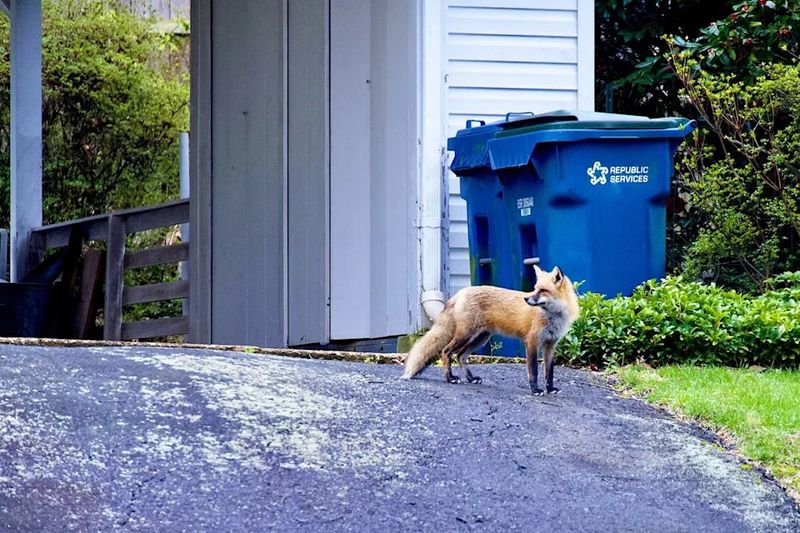
Start with the simplest rule: do not feed, touch, or try to tame a fox. DEC warns that feeding wildlife can make animals comfortable around people, and medicated food can harm other animals that eat it.
Even a casual handout can change how a fox behaves.
Next, take away easy meals. Feed pets indoors, or pick up bowls as soon as they are done.
Keep garbage in sealed containers, clean up spilled birdseed and fallen fruit, and do not leave pet food or compost where a fox can reach it.
The New York State Department of Health advises against attracting wild animals to homes and yards, and it recommends keeping pets away from wildlife. Think of these steps as ordinary precautions, not a sign that a particular fox is dangerous.
Pets need a little extra thought. Supervise dogs and cats when they are outside, especially around dawn and dusk, and do not let them approach a fox.
A leash, a fenced yard, or a short trip out with you can help avoid a surprise meeting.
Vaccines are part of the plan as well. CDC guidance supports keeping pets current on rabies shots, which protects them and your family.
Check your pet’s records now so you are not scrambling later.
Give a suspected den space
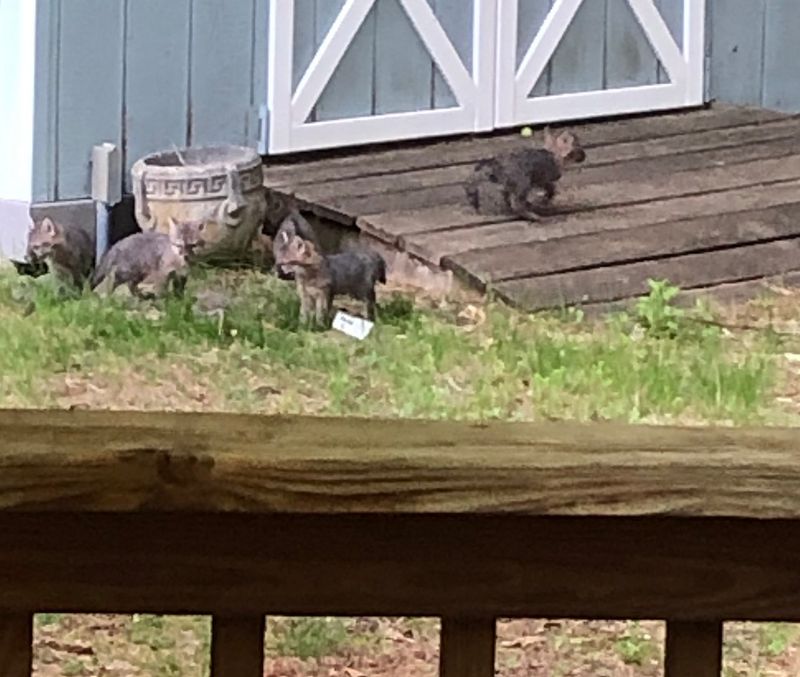
Spring is when many yard dens come to light. If you suspect one, or you spot kits, the best move is to watch from a distance and leave the young alone.
A DEC Conservationist response says it is not unusual for foxes to raise young under a backyard shed, and it advises people not to approach or feed them.
Resist the urge to act fast. Do not block a suspected den entrance, and do not seal a shed or porch opening until you are sure the den is vacant.
Closing it up with animals inside can trap kits and cause real harm.
A few quiet habits help. Keep children and pets away from the area, and skip the close-up photos.
A fox family usually moves on after the young are old enough, often by late summer.
If the den truly causes a problem, check the rules before doing anything. DEC explains that New York requires a permit to remove red or gray foxes, and captured animals cannot simply be released somewhere else.
Contact DEC or a local wildlife-management professional first.
You may hear about scents, urine products, or store-bought repellents as quick fixes. Rutgers Cooperative Extension notes that some reported deterrent methods lack documented scientific studies, so none should be treated as a sure solution.
Act promptly after a bite or saliva exposure

Most fox visits end with nothing more than a quick look and a wave goodbye. A few situations call for fast action, though.
Those are a bite or scratch, or saliva getting into an open wound or the eyes, nose, or mouth.
If that happens, wash the wound right away with soap and water, then contact a health professional and your county health department. The New York State Department of Health advises immediate washing and medical attention after a suspected rabies exposure.
You can find local numbers through the state’s county contact list.
Rabies is serious, and the CDC lists foxes among the wildlife that can carry it. Still, it is tied to exposure, not to a fox walking across your lawn.
An animal’s looks or the time of day cannot diagnose it, so public-health staff assess each case. CDC advice stresses getting care promptly after a possible exposure.
Seeing a fox, even repeatedly, is not an exposure. If your pet had contact with a fox, call your veterinarian and local health department for guidance, and wear gloves if you need to handle the pet before then.
So the calm plan stays simple: keep pets apart from wildlife and give any suspected den space. A fox that is left alone usually goes about its business and leaves you to yours.
Share this story