Every November, the wind picks up and a neighbor’s maple seems to empty itself onto your lawn. It is natural to wonder who has to clean up the mess.
The answer depends on how the leaves got there and what your town says about cleanup. Here is what New York decisions and local rules actually tell us.
Who usually has to rake naturally fallen leaves?
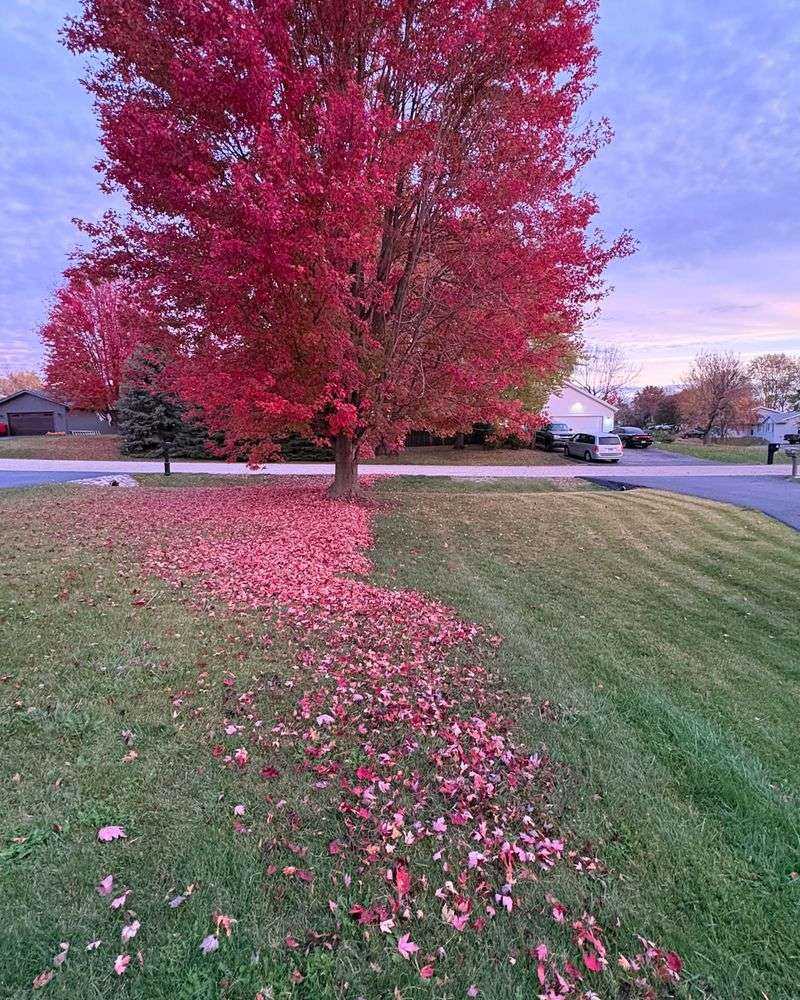
Short answer: if leaves fall or blow naturally from a neighbor’s tree, the general view is that you handle them on your own land. The neighbor ordinarily does not have to come over and rake them out of your yard.
That is a general conclusion, not a rule written into one statewide statute.
Two New York decisions point in this direction. In Leiser v.
Lanka, a Nassau County small-claims decision, the court dealt with leaves and twigs from neighbors’ trees and rejected a claim for cleanup damages. Small-claims rulings are specific to their own facts, so they guide the picture but do not bind every court.
The second case, Iny v. Collom, was really a dispute about tree roots damaging a garage.
While reviewing nuisance law, the court recited that dropping leaves alone ordinarily does not make overhanging branches a nuisance. That comment came up in a different kind of fight, so it is a helpful signal rather than a leaf-specific ruling.
Put together, the cases support a practical starting point for ordinary autumn leaf fall. Wind is nobody’s act, and a tree dropping leaves is what trees do.
Special situations, such as a neighbor deliberately moving leaves, a hazardous tree, serious damage, or a local ordinance, are separate questions covered in the sections below.
Deliberately moving leaves across the boundary is different
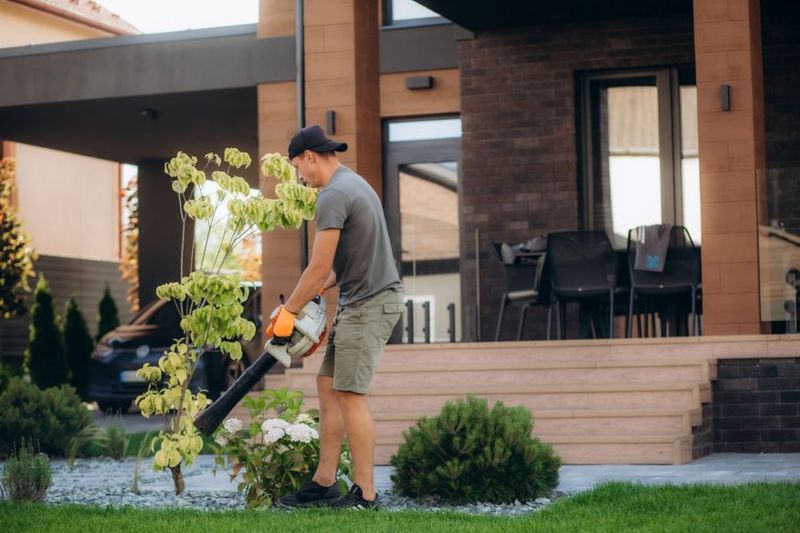
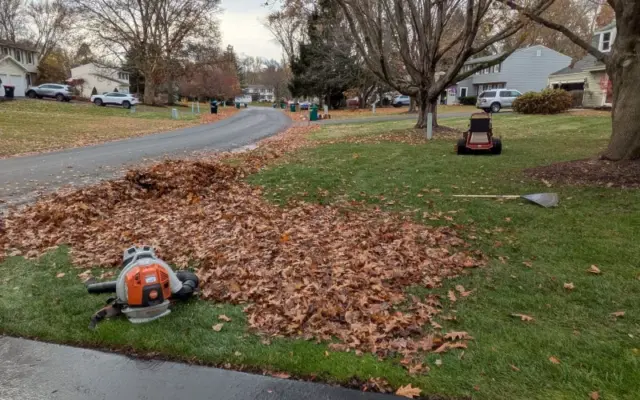
Leaves carried by wind are one thing. A neighbor or landscaper who aims a blower and sends a pile onto your property is something else, because now a person’s conduct is involved.
Courts look at that kind of behavior differently than at a tree shedding in October.
According to the New York Courts law librarian guide on neighbor nuisance, a nuisance claim involves interference with the use of your property that is substantial, intentional, and unreasonable, and that results from another person’s conduct. Deliberate blowing might meet the intentional piece, but it does not automatically satisfy the rest.
Whether a pile of leaves is substantial or unreasonable depends on the facts and the proof.
For a loose comparison, look at Cangemi v. Yeager, where an appellate court found evidence supporting trespass and nuisance claims over repeated snowblowing onto a neighbor’s house.
It was not a leaf case and does not predict how a leaf dispute would turn out.
If this is happening to you, write down dates, take photos or video, and note any concrete effects like clogged drains or damaged plants. Where it feels safe, a friendly request to stop is often the quickest fix.
No outcome is guaranteed, so consider legal advice if the problem continues.
A dangerous tree or real damage raises a separate question
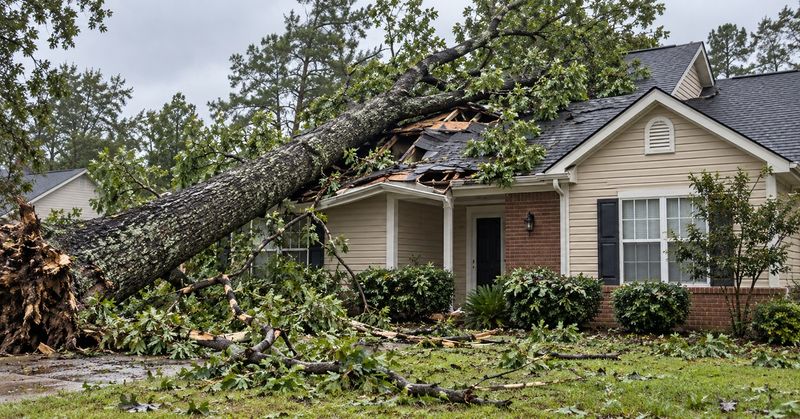
Raking is a chore. A tree that looks rotten, split, or ready to fall is a safety issue.
Routine seasonal leaf fall should not be confused with a tree that is dangerous or defective, or with damage that goes well beyond a messy lawn.
The Nassau County decision in Leiser v. Lanka is worth reading narrowly here.
In addressing liability, the court discussed evidence about the condition of the tree and whether the owner had notice of a problem. It does not mean every tree-related injury is off limits for a claim.
In practice, that means condition and notice can matter. A healthy tree dropping leaves is one story.
A visibly dead tree that an owner has been told about is another, and the outcome would depend on the facts.
If you spot warning signs, such as large dead branches, cracks, or a leaning trunk, photograph them with dates and let the owner know in writing. Substantial damage to a fence, roof, or garage is likewise a separate matter from falling leaves.
A local lawyer or your municipality can help you sort out next steps.
Your municipality sets the practical collection instructions
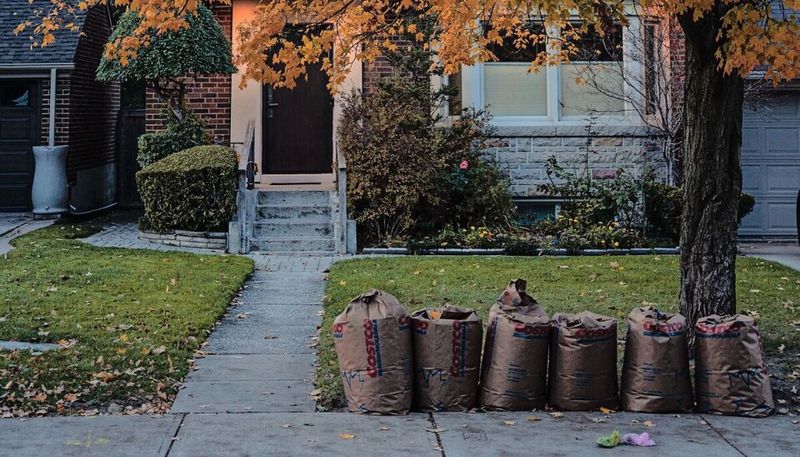
Before you drag a single bag to the curb, check what your own town, village, or city asks for. Collection rules differ from place to place, and they can change from year to year.
A quick look at the municipal website or a call to public works can save you a missed pickup or a warning.
The Town of Hempstead Highway Department offers one example. It says residents remove leaves from their own property and should not rake them into roadways.
The Town of Webster shows a different approach. A Webster supervisor’s column describes curbside pickup instructions and notes that other towns may require bagging.
These are local examples, not statewide cleanup rules.
Things to look up include pickup dates, whether leaves go loose or in bags, and where exactly they should be placed. Also check whether your municipality has any ordinance about leaves moving between properties.
If a neighbor’s leaves keep landing on your side, following the same local instructions for your own cleanup keeps you on solid ground.
Keep leaf piles out of roads and gutters
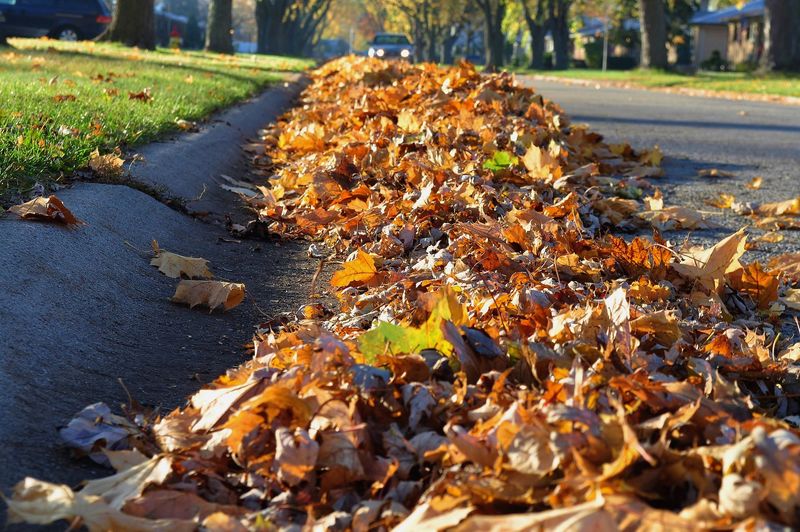
It can be tempting to sweep leaves toward the street and let them go. New York’s Vehicle and Traffic Law section 1220 restricts depositing refuse on highways and their rights-of-way, so that habit can cause trouble.
State road guidance says the same thing in plain terms. The NYS Local Technical Assistance Program warns against raking leaves into roads, since piles can block drainage and create hazards for drivers.
Wet leaves are a real danger on pavement. The New York State DMV driver’s manual discusses slippery conditions, and a layer of soggy leaves can make stopping and turning harder.
Curbside collection does not necessarily mean the roadway. Some municipalities want leaves on the grass strip, others want bags, and others have set pickup zones.
Do not assume; follow your own municipality’s placement instructions exactly.
Mulching and composting offer alternatives to disposal
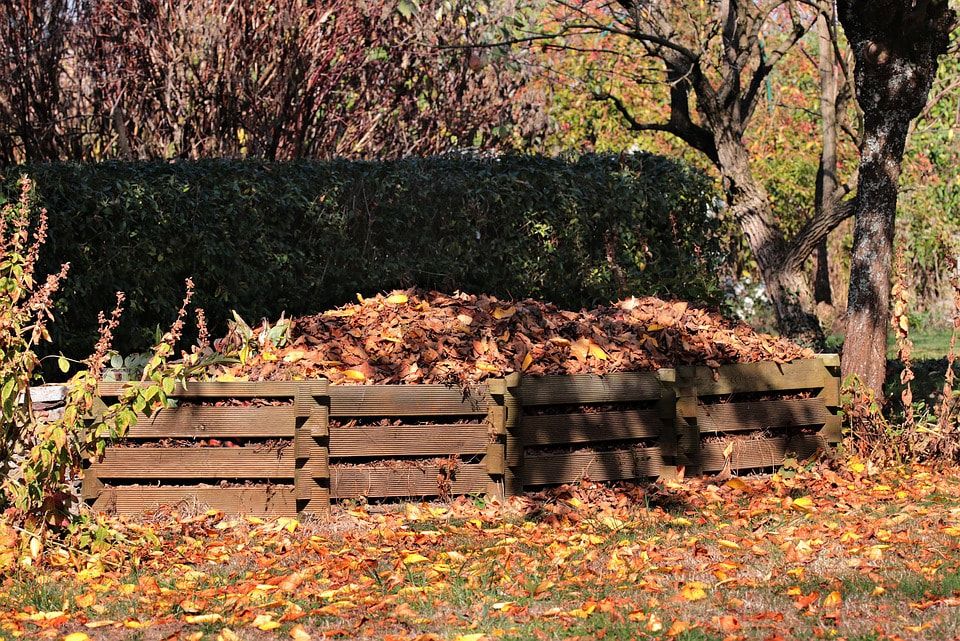
Leaves do not have to be a waste problem. Instead of hauling every bag away, many gardeners put them to work.
Cornell Cooperative Extension advises that leaves can be moved into garden beds as mulch.
If you have more than your beds can use, look to your town. The New York DEC home composting page says some municipalities accept leaves at compost facilities and recommends checking with local public works about available programs.
One firm warning: do not burn them. The DEC open burning page lists burning loose leaves or leaf piles among prohibited open-burning activities.
So the practical order is simple. Use what you can as mulch, ask public works about composting or collection programs, and leave the matches in the drawer.
Start with the ordinary rule, then check what makes your case different
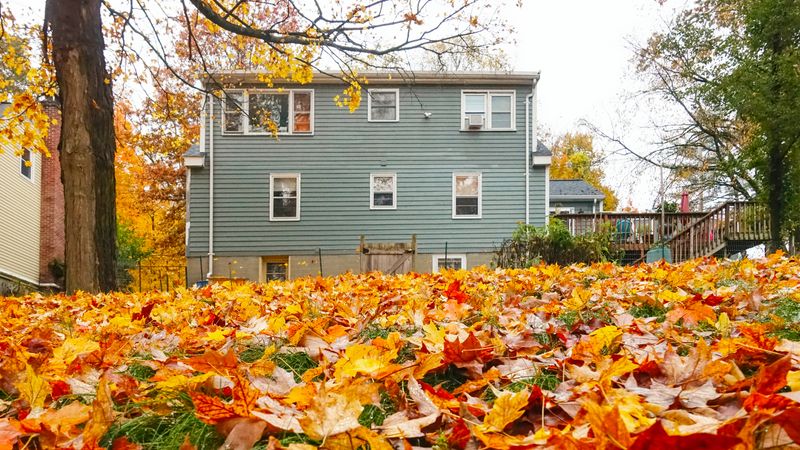
For leaves that fall or blow naturally, New York decisions such as Leiser v. Lanka and Iny v.
Collom point toward you handling them on your own land.
Next, ask whether the leaves drifted or were placed there on purpose. Then check your local collection instructions, and treat a hazardous tree or real damage as its own issue.
Autumn passes quickly, and a good relationship with the folks next door usually outlasts any pile of leaves.
Share this story