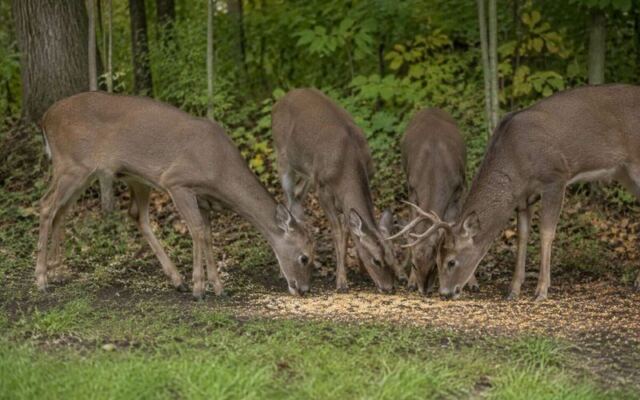
Yes, you can generally put out a small amount of corn for deer in your Michigan yard right now, as long as you follow strict limits set by state law. The rule covers feed within 300 feet of a home and caps the total amount.
A proposed change for 11 northeastern counties could shift things soon, and the health risks to deer are real. Here is what to check before you scoop any corn.
Michigan law allows limited recreational feeding
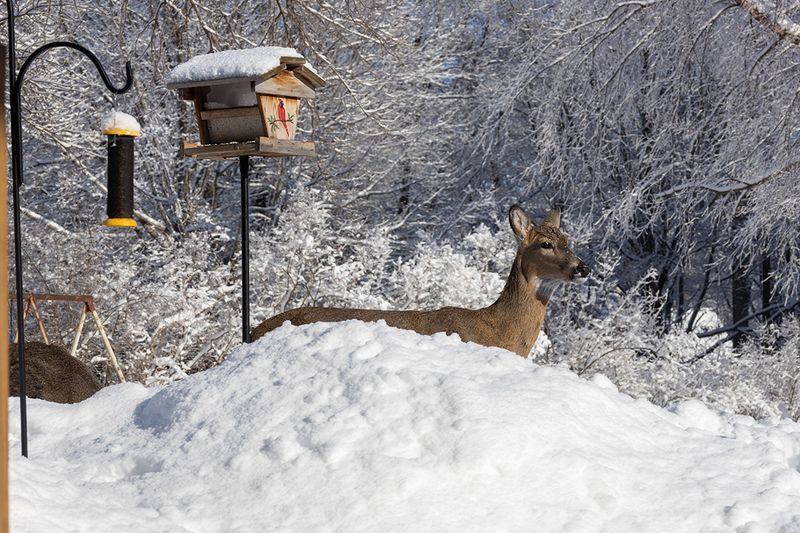
As of November 22, 2026, Michigan law allows wildlife and bird feeding, including deer feeding, for recreational viewing or to prevent starvation. The feed must be within 300 feet of a residence, and the total amount must stay within a set limit.
You can read the exact wording in Michigan Compiled Laws section 324.40111a.
The exception comes from Public Act 86 of 2026. It took immediate effect and was filed July 27, 2026, so it is a fresh change to a long-standing ban.
You can look at the bill itself in the enrolled text of the act.
Think of it as a narrow doorway, not an open gate. The permission applies to feeding near a home, for watching wildlife or helping animals avoid starvation.
It does not cover every place, every amount, or every purpose.
That matters because many Michigan homeowners grew up hearing that feeding deer was simply illegal. For years, that was close to the truth across much of the state, especially in the Lower Peninsula.
The new law changed the picture, but only inside the lines the Legislature drew.
A yard that sits well away from your house, a pile of feed set out far down a trail, or feed meant for hunting would not fit the exception. A few handfuls of corn on the ground near your back door, kept within the total limit, is the kind of situation the law was written for.
Even then, a pending proposal could change the rules where you live, which later sections explain.
What the two-gallon limit covers
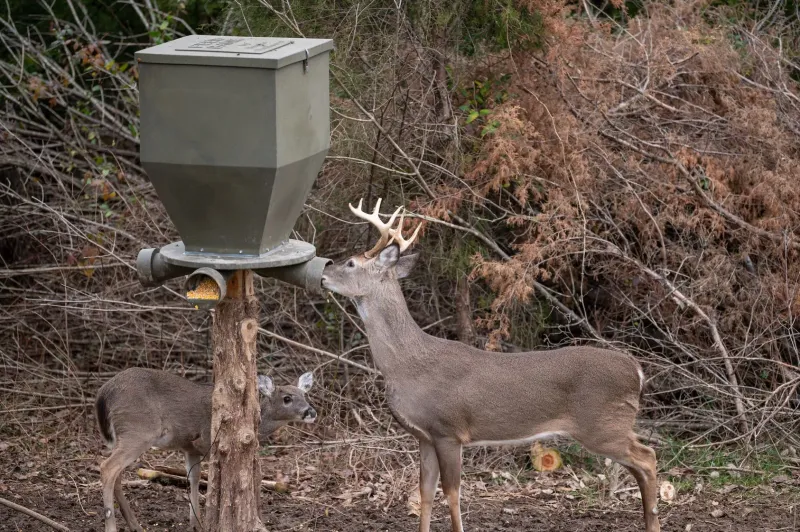
The limit is about the total, not about each feeder. All feed within 300 feet of the residence counts toward a cap of two gallons.
Two feeders, three piles, and a scattered handful all draw from that same combined allowance.
Feed that stays on the ground counts too. If corn from yesterday is still sitting in the snow, it is part of today’s total.
That means adding a fresh scoop on top of leftovers can push you past the line faster than you expect, which is spelled out in the statute’s language.
Picture a homeowner with a feeder on the porch and a pile by the garage. If the porch feeder holds one gallon and the pile holds another gallon, the total is already at the cap.
Adding more anywhere within 300 feet of the house would go over.
The law does not give a special way to measure what is left on the ground, and this article will not invent one. If you are unsure how much remains, the cautious choice is to put out less, not more.
Staying under the volume and distance limits does not automatically make feeding fine in every situation. Other rules, such as a county restriction or a hunting rule, can still apply.
Feeding deer to watch is different from baiting deer to hunt
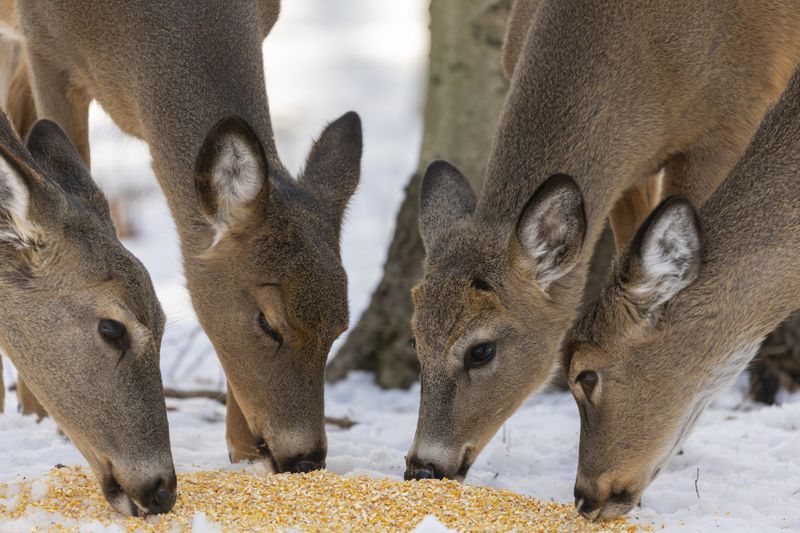
Michigan law cares about why feed is put out. Under the DNR’s terms on its baiting and feeding page, bait is something used as an aid to hunting.
Feed is food that may attract deer for some other reason, such as watching them from your kitchen window.
Corn is a grain that can draw deer in. That is exactly why the line between viewing and hunting matters so much.
The new two-gallon exception is built for recreational viewing and preventing starvation, and the statute excludes baiting to take game.
Here is a practical example. If you sprinkle corn near your porch and a hunter in your family sits in a stand overlooking that spot, the purpose has shifted.
The corn is now acting as an aid to hunting, and the exception does not protect that use.
The same corn can be legal in one setting and a violation in another, depending on what it is for. Keep viewing and hunting completely separate.
If anyone in your household hunts, talk through where they hunt and where you feed before the season gets going.
A proposed order could change the rule in 11 counties
The DNR has proposed continuing a ban on deer and elk feeding in 11 northeastern Lower Peninsula counties. They are Alpena, Alcona, Cheboygan, Crawford, Iosco, Montmorency, Ogemaw, Oscoda, Otsego, Presque Isle, and Roscommon.
The November 2026 document, Wildlife Conservation Order Amendment No. 12 of 2026, calls it a recommendation, and it may be eligible for approval December 9, 2026.
As of November 22, it was not approved. It should not be treated as a rule already in force.
If you live in one of those counties, though, the outcome could directly affect your plans for this winter.
You may also notice that the DNR’s general baiting and feeding webpage still says feeding is banned throughout the Lower Peninsula. The same page notes that the rules are subject to change under Public Act 86.
That blanket wording does not capture the newer, limited exception as the complete current rule.
The DNR’s own October 2026 memo acknowledges that the new law allows limited feeding, even as it recommends a new restriction in those counties. So the webpage and the statute are not really in conflict once you read them together.
The statute sets the current floor, and the proposed order could add a tighter rule on top for certain counties.
The takeaway is simple. Before you put feed out, check whether the proposed order was approved and whether your county is on the list.
The state-law exception remains the baseline for everyone else.
Sudden access to corn can make deer seriously ill
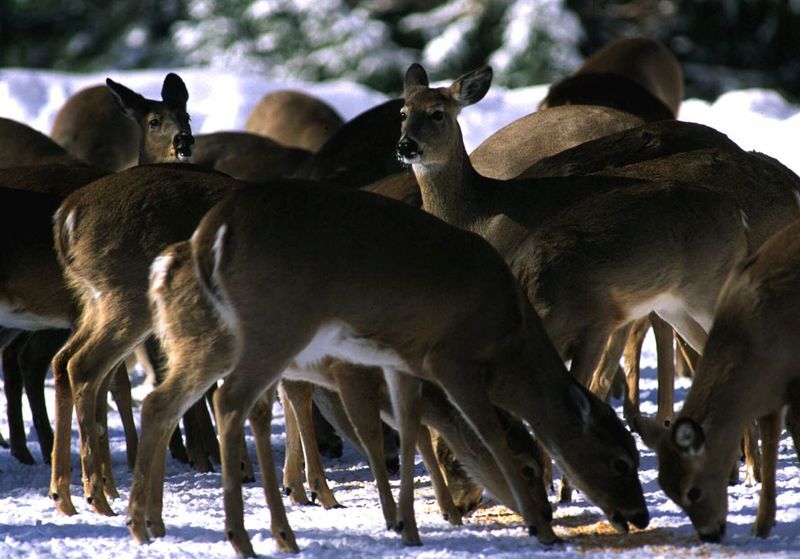
Corn looks like a treat, but a deer’s stomach is not built for a sudden pile of grain. The DNR warns that sudden access to grain, especially corn, can cause acidosis or enterotoxemia, and either can be serious or fatal.
You can read the details in the DNR’s corn toxicity guidance for deer and elk.
Where recreational feeding is allowed, the DNR advises introducing grains and fruit gradually over three weeks. That is advice for lowering risk, not a promise of safety.
Even a careful ramp-up can still leave deer worse off than if they had foraged naturally.
Winter makes people want to help. A thin deer at the edge of the yard can tug at the heart.
But corn is not a rescue tool, and starting feed after malnutrition is advanced may not save the animal, a point covered in the DNR’s page on malnutrition and starvation.
A deer that has been eating woody browse for weeks has a gut adjusted to that diet. Dropping a heap of corn in front of it is a sharp change.
Anyone who feeds should treat the practice as one with real risks to the animals they hope to enjoy watching.
Feeding sites can bring deer together
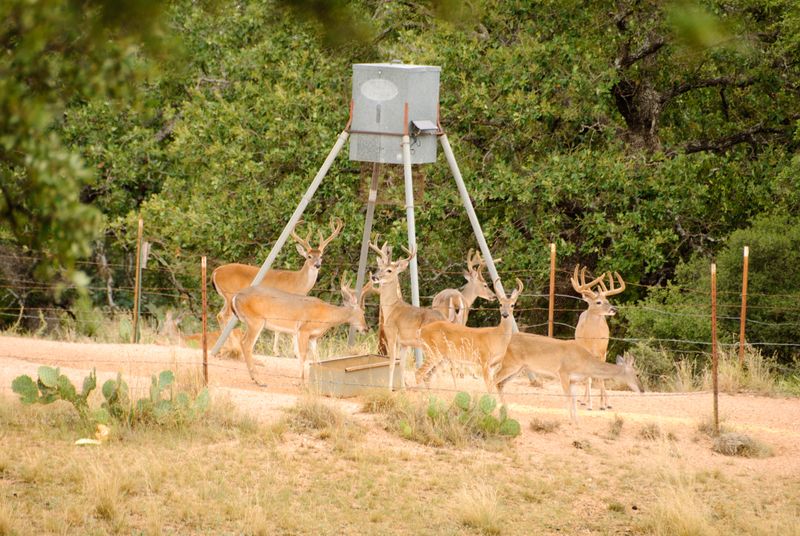
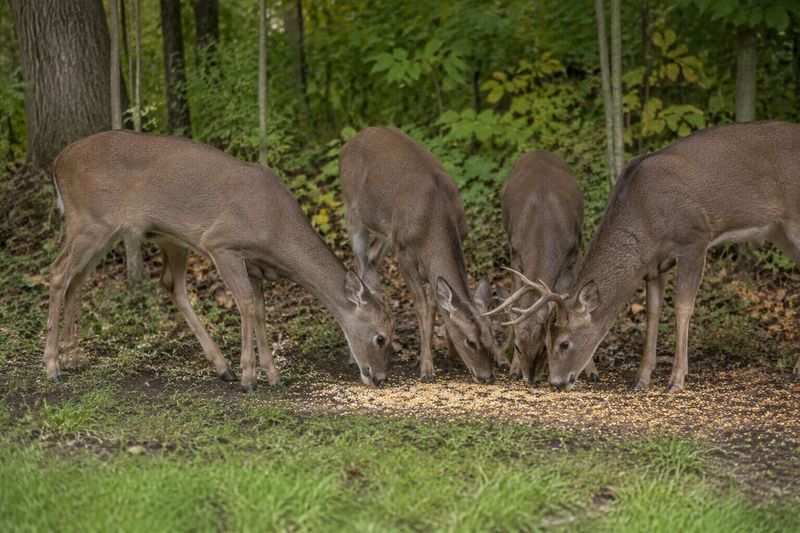
Food in one spot draws animals to one spot. The DNR’s order memo, Wildlife Conservation Order Amendment No. 12 of 2026, says feeding can concentrate deer and increase opportunities for disease transmission.
The proposed ban in 11 counties is grounded in that disease-control concern.
That wording matters. It describes more chances for disease to pass between animals when they crowd together, not proof that every feeding event causes infection.
It also does not show that your particular backyard is unsafe.
Still, a pile of corn is a magnet. Deer that would normally spread out may nose around the same patch, share the same ground, and stand close to each other.
The closer they bunch up, the more chances there are for problems to travel.
The DNR’s baiting and feeding page also recommends against repeatedly placing feed at the same ground spot. This is DNR guidance, not a legal requirement.
If you choose to feed within the legal limits, spreading out placement and avoiding a worn, muddy feeding patch follows that advice.
Check the current county rule before putting feed out
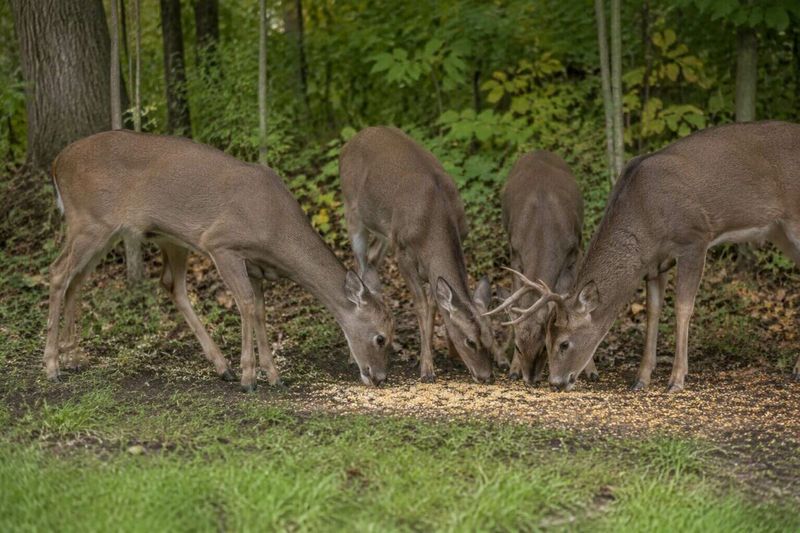
Start with the date. Look up whether the Natural Resources Commission approved the proposed order on or after December 9, using the commission’s meeting page, and check whether your county is among the 11 named in the DNR order.
If the state-law exception still applies to you, keep all feed within 300 feet of a residence and the total at or below two gallons, including what remains. Never use it to bait deer for hunting.
The full wording sits in Michigan’s statute.
A rule you checked in November may not be the rule in January.
Share this story