After a few rainy days in New Jersey, you might step outside and find little caps and stems scattered across your lawn overnight. Some of these surprise guests are harmless, but others can make people and pets very sick, or worse.
Knowing which ones to watch for can protect your kids, your dog, and anyone tempted to pick a wild snack. Here are ten toxic mushrooms that show up in Garden State yards, plus the clues that help you spot each one.
1. Eastern Destroying Angel (Amanita bisporigera)
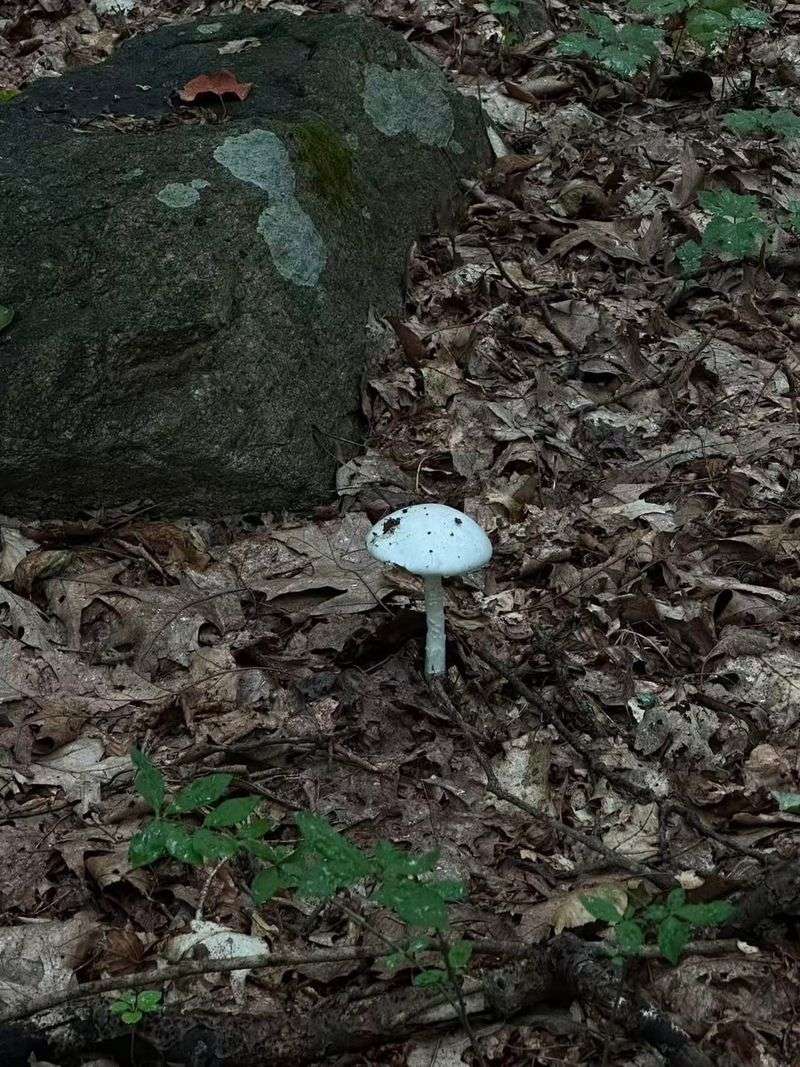
Few things in nature look so innocent while being so deadly. The Eastern Destroying Angel is snow white from top to bottom, and it often pops up near oak and beech trees in summer and early fall.
Just one cap can contain enough toxin to destroy a human liver.
To identify it, look for a smooth white cap, white gills that do not touch the stem, and a delicate ring hanging near the top of the stalk. The real giveaway hides underground: a sack-like cup called a volva wraps the base.
Dig gently around a suspect mushroom with a stick and you may find it.
Symptoms are sneaky. Victims often feel fine for 6 to 24 hours, then suffer severe vomiting, a brief false recovery, and finally organ failure.
If anyone eats a white mushroom from your yard, call Poison Control at 1-800-222-1222 right away, even if they seem fine.
2. Death Cap (Amanita phalloides)
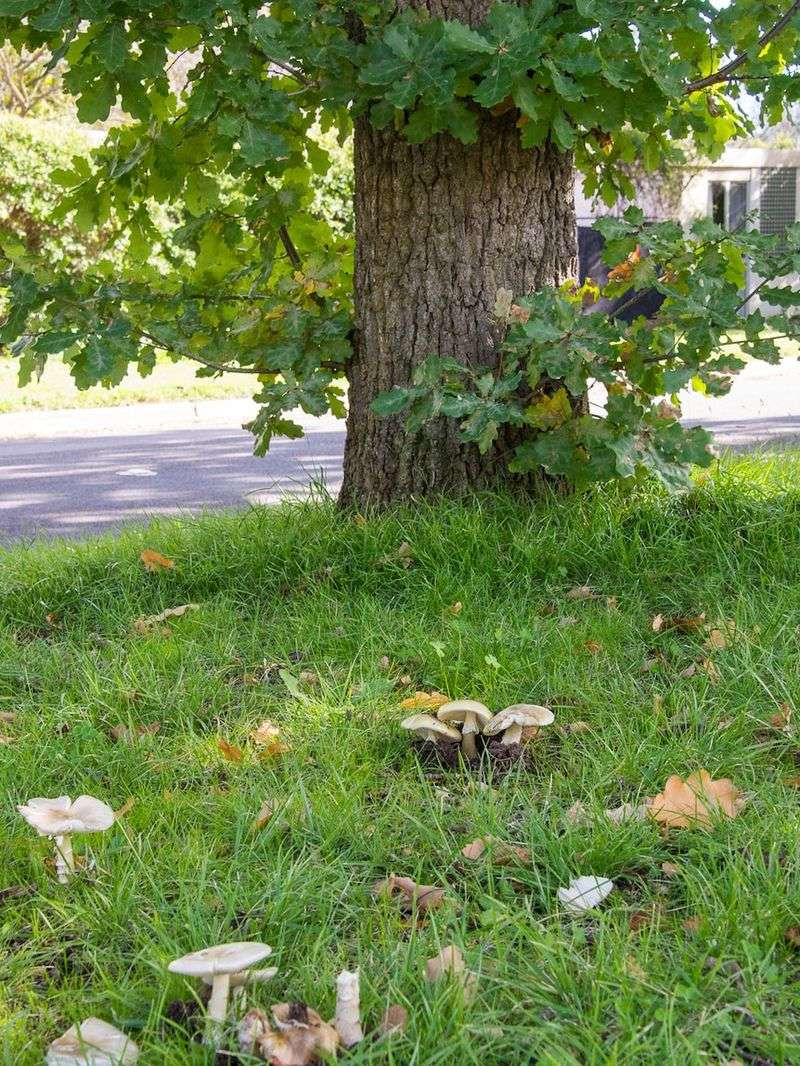
Responsible for roughly 90 percent of mushroom poisoning deaths worldwide, the Death Cap is an uninvited immigrant. It traveled to North America on the roots of imported trees and has been spotted in New Jersey, usually near planted oaks and other ornamental trees.
Its cap ranges from pale green to olive or yellowish, sometimes fading almost white. Like its cousin the Destroying Angel, it has white gills, a ring on the stem, and a cup at the base.
People sometimes confuse it with edible paddy straw mushrooms from Asia, which has led to tragic poisonings among immigrant foragers.
Cooking, freezing, or drying will not make it safe. The toxins, called amatoxins, survive heat completely, so the only safe move is to leave it alone.
3. Green-Spored Parasol (Chlorophyllum molybdites)
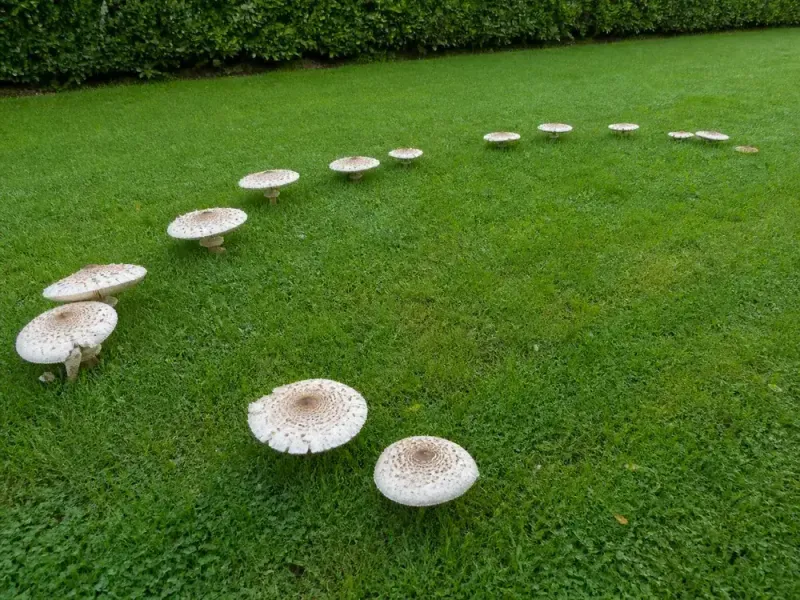
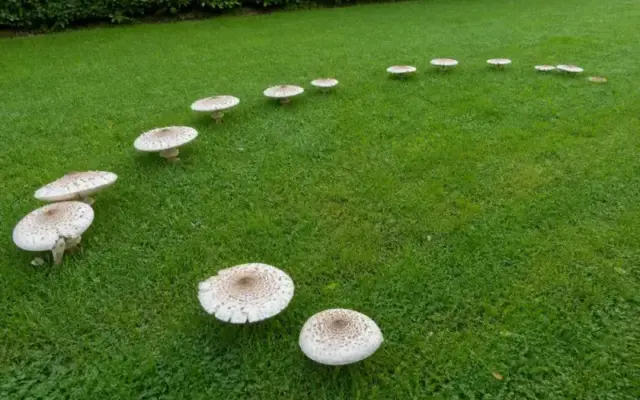
Picture a giant white umbrella sitting in the middle of your freshly mowed grass. That is the Green-Spored Parasol, the mushroom that sends more North Americans to the hospital than any other.
It loves lawns and often grows in big circles called fairy rings.
Caps can stretch as wide as a dinner plate and are covered in brownish scales near the center. Young gills look white, but as the mushroom ages they turn a dull greenish gray.
A spore print, made by leaving the cap gills-down on paper overnight, will show a telltale green color.
Eating it brings on harsh vomiting and diarrhea within a few hours. Rarely deadly, but miserable, especially for small kids and pets who might nibble it during a backyard play session.
4. Jack-O’-Lantern Mushroom (Omphalotus illudens)
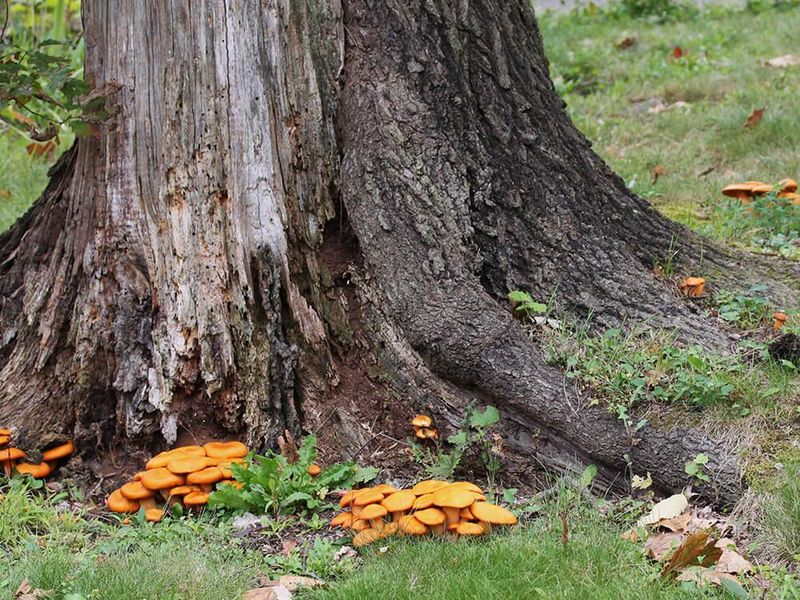
Here is a fun bit of trivia: the gills of this bright orange mushroom can actually glow a faint green in total darkness. That eerie light gave the Jack-O’-Lantern its name, and it makes a great story for curious kids.
You will usually find it in large clusters at the base of stumps or buried roots, especially oaks, from late summer into fall. It is pumpkin orange all over, with true gills that run down the stem.
Foragers sometimes mistake it for chanterelles, but chanterelles grow alone from soil and have blunt, forked ridges instead of sharp gills.
A bite of Jack-O’-Lantern causes cramps, vomiting, and diarrhea that can last for hours. It is not usually fatal, but it will ruin your week.
5. Funeral Bell (Galerina marginata)
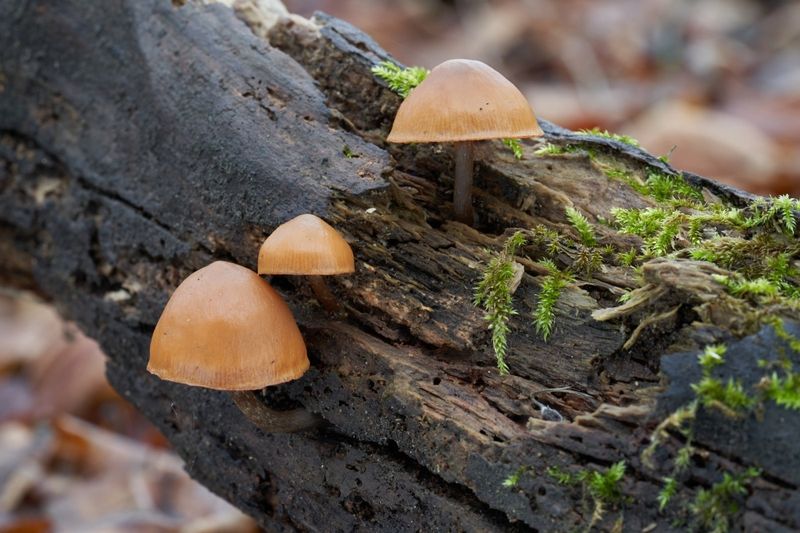
Small, brown, and easy to ignore, the Funeral Bell is the kind of mushroom most people would never look at twice. That is exactly what makes it dangerous.
It carries the same liver-wrecking toxins found in the Death Cap.
Look for it on rotting logs, stumps, and even wood chip mulch around flower beds. Caps are honey brown to tan, usually under two inches wide, and often sticky when wet.
A thin ring on the stem and rusty brown spores help set it apart.
Because it can grow in clusters on wood, it is sometimes confused with edible honey mushrooms. Even experienced foragers have made this mistake.
If a little brown mushroom is sprouting from your mulch, treat it as a hazard, not a harvest.
6. False Morel (Gyromitra esculenta)
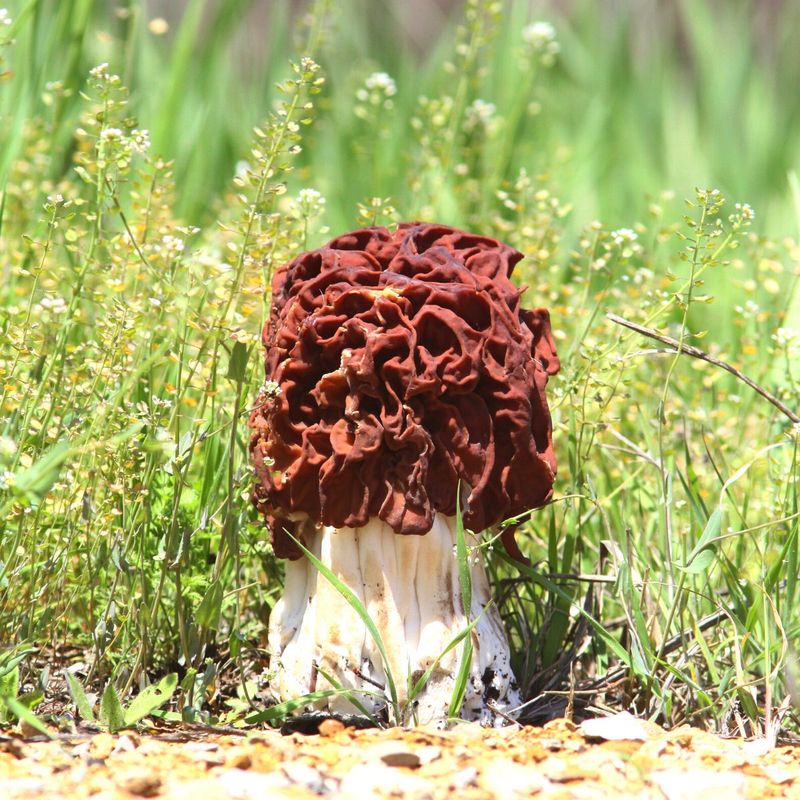
Spring in New Jersey means morel season, and with it comes a trickster. The False Morel looks like a wrinkly reddish brain perched on a stubby stem, and it fools hopeful hunters every year.
True morels have a honeycomb cap full of deep pits, and they are completely hollow when sliced lengthwise. False Morels have folds and lobes instead of pits, and inside you will find cottony fibers or chambers.
Slicing every morel in half before eating is a smart habit.
The toxin inside, gyromitrin, turns into a chemical related to rocket fuel once your body breaks it down. Poisoning can cause dizziness, vomiting, seizures, and liver damage.
Even breathing the steam while cooking them has made people sick.
7. Fly Agaric (Amanita muscaria)
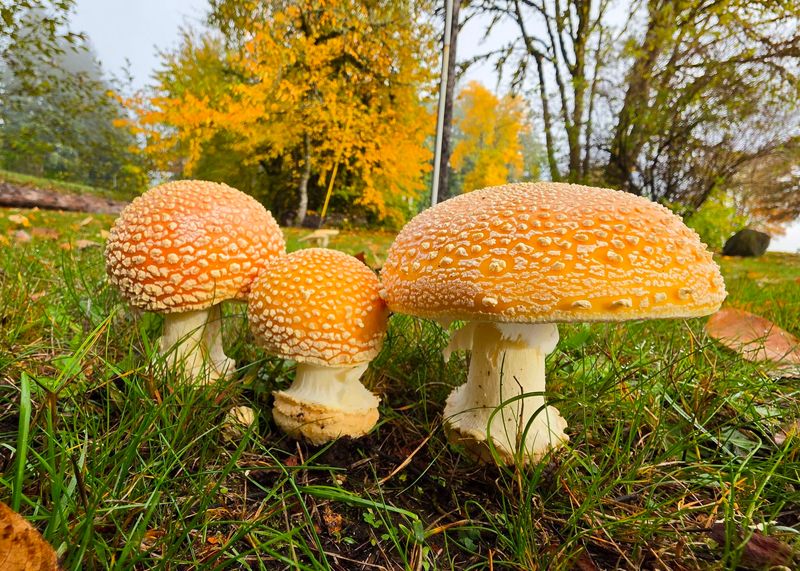
Ever seen a mushroom that looks like it hopped out of a fairy tale? The Fly Agaric is the classic storybook toadstool, though the variety common in New Jersey usually sports a yellow to orange cap rather than bright red.
White, cottony warts dot the cap, and the stem has a ring plus a shaggy, bulb-shaped base. It teams up with pine, spruce, and birch roots, so check under evergreens.
Its name comes from an old European practice of soaking it in milk to attract and kill flies.
Eating it can cause confusion, drooling, sweating, muscle twitches, and deep sleepiness. Dogs are especially at risk, so scoop these up with gloves if your pup roams the yard.
8. Sulfur Tuft (Hypholoma fasciculare)
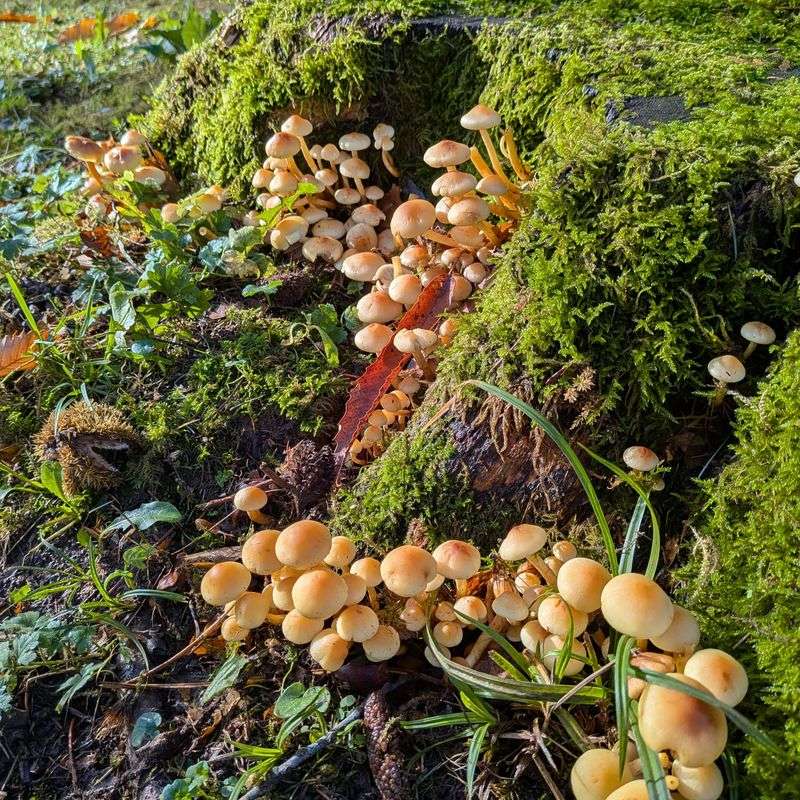
Cheerful yellow, crowded together like a bunch of tiny umbrellas, Sulfur Tuft brightens up old stumps from spring through late fall. Its sunny look hides a bitter, toxic punch.
The caps are sulfur yellow with darker orange centers. Flip one over and you will notice greenish yellow gills, which darken to purplish brown as spores mature.
That green gill color is your best clue, since edible look-alikes have pale or white gills.
Symptoms include nausea, vomiting, and stomach pain that can begin hours after eating. Taste is so bitter that most people spit it out, but toddlers and dogs are not always so picky.
9. Fiber Caps (Inocybe species)
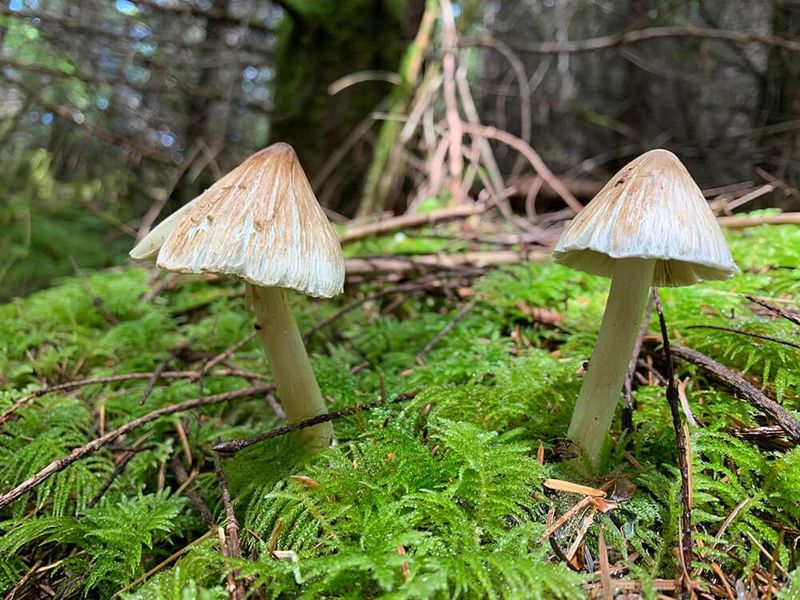
Mushroom experts sometimes joke that the Inocybe group is where identification goes to die. There are hundreds of species, and many look nearly identical.
What most share is a toxin called muscarine.
Fiber caps are small and tan to brown, with pointed or bell-shaped caps that look silky or fibrous, almost like strands of hair. The cap edges often crack or split as they age.
They pop up in lawns, along paths, and under trees.
Within 30 minutes of eating one, a person may start sweating heavily, crying, drooling, and having blurred vision. Doctors call it SLUDGE syndrome.
A dog that eats one can get sick fast, so a vet visit should not wait.
10. Ivory Funnel (Clitocybe dealbata)
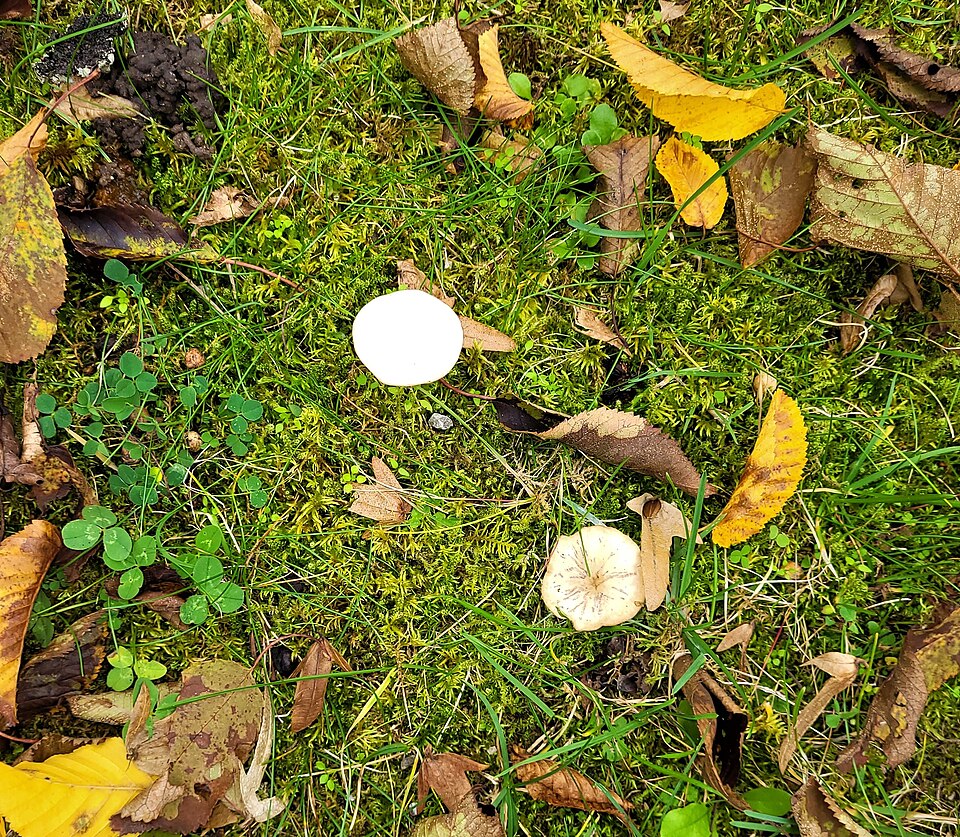
Grassy lawns and meadows are home turf for this small, chalky white mushroom. It often grows in rings right alongside edible fairy ring mushrooms, which is how so many people end up eating it by mistake.
Caps are flat or slightly sunken like a shallow funnel, with a frosty white coating. Gills are crowded and run a bit down the stem.
Edible fairy ring mushrooms, by contrast, have widely spaced gills and a tough, bendy stem that springs back when twisted.
Like fiber caps, it carries muscarine and causes heavy sweating, tears, and stomach upset. The safest plan for any parent or pet owner is simple: if it grows in your grass and you are not 100 percent sure, pull it, bag it, and toss it.
Share this story